
Fix butterfly valve with positioner supplier selection mistakes by tying each assembly requirement to a responsible person, an accepted document and a verification record. Ask who selects the components, joins their interfaces and releases the finished package. The order should identify the valve, drive and control arrangement for later support.
You approve a valve package, then discover that the valve supplier expects the installer to choose the positioner bracket and check its feedback direction. The installer expected those tasks to be included in the order. The package reaches site with a gap between the supplied parts and the promised function. Review responsibility and evidence before award, then carry the accepted definition into delivery and support.
1. What must a butterfly valve with positioner supplier own?
A butterfly valve with positioner supplier should own the supply and integration obligations stated in your purchase scope. Define responsibility for valve selection, actuator sizing, positioner compatibility and final assembly checks. When another party supplies an accessory, identify who still approves the joined interfaces and records the result for the complete package.
How do you assign the gaps between components?
Name the party that approves mounting, feedback geometry, pneumatic paths and electrical connections, then identify the reviewer who releases the assembly. Ask your supplier to mark each obligation as included, customer-provided or outside its scope. A collection of compatible catalogue parts leaves the package unresolved if nobody accepts responsibility for their actual joined configuration and the resulting inspection records.
- Name the owner of each selection and integration task.
- Identify customer-supplied parts and their compatibility reviewer.
- Assign complete-assembly release and document delivery explicitly.
Key takeaway: Use the responsibility schedule to check the complete function, including connections between separately supplied components.
| Check | What you should confirm |
|---|---|
| Selection | Accepted duty and named component-selection responsibility |
| Integration | Owner of mounting, feedback and utility interfaces |
| Release | Responsible reviewer and complete-assembly records |
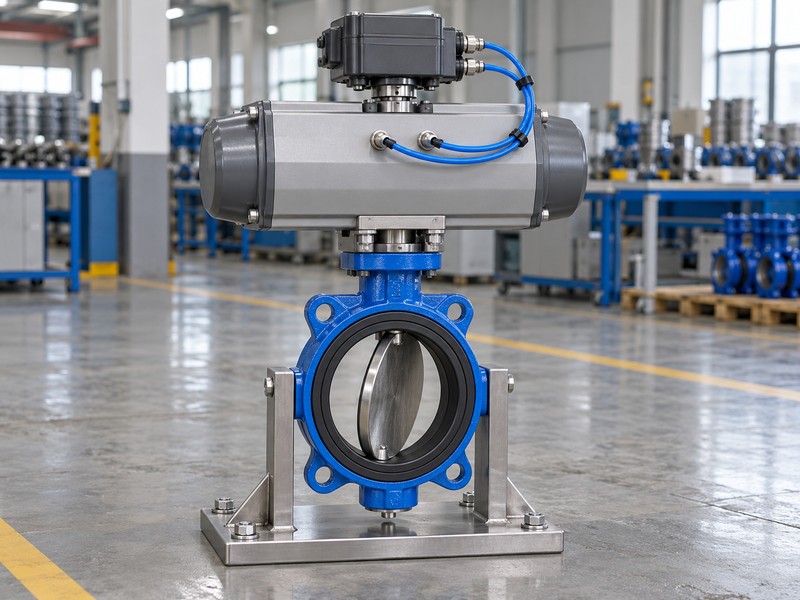
2. What duty does a butterfly valve with positioner supplier need?
Your butterfly valve with positioner supplier needs the fluid, temperature, operating pressure, closing differential and flow cases for the actual valve duty. Supply cleaning liquids and additives with the main fluid description. The supplier should accept one configuration against those inputs, with any unapproved condition identified before it selects the operator or accessories.
How should the technical response set boundaries?
RUITO’s ordinary clean-water butterfly duty uses 5–60°C and the selected PN10/16 pressure–temperature rating, while hydraulic and installation requirements still apply. Ask for model data at the intended operating positions and review continuous throttling, minimum controllable flow and cavitation separately. A positioner cannot enlarge the valve’s working rating or turn a material name into approval for another fluid or special service.
- Provide operating extremes, cleaning conditions and flow cases.
- Require a configuration-specific response to the supplied duty.
- Keep special service and intermediate-position limits visible.
Key takeaway: Keep the accepted duty response as the boundary for valve selection and later operating claims.
| Check | What you should confirm |
|---|---|
| Exposure | Actual fluid composition and cleaning liquids |
| Pressure and temperature | Limits accepted together for one configuration |
| Control duty | Model data and permitted operating-position envelope |
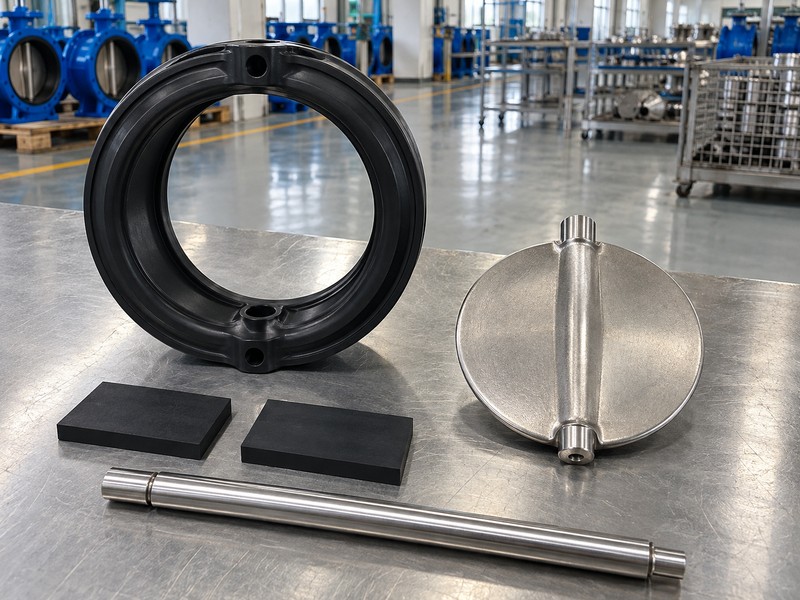
3. Which files must a butterfly valve with positioner supplier supply?
A butterfly valve with positioner supplier should supply the selected valve, actuator and positioner documents required by your order. Request the actual identities and revisions, plus the assembled drawing and schedules. A general product leaflet cannot tell your installer which coupling, terminal configuration or pneumatic variant belongs to the delivered package.
What links each document to the supplied assembly?
Ask for a document index that identifies the component and assembly revisions. Include the valve duty, material list, torque basis, mounting drawing, pneumatic diagram, signal schedule and selected accessory manuals. Have the supplier identify which documents support each acceptance requirement and which still need project approval. Review any claimed qualification against its actual product and intended-use scope; a company-level document cannot establish every accessory or complete-package approval.
- Request actual component identities and current selected manuals.
- Link drawings and schedules to the delivered assembly revision.
- Check the scope of documents offered for special qualifications.
Key takeaway: An indexed assembly file lets installation, inspection and support teams find the evidence for the package they are handling.
| Check | What you should confirm |
|---|---|
| Identity | The supplied valve, drive and accessory versions |
| Interfaces | Assembly drawing and accepted connection schedules |
| Acceptance | A document index mapping evidence to requirements |
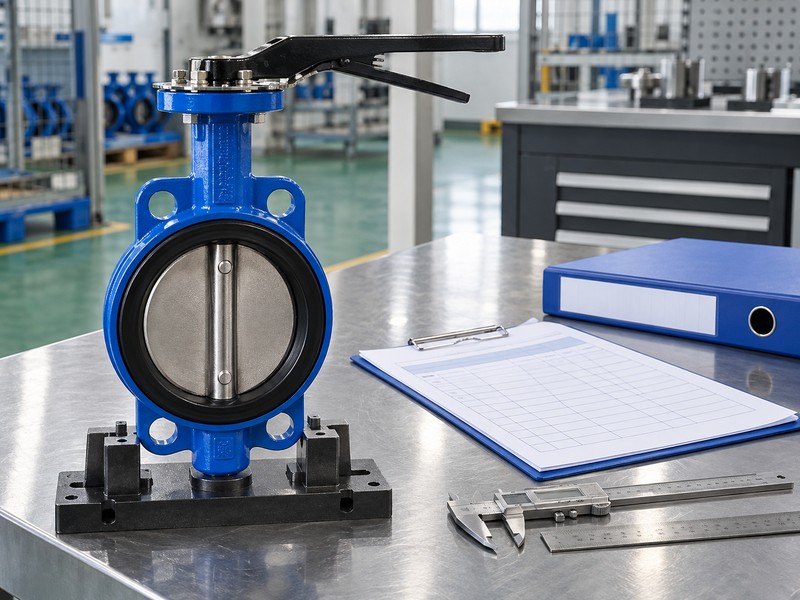
4. How does a butterfly valve with positioner supplier mount parts?
A butterfly valve with positioner supplier should mount the drive and feedback components using the accepted assembly drawing and selected instructions. Confirm valve-shaft engagement, bracket orientation and sensor range together. A mounting designation or matching bolt pattern leaves the motion relationship unresolved until the supplier checks the actual supplied parts through their accepted travel.
What should you inspect in the mounting evidence?
Ask for the approved adapter and coupling details, then request assembled direction and endpoint checks against that drawing. Keep actuator mounting separate from positioner feedback fit because those interfaces answer different mechanical questions. If the supplier proposes a bracket or coupling change, obtain its revised drawing and required verification before allowing the substitution into the released package.
- Confirm shaft engagement, orientation and accepted travel limits.
- Require the actual adapter and feedback arrangement on the drawing.
- Approve mounting changes before the assembled package is released.
Key takeaway: Require mounting evidence for the verified motion path and the actual supplied connections.
| Check | What you should confirm |
|---|---|
| Drive connection | Approved valve-shaft and actuator engagement |
| Feedback fit | Bracket, coupling and suitable sensing range |
| Verification | Direction and endpoints checked on the actual assembly |
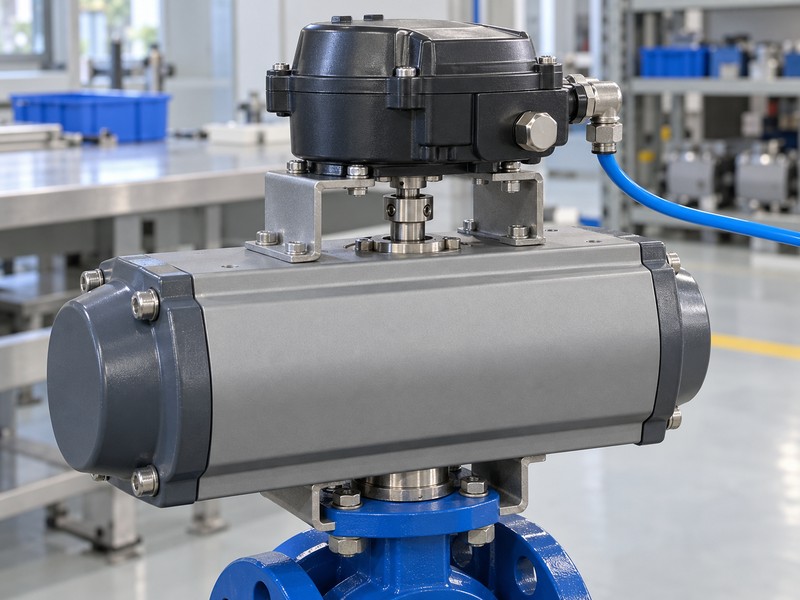
5. What must a butterfly valve with positioner supplier define?
A butterfly valve with positioner supplier must define the command input, electrical supply and required position output as separate functions. State the controller interface and the accepted input-to-travel direction. A normal low-end command such as 4 mA can be valid operation; its value alone does not establish closed position or a detected signal fault.
What should the supplier demonstrate about feedback?
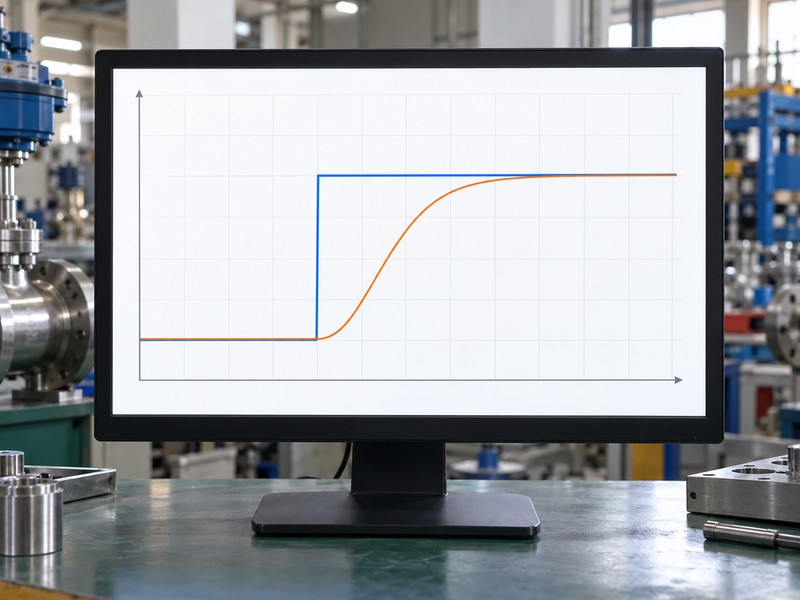
Request the selected device’s terminal and configuration schedule. Identify any optional feedback output and confirm what it reports to the receiving controller. Ask for actual command and travel records where your inspection plan requires them; the conceptual response chart below illustrates that relationship only. A position signal reports travel rather than measured process flow, so any flow-control promise needs an appropriate process measurement and an accepted system-level control arrangement.
- Separate command, power and position-output connections.
- Approve input direction and fault-detection configuration.
- Identify the measured quantity behind every control claim.
Key takeaway: Use the signal schedule to distinguish command input, power, travel feedback and any separate measured process variable.
| Check | What you should confirm |
|---|---|
| Input | Compatible command type and accepted travel mapping |
| Output | Purchased feedback function and receiving interface |
| Evidence | Actual position records and separate process requirements |
6. How does a butterfly valve with positioner supplier size drives?
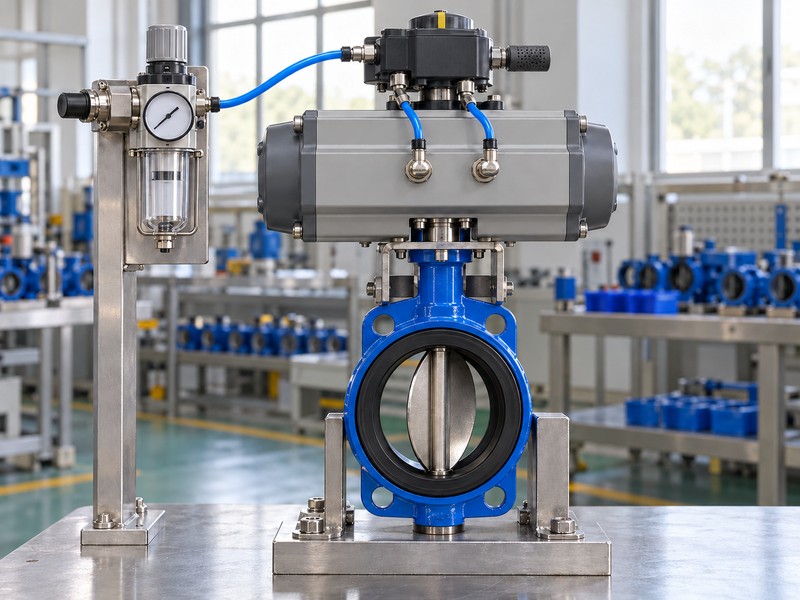
A butterfly valve with positioner supplier should size the drive against actual valve torque throughout travel at the declared minimum available supply. Request breakaway, running and closing demand at the accepted fluid and differential. Where the package uses spring return, review its return output as well as the air-powered side before approving the required direction.
What utility assumptions should the calculation show?
Confirm minimum supply during movement, permitted maximum pressure and the selected manuals’ air-quality requirements, with filter, regulator and tubing responsibilities identified. Review shaft, coupling and mounting loads against the accepted package and agreed sizing margin. A positioner can meter available air, but it cannot create missing actuator output or justify a regulator setting borrowed from an unrelated assembly.
- Match torque demand and output across the required stroke.
- Declare supply conditions and air-treatment responsibilities.
- Review return output and drive-component loads where applicable.
Key takeaway: Review matched torque and utility assumptions against the conditions your site will provide.
| Check | What you should confirm |
|---|---|
| Demand | Actual valve torque at the declared operating conditions |
| Output | Drive capability at accepted minimum supply |
| Utilities | Air quality, regulator and supply-path assumptions |
7. Which faults can a butterfly valve with positioner supplier check?
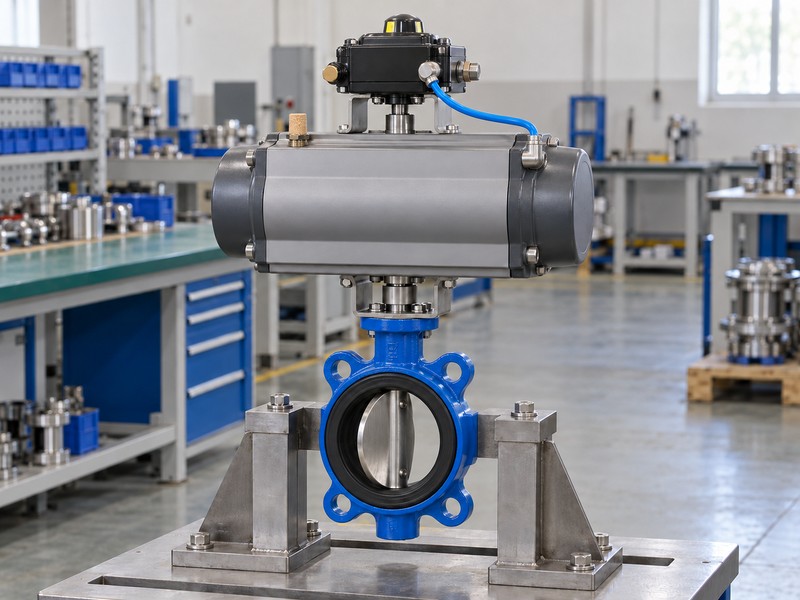
A butterfly valve with positioner supplier should check the specified response to air loss, command loss and electrical-power loss as distinct events. Define which utilities remain for each requirement. A springless double-acting actuator has no universal assured endpoint or indefinite holding behavior, and electrical output blocking cannot establish the response to lost air.
How should the proposed action be evidenced?
Identify pneumatic porting, return energy, fault settings and any separately supplied solenoid, lockup device or stored-air arrangement used to produce the response. Ask the supplier to record the actual configuration and conditions behind each verification. Keep combined failures separate when required, because successful single-event checks do not establish what happens when several utilities or energy sources disappear together.
- Specify separate air, command and electrical failure events.
- Identify remaining energy and dependent accessories.
- Request configuration-linked results for the agreed event schedule.
Key takeaway: A supplier’s failure claim becomes reviewable when it names the event, complete configuration and evidence for the response you require.
| Check | What you should confirm |
|---|---|
| Air loss | Available return energy and accepted mechanical response |
| Command loss | Enabled detection and actual fallback configuration |
| Power loss | De-energized pneumatic arrangement and remaining supply |
8. What tests must a butterfly valve with positioner supplier record?
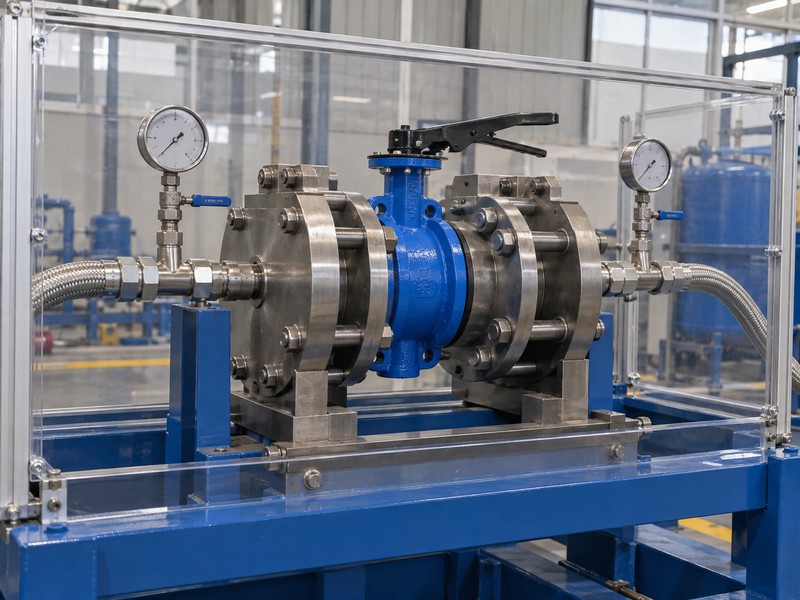
A butterfly valve with positioner supplier should record the agreed valve integrity, assembled travel and failure-event checks separately. Identify test conditions, acceptance criteria and required witnessing before purchase. Travel calibration can move the valve and does not prove shutoff leakage, hydraulic performance or successful tuning of the later installed process-control loop.
What should the inspection package distinguish?
If the contract selects ISO 5208, use it as the valve pressure-test method rather than proof of position precision or a Class VI designation. Keep travel checks under the selected manual and authorized isolation procedure, with personnel clear of energized mechanisms. Ask for product identity, utility conditions, settings and results so your reviewer can establish what each test verified.
- Agree separate valve, travel and failure-event acceptance methods.
- Link results to the supplied configuration and test conditions.
- Define safe calibration, witness and document-delivery obligations.
Key takeaway: Separate test records let your inspector assess the supplier’s actual acceptance evidence without treating one successful routine as proof of every function.
| Check | What you should confirm |
|---|---|
| Valve evidence | The agreed pressure and leakage procedure |
| Assembly evidence | Travel and separate failure-event results |
| Test identity | Component revisions, conditions and recorded acceptance |
9. What must a butterfly valve with positioner supplier hand over?
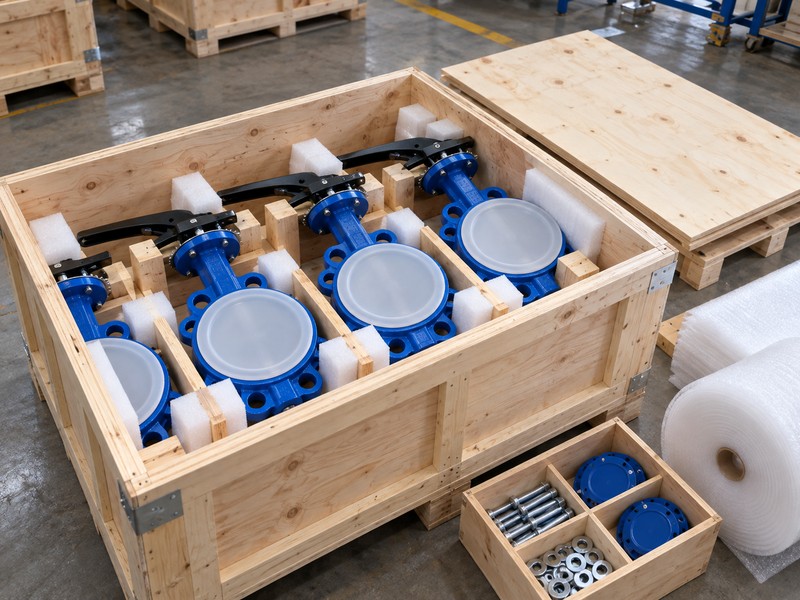
A butterfly valve with positioner supplier should hand over the identified assembly, agreed accessories and accepted technical records with the shipment. Define fitted and loose items so receiving can check the complete order line. A protected valve alone leaves the installation incomplete if its approved coupling, signal schedule or required inspection record arrives separately without an agreed plan.
What should receiving compare with the order?
Check labels, loose accessory identities, applicable preservation instructions and protection of brackets, tubing and exposed connections. Record missing parts or transport damage against the agreed supply scope before releasing equipment to the installer. Any proposed replacement should retain its own identity and compatibility review, rather than disappearing into the package as an undocumented substitute selected to complete an incomplete delivery.
- Identify fitted and loose items against the accepted assembly.
- Check interface protection and document completeness on receipt.
- Resolve damage and missing items before installation release.
Key takeaway: A complete handover preserves the supplier’s approved package definition from assembly through shipping, receiving and installation preparation.
| Check | What you should confirm |
|---|---|
| Inventory | The full ordered assembly and accessory schedule |
| Condition | Protected interfaces with damage or gaps recorded |
| Handover | Accepted instructions and configuration-linked test records |
10. How can a butterfly valve with positioner supplier support you?
A butterfly valve with positioner supplier can support you through a defined contact, traceable assembly records and an agreed route for technical problems or replacements. Confirm what information the supplier needs and who reviews it. Keep support obligations tied to the accepted duty and package, without assuming a general service statement guarantees every site outcome.
What should a useful support request contain?
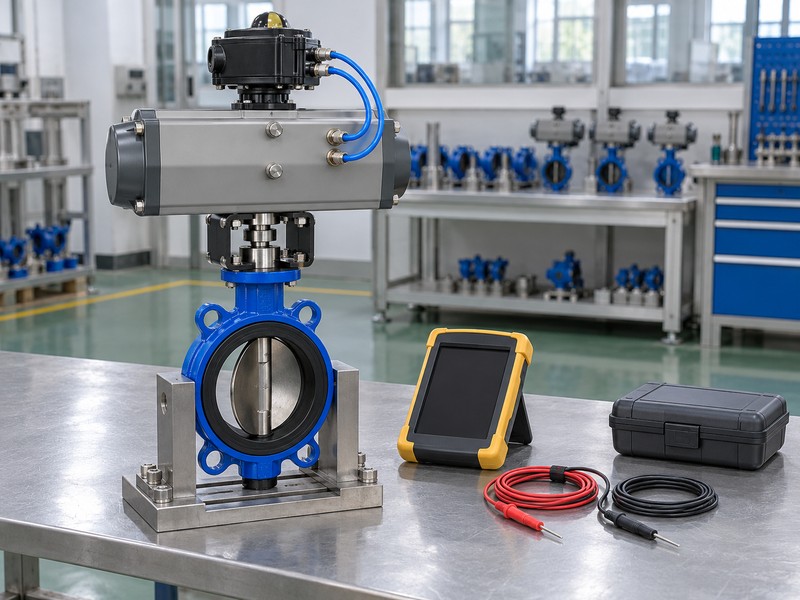
Provide assembly identity, approved drawings, current settings, utility conditions, error messages and observed motion before requesting a diagnosis. Separate a position discrepancy from a process-flow complaint and identify any installation or component change since delivery. RUITO can review configuration and interface inputs for your enquiry; request the applicable support and spare scope in the order. A replacement accessory still needs compatibility review and the specified verification before return to service.
- Name the technical contact and agreed issue-handling route.
- Send actual assembly, settings and operating observations.
- Review replacements and later changes against accepted records.
Key takeaway: Defined support gives you a practical way to investigate the supplied assembly and control replacements using the same accepted technical record.
| Check | What you should confirm |
|---|---|
| Support scope | Defined contacts, obligations and required information |
| Diagnosis | Actual configuration and documented symptom conditions |
| Replacement | Approved compatibility and return-to-service checks |
Send RUITO your duty sheet, interface drawings, utility limits and required acceptance records. We can review the valve configuration and clarify the assembly documents and responsibilities needed for your enquiry. Contact us before approving a supplier scope with unresolved mounting, failure evidence or handover obligations.
FAQ
Q1: Can I qualify a supplier from a valve brochure alone?
No. Request the actual assembly identities, interfaces, selected manuals and acceptance evidence for the function you intend to purchase.
Q2: How do I know who owns positioner compatibility?
Check the responsibility schedule. Name the party that approves mechanical fit, signals, utilities and complete-assembly verification.
Q3: Can I accept a travel record as a leakage test?
No. Use the separate valve pressure and leakage acceptance method stated in the order.
Q4: What’s the best information to send for a support problem?
Send identity, settings, utility conditions, symptoms and any changes since delivery.
Q5: Can I fit a replacement positioner with the same signal range?
Review the proposed replacement. Matching input range cannot establish mounting, feedback, failure logic or the required recalibration scope.