
How to Check Butterfly Valve Export Files Without Mistakes
A butterfly valve with supervisory switch exporter should keep the supplied configuration, translated technical meaning, required product evidence, and dispatch documents consistent. A correct valve model can still arrive with a translated schedule that describes the wrong signal function. Agree the source documents, responsible reviewers, and version controls before preparing the delivery package.
1. What can a butterfly valve with supervisory switch exporter map?
A butterfly valve with supervisory switch exporter should map the accepted enquiry to the same valve, gear, switch, documents, and packing references throughout the delivery. Build that relationship around the actual configuration. A familiar translated product name cannot identify which operator, supervision arrangement, or instruction version belongs to an order.

For a grooved end butterfly valve proposal, preserve the actual connection and accessory identities alongside the required normal-position supervision. Request a configuration cross-reference that follows the product through technical submission and dispatch. Its purpose is to keep the engineering description stable while different parties prepare their own documents.
Use one accepted configuration as the document reference
Identify the buyer’s equipment reference, manufacturer’s assembly description, relevant component identities, accepted options, and applicable document revisions. Ask each document owner to use that basis in its own schedule or packing information. Refer an inconsistent description to the responsible technical reviewer before it enters the delivery record.
- Connect the enquiry and accepted proposal with the actual assembly.
- Preserve the valve, operator, and switch identities across documents.
- Identify the accepted revisions used for dispatch preparation.
| Document relationship | Information to preserve |
|---|---|
| Enquiry to proposal | Required function and accepted configuration |
| Proposal to manufacturer data | Actual equipment and component identities |
| Product to supporting evidence | Applicable model and document versions |
| Product to packing reference | Where the identified equipment is allocated |
Resolve conflicting assembly descriptions before documents are issued to different recipients.
2. How should translated product names be controlled?
Control translated names through an accepted terminology list maintained with the butterfly valve with supervisory switch exporter and the project technical reviewer. Keep manufacturer names and product identifiers unchanged where they identify equipment. Translate the description in a way that preserves construction, function, and any stated limitations.
A wafer butterfly valve and a flanged butterfly valve describe different body connections. A shortened translated description should not merge those structures into one ambiguous item. Apply the same discipline to integral supervision, separate accessories, and the named operating mechanism.
Keep translation decisions linked with their technical source
Record the source term, accepted equivalent, applicable product reference, and responsible reviewer for terms that could affect selection. Preserve original identifiers beside translated descriptions in the document index. Where an equivalent term remains uncertain, ask for technical confirmation instead of choosing wording from a general sales catalogue.
- Retain exact product identifiers with the translated description.
- Distinguish connection, operator, and supervision terms.
- Record the accepted terminology version used for the order.
| Translation item | Meaning that must survive |
|---|---|
| Body connection | The actual mating arrangement |
| Operating mechanism | How the valve is operated |
| Supervision accessory | The specified sensing function |
| Product identifier | The equipment covered by its source documents |
A translation question becomes a technical clarification when the proposed wording changes the apparent configuration.
3. How do you preserve the signal’s meaning across languages?
Preserve the agreed device function and event definition when translating documents for a butterfly valve with supervisory switch exporter. Valve-position supervision, waterflow detection, auxiliary outputs, and circuit conditions need separate descriptions. A broad translated word such as alarm cannot settle what the actual device senses or how the selected panel represents it.
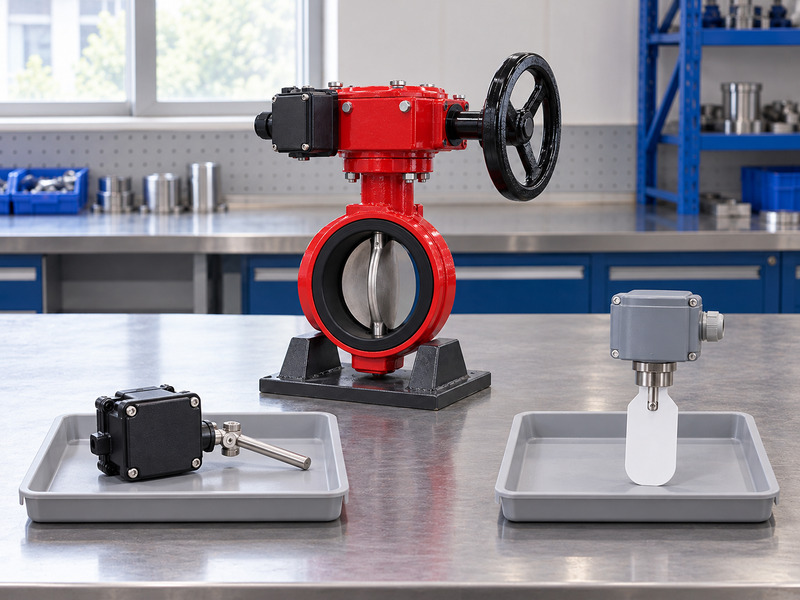
The Potter PCVS publication describes monitoring valve position, while the VSR-S publication describes a vane-type waterflow device. These are separate documented functions. Use the actual supplied device documents and accepted project point definition when choosing the translated description.
Translate the physical condition and system event separately
Ask the electrical reviewer to confirm the link between the identified asset, physical normal position, designated output, selected input, and displayed event. Keep an auxiliary or enclosure-monitoring function identifiable if it forms part of the order. Do not rename a valve-position signal as waterflow detection or assign every abnormal electrical condition the same event meaning.
- Identify what the documented device senses.
- Preserve the output’s assigned purpose in every language version.
- Refer event terminology to the selected input and panel documentation.
| Term category | Translation reference |
|---|---|
| Valve-position supervision | Actual mechanism and supported normal condition |
| Waterflow detection | Identified flow-detection device and purpose |
| Auxiliary output | Manufacturer’s permitted role |
| Displayed event | Accepted project input and panel definition |
Keep a terminology difference open when it changes the function that the receiving team believes it has ordered.
4. Which electrical terms need separate fields?
Separate contact ratings, device supply requirements, input sensing conditions, and environmental limits in documents prepared by the butterfly valve with supervisory switch exporter. Similar-looking voltage or current entries can describe different electrical functions. Preserve the source heading and its qualifications when preparing translated tables or summaries.

For example, the PAD100-MIM manufacturer manual lists operating-supply information separately from its monitored-input parameters. That distinction belongs to the identified module’s documents. It illustrates why a translator should preserve field meanings rather than combine every electrical value under a supply label.
Carry the complete rating description into the review
Keep voltage type, contact duty, relevant operating conditions, and output identity together wherever they appear in the source. Ask the qualified reviewer to check a translated requirement against the actual switch and input documents. A translated table should preserve uncertainty or an unresolved compatibility item instead of implying an accepted combination.
- Maintain separate fields for contact limits and powered-device requirements.
- Retain rating qualifications and any stated low-level conditions.
- Record the reviewer who accepts the electrical terminology.
| Electrical description | Keep distinct from |
|---|---|
| Contact switching conditions | An assumed operating supply |
| Module operating requirements | Conditions at the monitored contact input |
| Input sensing parameters | Maximum contact switching capacity |
| Enclosure conditions | Electrical contact duty alone |
Refer a translation that changes a rating’s purpose back to the technical source before issuing it for use.
5. How do you confirm the destination’s required evidence?
Ask the project accepting parties to identify the required product evidence for the destination before the butterfly valve with supervisory switch exporter confirms the proposal. Review the applicable adopted requirements and exact configuration. The presence of a familiar certification name cannot establish acceptance in every market or for every use.
UL’s explanation of its certification marks states that its enhanced mark communicates geographic scope and certified attributes. Review the actual record and conditions relevant to the offered product. Keep the destination’s acceptance decision with the responsible project parties instead of assuming a mark provides unrestricted international coverage.
Request a destination-specific evidence schedule
Have the buyer or local project coordinator identify the required documents, responsible reviewer, and intended submission stage. Ask the manufacturer and seller to respond against that schedule for the exact valve-gear-switch configuration. Record unsupported requirements or unavailable evidence as exceptions before an offer is treated as technically accepted.
- Identify the actual project and intended application.
- Request configuration-specific evidence and conditions of use.
- Assign destination acceptance questions to the appropriate project reviewer.
| Evidence question | Information required |
|---|---|
| What is requested? | Project evidence schedule |
| What product is covered? | Exact manufacturer and assembly identity |
| Where and how is it applicable? | Relevant scope and conditions |
| Who accepts it? | Responsible destination/project reviewer |
Keep a destination requirement unresolved until the appropriate party has accepted the supplied evidence or an explicit exception.
6. Who owns each cross-border document?
Assign a document owner and reviewer for each part of the delivery coordinated by the butterfly valve with supervisory switch exporter. The buyer, manufacturer, seller, importer or local coordinator, and installation team may prepare different information. Their responsibilities should be agreed for the project and contract rather than inferred from an exporter’s title.

Distinguish the person who issues a technical document from the person who translates, forwards, or accepts it. Identify who obtains locally requested information and who resolves differences between language versions. An unanswered technical question still needs a named owner when it passes between organizations.
Define the response route as well as the recipient
The document register should identify the issuer, delivery coordinator, technical reviewer, required recipients, and outstanding status. Agree how a manufacturer answer reaches the project file and how acceptance is returned to the seller. Keep that route available after shipment so receiving questions and later changes do not depend on one person’s email archive.
- Identify the original technical issuer and translation coordinator.
- Name the reviewer for technical and destination-evidence questions.
- Record who distributes and receives the accepted revision.
| Coordination role | Task to assign |
|---|---|
| Manufacturer | Applicable product information and technical answers |
| Seller/export coordinator | Consolidated document delivery and exceptions |
| Buyer/local coordinator | Requested destination documents and review routing |
| Project team | Acceptance and installed-use requirements |
A document is ready for handover when its intended recipient can identify both its source and its accepted status.
7. Which release decisions must remain separate?
Keep manufacturing completion, technical-document acceptance, dispatch readiness, and final project acceptance separate in the butterfly valve with supervisory switch exporter delivery plan. Each decision has a different evidence basis and responsible owner. A completed packing list cannot establish the valve’s technical suitability or its installed monitoring response.

Ask the parties to identify what permits each stage to advance under the agreed order. The manufacturer may complete its defined production scope while the buyer still has an unresolved document review. Conversely, an accepted technical submittal does not establish that the particular order is packed, released, or ready for its next logistics stage.
Give every release decision its own recorded basis
Use the agreed project process to record the relevant configuration, evidence, open exceptions, and authorized decision for each stage. Define how a remaining condition is communicated to the next owner. Keep the project’s installed acceptance outside a claim that the exporter has completed the trade or delivery paperwork.
- Name the authority for production release and dispatch decisions.
- Identify document conditions that remain outstanding at each stage.
- Preserve final installed verification responsibilities in the handover plan.
| Decision stage | Basis to identify |
|---|---|
| Manufacturing completion | Agreed production and release records |
| Technical-document review | Accepted configuration and evidence |
| Dispatch readiness | Ordered contents and agreed delivery documents |
| Project acceptance | Installed equipment and authorized verification |
Record unresolved conditions explicitly instead of combining every stage into a single shipped or approved status.
8. How do split packages retain the assembly relationship?
Split packages coordinated by a butterfly valve with supervisory switch exporter should retain a clear relationship with the accepted assembly and ordered accessories. Identify which items are allocated to each packing reference and where the applicable instructions are delivered. Packing convenience should not silently change the approved supply configuration.
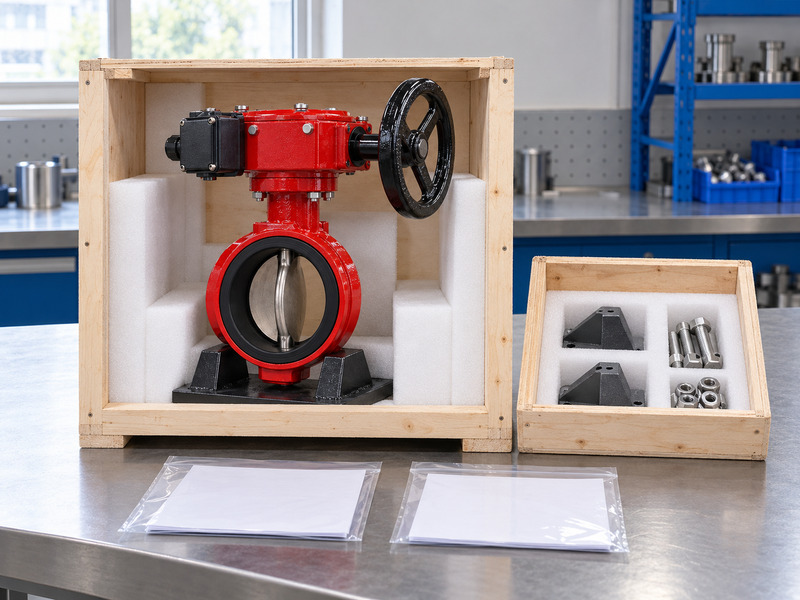
Ask the supplier to distinguish separate accessories from parts that form the accepted assembled product. Any proposed separation affecting that configuration needs the relevant manufacturer and project review. Obtain assembly-specific protection, storage, and receiving instructions without assuming a general arrangement applies to every valve and switch.
Map the packing allocation to the technical scope
The packing schedule should identify the assembly reference, included hardware, separate items, and associated document package. Record any planned later shipment and its effect on receiving or technical acceptance. Give the recipient enough information to identify an incomplete package without guessing which parts should already be fitted or supplied separately.
- Preserve the accepted assembly identity across all package references.
- Identify separate accessories and any remaining delivery scope.
- Link the applicable instructions and document index with the allocation.
| Packing relationship | Information to retain |
|---|---|
| Assembly to package | Where the identified equipment is allocated |
| Accessory to assembly | Which supplied item it belongs with |
| Document to recipient | Who receives the applicable version |
| Outstanding delivery | What remains and who owns the response |
An unexplained split in the packing record should become a delivery clarification before dispatch acceptance.
9. What should happen after a pre-shipment change?
Require the butterfly valve with supervisory switch exporter to disclose a proposed pre-shipment change and coordinate its technical, document, and language impacts before acceptance. A different switch, gear, enclosure, or instruction revision may affect several files. Updating only the packing description can leave the receiving project with inconsistent versions.

Ask for the affected product identities, reason for the change, technical differences, revised evidence, and required reviewers. Identify whether the proposal affects destination acceptance or previously agreed interfaces. Keep the accepted decision with both the original source documents and the corresponding translated schedules.
Obtain a response that identifies the accepted version
The change record should show which documents were replaced, which recipients received the revision, and which party accepted the revised basis. Confirm the technical meaning in each required language, including any unresolved exception. A translation receipt or document download alone cannot establish agreement to a changed product.
- Identify the affected equipment and document versions.
- Review configuration, interface, and product-evidence implications.
- Obtain the required acceptance and revision receipt through the agreed route.
| Change effect | Record to update |
|---|---|
| Hardware configuration | Manufacturer and assembly references |
| Technical condition | Applicable data and accepted exceptions |
| Translated description | Terminology and language-version relationship |
| Delivery allocation | Packing references and document recipients |
Release the revised delivery basis only through the agreed decision process and keep the earlier version distinguishable.
10. What should the receiving project team ask?
The receiving team should ask the butterfly valve with supervisory switch exporter to identify the supplied configuration, applicable language versions, packing allocation, accepted changes, and unresolved document items. Assign missing information to named owners. Keep receipt observations distinct from the project’s final technical and installed-system acceptance.
Q1. Can I translate supervisory as waterflow alarm?
No for a valve-position supervision function. Waterflow detection has its own documented purpose and project event definition. Retain these roles separately, then use the accepted input and panel documents for the translated point description.
Q2. Does an electrical contact rating define the device supply?
No. Keep contact switching conditions, powered-device requirements, and monitoring-input parameters separate. The applicable manufacturer documents and qualified review must establish their meanings and compatibility.
Q3. Does a familiar product mark establish acceptance in every destination?
No. Review the exact product evidence, geographic and application scope where relevant, and the project’s adopted requirements. Obtain the decision from the responsible accepting parties for the actual proposal.
Q4. Does shipment completion prove the installed supervision works?
No. Dispatch records cover their agreed delivery scope. Installed position, input response, event interpretation, and restoration remain project verification tasks. A normal signal cannot prove available water, flow, a clear passage, or seat tightness.
Q5. What should I submit to RUITO for document coordination?
Send the required configuration, destination/project evidence schedule, language needs, document-owner register, and packing scope. Ask RUITO to identify the proposed valve-document support and open supervisory-package questions. Confirm the actual supply and available evidence in writing for that proposal.
For this review, contact us with the document register and unresolved cross-language items. Request an agreed configuration reference, named response owners, and the accepted versions to accompany the delivery.