
How to Check Butterfly Valve Factory Records Without Mistakes
A butterfly valve with supervisory switch factory should agree an inspection and test plan that connects the ordered assembly with incoming acceptance, assembly checks, agreed results, corrective action, and final release. A signed report is difficult to evaluate when its product identity or method is unclear. Define the required records before production, including which questions remain for the installed-system acceptance team.
1. What does a butterfly valve with supervisory switch factory log?
A butterfly valve with supervisory switch factory should record the evidence required by the accepted product documents, inspection plan, and contract for the supplied configuration. Start with the claim each record must support. Design qualification, product inspection, and the installed panel response answer different questions and need separate acceptance bases.
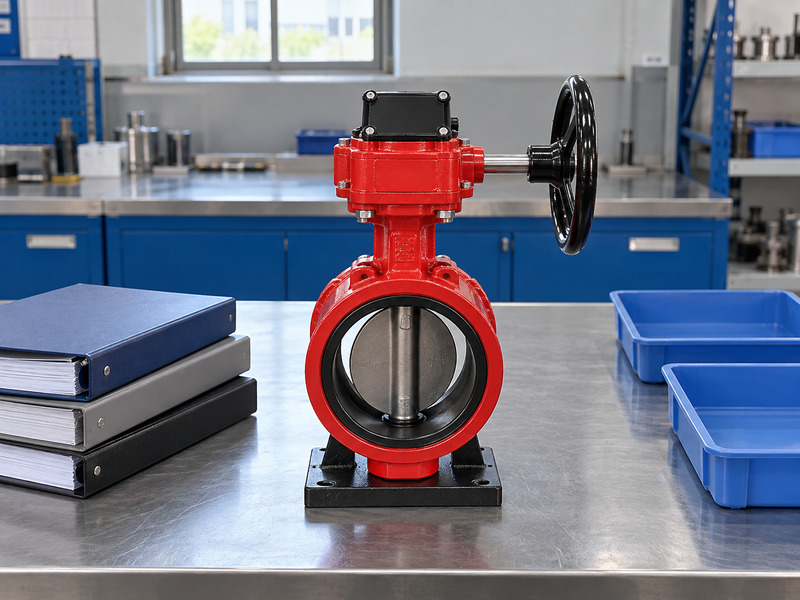
An inspection and test plan, or ITP, should identify the stage, applicable document, method, conditions, acceptance criteria, required record, and responsible reviewers. Agree any customer or third-party involvement before the relevant work occurs. The plan should distinguish a contractual witness point from a final shipment decision.
Define the evidence before defining the report layout
Where UL certification is claimed, UL’s Follow-Up Services description explains how continued production is checked against the original certification requirements. That program is separate from a buyer’s order-specific inspection plan. Obtain the actual product evidence and agree the factory records needed for the proposed order without treating either as proof of installed-system performance.
- Identify the product configuration and governing documents for the plan.
- Define the record and acceptance basis for each agreed activity.
- Name the reviewer and release authority at the relevant stage.
| Evidence layer | Question addressed | Keep separate from |
|---|---|---|
| Design or product qualification | What configuration and conditions are covered? | Results for a particular supplied item |
| Factory inspection | What agreed checks were recorded for this supply? | Installed monitoring response |
| Project acceptance | What did the installed arrangement demonstrate? | Factory report availability alone |
Keep unassigned evidence requirements open before production release.
2. What should incoming acceptance records establish?
Incoming acceptance at a butterfly valve with supervisory switch factory should establish which materials and components entered the order and how they were accepted for use. Agree the relevant identification and document checks in the ITP. A receiving entry that records quantity alone cannot explain whether a supplied gear or switch matches the accepted configuration.
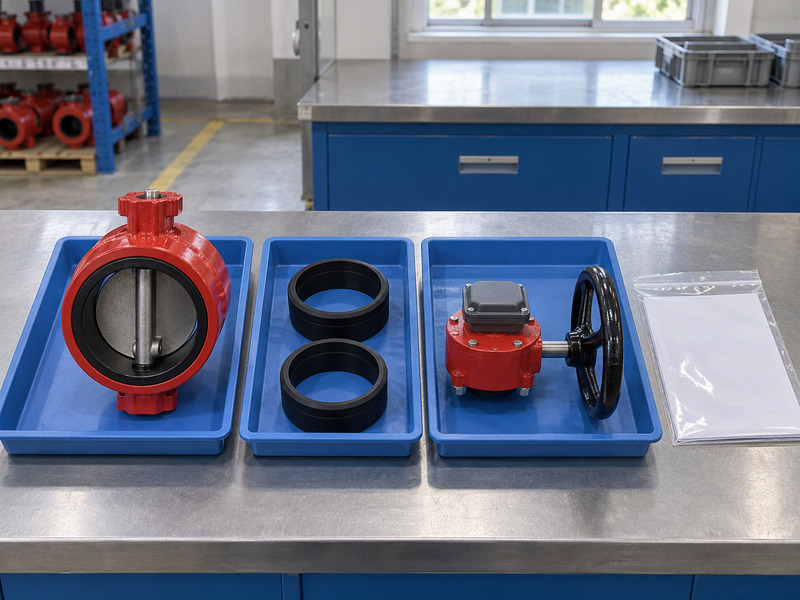
For a grooved end butterfly valve order, identify the actual valve and accessory scope before defining the receiving records. The connection category does not establish the proposed supervision package. Request the component identities and associated evidence that the manufacturer uses for that configuration.
Connect receiving decisions with the production record
Ask the factory to retain the receiving result, relevant supplier documents, and the identification used when components enter assembly. State how uncertain identity, damage, missing documentation, or an unaccepted substitution will be referred for disposition. The required checks should come from the actual product and contract rather than a generic list applied to every valve.
- Identify the relevant material and accessory records for the order.
- Record acceptance, outstanding questions, and rejected or held items.
- Preserve the link between accepted incoming items and assembly records.
| Incoming record field | Review purpose |
|---|---|
| Component identity | Match the accepted supply requirement |
| Supplier evidence | Associate supporting documents with that item |
| Receiving result | Show the acceptance decision and any exception |
| Production linkage | Identify where accepted items were used |
An unresolved receiving exception should remain visible when the order moves toward assembly.
3. What should the assembly inspection record identify?
The assembly record from a butterfly valve with supervisory switch factory should identify the supplied valve, operator, supervision arrangement, and applicable instructions alongside the agreed inspection results. Record the configuration that was examined. A general statement that assembly was checked leaves the reviewer unable to determine which version and interfaces the result covers.
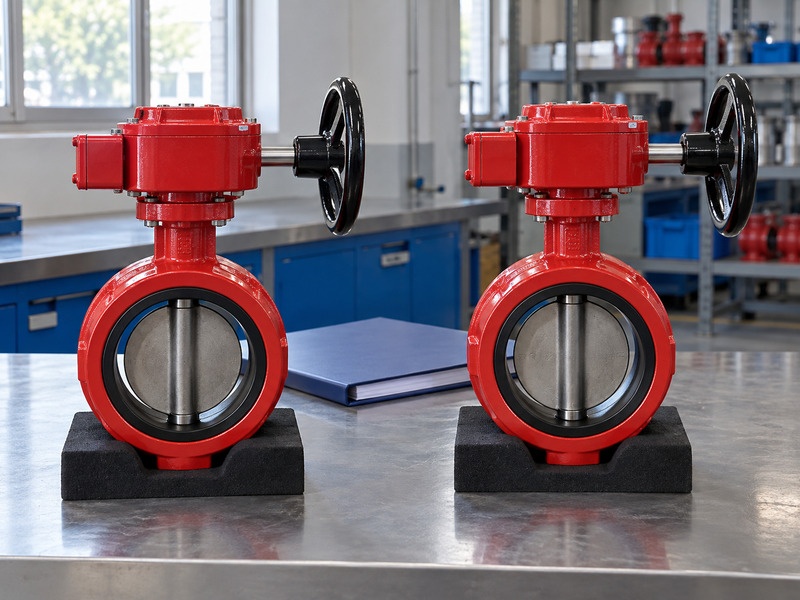
Drawings for a wafer butterfly valve and a flanged butterfly valve describe different connection structures. The relevant inspection record should refer to the actual ordered structure and assembly drawing. Do not use a familiar product-family name as the only description of the inspected package.
Record the condition that the inspector reviewed
Agree which assembly features need recorded confirmation for the proposed model, such as identified components, mounting relationship, orientation, and complete operating envelope. Use the accepted instructions and drawings to define the applicable checks. Record deviations and their disposition without replacing the original observed result with a later blanket approval.
- Identify the exact assembly and document revisions examined.
- Record the agreed mechanical and accessory observations.
- Associate any deviation with the affected product identification.
| Assembly evidence | Information to preserve |
|---|---|
| Product description | Ordered construction and accessory arrangement |
| Document basis | Applicable drawing and instruction versions |
| Inspection result | Observation against the agreed requirement |
| Exception | Affected identity and disposition reference |
The assembly record should describe what was reviewed before the product enters later inspection stages.
4. What should a factory pressure record demonstrate?
A pressure record from a butterfly valve with supervisory switch factory should demonstrate the agreed pressure-boundary inspection under its recorded method, conditions, and acceptance criteria. Its scope comes from the exact valve documents and accepted plan. It cannot establish electrical supervision, input compatibility, or the event shown by the final project panel.
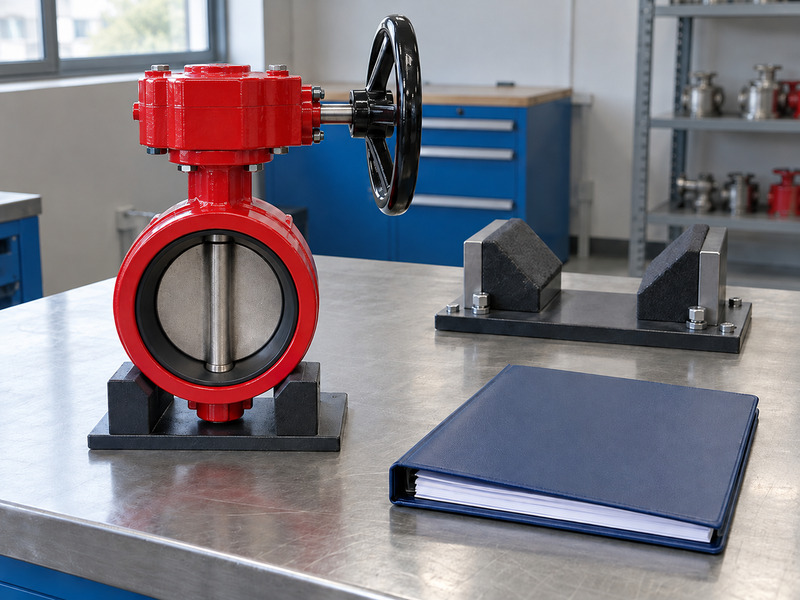
Require the report to identify the product, relevant configuration, governing procedure and revision, recorded conditions, result, and responsible personnel. Where the plan requires instrumentation references or witnessing, include the associated evidence. Agree those requirements before the activity rather than interpreting a generic certificate after shipment.
Preserve the basis needed to interpret the result
Ask the reviewer to check whether the recorded method and conditions correspond to the ordered valve and the claim being accepted. Keep shell, closure, leakage, or other results distinct wherever the applicable plan treats them separately. A test condition must not be copied into a quotation as an operating-pressure rating.
- Define which pressure-related results the actual order requires.
- Keep the procedure, conditions, and acceptance basis with each result.
- Record exceptions and any required subsequent disposition.
| Pressure-record item | Question for the reviewer |
|---|---|
| Product identity | Does this result cover the supplied configuration? |
| Method and conditions | Do they match the accepted inspection basis? |
| Acceptance criteria | What recorded limit or requirement was applied? |
| Result and review | What was observed and who accepted its scope? |
An unexplained pass statement should be returned for the information needed to evaluate it.
5. What can a factory functional record establish?
A functional record from a butterfly valve with supervisory switch factory can establish only the observations made under the documented factory arrangement and agreed criteria. Define whether the record addresses mechanical operation, the sensing mechanism, contact behavior, or another specified function. Avoid merging these observations into an unsupported claim about the complete installed fire-protection system.
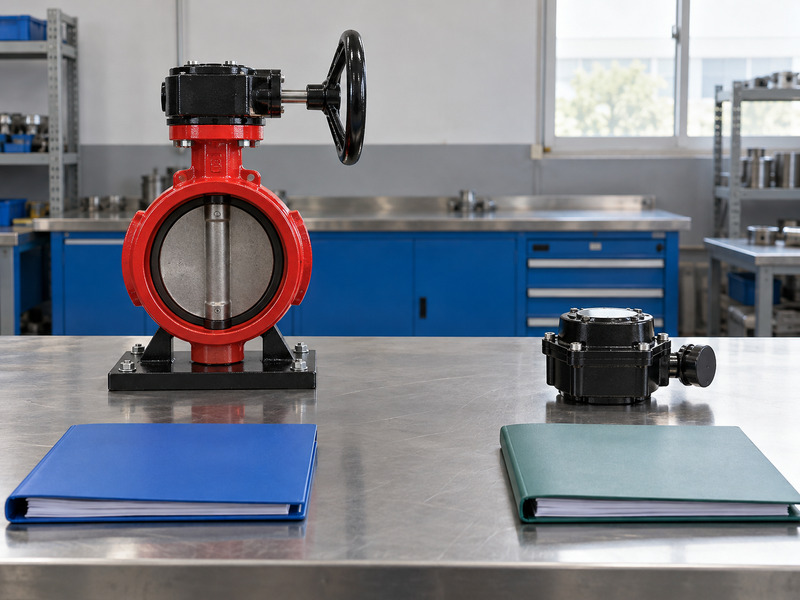
The ITP should identify the exact assembly instructions and the factory equipment or arrangement relevant to the recorded result. State any customer involvement and the form of evidence to retain. A contact observation in the factory remains different from the accepted input and event response of the project’s final module and panel.
Describe the observation without expanding its meaning
Ask for the product identity, configuration, method reference, conditions, observations, acceptance decision, and limitations of the functional record. Keep the required normal physical position distinct from contact state and input interpretation. A normal supervisory condition does not establish available water, flow, passage clearance, or seat sealing.
- Define the function and boundary covered by the agreed observation.
- Preserve the actual configuration and method used for that record.
- Identify functions that still require project verification after installation.
| Functional evidence | What it may support | What remains separate |
|---|---|---|
| Mechanical observation | Recorded movement or correspondence within scope | Unexamined service conditions |
| Sensing/contact observation | Documented device response under stated conditions | Final input and panel behavior |
| Factory interface observation | The identified factory arrangement | Different installed equipment or configuration |
The report should state its limitations wherever the project acceptance boundary extends beyond the factory arrangement.
6. How should nonconforming items remain controlled?
Require the butterfly valve with supervisory switch factory to identify and control items with unresolved nonconformances so they cannot be mistaken for accepted supply. Agree how product status and associated records will be maintained. A completed inspection form should not conceal a component mismatch, missing result, or condition awaiting an engineering decision.
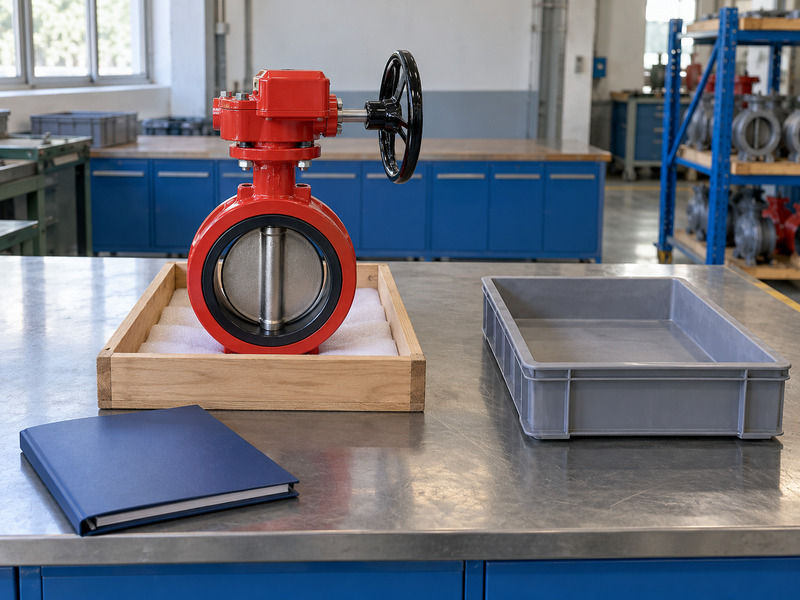
The order’s quality agreement should distinguish an observation, a confirmed nonconformance, an approved disposition, and completed corrective work. Identify who can make each decision. Where product certification is affected, the responsible parties must also address the applicable approval obligations; a buyer’s document acceptance cannot expand a certification scope.
Keep product status linked with the open issue
Ask for a record describing the affected identities, requirement, observed condition, immediate control, and responsible reviewer. The manufacturer should identify how far the issue may extend across the order or related supply. Define the authorization needed before held material or an affected assembly returns to the accepted production route.
- Associate the issue with identifiable products, components, or batches.
- Retain the original requirement and observed condition.
- Record the accepted disposition and authorization for the next stage.
| Issue record | Required relationship |
|---|---|
| Affected scope | Which items may be involved? |
| Requirement and observation | What needs a decision? |
| Product status | How is unresolved supply kept controlled? |
| Disposition owner | Who can accept the proposed next action? |
Do not treat a closed commercial discussion as closure of an unresolved technical nonconformance.
7. What should correction and reinspection records show?
Correction records from a butterfly valve with supervisory switch factory should connect the original issue with the accepted action, affected configuration, and required follow-up verification. Agree who determines the reinspection scope. Correcting one feature may affect observations already recorded at an earlier stage, so the review should consider those relationships.
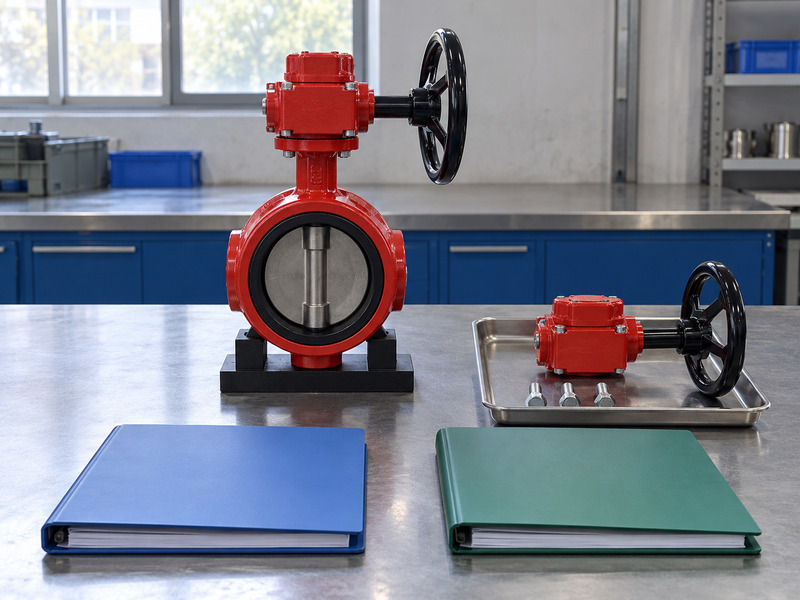
Val-Matic’s published inspection guidance discusses how a repair and its place in a test sequence can require other checks to be repeated. This is industrial-valve inspection guidance, not a universal supervisory-valve test program. Use the actual engineering decision, product instructions, and accepted ITP to determine the affected verification scope.
Link the new result with the original issue
Request a record of what changed, the accepted disposition, revised documents where applicable, and the results of the required reinspection. Preserve the earlier observation and the reason for the follow-up. If a gear, switch, mounting part, or valve component changes, identify which mechanical, electrical, pressure, or approval evidence needs renewed review.
- Record the action and the configuration after correction.
- Identify which prior results remain valid and which need further evidence.
- Keep the issue, disposition, reinspection, and closure decision linked.
| Follow-up record | Evidence to retain |
|---|---|
| Accepted action | What was authorized for the affected item |
| Change impact | Which requirements and earlier results were reviewed |
| Reinspection scope | Agreed method and acceptance basis |
| Closure | Results and responsible acceptance of the disposition |
Release review should be able to follow the issue from its initial observation through the accepted closing evidence.
8. Who can authorize the final factory release?
Name the person or function authorized to release the order at the butterfly valve with supervisory switch factory, and define the evidence that decision requires. Completing an individual inspection does not automatically authorize shipment. The release owner should review the agreed record package, outstanding exceptions, and applicable customer acceptance conditions.
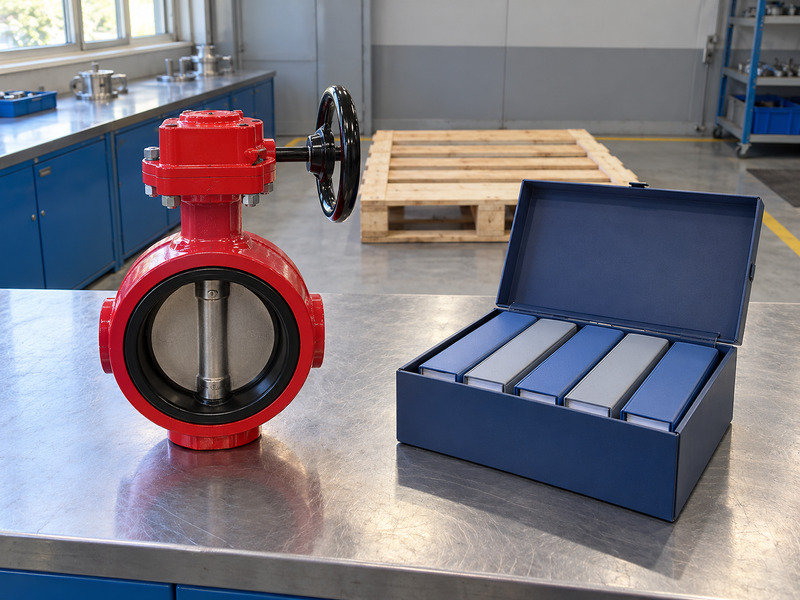
Specify how the ITP distinguishes factory review, customer or third-party involvement, and final release. Agree what happens when a required witness or document review remains outstanding. The contract should define the permitted decision route instead of leaving production or shipping personnel to interpret an empty approval field.
Make the release decision retrievable
Request a release record that identifies the covered order or products, applicable configuration, accepted inspection records, and any conditions attached to the decision. Include the closure status of relevant nonconformances and the disposition of remaining exceptions. A shipment date should follow the authorized release decision and agreed logistics conditions.
- Identify the release owner and the scope of that authority.
- Define the records and customer decisions needed for release.
- Retain the release status and any restrictions with the order.
| Release question | Required decision record |
|---|---|
| What is covered? | Product identities or defined order scope |
| What supports release? | Accepted record index and applicable revisions |
| What remains open? | Exceptions and their authorized treatment |
| Who approved it? | Responsible release identity and decision |
An unresolved mandatory record or acceptance condition needs a documented decision before the order advances to shipment.
9. What should packing and project handover preserve?
Packing and handover from a butterfly valve with supervisory switch factory should preserve the released configuration, protect the supplied items, and connect each packing reference with its documents. Agree the required hardware and document allocation before dispatch. The package should distinguish factory release evidence from the work still assigned to the project team.
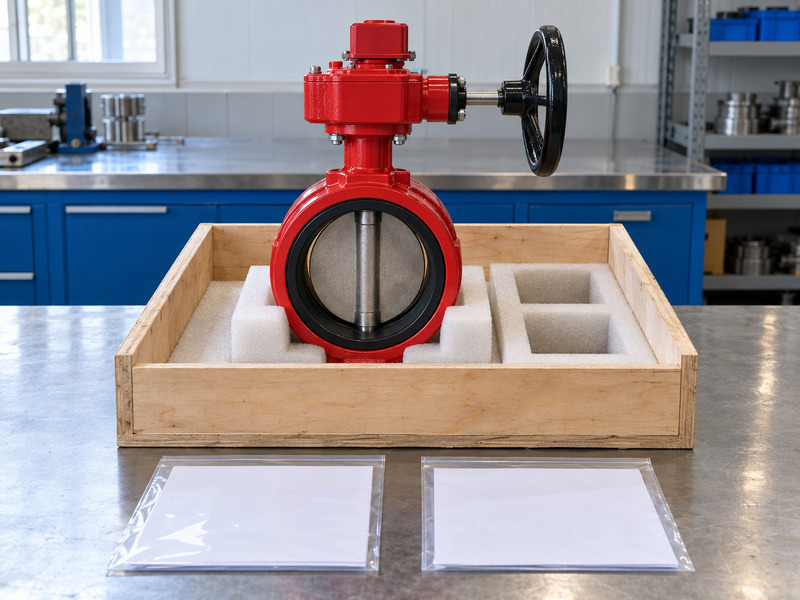
Request identification of the valve, operator, accessories, applicable instructions, agreed inspection records, accepted deviations, and relevant packing references. Define protection for exposed connection surfaces and vulnerable operator or enclosure parts within the packaging plan. Use the supplier’s actual identification system without assuming every item has an individual serial number.
State where the factory record ends and project verification begins
The receiving team needs to know which observations were made at the factory and which installed checks remain within the approved project plan. Assign responsibility for final asset identification, physical position, monitoring input and event verification, and restoration records. These activities belong to qualified authorized personnel using exact equipment instructions and project controls.
- Match packing contents with the released scope and record index.
- Include current instructions and the accepted configuration information.
- Identify project verification, acceptance, and handover responsibilities.
| Delivery element | Relationship to preserve |
|---|---|
| Packed equipment | Released product and accessory scope |
| Document package | Applicable versions and product-linked evidence |
| Accepted exceptions | Conditions the recipient must understand |
| Project responsibility | Remaining installed verification and acceptance |
Record the receiving party’s outstanding questions against the supplied asset so they can be resolved through the agreed project process.
10. What should buyers ask before agreeing the ITP?
Ask a butterfly valve with supervisory switch factory to define the applicable checks, records, exceptions, and release responsibilities before agreeing the ITP. The answers should describe the actual proposed order and its evidence boundaries. They should also identify what the factory cannot demonstrate about the installed monitoring system.
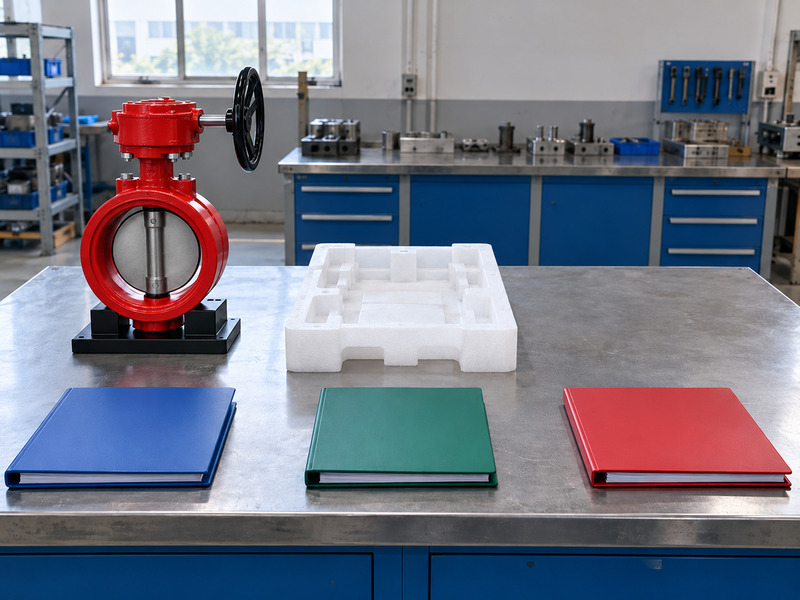
Q1. Does a product approval replace factory inspection records?
No. Product evidence defines its stated coverage, while factory records address the agreed checks on supplied items. Request both where required and keep their identities and scopes distinct.
Q2. Can a pressure report prove the supervisory function?
No. A pressure report supports only its recorded pressure-related scope. Mechanical supervision, contact behavior, and the selected input’s response require their own applicable evidence.
Q3. Should every order use the same factory test list?
No. Use the exact model requirements, accepted project specification, and contract to agree the methods, conditions, criteria, and involvement. A generic list cannot define every valve, accessory, or approval arrangement.
Q4. Is one repeat check enough after corrective work?
That depends on the accepted impact review. Identify the affected configuration and earlier results, then agree the necessary follow-up scope. Keep the correction, reinspection evidence, and closure decision together.
Q5. What should I send RUITO for an inspection-plan enquiry?
Provide the proposed assembly requirements, project quality specification, required documents, witness expectations, and release conditions. Ask RUITO to identify the valve-related inspection and record scope available for that proposal, including unresolved supervisory-package evidence and any contract exceptions.
To define that scope, contact us with the draft ITP and the required record index. Request a written response identifying the proposed evidence, responsible release owner, and verification that remains with the project team.