
How to Avoid Butterfly Valve Supervisory Switch Mistakes
A butterfly valve with supervisory switch combines a butterfly valve, its operating mechanism, and a switch that monitors departure from a specified normal position. A buyer can receive a valve that fits the pipe while still lacking evidence for its supervision function. Define the complete assembly, intended service, and acceptance records before requesting a firm offer.
1. What is a butterfly valve with supervisory switch?
A butterfly valve with supervisory switch is a valve assembly with separate mechanical and monitoring functions. The disc and seat provide the specified fluid isolation function; the handwheel or other operator moves the valve; the supervisory mechanism senses a defined position condition. The selected monitoring input and panel configuration determine how that condition appears to the system operator.
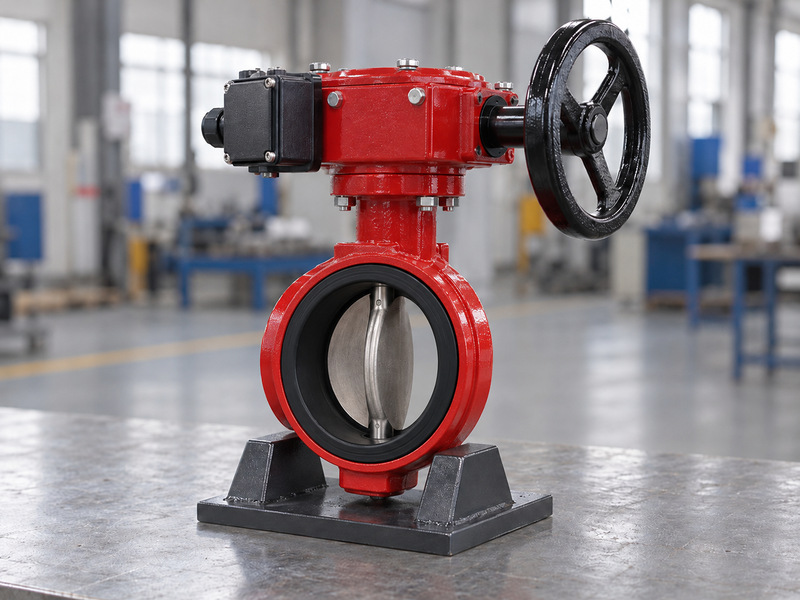
A gear-operated assembly can remain manually operated even when it has electrical contacts. Adding a position switch does not establish motor operation, automatic closure, or a defined response to loss of electrical power. Your specification should describe each required function without assuming that one accessory provides another.
Separate the valve, operator, and supervision roles
Ask the supplier to identify the sensing target and its mechanical relationship with the valve. A normal supervisory indication establishes only the condition covered by that arrangement. It does not establish available water, flow, an unobstructed passage, or seat tightness.
- Name the fluid isolation duty separately from position supervision.
- Identify manual or powered operation and any separately required controls.
- Record the monitoring function’s stated limits in the equipment schedule.
| Assembly element | Evidence to request | Review purpose |
|---|---|---|
| Valve | Exact data sheet and material schedule | Confirm the fluid boundary |
| Operator | Assembly drawing and operating limits | Confirm movement and fit |
| Supervision | Mechanism description and input requirements | Define the monitored condition |
An offer that describes only the valve body leaves the remaining functions open for clarification.
2. What belongs in the complete purchase specification?
A butterfly valve with supervisory switch specification should identify the complete supplied assembly and every interface left for others. Begin with the valve tag, service, connection, required normal position, and applicable project approval requirements. For a grooved connection, the grooved end butterfly valve range provides product context; the proposed supervisory configuration still needs written confirmation.
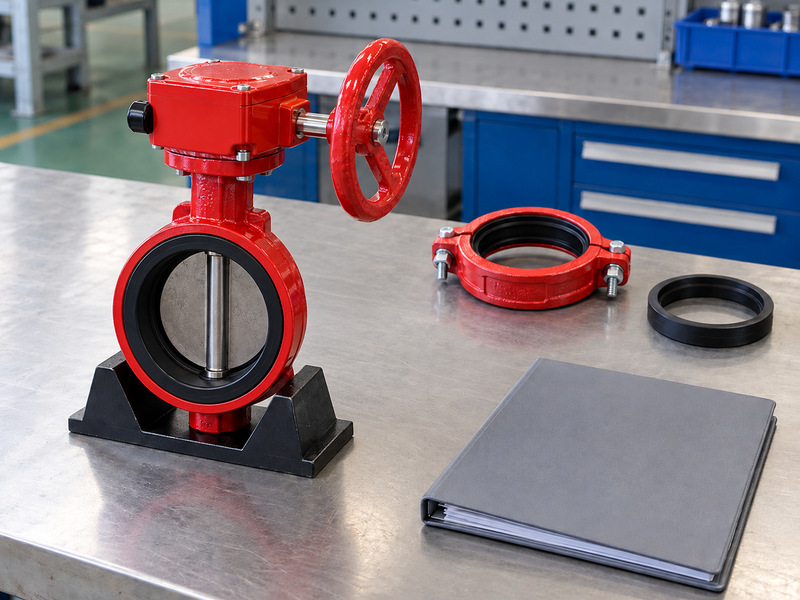
State whether the offer covers a complete assembled valve, a permitted accessory kit, or separate items. Then identify who supplies the coupling, gasket, electrical interface equipment, and project documentation. A photograph of an assembled product cannot settle these commercial boundaries.
Turn a product description into an order boundary
Give each requested document a purpose and a submission stage. A general arrangement drawing supports layout review before production, while product-linked inspection records support release. If a document remains unavailable, record the exception before award rather than leaving an empty cell that could be mistaken for acceptance.
- List included and excluded hardware against the same equipment tag.
- Require a dated technical response to each unresolved specification item.
- Identify document review, production release, and shipment milestones.
| Order item | Define in the enquiry |
|---|---|
| Supply unit | Complete assembly, approved kit, or separate parts |
| Site interface | Items and work assigned to other parties |
| Documents | Required content, revision, and submission stage |
| Exceptions | Written deviation and responsible reviewer |
The resulting order boundary gives purchasing a basis for comparing offers with different accessory and document scopes.
3. How should you define the valve’s normal position?
Define the normal position of a butterfly valve with supervisory switch from its intended service and the exact manufacturer’s permitted supervision arrangement. Write the physical valve condition in words and associate it with the project tag. Contact labels alone cannot define whether a valve is suitable for supervision in an open or closed position.
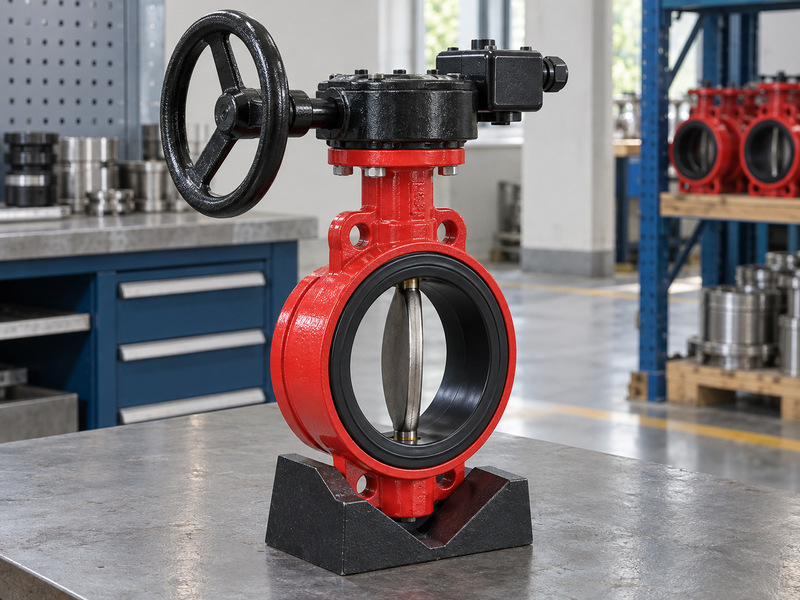
Manufacturer instructions can restrict the supervised position. For example, the Series 765/705 instructions limit those valves to supervision in the fully open position and distinguish the supervisory switch from an auxiliary switch. That limitation applies to those documented assemblies; obtain the corresponding instructions for the offered product.
Link normal service with the permitted mechanism
Ask the project designer to resolve any conflict between the service description and the supplied mechanism before purchasing. A normally closed duty may need a different documented arrangement. Changing a point description in a schedule cannot establish mechanical suitability or expand a manufacturer’s permitted use.
- Record the specified physical normal position for each tag.
- Identify the mechanism and document that support that position.
- Refer conflicting normal-position requirements for design review.
| Position record | What it establishes |
|---|---|
| Service schedule | The position required by the project |
| Manufacturer instructions | The position the exact mechanism can supervise |
| Approved point schedule | How the selected input represents that condition |
Agreement across these records avoids ordering an assembly whose monitored position conflicts with the intended service.
4. Which mechanical limits must the assembly meet?
A butterfly valve with supervisory switch must meet the specified fluid conditions, connection requirements, operating loads, and installation envelope as one assembly. Review pressure and temperature together for the proposed materials and seals. Include closing differential, flow direction where relevant, and the space required around the operator and enclosure.
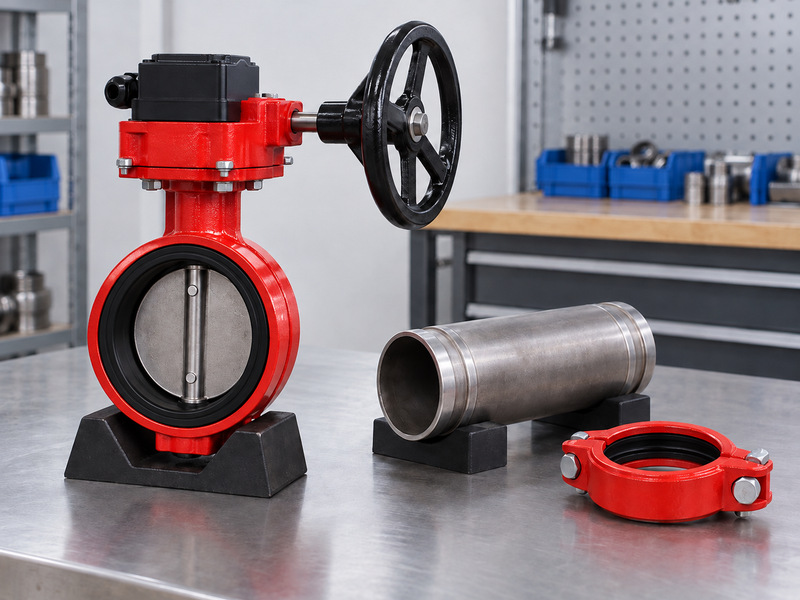
Connection details need their own review. A wafer butterfly valve sits between companion flanges, whereas a flanged butterfly valve has integral end flanges. Neither description establishes fire-service approval or interchangeability with a grooved assembly.
Review the connection and operating envelope together
For grooved ends, request the actual pipe outside diameter, groove profile, compatible coupling, and gasket requirements. Also check disc clearance and the complete operator envelope against adjacent piping and access restrictions. Ask the supplier to state the operating basis used for the selected gear and valve shaft connection.
- Submit the medium, simultaneous pressure and temperature, and closing duty.
- Provide the connection drawing and available installation space.
- Request the applicable valve and operator limits for that configuration.
| Review area | Drawing or data field | Conflict to resolve |
|---|---|---|
| Pipe interface | Actual mating dimensions | Nominal size alone |
| Disc travel | Opening envelope | Adjacent pipe obstruction |
| Operator access | Handwheel and enclosure clearance | Inaccessible operation or service |
Resolve a mechanical mismatch before using electrical compatibility as a reason to accept the package.
5. How do you verify the exact approved combination?
Verify a butterfly valve with supervisory switch against the approval evidence required for its actual valve, operator, switch, and permitted accessory combination. Ask for the identified manufacturer, model, sizes, ratings, and conditions of use. The project reviewer should compare that evidence with the offered assembly and the destination’s adopted requirements.
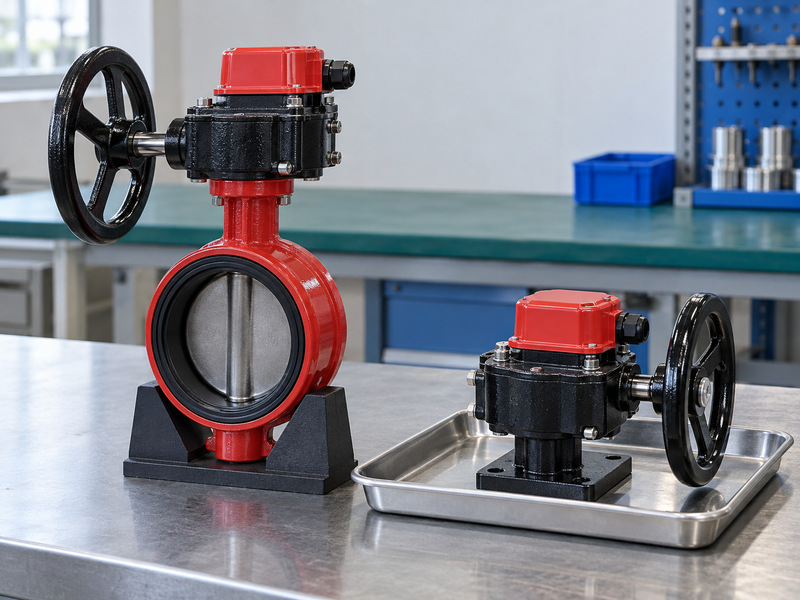
Use the issuing organization’s records where available. UL’s certification database guidance describes searches using identifiers such as file and assembly numbers and distinguishes product and component information. Record what the located entry covers before treating it as evidence for a complete valve package.
Match the offered assembly with the certification scope
A component certificate, quality-system certificate, or product-family brochure can support a review only within its stated scope. Require the supplier to explain how the proposed combination corresponds to the applicable product record and instructions. If the project calls for FM approval, request the corresponding current FM evidence as a separate item for review.
- Compare the offered identity with the identity in each approval record.
- Check covered sizes, ratings, accessories, and stated restrictions.
- Keep unresolved differences in the technical deviation register.
| Evidence offered | Procurement treatment |
|---|---|
| Exact product record | Check identity, scope, and conditions |
| Component documentation | Establish only the documented component scope |
| General marketing claim | Request the underlying product evidence |
| Unresolved configuration difference | Refer for acceptance before release |
Do not close the approval item while the supporting record describes a different assembly.
6. What electrical inputs should the buyer request?
The buyer should request the contact characteristics, intended monitoring interface, environmental limits, and exact electrical documentation for a butterfly valve with supervisory switch. The electrical designer needs the switch details alongside the selected input equipment and panel requirements. Keep the contact’s switching ratings separate from any supply needed by other equipment.
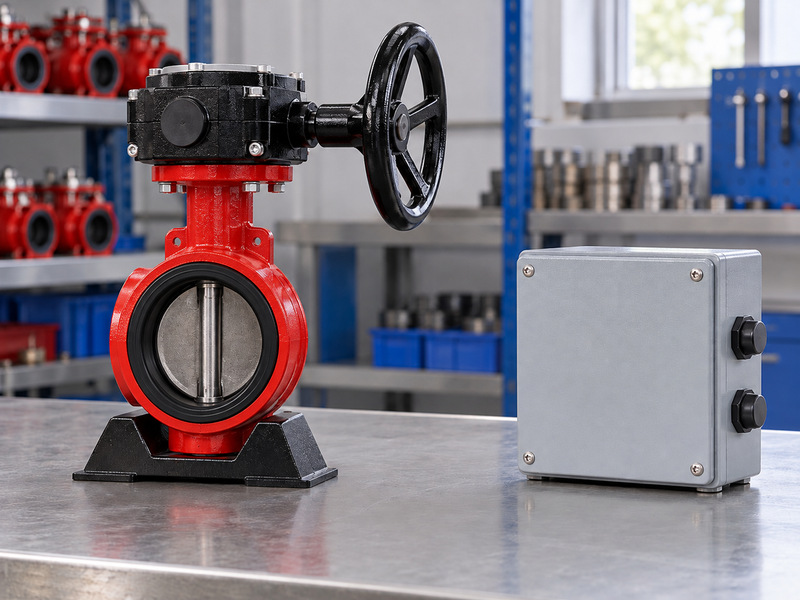
Ask the supplier to identify which output performs valve supervision and whether other contacts have a different assigned purpose. Request the applicable rating conditions, enclosure information, cable-entry details, and revision-controlled instructions. The responsible electrical specialist should confirm compatibility with the actual monitoring input.
Request an interface definition before a connection detail
Keep the enquiry at the level of required information. Wire colours, terminal assignments, circuit supervision arrangements, and permitted loads belong to the exact equipment documentation and approved project design. A contact rating printed on one switch cannot define a universal operating voltage for every supervised valve.
- Identify the supervisory output and any separately specified auxiliary function.
- Obtain rating conditions and the relevant enclosure and entry requirements.
- Name the party responsible for input and panel compatibility review.
| Electrical submittal field | Required clarification |
|---|---|
| Contact function | Which output fulfils the specified supervision role |
| Rating basis | Conditions attached to the stated electrical limits |
| Monitoring interface | Exact equipment and responsible compatibility reviewer |
| Documentation | Applicable model instructions and drawing revision |
An electrical submittal remains open until a reviewer can connect the documented output requirements with the selected input requirements.
7. Which evidence belongs at each acceptance stage?
Acceptance evidence for a butterfly valve with supervisory switch belongs at three distinct stages: design suitability, factory release, and project site acceptance. Each stage answers a different question. A factory pressure record cannot establish the installed monitoring response, while a panel indication cannot establish the valve’s pressure boundary performance.
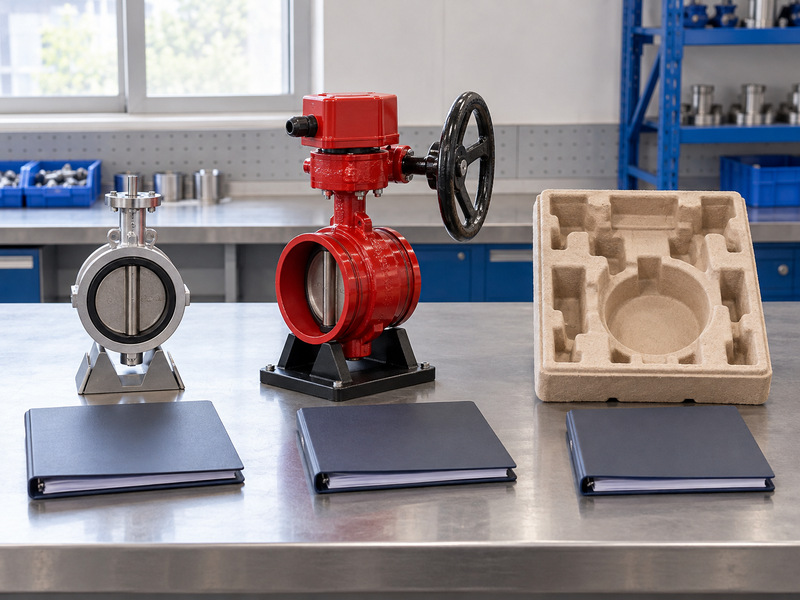
Before production, review the proposed assembly documents and applicable approval evidence. At factory release, request the agreed product-linked inspection and functional records, with acceptance criteria and any deviations. Define required witnessing and document submission in the inspection plan rather than assuming a standard package includes them.
Assign each claim to the record that can support it
Site acceptance requires the qualified project team to assess the installed equipment under its approved plan and manufacturer instructions. The record should connect the identified valve, observed physical position, designated input, and resulting event. It should also identify the responsible party’s acceptance and any outstanding restrictions.
- Define which records establish suitability before manufacturing release.
- Separate agreed factory inspections from installed-system verification.
- Record limitations when a result covers only part of the required function.
| Stage | Question answered | Record focus |
|---|---|---|
| Design review | Is this configuration suitable? | Approved documents and scope |
| Factory release | Does the supplied item meet agreed checks? | Product identity and inspection results |
| Site acceptance | Does the installed arrangement meet the approved plan? | Asset, observations, input, event, acceptance |
Keep all three stages visible in the document index so a missing result remains apparent.
8. Who owns the interfaces before site acceptance?
Assign each interface for a butterfly valve with supervisory switch to a named supplier or qualified project party before production release. The valve supplier, mechanical designer, electrical specialist, and accepting authority may have different responsibilities. Procurement should record who submits information, who reviews it, and who can approve a deviation.
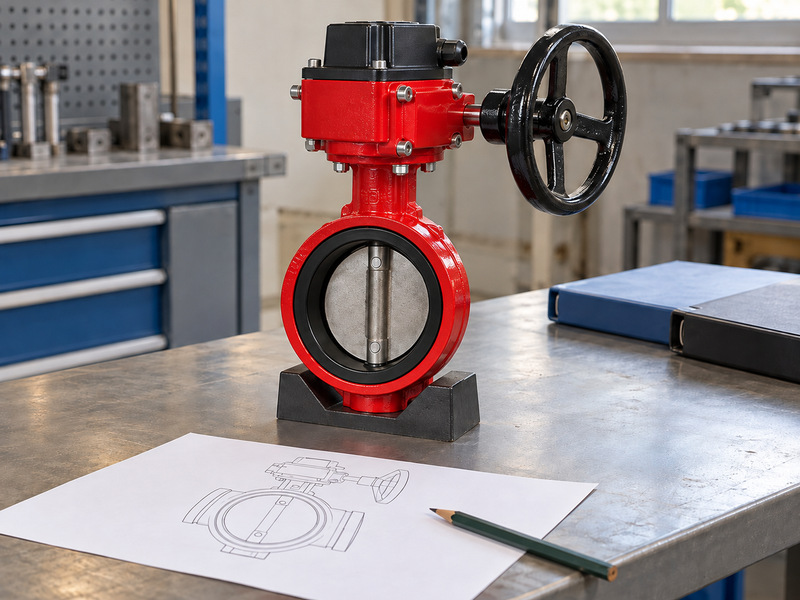
Include the equipment tag and deliverable in every responsibility entry. “Electrical by others” is too broad if nobody owns input compatibility or the point schedule. The same problem occurs when the coupling is excluded without identifying who checks it against the valve ends and system requirements.
Use a responsibility register with decision points
Agree how the team will resolve interface conflicts and preserve the accepted decision. Valve movement, enclosure access, circuit disturbance, and tests on a fire-protection installation require qualified, authorized personnel and the applicable project controls. A procurement article does not provide permission for those activities.
- Name the submitter and reviewer for every interface document.
- Identify who accepts deviations before production or shipment.
- Assign site acceptance and restoration records to the project team.
| Interface decision | Party to identify | Required output |
|---|---|---|
| Mechanical fit | Mechanical reviewer | Accepted assembly drawing |
| Monitoring compatibility | Electrical specialist | Reviewed input definition |
| Product evidence | Supplier and project reviewer | Closed approval or deviation item |
| Installed acceptance | Authorized project team | Signed asset-linked record |
A named reviewer and a defined output make exclusions manageable during procurement.
9. What must stay linked after handover or a change?
Keep the asset identity, approved assembly revision, product records, point schedule, and accepted observations linked throughout the life of a butterfly valve with supervisory switch. A replacement gear, switch, bracket, or valve can affect those relationships. Review the proposed change against the applicable instructions and approval scope before accepting it.
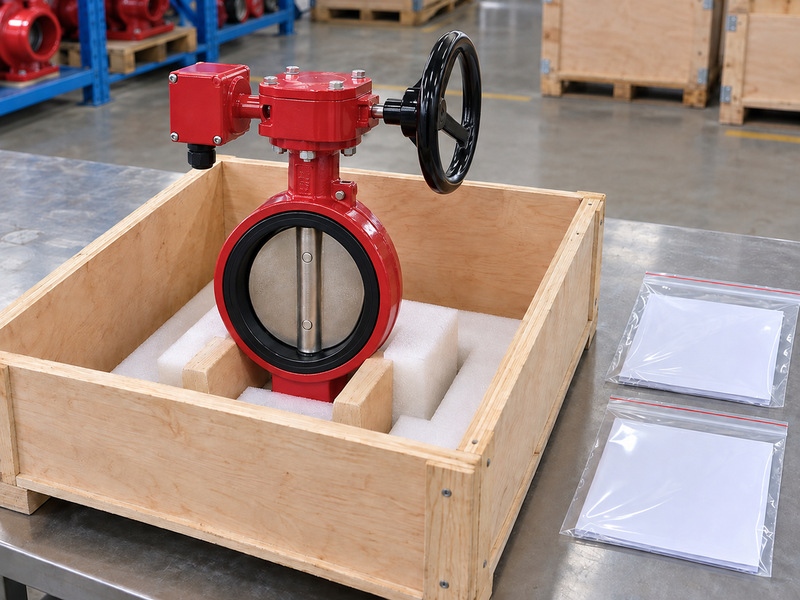
At handover, collect the final equipment schedule, applicable instructions, agreed inspection records, installation drawings, and accepted deviations. Use the supplier’s actual product identification system, whether individual identification, batch linkage, or another documented method. Do not assume every item has the same serial-number format.
Preserve the accepted configuration with the asset record
After an authorized change, update the affected documents and retain the acceptance and restoration evidence for that asset. The final record should connect physical position with the designated input and event, plus the responsible party’s receipt. Clearing a display alone does not establish restoration of the required protection.
- Keep superseded and current revisions distinguishable.
- Record what changed, its approval, and the affected equipment identity.
- Retain final position, input, event, and acceptance observations together.
| Change | Records to review for impact |
|---|---|
| Valve or operator | Assembly identity, fit, and product approval scope |
| Switch or mounting | Permitted mechanism and supervision function |
| Monitoring equipment | Input definition and point schedule |
| Asset relocation | Location, service description, and acceptance record |
Specify this record handover before shipment so the operating team receives the accepted configuration with the equipment.
10. What else should buyers ask before ordering?
Before ordering a butterfly valve with supervisory switch, settle any uncertainty about supply scope, supported normal position, required evidence, and project responsibilities. These questions help you identify what remains open before issuing a purchase order.
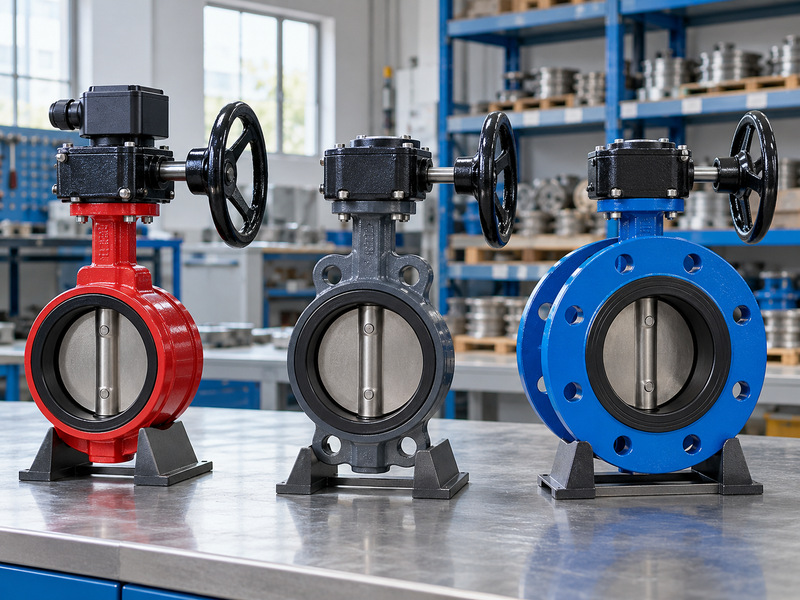
Q1. Can I order from a valve photograph alone?
No. Request the exact assembly identity, data sheet, connection drawing, instructions, and applicable approval evidence. A photograph can show appearance and some visible features, but it cannot establish the internal mechanism or covered configuration.
Q2. Can I specify a normally closed valve?
Only with a documented arrangement that supports the required service and supervised position. Ask the manufacturer and project designer to confirm suitability before purchase. A contact label cannot establish that permission.
Q3. How do I know whether the offered approval covers my order?
Compare the identified assembly with the current product record and its conditions. Refer differences in model, size, rating, operator, switch, or accessories to the responsible reviewer. Keep the item open until that reviewer accepts the evidence.
Q4. Can I accept a factory report instead of site acceptance?
No. A factory report covers its stated checks and conditions. The project team still needs the agreed evidence for the installed asset, monitoring interface, event response, and restoration under the approved acceptance plan.
Q5. What should I send RUITO for a configuration review?
Send the valve schedule, medium, pressure and temperature conditions, connection details, intended normal position, monitoring requirements, and required approval documents. RUITO can review the valve requirement and document scope; availability of the specific supervisory configuration and its approval evidence must be confirmed for the proposal.
For a scoped quotation, contact us with those documents and the unresolved technical items. Request written confirmation of the proposed assembly, exclusions, and available evidence before releasing the order.