
You can avoid China butterfly valve supplier buying mistakes by verifying who controls production, freezing the approved configuration, and linking shipment release to inspection records. A low quotation becomes expensive when a replacement valve misses its flange connection or a production batch arrives with a different seat compound. Choose a China butterfly valve manufacturer through a documented sample, process review, and delivery plan before committing your installation schedule.
1. Which China butterfly valve manufacturer fits your order?
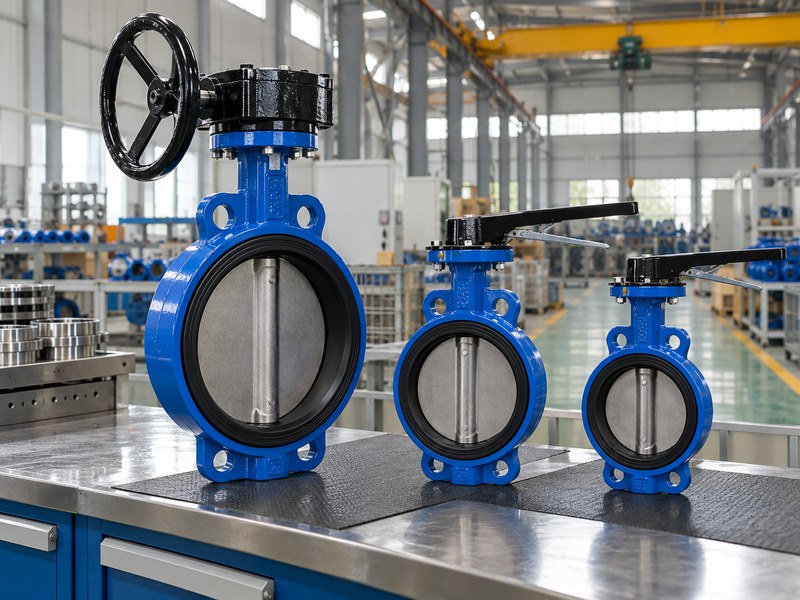
The right China butterfly valve manufacturer can support your exact valve configuration, inspection scope, and order pattern. A distributor replenishing standard water valves needs repeatable stock specifications; an equipment builder needs stable interfaces and controlled changes. A large water transmission project needs a separate review of machining, lifting, test fixtures, and transport.
Match the quotation to your purchasing task
- Give the complete fluid composition, operating temperature, pressure, and maximum closing differential.
- Identify the connection, face-to-face dimension, disc clearance, and operating method.
- State destination requirements, inspection points, quantities, and phased delivery dates.
RUITO manufactures and supplies fluid control products from Shijiazhuang, China, and was established in 2011. Its stated organization includes 96 employees, eight engineering staff, six quality staff, and approximately 12,000 square metres of factory buildings. Those facts help define the audit scope; your decision still needs records for the offered product.
| Purchase pattern | Evidence to request | Decision point |
|---|---|---|
| Stock replenishment | Exact SKU and batch ledger | Available configuration matches |
| Repeating OEM order | Frozen drawing and parts list | Production matches sample |
| Large project valve | Resource and inspection plan | Required operations are scheduled |
Compare technically compliant offers on landed cost after identifying any required testing or documentation charges.
2. How do you verify a China butterfly valve manufacturer's site?
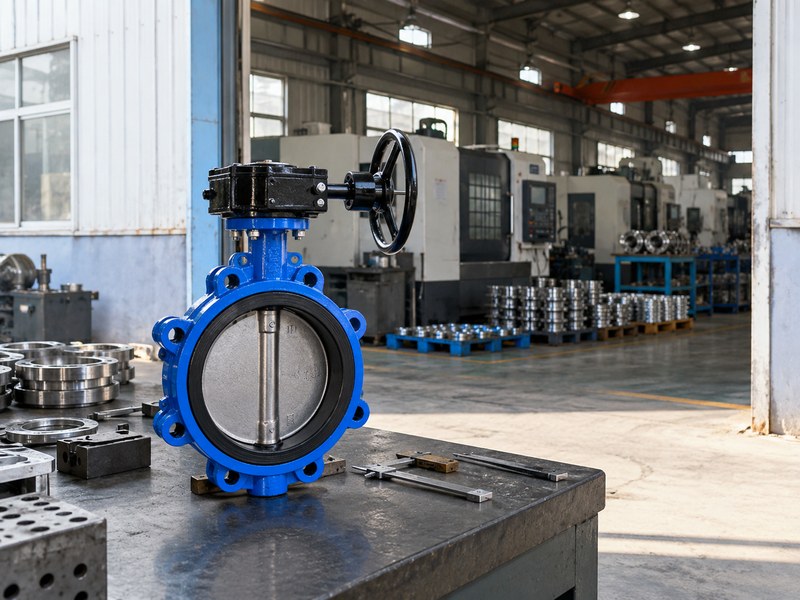
Verify the site by following a selected product through its production and inspection records with the China butterfly valve manufacturer. A factory video becomes useful when you choose the product identification number and ask staff to retrieve its drawing, material batch, work order, and test record. A prepared tour alone cannot establish control of your order.
Follow one valve through the records
- Match the contracting company, factory address, and responsible production contact.
- View machining, assembly, inspection, storage, and segregation areas relevant to your valve.
- Ask how rejected parts remain separated from released stock.
Request a live demonstration of a measuring instrument or pressure test arrangement used for the offered size. Confirm calibration status and ask who can stop production or shipment when a result fails. If another company performs a critical operation, record that boundary and the supplier's incoming acceptance responsibility.
| Audit check | Useful evidence | Unresolved issue |
|---|---|---|
| Site identity | Address and operating records | Contract and production mismatch |
| Process control | Current work instructions | Staff use obsolete drawings |
| Product traceability | Linked material and test records | Identification stops at assembly |
Close gaps with documents or a follow-up inspection before approving the site for your purchasing scope.
3. Which casting and machining checks matter?
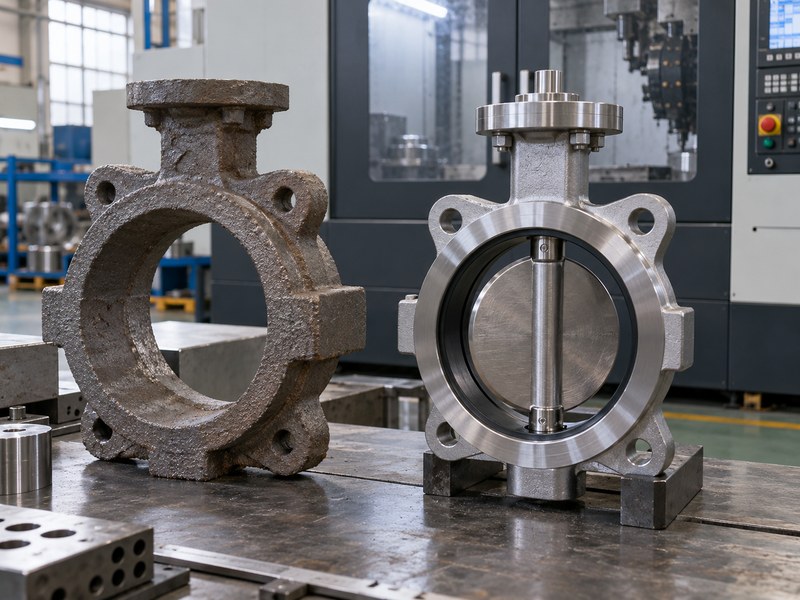
Casting identity, pressure boundary condition, and finished interface dimensions deserve priority when evaluating a China butterfly valve manufacturer. A body that passes a pressure test can still have incorrect flange drilling or insufficient disc clearance. Check material and geometry through separate acceptance steps so one result does not hide another defect.
Inspect before assembly conceals the surfaces
- Link the body material certificate and heat identification to the production batch.
- Check casting condition and specified wall dimensions before coating.
- Measure shaft bores, seating surfaces, flange features, and face-to-face length against the approved drawing.
Your drawing should name the datum surfaces and tolerances used for machining and inspection. Ask how the supplier checks bore alignment and repeatability after tool changes. For a wafer valve, use the actual mating flange bore and pipe geometry when reviewing disc travel; a nominal pipe size alone leaves that clearance unresolved.
| Feature | Procurement check | Possible consequence |
|---|---|---|
| Body material | Grade and heat linkage | Unapproved material supplied |
| Shaft alignment | Drawing-based measurement | Uneven seat loading |
| Face-to-face | Approved interface dimension | Pipework cannot close correctly |
| Disc envelope | Mating bore clearance | Disc contacts adjoining pipe |
Approve a dimensional report with actual readings rather than a checklist containing only acceptance ticks.
4. How should outsourced processes be controlled?
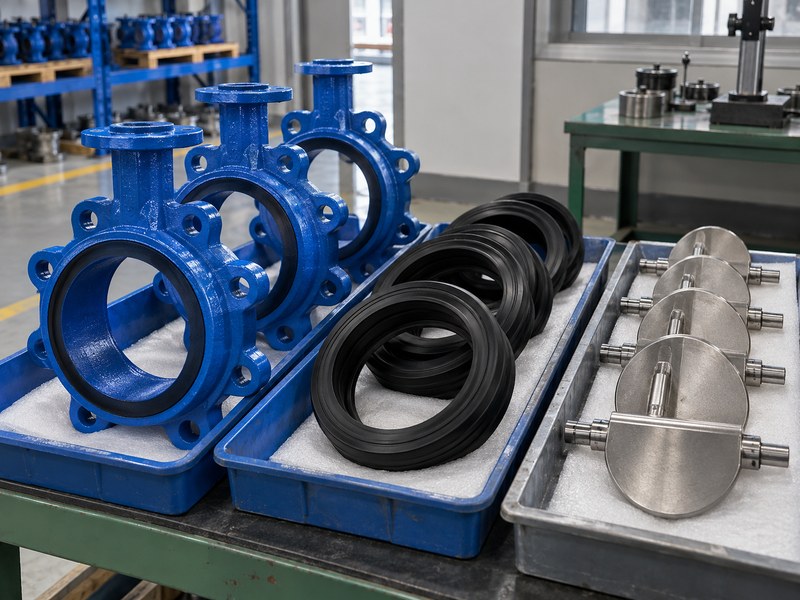
Outsourced processes should remain under the China butterfly valve manufacturer's purchasing, inspection, and change control system. Casting, elastomer production, coating, or actuator supply may involve specialist partners. Your contract should identify who approves those partners and who accepts their work before the parts enter assembly.
Define responsibility at each handover
- Specify the approved material or process requirement on purchase documents.
- Require batch identification to survive transport between facilities.
- Set incoming checks and rules for deviations or rework.
Ask for an example showing a subcontractor's report linked to a finished valve. For a rubber seat, that link should identify the compound and batch, not merely say EPDM or NBR. For a coated casting, agree which facility records surface preparation, application, curing, and repair acceptance.
| External process | Supplier control | Release record |
|---|---|---|
| Casting | Grade, drawing, foundry acceptance | Heat and inspection linkage |
| Seat manufacture | Approved compound and geometry | Compound batch and dimensions |
| Coating | Approved process and application limits | Preparation and inspection log |
| Actuator supply | Model and output requirements | Identified configuration |
Make a change of subcontractor a review trigger where it could affect material, fit, performance, or destination approval. Agree the notification route before production starts.
5. What freezes the sample and production versions?
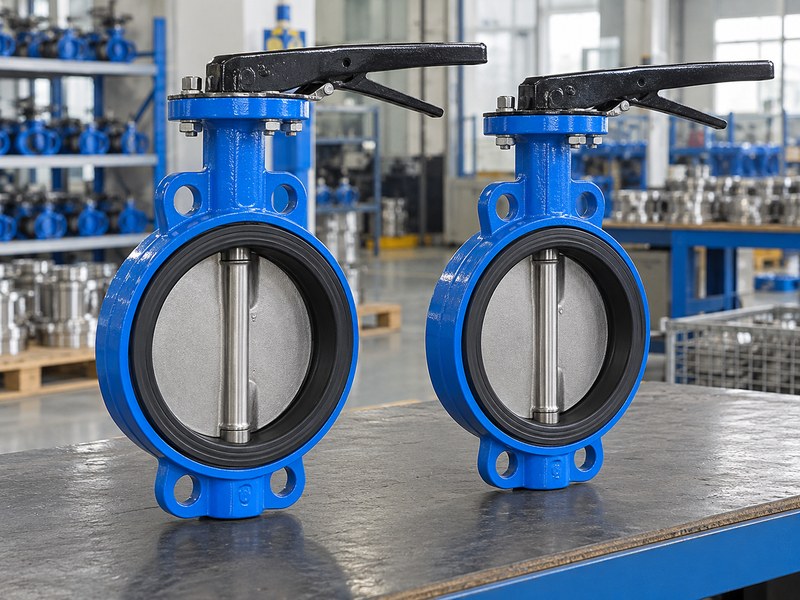
A signed drawing, bill of materials, inspection plan, and approved sample record freeze the version supplied by a China butterfly valve manufacturer. A sample on your desk leaves too much unspecified if its seat compound, shaft details, coating system, or actuator revision never enters controlled documents. Record those details before authorizing the production order.
Make the sample approval reproducible
- Give the accepted sample a traceable product identification number.
- List approved deviations and close outstanding installation or test issues.
- Define which changes require written customer approval and revalidation.
Tie the production order to specific document revisions and their effective batch. If a replacement seat supplier or coupling design becomes necessary, review the effect on torque, leakage, dimensions, maintenance, and applicable approvals. Verbal assurances that a replacement is equivalent cannot replace that engineering decision.
| Frozen item | Required identification | Repeat-order check |
|---|---|---|
| Interface drawing | Drawing number and revision | Same mounting envelope |
| Materials | Controlled parts list | Same approved compounds |
| Test plan | Method and acceptance revision | Same release criteria |
| Change notice | Approval and effective batch | No mixed versions |
Keep the accepted sample and its inspection package available until your repeat-order process has demonstrated consistent results.
6. How do you compare seat and lining options?
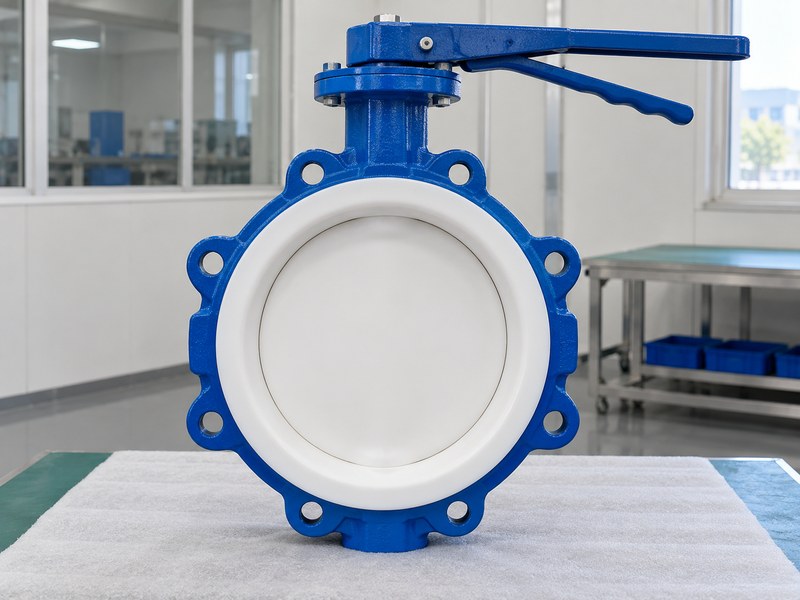
Compare seat and lining options against the complete fluid duty with your China butterfly valve manufacturer. RUITO's water configurations use EPDM, while compatible high flash point mineral oil requires a separately reviewed NBR configuration. PTFE and PFA lined valves have their own pressure, temperature, size, backing, and shaft-seal limits.
Request the entire wetted material list
- Include additives, cleaning chemicals, concentrations, and temperature excursions.
- Identify every wetted metal, elastomer, lining, backing, and shaft seal.
- Check differential pressure and minimum absolute pressure where relevant.
Do not combine the highest temperature from one configuration with the pressure limit of another. A lining material name alone also leaves its continuity and local minimum thickness undefined. For PFA, confirm whether both body lining and disc covering use PFA or whether only the disc has that covering.
| Configuration | Suitable review starting point | Additional check |
|---|---|---|
| EPDM water valve | Defined clean water duty | Compound and contact requirements |
| NBR oil valve | Compatible mineral oil | Additives and swelling |
| PTFE lined valve | Specified chemical solution | Lining, backing, shaft seal |
| PFA lined valve | Separate approved chemical configuration | Full wetted construction |
Ask for a written response to your actual fluid data rather than accepting a general chemical-resistance description.
7. Which coating checks belong in the order?
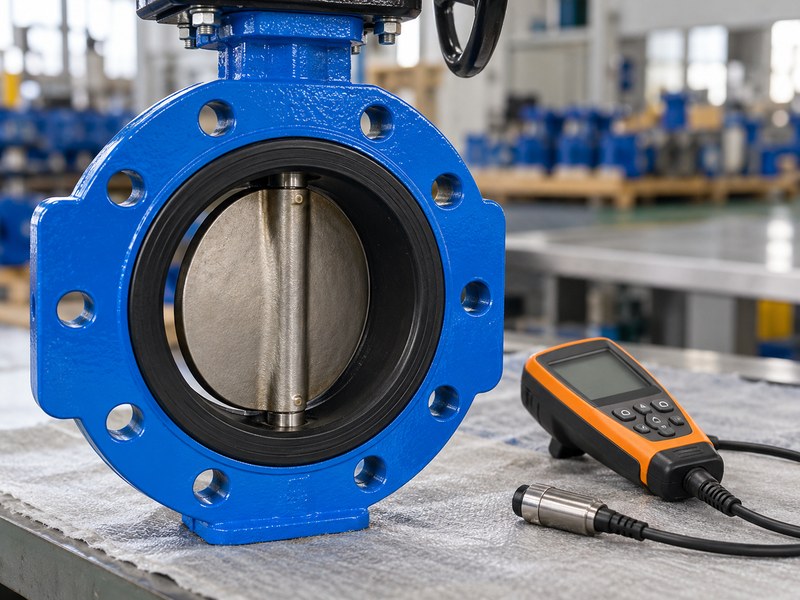
Your order should define surface preparation, coating system, thickness acceptance, curing, and repair rules for the China butterfly valve manufacturer. Paint colour cannot establish corrosion protection or drinking-water suitability. Internal wetted coating and external atmospheric coating may need different evidence because they experience different exposure.
Specify inspection before choosing the colour
- State the internal fluid and external environment separately.
- Identify surfaces that must remain uncoated, including functional fits.
- Require recorded checks at accessible locations and agreed treatment of defects.
Agree the coating product, preparation procedure, application conditions, and acceptance method before bodies reach the coating station. Where drinking-water contact applies, check the exact coating, elastomer, lubricant, product configuration, and approved temperature scope. A management system certificate does not establish product contact approval.
| Order detail | Record to review | Acceptance question |
|---|---|---|
| Preparation | Inspection before application | Was the specified condition achieved? |
| Thickness | Measured locations and readings | Are local limits satisfied? |
| Cure | Process record | Was the approved procedure followed? |
| Repair | Defect and repair report | Is the repaired surface accepted? |
Inspect flange faces, bolt holes, and handling points after final assembly because later operations can damage an accepted coating.
8. What should a witnessed factory test record?
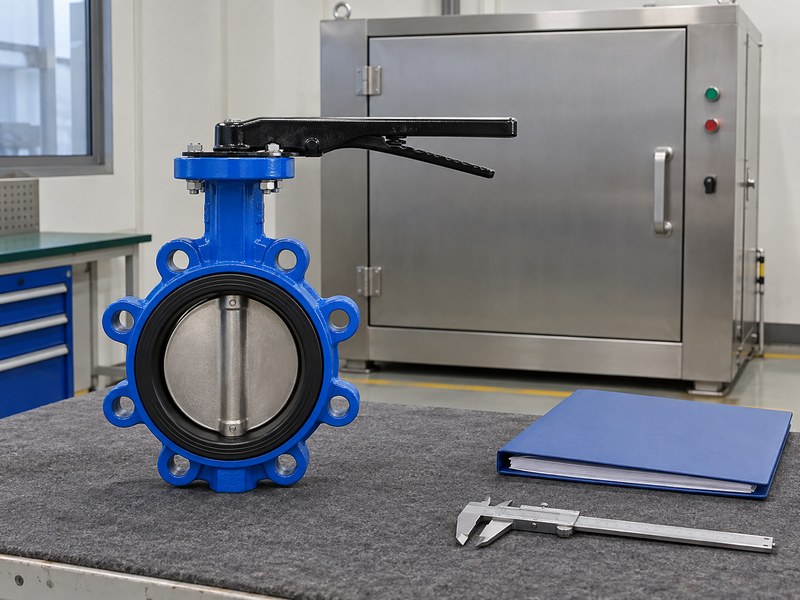
A witnessed test should record the valve identity, approved method, test conditions, measured results, and disposition from the China butterfly valve manufacturer. Agree the inspection and test plan before issuing a witness notice. Distinguish pressure integrity, seat closure, dimensions, and operating function because each answers a different acceptance question.
Witness the specified configuration
- Record pressure, medium, direction, duration, and leakage criterion.
- Identify gauges, calibration status, test personnel, and witness attendance.
- Link failures, repairs, and repeat tests to the same product.
For RUITO's applicable PN16 soft seated water configurations, 24 bar shell and 17.6 bar closure pressures are inspection inputs subject to the approved method and seat differential rating. They do not become operating pressure ratings. Large double offset valves also require the declared reverse differential and the suitable fixture arrangement.
| Test activity | What it establishes | What needs separate evidence |
|---|---|---|
| Shell pressure | Pressure boundary integrity | Working pressure-temperature limits |
| Seat closure | Leakage under stated conditions | Other directions or fluids |
| Operating check | Travel and mechanical function | Required duty-cycle performance |
Release the test record only after the inspector closes deviations and identifies any remaining shipment hold points.
9. How does a China butterfly valve manufacturer prove capacity?
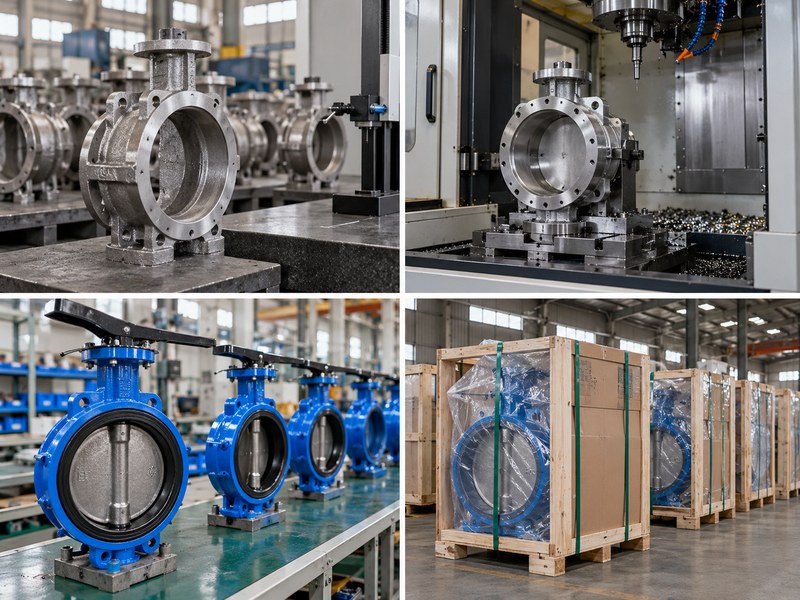
Verify capacity through allocated process time and material availability with the China butterfly valve manufacturer. RUITO's approximately 20,000-unit annual schedule covers a mixed group of established small and medium butterfly valves, resilient seated gate valves, check valves, and Y strainers. It is not an exclusive butterfly valve production figure.
Build dates around the constrained operations
- Confirm raw materials and exact released stock by configuration and batch.
- Reserve machining, coating, assembly, inspection, and witness slots.
- Separate factory release from freight, customs, and arrival commitments.
RUITO states typical mature small and medium batches take 30–50 days after required conditions are complete; lug, flanged, U-type, and grooved butterfly configurations typically take 35–60 days. Large double offset butterfly valves need their own 60–180-day planning review. Treat these as enquiry starting points until your order has an accepted schedule.
| Supply route | Evidence before committing | Schedule exposure |
|---|---|---|
| Existing stock | Exact available SKU and reinspection | Previously allocated stock |
| Mature production | Material and operation reservations | Queue or witness delays |
| Large project | Dedicated equipment and fixture plan | Machining, lifting, transport |
Count shared stock and manufacturing resources once when evaluating several configurations in the same order.
10. What should arrive with the shipment?
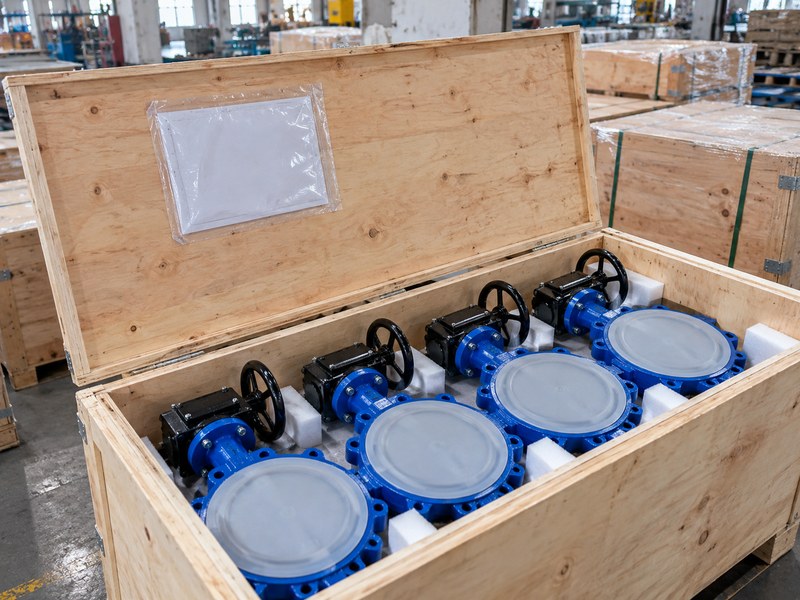
The shipment should include identified valves, protective packaging, agreed quality records, and matching export documents from your China butterfly valve manufacturer. Before dispatch, reconcile product identification numbers, customer part numbers, quantities, and box numbers. Resolve document discrepancies while the goods remain accessible at the factory; contact us to request a configuration review.
- Check the invoice, packing list, and required transport documents against the order.
- Receive approved drawings, inspection records, operating instructions, and spare-parts information.
- Agree how missing items or transit damage will be recorded on arrival.
Questions buyers ask before release
Q1. Can I approve a supplier through a video call?
You can use video for initial verification. Choose a product identification number yourself and follow its records; arrange further inspection where the order risk or project requires it.
Q2. What is the best way to verify ready stock?
Request the exact configuration, quantity, batch, allocation status, and reinspection date. A shared warehouse total cannot establish availability for your order.
Q3. How do I know if production matches my sample?
Compare document revisions, materials, dimensions, and test results with the accepted sample package. Require approval before a supplier changes controlled components.
Q4. Can a water pressure report approve chemical service?
No. Chemical service also needs compatibility and construction review for the actual solution, temperature, lining, backing, and seals.
Q5. Can I request inspection before paying the balance?
Yes, if your contract includes that release condition. Agree notice periods, access, acceptance documents, and responsibility for resolving defects before ordering.
Send RUITO your valve schedule, fluid data, mating flange drawing, destination requirements, and required arrival date. Request an engineering review covering the proposed configuration, exceptions, inspection records, and factory release milestones before you authorize production.