
Coated disks for butterfly valves use a protective surface over a load-bearing metal component. The coating must suit the fluid and remain compatible with the valve’s geometry and sealing system. If a quotation says only nylon coated or chemical resistant, ask for the actual material, coverage and service limits before buying. Compare the complete protective construction and its acceptance requirements.
1. How do coated disks for butterfly valves differ?
Coated disks for butterfly valves differ in substrate, protective material, thickness, coverage and manufacturing method. A thin metallic deposit, a polymer coating and a moulded fluoropolymer covering are different constructions. Their appearance does not define their limits. Ask the supplier to identify the construction rather than grouping every protective surface under one coating label.
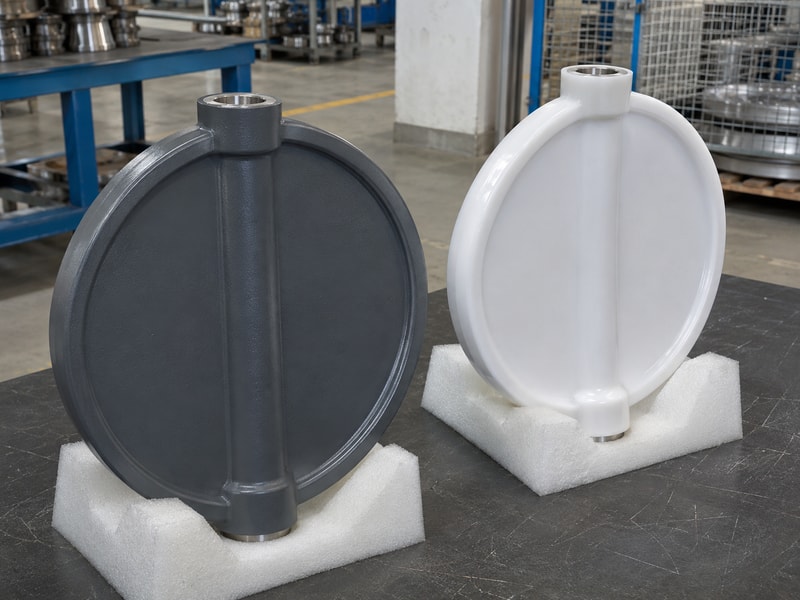
Specify the protection you need
Define the intended fluid barrier, mechanical duty and inspection requirements. Check how the protective layer meets the sealing edge and shaft region. The full butterfly valve assembly still needs suitable seat and seal materials.
A protected disk cannot establish compatibility for exposed parts elsewhere in the flow passage. Compare offers using a controlled section and material list so the supplier’s proposed boundary is clear.
- Name the metal substrate and protective material.
- Define the extent of wetted coverage.
- Request the applicable operating limits.
| Construction | Description to request | Separate concern |
|---|---|---|
| Metallic plating | Deposit material and process | Coverage and acceptance |
| Polymer coating | Formulation and application | Adhesion and geometry |
| Encapsulation | Covering and backing arrangement | Complete isolation boundary |
Use those construction differences when comparing prices and service claims.
2. When do coated disks for butterfly valves use nylon?
Nylon-type coated disks for butterfly valves need a specification for the actual polymer system and its approved application. The generic name does not establish suitability for a fluid, cleaning chemical or temperature. Request the substrate preparation, coverage and finished dimensions. Include the seat-contact region in the review because the finished disk must still match its seat.
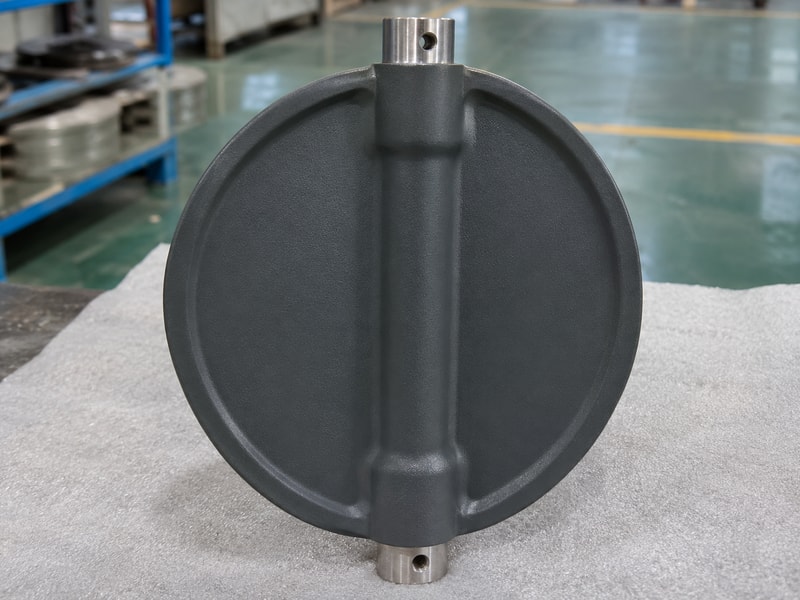
Check the finished construction
Agree on how thickness and surface condition will be checked at the relevant locations. Ask how the supplier controls handling damage and proposed repairs. Drinking-water use requires documentation covering the actual offered construction and contact materials.
A statement that nylon is suitable for water cannot replace that evidence. Keep any application-specific approval attached to the named model, formulation and operating conditions in the quotation.
- Request the specified coating system.
- Confirm its approved service and temperature range.
- Define inspection and repair acceptance.
| Question | Needed response | Incomplete answer |
|---|---|---|
| Which coating? | Named system and specification | Nylon finish |
| Where applied? | Defined coverage | Coated disk |
| Which service? | Configuration-specific limits | General water use |
Approve the actual coating specification before accepting a production sample.
3. How is plating checked on coated disks for butterfly valves?
Metal-plated coated disks for butterfly valves need defined deposit material, substrate and acceptance criteria. A bright finish cannot establish plating thickness or continuity. It also cannot identify the underlying alloy. Review how the coating will perform at the sealing surface, shaft connection and other exposed transitions in the stated fluid.
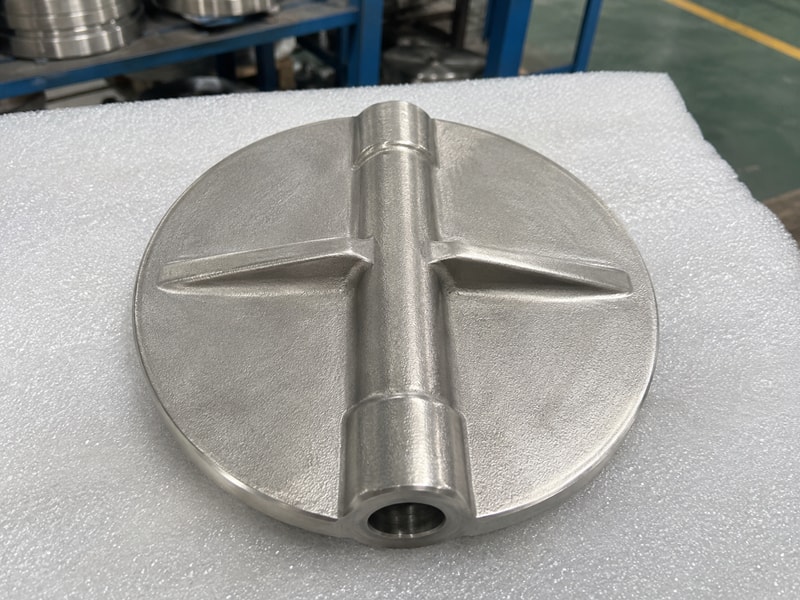
Identify the inspection method
Request the specified surface preparation, deposit requirements and permitted defects. Any thickness or integrity check must use a method suitable for the particular coating and substrate. Establish whether the method covers the relevant geometry rather than only a convenient flat test area.
If separate process coupons are used, define what they demonstrate and what still needs inspection on the finished part. Keep the original process and component records linked.
- Identify substrate and deposited metal separately.
- Define the required inspection locations.
- Agree on defect limits and any approved repairs.
| Item | Evidence | What appearance cannot prove |
|---|---|---|
| Substrate | Material identification | Alloy grade |
| Deposit | Process specification | Thickness |
| Finished surface | Defined inspection result | Full service compatibility |
Review the plating against the specified duty and acceptance procedure.
4. When do coated disks for butterfly valves need PTFE?
Fluoropolymer-covered coated disks for butterfly valves require a review of the complete wetted barrier. Identify whether the disk covering is PTFE or PFA and how it continues around the edge and shaft region. Check the body’s lining and the backing materials separately. A protected disk paired with an unsuitable exposed component leaves the assembly unresolved.
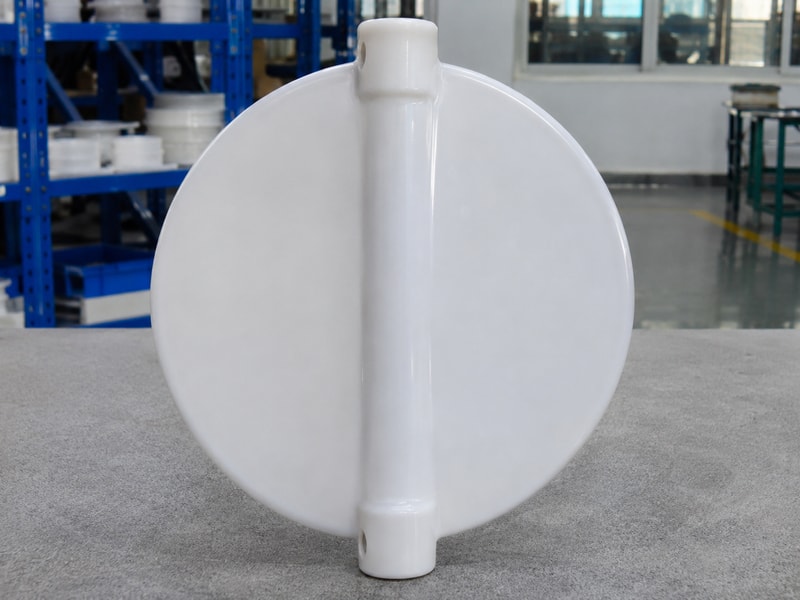
Keep mixed-material assemblies explicit
RUITO distinguishes its PTFE lined butterfly valve from its PFA lined butterfly valve. The material list must identify the disk covering and body lining independently. A PFA-covered disk with a PTFE seat is a mixed construction and should be described that way. Request the controlled section, required thickness limits and the specified integrity checks for the exact assembly offered.
- Identify disk covering and body lining separately.
- Review edges, shaft seals and backing materials.
- Confirm the actual chemical-service envelope.
| Protective boundary | Drawing should show | Acceptance should address |
|---|---|---|
| Disk perimeter | Continuous covering | Geometry and condition |
| Shaft region | Seal and material arrangement | Exposure and integrity |
| Body passage | Extent of lining | Complete construction |
Keep resin names tied to their actual position in the assembly.
5. Can coated disks for butterfly valves use elastomers?
Elastomer-covered coated disks for butterfly valves need an exact material formulation, geometry and service definition. A black surface does not identify the elastomer. Its compatibility with the fluid and cleaning conditions must be reviewed alongside the seat and shaft seals. The covering also changes the finished component geometry and must suit the intended sealing arrangement.
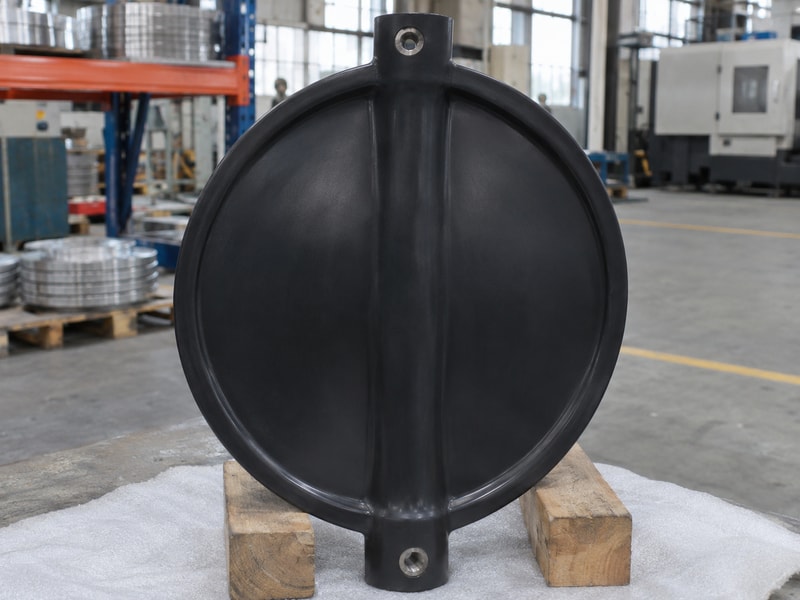
Confirm the role of each elastic component
Identify which surface forms the working seal in the actual valve design. A covered disk and a resilient body seat are separate construction choices. Do not infer their relationship from the colour of a sample.
Request the component drawing and assembly acceptance requirements. If a material change affects interference, flexibility or operating effort, require the supplier to assess the complete valve rather than approving only the replacement material name.
- Identify the actual elastomer formulation.
- Review fluid, temperature and cleaning exposure.
- Confirm the intended disk-to-seat relationship.
| Review item | Information needed | Decision supported |
|---|---|---|
| Elastomer | Exact material specification | Compatibility |
| Covering geometry | Controlled component drawing | Fit |
| Assembly | Defined seat and shaft seals | Functional acceptance |
Accept the covering as part of a defined valve construction.
6. How do chemical-service limits affect the selection?
Chemical-service coated disks for butterfly valves need limits for concentration, temperature and pressure that apply together. Include contaminants, cleaning solutions and minimum absolute pressure where relevant. Generic acid-resistant or alkali-resistant descriptions leave those conditions undefined. Ask the supplier to confirm the complete lined construction against the actual duty sheet.
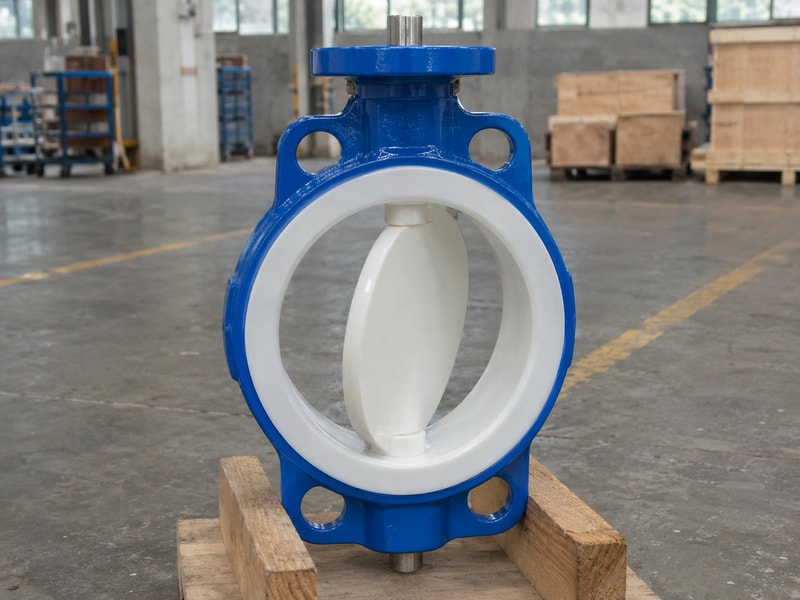
Use configuration-specific boundaries
RUITO’s documented PTFE and PFA lined butterfly valve configurations treat different chemical duties separately. Its specified sodium-hydroxide application covers 10–30% by mass at 20–60°C and working pressure up to 6 barg. Its specified sodium-hypochlorite application covers 0.5–5% by mass at 5–35°C and up to 4 barg within the approved size range.
These conditions belong to their own controlled constructions. They cannot be combined into a new service range or transferred to a nylon-coated disk.
- Give chemical concentration in a clear basis.
- Include cleaning and upset exposure.
- Obtain one confirmed envelope for the offered construction.
| Duty information | Why it changes the review | Required response |
|---|---|---|
| Concentration | Defines chemical exposure | Compatibility assessment |
| Temperature and pressure | Defines combined operating duty | Applicable limits |
| Backing and shaft seals | Defines the complete barrier | Material confirmation |
Keep the offered configuration and its approved operating conditions together.
7. What should happen if a protective layer is damaged?
Damaged coated disks for butterfly valves need a documented assessment before use or repair. Record the location, extent and observed condition after the valve has been safely isolated and inspected. A mark on a process coupon and damage on a finished sealing edge are different findings. Do not treat a successful touch-up on one surface as general repair approval.
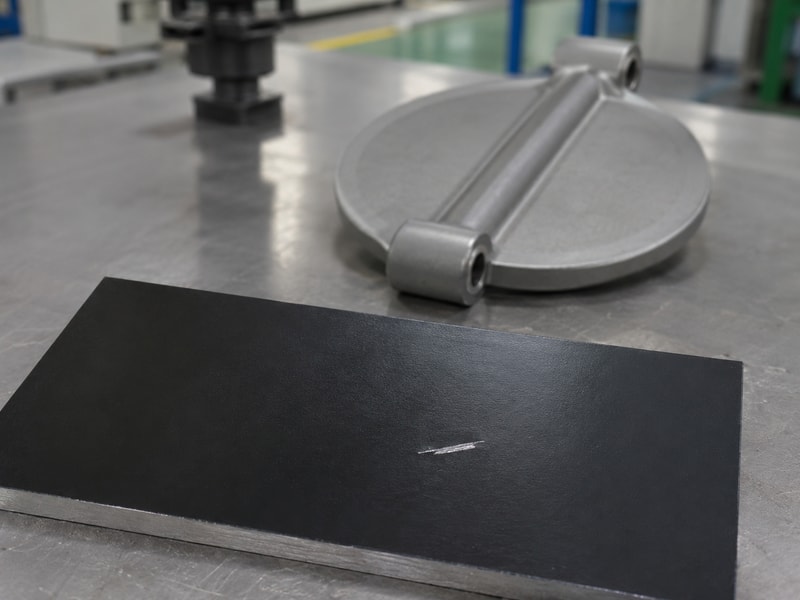
Define the repair decision
The component specification should identify permitted defects and who can approve a repair. Any repair procedure needs suitable preparation, materials, geometry control and subsequent inspection. Some damage may require replacement instead.
Check why the defect occurred, including handling, interference or service exposure. Returning a repaired disk to the same unresolved contact condition can damage the protective layer again. Record the disposition against the affected component or batch.
- Document damage before altering the surface.
- Apply the approved repair or replacement route.
- Reinspect the finished condition against defined criteria.
| Finding | Immediate record | Next decision |
|---|---|---|
| Handling scratch | Location and extent | Acceptance review |
| Edge damage | Sealing geometry and covering | Engineering disposition |
| Repeated local wear | Service and contact history | Cause investigation |
Approve the final condition before returning the component to service.
8. How are coated disks for butterfly valves inspected?
Inspection of coated disks for butterfly valves should verify the requirements of the actual protective system. Visual checks, dimensional checks, thickness measurements and specified integrity tests answer different questions. Select methods suitable for the coating, substrate and geometry. Record the procedure and acceptance limits so the reported result can be interpreted correctly.
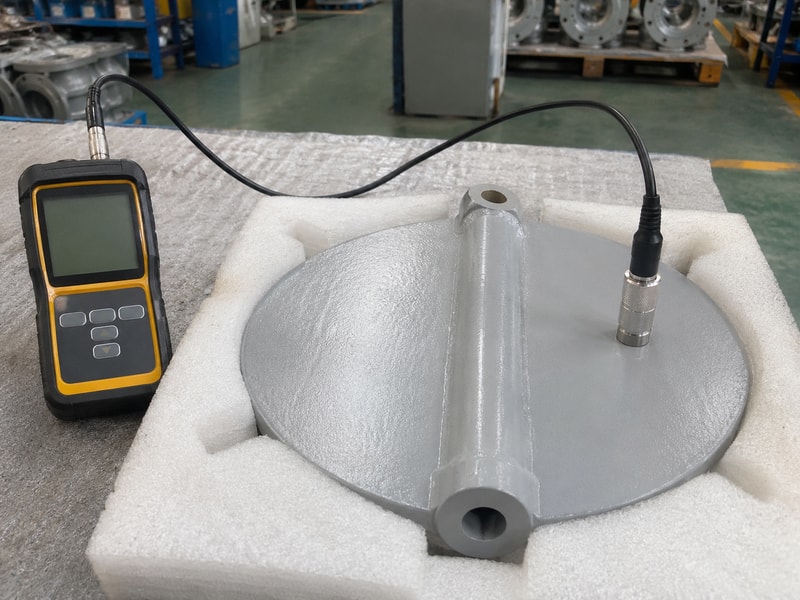
Match the method to the construction
A handheld instrument reading is useful only when its method, calibration and measurement position are suitable. An electrical integrity test needs settings defined for the material and thickness by an approved procedure. There is no universal test voltage for every protective layer.
Review the disk after the final relevant operation and confirm its fit in the intended assembly. Keep process inspections separate from the valve’s shell and closure test records.
- Identify the measurement method and locations.
- Use the specified settings and acceptance criteria.
- Retain traceable results for the finished condition.
| Inspection | Main question | Additional evidence still needed |
|---|---|---|
| Visual | What visible condition is present? | Required dimensional checks |
| Thickness | Does measured thickness conform? | Coverage and integrity |
| Assembly test | Does the valve meet stated criteria? | Material compatibility |
Use each inspection result within the limits of its method. If your contract specifies ISO 5208, apply its valve pressure-test requirements with the applicable product requirements. A pressure-test result does not establish coating compatibility.
9. How do you order coated disks for butterfly valves?
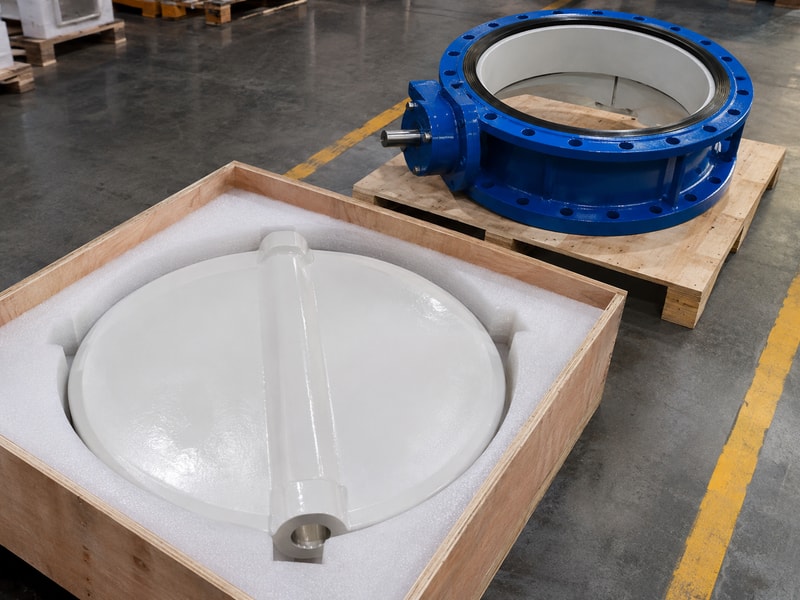
Coated disks for butterfly valves need handling that protects the finished surface and an order that defines the complete supply scope. Specify the valve model, approved drawing and protective construction. Include packaging, identification and the required inspection records. A disk ordered by nominal size and colour leaves too many interfaces undefined.
Protect the edge through installation
Use supports and packaging that prevent hard contact with the finished sealing edge. Follow the valve manufacturer’s installation instructions for the wafer butterfly valve or other actual connection. Check adjoining bore clearance, alignment and the permitted gasket arrangement before operation.
Do not use flange bolts to force a misaligned assembly together. Send RUITO the duty sheet and required protective construction when you contact us for a technical quotation.
- Define material, coverage and finished dimensions.
- Agree on inspection and repair requirements.
- Protect finished surfaces through delivery and installation.
| Order item | Define | Verify at receipt |
|---|---|---|
| Identity | Approved configuration | Part and document match |
| Protection | Specified surface construction | Required inspection records |
| Packing | Edge protection and separation | Condition after transport |
Resolve technical exceptions before the supplier releases the order for production.
10. Which coating questions should you settle before purchase?
For coated disks for butterfly valves, settle the protective-material and repair questions before accepting the supply scope. Keep a copy of the approved coating specification with the valve documentation. Your maintenance team will need it when assessing transport damage or later wear. Confirm who can approve a deviation and which inspections must follow an accepted repair.
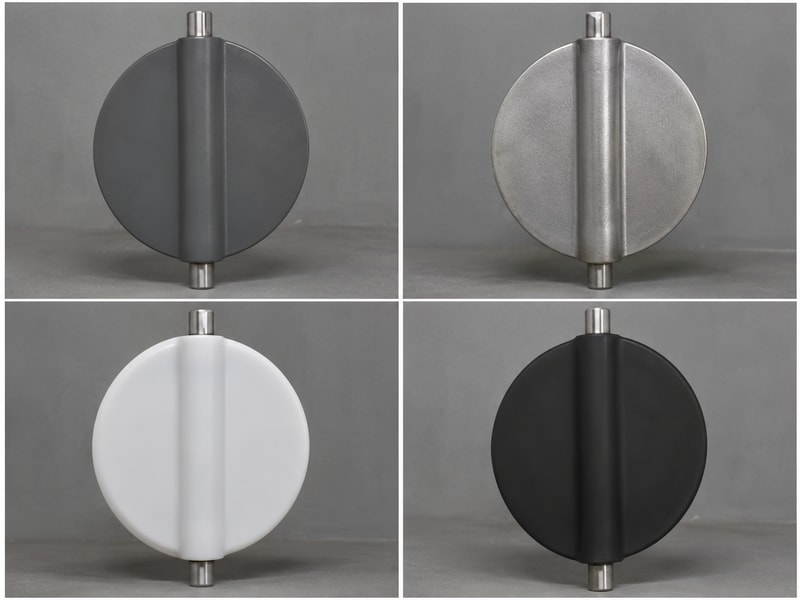
Q1: Can I choose a coating from its colour?
No. Colour cannot identify the formulation, thickness or service limits. Use the coating specification and documentation for the actual offered construction.
Q2: What’s the best coating for every chemical?
There is no universal choice. Review the complete fluid composition, temperature, pressure, cleaning exposure and wetted assembly before selecting a protective system.
Q3: Can I repair a scratch with ordinary paint?
Only an approved repair procedure can establish an acceptable repair. General touch-up paint may change compatibility, thickness or sealing geometry. Obtain a component-specific disposition.
Q4: How do I know whether the coverage is continuous?
Request the controlled construction drawing and the specified inspection results. A clear photograph can document visible surfaces but cannot prove hidden coverage or integrity by itself.
Q5: Does a thicker protective layer always work better?
No. The specified thickness must suit the process and finished geometry. Increasing it without review can change fit, seat engagement and operating effort.