
To define butterfly valves across an equipment family, identify their shared rotary-disc closure category while recording each item’s actual construction and duty separately. A family heading can group different connections, seats and operators. The tag records must establish which attributes are common, which vary and what evidence applies to each supplied configuration.
A valve schedule can place manual resilient-seated wafer items and powered metal-seated flanged items beneath the same butterfly-valve heading. Copying one member’s data into every row can conceal differences that affect acceptance. Set the grouping rule, preserve the individual configurations and map the supporting records to their actual scope.
1. How do you define butterfly valves across several tags?
To define butterfly valves across several tags, identify the common rotary valve category with a disc-shaped closure member positioned by a shaft. That shared description groups the items without making every assembly identical. Each tag still needs its selected construction, operator, application and acceptance information.
Which fact can genuinely be shared across the family?
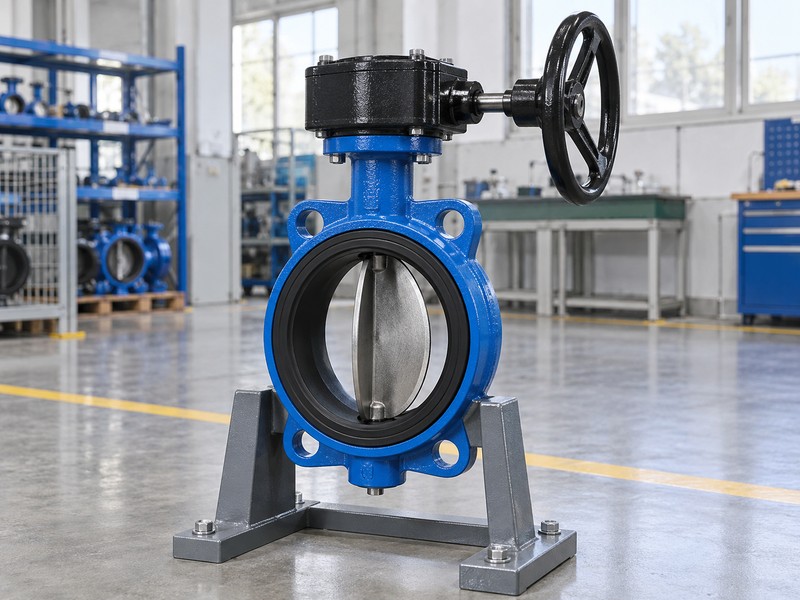
State the common closure category. The Emerson Control Valve Handbook provides rotary-valve terminology for the butterfly disk and its shaft-positioning relationship. Use that category statement across an appropriately identified item set, while retaining configuration facts per tag. A generic whole-valve illustration shows one example and cannot represent every member’s materials, geometry or accepted duty.
- Identify the shared rotary-disc closure category.
- Keep each scheduled item linked with its actual tag.
- Retain construction and service facts below the family heading.
Key takeaway: Share the closure-category definition while preserving individual valve records.
| Check | What you should confirm |
|---|---|
| Shared category | Included items use the identified rotary-disc closure type |
| Item identity | Each tag maps to its actual selected assembly |
| Separate facts | Construction and duty remain defined for each item |
2. What grouping boundary helps you define butterfly valves?
A grouping boundary helps you define butterfly valves without confusing an engineering equipment class with a manufacturer’s product family. A category-wide schedule can include several suppliers and constructions. A named catalogue family instead has its own stated model coverage, options and document applicability.
How should the roster state what is included?
Declare the reason for grouping. Record whether the family means a closure category, selected manufacturer series or a project-defined item set, then list the applicable tags. Retain the actual supplier and model identities beneath that rule. A shared description or catalogue prefix cannot establish common dimensions, interchangeable components or one qualification scope for every included row.
- State whether grouping is category-based or manufacturer-specific.
- List the actual included tags and model identities.
- Keep family coverage distinct from assumed interchangeability.
Key takeaway: Define the family boundary before applying any common data to its members.
| Check | What you should confirm |
|---|---|
| Grouping rule | Record states the basis for the family heading |
| Roster | Included tags and actual models are identifiable |
| Coverage | Shared documents retain their stated applicable scope |
3. How do connection variants help you define butterfly valves?
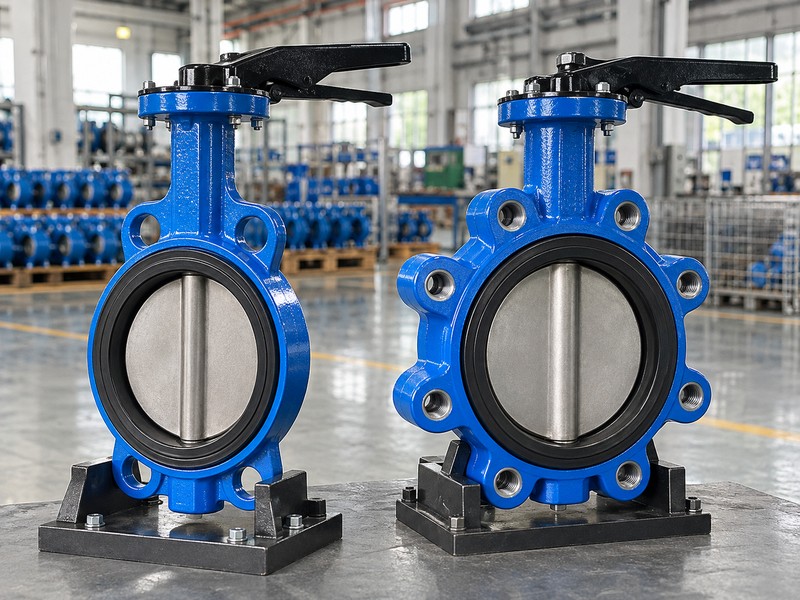
Connection variants help you define butterfly valves by their different pipe-interface constructions within the shared closure category. Wafer, lug, double-flanged and grooved items can require different selected interface records. A common family heading cannot establish equal face-to-face dimensions, gasket requirements or end-restraint capability.
Which connection information must stay with each tag?
Retain each selected interface definition. The Bray resilient-valve manual distinguishes named constructions and their applicable instructions rather than supplying one interchangeable arrangement. Keep body style and referenced interface information on the actual item row. The wafer-and-lug illustration is a generic comparison and cannot establish actual fit or transfer end-of-line permission between variants.
- Identify the connection construction on each item row.
- Reference the actual selected interface and installation records.
- Keep gasket and end-condition claims within their documented coverage.
Key takeaway: Preserve each connection variant’s interface records within the family schedule.
| Check | What you should confirm |
|---|---|
| Connection | Each tag identifies its selected body-interface arrangement |
| Interface record | Applicable dimensions and requirements match that variant |
| End condition | Required restraint and duty have selected-construction support |
4. How do geometry variants help you define butterfly valves?
Geometry variants help you define butterfly valves without changing their shared rotating-disc category. Concentric, double-offset and triple-offset labels describe selected internal relationships. They cannot establish identical seats, operating loads or qualifications across the family, and the number of offsets does not count physical shafts.
How should a named geometry example be used?
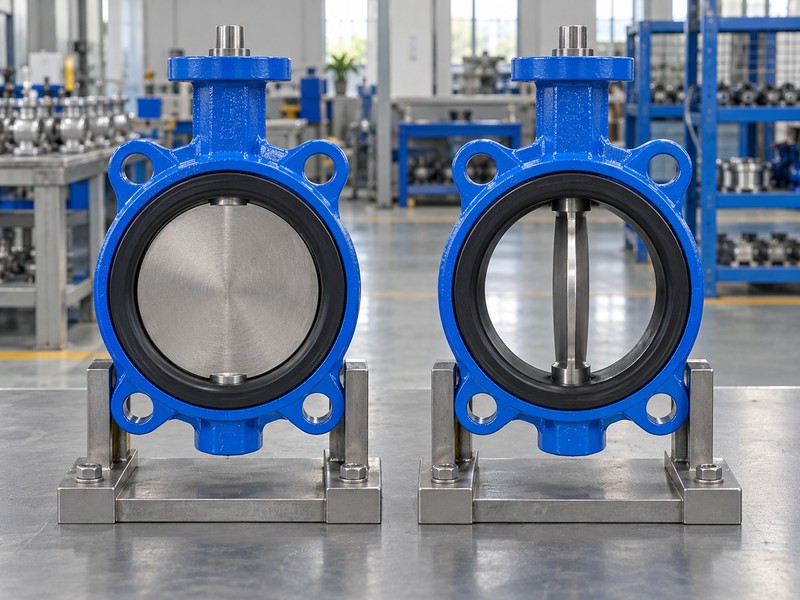
Link geometry labels with actual model records. The Bray Tri Lok-Cx manual describes a named triple-offset construction through its shaft and sealing-axis relationships. Use that example to distinguish the type of information required, without transferring its product claims to other family members or RUITO offerings. Generic open-and-closed views cannot verify concealed offset geometry for a tag.
- Identify actual geometry separately from the family category.
- Retain the applicable model or section reference per item.
- Keep named-example performance claims within their own scope.
Key takeaway: Use geometry fields to distinguish actual family members without assigning shared performance.
| Check | What you should confirm |
|---|---|
| Geometry field | Each selected configuration has an identified construction |
| Model reference | Applicable records support its concealed relationships |
| Claim boundary | Other members do not inherit the example’s capabilities |
5. How do sealing variants help you define butterfly valves?
Sealing variants help you define butterfly valves through the actual seat and material arrangements assigned to each tag. Resilient, polymer-lined and metal-seated descriptions can appear within the broad closure category. Those labels do not establish identical compounds, complete wetted coverage or a shared leakage criterion.
What must remain attached to the selected seat description?
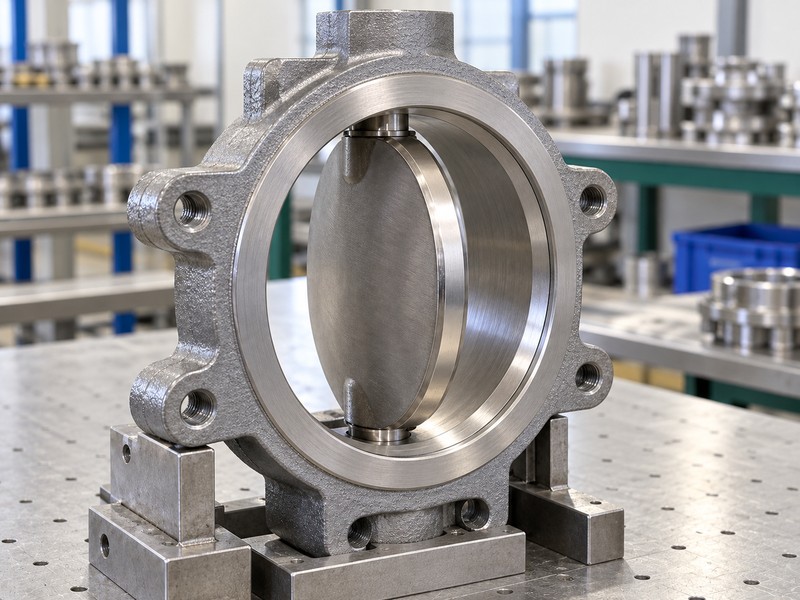
Preserve the actual material and sealing scope. Retain selected seat construction, relevant material definitions and required leakage acceptance for each configuration. Keep shaft and body-interface sealing separate where their duties need their own records. A generic metallic contact illustration cannot represent every family member’s seat, prove alloy identity or establish a universal tightness result.
- Identify each tag’s actual seat and material arrangement.
- Retain relevant wetted and associated sealing definitions.
- Keep required leakage acceptance linked with selected configurations.
Key takeaway: Record sealing variants without converting a shared material label into a family guarantee.
| Check | What you should confirm |
|---|---|
| Seat variant | Selected closure-sealing construction is identified per item |
| Material scope | Actual records define compounds, grades and coverage |
| Acceptance | Applicable leakage requirements remain tied to the configuration |
6. How do operator variants help you define butterfly valves?
Operator variants help you define butterfly valves as manual or powered assemblies without changing their common closure category. The actual lever, gearbox or actuator belongs to its selected item configuration. One member’s drive, available output, controls or failure behavior cannot be assumed for every other tag.
Which operating facts should the item records retain?
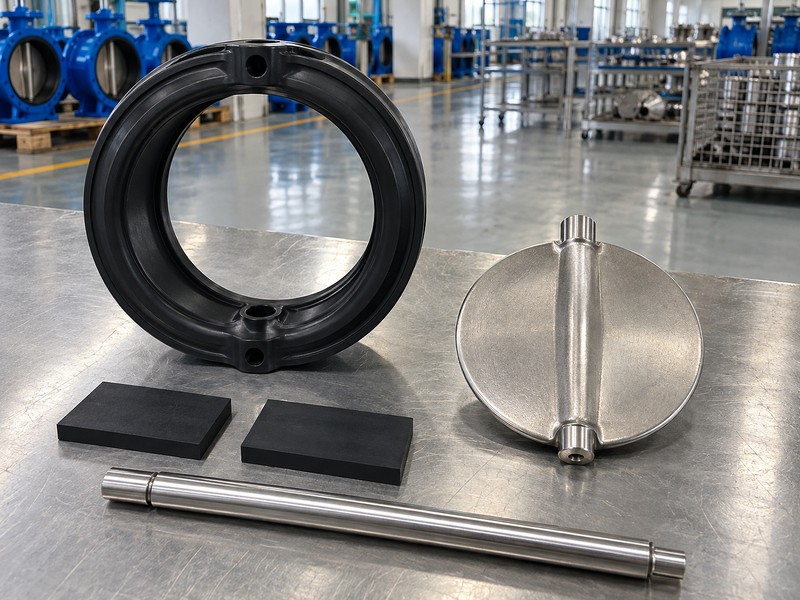
Separate required functions by item. Record the actual operator and mounting arrangement, required movement and relevant sizing or interface references for the tag. Keep the process medium distinct from the energy source used by a powered operator. Generic separated parts cannot establish the actual drive contents, torque capacity, signal functions or automatic response of the family as a whole.
- Identify the actual operator and mounting arrangement per item.
- Retain relevant sizing, movement and function references.
- Keep process medium separate from the operator’s energy source.
Key takeaway: Retain the selected operating package and required functions for each family member.
| Check | What you should confirm |
|---|---|
| Operator | Selected drive and mounting identity match the actual tag |
| Required functions | Item records define movement, controls and indications |
| Sizing | Selected valve and operator data support the actual duty |
7. Which duty records help you define butterfly valves?
Duty records help you define butterfly valves for several applications only when their actual coverage is explicit. Medium, temperature, pressure, directional differential and flow requirements can vary between tags. Keep those cases with the selected configuration instead of spreading a family maximum across every scheduled item.
Can one curve represent every member’s flow behavior?
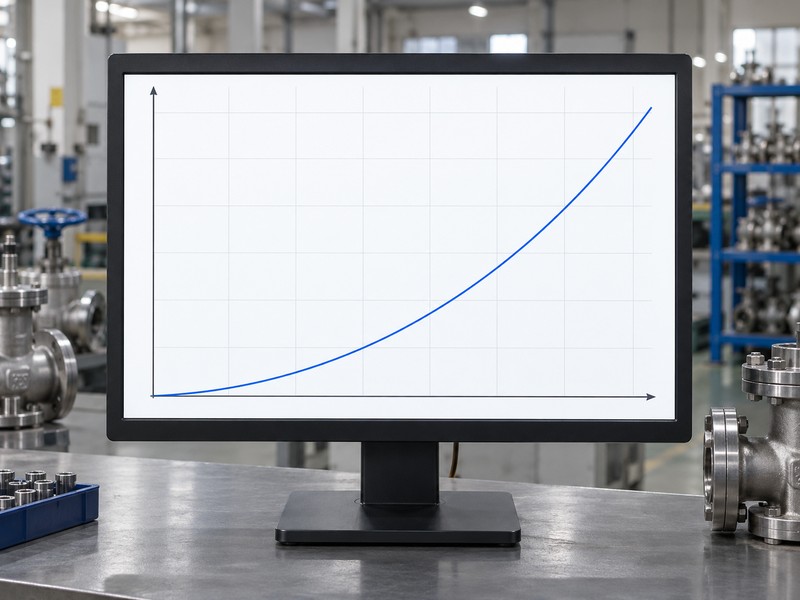
Match operating data with its applicable items. The disc and relevant shaft features remain in the flow passage, with actual performance dependent on selected construction, opening and fluid basis. The conceptual chart shows pressure loss versus flow at fixed opening, flow coefficient and liquid density; it supplies no representative family rating or leakage curve. Apply a shared document only where its stated coverage supports the affected item cases.
- Retain actual service cases against their selected item configurations.
- Check the scope of any proposed common performance document.
- Keep hydraulic data and leakage acceptance separately defined.
Key takeaway: Share operating documents only within their explicit configuration and service coverage.
| Check | What you should confirm |
|---|---|
| Item duty | Each tag retains actual medium and operating conditions |
| Shared data | Document coverage identifies which configurations it supports |
| Hydraulics | Selected model, opening and fluid basis govern actual sizing |
8. Which acceptance facts help you define butterfly valves?
Acceptance facts help you define butterfly valves as supplied equipment when records identify the configurations and items they cover. A family name cannot establish passed inspection or blanket approval. Rated duty, applied test conditions and required qualification each need their own scope and traceability.
How should common evidence be assigned to item rows?
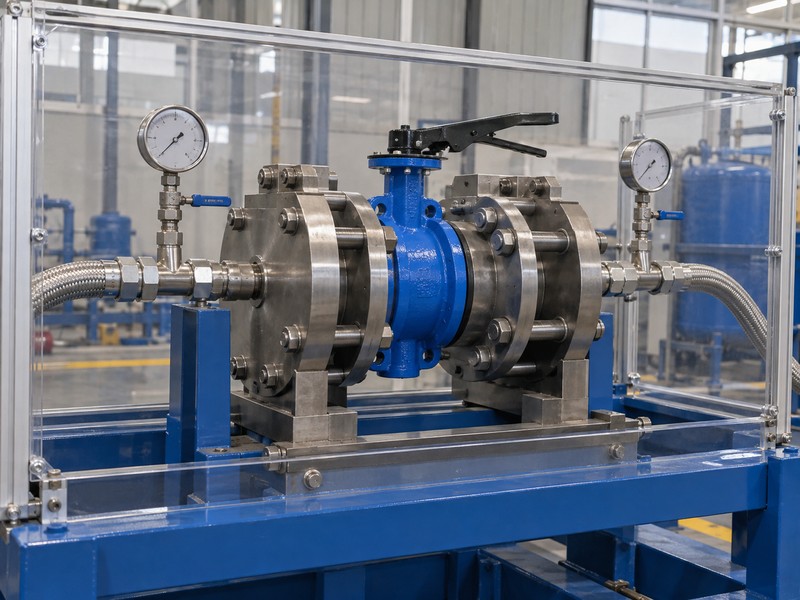
Map each record to its covered supply. Retain the actual test or qualification definition, applicable model and material scope, and identified results or accepted coverage. Where an agreed inspection plan uses batch or representative evidence, record its stated applicability rather than assuming coverage for unrelated variants. The generic hydraulic fixture establishes no actual result or approval for any member of the group.
- Identify which items and configurations each record covers.
- Retain actual test conditions and required qualification scope.
- Keep representative evidence within its agreed applicability.
Key takeaway: Assign acceptance evidence by actual coverage rather than the family heading.
| Check | What you should confirm |
|---|---|
| Inspection | Actual records identify checks and covered supplied items |
| Qualification | Required evidence matches model, materials and application scope |
| Applicability | Common records explicitly identify their covered configurations |
9. How should comparisons define butterfly valves consistently?
Comparisons should define butterfly valves consistently by using the same descriptive fields across suppliers or scheduled groups. Retain each manufacturer’s actual model and terminology beneath those fields. A common category or normalized column heading cannot establish identical fit, materials, parts or service capability.
What should a comparison preserve when names differ?
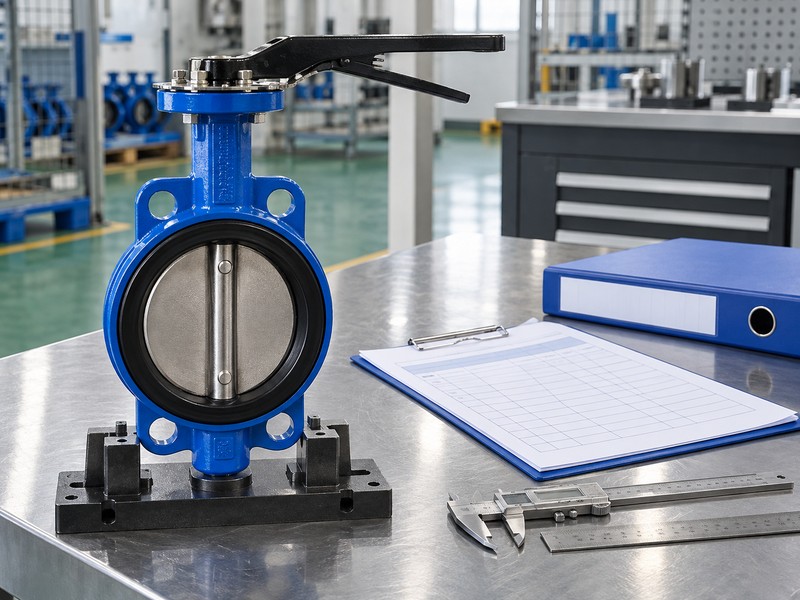
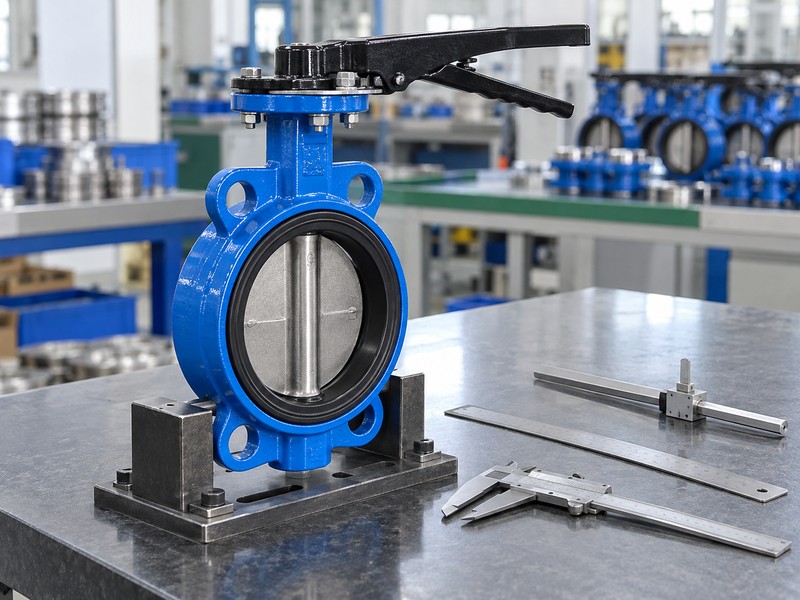
Compare field meaning before declaring equivalence. Separate closure category, connection, geometry, sealing, operator and required service so each offer can be read against the same questions. Keep supplier references and technical exceptions visible instead of replacing them with a guessed common value. A measuring-tool illustration supplies no comparison result or proof that the actual family members are interchangeable.
- Use consistent descriptive fields across the compared item sets.
- Retain actual supplier references and technical exceptions.
- Leave unsupported equivalence claims open for selected-item review.
Key takeaway: Compare family members through consistent fields while preserving their actual differences.
| Check | What you should confirm |
|---|---|
| Common headings | Fields ask equivalent construction and duty questions |
| Actual entries | Supplier and model references retain their original identity |
| Comparison result | Accepted equivalence depends on supporting item evidence |
10. How should released records define butterfly valves?
Released records should define butterfly valves through a maintained family roster and the applicable configuration references for each tag. Shared statements and item exceptions must remain distinguishable. A change to one seat, drive or model need not describe every other member, so record its actual applicability before updating the schedule.
What should a family-level handover leave behind?
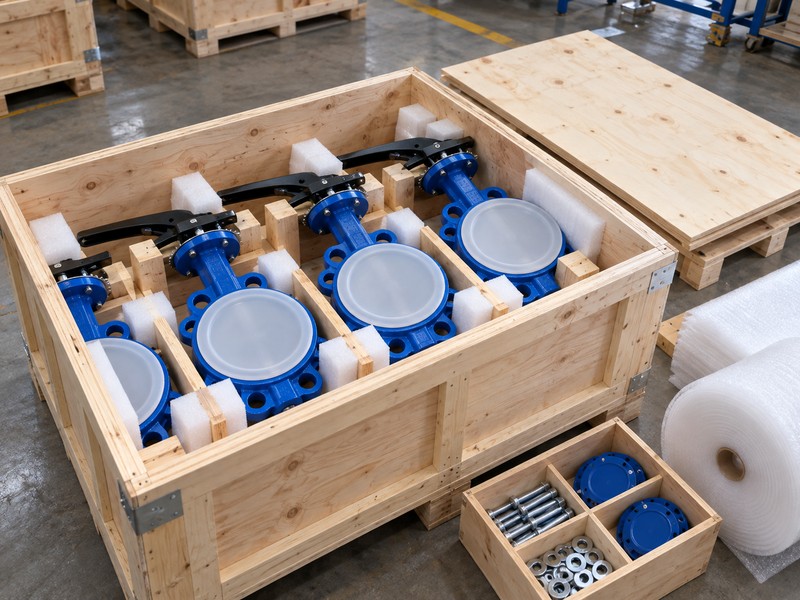
Keep the roster and evidence aligned. Retain the accepted tag list, actual model or variant definitions, shared-document coverage and individual exceptions under the applicable revisions. When an approved change occurs, identify affected items and update their linked construction, duty or acceptance records. Generic packing imagery cannot establish delivery identity, document conformity or approval across the whole family.
- Retain the accepted roster and actual configuration references.
- Keep shared statements separate from item-level exceptions.
- Update changed records only within their identified applicability.
Key takeaway: Release a family record that preserves actual member differences and evidence coverage.
| Check | What you should confirm |
|---|---|
| Roster | Included tags and selected variants remain identifiable |
| Evidence map | Shared and individual records show their applicable scope |
| Change record | Revisions identify affected items and accepted exceptions |
Send RUITO the item list, known construction variants, required service cases and available model or acceptance references. We can review the proposed applications and identify which configuration details or shared-document scopes need confirmation. Contact us before applying one member’s description or supplier claim to the entire scheduled family.
FAQ
Q1: Can different body connections belong to the butterfly-valve category?
Yes. Retain the actual connection and selected interface records for each included item; the common closure category does not make them interchangeable.
Q2: Can one pressure-temperature table apply to every family member?
Only where the selected table explicitly covers those models, materials and service conditions. A family heading alone cannot establish that coverage.
Q3: Does a shared seat label establish the same material grade?
No. Confirm the actual compound, grade, construction and applicable component records for each selected configuration.
Q4: Can actuator behavior be copied between tags?
Only where the actual selected packages and accepted documentation support the same functions and conditions. Do not infer common failure behavior from the family name.
Q5: Can I mark the whole family accepted with unresolved item data?
No. Keep required unresolved information visible and confirm actual evidence coverage before accepting the affected items.