
Fix PTFE EPDM butterfly valve seat manufacturing process mistakes by separating material-specific forming routes and approving the complete sealing construction. EPDM depends on a controlled compound and cure; conventional PTFE needs its own forming and thermal process. Approve the complete seat construction before comparing materials, prices, or replacement parts.
A maintenance buyer sees a white seat and a black seat offered for the same nominal valve size. Swapping them appears straightforward until the disc binds, the flange lips distort, or the liquid reaches an unsuitable backing. The useful comparison begins with the component drawing. Follow material identity, forming, finished geometry, support, and assembly tests to decide what the valve can accept.
1. What is a PTFE EPDM butterfly valve seat manufacturing process?
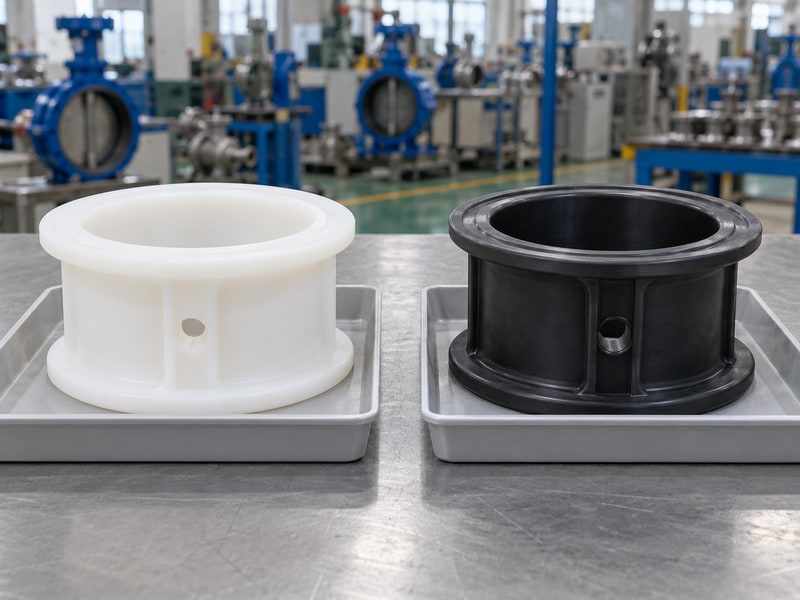
A PTFE EPDM butterfly valve seat manufacturing process covers distinct material-production routes and the inspection of their intended sealing constructions. The terms do not describe one universal blended material. A valve may use an EPDM seat, a PTFE component, or a specified fluoropolymer layer with separate support and auxiliary seals.
Which seat construction are you comparing?
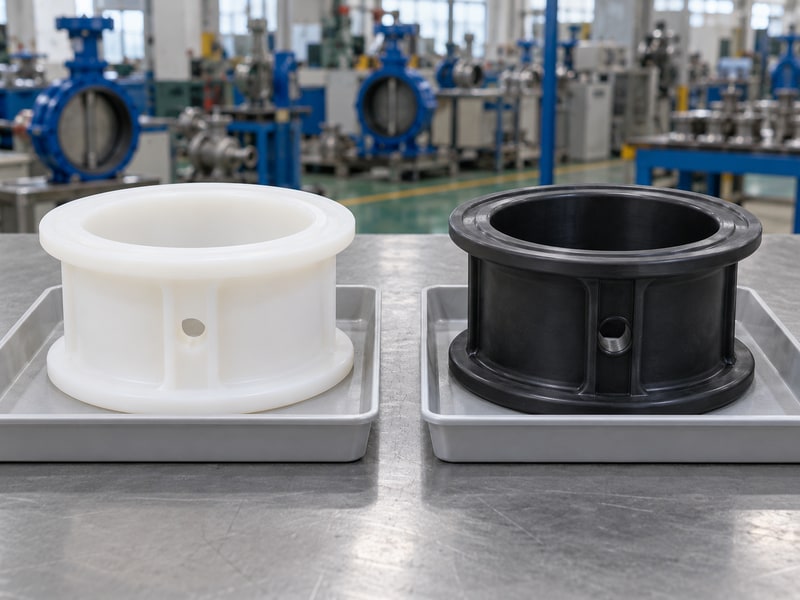
Look at the complete cross-section. Identify the contact layer, support, flange lips, shaft passages, and retention details. A replaceable elastomer sleeve differs from a rigid-backed cartridge and a lined chemical-service assembly. The same nominal diameter does not make them interchangeable.
Ask the supplier to show how the proposed seat fits the body and disc, then identify the applicable component revisions. If your enquiry concerns an existing valve, provide its identification and original assembly drawing. A photograph can support that enquiry, but it cannot establish hidden support dimensions or material identity. Key takeaway: Approve a defined construction before treating PTFE and EPDM as alternative purchasing options.
- Separate the sealing layer, backing, and auxiliary seals.
- Compare the exact component and assembly drawings.
| Control | Acceptance evidence |
|---|---|
| Construction | Defined layer, support, and retention |
| Interface | Matching body, disc, and shaft geometry |
2. How should you specify material identity?
Material approval for a PTFE EPDM butterfly valve seat manufacturing process should name the actual EPDM compound or PTFE grade, along with backing and auxiliary-seal materials. Neither color nor a generic polymer name establishes service suitability. The approved parts list should connect each material with the relevant drawing and fluid-contact condition.
What changes when the fluid changes?
Review the whole duty. State fluid composition, concentration, additives, contaminants, cleaning chemicals, and temperature. EPDM is a synthetic elastomer family; its compound formulation controls the finished component. A description based on natural-rubber content does not define an EPDM seat.
For fluoropolymers, review the exact grade and any filler or modification. RUITO’s normal water-service EPDM configuration does not become an oil-service configuration by changing the catalogue description. The valve also contains a disc, shaft, and auxiliary seals whose exposed surfaces need the same duty review. Key takeaway: A specific material identity gives engineering and purchasing the same approval basis.
- Name the approved compound or resin grade and batch.
- Review all wetted materials against the complete fluid duty.
| Control | Acceptance evidence |
|---|---|
| EPDM | Approved compound designation and batch |
| PTFE | Approved resin grade and any filler details |
3. How are EPDM seat compounds prepared?
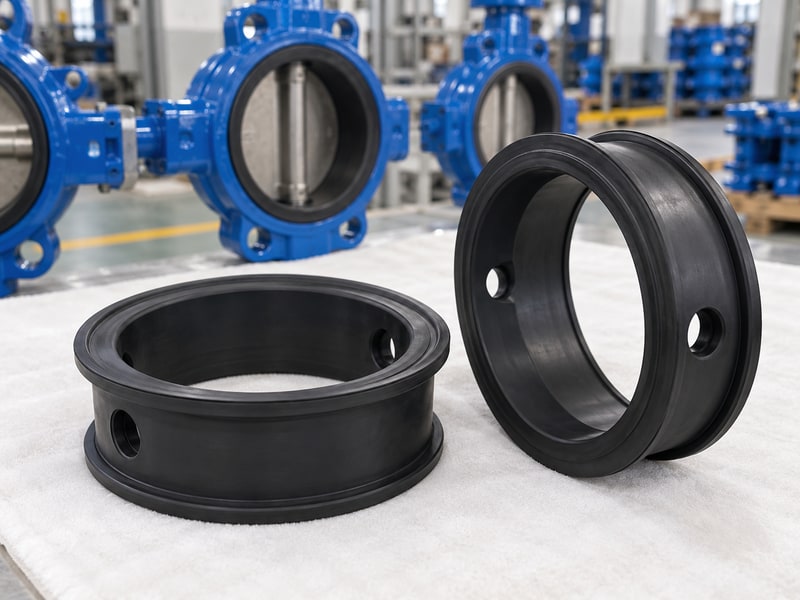
The rubber route in a PTFE EPDM butterfly valve seat manufacturing process starts with a controlled EPDM compound prepared for the specified product. Polymer, fillers, curing system, and other ingredients follow the approved formulation. The producer controls mixing, handling, and the checks that release material for molding.
Which compound records should a buyer request?
Request acceptance evidence rather than an invented recipe. Agree on the material identification and relevant test requirements while respecting the supplier’s formulation ownership. The manufacturing record should identify the compound batch and link it with the finished seats. Define the handling conditions, storage period, and disposition of material outside those limits.
If drinking-water contact is required, the approval must cover the actual compound and other wetted materials in the intended market. A generic rubber data sheet or a management-system certificate cannot establish that coverage. Changes to the compound need review before the affected batch enters your order. Key takeaway: Controlled compound acceptance reduces variation before the mold creates the final seat shape.
- Maintain compound-batch identity through preparation and molding.
- Define the material tests and any product-specific approvals.
| Control | Acceptance evidence |
|---|---|
| Compound | Approved designation and release records |
| Handling | Defined storage and production conditions |
4. What should EPDM molding and cure control?
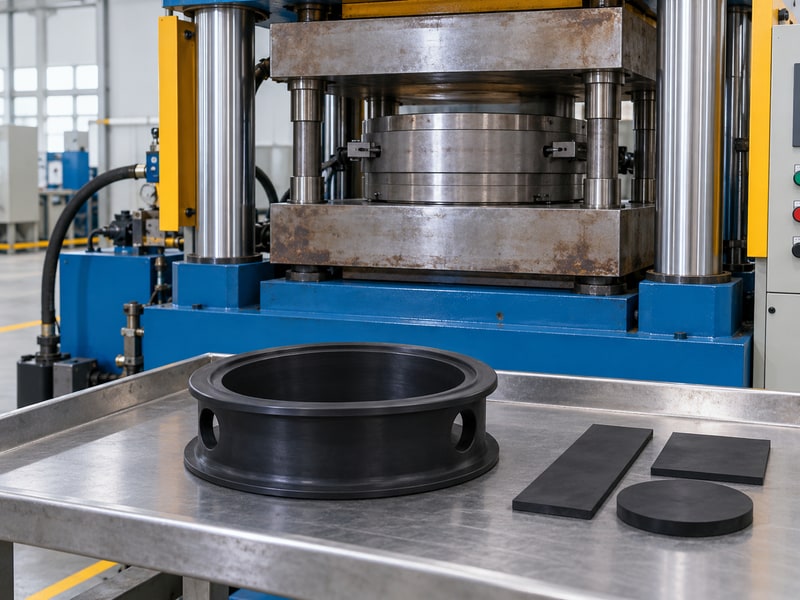
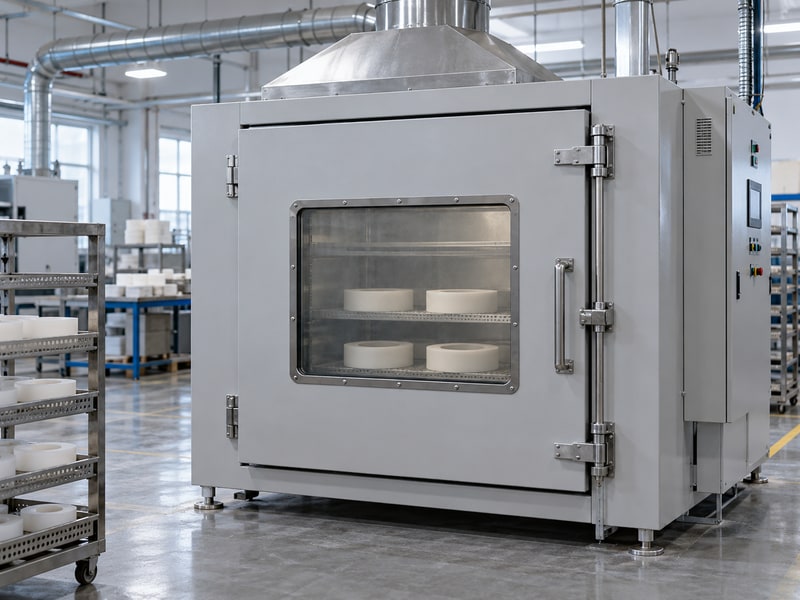
EPDM molding in a PTFE EPDM butterfly valve seat manufacturing process forms and cures the approved compound into the specified seat profile. Tooling, charge, cure conditions, and any prescribed later treatment follow the qualified product procedure. A press setting copied from another size or compound is not a reliable acceptance basis.
Where should you inspect the molded seat?
Examine the working surfaces after release from the tool. Check the sealing profile, flange lips, shaft openings, and any specified backing bond or retention feature. Flash removal must preserve the contact geometry. Record the tool identity, compound batch, cycle reference, and required acceptance results.
A molding fault may affect only a visible edge or indicate a wider process issue; the disposition should consider the actual defect. Keep rejected components apart from accepted stock. If the procedure specifies representative physical-property tests, link the samples with the relevant production batch instead of attaching unrelated laboratory results. Key takeaway: A controlled cure and intact profile give assembly a consistent rubber component.
- Control the tool and qualified cure-cycle revision.
- Inspect sealing surfaces after molding and flash removal.
| Control | Acceptance evidence |
|---|---|
| Molding | Tool, compound, and cycle identity |
| Finished rubber | Accepted dimensions, surface, and required tests |
5. How does the PTFE production route differ?
The PTFE route in a PTFE EPDM butterfly valve seat manufacturing process uses a grade-appropriate forming method followed by the required thermal and finishing operations. Conventional molded PTFE follows powder compaction and sintering. It should not inherit an EPDM cure procedure or an ordinary thermoplastic injection-molding description.
How do you verify a proposed fluoropolymer route?
Match the resin with its processing information. The fluoropolymer manufacturer’s guidance explains the distinction between PTFE and melt-processable alternatives. Keep the selected material, tooling, thermal route, and finished drawing connected in the production record. A supplier may machine the final seat from an appropriate sintered blank or use another approved component route.
Ask what is actually supplied and which operations establish the final dimensions. Replacing PTFE with PFA requires a material and construction review, even when both surfaces appear white and the proposed part carries the same nominal size. Key takeaway: Rubber curing and PTFE processing need separate work instructions and acceptance evidence.
- Use the process route approved for the actual resin grade.
- Record the thermal and finishing stages relevant to the supplied part.
| Control | Acceptance evidence |
|---|---|
| EPDM route | Compound forming and controlled cure |
| PTFE route | Grade-specific forming, thermal processing, and finishing |
6. How should you inspect the finished seat geometry?
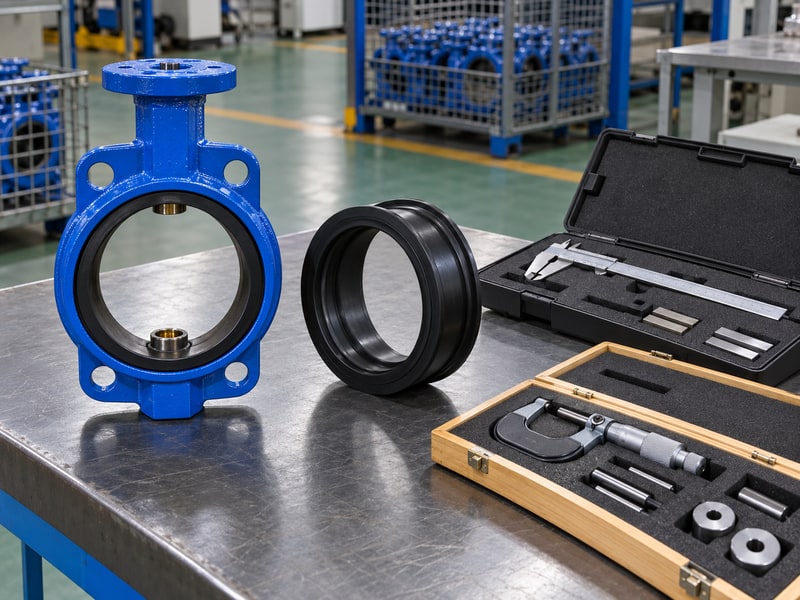
Finished-part inspection in a PTFE EPDM butterfly valve seat manufacturing process verifies the geometry required by each approved construction. Check the internal sealing profile, outer support surfaces, flange lips, and shaft passages against the applicable drawing. Rubber and fluoropolymer parts may need different measurement methods and handling conditions.
What can a dimensional comparison miss?
Compare the features that locate and seal. Two parts can have similar overall diameters while differing in lip thickness, shaft-hole position, or support shape. A measuring method that deforms a rubber sleeve can produce misleading values. Agree on the inspection conditions and suitable equipment, then retain measured results where required.
Review the surface for cuts, machining marks, contamination, and damage from storage. If a component has a rigid backing, inspect the relationship between backing and sealing layer. Use an accepted sample only with a defined drawing and approval status so visual comparison does not replace dimensional control. Key takeaway: The correct functional profile matters more than a matching nominal size.
- Inspect locating surfaces and sealing interfaces separately.
- Agree on measurement force, support, and conditions where relevant.
| Control | Acceptance evidence |
|---|---|
| Geometry | Accepted profile and passage location |
| Measurement | Suitable method and recorded conditions |
7. How does the backing change the sealing construction?
Backing review in a PTFE EPDM butterfly valve seat manufacturing process establishes how the sealing layer is supported, located, and retained. A fluoropolymer contact layer may use an approved elastomer support, while another seat uses a rigid backing. The supplier must define that arrangement rather than infer it from a material label.
Which hidden interfaces need review?
Follow the fluid and the support. Identify the normal wetted boundary and the interfaces around the shaft passages and end faces. Ask how the backing behaves under the approved temperature, differential pressure, and minimum absolute pressure. A support material can affect the assembly limit even when it is not the main wetted layer.
For a lined chemical-service valve, review the complete barrier and auxiliary seals. Changes in backing profile, hardness, or retention may alter contact loading and operating torque. Keep those changes under the same approval process used for the visible sealing material. Key takeaway: Support components form part of the approved seat system and its service limits.
- Identify the backing and its retention details.
- Review the full assembly against pressure and temperature conditions.
| Control | Acceptance evidence |
|---|---|
| Support | Approved material and geometry |
| Interfaces | Defined wetted barrier and shaft sealing arrangement |
8. How do assembly checks protect both seat types?
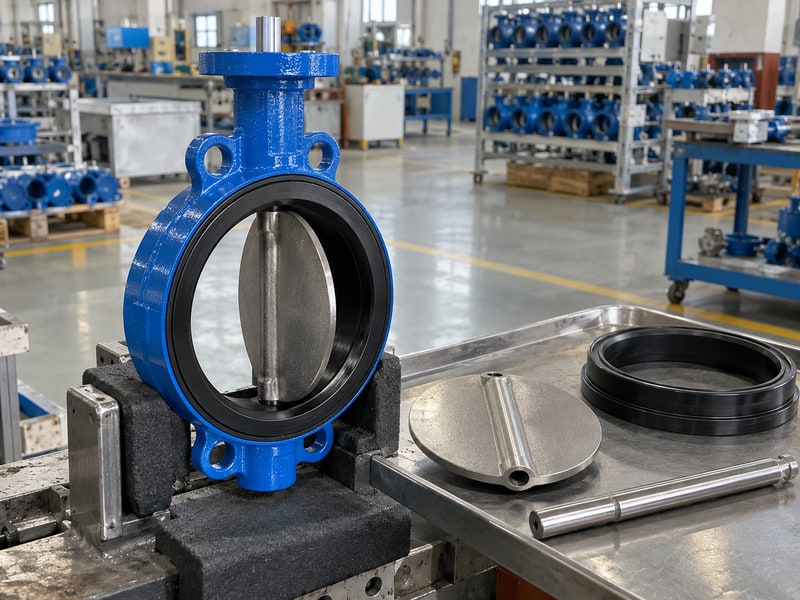
Assembly checks in a PTFE EPDM butterfly valve seat manufacturing process verify that the accepted seat fits its intended body, disc, shaft, and support arrangement. Follow the model-specific sequence and lubricant requirements. Forcing either material into an incompatible assembly can damage the sealing lip or distort the installed profile.
What should you do when the disc binds?
Find the cause before adding force. Check part identity, seat position, shaft alignment, disc profile, and operator indexing. Record any approved rework and repeat the inspections affected by that work. For a trial assembly, use the same component revisions planned for production.
A convenient test body with a slightly different pocket can conceal a mismatch. Confirm actual disc travel and the accepted torque basis before fitting the final operator. Adjusting a travel stop should not become a substitute for correcting the underlying fit. Key takeaway: Assembly acceptance confirms the matched construction rather than the seat in isolation.
- Protect sealing lips and shaft passages during fitting.
- Check the real mating parts before approving trial results.
| Control | Acceptance evidence |
|---|---|
| Fit | Correct parts, position, and retention |
| Function | Accepted travel and operating behavior |
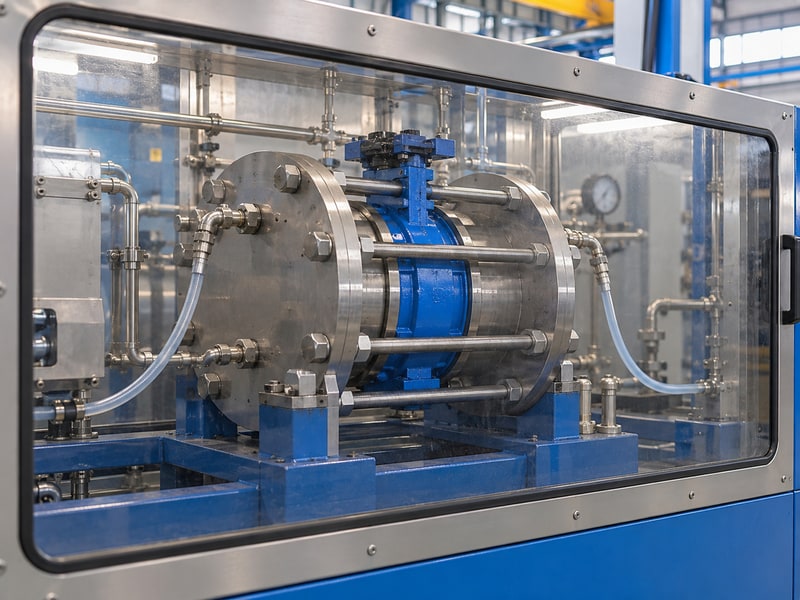
9. Which tests should the completed valve pass?
Final verification in a PTFE EPDM butterfly valve seat manufacturing process uses the procedures required for the completed valve and its duty. Component inspection, shell testing, closure leakage, external leakage, and operation have different acceptance purposes. Lining, chemical, thermal, and vacuum requirements need additional configuration-specific review where applicable.
What does a pressure result establish?
Keep each result within its stated conditions. RUITO’s applicable PN10 room-temperature shell and soft-seat closure procedures use 15 and 11 bar respectively, subject to the actual configuration and seat differential rating. Those values are inspection pressures and do not increase permitted service pressure. A lined assembly adds its specified thickness, integrity, and flange-lip checks.
A water test does not establish an elastomer’s oil compatibility or a liner’s behavior under vacuum. Ask for the report identity, direction, medium, duration, criterion, and configuration coverage before comparing two suppliers’ passed results. Key takeaway: A passed test supports only the assembly, conditions, and criterion recorded.
- Specify the test route for the actual assembled construction.
- Separate routine inspection from service-qualification evidence.
| Control | Acceptance evidence |
|---|---|
| Routine verification | Required dimensional, functional, and pressure results |
| Special duty | Applicable lining and service-qualification records |
10. What should you retain for replacements and repeat supply?
A PTFE EPDM butterfly valve seat manufacturing process should leave a traceable record of the selected construction, materials, production route, inspections, and assembly results. Retain those details for replacements and repeat orders. A nominal size and an old photograph cannot reliably identify a compatible seat after the valve design changes.
How do you keep future purchases consistent?
Order against the accepted revision. Include the valve identifier, seat drawing, material designation, backing details, and required inspection route. Define which supplier changes need approval and how the first affected batch is marked. Store spare parts according to the manufacturer’s instructions, with identity preserved and sealing faces protected from deformation and contamination.
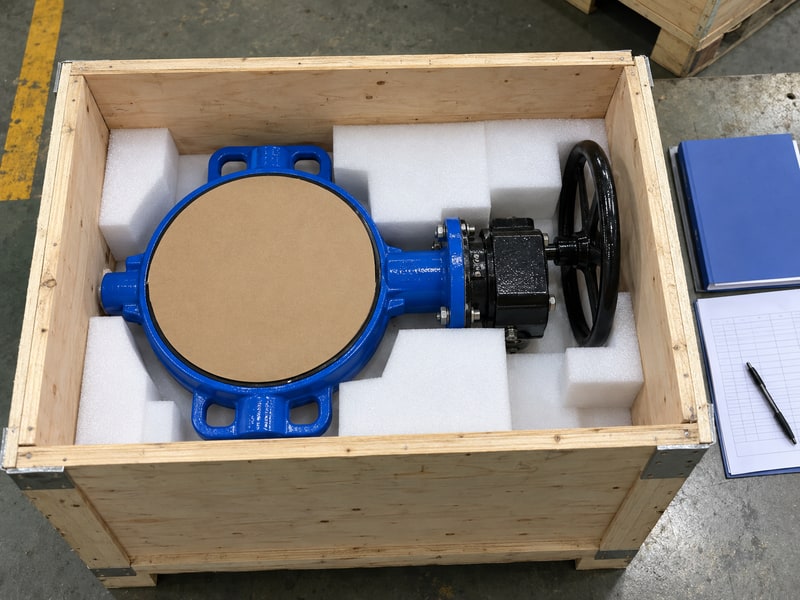
Before fitting an old spare, compare it with the current valve configuration and condition. For complete valves, inspect packaging supports and end protection before release. The order file should let purchasing and maintenance reach the same component specification without guessing from appearance. Key takeaway: A retained configuration makes replacement decisions faster and more defensible.
- Retain the accepted seat and assembly revisions.
- Control material changes and protect identified spare parts.
| Control | Acceptance evidence |
|---|---|
| Repeat supply | Accepted material, drawing, and process baseline |
| Replacement | Confirmed compatibility and protected component condition |
For a PTFE EPDM butterfly valve seat manufacturing process review, send RUITO the valve identification, seat drawing, fluid composition, temperature, pressure conditions, and replacement scope. We can review the construction and proposed acceptance route. Contact us with those details before approving a material change or repeat production order.
FAQ
Q1: Can I replace a rubber seat with PTFE in the same body?
Only after a configuration review. The body pocket, disc profile, shaft passages, backing, and fitting method must support the proposed seat.
Q2: How do I know if the rubber seat is EPDM?
Check the approved compound identity and traceability records. Black color, a generic rubber label, or a supplier photograph cannot establish the compound.
Q3: Can EPDM and PTFE use the same molding cycle?
No. They need material-specific forming and thermal procedures. A combined sealing construction still requires separately defined component and assembly controls.
Q4: What is the best seat for every chemical?
There is no universal choice. Review the exact fluid, concentration, temperature, pressure, exposed materials, and applicable qualification for the complete valve.
Q5: Does a harder backing always give better sealing?
No. Backing material, geometry, retention, and contact loading must suit the design. An unapproved change can alter fit and operating torque.