
Avoid DI lug type butterfly valve handwheel mistakes by confirming the body grade, threaded connection and manual operator separately. This description calls for a ductile-iron lug-body assembly with a geared wheel. A photograph can show the external parts, but it cannot prove material grade, effective thread engagement or permitted end-of-line duty.
1. What is a DI lug type butterfly valve handwheel assembly?
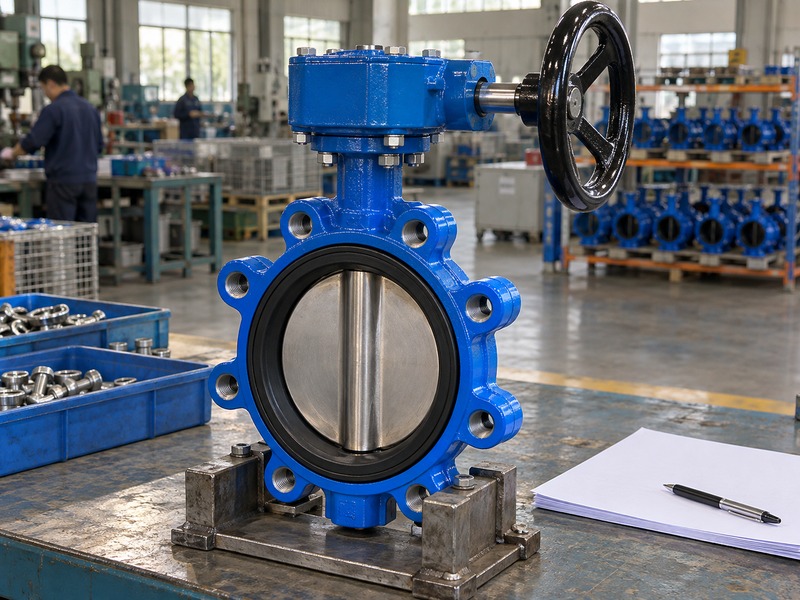
A DI lug type butterfly valve handwheel assembly combines a ductile-iron pressure body, a lug-style pipe connection and a manual geared operator. The lug body has threaded connection features around its perimeter. The wheel and gearbox rotate the butterfly disc without changing the valve's material or pressure-boundary rating.
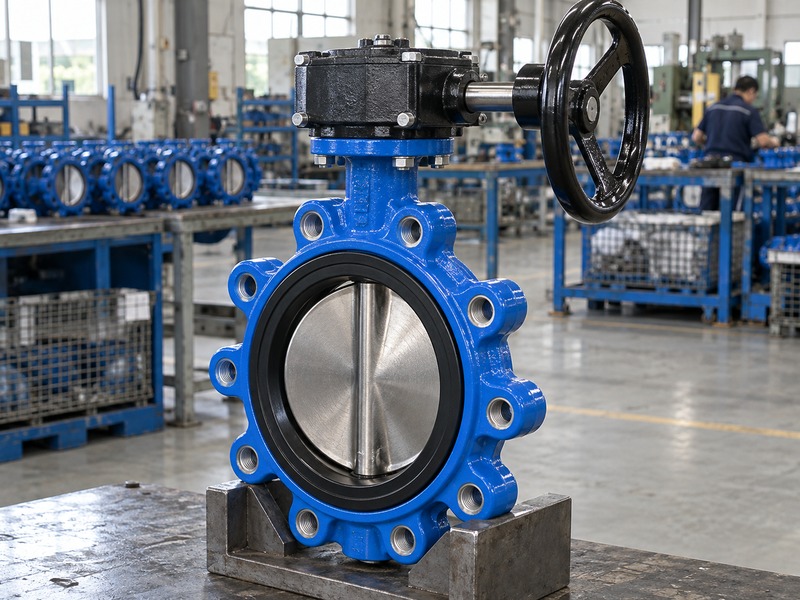
Which details can the product name leave unresolved?
The enquiry still needs the seat type, disc and stem materials, pressure-temperature limits, flange compatibility and operating duty. Suppliers may use short catalogue descriptions differently, so ask for a complete assembly and interface drawing. A lug-style outline should not be accepted as proof that every connection hole has the required thread or engagement. The manual operator also needs its own torque and mounting review.
Keep the valve body, sealing arrangement and operator identified as parts of one selected assembly. If a quotation substitutes a wafer body, a different casting grade or a lever operator, record that as a technical deviation. Resolving these differences at quotation stage is easier than finding them after the valve reaches the installation site.
- Confirm body, connection and operator separately.
- Request the selected interface drawing.
- Record substitutions as technical deviations.
| Term | Meaning |
|---|---|
| DI | Ductile-iron body material description |
| Lug type | Threaded peripheral connection arrangement |
| Handwheel | Geared manual operating input |
2. How do you verify the ductile-iron material?
Verify the body material of a DI lug type butterfly valve handwheel assembly from the specified grade and traceable material records. DI is a material family description rather than a complete specification. Coating color, casting appearance and a stainless disc cannot establish the body grade or its temperature capability.
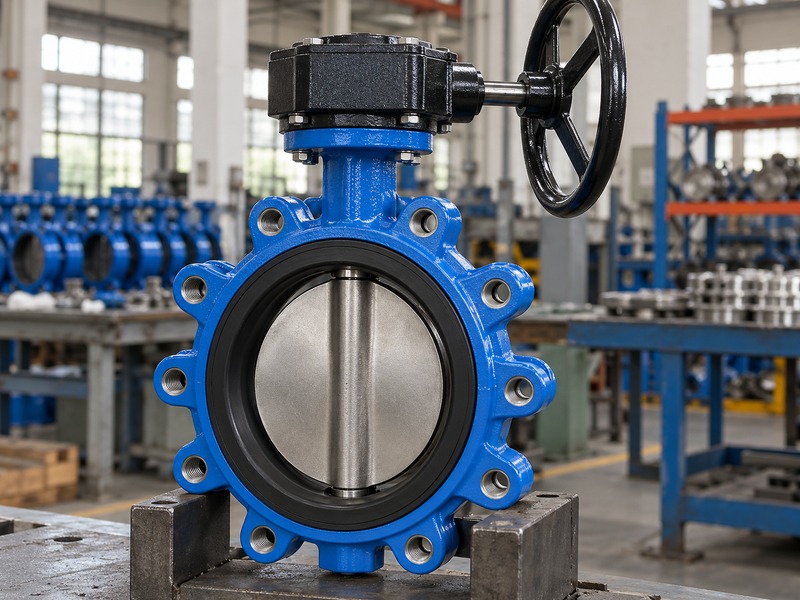
What evidence should connect the casting to the valve?
State the required material standard and grade on the enquiry and approved parts list. Agree which material certificates and traceability records the contract needs, then check that they correspond to the actual item or batch. RUITO's documented conventional water-service bodies use an identified ductile-iron configuration with its own temperature and pressure boundaries. A different low-temperature or chemical-service arrangement requires separate review.
Do not describe the complete valve as stainless steel because the disc or stem uses stainless material. External coating protects the casting within its specified preparation and exposure limits; it does not replace the pressure-body material requirement. If a material document uses a different designation, ask engineering to resolve the claimed equivalence rather than accepting a visual match.
- Specify the exact casting grade.
- Link records to the supplied item.
- Separate body, disc and stem materials.
| Evidence | What it establishes |
|---|---|
| Approved material list | Specified grade and component |
| Traceability record | Connection to actual item or batch |
| Coating record | External protection within its scope |
3. How does a lug connection differ from a wafer connection?
A DI lug type butterfly valve handwheel assembly uses the selected lug connection to attach the pipe flanges, while a wafer assembly is clamped between them using its approved through-bolting arrangement. The two interfaces need different bolt details. Their similar bore size does not make the fasteners interchangeable.
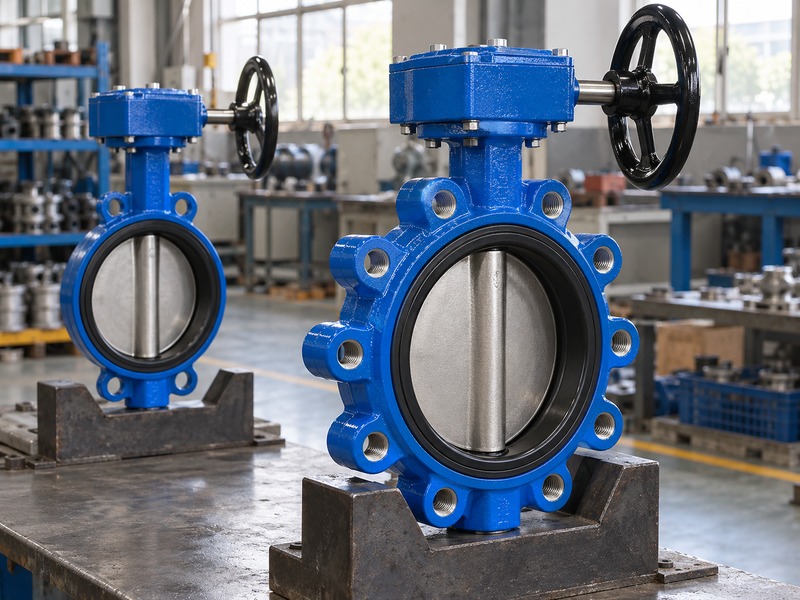
Which interface details prevent site confusion?
Show the required flange standard, hole pattern, thread form and effective engagement on the approved lug drawing. Identify the bolt lengths needed from each side. Avoid assuming that the valve's total lug thickness is the usable thread depth. Blind features, thread runout and internal clearances can reduce available engagement.
A DI lug type butterfly valve handwheel comparison should make the body-style difference explicit before purchasing fasteners or planning a replacement. Check the actual pipe bore and disc envelope for both arrangements. If the contractor already has a standard bolt kit, compare it with the selected valve rather than changing the valve's holes or forcing the kit to fit. Keep the approved bolting schedule with the installation instructions.
- Use the selected lug thread details.
- Check bolts from both sides.
- Do not substitute a wafer bolt kit by size alone.
| Body style | Connection check |
|---|---|
| Lug | Thread form, depth and engagement |
| Wafer | Approved flange-to-flange through bolts |
| Both | Flange compatibility and disc clearance |
4. How do you check lug-bolt engagement?
For a DI lug type butterfly valve handwheel installation, bolt engagement must follow the selected lug drawing and joint procedure. The bolt must provide the required effective threaded contact without bottoming or entering a prohibited space. There is no safe universal bolt length based only on nominal valve diameter.
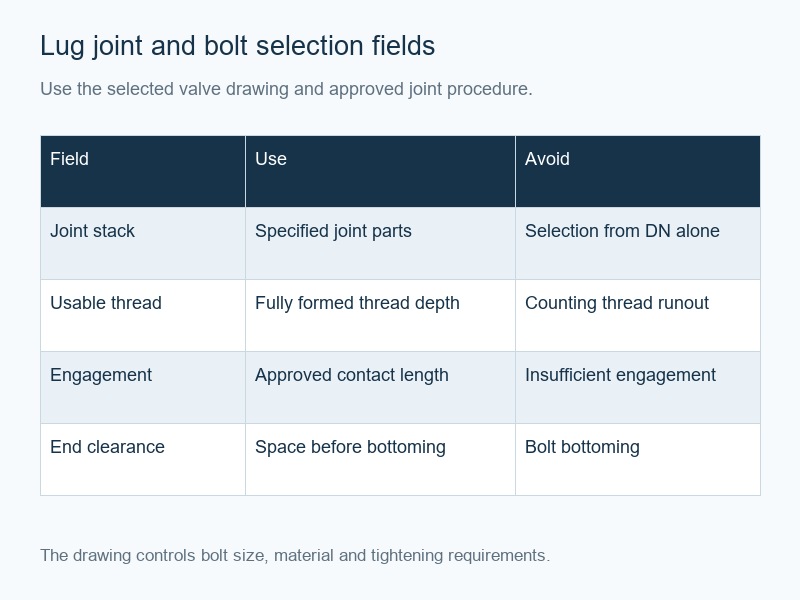
Which dimensions determine the bolt selection?
Build the dimensional check from the actual pipe-flange thickness, washers or other specified joint parts, gasket arrangement and usable lug thread. Distinguish drilled depth from fully formed thread depth. A long bolt can bottom before the joint clamps, while a short bolt can leave too little effective engagement. Both can appear normal from outside after tightening.
Confirm the permitted bolt material, tightening method and access for the installed arrangement. The engagement review should identify the reference surfaces and usable thread without assuming a model-specific value. Ask the supplier to approve the final bolt schedule for the stated flange joint. If flange thickness or gasket selection changes, repeat the engagement check before using the existing fastener length.
- Use effective thread depth.
- Prevent bottoming and insufficient engagement.
- Recheck after joint-stack changes.
| Dimension | Why it matters |
|---|---|
| Joint stack | Bolt length before the lug |
| Usable thread | Effective load-carrying engagement |
| End clearance | Prevention of bolt bottoming |
5. Can you use the valve for end-of-line isolation?
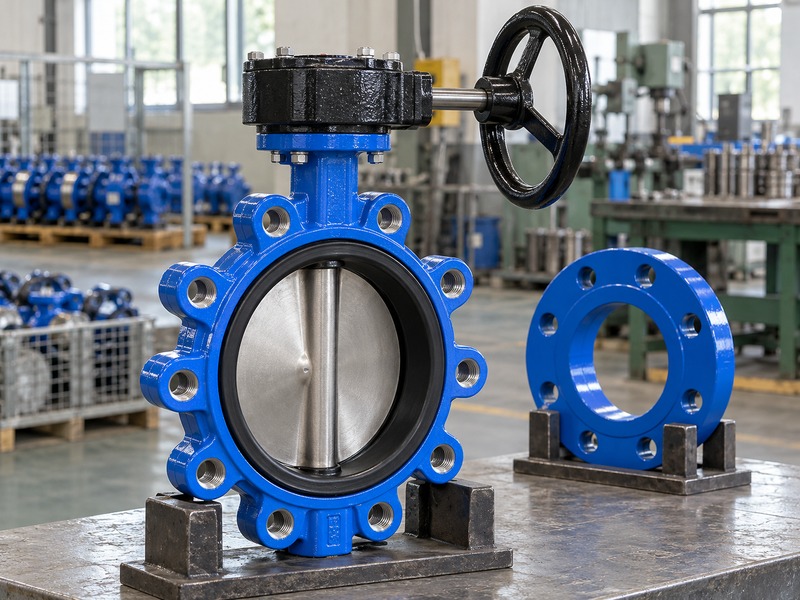
Use a DI lug type butterfly valve handwheel assembly for end-of-line duty only when the exact model, size, direction and differential pressure are approved for that condition. Threaded lugs alone do not establish that capability. Removing one pipe flange changes the loading and retention conditions of the valve assembly.
What should an end-of-line approval identify?
Request a written statement covering the actual valve configuration and its permitted end condition. Check the seat support, body and lug loads, fasteners and installation procedure together. RUITO's documented special water-service lug configuration is limited to DN50–200, 5–40°C and a permitted differential pressure no greater than 10 bar, with a separate end-condition test. That defined configuration should not be expanded to other sizes, materials or duties without review.
For a DI lug type butterfly valve handwheel order, state the end-of-line requirement before selection and testing. During maintenance, follow the site's isolation procedure and the manufacturer's approved instructions. A closed disc and a locked wheel do not by themselves establish a safe boundary for removing downstream equipment.
- Request exact-model end-condition approval.
- State direction and differential pressure.
- Keep maintenance isolation separate from position locking.
| End-duty field | Required definition |
|---|---|
| Model and size | Approved construction and range |
| Pressure direction | Permitted differential by direction |
| Installation | Fasteners, support and test basis |
6. How do you select the handwheel and gearbox?
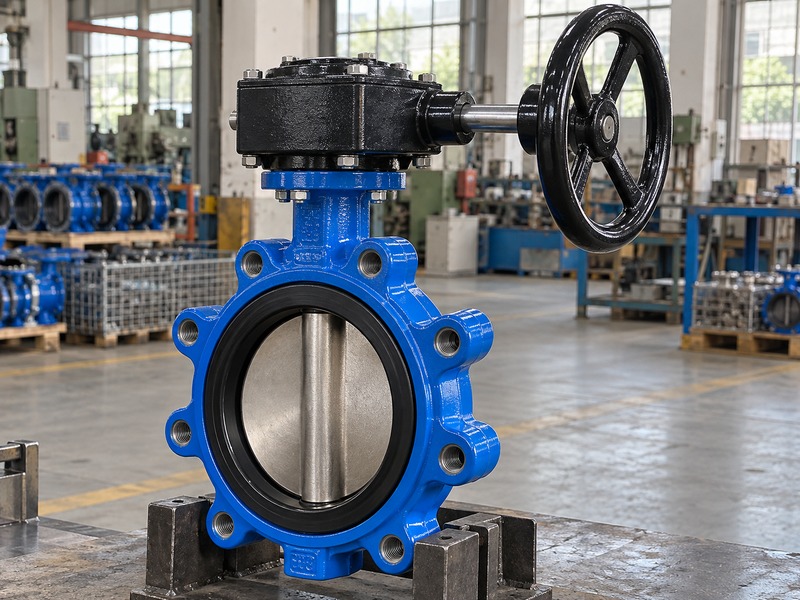
Select the operator of a DI lug type butterfly valve handwheel assembly from the valve's required torque and allowable stem load. Include the maximum closing differential pressure, seat material and service conditions. Body connection style does not determine the gearbox ratio, hand effort or coupling geometry.
How can you avoid an operator that fits but fails the duty?
Ask the supplier to identify the selected gearbox, wheel, mounting and coupling on the assembly drawing. Confirm the torque-sizing basis and any service allowance, along with the expected full-stroke turns and permitted input. A matching mounting pattern is only part of the conversion or replacement check. The coupling must engage correctly, and the stop positions must correspond with actual disc travel.
Check the user's standing position and clearance around the rim before approving the operator orientation. Do not increase wheel diameter or add an extension bar to solve unexplained resistance. A high operating effort may come from differential pressure, seat condition, alignment or interference. Investigate that cause under the approved safe procedure before changing the available manual input.
- Check output demand and stem limits.
- Approve the complete operator assembly.
- Investigate abnormal effort before modification.
| Operator detail | Acceptance question |
|---|---|
| Torque and ratio | Does it cover the approved duty? |
| Coupling | Does it fit and engage correctly? |
| Wheel location | Can the user operate it safely? |
7. Which seat and coating details need confirmation?
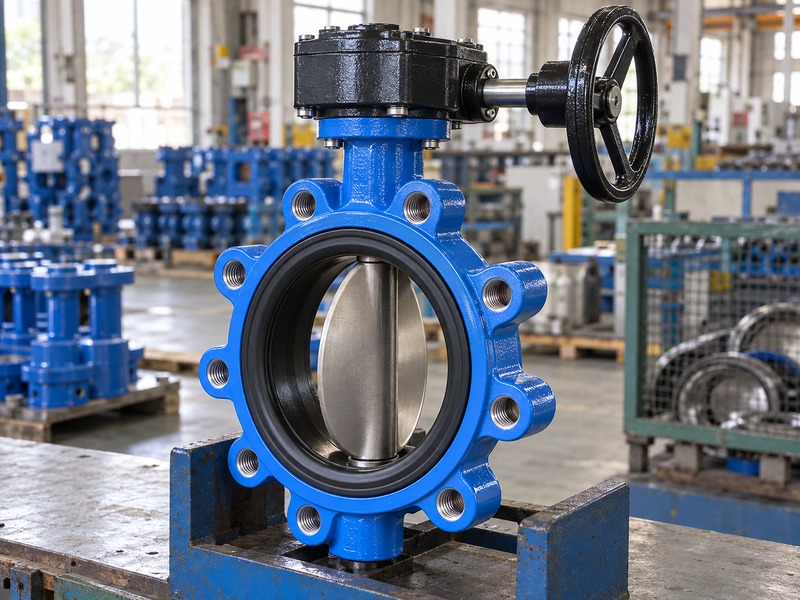
A DI lug type butterfly valve handwheel assembly needs seat and coating materials selected for the actual fluid and environment. The ductile-iron body does not determine elastomer compatibility. Water, mineral oil and chemical-liquid configurations can require different wetted materials and different permitted temperature-pressure conditions.
How should you review the complete contact-material list?
Include the body protection, disc, stem, seat, shaft seals and any lining in the material review. A stainless disc does not isolate every other component from the fluid. For drinking water, confirm the approval scope for the complete selected contact arrangement and temperature. For oil service, check the actual oil composition and approved elastomer rather than substituting a conventional water seat.
Chemical duties may require a separately designed lined valve with compatible backing and seals. RUITO's water-service applications use defined configurations rather than one universal material package. Keep external corrosion exposure separate from internal fluid compatibility, since an outdoor gearbox and the valve's wetted seat see different conditions. Resolve both before freezing the supplied assembly.
- Review every wetted component.
- Match elastomers to the actual fluid.
- Separate internal compatibility from external protection.
| Material area | Input required |
|---|---|
| Seat and seals | Fluid composition and temperature |
| Disc and stem | Wetted corrosion conditions |
| External coating | Atmosphere, moisture and handling |
8. What should inspection check before dispatch?
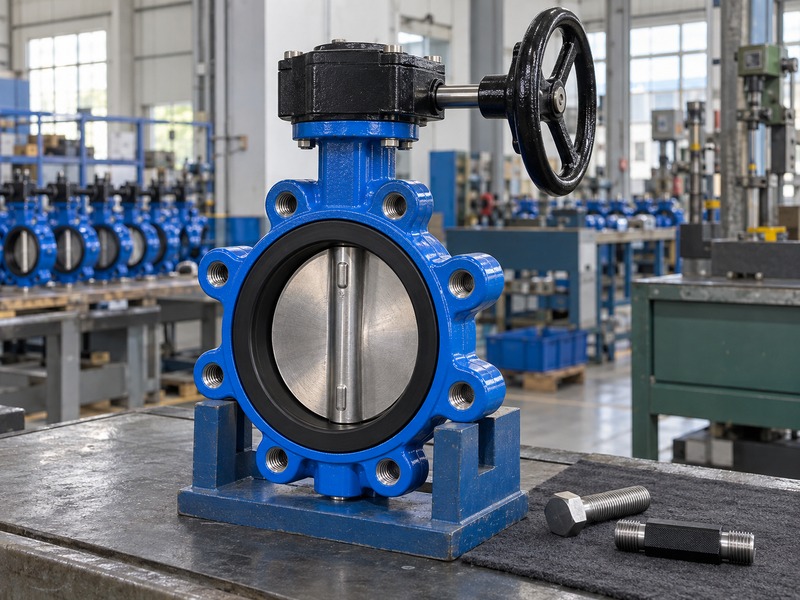
Inspect a DI lug type butterfly valve handwheel assembly against the approved material, interface and operating requirements. Check the lug threads, operator fit, disc movement and applicable pressure tests as separate items. A pressure-test report cannot confirm that the site bolts will engage correctly or that the wheel clears the installation.
How do you connect the inspection results to the order?
Identify the valve item, drawing revision and selected operator in the inspection record. Verify the specified thread details and critical dimensions using suitable controlled methods. Record functional findings without substituting an unloaded movement check for service torque sizing. If the contract selects ISO 5208, state the applicable metallic-valve test medium, pressure, direction, duration and leakage criterion with the product requirements.
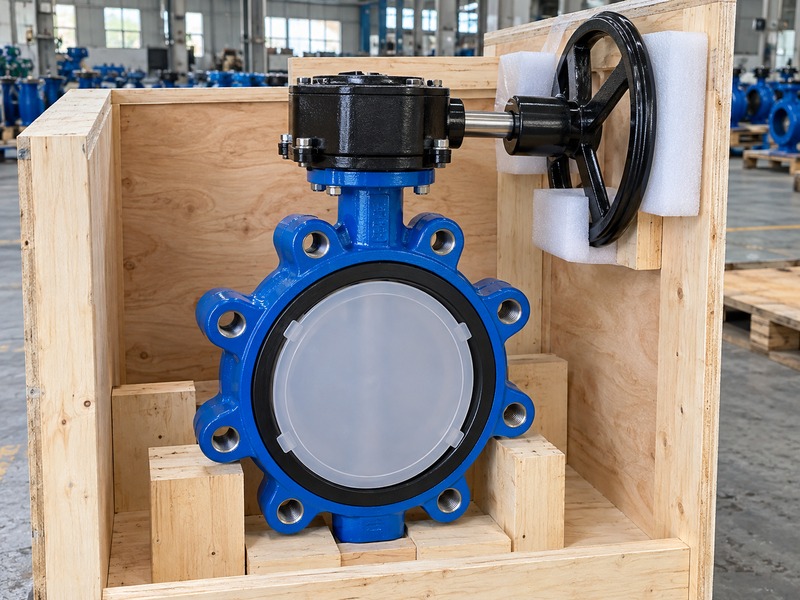
Any end-of-line approval needs its own applicable evidence. Check the wheel, gearbox and coating for transport damage before final packing. Protect the valve faces and keep crate loads on approved structural supports. If an inspection reveals a changed operator or casting detail, hold the item for review rather than accepting a statement that it is the same nominal size.
- Match records to the actual item.
- Check threads and operating function.
- Keep end-condition evidence within its approved scope.
| Inspection item | Evidence |
|---|---|
| Lug interface | Specified thread and dimension checks |
| Manual operator | Assembly and travel verification |
| Sealing and pressure | Applicable test record and criterion |
9. What should a complete enquiry include?
A DI lug type butterfly valve handwheel enquiry should include the fluid duty, exact material requirements, flange interface, end-condition needs and operator access. State the requested inspection and document scope. These inputs allow an offer for a defined assembly instead of a loosely described catalogue valve.
How should you compare quotations and repeat orders?
Use one comparison sheet for the body grade, seat, disc, stem, flange standard, lug threads, operator and permitted duty. Require each supplier to list deviations and missing inputs. Agree the approved assembly revision before releasing manufacture, especially if the order includes several similar valve sizes. Keep the bolt schedule and any end-of-line restrictions with each relevant item.
For repeat orders, check that material, coupling, gearbox and wheel changes follow a controlled approval process. A quotation that uses the same product name may still contain a different configuration. Give installation and maintenance teams the final drawings and operating instructions with the shipment, then retain the accepted inspection records for future spare parts and service enquiries.
- Compare offers on the same configuration.
- Resolve deviations before manufacture.
- Retain final drawings for repeat orders.
| Enquiry field | Definition |
|---|---|
| Service | Fluid, temperature and differential pressure |
| Interface | Flanges, threads and end condition |
| Operator | Torque, mounting and access |
10. What do buyers ask about DI lug handwheel valves?
Q1. Does DI mean the whole valve is ductile iron?
No. DI commonly identifies the body material. The disc, stem, seat and other components need their own material specification.
Q2. Can every lug valve hold pressure with one pipe removed?
No. End-of-line duty requires approval for the exact configuration, size, direction, differential pressure and installation arrangement.
Q3. Can I use the same bolt kit as a wafer valve?
Do not assume so. Lug connections need the specified thread form, effective engagement and bolt length from each side.
Q4. How do I know whether a bolt is bottoming?
Compare the actual joint stack and usable thread dimensions with the approved bolt schedule. Tightening resistance alone cannot distinguish proper clamping from bottoming.
Q5. Can I order a wheel separately from the gearbox?
Yes, when the exact operator interface and part specification are known. Confirm the hub, retention, load and envelope rather than selecting by rim diameter.
Send the duty, pipe-flange details and any end-of-line requirement when you contact us. RUITO can review the selected lug assembly, manual operator and inspection requirements before quotation.