
Fix double flange butterfly valve with handwheel selection mistakes by checking the body design, pipe interfaces and closing differential pressure together. The assembly combines two integral end flanges with a geared manual operator. Confirm face-to-face length, sealing design and operating effort before ordering a replacement or project package.
1. What is a double flange butterfly valve with handwheel?
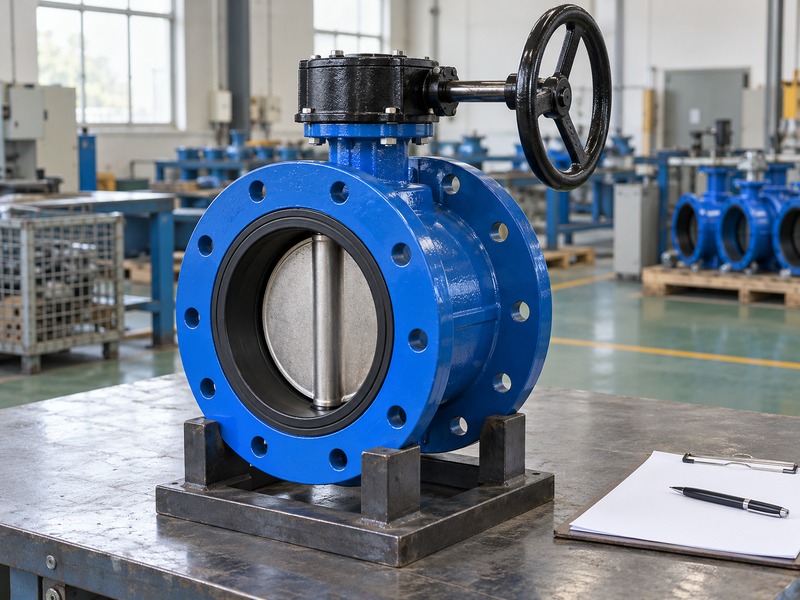
A double flange butterfly valve with handwheel connects to the pipeline through a flange at each end of its body. The handwheel drives a gearbox that rotates the disc. Connection style and operating method are separate choices, so neither term alone identifies the valve's seat design or pressure capability.
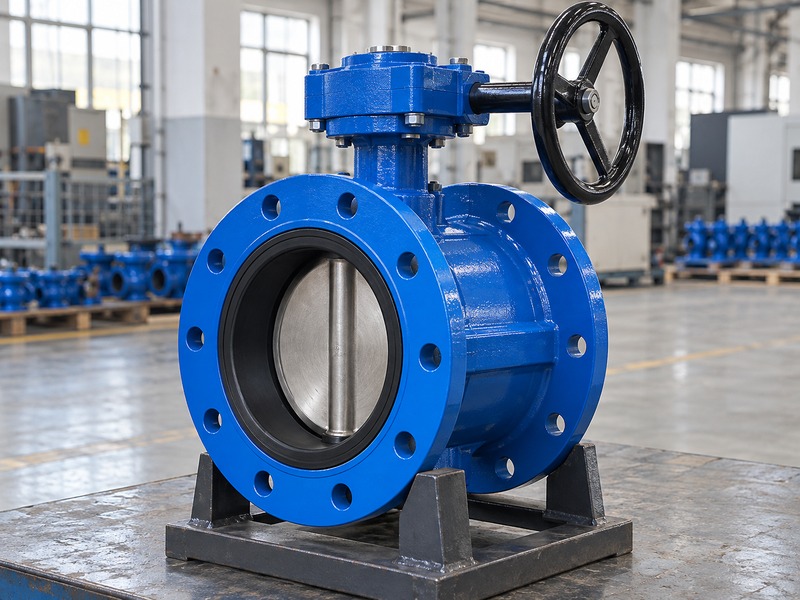
Which construction details should the drawing identify?
The assembly drawing should show the two valve flanges, body length, disc envelope, stem and complete manual operator. Identify whether the selected valve is concentric or uses an offset design. Those constructions can have different sealing, torque and directional limits even when the external connection looks similar. A short product name can hide these differences during purchasing.
Ask for the actual sectional description, wetted materials and approved pressure-temperature data rather than assuming every double-flanged valve uses the same mechanism. RUITO documents both concentric soft-seated and double-offset double-flanged configurations within their own size and duty boundaries. Keep the selected construction on the enquiry and order so the supplier cannot substitute one based only on nominal diameter.
- Identify connection and sealing design separately.
- Request the complete operator outline.
- Keep the selected construction on the order.
| Description | What it identifies |
|---|---|
| Double flange | Pipeline connection arrangement |
| Concentric or offset | Internal sealing geometry |
| Handwheel gearbox | Manual operating arrangement |
2. Which services suit this arrangement?
A double flange butterfly valve with handwheel can suit accessible local isolation on an approved water or compatible-fluid duty. The body, seat and materials determine its actual service limits. Two end flanges do not make a valve suitable for every pressure, temperature, chemical liquid or gas application.
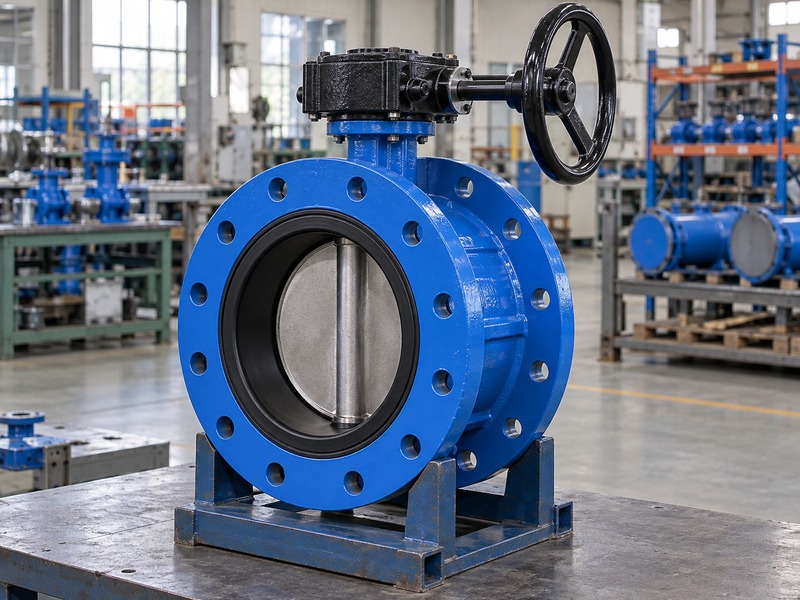
How do you keep the application within its boundaries?
Start with the complete fluid composition, normal and maximum temperature, operating pressure and maximum closing differential pressure. State any solids, cleaning chemicals or abnormal conditions that affect sealing and operation. RUITO's documented water and circulation configurations use specific material and temperature windows; chemical linings and other services require their own review. Drinking-water approval must cover the actual model and contact materials.
The gearbox and wheel must also suit the external environment and operating frequency. A sheltered plant room and an outdoor wet installation can impose different enclosure and corrosion requirements. If the valve will throttle, define the required flow conditions and permitted operating range separately from its isolation function. Keep those requirements attached to the same selected assembly.
- Provide fluid and simultaneous temperature-pressure conditions.
- State external environment and operation frequency.
- Review throttling as a separate duty.
| Requirement | Review |
|---|---|
| Fluid service | Materials and sealing compatibility |
| Local operation | Reach, effort and frequency |
| Environment | Operator protection and corrosion |
3. Which flange and face-to-face details must match?
A double flange butterfly valve with handwheel must match the complete piping interface, including flange standard, rating, drilling, facing and face-to-face length. DN or NPS alone cannot establish interchangeability. Check the actual pipe bore and disc opening envelope as part of the same interface review.
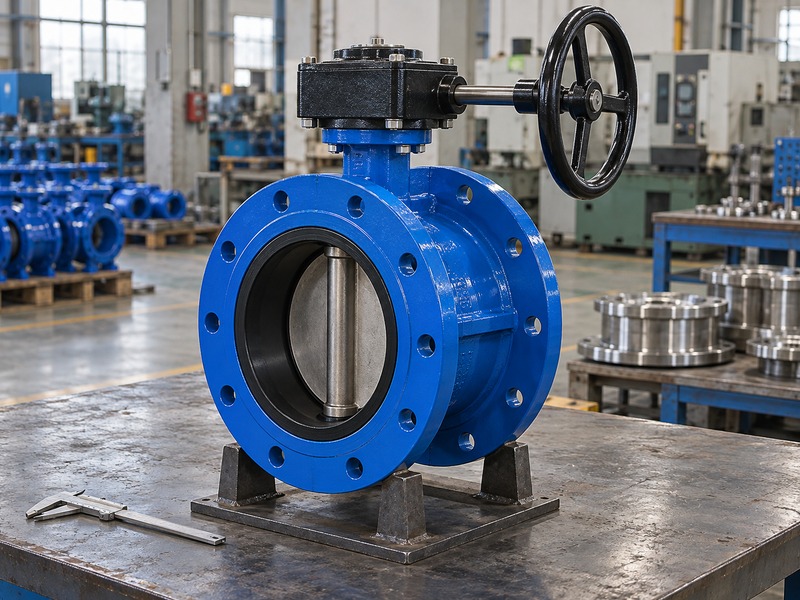
Why can a same-size replacement still fail to fit?
Different flange standards can use different bolt patterns, dimensions and sealing faces at the same nominal size. A different body series can also change the distance between the pipe flanges. Do not pull the pipeline into place using the valve bolts to overcome a length mismatch. For a double flange butterfly valve with handwheel replacement, obtain the original installation dimensions or measure them under an approved site procedure.
Compare the complete proposed drawing with the available space and adjoining equipment. If the pipework includes a dismantling joint, use its approved adjustment and restraint design rather than treating it as an unlimited compensation device. Resolve interface deviations before manufacture, since changing flange holes or face geometry later can affect the approved pressure boundary.
- Compare complete flange details.
- Confirm body length from the selected drawing.
- Resolve installation deviations before manufacture.
| Interface | Required check |
|---|---|
| Flanges | Standard, rating, facing and drilling |
| Body length | Approved face-to-face dimension |
| Pipe bore | Full disc opening clearance |
4. How do connection and shutoff ratings differ?
For a double flange butterfly valve with handwheel, flange designation, body pressure-temperature rating and permitted seat differential pressure describe different limits. Keep each value tied to the selected model. An interface drilled to a particular flange pattern does not establish the same pressure capability for the whole valve assembly.
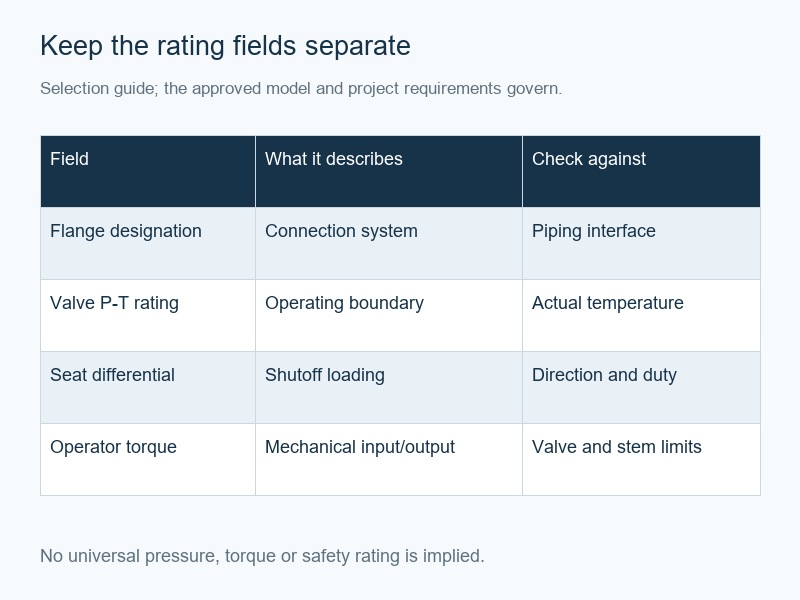
What should a rating comparison show?
Ask the supplier to state the permitted operating pressure at the actual temperature and the maximum closing differential pressure in each allowed direction. Identify any restrictions for reverse pressure or an end-of-line condition. Compare those limits with the pipeline's operating and transient conditions. Factory test pressure is an inspection condition, so it should not be copied into the operating-pressure field.
The manual operator's torque rating is another separate value. It must cover the valve demand without exceeding the allowable stem load. A clear rating schedule lets engineering identify which component or condition governs the installation. If two documents show different values, request a resolved model-level statement before accepting the quotation or approving a substitute.
- Keep interface and operating ratings separate.
- State closing differential pressure by direction.
- Distinguish inspection pressure from service limits.
| Rating item | Meaning |
|---|---|
| Flange designation | Specified connection system |
| Valve P-T limit | Permitted simultaneous operating conditions |
| Seat differential | Approved shutoff loading and direction |
5. How should you select the handwheel operator?
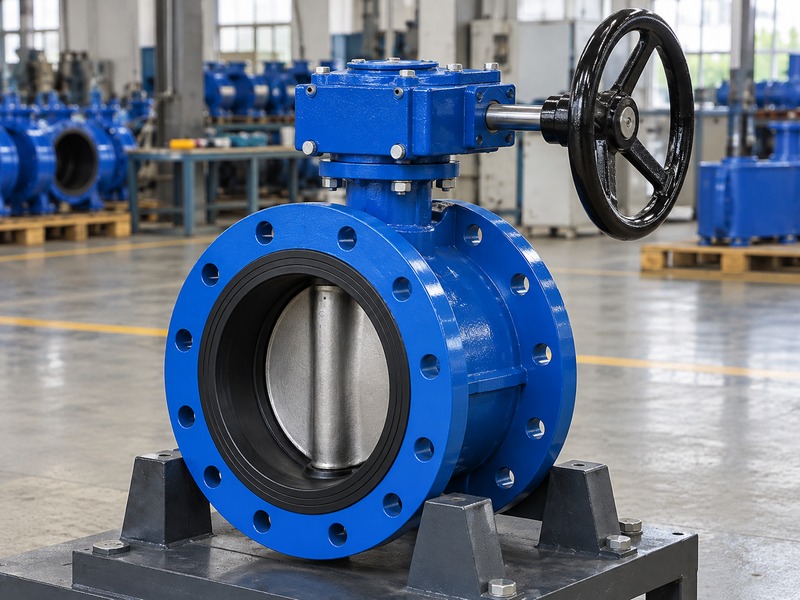
Select the operator of a double flange butterfly valve with handwheel from the required valve torque, permitted input effort and installation space. Use the stated service differential pressure and seat configuration. A wheel that fits the outline drawing can still be unsuitable for the valve's closing demand.
Which operating details should the supplier confirm?
Request the breakaway, running and closing torque basis for the selected assembly. Confirm the gearbox ratio, wheel diameter, approximate full-stroke turns and allowed input load. The operator must remain compatible with the stem, coupling and mounting flange. A larger gearbox can increase available output without increasing the valve's allowable stem torque.
Check that users can reach the rim without leaning across pipework or moving equipment. If the operator orientation changes during layout approval, update the drawing and confirm indicator and stop alignment. For valves used only occasionally, ask whether the operating conditions or idle periods affect the selection allowance. Retain the selected gearbox and coupling details with the valve identification so future replacements follow the same approved arrangement.
- Use model-specific torque demand.
- Check effort, turns and wheel space.
- Confirm coupling and mounting compatibility.
| Operator input | Decision it supports |
|---|---|
| Valve torque basis | Gearbox capacity |
| Effort and turns | Wheel and ratio selection |
| Installation envelope | Mounting orientation and access |
6. Which gaskets and fasteners should you use?
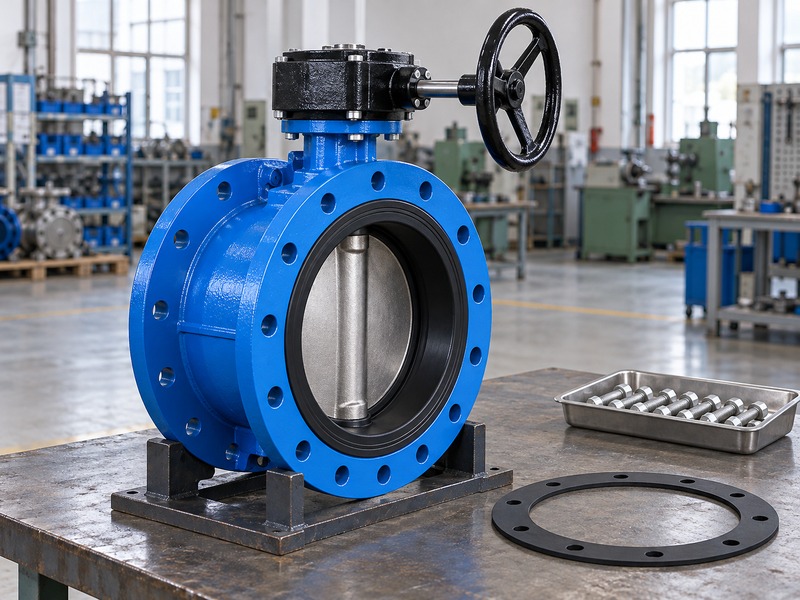
A double flange butterfly valve with handwheel needs the gasket and bolting arrangement specified for its actual sealing faces and construction. Do not apply a universal gasket rule from another butterfly-valve type. Bolt dimensions, materials, tightening and access must suit the selected flange joint and approved installation procedure.
What should the joint drawing make clear?
Identify whether the selected valve uses separate flange gaskets or a sealing arrangement with different requirements. Check compatibility with the medium, temperature, facing and any lining or coating at the joint. Fasteners need the correct diameter, length, engagement and access for the approved assembly. The tightening procedure should state the sequence and required values for that configuration.
Do not use a generic torque table as the final instruction without checking its applicability. For a double flange butterfly valve with handwheel project package, align the valve joint requirements with the piping specification and inspection plan. A complete bolting and gasket schedule reduces site substitutions and makes it easier to identify whether missing items belong to the valve supply or the installation contractor.
- Follow the selected joint's gasket requirement.
- Confirm fastener length and material.
- Agree supply and installation responsibilities.
| Joint item | Information to approve |
|---|---|
| Gasket or seal | Material, facing and geometry |
| Fasteners | Size, length and material |
| Tightening | Applicable sequence and specified values |
7. How should the pipework support the valve?
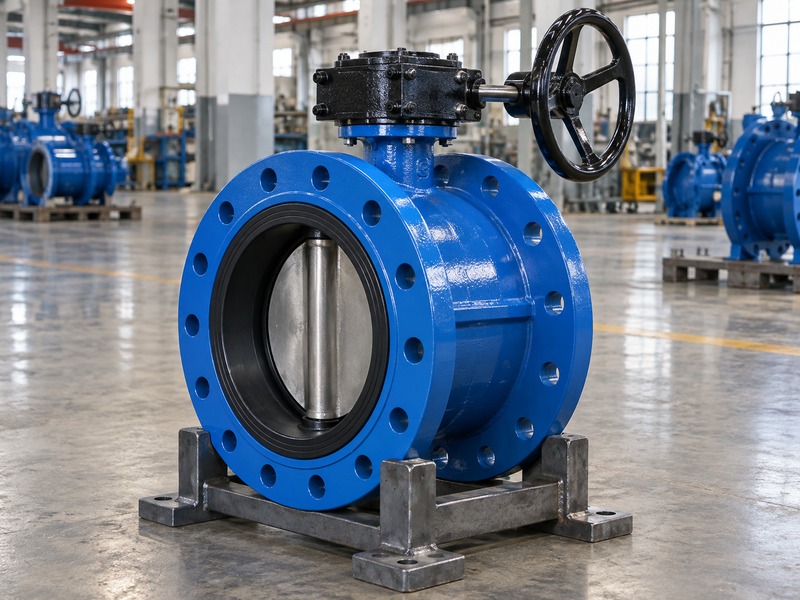
Install a double flange butterfly valve with handwheel into aligned, properly supported pipework without using the valve to correct forced misalignment. The system designer must address weight, pressure thrust and external pipe loads. A flange connection does not remove those loads or make the operator a lifting point.
Which installation details deserve an early review?
Show the valve support and lifting arrangement on the installation plan, especially when the assembly is heavy or the operator projects into an access route. Use only approved lifting points and handling methods. Keep lifting slings and transport restraints away from the handwheel and input shaft unless the manufacturer specifically provides for them. Check adjoining reducers, dismantling joints and supports for disc clearance and maintenance access.
The actual pipe internal diameter can be smaller than a nominal-size comparison suggests because of wall thickness, lining or a nearby component. Before final tightening, follow the model's installation procedure for centering and disc position. Avoid rotating the disc into an obstruction or using the gearbox to overcome a mechanical collision.
- Provide independent pipe and valve support.
- Use approved lifting points.
- Check disc travel before final commissioning.
| Load or space | Responsible review |
|---|---|
| Assembly weight | Support and handling plan |
| Pipe misalignment | Piping installation correction |
| Disc envelope | Actual adjoining bore and components |
8. What should commissioning verify?
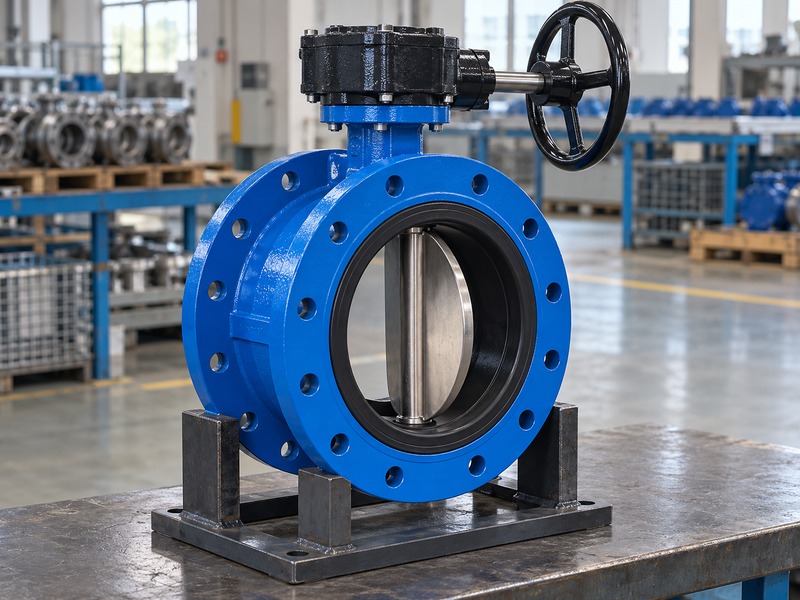
Commission a double flange butterfly valve with handwheel against the approved installation and operating procedure. Check mechanical travel, operator indication, joint condition and the required pressure or leakage tests as separate tasks. A smooth handwheel movement by itself does not establish that the valve meets the project's sealing requirement.
How do you make the check repeatable?
Record the valve identification, drawing revision and inspection conditions. Verify that the operator reaches its approved positions without binding and that indication corresponds with actual disc travel where the procedure permits checking it. Where the contract specifies ISO 5208, apply its metallic-valve test requirements with the selected product standard; system filling, venting and test safety still need the project procedure. Review closing behavior with the system designer if pump operation or rapid flow changes can create transients.
A handwheel can slow manual movement, but it does not provide a calculated water-hammer guarantee. Keep measured findings separate from supplier design values in the commissioning record. If effort, leakage or movement is abnormal, stop and investigate the assembly and duty before changing stops, extending the wheel or accepting the valve for service.
- Record identification and check conditions.
- Separate travel and leakage acceptance.
- Investigate abnormal effort or movement.
| Commissioning check | Acceptance basis |
|---|---|
| Mechanical function | Approved travel and indicator settings |
| Joint and pressure boundary | Project test procedure |
| Shutoff performance | Specified direction and leakage criterion |
9. What documents should the order require?
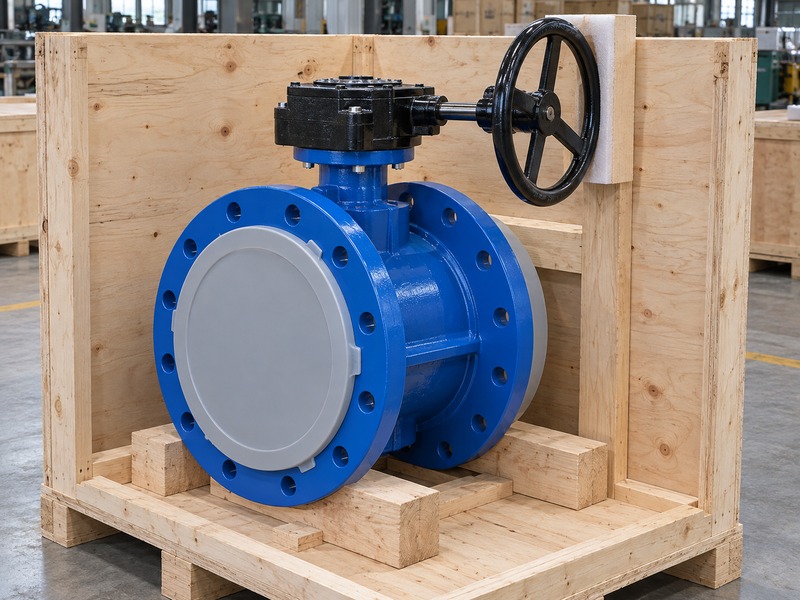
A double flange butterfly valve with handwheel order should require the selected assembly drawing, materials, operating limits, operator sizing and inspection scope. Connect each document to the actual valve item. A general brochure cannot replace the approved details needed for installation, acceptance and later spare-part enquiries.
How should you compare competing offers?
Build the comparison around the same fluid, temperature, differential pressure, interfaces and acceptance criteria. Ask suppliers to identify deviations instead of hiding them inside a general compliance statement. For RUITO's documented double-flanged valve configurations, size and duty must remain tied to the selected concentric or double-offset design. Request the appropriate pressure-temperature and directional information for that model.
Agree which material records, functional checks and pressure-test reports the contract requires. Include operator configuration, packing protection and any witness points in the same purchase package. Before shipment, verify that the approved drawing revision and item identification match the physical assembly and inspection records. Retain those documents for the installed valve rather than relying on the quotation alone.
- Compare offers on one duty basis.
- Require explicit technical deviations.
- Match records to the shipped item.
| Document | Purpose |
|---|---|
| Approved assembly drawing | Installation and operator fit |
| Duty and rating schedule | Service suitability |
| Inspection package | Traceable acceptance evidence |
10. What do buyers ask about double-flanged handwheel valves?
Q1. Does double-flanged construction mean double offset?
No. Double flange describes the end connections. Concentric and offset internal designs need separate identification.
Q2. Can I use flange drilling as the complete valve pressure rating?
No. Confirm the selected model's pressure-temperature and seat differential limits, including direction and any restricted installation condition.
Q3. Can the gearbox carry the valve during lifting?
Use the manufacturer's approved lifting method. The wheel and input shaft should not be treated as handling points.
Q4. What is the best gasket for every double-flanged valve?
There is no universal choice. Use the selected sealing-face design, fluid, temperature and installation procedure to determine the approved joint arrangement.
Q5. How do I avoid a replacement that is too long?
Compare the approved face-to-face dimension and complete operator envelope with the existing installation before manufacture. Resolve any deviation in writing.
Send the fluid duty, flange specification and installation drawing when you contact us. RUITO can review a documented configuration and identify the operator, interface and inspection details needed for the order.