
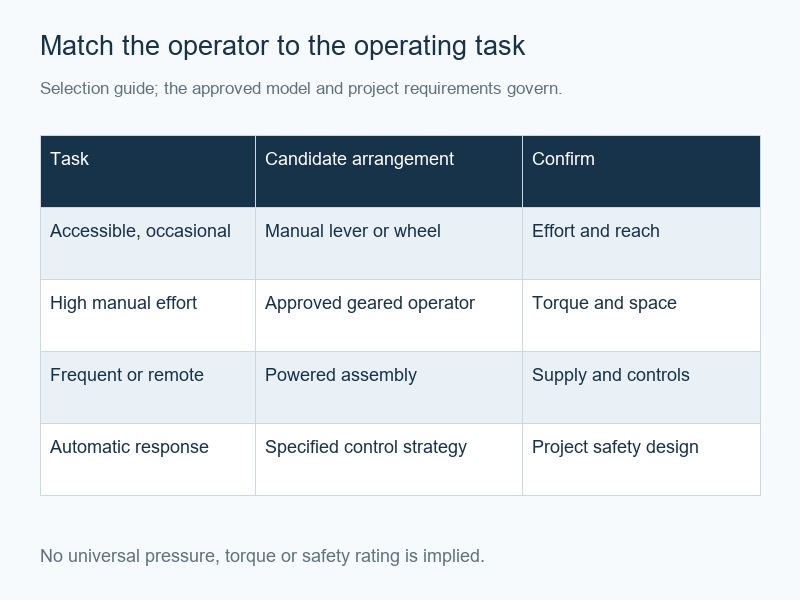
Choose a manual butterfly valve by checking the fluid duty, required torque, operating frequency and local access before selecting its lever or geared wheel. The operator rotates a disc across the flow passage. Confirm whether the process also needs remote commands or an automatic response, since those requirements change the operating arrangement.
1. How does a manual butterfly valve work?
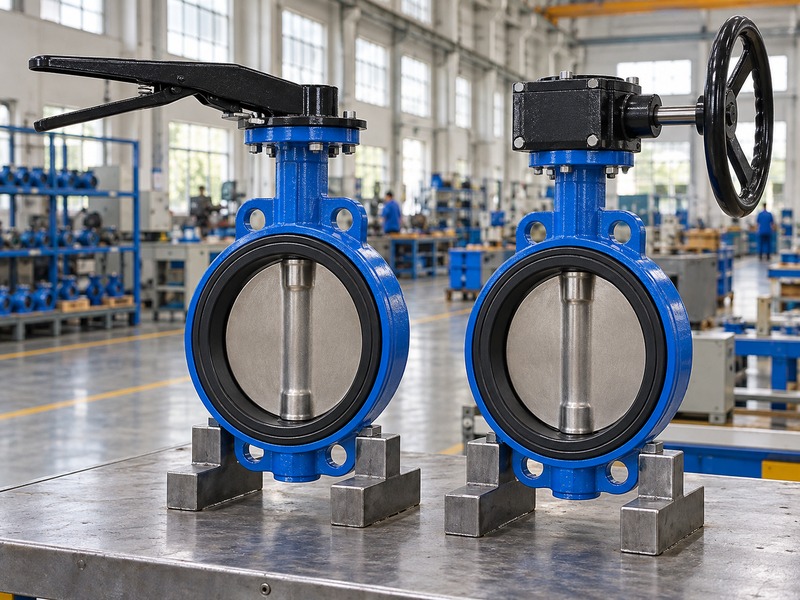
A manual butterfly valve opens and closes by rotating a disc through its specified quarter-turn travel. A direct lever turns the stem with the user's movement, while a geared handwheel turns the same output through a reduction mechanism. The disc remains inside the flow passage when the valve is open.
Which features distinguish it from other manual valves?
The compact rotary mechanism differs from a rising-stem gate or globe valve. Its disc and seat form the shutoff interface, while the stem transmits operating torque. Depending on the selected design, the body may use wafer, lug, flanged or another approved connection. Those connection choices do not determine whether the valve is operated by hand or by a powered actuator.
Identify the internal sealing design and operator separately on the data sheet. A quarter-turn disc does not mean that a handwheel also needs only a quarter turn, because the gear ratio adds input turns. Use the actual operator information when estimating local operation time or planning access around an equipment package.
- Identify body, sealing design and operator.
- Distinguish disc travel from wheel turns.
- Check the complete assembly drawing.
| Component | Function |
|---|---|
| Disc and seat | Flow passage and shutoff interface |
| Stem | Torque transfer |
| Lever or gearbox | Local manual input |
2. When is local manual operation the right choice?
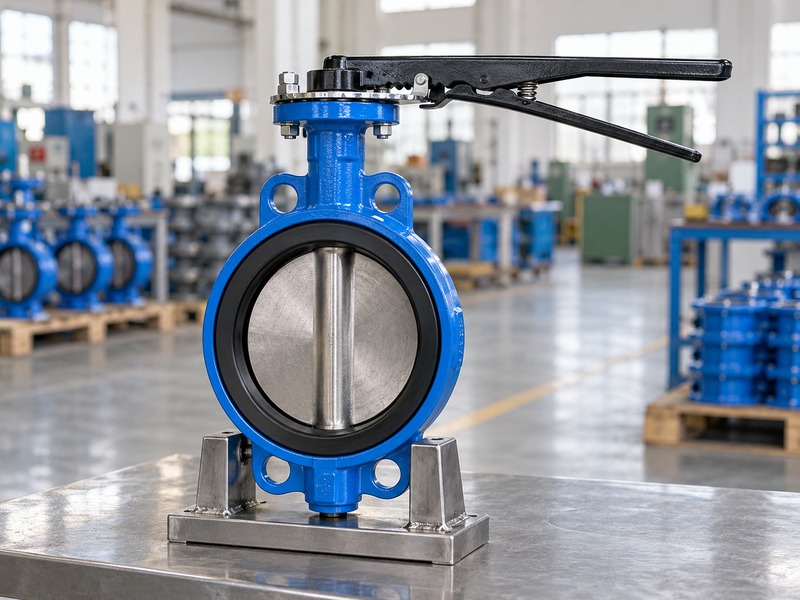
A manual butterfly valve is useful when local access, operating frequency and required response make hand operation practical. It suits duties where a person can carry out the required movement within the process procedure. Remote commands, automatic cycling or a defined loss-of-power response require a different operating strategy.
What should you ask the process operator?
Ask who operates the valve, how often they use it and how quickly the process requires a change. Include the standing position, available lighting and any access permit needed at the valve location. A valve that is inexpensive to buy can be inconvenient if routine operation requires a platform or repeated travel across the plant. The process designer should also define what happens when no operator is available.
A handwheel's mechanical holding feature does not perform an automatic shutdown action. If the duty changes later, review the complete valve, actuator and controls rather than adding a motor to an unverified manual assembly. Keep the chosen operating method on the valve schedule so the installation team understands the intended task.
- Define the local operating task.
- Record frequency and response needs.
- Separate manual holding from automatic action.
| Operating need | Selection direction |
|---|---|
| Occasional accessible isolation | Review a manual assembly |
| Frequent or distant operation | Review powered operation |
| Defined automatic response | Specify the control and failure strategy |
3. Which service inputs should the enquiry include?
A manual butterfly valve enquiry needs fluid composition, simultaneous temperature and pressure, maximum closing differential pressure and the required flow duty. State abnormal conditions that affect the selection. Nominal pipe size alone cannot establish material compatibility, sealing performance or the torque needed for reliable local operation.
How should you describe the fluid accurately?
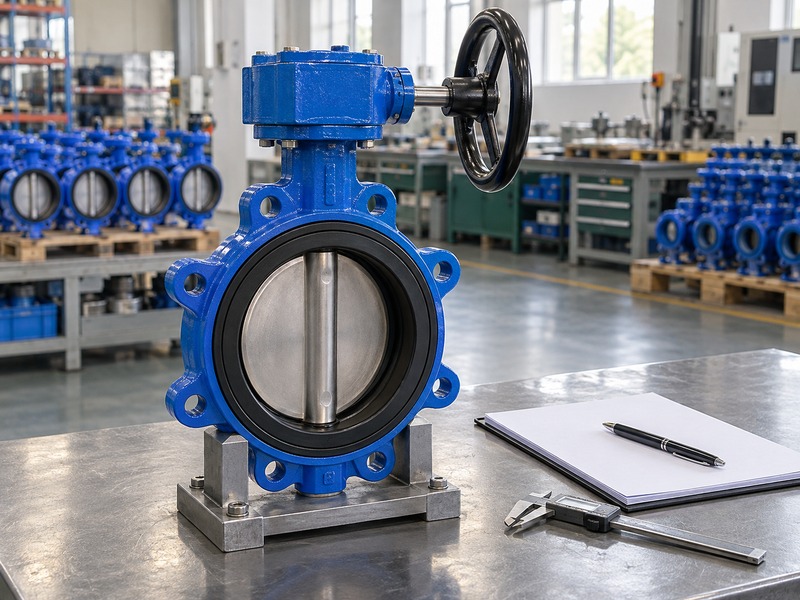
List the main fluid and any additives, solids, cleaning agents or contaminants that the valve may contact. For a glycol circuit, provide concentration and temperature rather than calling it water. For oil, identify the actual product and relevant composition. Gas service needs its own approved configuration and leakage requirements; a water valve does not become a gas valve because it has a handwheel.
A manual butterfly valve used in treatment or circulation equipment also needs a review of solids and deposits that could obstruct the disc. Give normal conditions and the maximum values that can occur together. This prevents a quotation from combining separate catalogue maxima that do not apply to one supplied configuration.
- Provide complete fluid and cleaning conditions.
- State maximum closing differential pressure.
- Use simultaneous temperature-pressure values.
| Input | Selection effect |
|---|---|
| Fluid composition | Wetted-material compatibility |
| Temperature and pressure | Model operating boundary |
| Differential pressure | Seat and operator loading |
4. How do you choose between a lever and a gearbox?
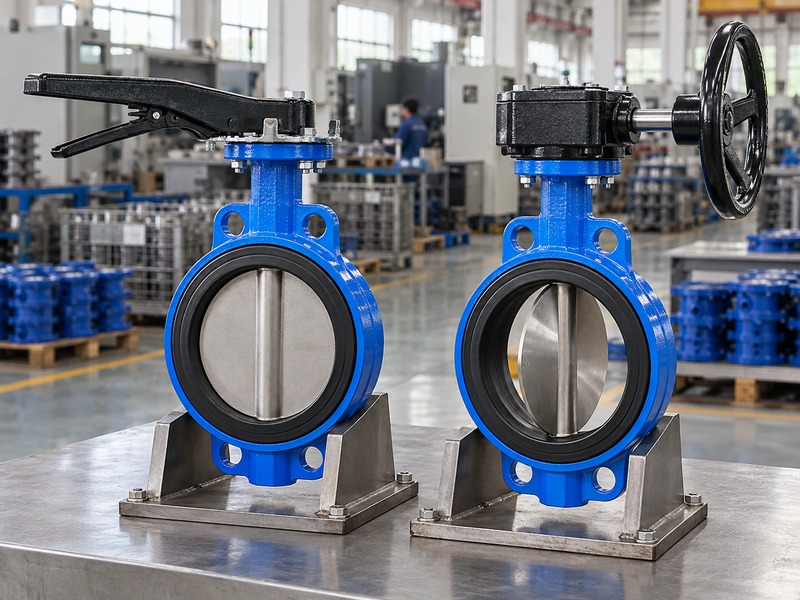
Choose the manual butterfly valve operator by required torque, acceptable hand effort, position control and available space. A lever offers direct movement but needs a clear sweep. A gearbox reduces input effort at the cost of extra turns and a larger operator assembly, so neither option is universally better.
Which practical checks should decide the choice?
Use the selected valve's torque basis and the supplier's permitted operator input. Check whether the user can grip the lever or wheel from a stable position through the entire required movement. A large lever may interfere with nearby pipework even when the valve body fits. A gearbox can solve one effort problem while introducing a wheel-clearance or access problem.
Include any lock or position-holding requirement in the approved arrangement. If the process needs frequent cycling, compare the time and labor involved with an appropriate powered option. Keep the operator selection tied to the actual differential pressure and seat material, because a different service can change torque without changing the nominal valve size.
- Check torque and permitted hand effort.
- Review the complete operator envelope.
- Include frequency and holding requirements.
| Operator | Practical check |
|---|---|
| Lever | Force, sweep and lock engagement |
| Geared handwheel | Effort, turns and wheel space |
| Powered option | Supply, controls and required response |
5. How do you match the seat and body materials?
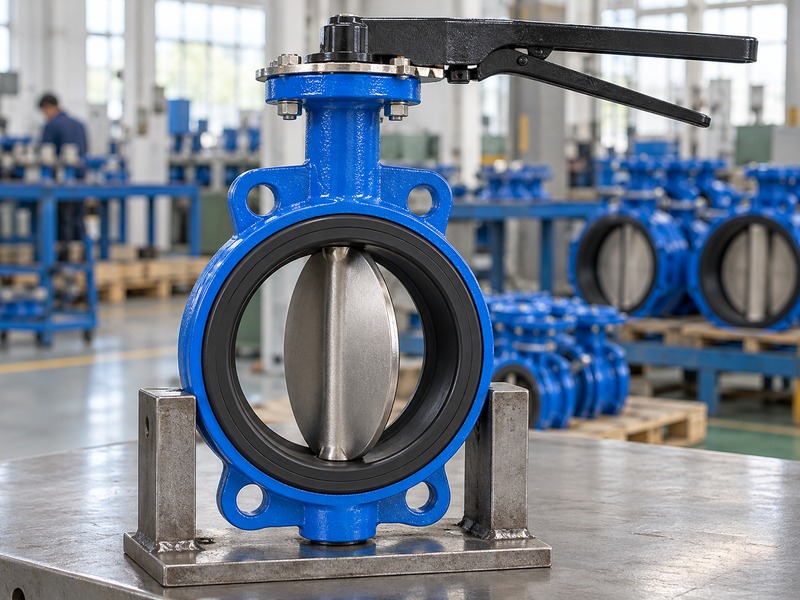
Select a manual butterfly valve's complete wetted-material arrangement for the specified fluid and operating conditions. The operator type does not determine compatibility. A body material, disc grade or elastomer name is only one part of the review, especially for drinking water, oil and chemically aggressive liquids.
What does the RUITO material review cover?
RUITO's documented conventional water configurations combine a defined body, disc, stem, seat and coating arrangement. Oil and clean-gas versions use their own approved materials and boundaries, while lined chemical valves require a complete lining, backing and shaft-seal review. Drinking-water use requires the applicable approval scope for the selected contact materials and temperature. Do not transfer the highest temperature from one seat material to another assembly that shares the same body size.
Keep external corrosion protection separate from internal compatibility. The operator housing, fasteners and wheel may see rain or salt spray while the valve carries fresh water. Ask the supplier to list every wetted material and state the actual permitted service window for that configuration.
- Review every wetted component.
- Confirm application-specific approval scope.
- Check external exposure separately.
| Material group | Review basis |
|---|---|
| Body, disc and stem | Fluid and mechanical duty |
| Seat and shaft seals | Compatibility and temperature |
| Operator exterior | Moisture, corrosion and access |
6. Can you use it for flow control?
A manual butterfly valve can provide an intermediate disc position when the selected design and operator permit it, but a fixed position does not guarantee a fixed flow. The useful throttling range depends on the valve characteristics and system conditions. Review differential pressure, hydraulic torque, noise and cavitation where relevant.
Why is half open different from half flow?
The relationship between disc angle and flow coefficient is nonlinear and varies by design. Actual flow also changes with available pressure difference and fluid properties. Use the selected model's approved flow data and calculation method rather than equating an indicator percentage with a flow percentage. A manual butterfly valve on a circulation circuit should not be presented as a calibrated balancing valve unless the actual product provides that function and evidence.
Confirm that the operator can hold the required position under the stated service loads. If the duty requires continuous automatic regulation, choose an appropriate control arrangement with suitable feedback and sizing. Keep the isolation and control requirements separate in the enquiry so each receives the correct review.
- Use model-specific flow characteristics.
- Check the permitted throttling range.
- Separate fixed position from measured flow.
| Observed feature | What it does not prove |
|---|---|
| Half-open indicator | Half of maximum flow |
| Locked operator | Stable flow under changing pressure |
| Isolation rating | Suitability for every control duty |
7. Which installation details affect manual operation?
A manual butterfly valve needs compatible pipe interfaces, disc opening clearance and usable operator access. Forced pipe alignment or interference can increase operating effort or damage the assembly. Check the selected installation procedure before fitting the valve, including its required disc position, gasket arrangement and fastener details.
How do body style and adjoining equipment change the check?
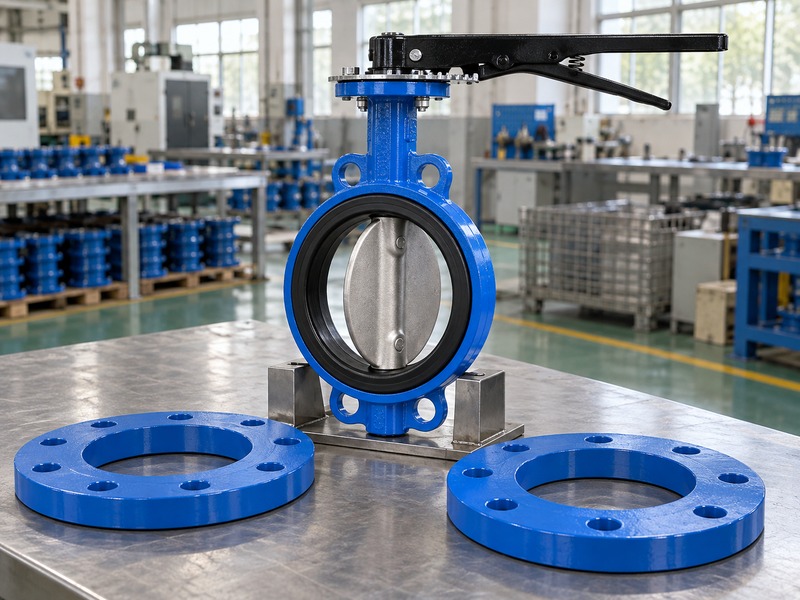
Wafer, lug and flanged bodies use different joint arrangements and cannot share an assumed bolt schedule. The actual adjoining bore, lining or reducer may restrict the disc even when nominal sizes match. Check the full opening envelope against the selected pipework before applying operating force. A manual butterfly valve replacement also needs a face-to-face and operator-envelope comparison with the existing installation.
Do not use the lever or wheel to move a heavy valve into place. Protect the seat and disc during handling and follow the approved support method. After installation, verify movement under the prescribed safe conditions before returning the system to service, rather than assuming successful flange assembly proves correct internal clearance.
- Use the selected body-style instructions.
- Check the actual adjoining bore.
- Verify safe movement after installation.
| Installation area | Check |
|---|---|
| Pipe joint | Correct interface, seals and bolts |
| Flow passage | Disc clearance through full travel |
| Operating point | Reach and free movement |
8. What should you do if the valve becomes hard to move?
Stop forcing a manual butterfly valve when its effort changes unexpectedly, then compare the process conditions with the approved duty. Rising differential pressure, deposits, mechanical damage or interference can produce similar symptoms. Use the site's isolation and depressurization procedure before any maintenance that disturbs the valve or operator.
Which observations help the supplier diagnose the problem?
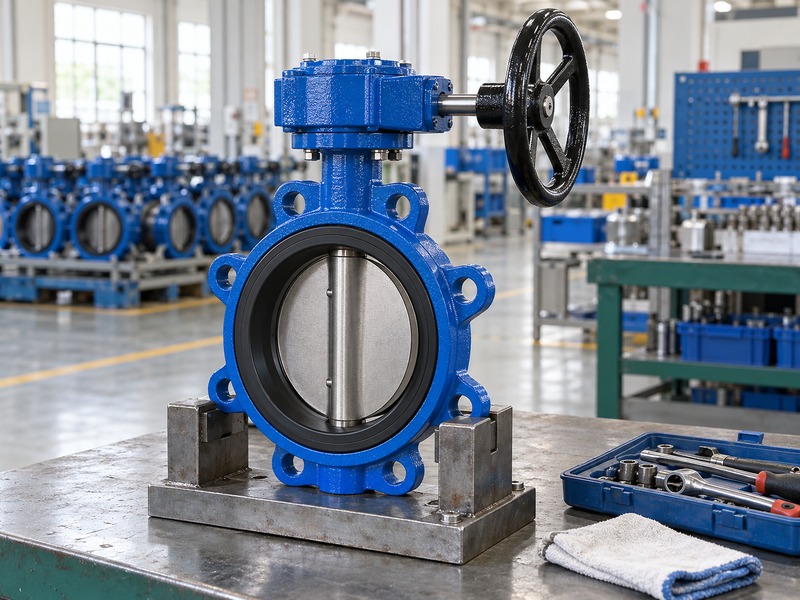
Record where resistance appears in the stroke and whether the change was sudden or gradual. Note recent pipework changes, long idle periods, fluid changes and temperature conditions. Photograph the identification, external operator and any visible damage without entering an unsafe area. Do not add a pipe to a lever or wheel to overcome the resistance.
Extra input can damage the stem, coupling or seat while hiding the original cause. Keep leakage, operator function and joint condition as separate findings in the report. The supplier can then compare the observations with the assembly drawing, service inputs and model-specific maintenance procedure, and identify whether inspection, adjustment or approved replacement parts are appropriate.
- Record the point of increased resistance.
- List recent process and installation changes.
- Avoid improvised force-increasing tools.
| Symptom | Information to record |
|---|---|
| Hard at initial movement | Idle time and pressure difference |
| Hard throughout travel | Alignment and operator condition |
| Leakage at closure | Direction, pressure and approved test basis |
9. What should purchasing and inspection confirm?
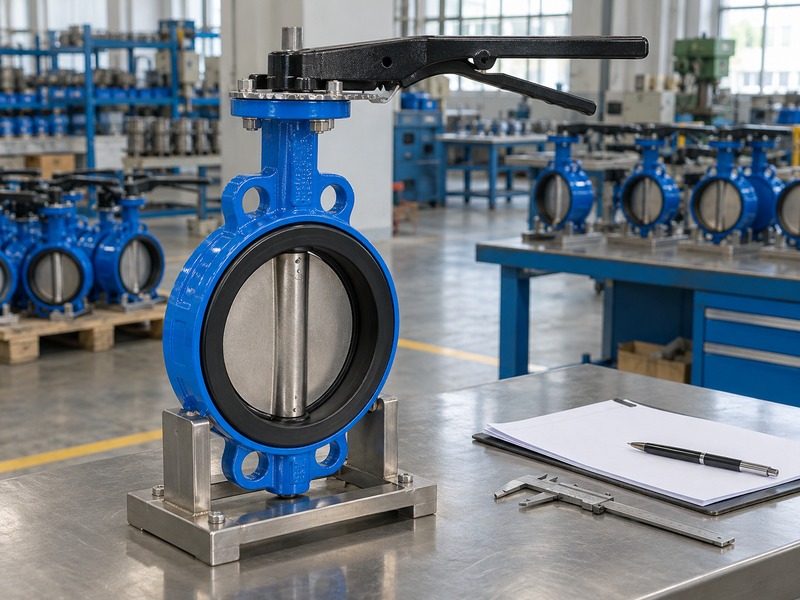
A manual butterfly valve order should freeze the duty, materials, body connection, operator and acceptance requirements. Inspect the received assembly against those details. A catalogue description or a low purchase price cannot establish that the valve will fit, operate comfortably and satisfy the specified sealing requirement.
How do you prepare for repeat orders and maintenance?
Retain the approved assembly drawing, material list, operator identification and required test records with the valve item. Agree which spares and maintenance instructions the supplier will provide. Keep factory pressure tests distinct from mechanical function and service torque sizing. Compare offers using the same inspection and document scope so missing work does not reappear as an unexpected cost later.
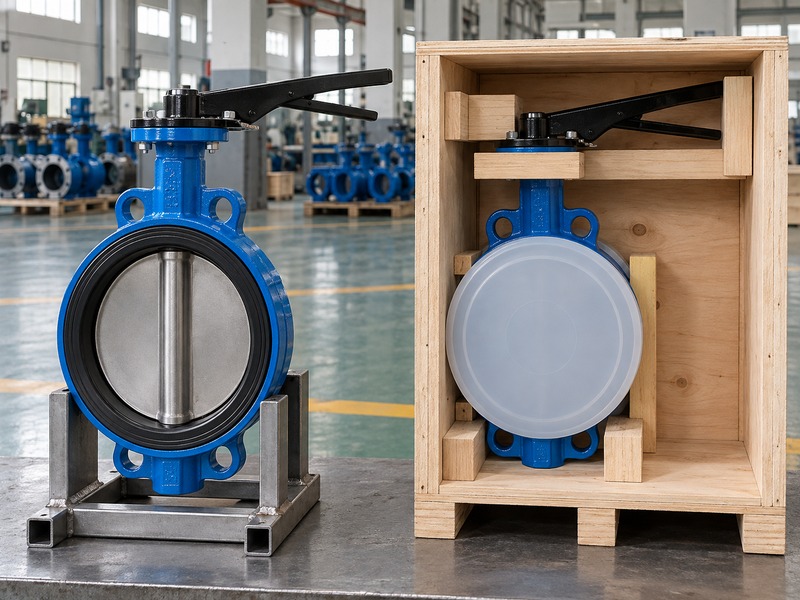
Packaging should protect the flow faces, seat and operator without placing transport loads on the handle. For an OEM or distributor, freeze the accepted configuration after the sample review and require approval for changes. This gives future orders a defined basis and helps maintenance personnel obtain compatible parts without relying on photographs or a generic size description.
- Freeze duty and assembly details.
- Agree inspection, documents and spares.
- Control changes after sample approval.
| Purchase record | Future use |
|---|---|
| Assembly drawing | Installation and spare fit |
| Material list | Service compatibility |
| Inspection package | Traceable acceptance |
10. What do buyers ask about manual butterfly valves?
Q1. Does manual mean the valve has a lever?
No. Manual assemblies can use a direct lever or a geared handwheel. Confirm the selected operator and its duty.
Q2. Can I change a manual valve to powered operation?
Sometimes. Review the valve torque, stem, mounting, coupling, actuator supply and controls as a complete conversion before ordering parts.
Q3. Can I use the disc position to measure flow?
Not by position alone. Flow depends on the selected valve characteristic, pressure difference and fluid properties.
Q4. What is the best manual operator for a large valve?
Use the actual torque and access review. A gearbox often reduces effort, but the wheel, ratio, stem load and operating time still need approval.
Q5. How do I know whether a water valve can handle gas?
Check an approved gas-service configuration and its leakage requirements. A manual operator and a successful water test do not establish gas suitability.
Provide the fluid, operating conditions and local access requirements when you contact us. RUITO can review an appropriate valve configuration, manual operator and inspection package for the requested duty.