
Choose a dn80 butterfly valve by matching its connection, seat, pressure limits, and drive with your actual service conditions. A nominal size alone leaves several installation decisions unresolved. RUITO supplies DN80 resilient-seated wafer and lug configurations, with selection and inspection documents tied to the specified materials, operating conditions, and connection.
An equipment buyer replacing a three-inch isolation valve may have only an old nameplate and a short shutdown window. A different flange pattern or unsuitable seat can delay installation after delivery. Build the order around a checked drawing and service data sheet so your supplier can resolve those differences before production.
1. What does a dn80 butterfly valve size tell you?
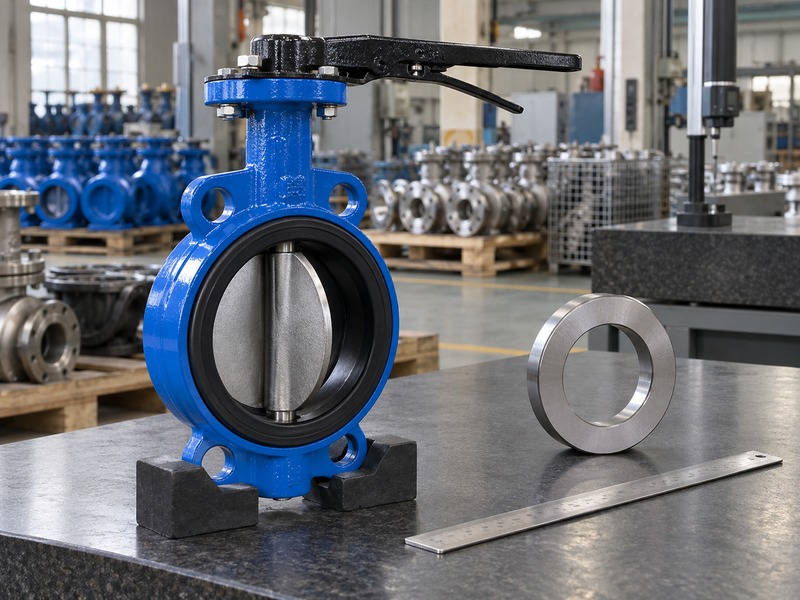
A dn80 butterfly valve has a nominal size corresponding approximately to NPS 3, while its actual bore and installation dimensions depend on the design. DN80 does not promise an unobstructed 80 mm opening. You still need the connection drawing, disc envelope, and flow data for the proposed assembly.
Which dimensions belong on your comparison sheet?
Start with the existing pipe connection. Record its standard, pressure designation, internal diameter, and available space between mating faces. The disc remains in the flow path and sweeps beyond parts of the body as it opens. Compare that movement with adjacent pipework, reducers, and fittings before accepting a nominally matching replacement.
Your supplier should identify the exact drawing revision used for the offer. If an existing valve has no readable identification, send measured dimensions and photographs for review. A shared DN designation does not establish interchangeability between different body designs. Key takeaway: Use nominal size for identification and measured interfaces for the installation decision.
- Record the actual pipe bore and available installation length.
- Request the disc-opening envelope with the connection drawing.
| Item | Review |
|---|---|
| Nominal size | DN80, approximately NPS 3 |
| Installation fit | Checked dimensions and disc clearance |
2. Should you choose a lug or wafer body?
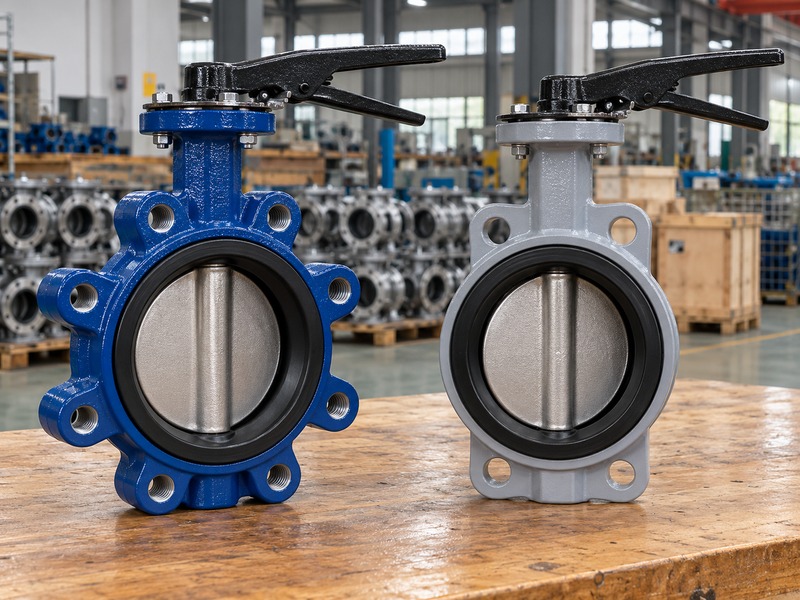
Choose a lug body when its separately bolted connection supports your maintenance plan, or a wafer body when the approved assembly uses through-bolting between flanges. A dn80 butterfly valve needs the correct fastening arrangement for either choice. A lug body alone does not establish a permissible dead-end pressure.
Can you remove downstream pipework with pressure upstream?
Confirm the required maintenance condition in writing. RUITO limits lug end-of-line isolation to specifically validated water-service configurations within DN50–200, at 5–40°C and a differential pressure no higher than 10 bar. The selected DN80 version still requires its own approved construction and independent end-of-line test. State the loaded side and support arrangement when requesting this duty.
Otherwise, plan isolation and depressurization before removing adjacent pipework. RUITO also offers a DN80 centerline flanged option when that connection suits the project. Its double-offset range starts at DN350 and should not be specified as a RUITO DN80 alternative. Key takeaway: A maintenance requirement can change the body, bolting, testing, and allowable differential pressure.
- Name the connection style on every quotation and drawing.
- Request specific evidence for any pressurized end-of-line duty.
| Item | Review |
|---|---|
| Wafer | Approved through-bolted assembly |
| Lug | Specified threads and validated loading |
3. Which flange and pipe details must match?
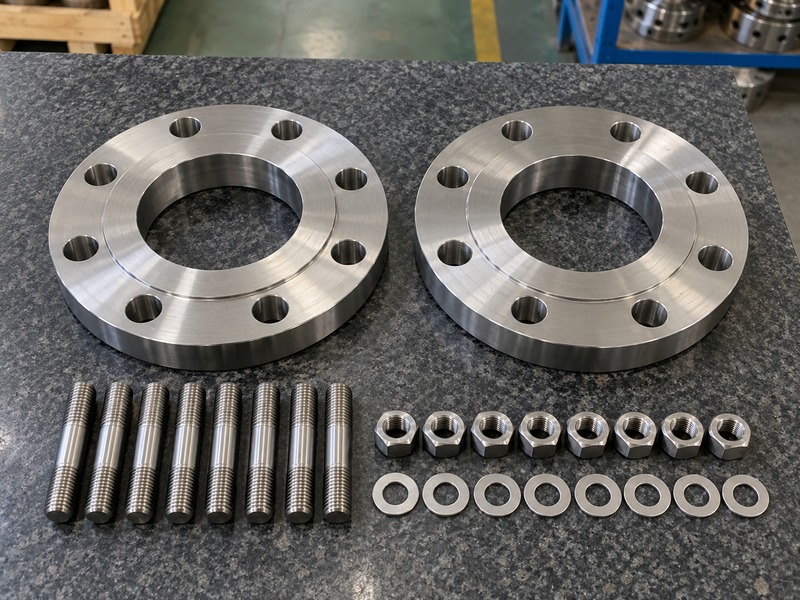
The flange standard, pressure designation, bolt pattern, sealing face, and pipe bore must match the proposed dn80 butterfly valve. A PN marking cannot establish compatibility with an ASME connection. Check both mechanical fit and pressure suitability, even when a catalogue describes a body as suitable for several flange patterns.
What should the supplier check against your flange drawing?
Send the mating-flange details with the enquiry. Ask for confirmation of hole locations, fastener sizes, face-to-face length, and clearance throughout disc travel. Lug threads also need the specified form, depth, and effective bolt engagement. A bolt that bottoms out can appear tight without providing the intended clamping force.
Follow the model-specific instructions for flange faces and any separate gaskets rather than adding them automatically. Check internally lined pipe and nearby reducers because they can restrict the opening envelope. Obtain a written interface check when converting between an EN installation and an ASME-based purchase specification. Key takeaway: A complete interface check prevents a nominally correct valve from arriving with an unusable connection.
- Confirm flange dimensions against the approved valve drawing.
- Check fastener engagement and disc clearance before assembly.
| Item | Review |
|---|---|
| Connection | Standard, drilling, and sealing face |
| Clearance | Pipe bore and full disc travel |
4. How do you select the seat and wetted materials?
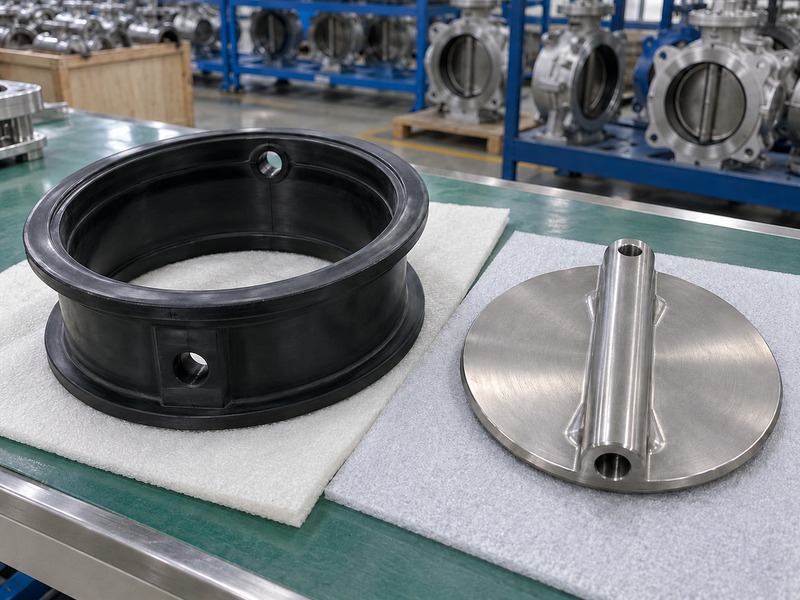
Select the seat and wetted materials from the complete fluid composition, temperature, and cleaning conditions. An EPDM-seated dn80 butterfly valve can suit approved water duties, while mineral-oil service requires a separately assessed oil-compatible construction. Seat color and a generic stainless-steel description cannot establish chemical compatibility.
What information changes a material recommendation?
List additives and cleaning fluids beside the main medium. RUITO reviews glycol concentration, inhibitors, oil additives, and chemical concentration within the relevant configuration. Its mineral-oil wafer and lug options use a separately controlled NBR construction rather than ordinary water-service EPDM. Review disc, shaft, auxiliary seals, and coatings wherever they contact the fluid.
A PTFE-lined valve requires review of its complete lining, backing, and shaft-seal arrangement. A polymer seat alone cannot establish continuous protection of all wetted parts. For drinking water, request documents covering the exact contact-material combination and destination requirements. Key takeaway: Material approval must cover every wetted component under the stated operating and cleaning conditions.
- Provide concentration, impurities, additives, and cleaning conditions.
- Approve the complete wetted-material list before production.
| Item | Review |
|---|---|
| Water duty | Approved EPDM and contact materials |
| Oil or chemicals | Separate compatibility review and construction |
5. Which pressure and temperature limits govern selection?
Use the selected model’s pressure-temperature limits, permitted closing differential, and connection rating together. A dn80 butterfly valve marked PN16 does not automatically suit every fluid at 16 bar across its temperature range. Operating pressure, shutoff differential, and transient pressure describe different demands and should appear separately on the data sheet.
Which operating conditions need separate confirmation?
Specify the maximum differential when the valve closes. Include normal temperature, upset conditions, pump operation, and any known pressure surges. RUITO offers DN80 wafer and lug versions in PN10 and PN16, subject to the selected configuration. Its ordinary water-service temperature range does not extend a drinking-water approval beyond the approved contact-material window.
Cyclic or rapid closure may require a project review of transient pressure and closing time. A higher factory test pressure remains an inspection condition rather than a new working limit. Ask the supplier to state the accepted operating envelope beside the material and connection details. Key takeaway: Keep pressure, temperature, materials, and closure duty together when reviewing the supplier’s acceptance.
- Separate working pressure from maximum closing differential.
- Check temperature and transient conditions against the same configuration.
| Item | Review |
|---|---|
| Service limits | Model-specific pressure-temperature data |
| Closure duty | Differential, direction, and operating conditions |
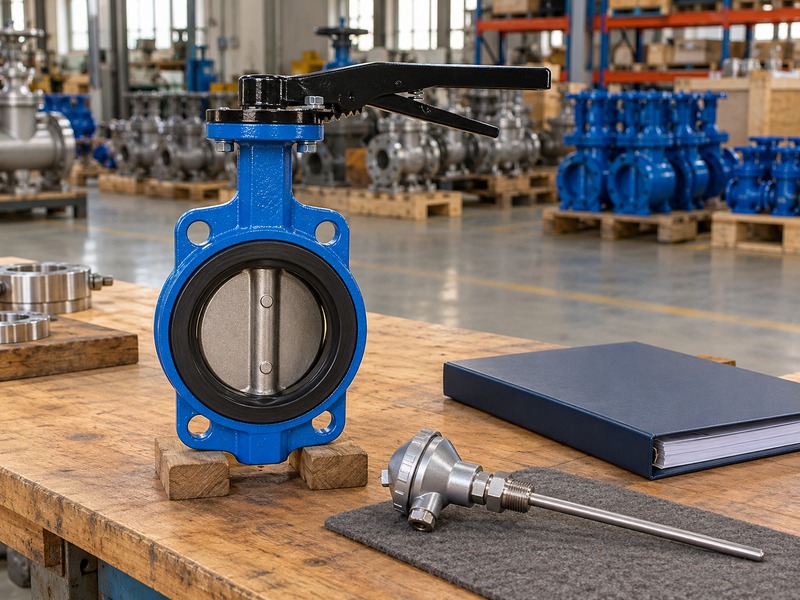
6. Should you use a lever, gearbox, or actuator?
Select a lever, gearbox, or actuator according to operating torque, access, switching frequency, and control requirements. The small nominal size of a dn80 butterfly valve does not establish a universal manual operating force. Automated selection also depends on the available supply, required failure action, and permitted shaft loads.
How do you check the proposed drive package?
Size the drive from the accepted valve torque data. Confirm breakaway, running, and seating requirements under the specified service conditions. For pneumatic operation, compare required torque with actuator output at the minimum available air pressure. Spring-return operation needs review through both the powered and spring strokes.
For electric operation, specify supply voltage, travel time, enclosure requirements, and control signals. Check mounting, coupling engagement, and actual disc position rather than relying on a matching bolt pattern. Record whether a safe position requires stored energy or another arrangement when the supply fails. Key takeaway: A suitable actuator must move the valve throughout its stroke without exceeding the assembly’s limits.
- State minimum supply conditions and required failure action.
- Check torque, coupling fit, travel stops, and feedback.
| Item | Review |
|---|---|
| Manual drive | Accepted effort and accessible operating space |
| Powered drive | Verified output, supply, and control package |
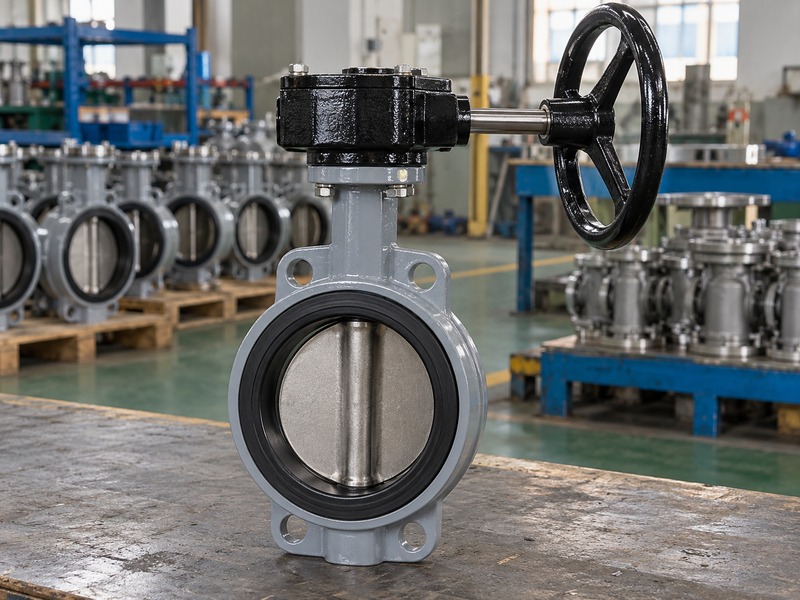
7. What should you check before installing the valve?
Check identity, cleanliness, seat condition, flange alignment, and disc clearance before installing a dn80 butterfly valve. Follow the supplied installation instructions for disc position, fastening, and tightening sequence. Pipe strain or incorrect clamping can distort the assembly even when the valve passed its factory inspection.
Which checks belong on the installation handover sheet?
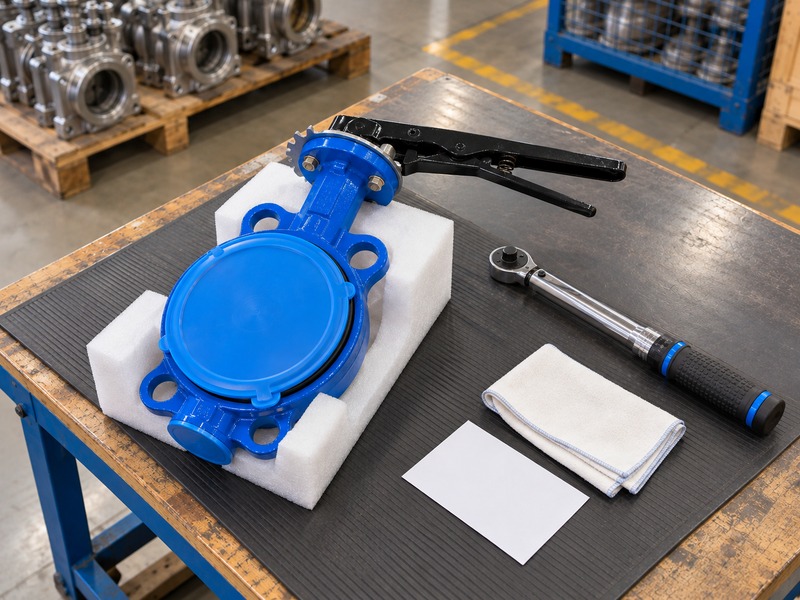
Keep the installation instructions with the delivered valve. Compare the label with the approved material list and drawing before removing protective packaging. Inspect the seat faces and disc edge for transport damage or trapped debris. Verify that pipe supports carry the intended loads without pulling the flanges into position.
Use the specified fasteners and tightening procedure while maintaining the required alignment. Check full travel under the prescribed safe conditions before introducing process pressure. If movement binds, investigate clearance, alignment, and seat position before adding operating force or adjusting stops. Key takeaway: Installation checks protect the accepted seat geometry and give you a record of the delivered condition.
- Inspect sealing surfaces and remove foreign material.
- Confirm alignment and free travel before commissioning.
| Item | Review |
|---|---|
| Before fitting | Identity, condition, and correct fasteners |
| Before pressure | Alignment, support, and accepted travel |
8. Which tests and approvals should you request?
Request configuration-specific pressure, closure, external-leakage, and functional records, plus any approvals required for the service. A dn80 butterfly valve needs evidence tied to its identity and construction. A general company certificate cannot establish drinking-water contact approval or another product-specific acceptance for every supplied configuration.
How do you read a useful acceptance report?
Read the test conditions beside each result. RUITO’s applicable room-temperature procedures use shell and soft-seat closure pressures of 15 and 11 bar for PN10, or 24 and 17.6 bar for PN16. These values must suit the selected model and its seat differential rating. The report should identify test medium, pressure, hold time, direction, and leakage criterion.
Where specified, EN 12266-1 or ISO 5208 provides the selected pressure-test framework. Gas service and end-of-line duty require their additional configuration-specific checks. Confirm that approval documents name the applicable model, materials, size coverage, and service conditions. Key takeaway: Factory testing and product approvals answer different questions and need separate evidence in your purchase file.
- Link inspection results with the supplied product identifier.
- Check approval coverage against the complete ordered configuration.
| Item | Review |
|---|---|
| Test evidence | Identity, conditions, and acceptance result |
| Approval evidence | Applicable model, materials, and service scope |

9. How should you compare suppliers and quotations?
Compare suppliers against one technical specification, an agreed inspection scope, and a defined delivery basis. Two offers for a dn80 butterfly valve may cover different seats, operators, fasteners, or documents. Resolve those differences before using unit price as the deciding comparison between technically acceptable offers.
What makes a quotation usable for procurement?
Ask each supplier to mark its technical deviations. Your comparison should show body style, materials, connection, operating limits, drive, and included records in matching fields. Identify whether quoted delivery begins after drawing approval, payment, inspection release, or another agreed milestone. RUITO reviews stock against an exact configuration rather than a nominal-size description alone.
An available wafer valve does not establish availability of a lug version with another seat or actuator. Separate factory release from freight, customs, and arrival at site. For repeat supply, agree how the supplier controls substitutions and records the effective revision. Key takeaway: A consistent comparison sheet exposes scope differences before you commit to a supplier and delivery date.
- Compare complete assemblies and identical documentation requirements.
- Confirm deviations, release conditions, and delivery milestones.
| Item | Review |
|---|---|
| Technical comparison | Matched configuration and declared deviations |
| Delivery comparison | Defined release basis and transport scope |
10. What belongs in your final purchase specification?
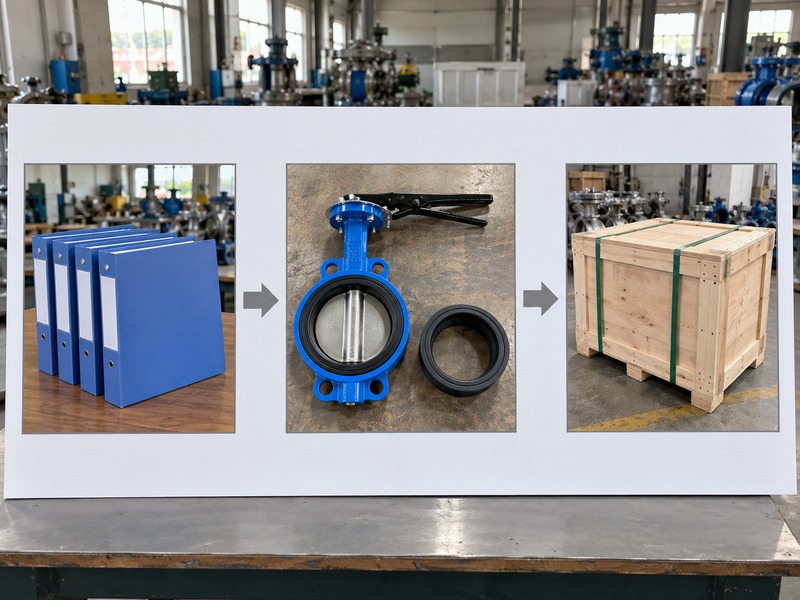
Your final purchase specification should combine service conditions, construction, interfaces, drive requirements, inspection, and delivery documents. Order a dn80 butterfly valve against approved revisions rather than a catalogue description alone. The purchase record should also identify who may accept a material change, test deviation, or alternative operator.
Which documents should stay with the ordered assembly?
Attach the approved configuration to the purchase order. Include the data sheet, installation drawing, wetted-material list, and any required actuator or accessory schedule. Name the inspection plan and the documents needed before shipment release. RUITO can provide model-specific drawings, torque information, pressure-temperature data, installation instructions, and agreed inspection records.
Link these documents with the product identifier and packing list for site receiving checks. Define spare-seat and replacement-drive details where maintenance planning requires them. A repeat order should reference the approved revision and any accepted changes rather than assuming that an earlier description remains sufficient. Key takeaway: A documented purchase basis helps your receiving, installation, and maintenance teams work from the same specification.
- List approved revisions and required shipment records.
- Define change approval and replacement-part identification.
| Item | Review |
|---|---|
| Order basis | Approved duty, construction, and drawing revisions |
| Handover file | Matching inspection, installation, and packing records |
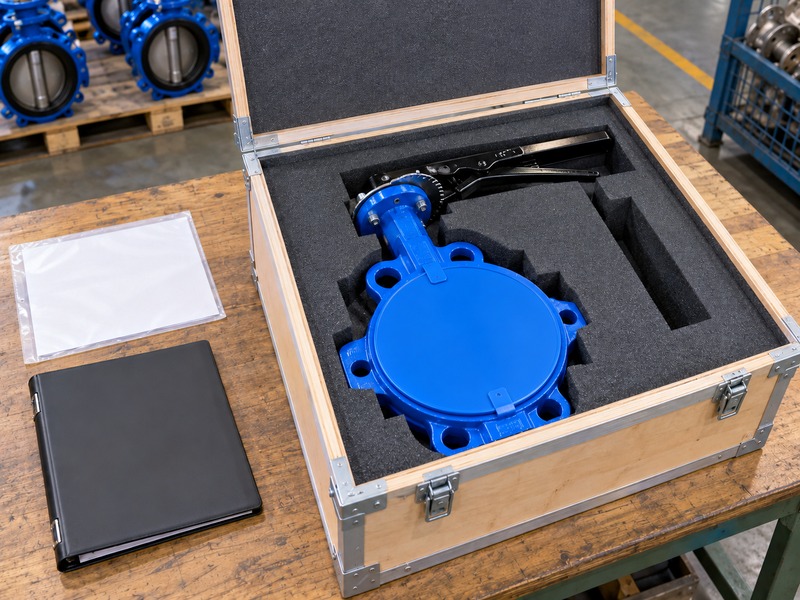
Send RUITO your medium, temperature, pressure, maximum closing differential, mating-flange details, and operating requirements. We can review the DN80 construction, drive, and required inspection file before you place the order. Bring your existing drawing or valve photographs when you contact us so the review addresses your installation.
FAQ
Q1: Can I replace any three-inch valve with a DN80 version?
Only after checking the interfaces. DN80 and NPS 3 identify corresponding nominal sizes, while flange standards, face-to-face length, pipe bore, and disc clearance determine installation fit.
Q2: Can I use an EPDM seat for mineral oil?
Use a separately approved oil-service construction. RUITO’s mineral-oil wafer and lug configurations use NBR, with the actual oil composition, additives, and temperature reviewed before selection.
Q3: Can I use any lug valve at the end of a line?
No. Obtain the exact end-of-line rating and validation. RUITO’s specified water-service lug configurations require independent testing and remain limited to their approved temperature and differential pressure.
Q4: How do I know if the actuator is correctly sized?
Compare its available output with the valve’s required torque throughout travel. Include minimum supply conditions, spring action where fitted, coupling fit, and the permitted shaft load.
Q5: What’s the best information to send with an enquiry?
Send a service data sheet and mating-connection drawing. Include fluid composition, temperature, pressure, closing differential, drive requirements, inspection scope, and any destination-specific approval requirements.