
You can avoid costly threaded butterfly valve mistakes by verifying the manufacturer’s connection drawing and seat specification before ordering. An enquiry such as “do threaded butterfly valves come with Viton seat” leaves both the connection and material unresolved. A buyer may send a photograph of tapped body lugs while the installer expects screw connections into the process line. Resolve the connection first, then verify the seat compound and complete valve duty.
1. Do threaded butterfly valves come with Viton seat?
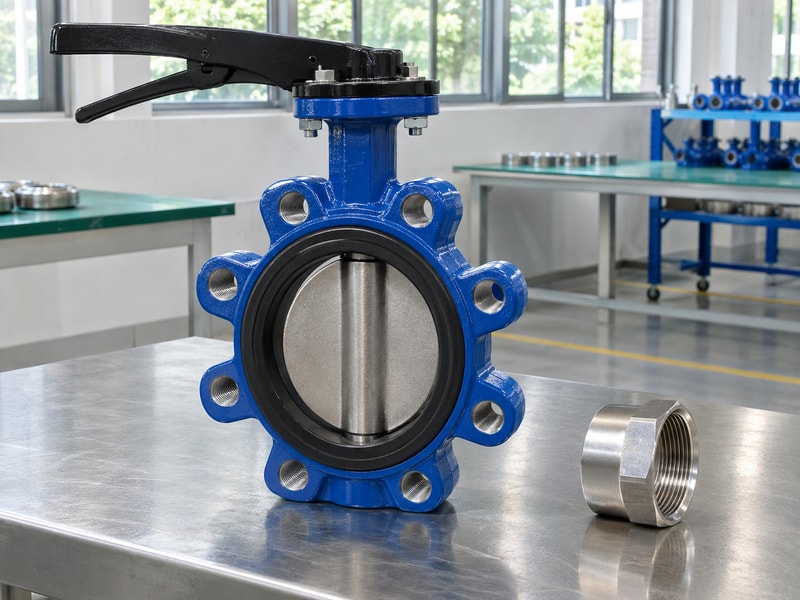
Some manufacturer specific designs may combine a threaded connection feature with an FKM seat, but availability requires confirmation for the exact product. The word threaded can describe pipe ends, body lugs, or a separate adapter assembly. It cannot establish any seal material. Ask the supplier which feature has threads and request a drawing that shows how the valve joins the pipework.
What should the supplier confirm before quoting?
Keep the connection question separate from the material question in your enquiry. A supplier may offer a standard lug butterfly body while your system needs threaded line connections and additional fittings. Another product may use a different construction altogether. Ask RUITO to confirm the specific connection and seat combination with supporting drawings and materials before assuming that configuration can be supplied.
- Ask whether the threads carry flange bolts or form the actual pressure connection.
- Request the complete material list, including the seat compound and stem seals.
- Confirm whether adapters, companion flanges, fasteners, and operators belong in the supply scope.
| Description received | Evidence still needed |
|---|---|
| Threaded butterfly valve | Drawing identifying every threaded feature |
| Viton seat available | Exact compound and approved valve configuration |
| Fits existing line | Verified interface and installation dimensions |
Do not convert a supplier’s brief sales description into an installation specification without those details.
2. Are threaded lugs the same as threaded pipe ends?
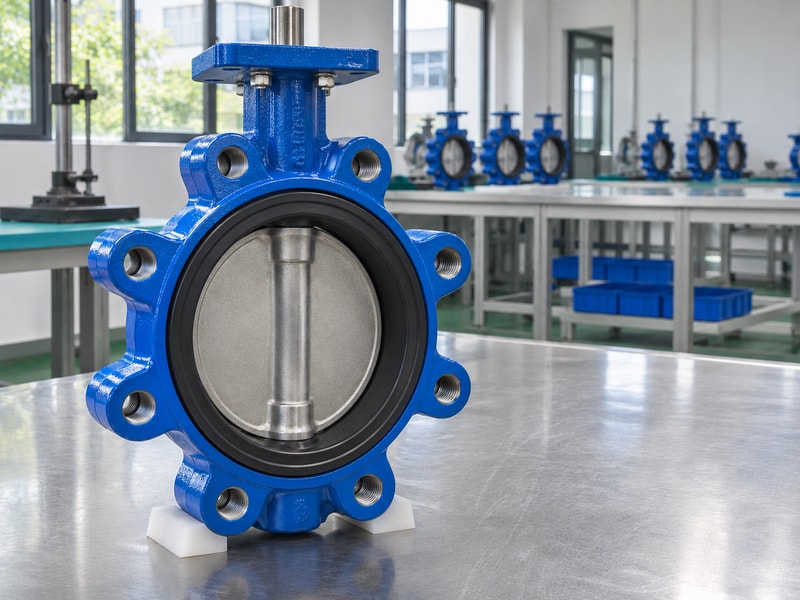
Threaded lugs hold flange bolts around the valve body; threaded pipe ends join the valve or fitting directly to mating pipe threads. The lug threads sit outside the flow passage and serve the bolted flange connection. Their size and engagement requirements belong on the fastening drawing. A lug butterfly valve therefore still requires compatible mating flanges in its standard flange mounted arrangement.
How can a drawing make the difference clear?
Look at where the mating part attaches. A bolt entering a peripheral tapped hole fastens a flange; a pipe entering a threaded bore makes a different joint. Bray’s double offset butterfly valve installation manual distinguishes tapped lug holes from wafer guide holes in its flange installation procedure. Use your selected manufacturer’s instructions for the actual assembly rather than transferring another product’s installation steps.
- Locate the flow bore, flange faces, peripheral lugs, and all thread callouts.
- Check whether the quoted threads are metric fastener threads, UNC, or pipe threads.
- Ask for a section view when photographs hide the pressure connection geometry.
| Thread location | Usual function to verify |
|---|---|
| Peripheral body lug | Fastening a mating flange |
| Pipe entry bore | Joining a compatible threaded pipe or fitting |
| Separate adapter | Converting between two defined connection systems |
Require the drawing callout to identify the function instead of inferring it from the word threaded.
3. How can you identify the existing connection?
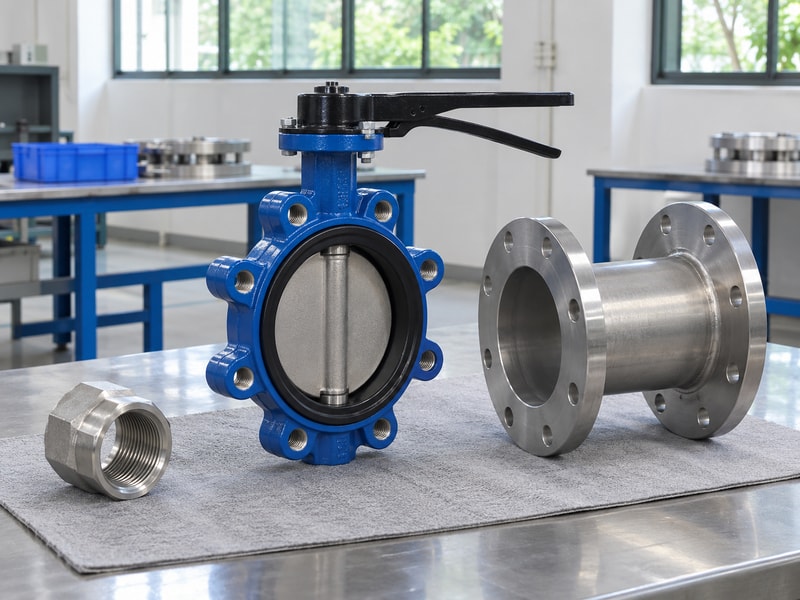
Identify the existing connection from drawings, nameplate records, photographs, and measured interfaces after the system is safely isolated. A close photograph of one bolt rarely shows the complete arrangement. Capture both valve faces and enough adjacent pipework to reveal adapters and flanges. Keep valve identification separate from any casting marks or installer applied labels that may refer to another component.
Which field details should maintenance record?
Measure only after the site has followed its isolation and access procedures. Record face to face length, flange outside diameter, bolt circle, hole count, and clear bore where accessible. If an actual pipe thread is present, identify its standard with suitable gauges and records. Threads that look similar can differ in pitch, profile, taper, and sealing method, so a trial fit alone is inadequate evidence.
- Photograph the entire assembly, nameplate, connection faces, and visible thread markings.
- Record pipe nominal size, material, wall thickness, and any liner projecting into the bore.
- Note reducers, unions, adapters, and equipment nozzles immediately beside the valve.
| Field record | What it resolves |
|---|---|
| Overall assembly photographs | Hidden flanges, fittings, and adapter arrangement |
| Interface dimensions | Size and geometry needed for replacement review |
| Identification and drawings | Original model, materials, and approved connection |
Send uncertain dimensions as unverified measurements so the supplier knows which details still need confirmation.
4. Which valve designs can match your pipework?
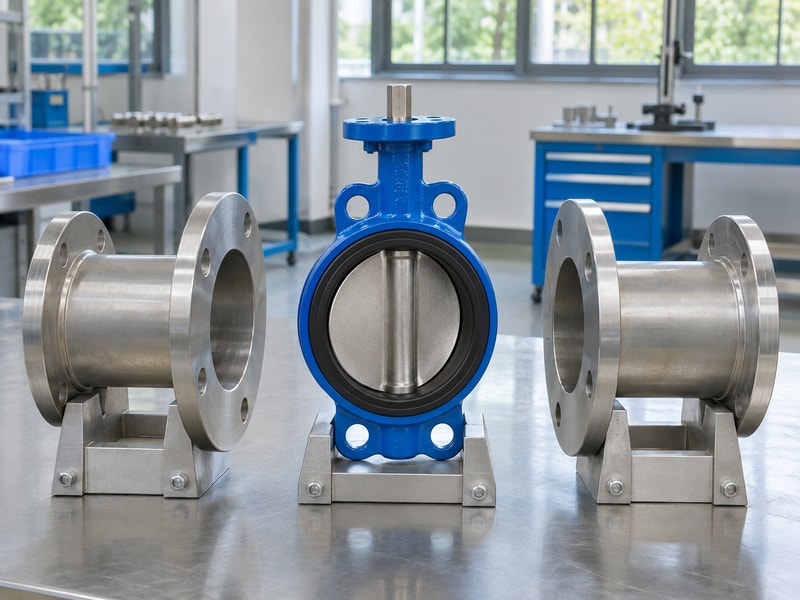
A suitable design must match your pressure connection, installation space, flow duty, and maintenance requirements together. For flanged pipework, wafer, lug, and integral flanged butterfly bodies provide different mounting choices. A genuinely threaded pipeline may need a verified adapter arrangement or another valve design. Avoid assuming that all products described as threaded butterfly valves share one construction or that such designs cannot exist.
When should you compare an adapter assembly?
Evaluate the complete assembly when converting a threaded line to a flange mounted valve. The adapter adds joints, length, weight, and possible bore restrictions. A wafer butterfly valve needs the correct flange support and fastening arrangement, while an integral flanged body has its own dimensions. Ask an engineer to approve the connection scheme before treating adapters as interchangeable catalogue accessories.
- Check the pressure temperature ratings of the valve, fittings, seals, and fasteners together.
- Review additional weight, support needs, wrench access, and removal space at the location.
- Confirm the open disc envelope through every adjacent adapter and pipe section.
| Existing line | Option for engineering review |
|---|---|
| Compatible pipe flanges | Correct wafer, lug, or flanged butterfly assembly |
| Threaded pipe connection | Verified adapter scheme or suitable alternative valve |
| Restricted equipment space | Dimensioned assembly and maintenance access review |
Select the connection arrangement before finalizing the seat material and operator package.
5. How do you check the FKM seat separately?
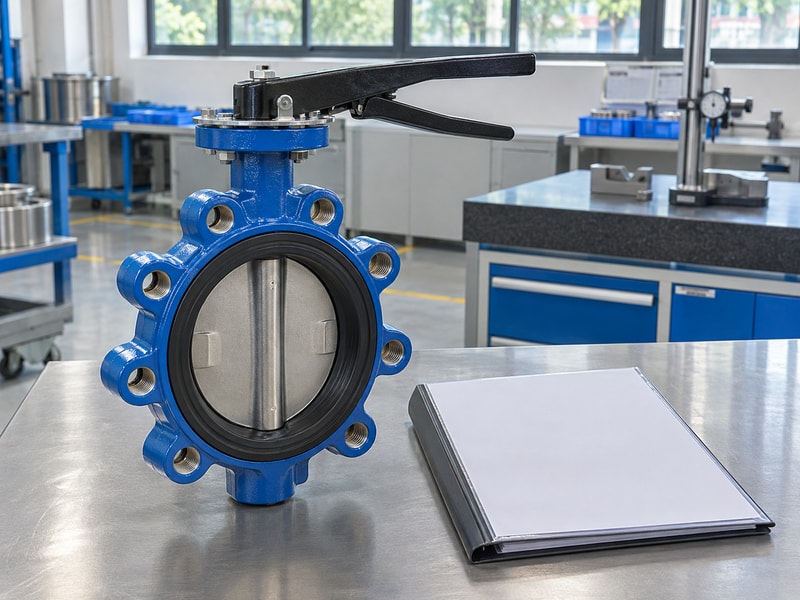
Check the FKM seat through a compound specific compatibility and valve rating review after identifying the connection. The body mounting style cannot establish resistance to the process fluid or cleaning chemistry. Viton identifies a brand of fluoroelastomers rather than one universal finished seat formulation. Ask for the exact compound, approved exposure conditions, and supporting material records for the proposed assembly.
What exposure information should accompany the request?
Provide the entire production and cleaning sequence, including concentrations, temperature, duration, and contaminants. Chemours shows differences among grades in its Viton chemical resistance overview, including limitations that prevent a blanket chemical approval. The supplier should identify how its finished compound and complete seat design meet your stated conditions. Keep material compatibility approval distinct from connection and pressure testing.
- Include flushing solvents, alkaline washes, sanitizers, additives, and lubricants that may contact seals.
- State maximum and minimum temperature with the pressure present during each condition.
- Request compound identity and any limits on cycling, exposure duration, or cleaning frequency.
| Separate review | Question to close |
|---|---|
| Chemical exposure | Is the exact compound accepted for every listed medium? |
| Complete valve rating | Is the assembly approved at those temperatures and pressures? |
| Supply evidence | Does the proposed BOM identify that seat and its records? |
Do not accept a generic FKM compatibility statement as confirmation that a particular threaded assembly is available.
6. What drawing dimensions prevent an adapter mismatch?
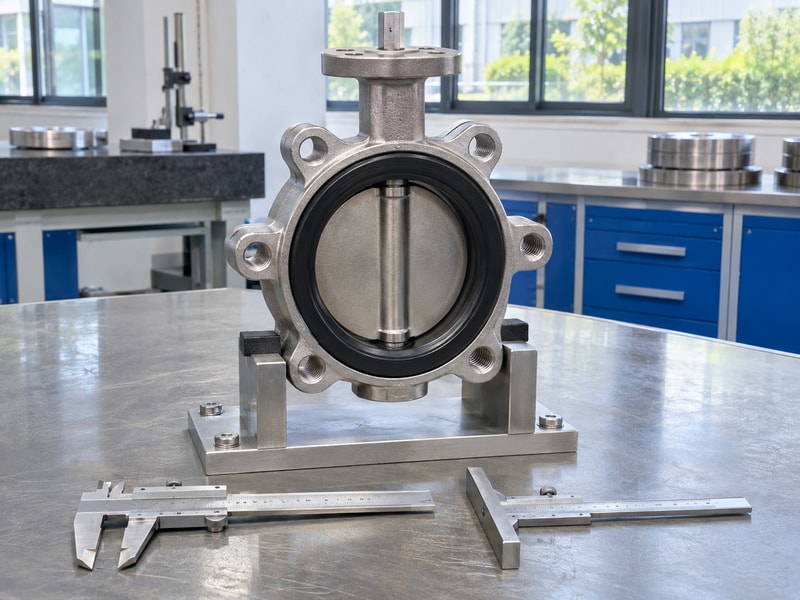
An adapter mismatch is prevented by a drawing that covers the entire connection stack and disc clearance envelope. Nominal diameter does not establish internal bore or usable installation length. An adapter can match the outside flange pattern while projecting into the path of the open disc. Show the valve, both adjacent fittings, gaskets where specified, and the pipe ends on one assembly view.
Which dimensions need explicit acceptance?
Ask the supplier to identify its minimum permitted mating bore and the disc projection on each side at full opening. For an integral flanged butterfly valve, compare its face to face length with the available gap rather than borrowing wafer dimensions. Pipe thread adapters also need their exact standard and assembled engagement reviewed. Include tolerances and the space needed to assemble the joints.
- Dimension the available installation gap, valve length, adapter lengths, and flange faces.
- Show bore restrictions, liner thickness, pipe schedule, and any offset between mating parts.
- Identify thread form, taper or parallel geometry, seal location, and required engagement.
| Drawing feature | Mismatch it reveals |
|---|---|
| Complete axial stack | Assembly too long for the existing pipe gap |
| Disc sweep with mating bores | Disc interference inside an adapter or pipe |
| Thread and seal detail | Incorrect mating form or sealing arrangement |
Require approval of the assembled interface rather than separate approval of components that have never been checked together.
7. How should you review torque and access?
Review valve operating torque and installation access as separate requirements for the complete assembly. The actuator must move the approved seat and disc under the specified differential pressure. The installer also needs space to tighten connections and maintain the operator without loading the stem or bracket. A compact body can still become inaccessible after adapters, air fittings, and cable entries are added.
What must the operator package demonstrate?
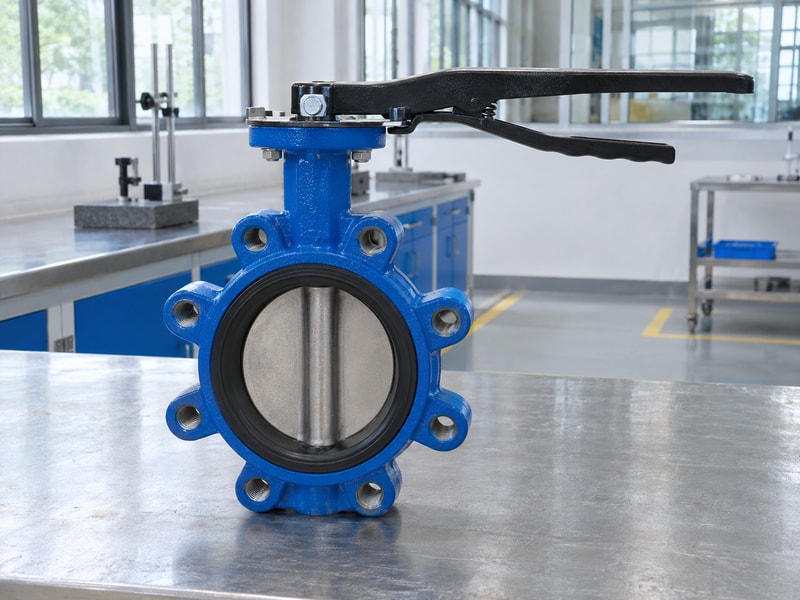
Request the valve manufacturer’s torque requirements at the stated temperature, differential pressure, and operating frequency. Compare actuator output at the minimum available supply and through the required failure stroke. Show lever sweep, gearbox handwheel, air tubing, and electrical entries on the layout. Where a threaded adapter requires rotation during assembly, establish a method that avoids transmitting that force through the operator.
- Check bracket and coupling capacity against the proposed actuator’s available output.
- Reserve space for fastener tools, manual override, seat maintenance, and valve removal.
- Confirm travel stops, indication, and failure position during the assembled functional test.
| Review item | Required evidence |
|---|---|
| Operating effort | Configuration specific valve torque and actuator output |
| Access envelope | Dimensioned lever, gearbox, actuator, and tool space |
| Assembly method | Defined support and approved tightening locations |
Resolve access problems in the layout before fabrication leaves the valve trapped between fixed equipment.
8. What must an installer check before fitting?
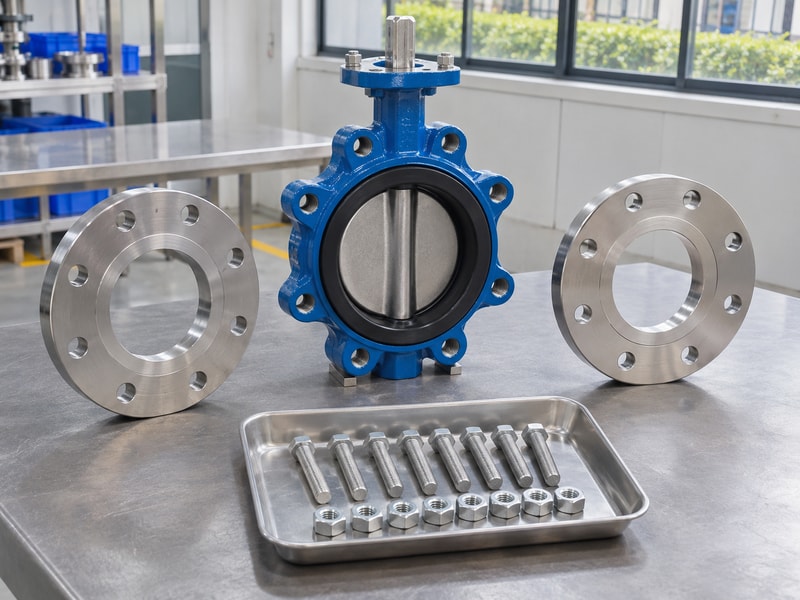
The installer should check identification, mating geometry, cleanliness, support, and the approved installation procedure before fitting the valve. Verify the received parts against the released drawing rather than the original search description. Lug bolts, flange joints, and actual pipe threads require different checks. The selected manufacturer’s instructions should define fastening, gasket use, thread sealing where applicable, and the disc position during installation.
How do you keep assembly damage out of commissioning?
Remove fabrication debris and inspect the disc edge, seat, flange faces, and adapter bores before assembly. Align and support the pipework so tightening does not pull an unsupported line into place. Use the specified engagement and bolt lengths for tapped lugs. Never infer end of line isolation capability from a lug body; require explicit approval for the exact configuration and condition.
- Verify correct threads and fasteners before using tools or applying tightening force.
- Check free disc travel through the assembled mating bores using the approved procedure.
- Record the final orientation, fastening checks, functional stroke, and specified leak test results.
| Installation checkpoint | Acceptance basis |
|---|---|
| Connection identity | Released drawing and verified mating parts |
| Fastening and sealing | Product specific installation procedure |
| Commissioning | Agreed functional and leakage test requirements |
Stop and investigate binding, damaged threads, or a mismatched interface before admitting process fluid.
9. What should a replacement enquiry contain?
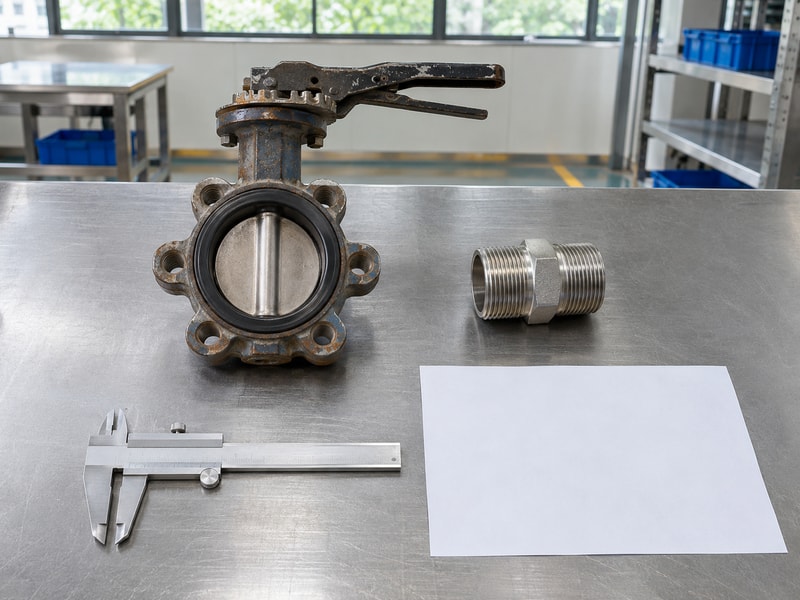
A replacement enquiry should contain enough evidence to reconstruct the existing connection and verify the proposed seat independently. Include the original valve identity, assembly photographs, measured dimensions, operating duty, and reason for replacement. Quote the phrase do threaded butterfly valves come with Viton seat as a question for the supplier, then specify exactly which connection and material details need confirmation. Avoid declaring an unverified part interchangeable.
How should you close uncertain information?
Mark each missing or uncertain field and assign responsibility for checking it. Ask the supplier for a dimensioned proposal, material list, operating limits, and a deviation schedule. A suitable response should distinguish confirmed catalogue information from a proposed special configuration. Freeze the approved assembly drawing and BOM before ordering so receiving inspection can detect a connection or seat substitution.
- Attach valve identification, pipe thread or flange details, clear bore, and available space.
- Give process mixtures, cleaning exposure, pressure, temperature, shutoff needs, and operator requirements.
- Ask for confirmed supply scope, drawings, compound evidence, test records, and installation instructions.
| Enquiry item | Closure needed before order |
|---|---|
| Connection sketch | Approved mating geometry and complete assembly stack |
| Material request | Exact seat compound and complete wetted BOM |
| Duty and acceptance | Approved limits, tests, and remaining deviations |
Keep the proposed replacement on technical hold until the supplier and your responsible reviewer close those fields.
10. What do buyers ask about threaded connections?
Buyers should ask which feature is threaded, how the connection seals, and what evidence covers the proposed seat.
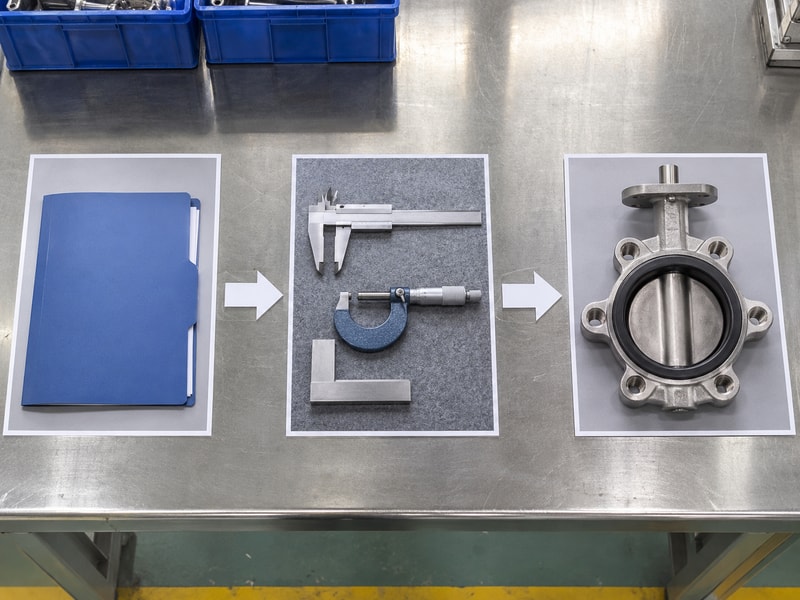
- Q1: Can I screw a lug butterfly valve onto a threaded pipe? A standard flange mounted lug valve needs compatible mating flanges. Its peripheral threads receive fasteners rather than the process pipe. If you need adapters, request an approved assembly drawing that checks rating, support, installation length, sealing, and full disc clearance.
- Q2: Do threaded butterfly valves come with Viton seat? Confirm the exact manufacturer’s design. Thread terminology cannot establish the seat material or supply scope. Ask for the connection drawing, finished compound designation, complete BOM, and duty approval. RUITO must confirm any proposed combination before you treat it as available.
- Q3: Can I treat NPT and BSP threads as interchangeable? No. Identify the complete thread standard and sealing arrangement before assembly. Similar outside dimensions do not establish matching pitch, profile, taper, or sealing location. Use the approved drawing and suitable inspection methods rather than accepting a joint because it begins to turn.
- Q4: Does a threaded lug prove end of line capability? No. Terminal isolation depends on the approved complete valve, size, pressure, temperature, and fastening arrangement. Request a specific rating and installation instructions. A general lug catalogue description cannot authorize removal of the downstream pipework under pressure.
- Q5: What should I send RUITO for a connection review? Send overall photographs, valve identification, interface dimensions, pipe details, fluid and cleaning data, and required actuation when you contact us. Ask RUITO to confirm the available connection and seat configuration with drawings and any stated deviations.