
You can fix a Viton seat butterfly valve selection mistake by checking the exact seat compound against every fluid, operating condition, and sealing interface before you approve the valve. A maintenance team may replace a swollen seat with FKM and still face leakage after the next cleaning cycle. Treat the failed seat, cleaning recipe, and valve drawing as one investigation. A material name alone cannot explain why the assembly failed.
1. What is a Viton seat butterfly valve?
A Viton seat butterfly valve uses a seat made from a specified Viton branded fluoroelastomer compound around its rotating disc. FKM describes a polymer family; Viton identifies a brand within that family. Your purchase specification should identify the finished compound and its supplier rather than treating these names as proof of identical performance. The seat must seal against the disc and maintain the required interfaces around the body and stem.
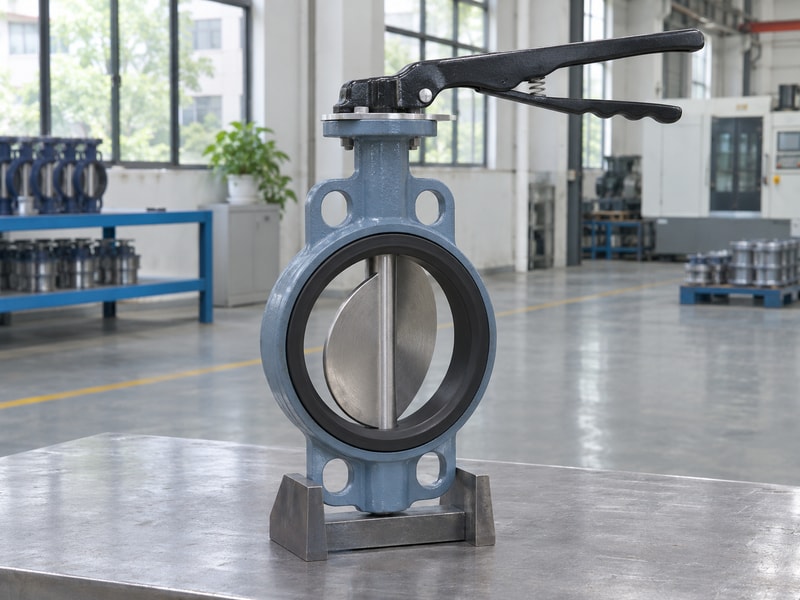
Which part of the sealing system are you selecting?
Check a sectional drawing before discussing material upgrades. A resilient seat may line the body bore and contribute to flange sealing, while separate stem seals handle another leakage path. A fluoropolymer lined design may place an elastomer behind its wetted lining. Those arrangements expose different materials to different conditions and require separate approval.
- Identify every surface that contacts process liquid during normal service and cleaning.
- Mark the disc contact band, stem openings, and flange faces on the drawing.
- Ask whether the seat is replaceable, bonded, or supplied with a complete body.
| Description on enquiry | What you still need |
|---|---|
| FKM seat | Exact compound and finished seat specification |
| Viton seat | Brand identity and traceable compound designation |
| Lined valve | Wetted layer, backing, and stem seal materials |
Use that drawing to separate a seat material decision from a change in valve construction.
2. Which fluids suit an FKM seat?
An FKM seat suits only the fluids and exposure conditions approved for its exact compound. A Viton seat butterfly valve enquiry should list the full process mixture, including additives and cleaning chemicals. Hydrocarbon service can make FKM worth reviewing, but a solvent blend or hot wash can change the result. Chemours documents different chemical resistance among its fluoroelastomer types in its Viton chemical resistance overview.
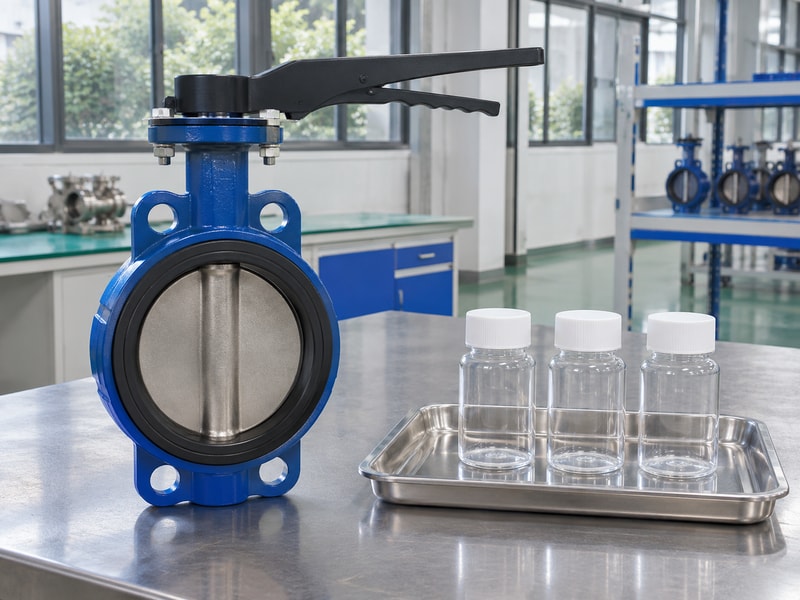
How do you screen the actual process recipe?
Start with the product safety data sheet and add operating information that it omits. A supplier needs concentrations, temperature, exposure duration, and whether a liquid remains trapped during shutdown. Ask for a written response identifying both approved conditions and exclusions. For a changing batch process, send every recipe rather than the most common product.
- Include solvent flushing, sanitizers, neutralizers, and maintenance lubricants in the review.
- Identify suspended particles, crystallizing residues, and any abrasive contamination in the stream.
- Record hot soak duration and the frequency of cleaning or product changes.
| Fluid information | Selection question |
|---|---|
| Complete mixture | Has the finished compound been evaluated? |
| Cleaning sequence | Does each stage have its own approval? |
| Solids and deposits | Can the disc close without damaging the seat? |
Request compound specific testing when the available compatibility information does not cover your mixture.
3. How do EPDM, NBR, PTFE and FKM compare?
Compare these materials by their approved duty and seat construction, then decide whether a Viton seat butterfly valve offers a useful benefit. EPDM and NBR are elastomers with different fluid compatibility profiles; PTFE is a fluoropolymer and can require a different sealing arrangement. FKM adds another set of compound options. None of these names supplies a universal chemical or temperature approval for a finished valve.
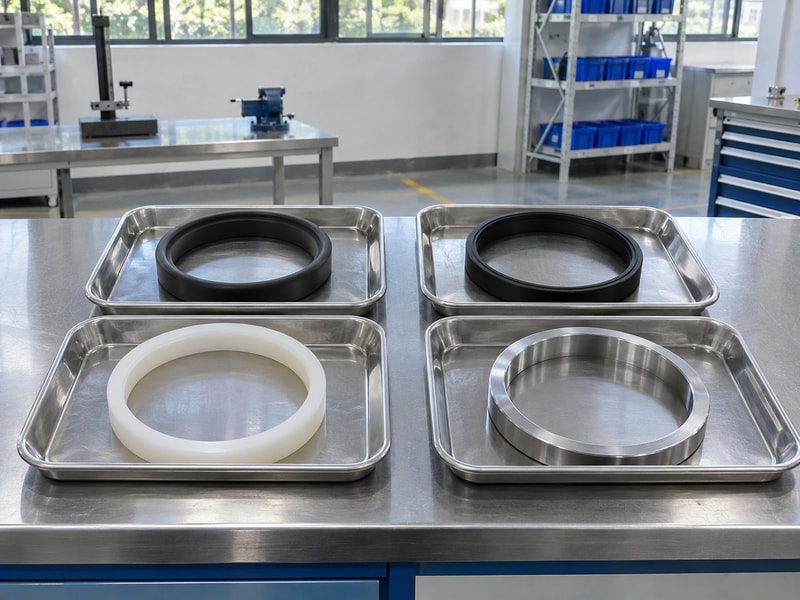
Which alternative deserves a separate engineering review?
For water and oil screening, Parker’s O-Ring Handbook describes different elastomer compatibility profiles and cautions around conventional FKM in several media. Its guidance concerns seal materials, so you still need valve specific evidence. When your application needs a continuous wetted barrier, review a PTFE lined butterfly valve as a complete assembly, including its backing and shaft seals.
- Review EPDM for an approved water or aqueous duty with the actual additives.
- Review NBR for an approved oil duty with the specified oil composition.
- Compare FKM and fluoropolymer arrangements against the entire chemical and cleaning sequence.
| Candidate | Evidence required before selection |
|---|---|
| EPDM or NBR | Exact compound approval for the stated medium |
| FKM | Compound identity, exposure limits, and valve rating |
| PTFE lining | Complete wetted barrier and supporting seal specification |
Keep the comparison tied to one duty sheet so a stronger claim about one material cannot hide missing assembly data.
4. What limits pressure and temperature?
The lowest applicable assembly limit governs a Viton seat butterfly valve at each operating condition. A polymer heat resistance figure cannot replace the manufacturer’s pressure temperature chart for the selected valve. Body strength, seat retention, stem sealing, flange connection, and closing differential pressure all need review. Maximum pressure and maximum temperature may apply at different points on that chart.
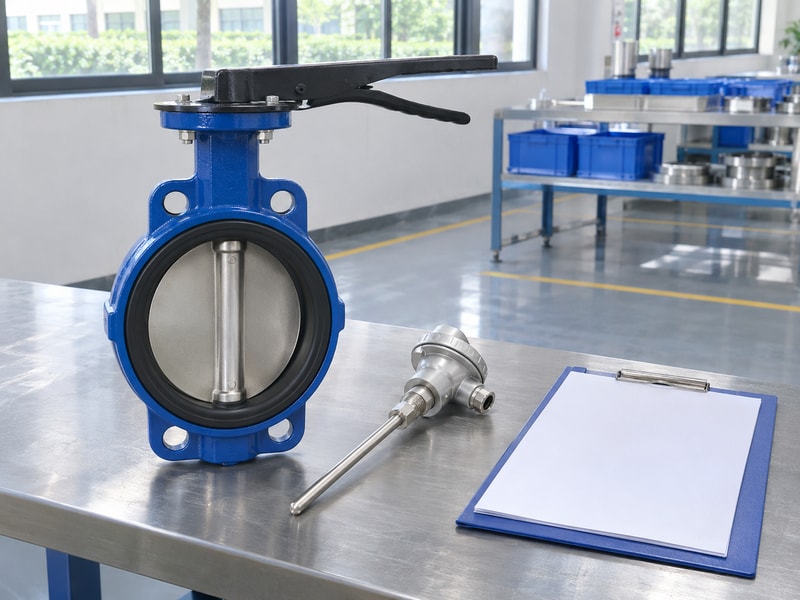
Which operating cases belong on the approval sheet?
Use separate rows for normal operation, startup, cleaning, shutdown, and credible excursions. For example, an oil line may run at moderate temperature but receive a hotter flushing liquid during maintenance. Ask the supplier to approve the pressure, temperature, and duration together for that event. Where vacuum can occur, give the minimum absolute pressure rather than writing only a negative gauge value.
- State normal and maximum upstream pressure together with maximum closed disc differential pressure.
- Include minimum temperature at startup and the coldest expected outdoor exposure.
- Describe thermal cycles, cleaning hold times, and whether operation continues during heating.
| Operating case | Required acceptance |
|---|---|
| Normal production | Allowable pressure at actual fluid temperature |
| Hot cleaning | Approved chemistry, duration, pressure, and cycling |
| Vacuum or cooldown | Minimum absolute pressure and seat retention review |
Return an incomplete chart for clarification before releasing a purchase order or actuator selection.
5. How does seat geometry affect shutoff?
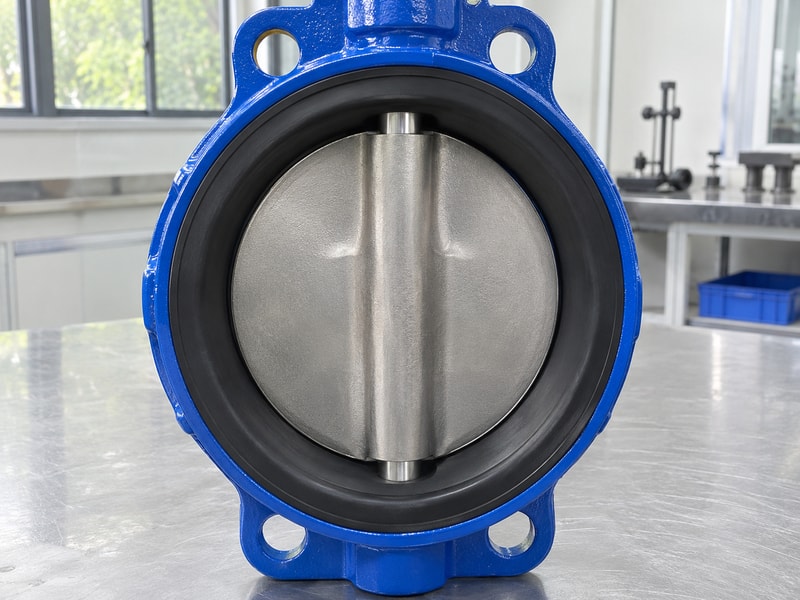
Seat geometry controls how the disc compresses and slides against the sealing surface in a Viton seat butterfly valve. A replacement with the same nominal diameter can still have different lip thickness, stem holes, backing, or flange faces. Changing hardness or compound may also require a design review. You need the valve manufacturer’s approved seat geometry rather than a loose ring that appears to fit.
What should you measure when a seat leaks?
Inspect the removed parts before cleaning away the evidence. Record the location of cuts, uneven contact, permanent deformation, and trapped debris. Photograph both faces of the seat and the corresponding disc edge. For a wafer butterfly valve, also compare the installation with the specified flange faces and bore because the surrounding pipework affects the assembly.
- Match seat drawing revision, stem hole locations, and flange face dimensions.
- Check the disc edge for scoring, deposits, corrosion, and damage from previous assembly.
- Keep the failed seat with its operating history for the supplier’s examination.
| Observation | Follow up check |
|---|---|
| Local cut | Debris, disc damage, and installation contact |
| Uneven witness band | Alignment, geometry, and flange loading |
| Permanent deformation | Compound exposure, temperature, and compression history |
These observations guide the investigation; they do not identify a failed polymer without further evidence.
6. How do you match the operating torque?
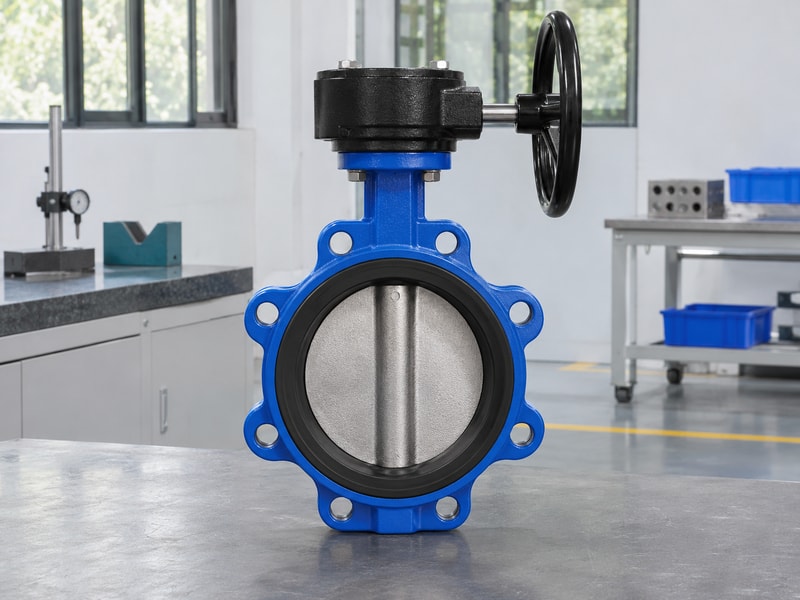
Match the operator to the manufacturer’s torque requirements for the complete Viton seat butterfly valve under your worst operating case. Seat friction, differential pressure, dwell time, temperature, and deposits can change the effort needed to move the disc. A torque figure from an EPDM configuration may not apply after a seat change. Request separate breakaway, running, and seating requirements where the manufacturer provides them.
What evidence should accompany actuator selection?
An actuator proposal should state its available output across travel and the supply conditions used. For pneumatic service, check the minimum available air pressure, including spring action in the required failure direction. For electric service, review voltage, duty, ambient conditions, and torque settings. The coupling, bracket, shaft, and gearbox must tolerate the selected output.
- Give cycle frequency, maximum closed differential pressure, and the longest idle period.
- Ask the supplier to identify its sizing allowance and any application restrictions.
- Confirm that mechanical stops and limit settings match the valve’s approved travel.
| Item | Evidence to compare |
|---|---|
| Valve requirement | Torque by condition and disc position |
| Actuator output | Available torque at minimum supply |
| Mechanical connection | Bracket, coupling, and shaft capacity |
Avoid compensating for an unexplained tight valve by increasing actuator force before checking the cause.
7. Which installation errors damage the seat?
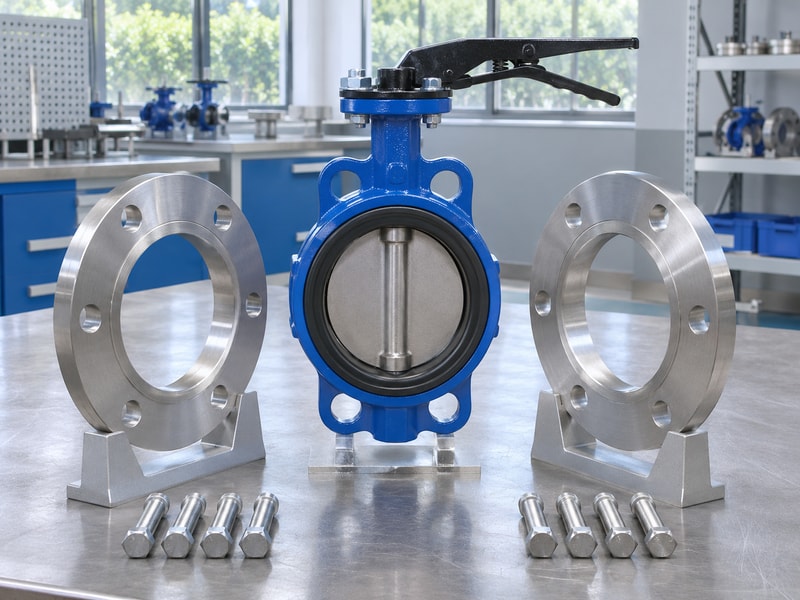
Misalignment, debris, unsuitable mating faces, and incorrect tightening can damage a Viton seat butterfly valve during installation. The manufacturer’s installation instructions should define disc position, gasket requirements, and the tightening procedure for that design. Adding extra gaskets or applying a torque value from another valve can alter seat compression. Check the pipe and flange bore through the complete disc travel before commissioning.
How should you prepare a controlled installation?
Inspect the line after fabrication and remove material that could obstruct the disc or score its contact band. Support and align the pipework before inserting the valve; flange bolts should not pull a distorted line into position. If you select a lug butterfly valve, confirm the exact bolt thread, length, and engagement. End of line service requires its own approved rating.
- Verify pipe bore, flange facing, bolt pattern, and access against the approved drawing.
- Use the specified fasteners, sequence, and tightening values for that exact assembly.
- Record a full travel check after tightening and before introducing process fluid.
| Installation check | Failure it helps prevent |
|---|---|
| Clean sealing faces | Debris trapped at the seat interface |
| Free disc sweep | Contact with adjacent pipe or flange |
| Controlled bolting | Uneven loading and distorted sealing faces |
Stop the installation if the disc binds rather than using the lever to force it through contact.
8. What proves the seat compound is correct?
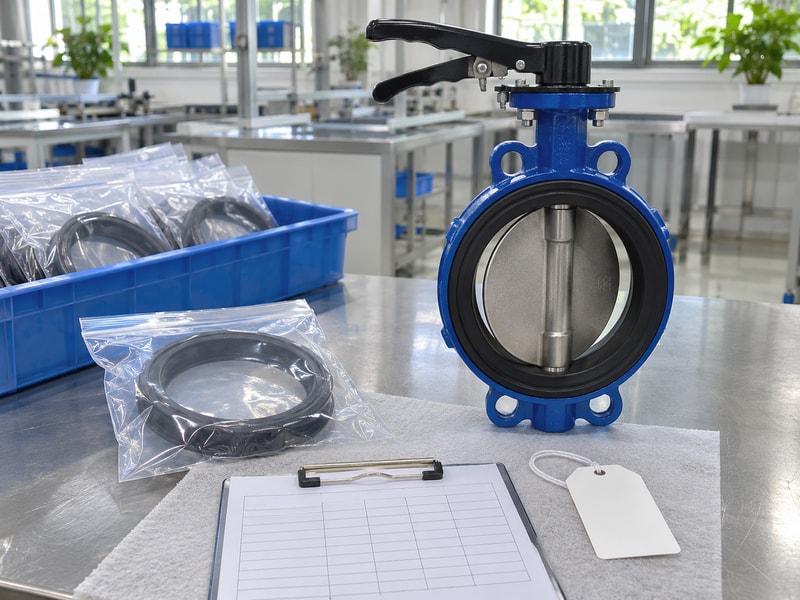
Traceable compound and production records support the material identity of a Viton seat butterfly valve. Appearance, color, and a generic FKM label cannot establish the formulation or its suitability for your duty. Request a finished seat specification tied to the valve bill of materials and manufacturing batch. If the order requires branded polymer, the documentation should support that claim separately from routine valve testing.
Which records should receiving inspection compare?
Agree on document requirements before manufacture so the supplier can preserve the needed links between parts and records. A pressure test shows performance under its stated conditions; it does not identify the seat polymer or demonstrate years of chemical exposure. When supplementary material analysis is needed, agree the method and acceptance criteria with the responsible materials specialist. Keep approved samples identified and protected.
- Compare compound designation, hardness tolerance, seat drawing, and revision with the order.
- Check that batch records cover the delivered seats rather than an unrelated sample.
- Separate material identity, dimensional inspection, and finished valve performance evidence.
| Record | What it supports |
|---|---|
| Compound specification | Defined formulation and agreed properties |
| Batch traceability | Link from delivered seat to production records |
| Valve test report | Performance under the recorded test conditions |
Resolve missing traceability before mixing spare seats into maintenance stores or releasing the valve for service.
9. What should your valve enquiry include?
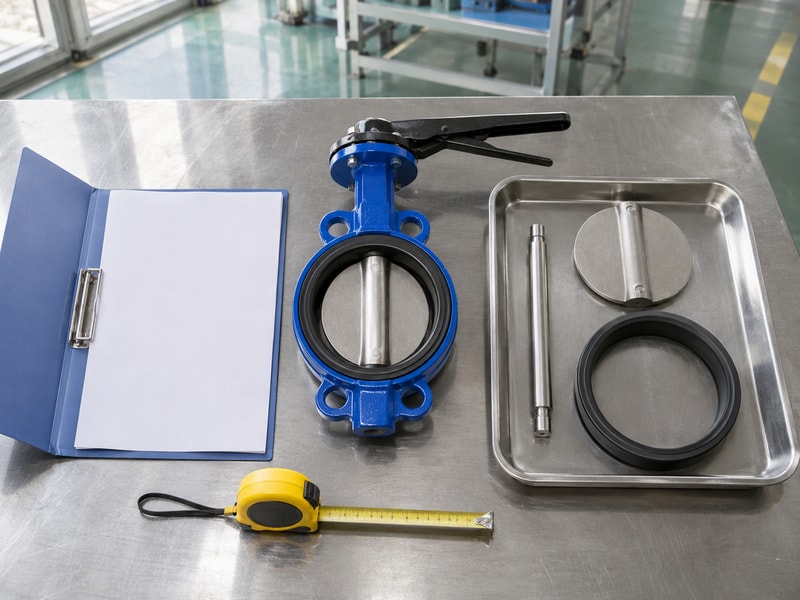
Your Viton seat butterfly valve enquiry should combine a complete duty sheet, an identified sealing design, and a request for written technical confirmation. Separate confirmed requirements from items you want the supplier to propose. RUITO must confirm any proposed FKM seated configuration for your application; standard EPDM, NBR, PTFE, or PFA product information does not establish that availability. Request a specific configuration review before placing an order.
How do you make the supplier’s answer reviewable?
Send the current drawing or clear photographs when replacing an installed valve, then request a marked technical response. Ask the supplier to list deviations and unresolved questions beside its proposed materials. Include inspection requirements and the documents needed with delivery. A quotation that leaves the compound or operating envelope open still needs engineering work before you can compare price or lead time.
- Provide size, connection, complete medium, cleaning sequence, pressure, temperature, and operating frequency.
- State shutoff criteria, actuation needs, destination requirements, and required traceability documents.
- Ask for the exact seat compound, assembly rating, drawing revision, and available supply scope.
| Enquiry attachment | Expected supplier response |
|---|---|
| Duty sheet | Approved conditions and explicit exclusions |
| Connection drawing | Confirmed dimensions and any deviations |
| Inspection schedule | Agreed records, tests, and release requirements |
Keep each open item visible until an authorized reviewer accepts the supplier’s answer.
10. What do buyers ask before choosing a seat?
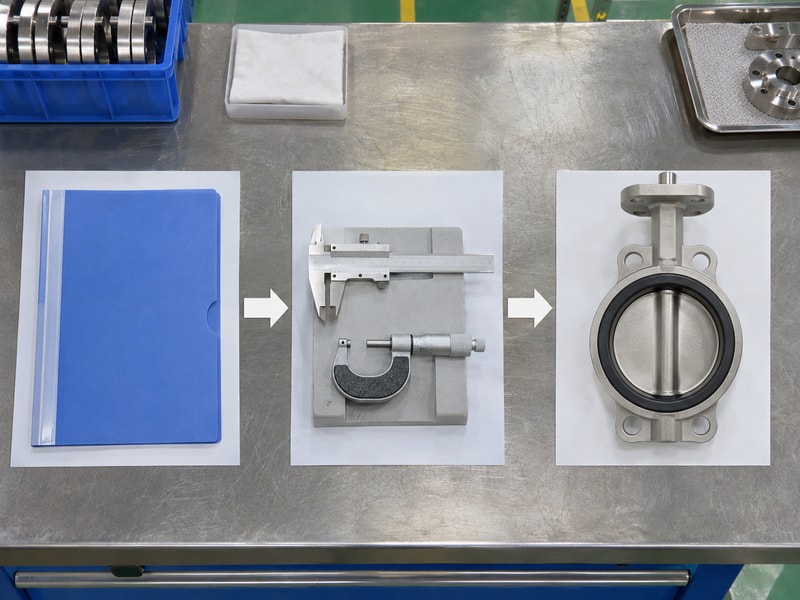
Buyers should confirm compound identity, full exposure conditions, and valve performance before approving a seat change.
- Q1: Can I identify an FKM seat by its color? No. Color can vary with formulation and production requirements, while different polymers can look similar. Use the approved compound specification, part identification, and batch records. If a stored seat has lost its identity, keep it out of service until the supplier resolves its traceability.
- Q2: Can I replace EPDM with Viton in the same valve? Only with manufacturer approval. Geometry, hardness, friction, fluid compatibility, and actuator sizing need review together. Ask for an approved replacement part linked to your valve model and drawing revision rather than ordering by nominal diameter alone.
- Q3: Is a chemical compatibility chart enough? No. A chart helps screen materials, but your actual mixture, concentration, cleaning sequence, temperature, and exposure duration still need approval. Ask whether the evidence concerns the exact finished compound and whether a representative exposure test is needed.
- Q4: Does a higher polymer temperature limit raise valve pressure? No. The complete valve retains its own pressure temperature envelope and shutoff differential limit. Ask for a chart covering the proposed seat and all other components rather than combining a polymer data sheet with the body’s cold pressure label.
- Q5: How do I start a RUITO material review? Send your duty sheet, cleaning recipe, photographs, and connection drawing when you contact us. Ask RUITO to confirm the available configuration, exact seat compound, supporting evidence, and any deviations before you release an order.