
Compare double acting butterfly valve manufacturers against one defined valve duty, assembly specification, and acceptance schedule. A lower quotation may cover a different seat, actuator, accessory set, or test scope. Those differences should be resolved before price becomes the deciding factor. Build your shortlist around manufacturers that can explain the proposed configuration and provide the records your project needs, then compare their offers on the same technical and commercial basis.
1. Which double acting butterfly valve manufacturers fit?
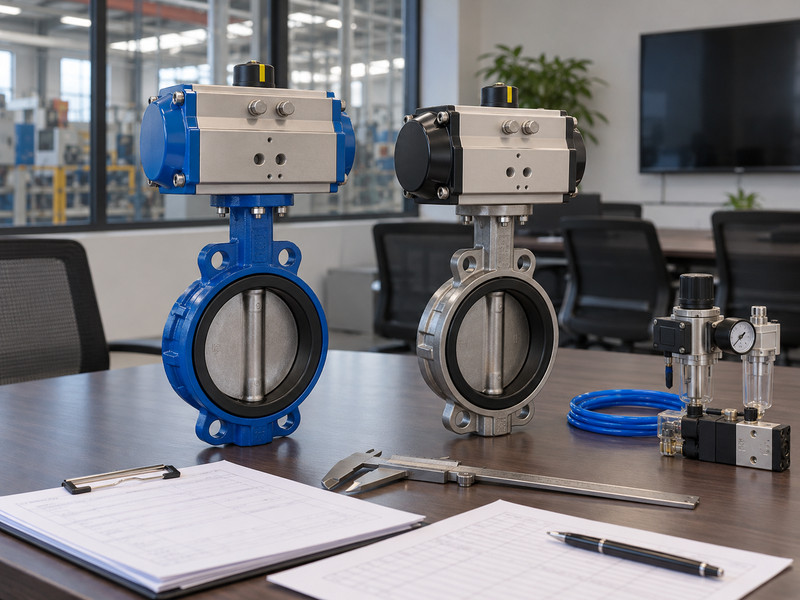
Suitable double acting butterfly valve manufacturers can support the actual valve construction, service conditions, actuation package, and acceptance requirements in your enquiry. A broad catalogue does not prove every offered configuration. Separate the manufacturer’s demonstrated product scope from options that still require engineering review or sourcing confirmation.
What should a shortlist entry contain?
Identify body style, seat and wetted materials, size range relevant to the order, pressure-temperature limits, actuator arrangement, and the party responsible for final assembly. Ask how each supplier will address exceptions to your specification. A short written response to those points is more useful than ranking companies by the number of product photographs on their websites. Keep uncertain items visible so the shortlist remains a review tool rather than an implied approval of every listed manufacturer.
- Identify the configuration each supplier actually proposes.
- Record deviations and outstanding engineering questions.
- Name the party responsible for the complete package.
| Shortlist field | Information to capture | Reason |
|---|---|---|
| Product scope | Relevant construction and service limits | Establishes initial fit |
| Assembly scope | Valve, drive, controls, responsibility | Prevents gaps between suppliers |
| Exceptions | Accepted, rejected, or unresolved items | Keeps approval conditions visible |
Key takeaway: A useful shortlist describes what each company can provide for this order rather than making a general brand ranking.
2. How do you normalize different valve constructions?
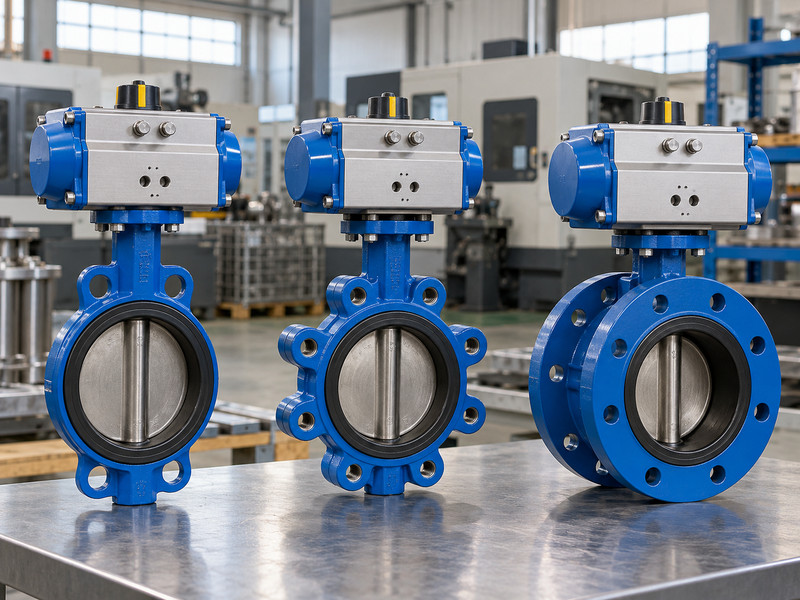
Normalize construction by comparing the same body style, connection, sealing arrangement, and declared duty. Offers from double acting butterfly valve manufacturers are not equivalent merely because they share a nominal diameter and pneumatic drive. Wafer, lug, flanged, concentric, and offset descriptions answer different design questions.
What should the technical comparison sheet separate?
Record connection arrangement, face-to-face length, flange compatibility, disc clearance, seat design, permitted pressure direction, and any separately declared end-of-line duty. Double acting identifies the actuator’s operating principle rather than double-offset valve geometry. If one supplier offers an alternative construction, ask how it meets the installation and process requirements instead of treating it as an automatic upgrade. A lug butterfly valve also needs the specified bolt-engagement and load review for its intended connection.
- Separate connection style, sealing geometry, and actuation type.
- Compare actual installation dimensions and pressure directions.
- Review alternative constructions as explicit deviations.
| Comparison field | Compare on the same basis | Do not infer |
|---|---|---|
| Connection | Actual drilling, face length, bore clearance | Fit from nominal diameter alone |
| Sealing | Seat design and declared acceptance | Equal reverse and forward limits |
| Actuation | Complete pneumatic operating arrangement | Valve offset geometry from “double acting” |
Key takeaway: Resolve construction differences before treating two line items as the same product.
3. How should you compare material proposals?
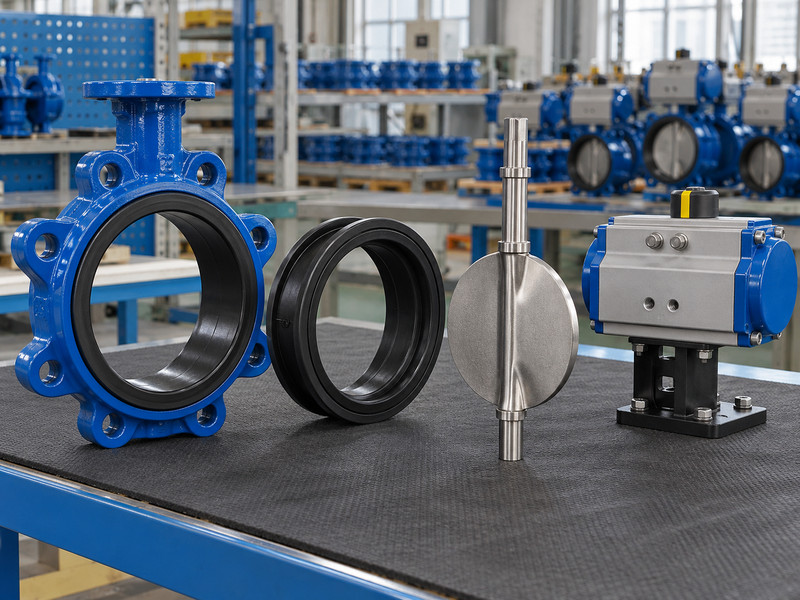
Compare the complete wetted-material and seal configuration against the same fluid conditions. Double acting butterfly valve manufacturers may quote different body, disc, shaft, seat, and coating combinations under a similar product description. A material summary headed by “stainless steel” can conceal differences that affect compatibility and maintenance.
Which material differences need engineering review?
Check actual grades, seat compounds, shaft seals, coatings or linings, and any relevant backing materials. Include cleaning chemicals, concentration, additives, temperature, and solids in the service data shared with all bidders. A general chemical-resistance chart can support an initial question but does not approve the complete valve. Ask each supplier to identify its configuration limits and the evidence available for the stated duty.
- Compare all wetted components and seals separately.
- Give every bidder the same fluid and cleaning data.
- Record the approval basis for proposed material alternatives.
- Keep unsupported substitutions as unresolved items rather than accepting them through a price comparison.
| Material proposal | Required clarification | Purchasing action |
|---|---|---|
| Different seat compound | Compatibility and torque effect | Obtain engineering acceptance |
| Different metal grade | Fluid and load suitability | Review before price normalization |
| Different lining or coating | Scope, continuity, and limits | Confirm exact configuration |
Key takeaway: Compare material combinations for the defined service rather than selecting the most impressive material name.
4. How do you compare automation packages fairly?
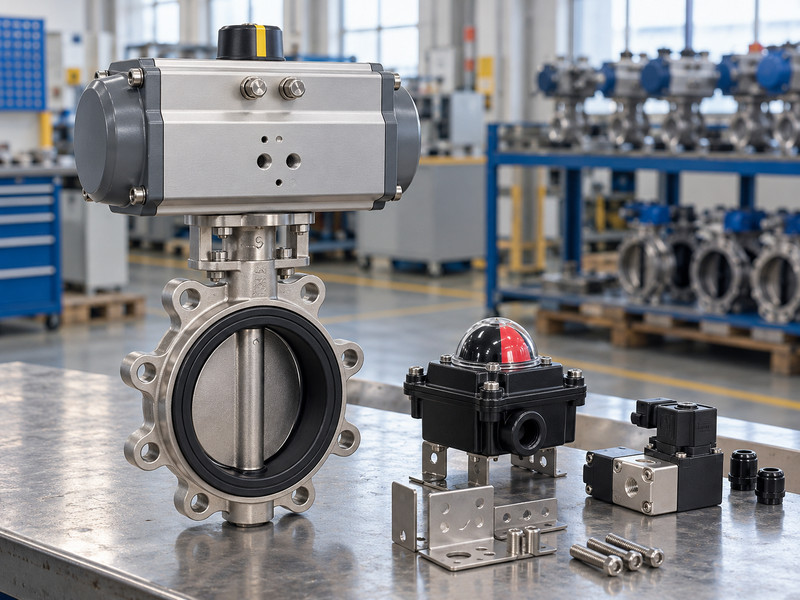
Compare valve torque, actuator output, mounting, controls, and feedback as one package. Quotations from double acting butterfly valve manufacturers can differ substantially in included accessories and sizing assumptions. An actuator-only price does not establish the cost or behaviour of an installed assembly.
What should each bidder provide?
Require the valve torque basis, minimum dynamic air pressure, sizing method, and maximum-output mechanical check. Compare bracket, coupling, solenoid function, voltage, feedback, enclosure, tubing, and any override. Define normal operation, power loss, air loss, and restart requirements consistently. A standard double-acting actuator does not inherently guarantee a spring-powered return stroke.
- Use one air-supply and process-duty basis for all offers.
- Compare included accessories and mounting hardware line by line.
- Require a defined response to the specified failure events.
- Where a supplier proposes another failure arrangement, review the full mechanism and verification scope rather than treating the claim as a minor accessory option.
| Package item | Comparison basis | Missing-information risk |
|---|---|---|
| Actuator sizing | Same valve duty and minimum air | Incomparable output selections |
| Accessories | Same command and feedback function | Additional cost or incorrect response |
| Mounting | Actual supported drive arrangement | Installation mismatch or overload |
Key takeaway: Normalize the complete automation scope before comparing the quoted package price.
5. Which documents should you request during bidding?
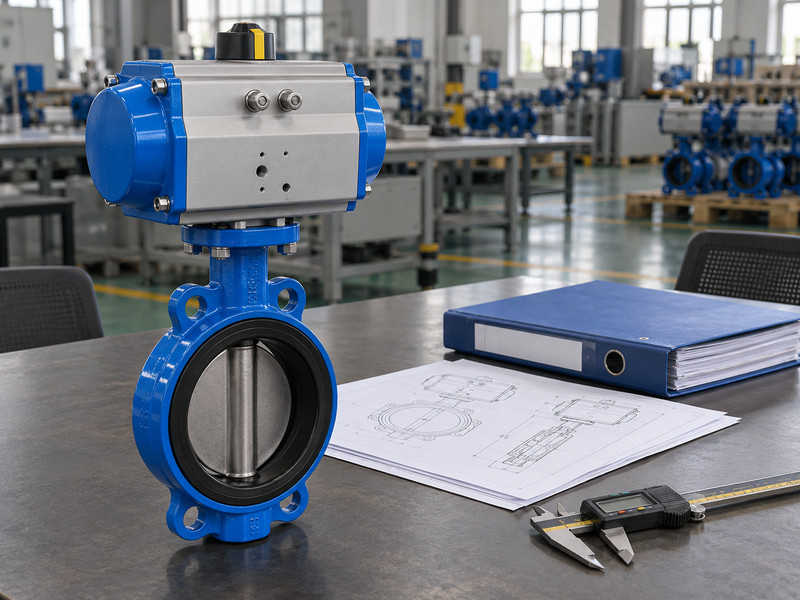
Request the documents needed to assess selection, installation, verification, and support. Double acting butterfly valve manufacturers should distinguish documents available with a quotation from records produced after manufacture. A generic certificate list cannot replace a configuration-specific data sheet and assembly drawing.
How do you check whether a certificate is relevant?
Review the issuing information, applicable entity, product or management-system scope, and any size, material, temperature, or destination limitations relevant to the claim. Company-level ISO 9001 quality management certification does not approve every valve for every application. Ask how the delivered assembly will connect to its material and test records. For a flanged butterfly valve, obtain the actual installation dimensions instead of accepting a similar model’s drawing for preliminary fit approval.
- Separate quotation documents from manufacturing records.
- Check the scope behind each certification claim.
- Agree a final document index before ordering.
| Document | Bidding use | Final-order use |
|---|---|---|
| Data sheet and drawing | Establish selection and fit | Define the delivered revision |
| Applicable approval evidence | Check scope of claims | Confirm exact required coverage |
| Inspection and test schedule | Compare verification scope | Produce identifiable acceptance records |
Key takeaway: Ask for documents that close a purchase requirement, and check the scope before crediting a claim.
6. How do you compare testing capability?
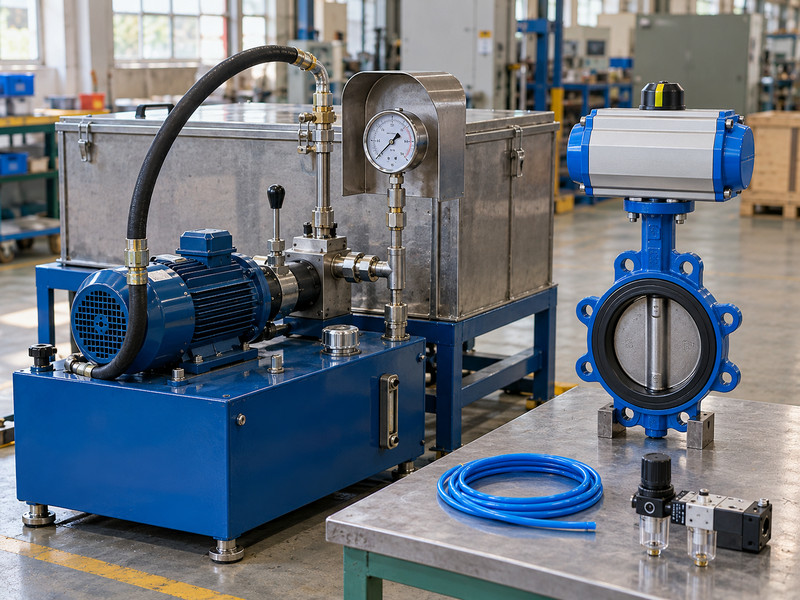
Compare testing capability against the specific pressure, closure, functional, and project requirements in your enquiry. Double acting butterfly valve manufacturers may use different test arrangements and record formats. A supplier’s ability to perform one inspection should not be extended to a test outside that demonstrated scope.
Which questions make a capability review concrete?
Check the procedure, medium, pressure, duration, direction, acceptance limit, equipment identification, and product connection. Distinguish shell integrity from seat closure and complete-assembly movement. If operation against a defined load is required, confirm whether the proposed arrangement can represent it. Clarify any third-party witness requirements, notice period, and extra test preparation.
- Compare the actual tests included in each quotation.
- Review an example with a relevant product configuration.
- Identify test limitations and any remaining site verification.
- The goal is an agreed verification route that the supplier can execute and your quality team can interpret without reconstructing the test from a marketing video.
| Test capability | Question to ask | Evidence |
|---|---|---|
| Pressure integrity | Which configuration and procedure apply? | Applicable test record |
| Closure | Which direction and leakage criterion apply? | Defined acceptance method |
| Function | Which load, air, and controls are represented? | Assembly test arrangement and results |
Key takeaway: Compare test scope and interpretability rather than counting test-machine photographs.
7. What should a sample approval establish?
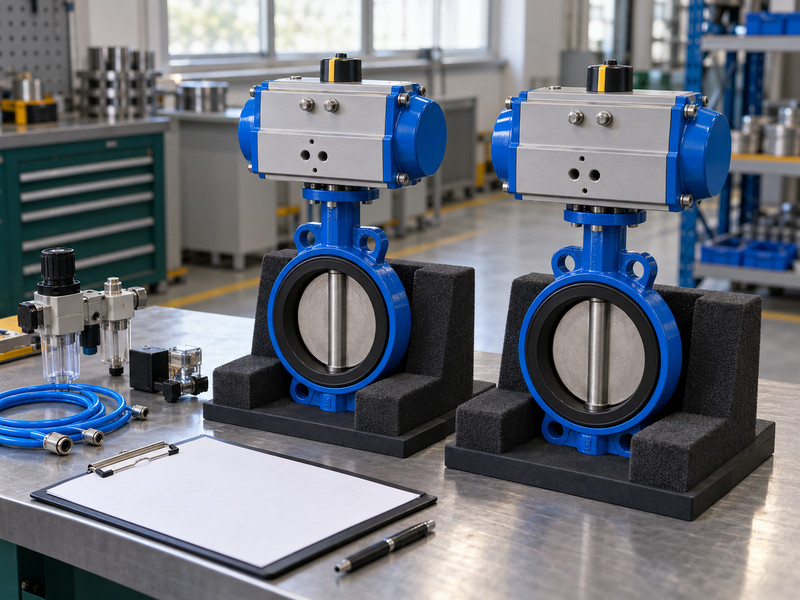
A sample approval should establish the defined characteristics of the sample and the configurations it represents. Double acting butterfly valve manufacturers should not treat one accepted unit as approval of every size, seat, or accessory option. Record sample coverage before using it to release a larger order.
How do you choose representative samples?
Consider body construction, materials, mounting interfaces, actuator sizes, controls, and the installation conditions needing verification. A sample may be useful for dimensional fit, assembly review, signals, or a defined operating test, but each result has a scope. Keep the approved sample identification, drawings, and bill of materials together. If production differs, require review of the change before accepting the lot as equivalent to the sample.
- State what each sample is intended to demonstrate.
- Define the variants that its acceptance covers.
- Freeze the accepted build and change-approval route.
- This also helps the factory understand which features must remain controlled on repeat orders.
| Sample purpose | Acceptance evidence | Scope limitation |
|---|---|---|
| Installation fit | Measured or installed interface | Other sizes may differ |
| Control function | Actual command and feedback test | Other accessories need review |
| Service verification | Defined operating conditions | Unrepresented duties remain separate |
Key takeaway: A sample reduces uncertainty when its purpose and coverage are recorded precisely.
8. Which delivery assumptions should you compare?
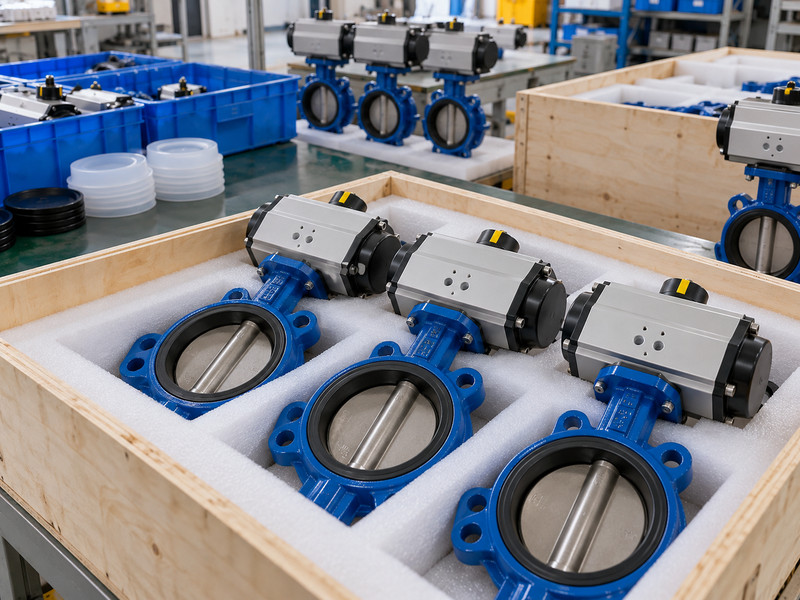
Compare delivery assumptions after normalizing the technical scope, inspection requirements, document package, and quantities. Offers from double acting butterfly valve manufacturers can quote different starting conditions for lead time. A shorter period may exclude drawing approval, special materials, witness preparation, or transport.
How do you avoid an incomplete schedule comparison?
Identify the approvals, payments, material commitments, or inspection arrangements required to start manufacture or release shipment under the quotation. Separate factory readiness from international transport and customs where relevant. Review packing protection and the document delivery schedule as well as the physical goods. For repeat supply, ask how the supplier handles approved configurations, forecast quantities, and component changes.
- Compare the same quantity and technical configuration.
- State start conditions and the delivery milestone quoted.
- Include inspection, documents, packing, and transport responsibilities.
- Record those assumptions without turning an indicative quote into an unsupported guarantee of future availability.
| Schedule item | Clarification | Comparison benefit |
|---|---|---|
| Start condition | What must be approved or available? | Prevents different lead-time bases |
| Factory milestone | Ready for inspection or shipment? | Makes completion claims comparable |
| Logistics and records | What remains after factory release? | Supports installation planning |
Key takeaway: Normalize schedule boundaries before treating a quoted delivery period as a supplier advantage.
9. How should you make the final selection?

Select from the technically acceptable offers using the project’s stated priorities and resolved comparison data. Double acting butterfly valve manufacturers should be assessed against the same requirements before price, delivery, support, and other commercial factors are weighed. Keep approval conditions attached to the decision.
What should the recommendation show?
Present configuration, deviations, documents, testing, sample coverage, delivery assumptions, and remaining actions side by side. Identify requirements that are mandatory and those where an approved alternative is acceptable. Do not hide a governing technical gap inside an average score. Record why the selected offer meets the requirement and which changes would trigger another review.
- Close mandatory requirements before final commercial selection.
- Keep accepted deviations and conditions visible.
- Freeze the selected package and verification schedule.
- This gives procurement a defensible comparison and gives the supplier a clear description of the accepted scope.
| Decision area | Compare | Release condition |
|---|---|---|
| Technical fit | Service, materials, drive, interfaces | Accepted configuration and deviations |
| Verification | Documents, inspection, sample coverage | Agreed acceptance route |
| Execution | Schedule, support, packing, responsibilities | Clear commitments and open-action owners |
Key takeaway: Send a common service data sheet and comparison schedule when you contact us. RUITO can identify the proposed scope and any information needed to close its quotation.
10. What should procurement ask before choosing a manufacturer?
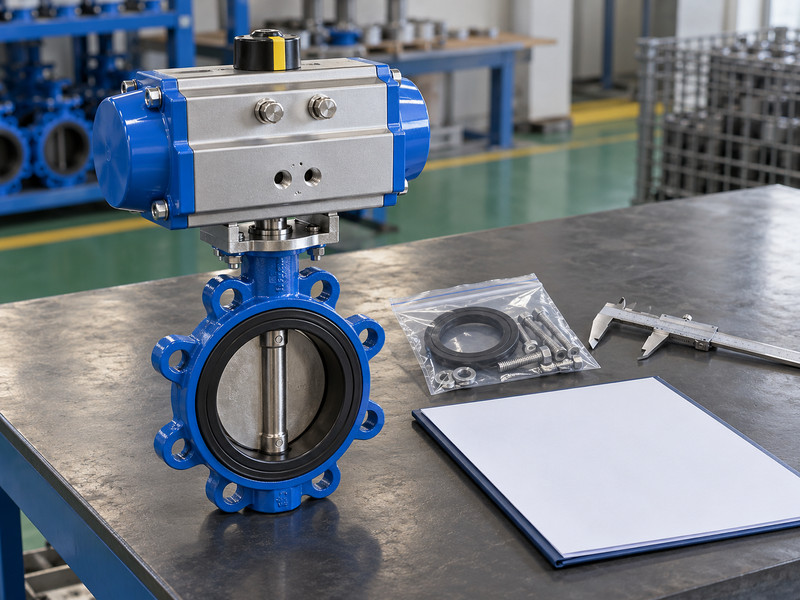
Use these questions to compare double acting butterfly valve manufacturers for a specific order.
- Q1: Can a supplier use purchased actuators? Yes, when the complete package meets the requirements and assembly responsibility is clear. Review the actuator specification, sizing, controls, mounting, and final verification.
- Q2: What’s the best country to source from? Country alone does not establish product suitability. Compare the actual configuration, evidence, support, logistics, and project requirements for each supplier.
- Q3: Can I compare only the valve size and pressure class? No. Include materials, seat, pressure-temperature limits, direction ratings, actuator, controls, installation dimensions, documents, and tests.
- Q4: How do I know if a certificate covers my valve? Compare its scope with the exact product, materials, sizes, use, and destination requirements behind the claim. A general company certificate is insufficient for a product-specific approval.
- Q5: Can an approved sample cover later substitutions? Only within its stated approval scope. Review changes affecting materials, torque, mounting, controls, fit, and acceptance before treating the new build as equivalent.