
Buy a wholesale double acting pneumatic butterfly valve package by freezing the configuration, approving representative samples, and defining the inspection and release conditions for every ordered variant. A batch can look consistent while containing different seats, solenoids, or coupling dimensions. Your purchasing schedule should identify those parts before quantities increase. Compare the complete delivered package and its acceptance records, then agree how the supplier must obtain approval for any production change.
1. Which wholesale double acting pneumatic butterfly valve fits?
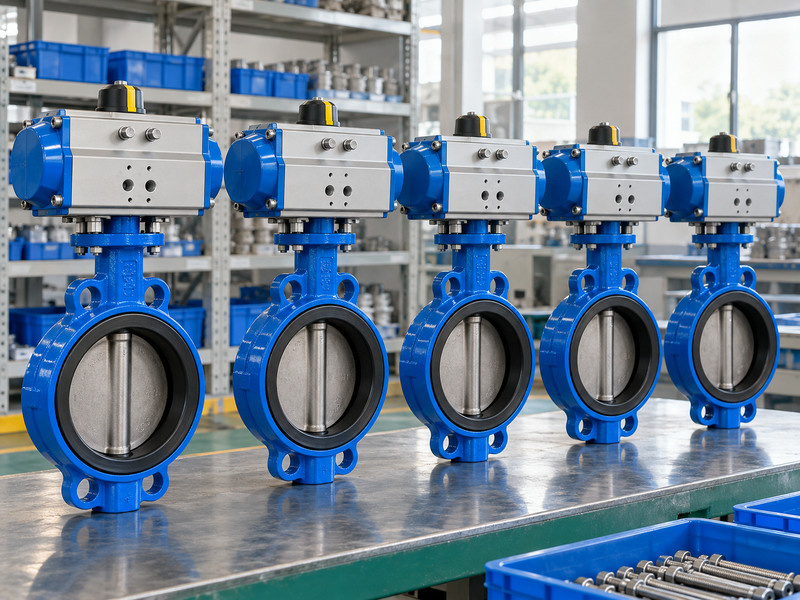
The suitable package matches the actual process duty, installation, controls, and acceptance requirements. A wholesale double acting pneumatic butterfly valve enquiry needs those details for each ordered configuration. Quantity does not make different body styles, seal materials, pressure directions, or accessory functions interchangeable.
How should you structure a multi-item enquiry?
Separate nominal sizes, body connections, wetted materials, seats, pressure-temperature conditions, actuators, and control accessories. Identify any variants that share a documented approved configuration and those needing separate review. Add the required quantities, document package, inspection points, packing arrangement, and delivery milestones. This gives the supplier a basis for planning production and prevents a short description such as “pneumatic butterfly valve, assorted sizes” from becoming the only controlled reference for the order.
- Separate configuration identity from the ordered quantity.
- State operating and installation conditions for each variant.
- Include controls, documents, tests, and packing in the enquiry.
| Order field | Detail to retain | Reason |
|---|---|---|
| Valve configuration | Size, body, materials, seat, rating limits | Prevents mixed technical scope |
| Automation | Actuator, mounting, controls, feedback | Defines the complete package |
| Delivery scope | Quantity, documents, inspection, packing | Makes offers comparable |
Key takeaway: A clear configuration schedule is the foundation for a repeatable bulk order.
2. What should remain fixed after sample approval?
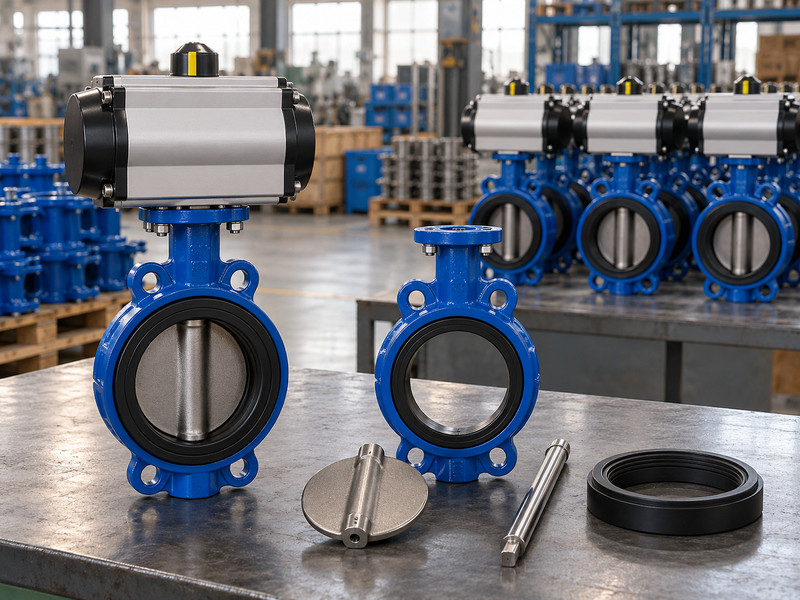
Keep the approved valve, actuator, mounting components, accessories, and document revisions fixed within the accepted change process. A wholesale double acting pneumatic butterfly valve order should not drift from the sample through undocumented purchasing substitutions. Similar appearance does not establish equal materials or operating behaviour.
Which details belong in the frozen configuration?
Keep the material list, seat compound, shaft and coupling details, bracket, fasteners, actuator selection, solenoid function, voltage, and feedback specification. Retain the drawings and accepted test conditions. A supplier may need to propose a replacement component during production, but the proposal should identify its effect before assembly proceeds. Define who can approve changes and what evidence is needed.
- Freeze the approved component list and drawings.
- Identify changes requiring engineering or buyer approval.
- Recheck affected tests after an accepted substitution.
- This keeps a supply problem from turning into a silent change in torque, fit, or failure response.
| Controlled item | Possible substitution effect | Review needed |
|---|---|---|
| Seat or seal | Compatibility and operating torque | Material and duty assessment |
| Actuator or coupling | Output, engagement, clearance | Mechanical sizing and interface review |
| Solenoid or feedback | Control and signal behaviour | Function and acceptance sequence |
Key takeaway: Approve the sample’s actual configuration and require a documented route for later alternatives.
3. How should you choose samples for several variants?
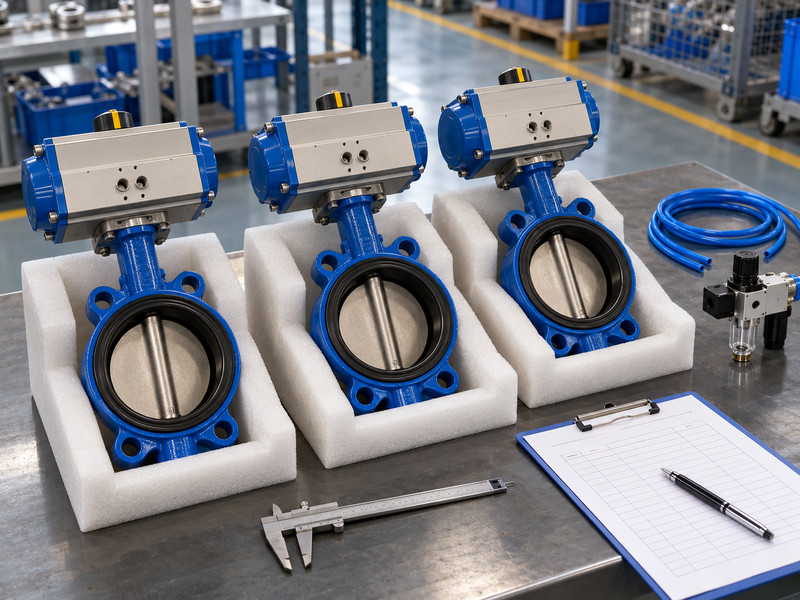
Choose samples to cover the differences that affect fit, materials, drive selection, and control function. A wholesale double acting pneumatic butterfly valve programme should state which variants each accepted sample represents. One successful small valve cannot automatically establish the mounting or operating behaviour of every larger assembly.
Which differences should the sample plan address?
Review body construction, size changes, seat compounds, actuator families, bracket and coupling arrangements, and accessory configurations. Define whether each sample is intended for dimensional fit, assembly inspection, signal checks, or a specified operating test. Keep its identification and records with the approval. Where a sample does not represent a variant’s governing requirement, obtain the separate review or verification that the variant needs.
- Identify the requirement each sample will verify.
- State the variants covered by its approval.
- Keep unrepresented interfaces or duties open for review.
- Sampling should follow the order’s actual technical differences rather than a convenient quantity chosen without a coverage plan.
| Sample objective | Useful evidence | Coverage limit |
|---|---|---|
| Installation fit | Actual dimensions or equipment trial | Different geometry may need review |
| Control operation | Commands, feedback, supply condition | Different accessories may behave differently |
| Valve service | Defined test or operating conditions | Other materials or duties remain separate |
Key takeaway: Sample approval should reduce identified uncertainty without implying untested coverage.
4. How do you keep control accessories consistent?
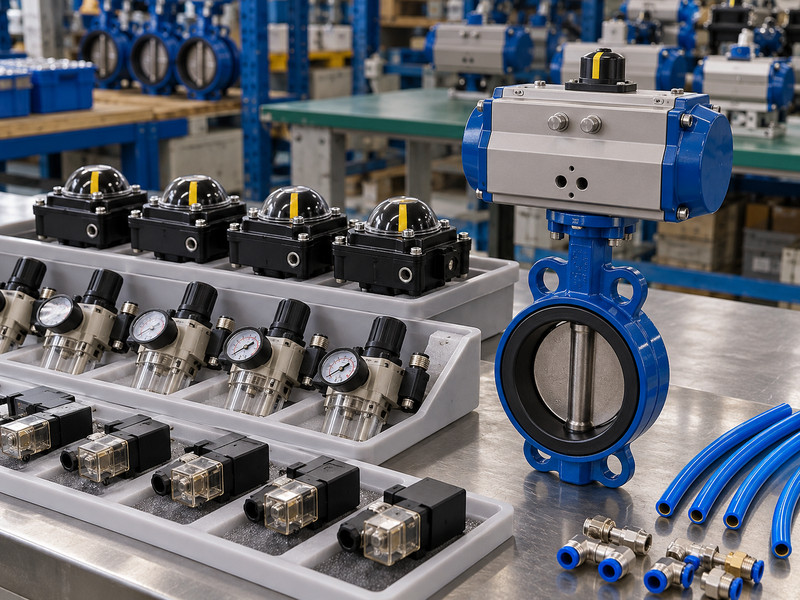
Specify control accessories by their complete function and relevant interfaces. A wholesale double acting pneumatic butterfly valve batch can fail equipment-line checks when one solenoid or feedback device differs from the approved package. Colour, connector shape, and nominal voltage alone do not establish equivalence.
What should receiving and assembly teams compare?
Include directional-valve function, electrical supply, connector, flow capacity where relevant, enclosure and environmental requirements, feedback type, and the required rest-state behaviour. Define air preparation and tubing requirements with the package. Confirm the response to power loss, air loss, and restoration for the selected design. Standard double-acting actuation does not itself provide a spring-powered return after air loss.
- Match accessory identity and function during receiving.
- Verify the final package against the approved schedule.
- Record substitutions and their accepted test results.
- If a different arrangement supplies a required response, preserve its configuration and verification requirements across the lot.
| Accessory | Configuration detail | Batch check |
|---|---|---|
| Solenoid | Pneumatic function, supply, connector | Correct command and rest-state response |
| Feedback device | Signal, interface, enclosure | Correct end-position output |
| Air preparation | Range, quality, capacity requirements | Matches the selected operating basis |
Key takeaway: Keep accessory function under the same configuration control as the valve and actuator.
5. Which test records should a production lot contain?
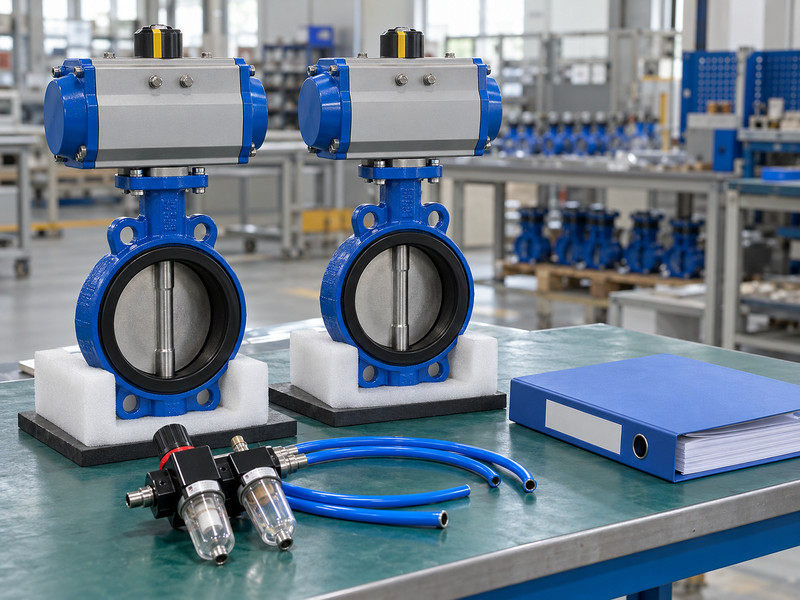
The lot should contain the inspection and test records required by the contract, connected to the delivered products and accepted configuration. A wholesale double acting pneumatic butterfly valve order needs separate definitions for pressure integrity, seat closure, and assembly operation. A batch summary should not conceal the required scope of individual checks.
How do you define inspection coverage clearly?
State which checks apply to every unit and which use an agreed sampling plan, together with acceptance and rejection rules. Identify the contract-selected procedure, such as ISO 5208 where applicable, and the conditions, direction, and acceptance limit for pressure and closure tests. Record the actual configuration and air conditions for functional checks. If an inspection fails, define the lot disposition, corrective work, and repeat-verification requirements.
- State coverage and acceptance rules for each inspection.
- Keep pressure, closure, and functional requirements separate.
- Define failed-result disposition and required repeat checks.
- Keep the record scope clear so the receiving team can determine which result applies to a particular valve or controlled group.
| Inspection type | Scope to define | Record connection |
|---|---|---|
| Pressure and closure | Applicable unit coverage and procedure | Identified product or stated accepted scope |
| Functional assembly | Movement, controls, supply, loading | Actual supplied configuration |
| Sampled dimensional check | Agreed plan and rejection rule | Defined lot and selected items |
Key takeaway: An inspection plan should show how accepted evidence covers the quantity being released.
6. What should packing protect during transport?
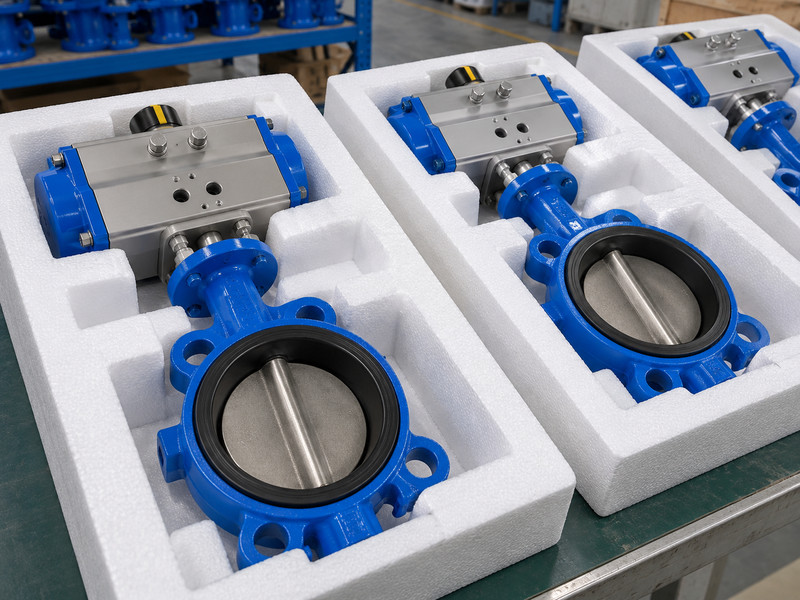
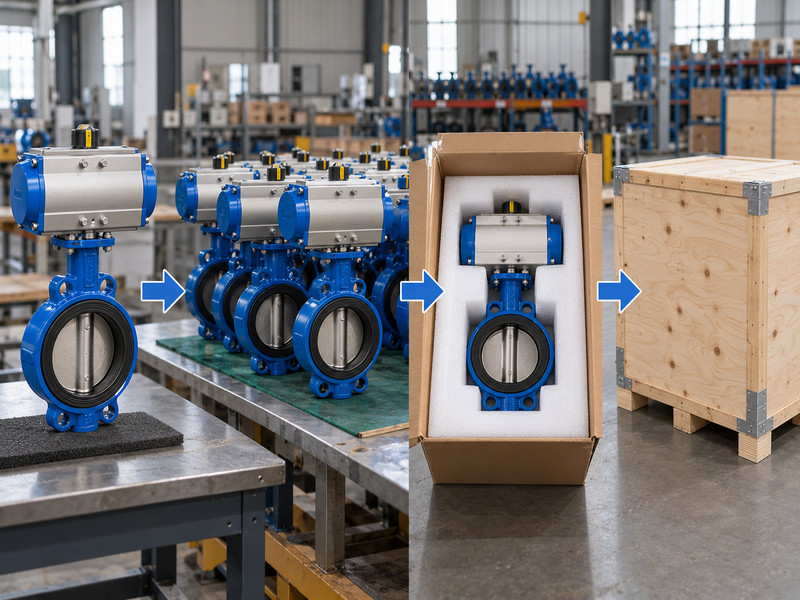
Packing should protect sealing faces, the body, actuator, drive connection, controls, and small fittings from transport damage. A wholesale double acting pneumatic butterfly valve shipment should support the assembly at suitable locations rather than allowing its weight to hang from vulnerable accessories. Review the actual packed arrangement before shipment release.
What should a packing inspection check?
Confirm support and restraint for both the valve and actuator, with protection for exposed faces, shafts, air ports, and electrical connectors as applicable. Keep loose accessories and spare parts secured so they cannot strike the assembly. Identification should remain readable and linked to the packing list without requiring unpacking every item at the receiving dock. Agree any special preservation, storage, or destination requirements in advance instead of adding them after the crates have been closed.
- Protect exposed sealing and connection surfaces.
- Support the assembly without loading small fittings.
- Reconcile package identification with the shipment schedule.
| Packing feature | Inspection question | Damage it can reduce |
|---|---|---|
| Support and restraint | Is the assembly held at suitable points? | Movement and impact damage |
| Surface protection | Are sealing faces and ports protected? | Contamination and surface damage |
| Loose items | Are spares and accessories secured? | Impact on the valve or controls |
Key takeaway: Evaluate protection of the complete assembly rather than the strength of the crate alone.
7. How should spare parts be specified?
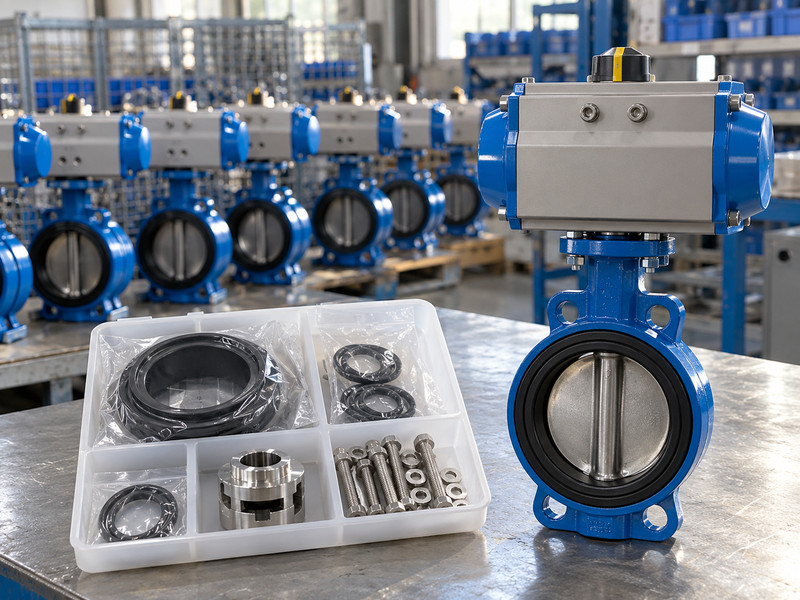
Specify spare parts against the approved build, materials, and operating instructions. A wholesale double acting pneumatic butterfly valve order should not use nominal diameter alone to identify a replacement seat or coupling. Parts that look similar can differ in compound, dimensions, drive engagement, or permitted service.
Which information should maintenance receive?
Retain the valve configuration, material and seal details, relevant drawings, actuator identification, and accessory specifications. State whether supplied spares are for commissioning, planned maintenance, or agreed stock support. For a flanged butterfly valve, preserve the exact construction and installation dimensions with the parts information. Ask how replacements will remain identifiable if a supplier later changes a component design, and define the review needed before accepting an alternative.
- Identify spares by configuration rather than appearance.
- Separate commissioning parts from maintenance stock.
- Retain substitution and revision information for later orders.
| Spare item | Identity needed | Why diameter alone is insufficient |
|---|---|---|
| Seat or seal | Compound, geometry, configuration | Different materials and fitting arrangements |
| Coupling | Shaft form, engagement, allowable load | Different drive interfaces |
| Control accessory | Function and electrical interface | Different commands or feedback behaviour |
Key takeaway: Buy spare-part information with the original lot so replacement selection does not become a new identification project.
8. How do you plan staged deliveries?
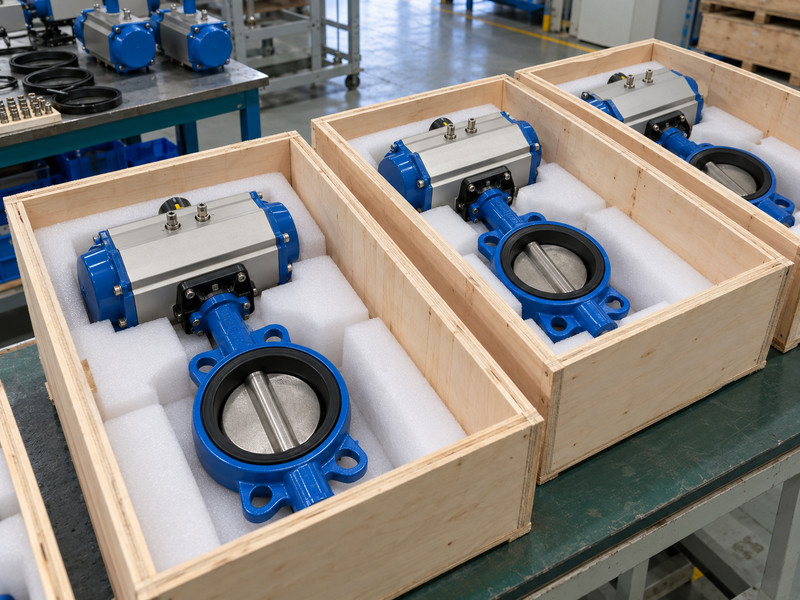
Plan staged deliveries around accepted configurations, material availability, inspection points, document readiness, and the receiving schedule. A wholesale double acting pneumatic butterfly valve programme needs a clear distinction between factory completion, inspection release, shipment, and arrival. Those milestones should not share one ambiguous “delivery date.”
What should each release schedule contain?
State the configurations and quantities in each release, approval conditions, required records, inspection notice, packing arrangement, and the responsibility for transport. Keep technical changes aligned with the affected releases so one approved revision does not become mixed with another in the warehouse. For urgent replacements or repeat supply, discuss forecast and stock arrangements explicitly. Avoid assuming that an initial lead-time quotation guarantees future availability of every actuator or accessory in the package.
- Define each release by configuration, quantity, and revision.
- Separate factory and logistics milestones.
- Agree documents and inspection notices for each shipment.
| Milestone | What it means | Information to retain |
|---|---|---|
| Factory completion | Manufacture reaches the agreed stage | Quantity and pending inspections |
| Shipment release | Required acceptance conditions are met | Release record and document package |
| Dispatch and arrival | Logistics stages after release | Transport responsibilities and receiving plan |
Key takeaway: A staged schedule works when the physical goods, revisions, and documents move together.
9. How do you keep repeat orders consistent?
Keep repeat orders consistent through a controlled configuration record and a defined change-approval process. A wholesale double acting pneumatic butterfly valve purchase should reference the accepted build and current service requirements. Repeating an old item description alone can leave the supplier and buyer working from different revisions.
What should be reviewed before the next release?
Confirm that the fluid, pressure-temperature conditions, minimum air supply, controls, mounting, and installation space remain the same. Check supplier-proposed component changes and any lessons from receiving or commissioning the earlier lot. Update the approved record where a change is accepted, then communicate it to purchasing, quality, and maintenance. This keeps repeat supply useful without treating historical approval as permission for undocumented changes in materials, operating response, or replacement-part compatibility.
- Reference the accepted configuration and document revisions.
- Review changes in both the site duty and supplier build.
- Carry corrective actions into the next purchase release.
| Repeat-order check | Required comparison | Action |
|---|---|---|
| Service conditions | Current duty versus original basis | Reassess affected selection inputs |
| Supplier build | Proposed parts versus accepted configuration | Approve or reject deviations |
| Previous performance | Receiving and commissioning findings | Close corrective actions before repetition |
Key takeaway: Send RUITO your configuration schedule, quantities, and release requirements when you contact us. We can review the requested package and identify the information needed for a batch quotation.
10. What should buyers ask about bulk orders?
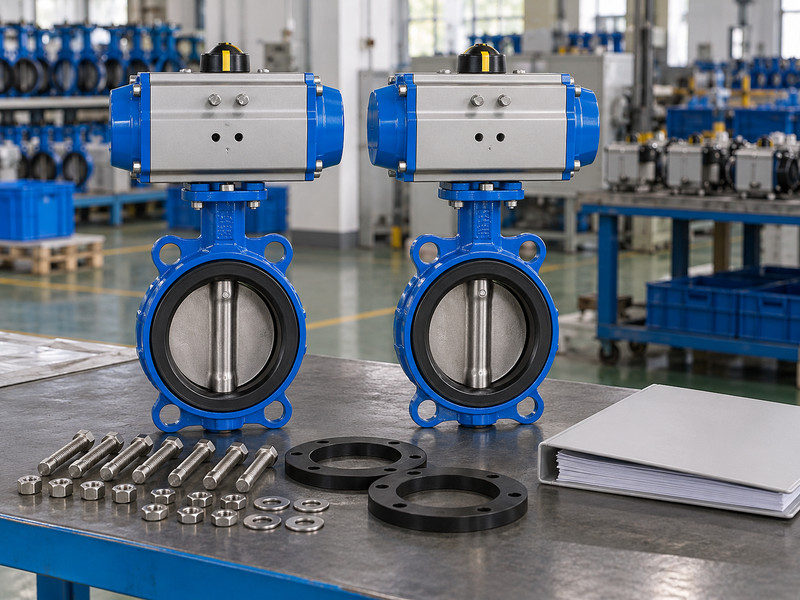
Use these questions before releasing a wholesale double acting pneumatic butterfly valve order.
- Q1: Can I mix several sizes in one order? Ask the supplier to quote each defined configuration and quantity. Confirm sample coverage, actuator selection, inspection, packing, and delivery assumptions for the different items.
- Q2: What’s the best minimum order quantity? Use the supplier’s quotation for the actual configuration and delivery scope. A general advertised minimum may exclude special materials, accessories, documents, or packing requirements.
- Q3: Can sample approval replace production tests? No. Sample approval and production inspection have different purposes. Define the required unit tests and sampling inspections in the agreed inspection plan.
- Q4: How do I know a repeat order matches the earlier lot? Compare the current bill of materials, drawings, controls, revisions, and approved changes with the accepted baseline. Retain records identifying the actual delivered build.
- Q5: Can I accept an equivalent actuator during production? Only after reviewing its output, air demand, mounting, controls, clearance, and required response. Document the accepted change and repeat the affected verification.