
Size a double acting pneumatic actuator butterfly valve by comparing valve torque with available actuator output throughout opening and closing, then checking the drive’s strength limits. A valve that cycles on a bench may still stall when process differential pressure rises or the air supply drops. Your sizing record should make those operating conditions visible. Ask the supplier for the calculation basis before approving a larger actuator or accepting a nominal-bore selection chart.
1. Which double acting pneumatic actuator butterfly valve fits?
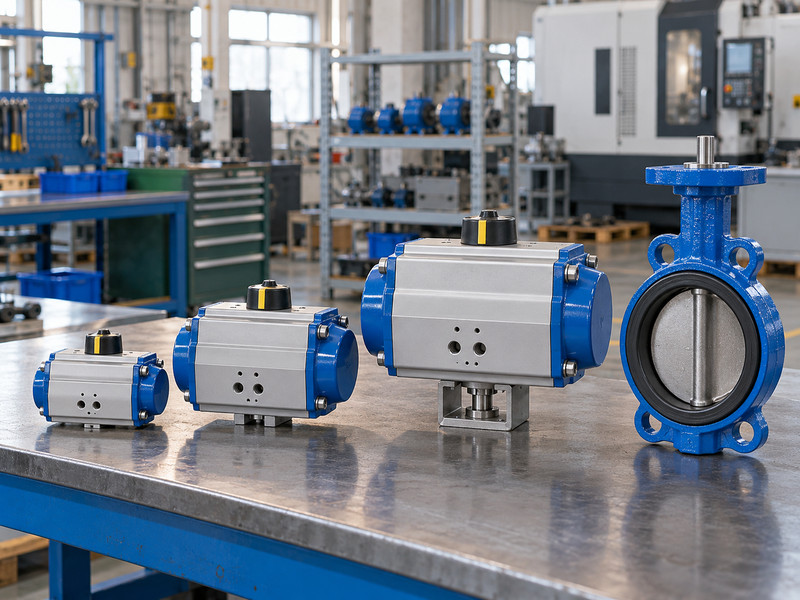
A correctly sized package has enough output for its stated duty without overloading the valve or mounting components. A double acting pneumatic actuator butterfly valve therefore needs both a movement check and a strength check. Matching the mounting flange only establishes part of the mechanical interface.
What belongs in the selection record?
Record the actual valve construction, seat material, size, fluid, temperature, differential pressure, and expected operating frequency. Add minimum and maximum actuator air supply, required stroke time, and any failure-response requirement. Ask the supplier to identify which conditions determine the worst operating torque. A clean-water duty at moderate temperature cannot automatically represent a valve with a different seat, deposits, or a different direction of closing pressure.
- Define the valve and seat configuration before selecting the actuator.
- State both opening and closing operating cases.
- Record the drive components and their allowable loads.
| Sizing question | Required input | Result to retain |
|---|---|---|
| Will it move? | Valve demand and available output | Operating torque comparison |
| Can it be damaged? | Maximum output and component limits | Mechanical limit check |
| Will it respond in time? | Air capacity and process duty | Stroke-time verification |
Key takeaway: Treat sizing as an assembly calculation rather than a choice of actuator model by valve diameter.
2. Which valve torque values should you request?
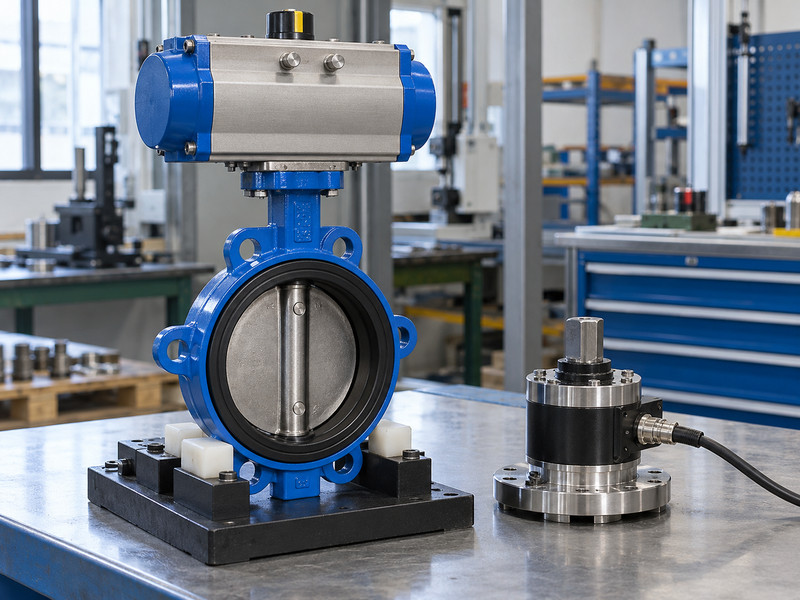
Request the torque values needed across the stroke, including breakaway, running, and seating conditions where applicable. For a double acting pneumatic actuator butterfly valve, a single unexplained “operating torque” can hide the condition that controls selection. Ask how each value was obtained and which allowances it already contains.
How do service conditions change the demand?
Seat friction, differential pressure, temperature, fluid properties, deposits, and time spent closed can change the required torque. The direction of applied pressure can also matter for some designs. Request configuration-specific information rather than transferring a value between body styles or seat compounds. If the supplier includes an allowance in its quoted valve torque, identify it so your project method does not accidentally add the same allowance twice or omit a separate operating effect.
- Identify the condition represented by each torque value.
- Request the relevant pressure direction and temperature basis.
- Distinguish measured, calculated, and guaranteed information.
| Torque term | Typical selection use | Clarification to obtain |
|---|---|---|
| Breakaway | Starting from a seated position | Dwell time and pressure condition |
| Running | Movement through the stroke | Process load and friction basis |
| Seating | Reaching the required shutoff state | Seat design and permitted setting |
Key takeaway: Comparable torque data needs comparable valve configurations and operating conditions.
3. Which air pressure should govern the calculation?
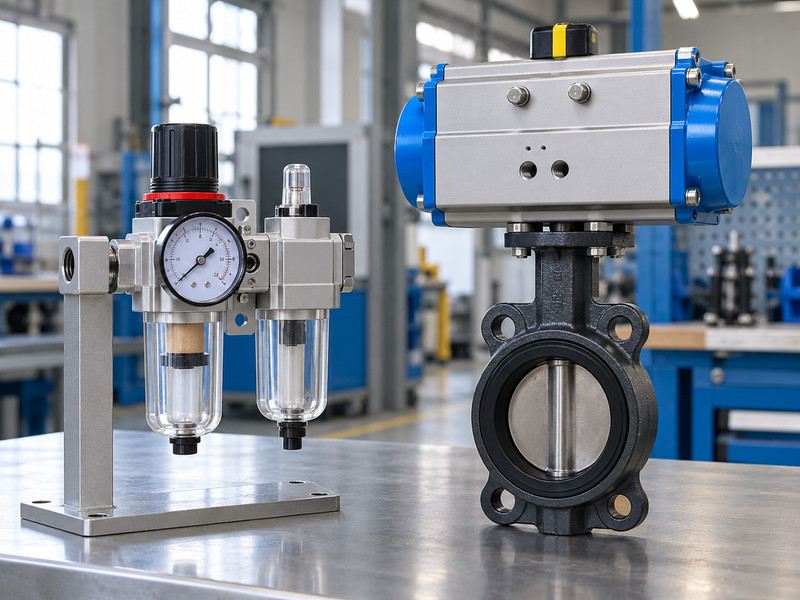
Use the minimum air pressure available at the actuator during movement. A double acting pneumatic actuator butterfly valve cannot produce output based on pressure that disappears across the regulator, solenoid, fittings, or tubing. Static pressure at a remote supply point is an incomplete sizing input.
How should you confirm the minimum supply?
Establish the site’s lowest expected supply condition and the pressure losses through the installed controls. Consider other equipment cycling at the same time, long branch lines, restricted tubing, and exhaust backpressure. Use the manufacturer’s torque data for the applicable pressure and operating arrangement. A catalogue’s maximum pressure is a limit rather than the pressure you should assume for every stroke.
- State where the minimum air pressure applies.
- Include the regulator and directional valve in the review.
- Verify the assembled package under representative air conditions.
- If available pressure is uncertain, close that input before treating the actuator selection as final.
| Pressure description | Appropriate use | Limitation |
|---|---|---|
| Compressor discharge | Utility-system information | Excludes downstream losses |
| Static local pressure | Initial pneumatic check | May fall during movement |
| Dynamic actuator pressure | Operating sizing basis | Must represent the specified case |
Key takeaway: Put the pressure location and operating condition beside the value on the sizing sheet.
4. How do you protect the shaft and coupling?
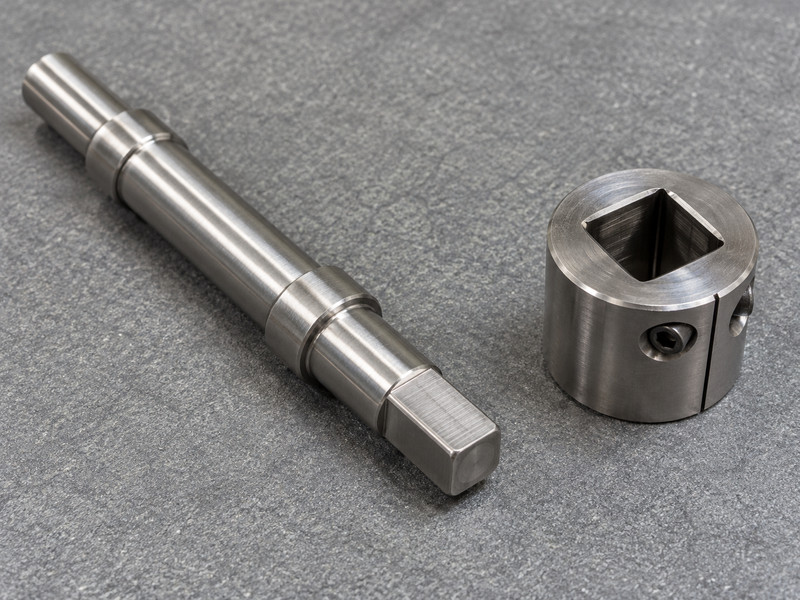
Protect the drive by comparing maximum possible actuator output with the allowable loads of the shaft, coupling, bracket, and related components. Selecting a double acting pneumatic actuator butterfly valve only for minimum-air operation leaves the highest-air condition unchecked. Excess output can damage an otherwise adequate valve.
Why can a larger actuator create another failure?
An illustrative assembly might need 120 Nm of valve torque and use a documented sizing factor of 1.3, giving a 156 Nm selection demand. That arithmetic alone does not approve the drive. If the chosen actuator can deliver more than a component’s permitted torque at maximum air pressure, the assembly needs another engineering solution. These numbers are an example, not RUITO product ratings.
- Review maximum output as well as minimum-air output.
- Confirm coupling engagement, fit, and material.
- Retain the lowest applicable drive-component limit.
- Obtain the actual component limits and any approved pressure-control arrangement for your package.
| Check | Illustrative calculation or comparison | Decision |
|---|---|---|
| Operating demand | 120 Nm × 1.3 = 156 Nm | Compare against available output |
| Shaft strength | Actual output versus approved limit | Do not exceed the limit |
| Mounting | Actual bracket and fastener loads | Verify the complete load path |
Key takeaway: Extra torque is useful only within the approved mechanical limits of the assembly.
5. How should seat selection enter the torque review?
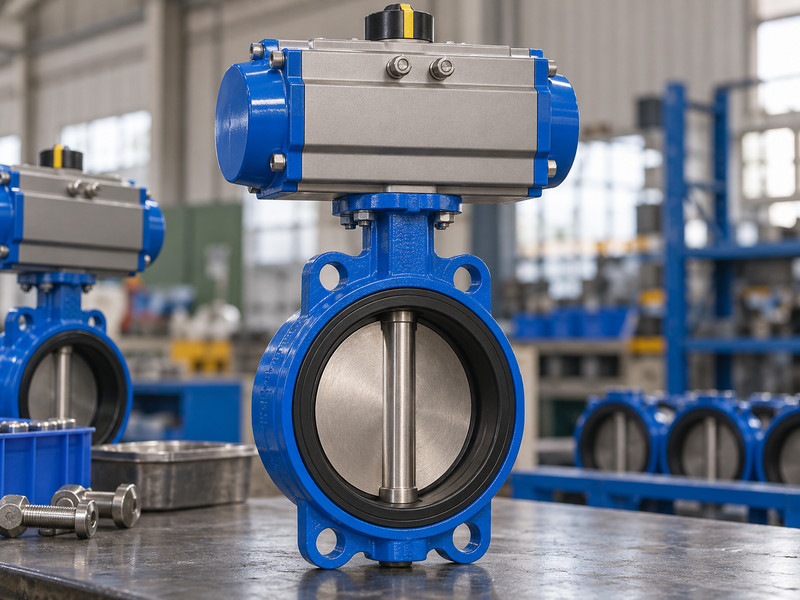
Seat selection belongs in the torque calculation because sealing friction and geometry affect movement. A double acting pneumatic actuator butterfly valve approved with one seat compound should not receive another compound through an undocumented purchasing change. Recheck compatibility and torque together when the seal configuration changes.
What should you ask after a material change?
A material that tolerates the fluid may still have different friction, temperature behaviour, or installation requirements. Deposits and swelling can also affect operation; increasing actuator size does not correct an incompatible seal. For a PTFE-lined butterfly valve, review lining, backing, shaft seals, temperature derating, and the actual actuator interface as one configuration. Ask for a revised selection record when a change affects any of those inputs, even if the nominal size and flange drilling remain unchanged.
- Freeze the seat compound and relevant material details.
- Review cleaning exposure and abnormal operating conditions.
- Reassess torque after any approved seal substitution.
| Change | Possible effect | Required follow-up |
|---|---|---|
| Seat compound | Friction and compatibility change | Updated material and torque review |
| Fluid or cleaning cycle | Swelling, deposits, temperature change | Revised duty assessment |
| Lining arrangement | Different sealing and support behaviour | Configuration-specific approval |
Key takeaway: Resolve seal suitability before using actuator output to overcome unexpected resistance.
6. What does operating frequency change?
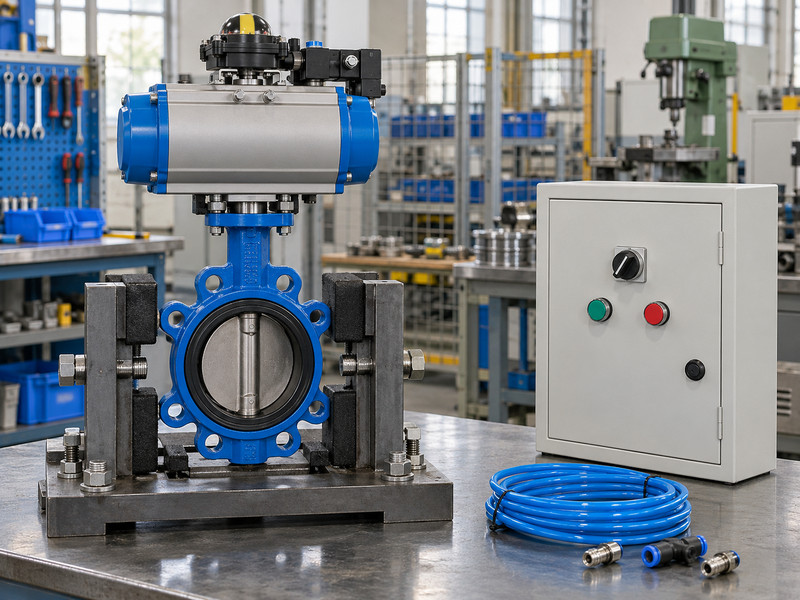
Operating frequency changes air demand, wear exposure, and the controls required to repeat the intended movement. A double acting pneumatic actuator butterfly valve used for occasional isolation has a different duty from one making frequent adjustments. Record the expected service pattern rather than asking only for “fast operation.”
How do you define the required movement?
State the number of operations, travel range, expected time at closed or intermediate positions, and the process conditions during each movement. For modulation, check that the valve and actuator package support that duty and operating range. Stroke time also affects the process: faster closure can increase transient loads in some liquid systems. Agree a suitable operating time with the system designer, then verify the controls and available air capacity against it.
- Specify cycles and movement range for the actual duty.
- Distinguish isolation from modulating operation.
- Agree stroke time with the process or piping designer.
| Duty | Additional information | Review focus |
|---|---|---|
| Occasional isolation | Long closed dwell and restart case | Breakaway and dependable travel |
| Frequent on/off | Cycle rate and available air | Repeatability and wear |
| Modulation | Travel range and control requirements | Positioning and permitted valve duty |
Key takeaway: State the operating pattern so the supplier can assess more than one successful stroke.
7. Can control accessories undermine a sound selection?
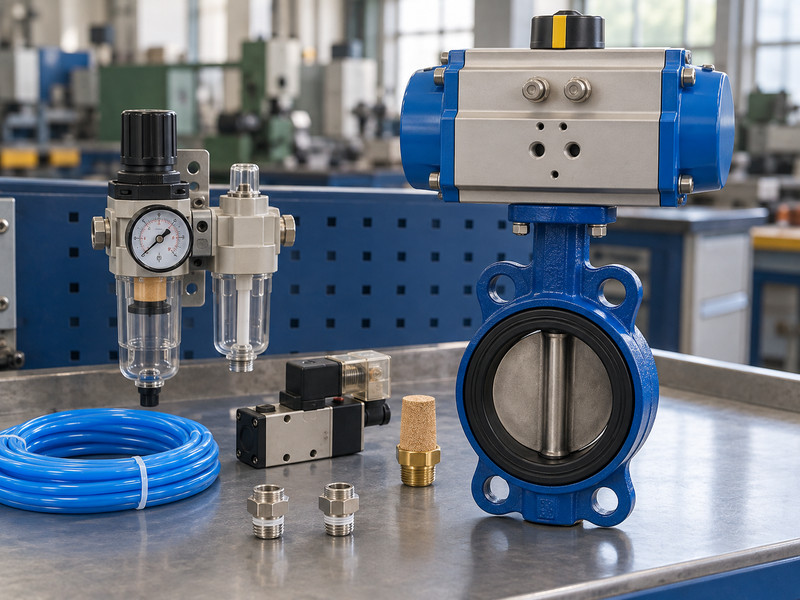
Yes. Restricted controls can prevent a double acting pneumatic actuator butterfly valve from receiving the conditions assumed in its sizing record. An actuator may be mechanically adequate yet respond poorly because the solenoid, air preparation, tubing, or exhaust arrangement limits flow. Review the controls before declaring the actuator too small.
What should you inspect when the valve moves slowly?
Check regulator settings, supply pressure during travel, tube bore and length, fitting restrictions, and the directional valve’s permitted flow arrangement. Inspect silencers and flow controls for blockage or incorrect adjustment. Confirm that the opposite actuator circuit can exhaust as intended. Keep diagnostic changes within the equipment’s pressure and operating limits.
- Record pressure during both opening and closing.
- Check the exhaust path as well as the supply.
- Compare installed accessories with the approved specification.
- If movement is uneven or stops at a particular angle, also investigate disc interference, coupling alignment, or a process load that the original sizing case missed.
| Symptom | Pneumatic check | Mechanical or process check |
|---|---|---|
| Both strokes slow | Supply and common restrictions | General interference or load |
| One stroke slow | One working path and exhaust | Direction-specific valve torque |
| Stops at one angle | Pressure at the stopping point | Disc clearance and load change |
Key takeaway: Diagnose pressure, flow restrictions, and mechanical resistance before changing actuator size.
8. How do you verify fit after selecting the actuator?
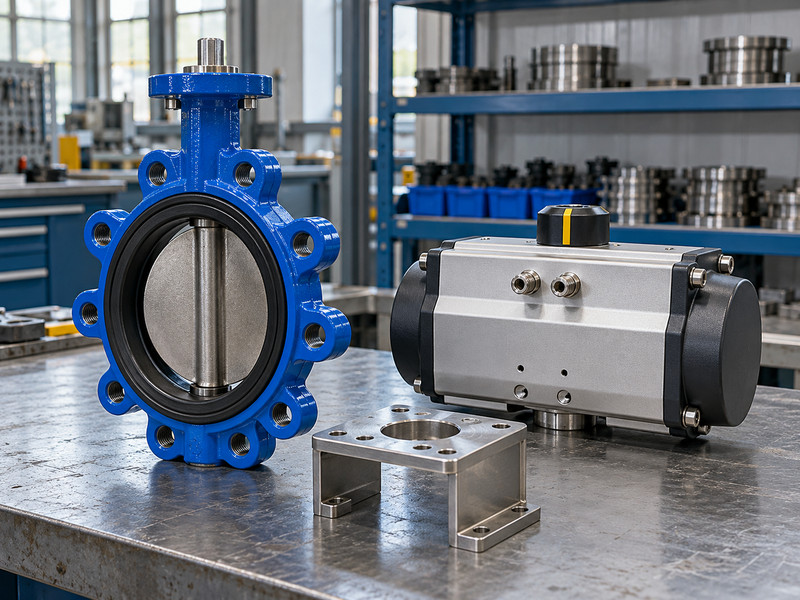
Verify fit through the actual mounting pad, coupling, bracket, and installed clearance. A double acting pneumatic actuator butterfly valve needs a supported, aligned drive with adequate engagement. An ISO 5211 attachment reference does not remove the need to check shaft form, coupling dimensions, and the assembly drawing.
Which installation dimensions should remain controlled?
Include the actuator ends, top-mounted feedback enclosure, solenoid, tubing bends, cable access, and any manual override. A larger actuator selected late in a project may collide with a nearby pipe or make a service cover inaccessible. Keep the approved orientation and dimensions with the bill of materials. If the supplier proposes an alternative bracket or coupling, review its alignment, loads, corrosion suitability, and engagement rather than accepting it solely because the bolt holes match.
- Review the shaft and coupling interface dimensions.
- Check access around the actuator and accessories.
- Approve bracket and drive substitutions before assembly.
| Interface | Drawing detail | Installation risk |
|---|---|---|
| Shaft and coupling | Shape, engagement, tolerance | Slip, backlash, or overload |
| Bracket | Height, faces, fasteners | Misalignment and bending |
| Assembly envelope | All accessories included | Collision or inaccessible service points |
Key takeaway: Carry the selected actuator’s actual dimensions into the installation drawing before procurement release.
9. What should final sizing approval include?
Final approval should identify the selected hardware, operating cases, output comparisons, mechanical limits, and verification plan. A double acting pneumatic actuator butterfly valve should have a revision-controlled record that the factory and site teams can both use. An unexplained model number is insufficient for future replacement.
Which changes should trigger another review?
Changes to the seat, fluid, temperature, closing differential pressure, air supply, control accessories, or operating pattern can invalidate the original selection. Mounting and shaft changes also need review. State which factory tests will verify movement and signals, and which process-loaded checks remain for the site. Where the test cannot reproduce the full duty, record that limitation clearly.
- Freeze the calculation inputs and approved component list.
- Identify factory and site verification responsibilities.
- Require review before changes affecting torque or supply conditions.
- This gives procurement a usable substitution process and helps maintenance avoid replacing one uncertain assembly with another.
| Approval record | Purpose | Retain for |
|---|---|---|
| Sizing calculation | Links duty to output | Engineering changes |
| Assembly drawing | Defines the drive connection | Installation and spares |
| Verification plan | States what each test proves | Factory and site acceptance |
Key takeaway: Send your service data and minimum dynamic air pressure when you contact us. RUITO can review the missing inputs and proposed assembly before a quotation is finalized.
10. What should you ask before approving the actuator?
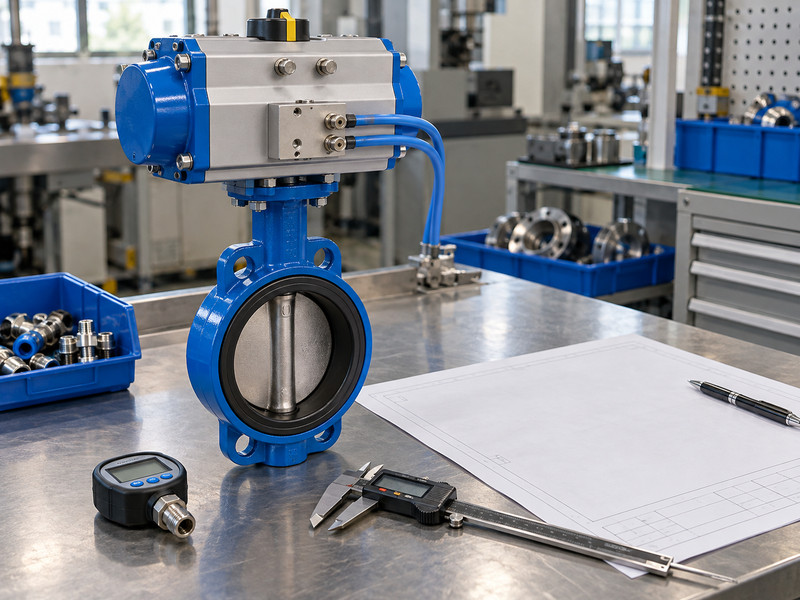
Use these questions to review a double acting pneumatic actuator butterfly valve with your engineering and purchasing teams.
- Q1: Can I size the actuator from DN alone? No. Diameter omits seat friction, differential pressure, temperature, fluid, and air supply. Use the actual valve torque basis and actuator output data.
- Q2: What’s the best safety factor? Use the project-approved method and supplier data. Confirm what allowances are already included; one universal percentage cannot represent every valve, service, or uncertainty.
- Q3: Can I solve stalling by raising air pressure? Only within an approved review. Higher pressure can exceed actuator or drive limits and may leave a restriction, interference, or material problem unresolved.
- Q4: How do I know if the coupling is strong enough? Check its documented allowable torque, fit, engagement, material, and connection details against the maximum applicable output. Hole-pattern compatibility alone does not prove strength.
- Q5: Can I approve an unloaded workshop cycle? It can verify defined movement and signals, but it does not prove every process-loaded case. State which conditions the test represents and which checks remain.