
Choose an electric operated butterfly valve supplier by comparing its proposed configuration, integration responsibility and acceptance evidence with your duty sheet. If the valve maker, actuator source and installer each assume another party checked the coupling, a complete-looking assembly can still fail. Define those responsibilities before approving the supplier’s proposal.
1. How do you vet an electric operated butterfly valve supplier?
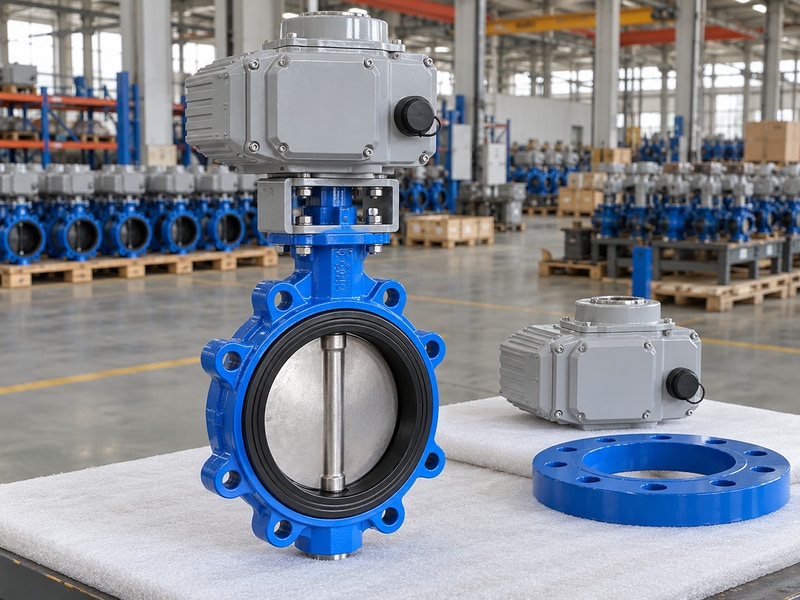
An electric operated butterfly valve supplier should identify the supplied equipment and the engineering checks included in its offer. Complete package supply normally involves more interfaces than a bare valve sale. Ask who selects the actuator, approves the drive connection and verifies the assembled unit’s operation before shipment.
Name the owner of each interface
A valve body, mounting bracket, coupling and actuator may come from different sources. The contracting supplier needs to explain how their technical information is brought together. If your team supplies one component, agree who checks it against the rest of the assembly. A supplied-parts list alone does not establish responsibility for a combination that has never been reviewed.
Record the supply boundary and exclusions beside the technical proposal. Include electrical accessories, loose items, documents and required testing. Review RUITO’s butterfly valve arrangements as product context, then require an order-specific drawing and list of supplied parts. That record gives purchasing, engineering and installation teams the same baseline.
- Identify supplied and buyer-supplied components.
- Assign integration review responsibility.
- Record tests, documents and exclusions.
| Interface | Responsible party | Required output |
|---|---|---|
| Valve to actuator | Named integrator | Approved mechanical assessment |
| Actuator to controller | Agreed supplier and project team | Compatible interface definition |
| Assembly to pipe | Project and package review | Approved installation arrangement |
2. How does the supplier qualify the valve duty?
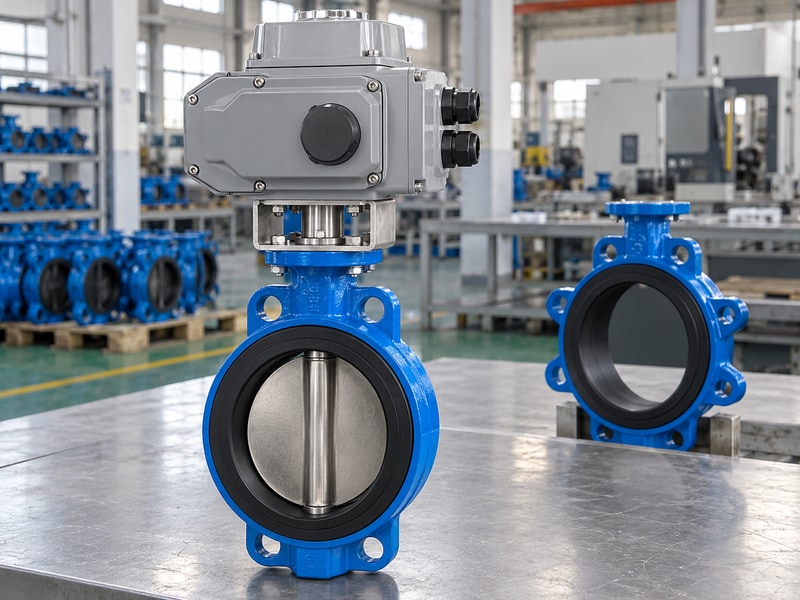
An electric operated butterfly valve supplier should match the valve to fluid composition, pressure, temperature and the required flow or isolation task. Pipe size and motor voltage provide too little information for that decision. Give the supplier the operating envelope and ask it to identify any condition outside the proposed configuration’s documented scope.
Check the fluid and operating limits together
Provide normal conditions, limiting conditions, cleaning fluids, solids and relevant transients. A clean-water seat arrangement should not be transferred to oil or chemical service without review. Pressure and temperature must belong to the same material and construction configuration. The supplier should also identify allowable closing differential and any direction-specific shutoff limit.
Ask for capacity information when throttling matters, rather than assuming the pipe diameter establishes control performance. RUITO reviews material, connection and duty together during selection. For a chemical enquiry, use the relevant PFA lined valve information and provide the actual liquid composition before comparing that option with other seat systems.
- Describe fluid and cleaning conditions.
- Provide a combined operating envelope.
- State closing differential and control duty.
| Input | Supplier response | Approval question |
|---|---|---|
| Medium | Wetted material configuration | Are all wetted parts suitable? |
| Pressure and temperature | Combined operating limits | Do the limits apply together? |
| Flow or isolation duty | Selected construction and capacity | Does it meet the intended task? |
3. What proves the mechanical package fits?
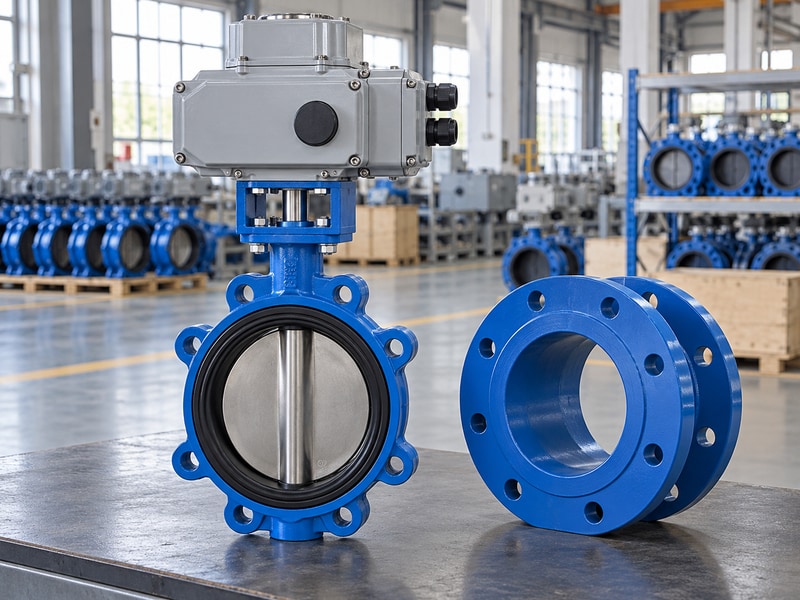
An electric operated butterfly valve supplier should provide the mechanical dimensions needed to check pipe fit, disc clearance and actuator access. A matching nominal diameter does not establish flange drilling or face-to-face length. The complete assembly also needs room for the enclosure, manual operation and maintenance access where specified.
Review the installation and drive drawings together
Check companion flange standard, bore and face arrangement against the valve drawing. For wafer bodies, verify the disc opening envelope within the adjoining pipe. For lug bodies, confirm thread engagement and the specific permitted end conditions. Do not treat a compact body as a drop-in replacement for a double-flanged unit without comparing the installed dimensions.
Review actuator mounting and coupling engagement on the same configuration. Confirm the approved lifting and support points so installation loads do not pass through fragile accessories. The double-flanged body information can help compare connection arrangements, but the supplied assembly drawing remains the basis for installation approval.
- Match the exact pipe connection.
- Check disc and enclosure clearances.
- Confirm coupling, support and lifting arrangements.
| Fit item | Check | Consequence if missed |
|---|---|---|
| Pipe connection | Drilling, bore and face-to-face | Installation mismatch |
| Disc envelope | Clearance through full travel | Mechanical obstruction |
| Drive and enclosure | Mounting and access | Load or maintenance problem |
4. How should torque responsibility be divided?
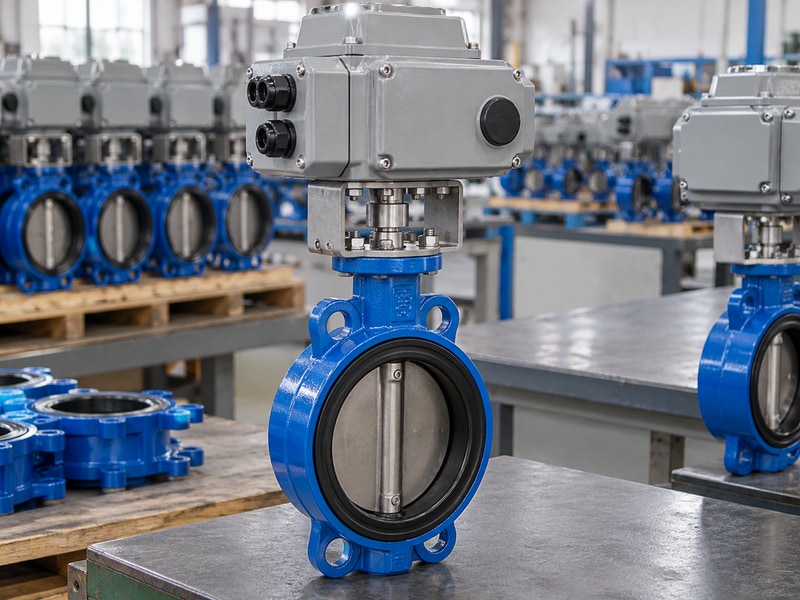
An electric operated butterfly valve supplier should state who provides valve torque data, who selects the actuator and who approves the complete torque assessment. Keep required valve torque, available actuator output and maximum permitted mechanical input separate. Each value answers a different part of the integration decision.
Request one combined review
Valve torque depends on construction, seat, differential pressure and service conditions. Actuator output depends on its selected option and rated conditions. The shaft, coupling and mounting hardware also have mechanical limits. Ask the supplier to show how those inputs are compared over the required stroke, including the agreed allowance and protective settings.
If the buyer specifies an actuator brand or model, the compatibility review still needs completion. A named product does not remove the need to check duty, speed, engagement and permissible output. Record the approved settings and any limits on site adjustment. That record helps prevent a later replacement from increasing torque beyond what the original valve assembly can accept.
- Name the sources of the torque inputs.
- Review both available and permitted output.
- Record approved protection settings.
| Torque term | Provided by | Used for |
|---|---|---|
| Valve requirement | Valve design information | Establishes operating load |
| Actuator output | Selected drive data | Confirms movement capability |
| Permitted input | Assembly design limits | Prevents mechanical overload |
5. Who checks controls and failure behavior?
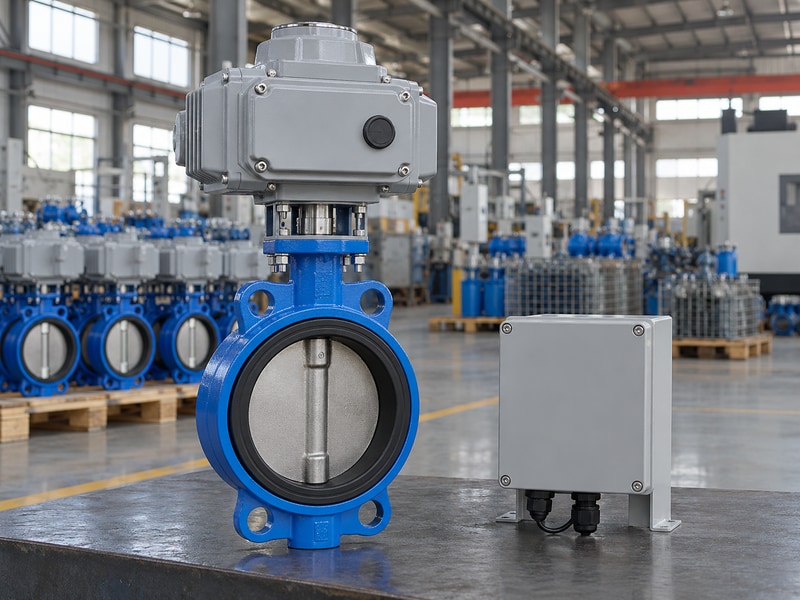
An electric operated butterfly valve supplier and the project control team should agree the electrical interface and required response to faults. Motor supply, open-close commands, analogue signals and feedback are distinct requirements. Define each one for the actual actuator option before wiring reaches the installation site.
Write the required behavior in observable terms
State on-off or modulating duty, control priority and the receiving equipment’s interface. Check whether feedback is a contact output or a measured position signal. Define the behavior after power loss, signal loss and communications loss separately. A general request for a fail-safe valve leaves the triggering event, final state and available energy unclear.
The project determines the process response it needs, while the supplier confirms whether the offered package can provide it under the stated conditions. Agree on tests for both the event and restoration. Do not assume an enclosure rating establishes hazardous-area suitability or that a configured menu alone proves a complete assembly’s loss response.
- Separate power, commands and returned signals.
- Define each loss event and final state.
- Agree on event and restart verification.
| Control item | Project defines | Supplier confirms |
|---|---|---|
| Normal operation | Commands and priority | Compatible actuator interface |
| Position feedback | Required indication | Output type and performance |
| Fault response | Event and required state | Package capability and test |
6. What inspection evidence should the supplier provide?
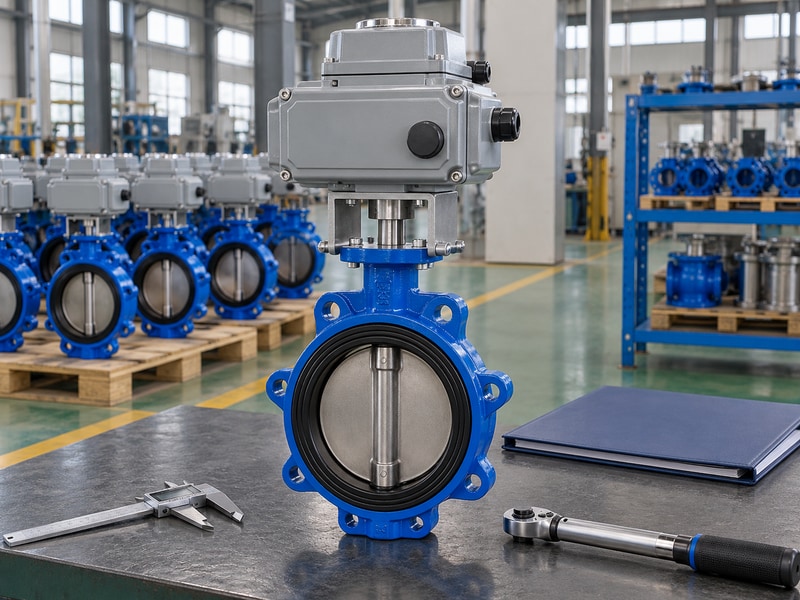
An electric operated butterfly valve supplier should provide the inspection evidence agreed for the selected valve and integrated package. Set the scope before manufacture. Material, dimensional, pressure and functional records address different requirements, so one generic certificate cannot substitute for every part of acceptance.
Link the reports to the shipped assembly
Identify the selected pressure-test method and seat criterion for the construction. Specify direction and required records. Add integrated travel, indication and control checks for the actuator package. A separately tested bare valve may need further verification after drive assembly or any approved modification that affects operation.
Agree on witness points, notice and release authority. Ask how nonconforming units are segregated and how corrections and retests are recorded. Each final result should connect to the supplied product or defined batch through identification. A report supplied as a sample can show the format, but it must not be confused with the acceptance record for your order.
- Freeze the required tests and criteria.
- Set witness and release responsibilities.
- Match records to the delivered units.
| Evidence | Covers | Does not replace |
|---|---|---|
| Material record | Specified component identity | Integrated function test |
| Pressure report | Defined shell or closure result | Electrical compatibility review |
| Function record | Assembly movement and indication | Material verification |
7. Which spare parts need configuration control?
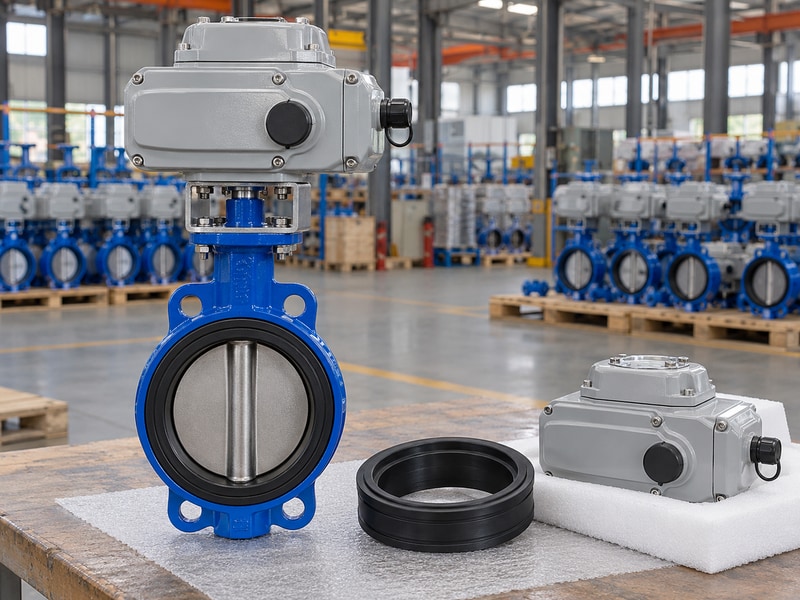
Ask an electric operated butterfly valve supplier to identify spare parts against the approved material and assembly version. Seat, shaft-seal and actuator replacements can affect compatibility, torque or controls. Physical similarity is a weak basis for a spare-part decision when several configurations share a common body size.
Preserve the original technical baseline
Request part descriptions and the identification needed to order the correct version. Include the actuator option and coupling details where replacements are expected. Define storage requirements and any shelf-life or maintenance conditions from the relevant instructions. A spare seat stored incorrectly may be unusable even if its nominal material description matches the original order.
Before substitution, review what changes in fluid compatibility, dimensions, maximum output or fault response. Keep approval and revised drawings with the maintenance record. RUITO’s support team uses product identification and operating information to assess replacements. Give the supplier that evidence rather than asking for an interchangeable part based only on a photograph.
- Identify spares by approved configuration.
- Follow relevant storage instructions.
- Review substitutions before installation.
| Spare | Check | Record |
|---|---|---|
| Seat and seals | Material and dimensions | Approved part version |
| Actuator | Supply, duty and interface | Selected actuator option |
| Coupling hardware | Engagement and strength | Assembly drawing revision |
8. How should delivery and support be defined?
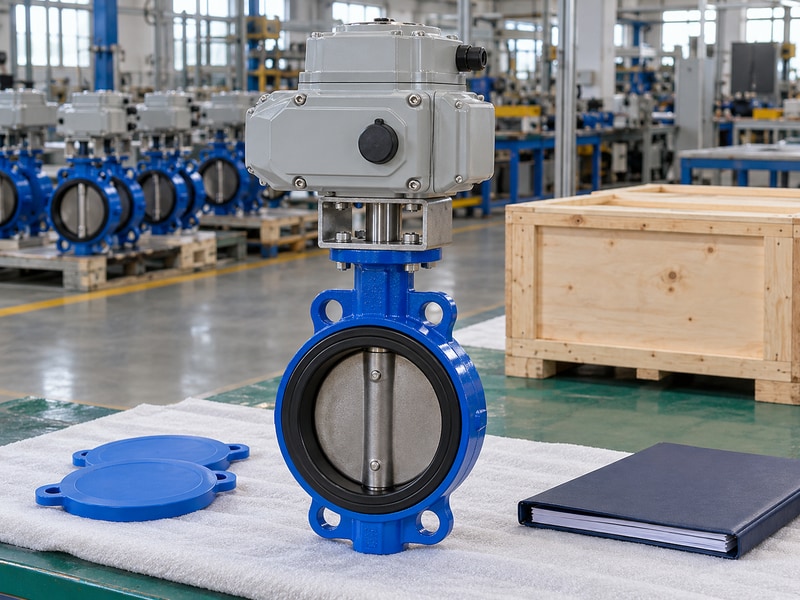
An electric operated butterfly valve supplier should identify factory release conditions, packing scope and the support route for receipt or operating problems. Keep factory lead time separate from transport and installation. A complete technical proposal still needs an agreed path for document approval, inspection and shipment authorization.
Set milestones that both teams can check
Ask for engineering, component, assembly, inspection and release milestones for the actual configuration. Name buyer approvals and witness visits that affect the schedule. Confirm opening protection, supports and loose-item packing. The final document index should match the product identification and packing list so receiving staff can check the goods without reconstructing the order from emails.
Define the information needed to start a support review, including identification, medium, operating conditions and the observed sequence. Preserve settings and failed parts when a fault occurs. Use the RUITO contact route with those records. Remedy and replacement steps should follow the agreed contract and an approved technical assessment.
- Separate factory release and site arrival.
- Agree on packing and document handover.
- Define the support information and contact path.
| Milestone | Evidence | Owner to agree |
|---|---|---|
| Technical approval | Closed configuration and deviations | Engineering |
| Shipment release | Tests, records and packing | Quality and purchasing |
| Support review | Identification and fault information | Supplier and site team |
9. What makes the final supplier offer comparable?
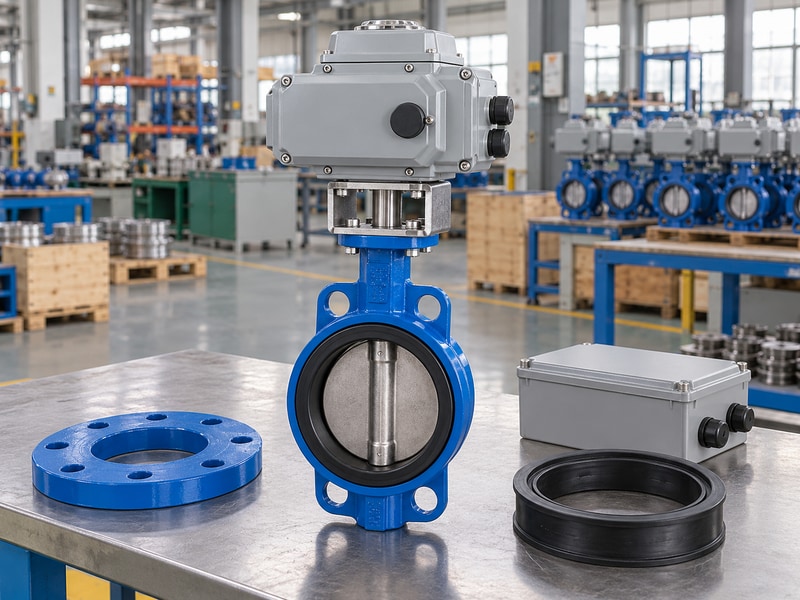
An electric operated butterfly valve supplier offer becomes comparable when it states the same duty, supplied parts, tests, documents and delivery boundary as the alternatives. Compare deviations before comparing the amount. A cheaper offer may be reasonable, but its scope must remain visible so your team knows what additional work it accepts.
Approve the unresolved items explicitly
Build a short comparison listing the offered configuration and each departure from the enquiry. Separate an acceptable alternative from an unresolved question. If the buyer will perform an excluded task, name its owner, cost and schedule effect. Avoid declaring offers equivalent merely because their main product descriptions and nominal dimensions match.
Before award, attach the accepted technical baseline and the final deviation response to the order. Confirm who will approve drawings, witness inspections and authorize changes. RUITO can respond to that shared baseline with a defined package proposal. The purchasing decision should leave engineering and installation teams with a clear assembly and a clear division of work.
- Compare deviations and exclusions openly.
- Assign work outside the supplied scope.
- Attach the accepted baseline to the order.
| Comparison field | Record | Decision |
|---|---|---|
| Technical compliance | Exact offered configuration | Accept or request correction |
| Excluded work | Owner, cost and schedule | Buyer approval required |
| Final agreement | Closed deviations and attachments | Release purchasing decision |
Send RUITO the valve duty, installation drawing and required control functions. We can review the proposed supply boundary and identify the documents and tests needed for the assembly. Contact us to settle who owns each interface before you place the order.
10. What else should you check before ordering?
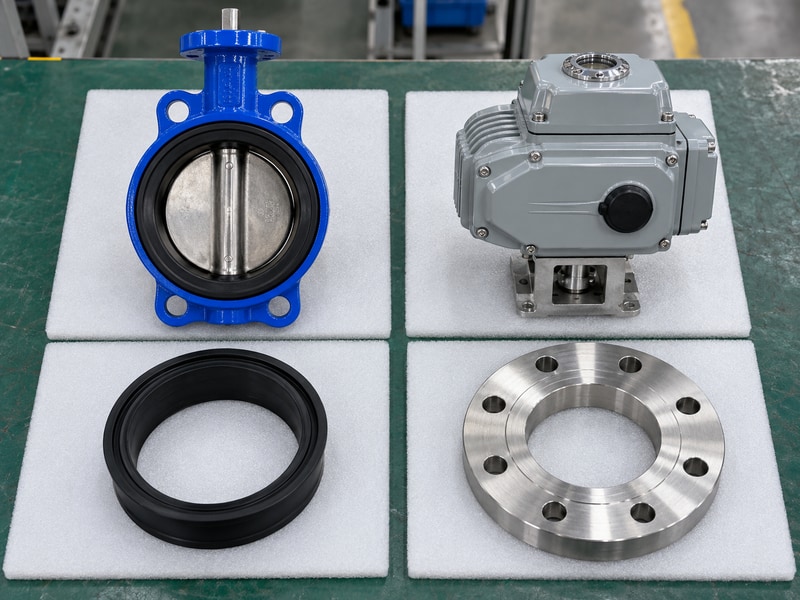
For electric operated butterfly valve supplier, resolve these remaining questions against the approved package and site conditions.
Q1. Can I buy the valve and actuator from different suppliers?
Yes, if a named party completes the integration review. Confirm torque, mounting, coupling, controls and tests for the actual combination before assembly or installation.
Q2. How do I know whether an offer includes a complete package?
Read the supplied-parts list, exclusions, assembly drawing and test scope together. Ask directly about brackets, couplings, control accessories, documents and integrated testing.
Q3. What's the best way to define fail-safe behavior?
Name the fault event, required final state, load conditions and restoration sequence. Ask the supplier to confirm capability and the acceptance test for the complete offered package.
Q4. Can I replace an actuator with one having more torque?
Only after reviewing maximum permitted input, mounting, engagement, duty, controls and protection. More available torque can overload parts of the valve assembly.
Q5. What should accompany a repeat purchase?
Provide the original approved configuration, identification and drawing revisions, then list any changed duty or interface. Require approval before substitutions and record the final version supplied.