
You avoid costly EN butterfly valve buying mistakes by checking design, dimensions, materials and testing as separate requirements for the exact valve offered. EN resilient seated butterfly valves can arrive with familiar standard numbers on the data sheet yet fail a project review because the flange material, face-to-face length or approval scope differs from the purchase specification. A list of standards cannot resolve those differences by itself.
Build a requirement matrix before comparing prices. Ask each supplier to identify the applicable standard and edition, the offered configuration, the supporting document and any deviation. That approach gives engineering a defined product to approve and gives procurement a delivery scope it can enforce.
1. How should EN resilient seated butterfly valves be specified?
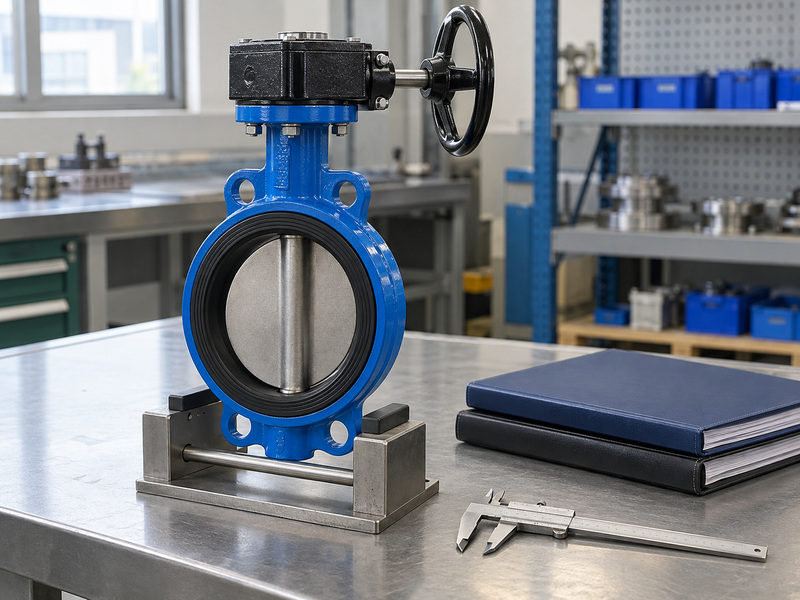
Specify EN resilient seated butterfly valves through a product-specific requirement matrix that assigns each standard to its actual purpose. EN 593 addresses the applicable metallic butterfly valve design route; EN 1092 concerns relevant flange requirements, while EN 558 addresses face-to-face dimensions where the selected series applies. Pressure testing needs its own agreed basis.
Request a completed technical data sheet with size, connection form, materials, pressure–temperature limits, closure differential and operating arrangement. A general catalogue can support initial screening, but the offered configuration needs a clear identity. Put exceptions in a deviation schedule before award rather than leaving them inside a footnote on a quotation.
Which evidence should accompany a standard number?
Ask the supplier to name the drawing, calculation, material record or inspection procedure that demonstrates the requirement. Keep document status visible: submitted, reviewed and approved describe different stages. An EN reference is a technical claim about the stated scope; it does not itself establish third-party certification.
| Requirement | Primary question | Evidence to request |
|---|---|---|
| Design | Which structure is offered? | Product data and design basis |
| Interface | Which flange and length apply? | Controlled installation drawing |
| Pressure limits | Which conditions apply together? | Model-specific rating information |
| Acceptance | Which test route governs? | Approved procedure and report format |
Resolve the matrix before commercial comparison so lower prices do not conceal missing requirements.
2. What does an EN 593 design claim establish?
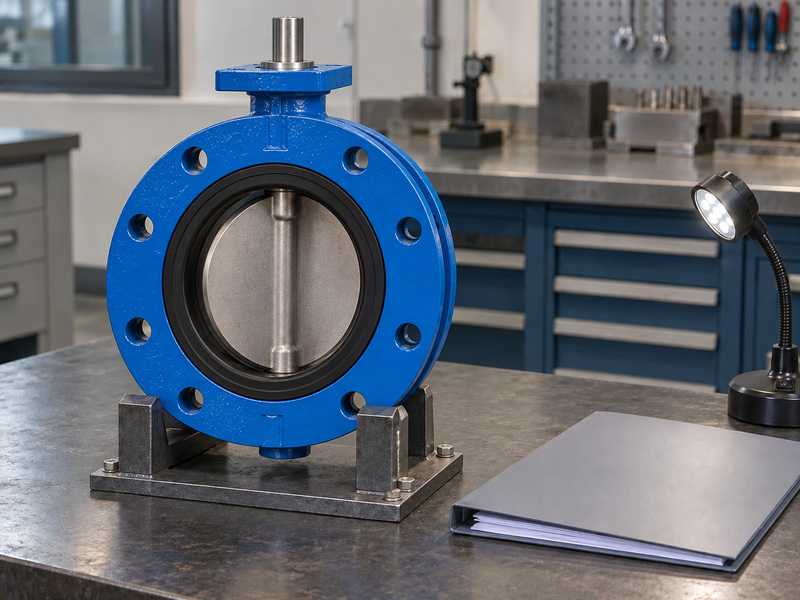
An EN 593 claim for EN resilient seated butterfly valves establishes the offered design basis only within the applicable structure and declared scope. It does not select the seat compound, confirm flange interchangeability or grant approval for every medium. Ask which valve configuration the statement covers and how the manufacturer supports it.
RUITO separates concentric resilient-seat constructions from double-offset double-flanged designs. The concentric double-flanged water range covers DN50–600 and PN10/16; its large double-offset range uses a different size range, drawing and direction-specific closure ratings. Combining the largest size from one construction with the sealing or pressure claim from another produces an unsupported specification.
How do materials affect the design review?
The bill of materials should identify the body, disc, shaft, seat and relevant coatings. A PTFE-lined butterfly valve requires its own lining, backing and shaft-seal review for the intended chemical duty. Its pressure testing and lining integrity procedures cannot be inferred from an ordinary water valve’s paperwork.
| Design statement | Confirm | Avoid assuming |
|---|---|---|
| Metallic butterfly valve | Applicable construction | Every connection has identical limits |
| Resilient seat | Actual compound and geometry | Universal fluid compatibility |
| Double-offset design | Separate drawing and ratings | Concentric-valve data transfer |
| Lined construction | Continuous wetted-material arrangement | Body material defines chemical resistance |
Require the supplier’s response to follow the actual product description used on the order.
3. Which EN 1092 flange requirements apply?
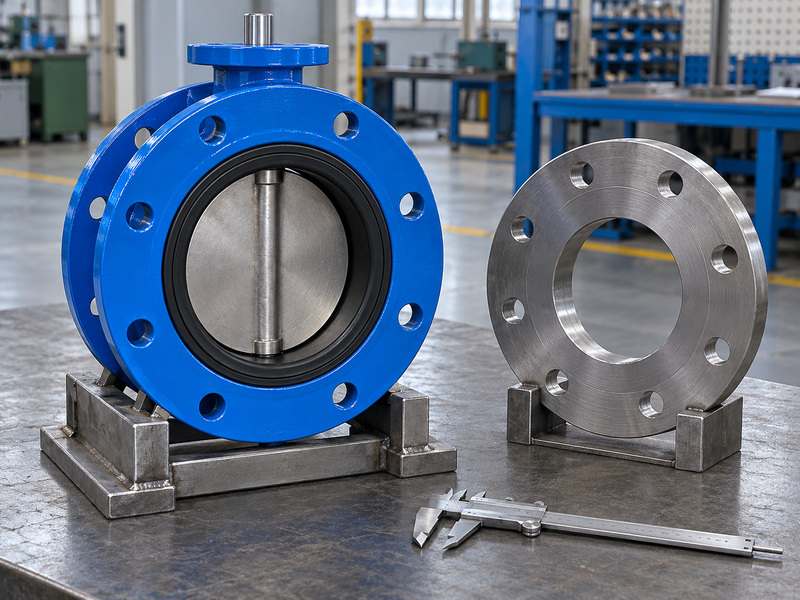
Apply the material-relevant EN 1092 requirements to EN resilient seated butterfly valves and check the complete mating connection. RUITO identifies EN 1092-2 for its relevant cast-iron flange route and EN 1092-1 for the relevant steel route. A purchase note that says only EN flange leaves material, form and interface details unresolved.
Compare DN, PN, drilling, flange faces and adjoining pipe details against the offered drawing. Check fastener access, gasket arrangement and the disc’s opening envelope. Matching bolt holes alone does not establish that the disc clears a lined pipe bore or that the selected sealing arrangement will assemble correctly.
What changes with a different body connection?
A lug butterfly valve needs its own thread, bolt engagement and installation checks. A double-flanged body uses a different connection arrangement. State whether the valve remains between two connected pipe flanges; any end-of-line duty needs specific evidence for the exact construction, size and permitted differential.
| Connection feature | Check against | Required result |
|---|---|---|
| Flange material | Applicable EN 1092 part | Correct material-specific route |
| Drilling and faces | Approved mating drawings | Compatible connection |
| Bore | Disc operating envelope | Adequate clearance |
| Fasteners and seals | Installation instructions | Approved assembly details |
Return incompatible mating details to engineering before either party releases fabrication.
4. How do EN 558 and the approved GA work together?
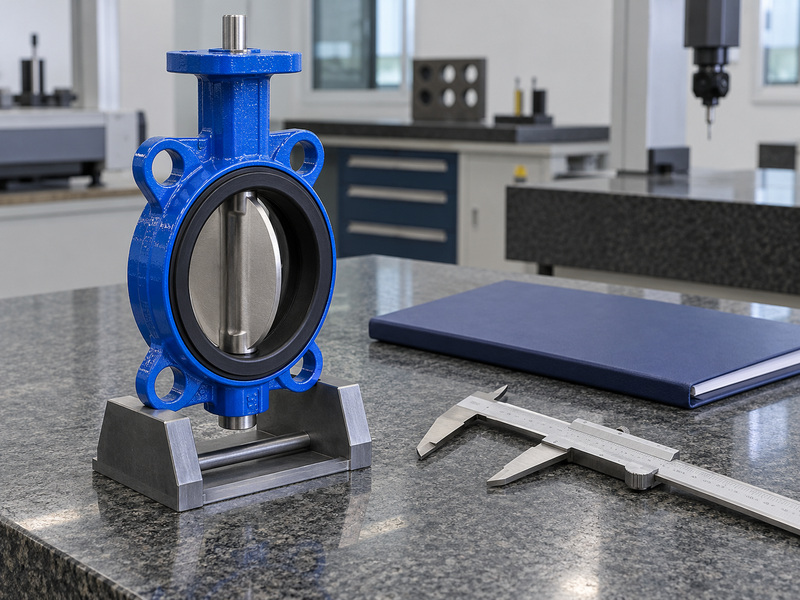
Use the applicable EN 558 series and the approved general arrangement drawing together to establish the installation length of EN resilient seated butterfly valves. RUITO specifies EN 558 series 20 for its relevant wafer construction; double-flanged and U-type configurations follow their corresponding standard tables and approved drawings. Those lengths should not be exchanged between body forms.
Replacement work needs measured site dimensions as well as the nominal standard reference. Record the existing flange spacing, adjoining bore and available actuator clearance. If an old installation differs from the new valve’s approved dimensions, resolve the pipework or selected construction before promising a direct replacement.
Which drawing dimensions should the buyer approve?
The wafer butterfly valve offers one installation arrangement within the broader category. Its compact body does not settle the envelope of a geared or actuated assembly. Review valve length, overall height, operating clearance, disc travel and lifting requirements on the same drawing revision.
| Drawing dimension | Installation check | Consequence of a mismatch |
|---|---|---|
| Face-to-face | Available flange spacing | Pipework adjustment |
| Disc envelope | Adjoining bore and components | Restricted travel |
| Overall height | Equipment and maintenance space | Inaccessible operator |
| Mounting orientation | Support and access layout | Assembly interference |
Approve a revised drawing whenever the connection form or operating assembly changes.
5. Why do PN and temperature need separate checks?
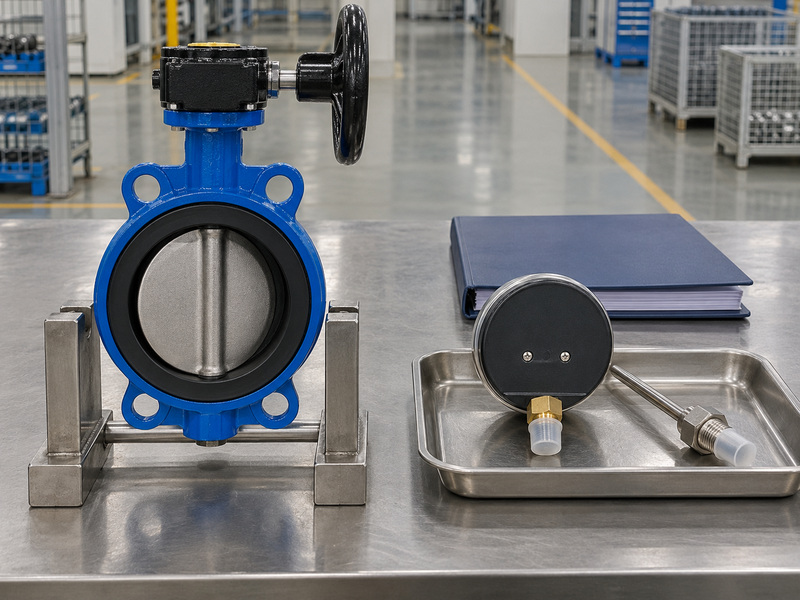
Check EN resilient seated butterfly valves against the allowable pressure at the actual temperature, plus the permitted closure differential. PN identifies a nominal pressure designation; it does not guarantee the same working pressure across every temperature, material and seat configuration. The connected components and operating duty can impose lower limits.
For RUITO’s stated clean-water concentric configurations, the normal application range is 5–60°C, with the model’s pressure–temperature boundary governing working pressure. The 20°C upper boundaries are 10 or 16 barg for the respective PN10 or PN16 configuration. Circulating glycol-water duty has separate composition and pressure limits that must remain attached to that application.
What must remain distinct on the data sheet?
List working pressure, transient conditions, shell-test pressure and closure-test pressure in different fields. Also state maximum closure differential in each required direction. A high shell-test pressure demonstrates the agreed inspection result; it does not authorize operation at that pressure or establish a seat’s reverse-direction capability.
| Pressure item | Meaning for selection | Evidence |
|---|---|---|
| PN designation | Nominal product designation | Data sheet and marking |
| Allowable working pressure | Limit at stated temperature | Model pressure–temperature data |
| Closure differential | Seat and drive duty | Direction-specific declaration |
| Inspection pressure | Controlled acceptance condition | Approved test procedure |
Compare pressure and temperature as a paired duty point before approving a valve.
6. Which pressure-testing standard should govern?
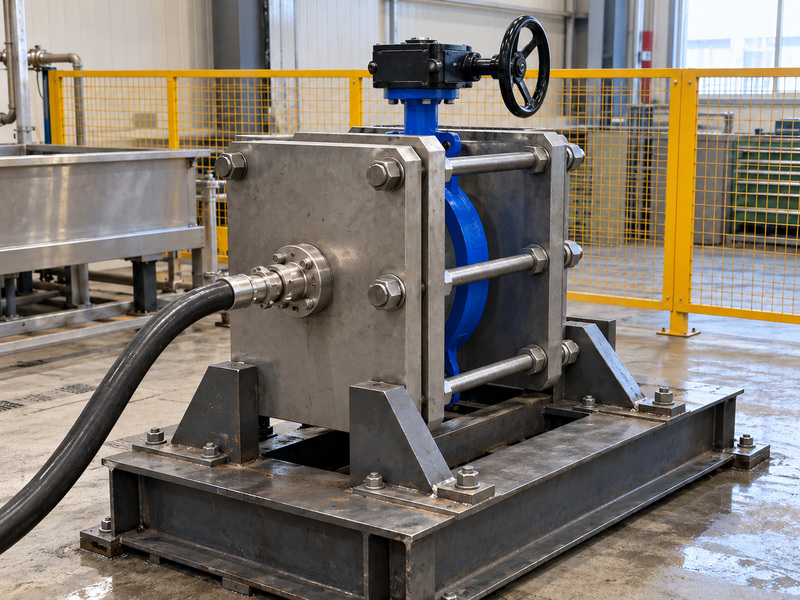
Choose EN 12266-1 or the contractually selected alternative as the primary pressure-testing basis for EN resilient seated butterfly valves. State the applicable procedure, test medium, pressures, durations, directions and acceptance criteria. If more than one specification is required, the inspection plan must resolve their scope and any differences before testing starts.
The official ISO 5208 industrial valve pressure-testing resource provides a primary reference for a common contract alternative. A report should identify which route was followed. Avoid accepting a document that lists several standards without connecting the recorded test conditions to an approved procedure.
How should the purchaser read a leakage result?
Rate A describes no visually detectable leakage under the selected standard’s prescribed test conditions. It is not a promise of zero leakage for every fluid or future operating condition. RUITO’s stated ambient PN10 soft-seat checks include 15 bar shell and 11 bar closure testing where the selected configuration supports those conditions; PN16 uses 24 and 17.6 bar respectively.
| Report field | What to confirm | Acceptance concern |
|---|---|---|
| Standard and procedure | Agreed test route | Ambiguous acceptance basis |
| Pressure and duration | Required test conditions | Incomplete inspection |
| Direction | Required seat duty | Missing reverse-direction evidence |
| Product ID and result | Delivered unit linkage | Untraceable generic report |
Treat pressure testing as a defined acceptance activity with its own limits and records.
7. How can material and seat records be traced?
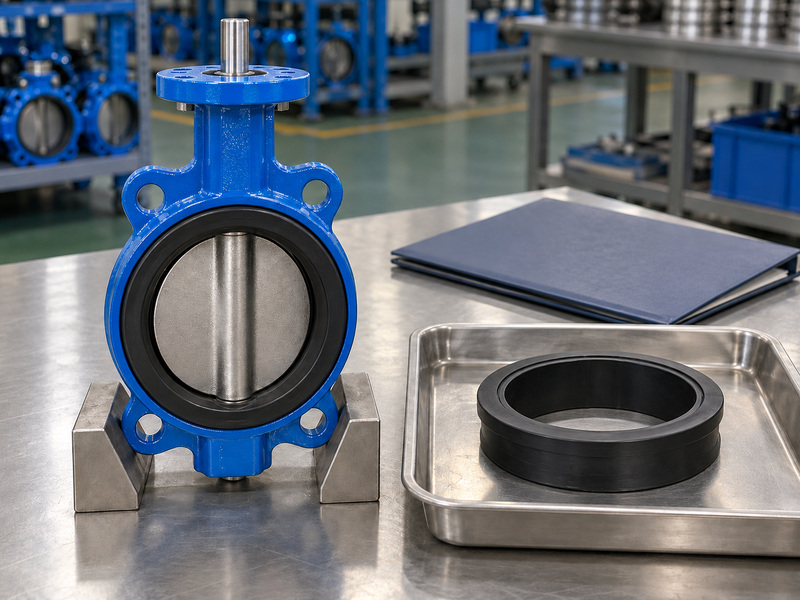
Trace EN resilient seated butterfly valves from their product IDs to the approved material list, relevant heat or batch records and inspection results. A material certificate for a casting cannot identify the installed elastomer compound by itself. The supplier needs a record path that connects the actual seat and other specified materials to the delivered valve.
RUITO’s stated water configuration uses a ductile-iron body, CF8M disc, strength-checked stainless shaft and EPDM seat. Its oil and clean-gas configurations use separately controlled materials and application limits. The familiar EPDM or NBR name identifies a material family; the approved compound and intended duty still govern selection.
What should a practical traceability audit follow?
Choose a delivered product ID and ask the supplier to retrieve its drawing revision, assembly work order, body record, seat batch and final test. Review how mixed batches and reworked units are identified. File names alone are weak evidence if the record cannot show which parts entered the selected assembly.
| Component or record | Traceability link | Buyer check |
|---|---|---|
| Pressure-containing body | Relevant material record | Material and product identity |
| Seat | Compound and production batch | Approved duty and batch linkage |
| Assembly | Work order and BOM revision | Correct installed components |
| Final test | Product-linked original record | Same unit and accepted result |
Agree the record depth during quotation so necessary evidence is available when the batch is produced.
8. How should approvals and certificates be reviewed?
Review approvals for EN resilient seated butterfly valves against the exact product, manufacturing entity, covered materials, sizes and intended destination or use. A management-system certificate describes its stated organizational scope. It cannot substitute for a product approval, a project acceptance or evidence that a particular wetted-material configuration is covered.
For drinking-water duty, check all contact materials and the temperature range against the applicable approval documents. RUITO’s stated drinking-water applications use accurately covered configurations at 5–40°C and no more than 10 barg, subject to the lower approval and product pressure boundary. Ordinary water-service paperwork does not automatically cover that use.
Which claims deserve a request for clarification?
Ask for the issuing body, document number, current status and searchable scope where a certificate is claimed. Check whether the named brand and manufacturing site match the offer. The buyer’s project team should identify applicable market and project requirements; a broad EN label does not determine all obligations for the destination installation.
| Document claim | Scope to verify | Unsupported inference to avoid |
|---|---|---|
| EN design reference | Named product and requirements | Automatic third-party certification |
| Management-system certificate | Entity, site and activity | Every product is approved |
| Drinking-water approval | Materials, sizes and temperatures | Any EPDM seat is covered |
| Project approval | Accepted configuration and revision | Future substitutions are accepted |
Record any scope gap as a technical deviation before the purchase order is signed.
9. Which documents should be closed before shipment?
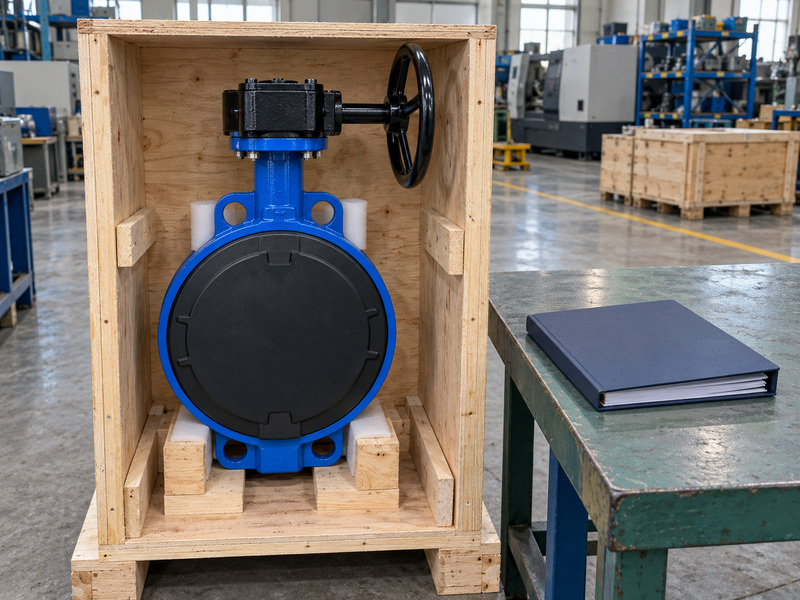
Release EN resilient seated butterfly valves after the agreed inspection and document requirements have been closed against the delivered configuration. Define an inspection and test plan, or ITP, that assigns review, witness and hold points. Agree the manufacturing record dossier, or MDR, index before production so missing records can be prevented.
The final package should connect approved drawings, materials, inspections, tests and product identification. Specify document language, revision status and any owner approval needed before factory release. A complete-looking folder can still delay project handover if its serial numbers or drawing revisions differ from the valves in the crates.
How can procurement make the review manageable?
Use one document register with owners, due dates and acceptance status. Ask the supplier to identify exclusions and unresolved comments alongside the proposed release date. To prepare a configuration-specific review, contact us with the valve schedule, fluid conditions, flange drawings and project document requirements.
| Delivery record | Agree before production | Confirm at release |
|---|---|---|
| Drawings and data | Required review status | Accepted final revision |
| Material records | Scope and identification | Product or batch linkage |
| Inspection and tests | ITP and procedures | Closed results and witness status |
| Installation documents | Required instructions and spares | Matching delivered configuration |
Separate factory release from shipment and destination arrival when confirming project milestones.
10. What do buyers ask about EN valve documents?
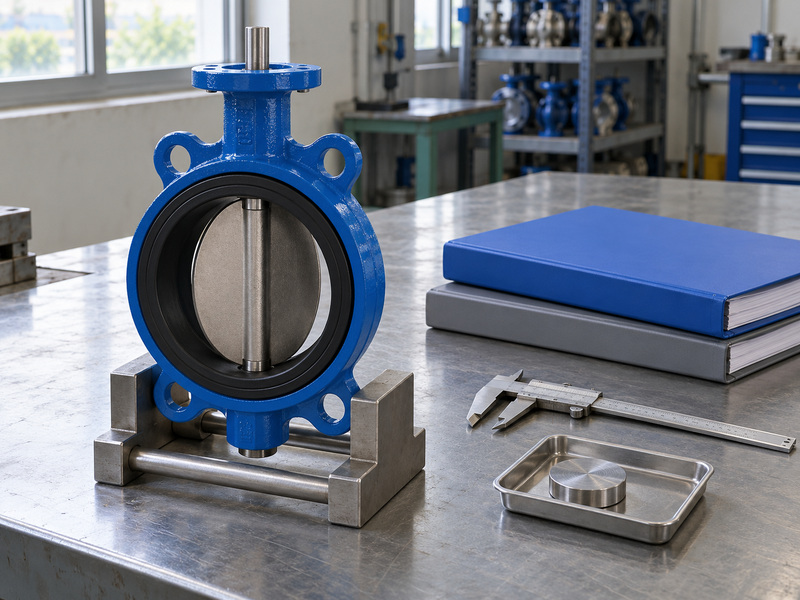
Buyers evaluating EN resilient seated butterfly valves should settle these document questions while the offer can still be revised.
Q1. Can I treat an EN label as a certification?
No. Identify the claimed requirements and supporting evidence; verify any separate certification against its actual issuing body and scope.
Q2. Can I specify EN 1092 without naming the flange material?
The specification needs more detail. Confirm the material-relevant part, DN, PN, flange faces and complete mating arrangement on approved drawings.
Q3. How do I know which face-to-face length applies?
Check the selected body construction. Use its applicable EN 558 series or agreed dimension together with the approved general arrangement drawing.
Q4. Does a PN16 marking mean 16 bar at every temperature?
No. Check the selected configuration’s pressure–temperature boundary and closure differential, together with the connected components and application limits.
Q5. Is a material certificate enough to accept a seat?
No. Require the approved compound identification and a traceable batch link to the delivered valve, plus the agreed inspection and test evidence.