
You avoid costly butterfly valve manufacturer mistakes by comparing suppliers against the same approved configuration and checking how their production records support it. Searches for resilient seated butterfly valve manufacturers produce companies with different manufacturing, assembly and sourcing responsibilities. A factory photograph or broad product list cannot tell you whether the next production batch will match the sample your engineers approved.
Before requesting final prices, define the fluid, connection, materials, pressure–temperature limits and inspection scope. Then ask each candidate to demonstrate its control of drawings, seats, assembly and release records. Those checks expose differences that a unit-price comparison leaves unresolved, including who must correct a defect after delivery.
1. How do resilient seated butterfly valve manufacturers compare?
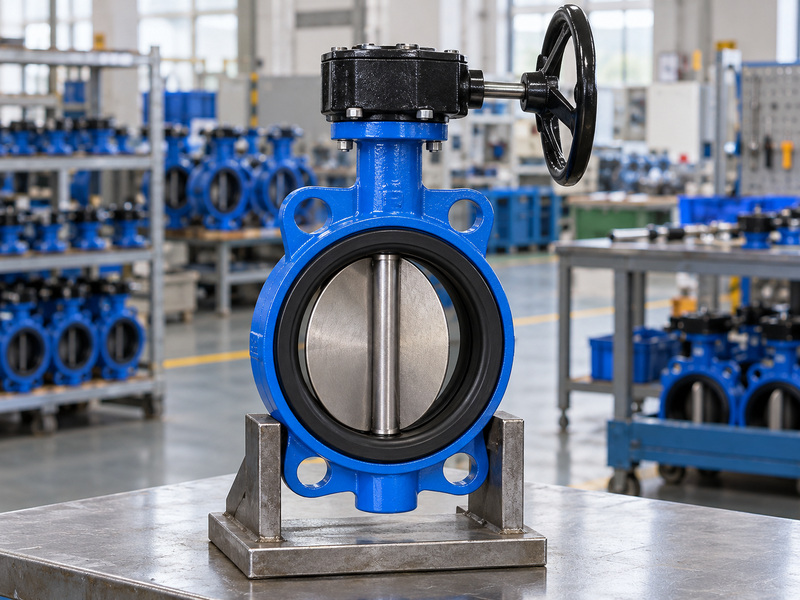
Compare resilient seated butterfly valve manufacturers by the work they control and the evidence they can retrieve for the offered valve. Ask who designs the product, purchases castings and seats, machines critical features, assembles the valve and signs the final release. Manufacturing and sourcing arrangements need a clear statement of responsibility.
A supplier can purchase selected components and still control a defined valve manufacturing process. Conversely, owning equipment does not prove that the quoted configuration passed through it. Request a process route for the offered product and identify external operations, inspection responsibility and the party that approves changes or nonconforming parts.
What should a factory review follow?
Select a real product ID from the relevant range and follow its work order through inspection and release. RUITO describes its role as integrated manufacturing and supply, with controlled processing, assembly and inspection for established configurations. Buyers can test that statement by connecting the offered valve to actual process and quality records.
| Supplier responsibility | Evidence to request | Question to resolve |
|---|---|---|
| Product design | Controlled drawings and ownership | Who approves revisions? |
| Purchased parts | Approved purchase specifications | Who controls substitutions? |
| Manufacturing and assembly | Work orders and inspections | Where is the work performed? |
| Final release | Authorized release record | Who accepts product responsibility? |
Use the same questions for every candidate so different business models can be compared fairly.
2. Which drawings and BOM details should be controlled?
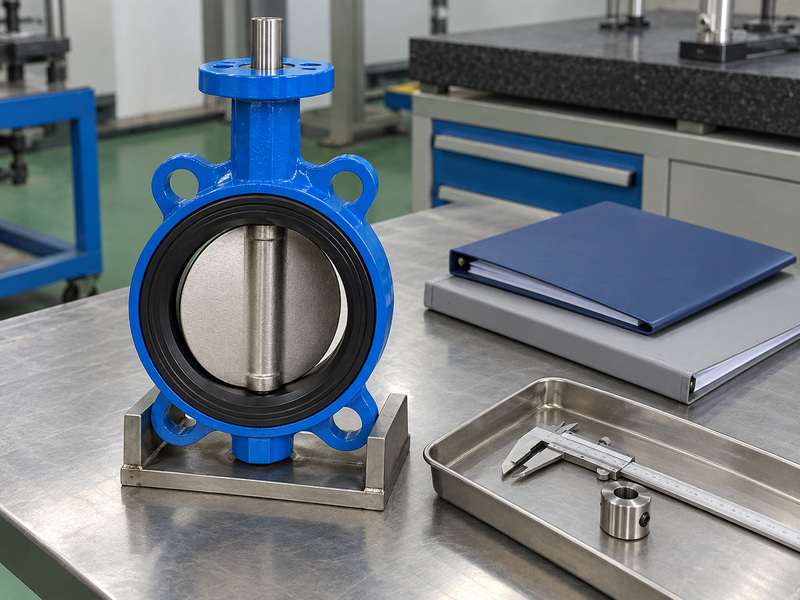
Require resilient seated butterfly valve manufacturers to quote against a controlled general arrangement drawing and bill of materials for the exact configuration. The drawing establishes interfaces and envelope; the bill of materials establishes what will be installed. Both need a revision and a link to the buyer’s approved item or valve schedule.
Review face-to-face length, flange details, adjoining bore clearance, operator space and mounting orientation before sample production. The wafer butterfly valve has its own installation arrangement; a flanged or U-type valve needs its corresponding drawing. Similar pipe size does not make these body forms dimensionally interchangeable.
How much detail does a repeat order need?
The approved package should identify body, disc, shaft, seat, coating and drive where supplied. Agree how confidential compound details will be controlled without leaving the purchaser unable to identify the approved seat. Repeat orders should cite the approved revision, with the supplier declaring changes before production begins.
| Controlled item | Buyer approval concerns | Production reference |
|---|---|---|
| General arrangement | Fit and operating clearance | Accepted drawing revision |
| Material list | Actual wetted and pressure parts | Approved BOM revision |
| Operator assembly | Torque, mounting and access | Assembly drawing |
| Product identification | Buyer item and configuration | Work order and marking |
Freeze the documents that define fit and function before the sample becomes a purchasing reference.
3. How can you verify seat compound and batch control?
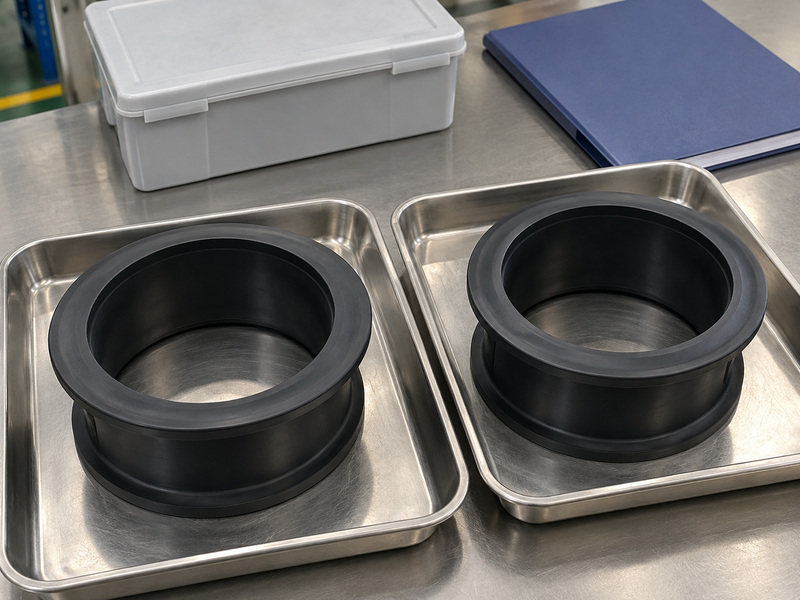
Ask resilient seated butterfly valve manufacturers to connect the approved seat compound to the batch installed in each production lot. EPDM and NBR describe material families with different formulations and intended duties. Seat geometry, curing and handling also affect the assembled valve, so a generic rubber description leaves the buyer without a repeatable specification.
Provide the full medium, additives, cleaning agents and temperature range for compatibility review. RUITO separates EPDM water-duty seats from NBR oil-duty configurations and maintains their material identities separately. Changing the drive or body connection does not establish chemical compatibility for an existing seat.
What evidence should follow a seat into assembly?
Review incoming identification, the supplier’s acceptance checks, storage controls and the link from seat batch to assembly work order. A PTFE-lined butterfly valve requires a different material and process review, including the lining, backing and shaft seals. Avoid approving a water-valve supplier’s chemical offering solely from its water-seat records.
| Seat control | Evidence | Buyer concern |
|---|---|---|
| Compound approval | Controlled material identity | Compatibility with actual medium |
| Incoming batch | Identification and acceptance record | Mixed or unknown material |
| Storage and handling | Defined controls | Damage or identification loss |
| Assembly linkage | Batch-to-work-order record | Production differs from sample |
Require a documented review before any seat supplier or compound substitution enters a repeat batch.
4. How do you test the supplier’s rating claims?
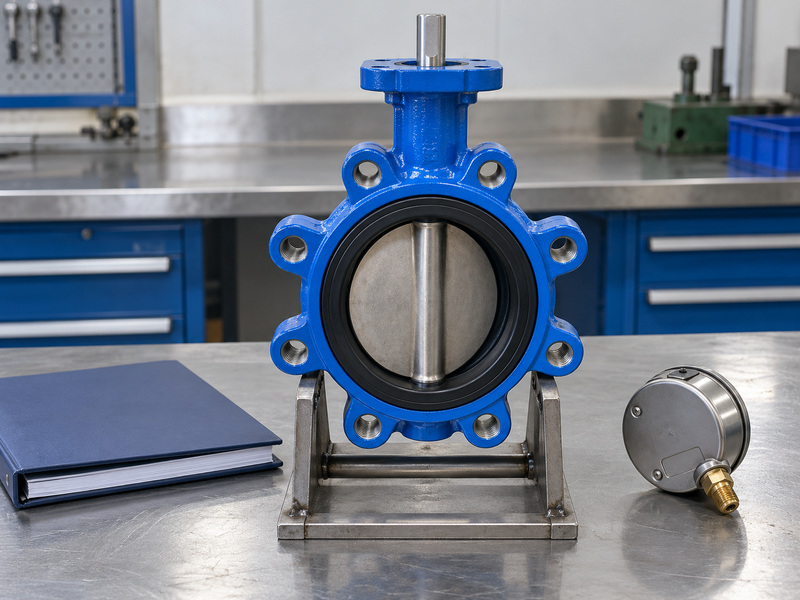
Evaluate resilient seated butterfly valve manufacturers by asking them to attach each rating to a specific size, material, temperature and installation condition. Catalogue maximums from different configurations cannot be combined into one valve. The allowable pressure at temperature, closure differential and connection limits need to agree with the proposed duty.
RUITO’s concentric water-duty wafer and double-flanged ranges cover DN50–600 and PN10/16, while its lug range covers DN50–300. Those ranges do not establish an unrestricted end-of-line rating. The lug butterfly valve requires its own verified thread engagement, loading and any specifically approved end-of-line conditions.
Which answers reveal whether the offer is defined?
Ask for the maximum permitted closure differential in each required direction, the intended operating travel and the applicable installation instructions. A butterfly disc has defined travel; claims of unrestricted rotation need correction. For a supplied actuator, request duty-specific torque data and a transmission-load review rather than assuming that a larger drive solves every operating problem.
| Supplier claim | Evidence to request | Reject unsupported transfer |
|---|---|---|
| Pressure rating | Model-specific pressure–temperature data | One temperature to every temperature |
| Closure capability | Stated direction and differential | Forward rating to reverse duty |
| End-of-line use | Exact configuration and test scope | Any lug body to every size |
| Drive suitability | Torque and interface assessment | Pipe size to actuator selection |
Keep any unresolved rating question open in the technical deviation list.
5. How do you keep production consistent with samples?
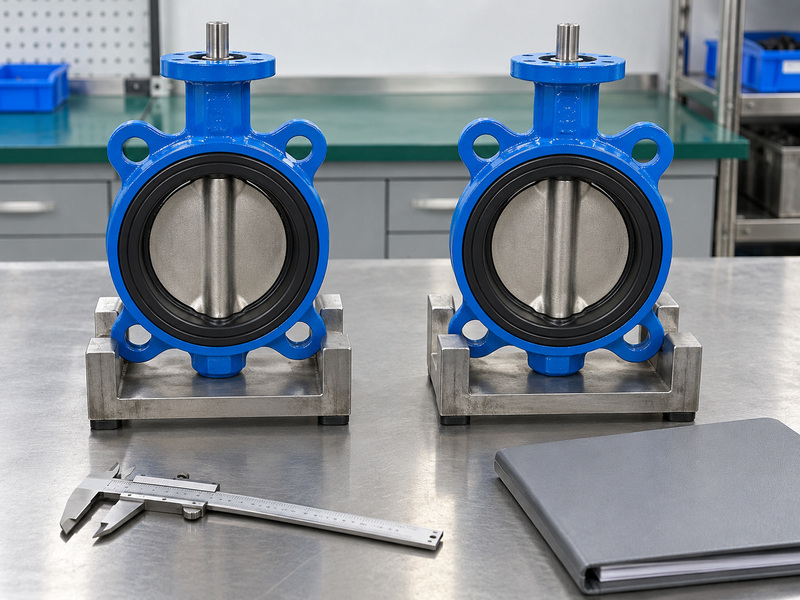
Require resilient seated butterfly valve manufacturers to identify the sample’s drawings, materials, process route and test results before approving it as the production reference. A physical sample without that record can be copied only by appearance. Define which features must remain unchanged and which dimensions or functions need confirmation on the first production batch.
Sample approval should include installation fit and the actual operating requirements where relevant. Record flange compatibility, disc clearance, operator behavior and leakage acceptance using an agreed method. If your equipment requires a specific bracket or signal arrangement, preserve those details in the approved assembly package.
What should happen before increasing order volume?
Review a first article or small production release against the same criteria used for the sample. Compare seat identity, critical dimensions, coating requirements and functional results. Investigate a difference before accepting it as normal production variation, especially where it changes assembly fit, operating torque or the evidence supporting an approval.
| Approval stage | Compare against | Record needed |
|---|---|---|
| Development sample | Agreed duty and drawing | Identified sample report |
| Installation trial | Actual mating equipment | Fit and function results |
| First production | Frozen sample configuration | First-article inspection |
| Repeat batch | Accepted revision and limits | Production inspection records |
Authorize volume growth after the supplier has demonstrated the approved configuration in its production process.
6. What should the ITP and witness plan contain?
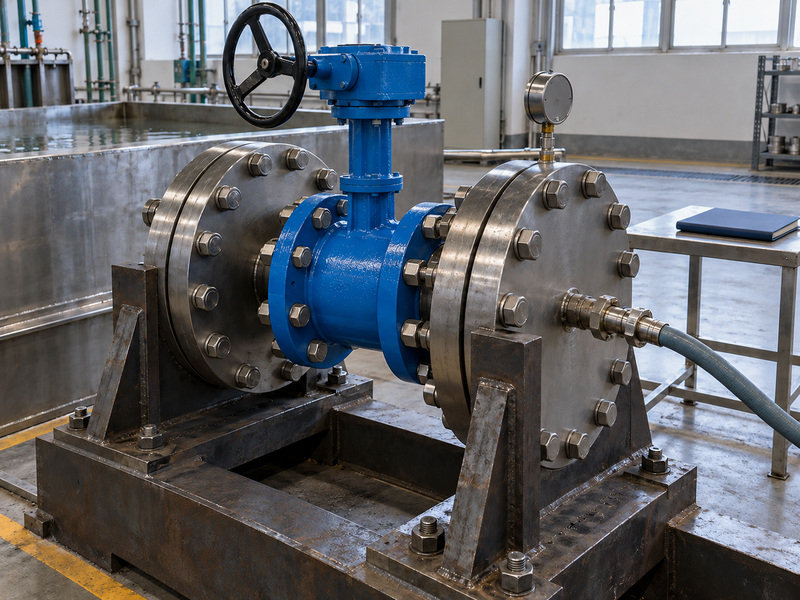
Agree an inspection and test plan with resilient seated butterfly valve manufacturers that identifies activities, acceptance criteria, responsible parties and review or witness points. The ITP should cover the offered configuration rather than reproduce a generic company checklist. State how the supplier must notify the buyer before an agreed witness or hold point.
Choose the primary pressure-test route and define the required procedure. The official ISO 5208 industrial valve pressure-testing resource is a primary reference where that route is selected in the contract. EN 12266-1 is another stated option in RUITO’s quality documentation; the order must identify which basis governs the acceptance record.
How should a witness inspection be made useful?
Connect the inspected product IDs to the procedure, instruments and original readings. Agree whether the witness scope includes dimensions, material identification, shell testing, closure testing and operation. Remote viewing can support an agreed inspection, but the record should still identify the units, conditions and results that were observed.
| ITP element | Agree before production | Confirm during inspection |
|---|---|---|
| Acceptance basis | Standard and approved procedure | Correct conditions applied |
| Inspection points | Review, witness and hold scope | Required participation completed |
| Product selection | Units and sampling where allowed | Identified inspected products |
| Nonconformance | Reporting and disposition process | Approved closure before release |
Include witness scheduling and document review in the production plan rather than adding them after the valves are ready.
7. Which records should the MDR connect?
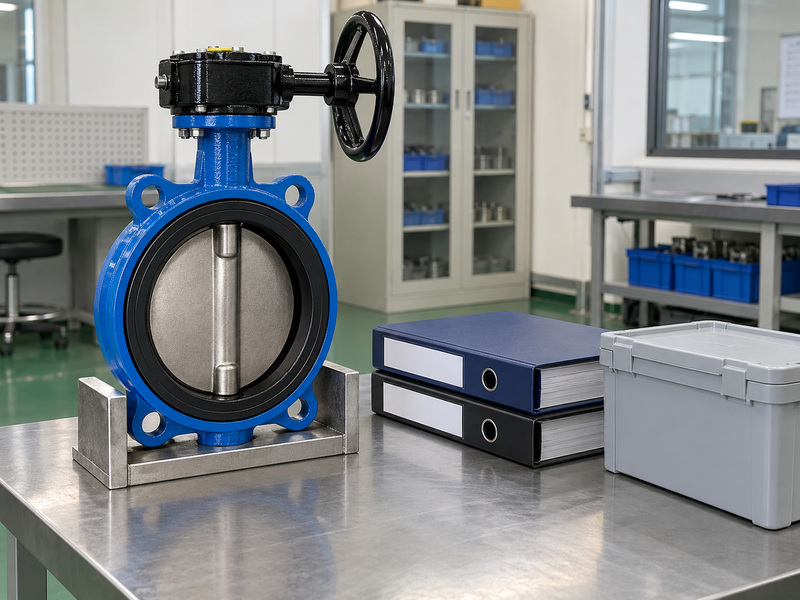
Require resilient seated butterfly valve manufacturers to connect delivered product identification to the agreed manufacturing record dossier, or MDR. The dossier should show which drawings, materials, inspections and tests support the supplied valves. Its value depends on that connection, not the number of pages included.
Agree a document index during quotation with the required language and approval status. Depending on the order, records may include material evidence, seat batch identification, dimensional inspections, coating checks, pressure results and final functional checks. Product approvals or management-system certificates belong in their accurately described scopes; they do not replace manufacturing records.
Can the supplier retrieve one valve’s history?
Ask the quality team to choose a product ID and retrieve its approved revision, relevant material and seat records, assembly work order and final test. Check how the same identification appears on the packing list and crate register. Resolve gaps while records and products remain accessible at the factory.
| Record group | Link required | Acceptance question |
|---|---|---|
| Design | Product and approved revision | Was the correct design built? |
| Materials | Relevant heat or batch | Were approved materials installed? |
| Inspection and tests | Product or defined batch | Were required results accepted? |
| Dispatch | Product, box and order item | Can receiving staff identify delivery? |
Set the required MDR review status as an explicit release condition where the project needs it.
8. How should OEM changes and defects be managed?
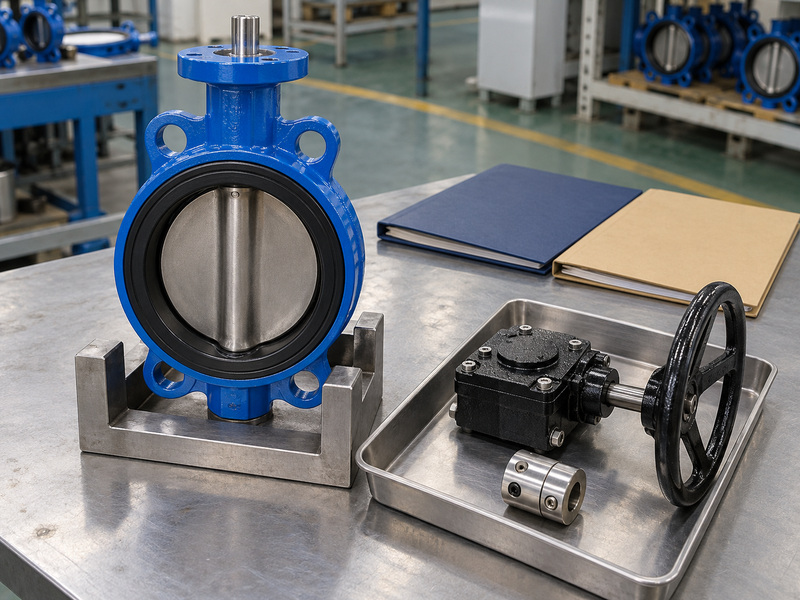
Select resilient seated butterfly valve manufacturers that submit relevant OEM changes for review before implementation and keep nonconforming products under control. A change to a seat source, shaft, coating, casting route or actuator can affect compatibility, fit or approval scope. Define the notification and approval process in the purchasing agreement.
Identify changes that need new samples, calculations, tests or customer approval. Keep the accepted revision tied to the buyer’s part number and effective production batch. Authorized branding and packaging also need control so labels do not imply approval for an unreviewed configuration or use another party’s identity without permission.
What does a useful corrective-action process deliver?
For a reported defect, provide product identification, photographs, actual fluid conditions and installation records. The supplier should identify affected batches, contain suspect stock, establish the cause and verify the correction. Replacement units must follow the approved configuration or an explicitly accepted revision, with records that let the buyer distinguish them from affected stock.
| Change or defect event | Supplier response | Buyer control |
|---|---|---|
| Proposed material change | Technical effect assessment | Approval before implementation |
| Interface revision | Updated drawing and fit evidence | Revalidation where needed |
| Production defect | Containment and batch identification | Affected-stock decision |
| Corrected supply | Verified action and identification | Traceable replacement acceptance |
Agree who can authorize a deviation and retain the signed decision with the order record.
9. How should delivery promises and prices be compared?
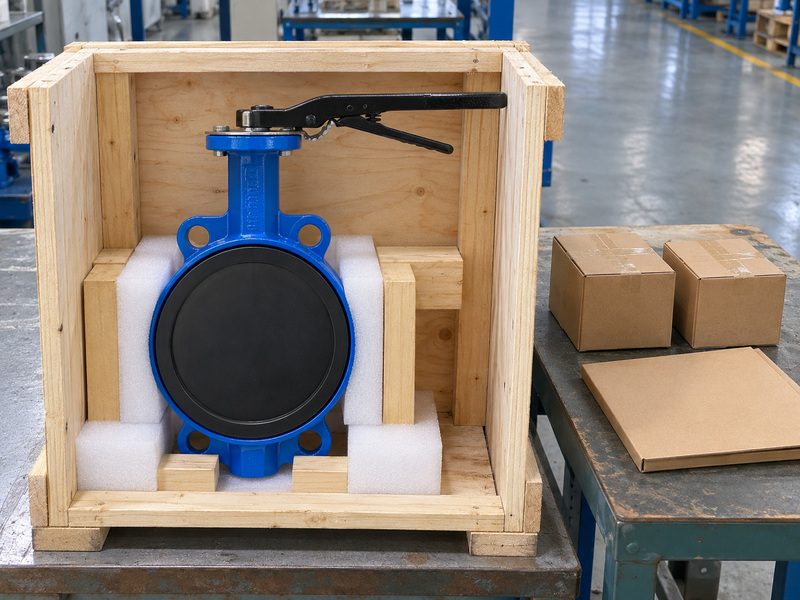
Compare resilient seated butterfly valve manufacturers on a common delivery scope that includes technical approval, production, inspection, documents and factory release. Separate factory release from transit, customs and arrival. A short quoted lead time can exclude approval or witness activities that your project still requires before shipment.
RUITO identifies 35–60 days as a typical mature-production factory cycle for relevant lug, flanged, U-type and grooved butterfly configurations once the required technical, commercial and inspection conditions are ready. The actual order needs a confirmed plan; a new design, special material or additional approval can require a different schedule.
What belongs in the final commercial comparison?
Compare the same materials, tests, document package, marking, packaging and spare-parts scope before evaluating unit prices. Identify exclusions, transport responsibilities and the milestone that starts the production clock. For a documented supplier review, contact us with the valve schedule, approved duty, required drawings and inspection expectations.
| Commercial item | Common comparison basis | Evidence before release |
|---|---|---|
| Product scope | Same configuration and quantity | Accepted drawings and BOM |
| Quality scope | Same tests and documents | Closed ITP and MDR status |
| Schedule | Defined start and release milestones | Confirmed production progress |
| Delivery package | Marking, protection and spares | Packing list and inspection |
Keep unresolved exclusions visible in the purchase decision rather than treating them as included services.
10. What do buyers ask before approving a manufacturer?
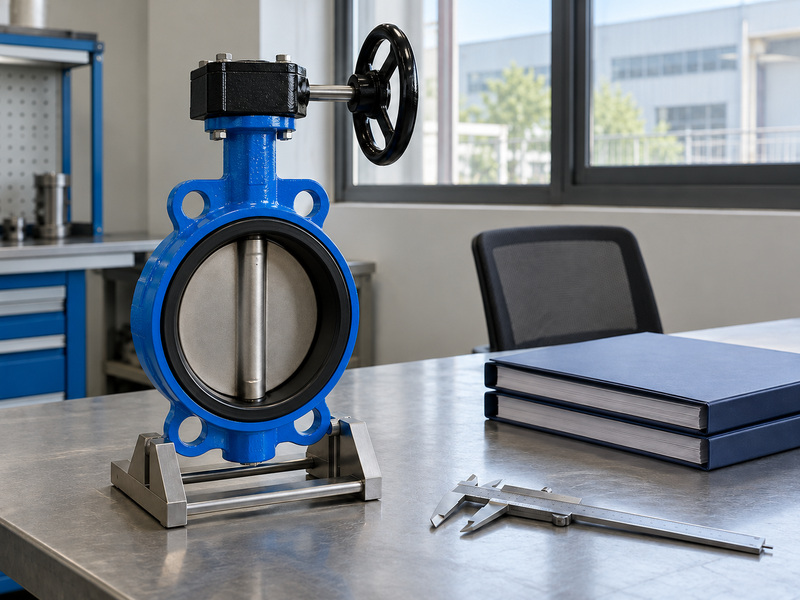
Buyers assessing resilient seated butterfly valve manufacturers should close these questions before approving a production source.
Q1. Can I approve a supplier from a factory video?
No. Use it to support a review of the actual process route and product-linked records for the configuration you intend to purchase.
Q2. How do I know production will match my sample?
Freeze the sample’s drawing and BOM revisions, then verify the first production batch against its dimensions, materials and agreed functional criteria.
Q3. Is an EPDM description enough for seat approval?
No. Confirm the approved compound, actual medium and temperature range, then require batch traceability into assembly.
Q4. Can every lug valve handle end-of-line duty?
No. Require evidence for the exact construction, size, temperature and permitted differential, including the approved connection and test conditions.
Q5. What’s the best way to compare two quotations?
Align the scope first. Compare the same configuration, inspection, documents, delivery milestones and exclusions before comparing prices.