
How to Avoid Fluoropolymer Butterfly Valve Buying Mistakes
Avoid fluoropolymer butterfly valve buying mistakes by approving the full wetted construction and service envelope before accepting a material label. A quotation may say PFA while its drawing shows PFA only on the disc, leaving another material at the seat. A fluoropolymer butterfly valves manufacturer should explain every wetted surface, lining inspection, installation limit, and chemical boundary. Require that explanation before the purchase order freezes the wetted materials.
1. Which fluoropolymer butterfly valves manufacturer fits?
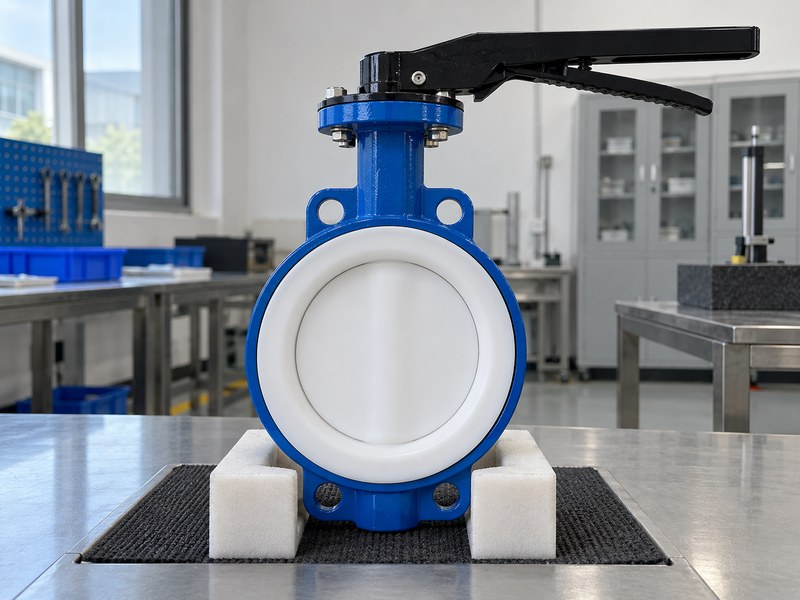
A fluoropolymer butterfly valves manufacturer fits your application when it can connect your chemical data to an exact construction, operating envelope, and inspection package. A lined butterfly valve controls flow with a rotating disc while the specified fluoropolymer layer separates the process fluid from protected metal surfaces. Its service limits also depend on backing, shaft seals, mechanical support, and installation.
What should you request before comparing prices?
RUITO supplies PTFE lined butterfly valves in DN25–300 and PFA lined butterfly valves in DN25–200, both with a whole valve PN10 designation. Its stated design range of −10–150°C requires derating for the lining, backing, and temperature. An approved chemical duty has a narrower operating window, so the design endpoints cannot be applied to any fluid on request.
- Ask for a section drawing and complete wetted material list.
- Submit operating, cleaning, shutdown, and upset conditions.
- Require the supplier to list deviations from your process specification.
| Supplier response | Evidence you need |
|---|---|
| Chemical suitability | Exact composition and operating limits |
| Lined construction | Continuous barrier shown in section |
| Inspection capability | Procedures and product-linked records |
Compare prices after matching the PTFE or PFA construction to your complete chemical recipe.
2. How do PTFE and PFA constructions differ?
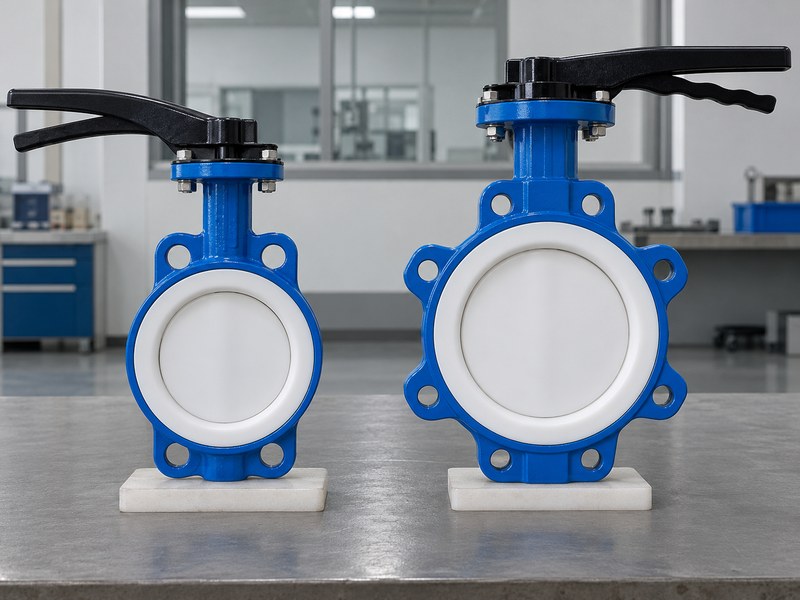
PTFE and PFA constructions differ in their specified resin, forming process, and finished component arrangement; your fluoropolymer butterfly valves manufacturer should define those differences in the supplied valve. The polymer name alone does not prove a thicker layer, longer service life, or cleaner process. Compare the complete lining, disc covering, backing, and shaft seal construction.
Which material description is precise enough?
RUITO's PTFE design uses a continuous PTFE wetted lining and covered disc, with a design thickness of 2–5 mm. Its PFA design uses PFA on both the body wetted lining and disc covering, with a design thickness of 3–5 mm. Local minimum thickness follows the approved drawing, and a PFA covered disc combined with a PTFE seat must be described component by component.
- Identify resin grade and batch traceability for each polymer component.
- Confirm the forming process and approved inspection method.
- Ask which service data support the proposed combination.
| Offered construction | Accurate purchase description |
|---|---|
| PTFE lining and covered disc | PTFE wetted construction as drawn |
| Full PFA lining and covered disc | Continuous PFA wetted construction as drawn |
| PFA disc with PTFE seat | Mixed material configuration |
Write the actual component materials into the order so a mixed construction cannot be substituted under a broad PFA label.
3. What makes a continuous wetted barrier?
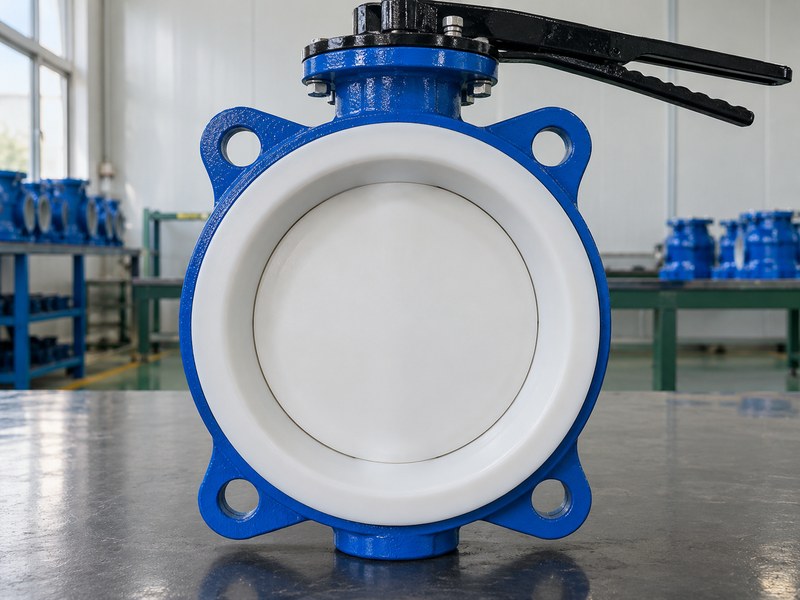
A continuous wetted barrier separates the process fluid from protected metal across the body, disc, shaft transition, and sealing interfaces shown in the approved design. Your fluoropolymer butterfly valves manufacturer must identify how those interfaces remain protected during operation. A lined bore and a coated disc can still leave a weak point at a transition or damaged flange face.
Where should you inspect the section drawing?
Follow the fluid path through the open valve and along the closed disc's sealing contact. Check the lining turn at each flange face, the disc edge, and the shaft entry where movement and sealing meet. Ask which backing and shaft seal materials may contact fluid during the design's expected service and how the supplier evaluates permeation behind the lining.
- Mark every material that can contact the process or cleaning liquid.
- Identify lining retention and support at geometric transitions.
- Record acceptance limits for damaged or repaired wetted surfaces.
| Location | Drawing or inspection question |
|---|---|
| Flange lining turn | Is the protected contact face continuous? |
| Disc edge | Does the covering remain intact at closure? |
| Shaft transition | How are sealing and metal isolation achieved? |
Resolve exposed or unexplained interfaces before approving the material list; a general resin certificate cannot answer those construction questions.
4. Which thickness checks can detect weak areas?
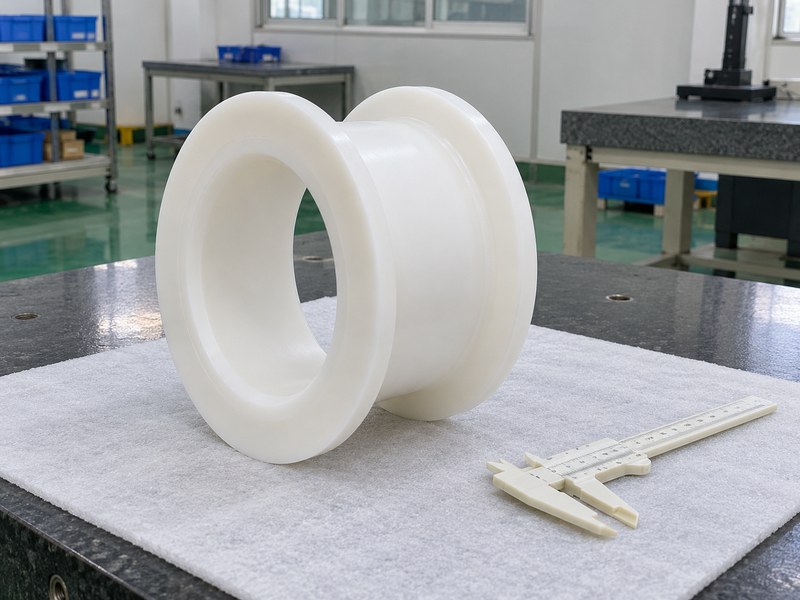
Thickness checks can detect weak areas when they measure defined locations and compare local results with the approved drawing. A fluoropolymer butterfly valves manufacturer should provide the measurement method, coverage, instrument details, and minimum acceptance values. An average thickness can hide a thin corner or transition that fails the local requirement.
How should you read the inspection results?
Use a location map covering accessible straight areas and the design's vulnerable transitions, with a validated method for each geometry. Compare results with the intended nominal range and local minimum, rather than treating the catalogue range as permission for any thickness anywhere. Pair thickness inspection with visual and holiday inspection because each detects different conditions.
- Include flange turns, disc edges, and shaft transition areas.
- Link the measured component to its resin batch and product ID.
- Agree the response to a low reading before production begins.
| Inspection | What it can establish |
|---|---|
| Location-based thickness | Compliance at specified measurement points |
| Visual examination | Visible defects and flange face condition |
| Holiday examination | Detectable discontinuities under its procedure |
Keep raw readings for the accepted sample so later batches can be compared at the same locations using the same method.
5. What chemical data should you submit?
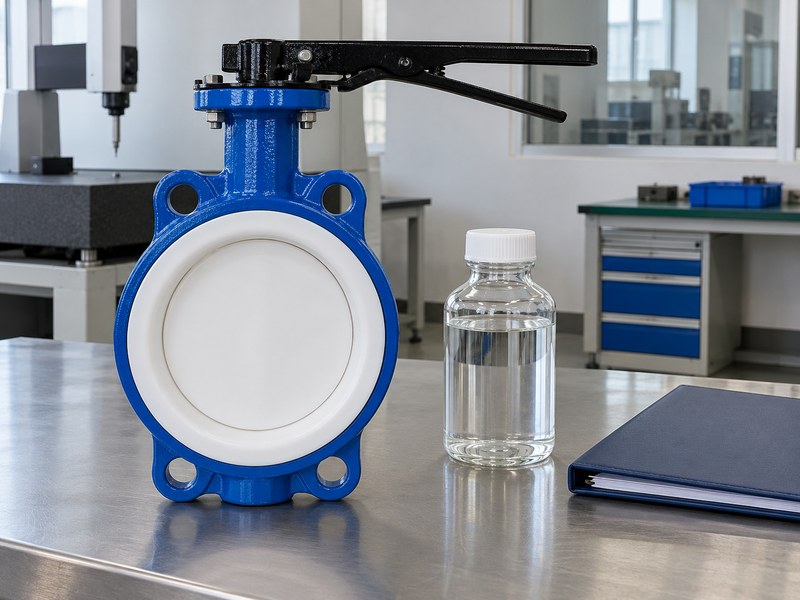
Submit the full chemical composition, concentration basis, impurities, cleaning liquids, and exposure conditions so a fluoropolymer butterfly valves manufacturer can review the complete assembly. A fluid name such as acid or bleach leaves too much unresolved. RUITO's stated chemical windows use mass fraction and separate configurations for alkali, acid, and sodium hypochlorite service.
Which RUITO service windows need separate review?
The limits below apply to the specified aqueous solutions and exact approved materials, with pressure–temperature and installation limits also satisfied. They do not cover concentrated acids, mixed acids, or hot oxidising liquids. For sodium hypochlorite, active chlorine, pH, backing, shaft seals, and possible decomposition gas need review; system venting and relief remain the customer's design responsibility.
- Provide normal and maximum concentrations, including cleaning stages.
- List contaminants, suspended solids, and concentration changes during storage.
- State contact time, cycling frequency, and any retained liquid during shutdown.
| Aqueous service | Temperature | Maximum pressure |
|---|---|---|
| NaOH 10–30% by mass | 20–60°C | 6 barg |
| HCl 1–20% or H₂SO₄ 1–30%, separate builds | 5–50°C | 6 barg |
| NaClO 0.5–5%, DN25–150 only | 5–35°C | 4 barg |
Obtain a written response for your full recipe before treating any listed window as applicable.
6. How do temperature and pressure limits interact?
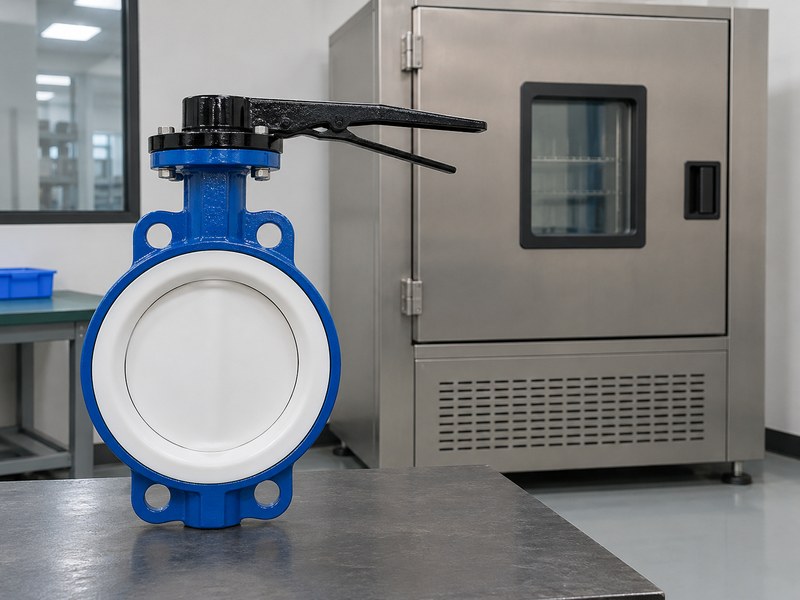
Temperature and pressure limits interact through the exact valve's pressure–temperature rating and its chemical service restrictions. A fluoropolymer butterfly valves manufacturer must confirm a permissible operating point for the same lining, backing, seals, size, and connection. Combining maximum catalogue pressure with maximum design temperature can create a condition the supplied valve has never been approved to withstand.
Which conditions belong in the review?
State normal operation, startup, hot cleaning, cooldown, and the maximum closing differential pressure. RUITO's whole valve PN10 designation does not make 10 barg available throughout its −10–150°C design range. The chemical service windows also remain separate limits, and the lower applicable restriction governs the proposed duty.
- Submit simultaneous pressure and temperature pairs for every stage.
- Identify temperature changes that occur with liquid trapped in the line.
- Request the approved rating curve and stated exceptions for the configuration.
| Condition | Approval question |
|---|---|
| Normal process | Does the selected build cover this operating point? |
| Cleaning cycle | Are the cleaning liquid and temperature accepted? |
| Shutdown or upset | Are pressure and thermal effects addressed? |
Keep service conditions beside the rating curve in the purchase file so later process changes trigger a new review.
7. Why must vacuum and permeation be reviewed?
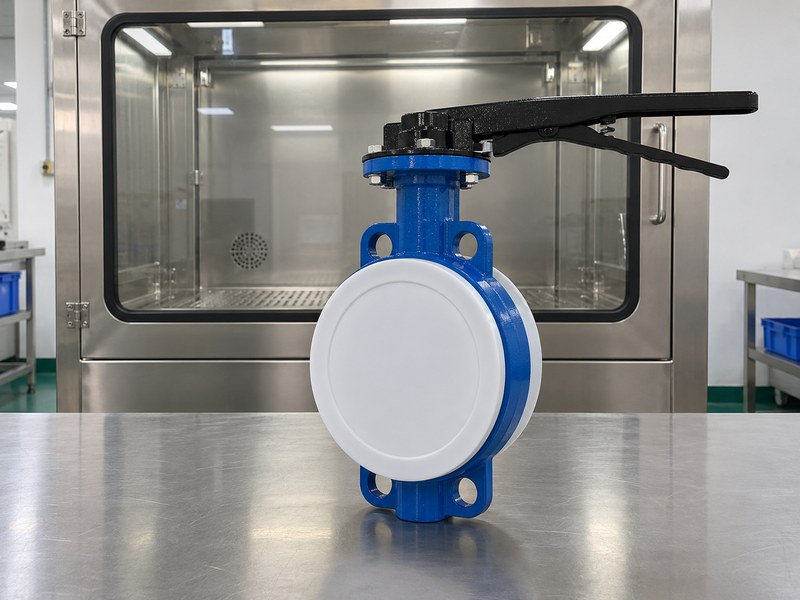
Vacuum and permeation need review because they can affect lining retention, backing, and shaft seals even when the process fluid is chemically compatible with the exposed polymer. A fluoropolymer butterfly valves manufacturer should state the permitted minimum absolute pressure at the relevant temperature. Positive pressure test results cannot establish suitability for a vacuum condition.
Where can reduced pressure occur?
Include pump suction, draining, cooldown, cleaning, and any process step that can lower internal pressure. Give the supplier minimum absolute pressure and its duration rather than an undefined request for vacuum suitability. Permeation review also needs the fluid composition, temperature, exposure time, lining construction, and materials behind the barrier.
- State minimum pressure in bar(a), not a gauge pressure without context.
- Ask how the lining is supported against the proposed pressure differential.
- Request configuration-specific negative pressure evidence where required.
| Risk input | Supplier response needed |
|---|---|
| Minimum absolute pressure | Accepted limit at stated temperature |
| Duration and repeated cycles | Applicable test or engineering basis |
| Permeating chemical species | Backing and shaft seal compatibility review |
If the supplier cannot define the minimum absolute pressure, keep that operating condition open instead of assuming the positive pressure rating covers it.
8. How do flange loads affect a lined valve?
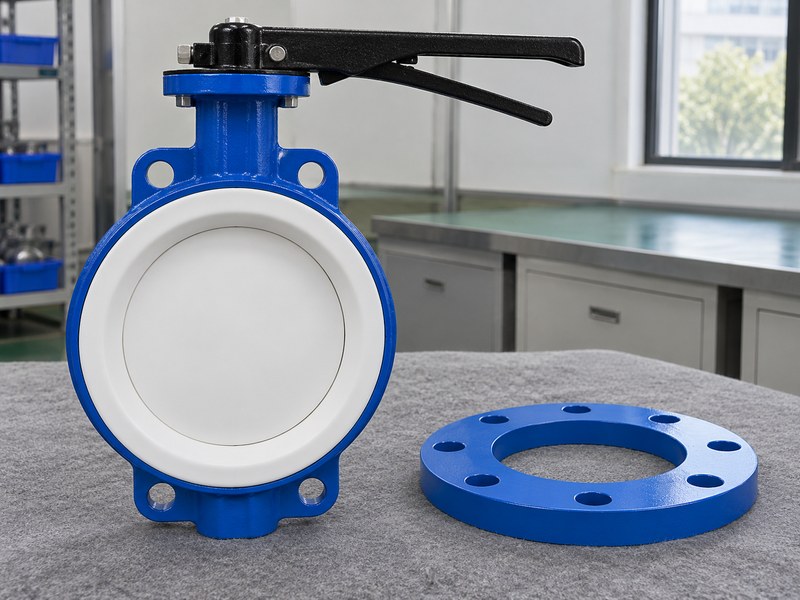
Flange loads affect sealing and lining condition because the joint compresses the valve's lined faces and supporting materials. Your fluoropolymer butterfly valves manufacturer should specify the permitted mating faces, gasket arrangement, bolt sequence, and tightening instructions. Excessive clamping can damage a lining flange; uneven loading can leave a poor seal or distort the assembly.
What should installers receive with the valve?
Provide the exact installation drawing and instructions for the delivered size and construction. Verify the mating flange bore against the full disc travel envelope and check pipe alignment before tightening. Keep the lining flange protected during transport and handling, and use a separate gasket only where the approved instructions permit or require one.
- Confirm flange face contact supports the lining as intended.
- Include backing and shaft seal details in the material review.
- Check that bolt loads and pipe loads follow the approved arrangement.
| Installation detail | Required control |
|---|---|
| Lined face | Protection from impact and excessive compression |
| Mating bore | Disc clearance throughout travel |
| Bolting | Approved sequence and tightening guidance |
Send flange drawings with the enquiry so installation restrictions are settled before the lined valve is ordered.
9. What must a fluoropolymer butterfly valves manufacturer test?
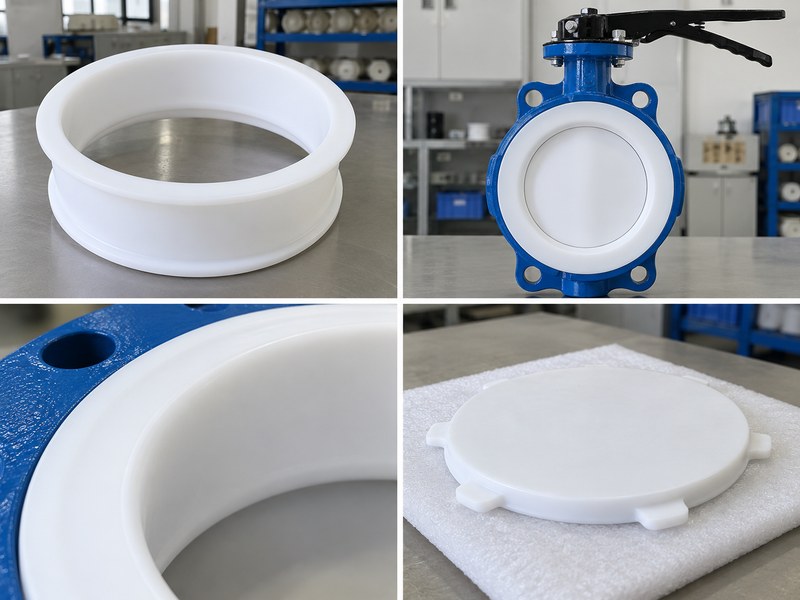
The manufacturer should test lining continuity, pressure integrity, closure sealing, and performance after the specified thermal cycles. A fluoropolymer butterfly valves manufacturer must distinguish routine inspection from representative configuration testing. Neither test proves unlimited chemical resistance or service life beyond its stated conditions.
How much evidence should a report contain?
Record the product or sample identity, lining material, thickness basis, test method, settings, acceptance criteria, and results. Holiday test voltage must follow the procedure for the material and thickness rather than a universal value. Thermal reports should state temperatures, cycle count, hold conditions, and the leakage, lining, and functional checks performed afterward.
- Require individual thickness, holiday, flange face, and sealing records.
- Separate pressure reports from thermal or negative pressure test evidence.
- Verify that any witness report identifies the tested configuration.
| Test | Evidence boundary |
|---|---|
| Holiday inspection | Defined discontinuity check at stated settings |
| Pressure inspection | Shell and closure result under its procedure |
| Thermal cycling | Result for the tested build and cycle conditions |
For one RUITO chemical equipment order, 18 DN80 PTFE lined butterfly valves served 20% NaOH at 45°C and 4 barg. Representative testing included 50 cycles between 20 and 60°C followed by reinspection; that PTFE evidence cannot be relabelled as a PFA project.
10. What documents should close the purchase review?
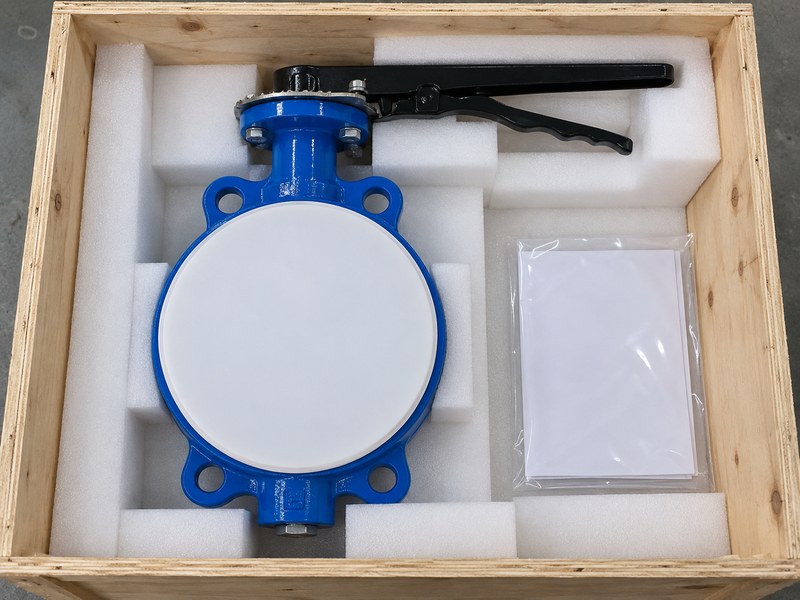
Close the purchase review with approved drawings, materials, operating limits, inspection requirements, and controlled changes from your fluoropolymer butterfly valves manufacturer. Link the eventual reports to the supplied product IDs. Keep the installation instructions and spare parts list with those records so maintenance staff can order the correct lining, backing, and seal configuration; contact us to request a configuration review.
Which records should you retain?
- Section drawing, wetted material list, resin batches, and local thickness limits.
- Chemical approval, rating curve, minimum absolute pressure, and installation rules.
- Individual inspection reports and applicable representative test evidence.
FAQ for lined valve purchases
Q1: Can I call a PFA covered disc a fully PFA lined valve?
No. The body wetted lining and remaining interfaces must match the stated construction; list mixed PTFE/PFA components separately.
Q2: What's the best material for my cleaning liquid?
It needs a separate review. Submit its composition, concentration, temperature, pressure, and exposure time alongside the process fluid.
Q3: How do I know if PN10 covers hot service?
Check the exact pressure–temperature curve. PN10 alone does not establish the working pressure at your cleaning or process temperature.
Q4: Can I specify PFA for high purity duty automatically?
No. Purity, extractables, cleanliness, and acceptance requirements need their own agreed evidence; the polymer name cannot establish them.
Q5: Can a pressure test replace a holiday test?
No. They inspect different conditions, and the purchase plan should define both where required for the lined construction.
Send RUITO your complete chemical recipe, operating and cleaning cycles, minimum absolute pressure, flange drawing, and inspection requirements for an exact PTFE or PFA configuration review.