
How to Fix Wafer Butterfly Valve Supplier Sourcing Mistakes
Fix wafer butterfly valve sourcing mistakes by approving the complete installed assembly before comparing prices. A replacement can match the pipe size and pressure label yet jam against a flange bore when you open it. Buyers reviewing wafer type butterfly valve manufacturers need the flange drawing, disc travel envelope, seat instructions, operator data, and test plan in one purchase file. That review catches fit problems before a shutdown crew has the old valve out.
1. Which wafer type butterfly valve manufacturers fit?
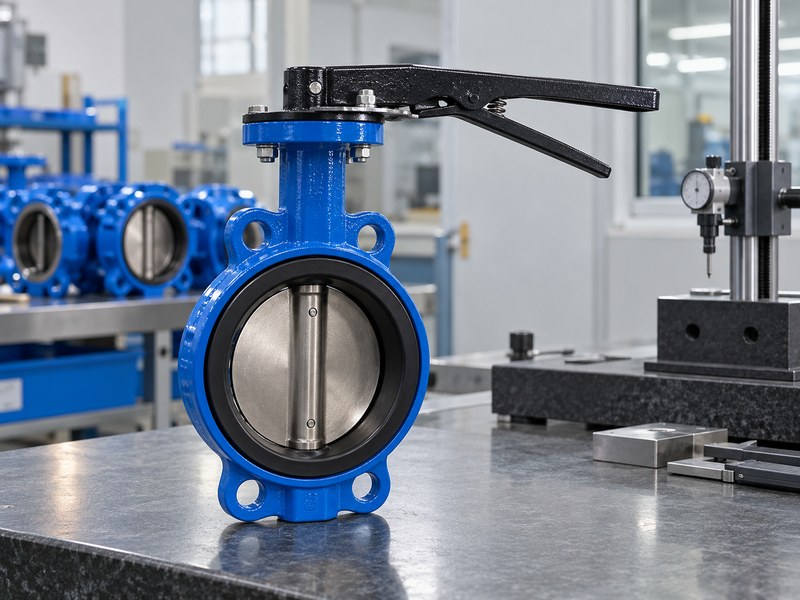
Wafer type butterfly valve manufacturers fit your project when they can document the exact body, seat, disc, shaft, and installation conditions you need. A wafer body sits between two pipe flanges and depends on the specified assembly for restraint and sealing. Its compact length helps in crowded equipment, but a catalogue photograph cannot prove compatibility with your pipework.
What should you put in the enquiry?
Give suppliers the service conditions before asking for an interchangeable replacement. RUITO's standard water service wafer butterfly valve range covers DN50–600 and PN10/16, with clean water service at 5–60°C subject to the exact pressure–temperature rating. Drinking water, oil, clean gas, seawater, and lined chemical service require their own configurations and supporting evidence.
- Submit maximum working pressure and closing differential pressure separately.
- Identify fluid composition, temperature, solids, and cleaning chemicals.
- Attach the existing valve and mating flange drawings.
| Enquiry item | Supplier response you need |
|---|---|
| Water service configuration | Exact wetted materials and seat compound |
| Installation | Approved dimensions and disc envelope |
| Acceptance | Tests tied to the supplied configuration |
Compare prices for the same flange interface, seat compound, and closing differential pressure.
2. How do you confirm flange bore clearance?
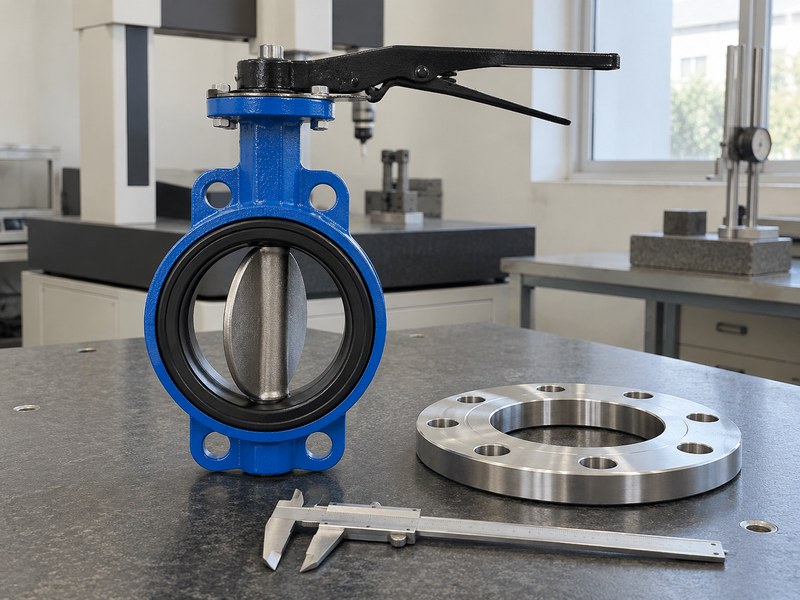
Confirm clearance by comparing the actual mating flange and pipe bores with the disc's required opening envelope; wafer type butterfly valve manufacturers should supply the dimensions for that comparison. DN identifies nominal size, not every internal diameter you will encounter. A thick pipe wall, internal lining, flange neck, or nearby fitting can reduce available space.
Which dimensions belong on the interface drawing?
Ask for a section through both flange faces with the valve centred in its installed position. Include the nearest pipe welds, reducer, and lining transitions where they approach the disc. Check the drawing against measured site dimensions when the original pipe schedule or flange documentation is uncertain.
- Record the minimum clear bore on both sides of the valve.
- Include lining thickness and any inward projection at the joint.
- Show the disc projection beyond each valve face during travel.
| Interface feature | Clearance question |
|---|---|
| Flange bore and neck | Can the disc pass without contact? |
| Pipe lining or weld | Does it enter the travel envelope? |
| Adjacent reducer | Is its taper far enough from the disc? |
Resolve a bore conflict through an approved interface change before the valve reaches site; tightening the flanges cannot create the missing clearance.
3. What should a full disc sweep check prove?
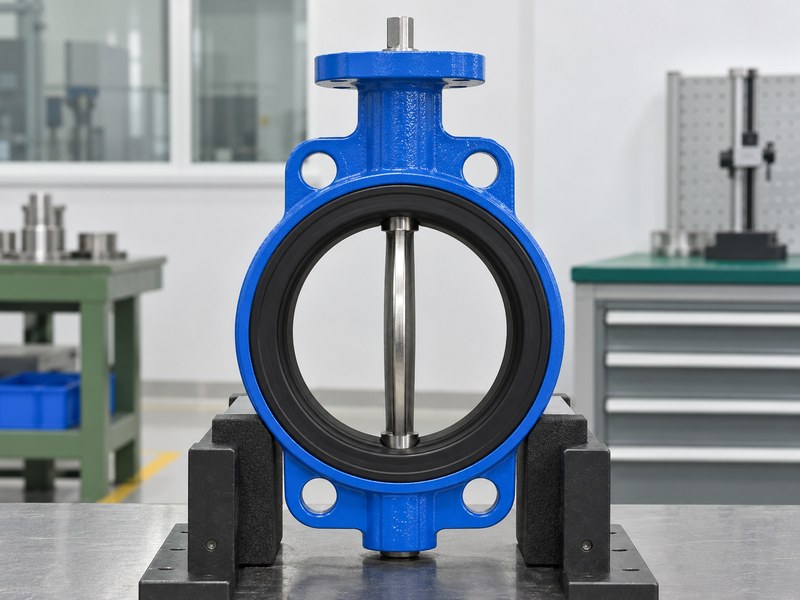
A full sweep check should prove that the disc travels from its specified closed position to its specified open position without touching adjacent components. Wafer type butterfly valve manufacturers should assess intermediate angles as well as the final position. A disc that clears at one stop can still strike a restriction during rotation.
How can you check the installed travel?
Use the approved disc envelope to review the complete assembly, then verify a representative assembly where project risk warrants it. Set operator stops according to the valve instructions and confirm that position indication agrees with disc position. Carry out physical checks under an approved procedure with the line isolated, depressurised, and safe for access.
- Include flange faces, pipe bores, gaskets, and nearby fittings in the check.
- Record contact, unusual resistance, and travel limit settings.
- Confirm that guards or insulation leave access to the operator.
| Check position | What the record should establish |
|---|---|
| Closed | Correct disc position and stop setting |
| Intermediate travel | Clearance through the rotation path |
| Open | Required travel and available operator access |
Do not accept increased operator force as a remedy for interference; find the contact point and correct the assembly.
4. Which face to face dimension must stay fixed?
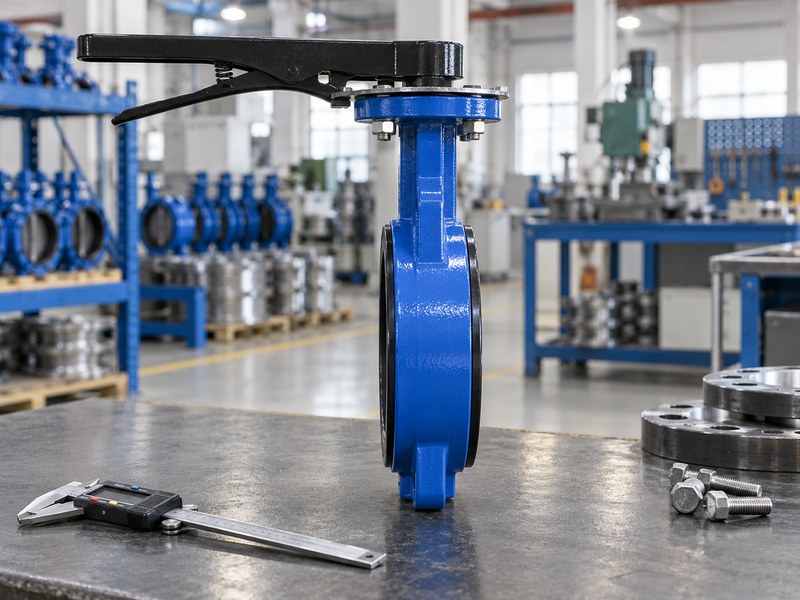
The approved valve face to face dimension and its tolerance must stay fixed for a replacement to fit the existing flange gap. Wafer type butterfly valve manufacturers should identify the applicable dimensional series and drawing revision. For RUITO's wafer butterfly valves, the stated length basis is EN 558 Series 20, subject to the approved size drawing.
What else can change the installed length?
Separate the metal body dimension from the complete joint arrangement shown in the installation instructions. Seat flanges, permitted gaskets, and flange face details affect assembly even when two catalogue lengths appear identical. Double flanged and U-type valves have their own interface drawings and cannot inherit a wafer valve's length merely because DN and PN match.
- Measure the existing gap after checking pipe support and alignment.
- Record the drawing datum used for the face to face measurement.
- Require approval before a supplier changes the body or seat design.
| Drawing detail | Purchase requirement |
|---|---|
| Face to face length | Nominal dimension and allowed tolerance |
| Seat arrangement | Installed face condition and gasket rule |
| Replacement envelope | Body, neck, and operator clearances |
A dimensioned replacement review gives installers a defined fit instead of leaving them to pull the pipework into position.
5. When does a seat replace a separate gasket?
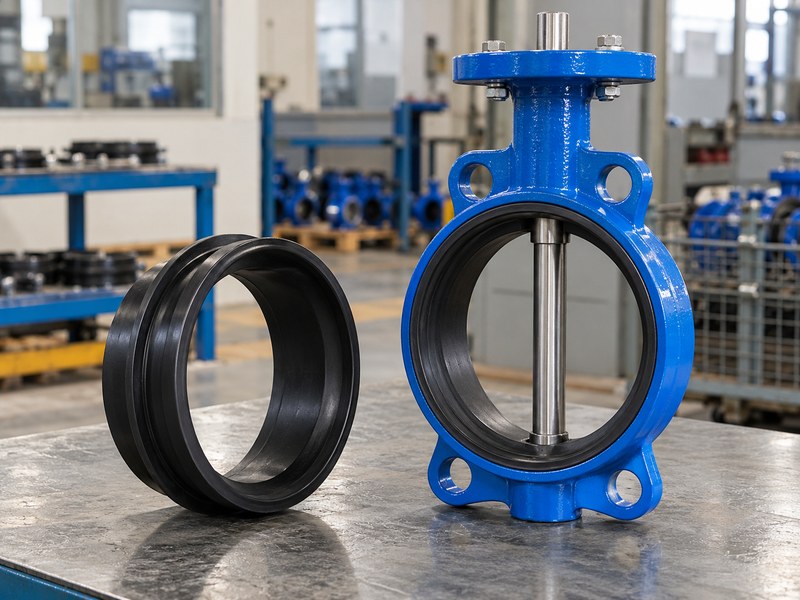
A seat replaces a separate gasket only when the approved valve design uses its seat faces to seal against the mating flanges. Wafer type butterfly valve manufacturers must state that rule for the supplied configuration. Adding a gasket without approval can change compression, distort the seat, or move material toward the disc path.
What should the installation instructions specify?
Ask for permitted flange face geometry, surface condition, tightening sequence, and bolt torque guidance for the actual assembly. A resilient water valve seat and a PTFE or PFA lining flange need different handling and cannot share a generic instruction sheet. Inspect sealing faces for damage before installation and retain the supplier's written answer on separate gaskets.
- Confirm whether additional gaskets are required, permitted, or prohibited.
- Check the contact area between each flange and the seat face.
- Keep shipping protection in place until the valve is ready for fitting.
| Seat or face detail | Question to close |
|---|---|
| Resilient seat sealing face | Does the seat provide the flange seal? |
| Additional gasket | Is its material and thickness approved? |
| Lined flange face | How is excessive compression prevented? |
Follow the configuration's instructions whenever a standard site gasket practice conflicts with the valve's sealing arrangement.
6. How do bolt length and alignment affect fit?
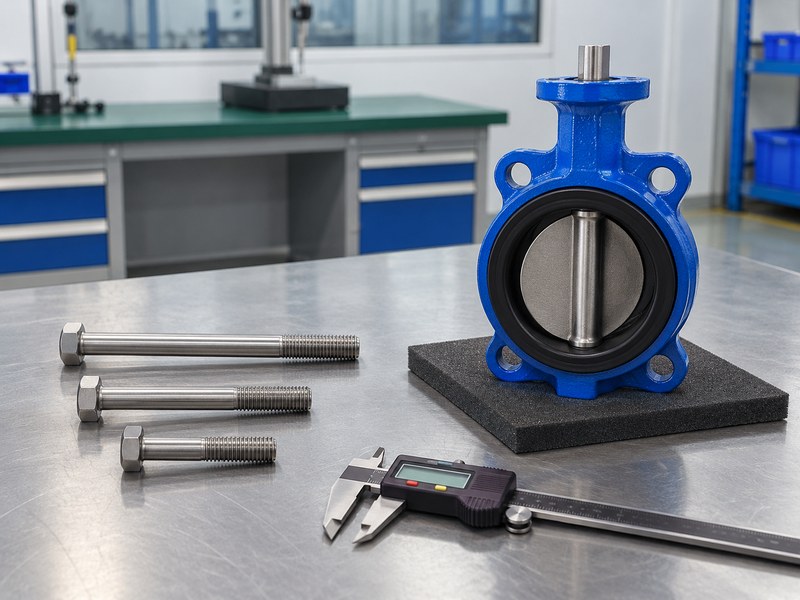
Bolt length and alignment determine whether the joint develops its intended clamping load without shifting or damaging the valve. Wafer type butterfly valve manufacturers should review the complete flange stack and fastener arrangement. A bolt chosen from valve body width alone can leave too little engagement or interfere with surrounding equipment.
What needs checking before tightening?
Use flange thicknesses, washers, nuts, valve width, and any approved gasket allowance to select the fasteners. Centre the valve using the specified method, with the pipework supported and flange faces aligned. Tighten in the approved sequence while checking that the disc retains its required clearance and travel.
- Verify bolt grade, diameter, length, and corrosion protection.
- Check available nut engagement and tool access at every position.
- Support the pipework independently of the valve during assembly.
| Assembly condition | Likely consequence to investigate |
|---|---|
| Valve off centre | Reduced disc clearance on one side |
| Uneven flange gap | Uneven seat compression |
| Unsuitable bolt length | Poor engagement or physical interference |
If the joint needs force to bring misaligned pipes together, correct the supports and alignment before setting the valve's final bolt load.
7. Can a wafer body provide end of line isolation?
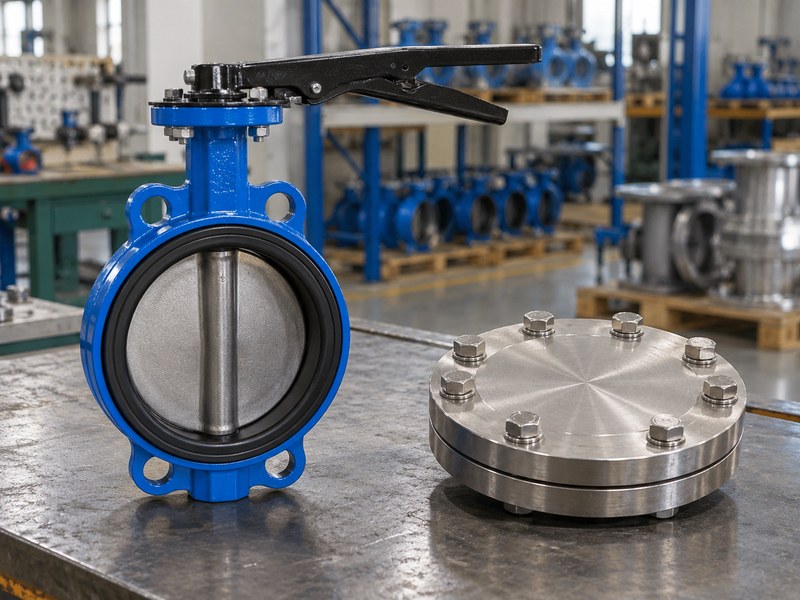
You cannot assume that a wafer body provides end of line isolation when one adjoining pipe flange is removed. Wafer type butterfly valve manufacturers must confirm any proposed terminal duty with design and test evidence for that exact arrangement. A normal between-flange pressure test does not establish how the valve remains restrained with one side disconnected.
Which alternative needs separate approval?
RUITO's stated end of line option is a dedicated lug water service configuration, limited to DN50–200, 5–40°C, and differential pressure no higher than 10 bar. It requires its own terminal test and defined bolt engagement and loading. Those conditions do not transfer to RUITO's wafer body or to every lug valve in its wider size range.
- Identify which side may be disconnected and which remains pressurised.
- Ask for the terminal rating and permitted installation arrangement.
- Agree the maintenance isolation procedure with the project owner.
| Offered arrangement | Required decision |
|---|---|
| Standard wafer between flanges | Keep both specified mating flanges installed |
| Dedicated terminal lug configuration | Verify size, temperature, differential, and test |
| Unstated terminal capability | Hold approval until evidence is supplied |
Treat terminal isolation as a separate purchase requirement whenever downstream equipment must be removed.
8. Which shaft and operator checks belong together?
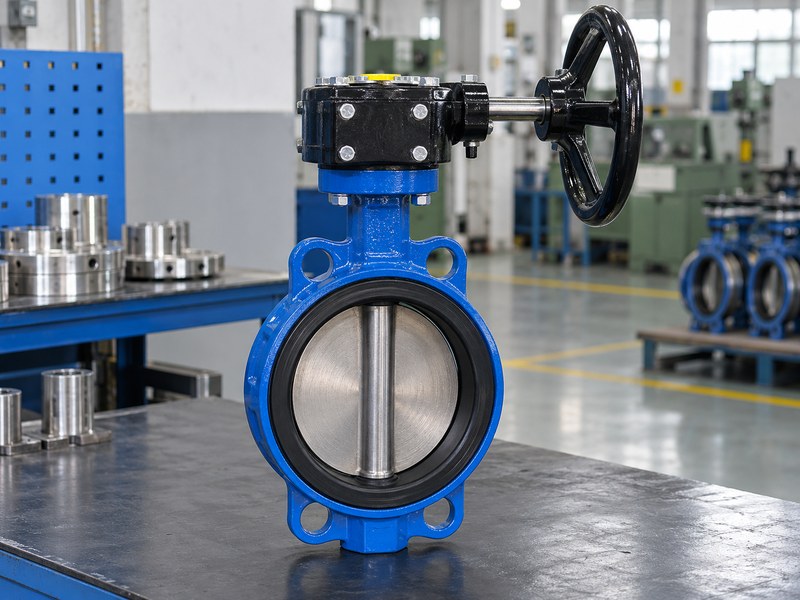
Shaft strength, valve torque, operator output, and travel settings belong in one review because each limits the assembled valve's operation. Wafer type butterfly valve manufacturers should size the drive against the actual closing differential pressure and service conditions. A large operator can exceed the shaft's allowable load if torque limits and stops are wrong.
What data should the drive selection include?
Request opening, running, and seating torque at the stated temperature and differential pressure, plus the allowable shaft torque. For pneumatic drives, check output at minimum available air pressure; for electric drives, review the supplied voltage, controls, and torque settings. Confirm bracket, coupling, mounting interface, and position feedback against the approved assembly drawing.
- Specify manual access, operating frequency, and required closing time.
- Review fail action and feedback where automation is required.
- Check the mounting envelope against nearby pipes and insulation.
| Component | Evidence to compare |
|---|---|
| Valve | Required torque under stated conditions |
| Shaft and coupling | Permitted transmitted load |
| Operator | Available output and travel settings |
Freeze the operator and coupling with the valve configuration so a repeat order does not arrive with different mounting or control requirements.
9. What should wafer type butterfly valve manufacturers test?
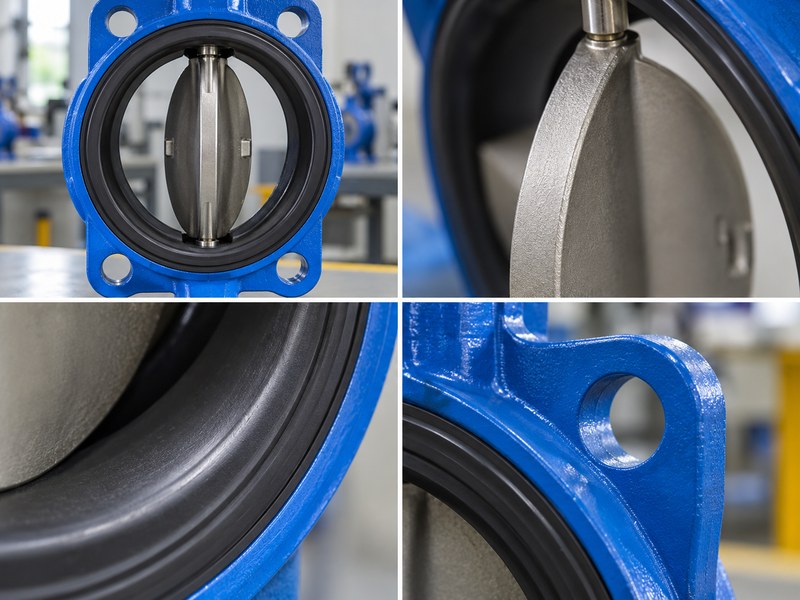
An assembled valve test should check shell integrity, closure sealing, external leakage, and functional travel. Wafer type butterfly valve manufacturers should link those results to the supplied materials and drawing revision. A pressure figure without direction, duration, or leakage criteria leaves you unable to judge what the inspection established.
How do you separate test pressure from working pressure?
RUITO states ambient PN10 shell and soft seat closure test pressures of 15 and 11 bar, and PN16 values of 24 and 17.6 bar, under the selected applicable procedure. These are inspection conditions, subject to the exact seat differential rating, and do not raise allowable service pressure. Clean air or nitrogen configurations require their additional gas leakage checks; a water test alone does not establish gas service suitability.
- Agree EN 12266-1 or the contract's selected ISO 5208 procedure.
- Record pressure direction, test medium, time, and instrument identity.
- Include external leakage, seat leakage, and full travel observations.
| Record | Traceability needed |
|---|---|
| Pressure report | Product ID and accepted procedure |
| Material record | Body heat and seat compound batch |
| Function report | Operator, limits, and travel result |
Require the report package before shipment so missing identity or test information can be resolved at the factory.
10. How can you freeze a reliable repeat order?
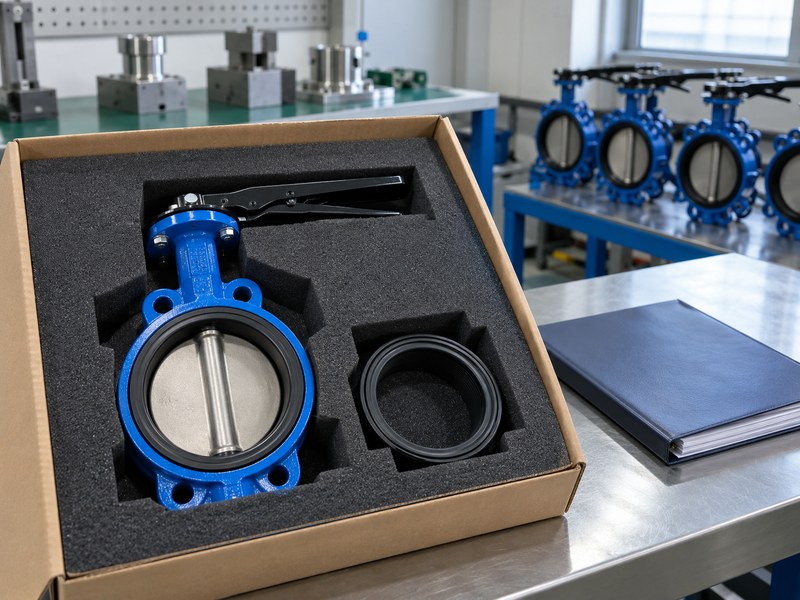
Freeze a repeat order by approving the drawings, bill of materials, operator, test plan, and change procedure that wafer type butterfly valve manufacturers must follow. Keep the accepted sample and its inspection record linked to that package. A repeated catalogue description leaves room for changes in seat compound, shaft connection, dimensions, or accessories; contact us to request a configuration review.
What should remain in your order file?
- Approved installation drawing, flange bore check, and seat instructions.
- Wetted materials, drive details, and applicable service boundaries.
- Product IDs, inspection reports, spare parts, and approved changes.
FAQ for repeat wafer valve orders
Q1: Can I buy by DN and PN alone?
No. You also need the face to face dimension, flange bore clearance, materials, seat arrangement, and closing differential pressure.
Q2: What's the best sample check for a replacement?
An installation and travel check against your actual interface is useful. Pair it with the specified pressure and function records for the same sample.
Q3: Can I use an EPDM water valve for mineral oil?
No. RUITO's compatible mineral oil service uses a separate NBR configuration with its own fluid and temperature review.
Q4: How do I know if a valve suits drinking water?
Check the exact product and destination approval. RUITO's stated drinking water window is 5–40°C and up to 10 barg, within the lower applicable rating.
Q5: Can I change the operator on a repeat order?
Yes, after engineering review. Recheck torque, shaft loading, mounting, travel stops, and control signals before approval.
Send RUITO your fluid data, closing differential pressure, mating flange drawing, available space, and required acceptance documents for a configuration review and a defined replacement proposal.