
Avoid costly manufacturer mistakes by making one design owner answer for the valve configuration, operating limits, and every approved change. When you evaluate a gear operated high performance butterfly valve manufacturer, a drawing that fits your pipework can still hide an unsuitable seat or an undersized gearbox. That mismatch can stop equipment approval after samples arrive. Review the service basis, calculations, controlled documents, and sample plan together before you freeze the design.
1. Why a gear operated high performance butterfly valve manufacturer?
A gear operated high performance butterfly valve manufacturer gives your project an accountable owner for the valve design, stated ratings, and design changes. Establish who signs the technical response and who can approve a departure from the agreed configuration. A commercial contact can coordinate questions, but your engineering team needs a named route for design decisions.
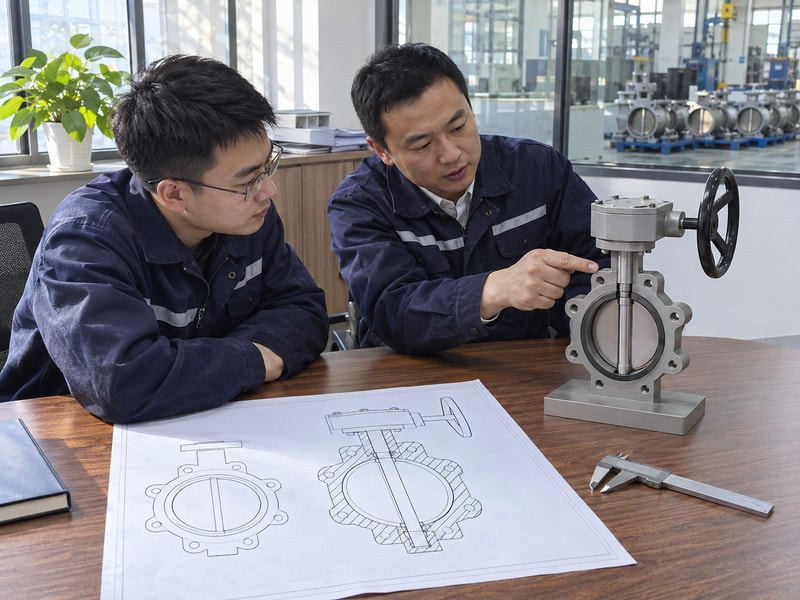
Who owns each design decision?
Manufacturers may design their own valve platforms, build to customer drawings, or assemble purchased components. Each arrangement needs a written division of responsibility. Ask who owns the body and shaft calculations, seal selection, gearbox matching, and technical file. When several companies contribute, record who accepts the complete valve assembly and answers a failure investigation.
- Name the valve design authority and its technical contact.
- Assign responsibility for purchased gearbox and seal data.
- Record customer-owned drawings and limits on permitted changes.
| Design item | Required owner | Review evidence |
|---|---|---|
| Valve rating | Valve design authority | Approved datasheet and design basis |
| Manual drive | Assembly design authority | Gearbox selection and shaft check |
| Customer interface | Agreed engineering contacts | Signed drawing and deviation record |
Resolve unassigned items before requesting design approval.
2. What service data must the design owner receive?
The design owner needs the complete operating envelope before selecting materials or calculating loads. Give the gear operated high performance butterfly valve manufacturer normal and maximum pressure, temperature, and closing differential pressure as separate inputs. Include reverse pressure and operating frequency. A line pressure entered without a temperature or pressure direction leaves several design decisions unresolved.
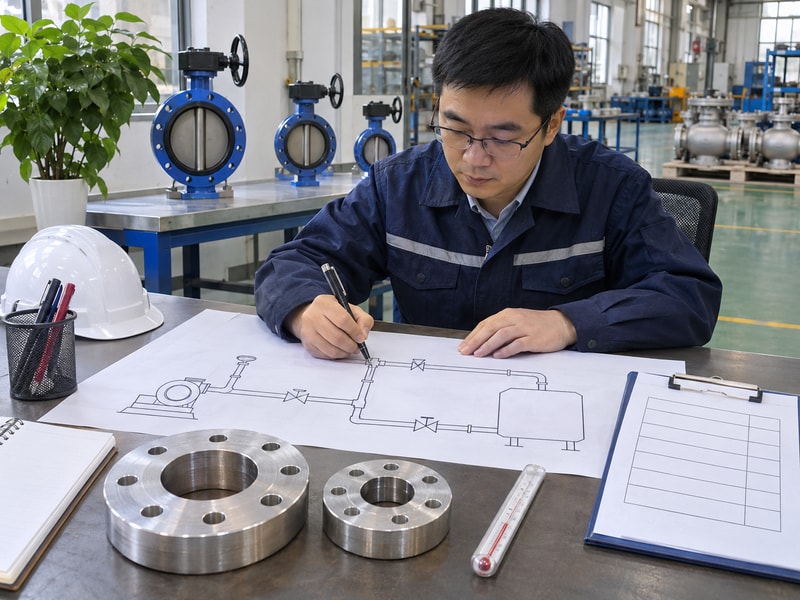
How do you freeze the operating basis?
Use one controlled service sheet across your process, mechanical, and purchasing teams. Record fluid composition, cleaning fluids, solids, minimum pressure, and transient conditions where relevant. Define whether the valve will isolate or throttle. A manufacturer needs further review when operation includes sustained partial opening, changing flow direction, or loads from unsupported pipework.
- State fluid composition and relevant concentration or contamination.
- Separate normal duty, upset conditions, and maximum closing differential.
- Give installation orientation, available space, and expected operating cycles.
| Input | Design question | Documented response |
|---|---|---|
| Fluid and cleaning | Are all wetted parts compatible? | Material and seal selection |
| Maximum closing differential | Can the assembly operate and seal? | Torque and direction limits |
| Transient loads | What additional review is needed? | Agreed calculation scope |
Keep unanswered service conditions on the deviation register.
3. How do you check a pressure–temperature rating?
Check the permitted pressure at each required temperature for the exact valve assembly. A gear operated high performance butterfly valve manufacturer should tie its pressure–temperature data to the body, seat, packing, shaft, size, and connection in your bill of materials. A maximum pressure and a maximum temperature quoted separately do not define an acceptable operating point.
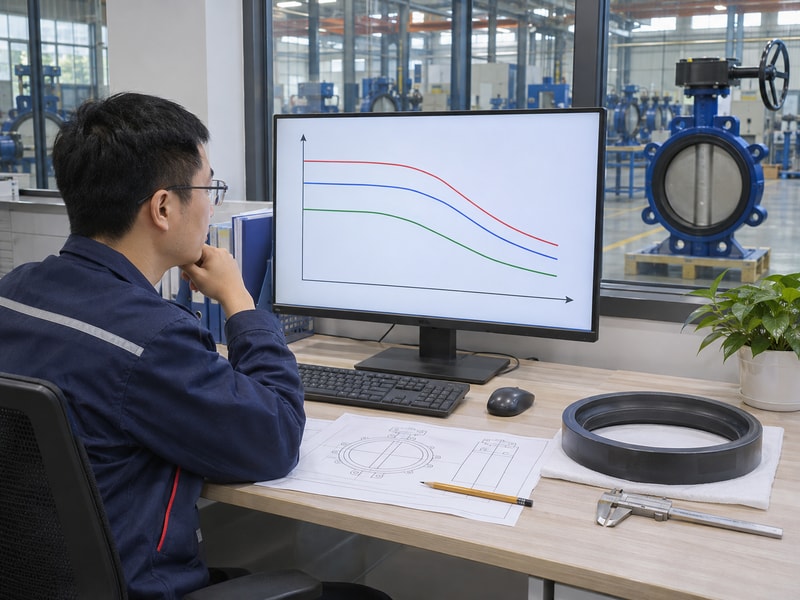
Which limits belong on the rating sheet?
Ask for the applicable curve or table and its configuration reference. Separate body pressure capability from seat differential-pressure limits, including reverse closure. Gear operation describes the handwheel and reduction drive; it does not raise either limit. Hydrostatic shell-test pressure describes a test condition and cannot replace the permitted working pressure at temperature.
- Mark every required operating point against the approved curve.
- Check seat differential limits in each specified direction.
- Record temperature restrictions for packing and auxiliary seals.
| Claim | Check against | Decision |
|---|---|---|
| Pressure at temperature | Same configuration rating | Accept only covered duty points |
| Reverse isolation | Declared reverse differential limit | Request a separate response |
| Higher shell-test pressure | Approved test procedure | Keep separate from working rating |
Return conflicting ratings for a corrected, signed technical response.
4. Which drawings prevent a costly interface mistake?
An approved general arrangement drawing and controlled bill of materials prevent interface assumptions from becoming production requirements. Ask the gear operated high performance butterfly valve manufacturer to reference both documents in its technical offer. A catalogue sketch may omit disc clearance, gearbox orientation, bolt engagement, or the exact seat arrangement needed for your equipment.
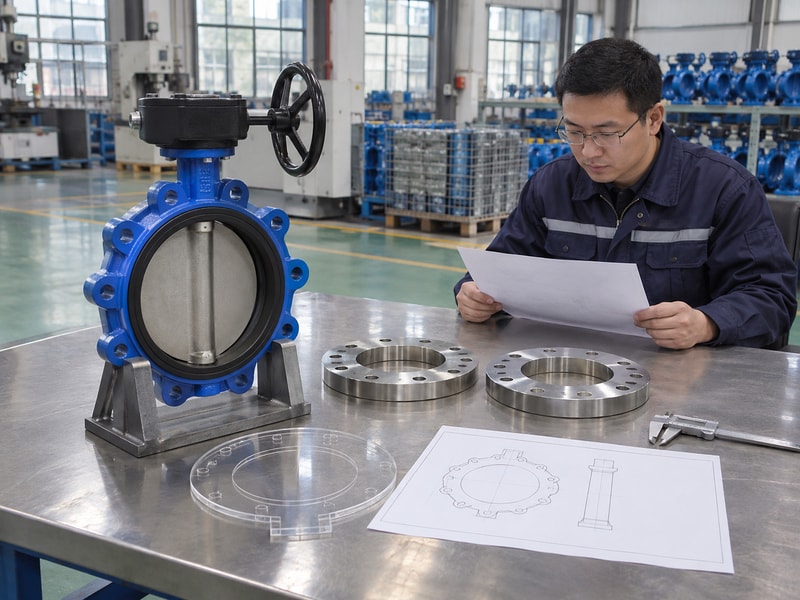
What should your engineering team mark up?
Review face-to-face length, flange details, disc sweep, shaft position, and the handwheel operating envelope. Use the flanged butterfly valve and wafer butterfly valve pages to identify connection styles, then obtain the exact installation drawing. A PTFE seat in a high-performance design does not establish continuous PTFE lining across the wetted body and disc.
- List body, disc, shaft, seat, packing, and auxiliary seals.
- Confirm mating pipe bore and disc clearance through full travel.
- Match the formal drawing revision with any supplied STEP model.
| Document | Required detail | Approval check |
|---|---|---|
| Arrangement drawing | Connection and operating envelope | Fits the equipment layout |
| Section and material list | Seal and wetted-part arrangement | Matches the stated service |
| Bill of materials | Controlled component revisions | Matches the proposed sample |
Approve the dimensional interface and material configuration together.
5. How should the manual gearbox be sized?
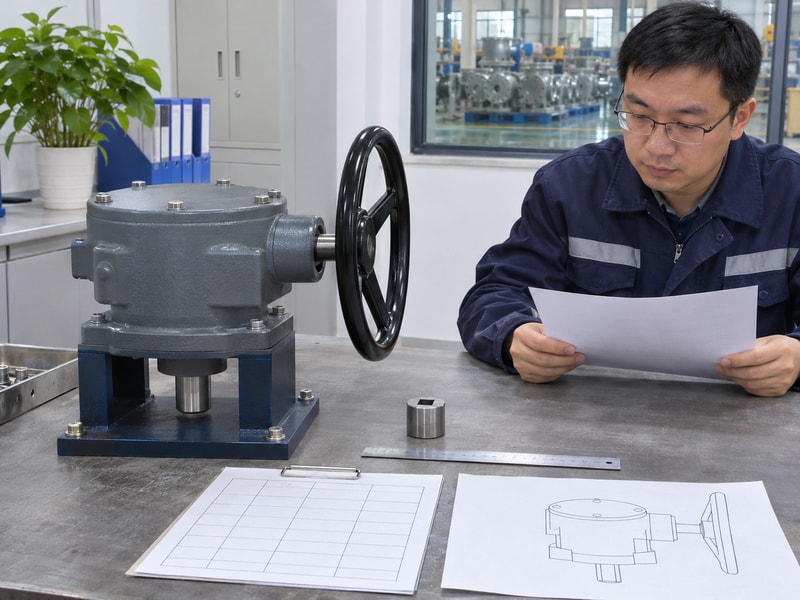
Size the gearbox from valve torque requirements and the assembly’s allowable loads at the specified duty. The gear operated high performance butterfly valve manufacturer should provide breakaway, running, and seating torque with the pressure, temperature, direction, and service assumptions behind each value. An ISO 5211 mounting match establishes an interface; torque compatibility requires separate checks.
Which torque checks belong in the calculation?
Compare the required output, with the agreed selection margin, against the gearbox rating and the shaft’s allowable torque. Check the coupling and mounting load path too. Gear ratio, efficiency, and handwheel radius affect operating effort; ratio or wheel diameter alone cannot establish output capacity. Record the expected effort and turns so you can judge manual operation.
- Use maximum closing differential and the relevant torque direction.
- Check gearbox output, shaft, key or coupling, and mounting limits.
- Follow the exact IOM for rotation, closed position, and stops.
| Calculation input | Required check | Acceptance record |
|---|---|---|
| Valve torque stages | Adequate gearbox output | Signed selection sheet |
| Allowable shaft torque | Assembly load remains acceptable | Shaft and connection review |
| Efficiency and wheel radius | Acceptable operator effort | Declared force and turns |
Request revised calculations whenever the seat or gearbox changes.
6. Which approval documents apply to your exact valve?
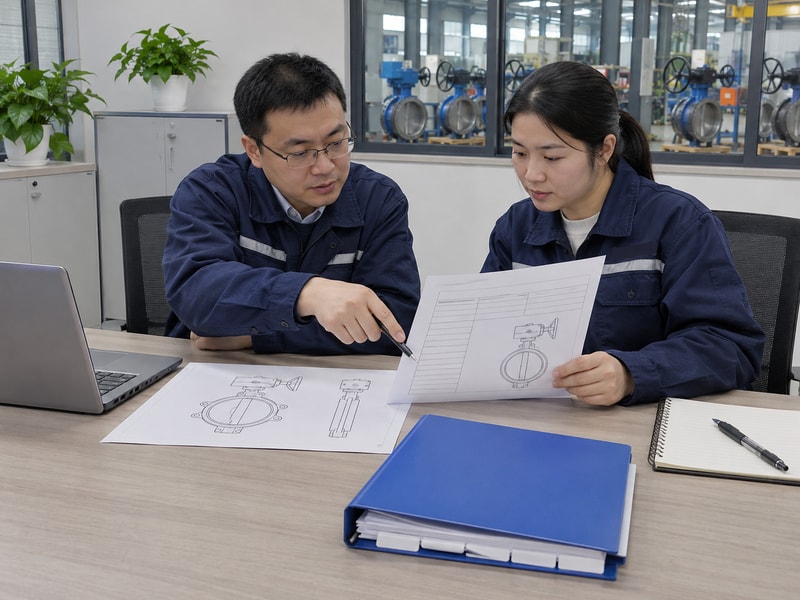
Approval documents must cover the requested product configuration, purpose, and destination. Ask the gear operated high performance butterfly valve manufacturer for the applicable document list and a clear statement of exclusions. A company management-system certificate describes the certified system; product admission needs its own evidence where the project or destination requires it.
How do you review claims without guessing?
Match the document holder, product description, covered sizes, materials, ratings, and current status with the proposed valve. Have your project compliance reviewer identify the applicable requirements. Fire testing, fugitive-emission testing, drinking-water contact approval, and pressure design address different questions. None should be inferred from a generic catalogue description or an unrelated component’s report.
- Ask for the verification route and complete scope pages.
- Separate required approvals from optional test requests.
- Track each exclusion through the project deviation process.
| Evidence | Question answered | Remaining check |
|---|---|---|
| Management-system certificate | What system and site are covered? | Exact product qualification |
| Product approval | What configuration and use are covered? | Match the proposed configuration |
| Type-test report | What specimen and conditions were tested? | Applicability to this design |
Leave unsupported approval claims open until the reviewer resolves them.
7. What should the sample validation prove?
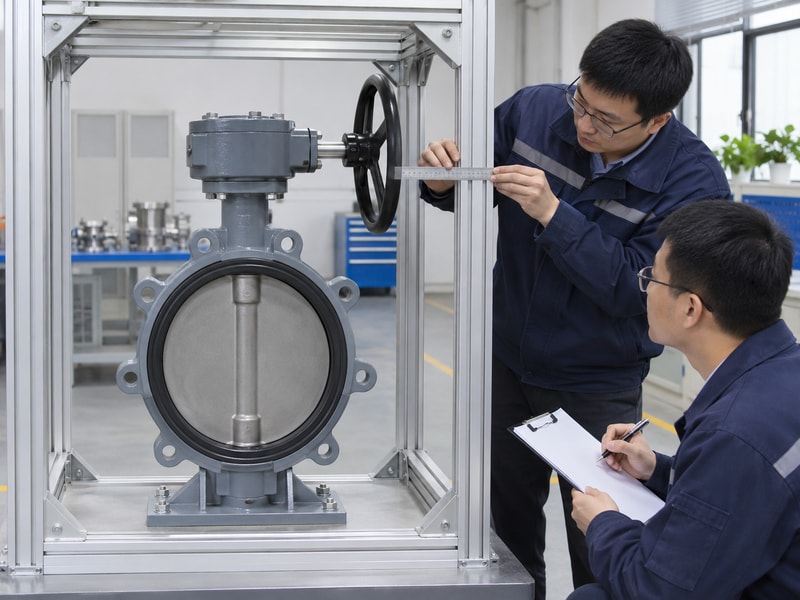
Sample validation should prove the agreed design and installation requirements under defined conditions. Ask the gear operated high performance butterfly valve manufacturer to identify the sample’s drawing and bill-of-materials revisions before testing begins. Agree which results qualify the design and which checks apply to later production. A successful fit check alone leaves pressure and operating performance unanswered.
How do you make sample results reusable?
Approve a validation plan with sample identity, methods, instruments, conditions, and acceptance criteria. Include assembly fit, full travel, manual effort, and the specified pressure and leakage checks. Thermal or endurance validation needs a separate agreed scope when service requires it. Record deviations and corrective action, then decide whether a changed sample needs another test.
- Link photographs and results with the identified sample.
- Specify test medium, direction, duration, and leakage criteria.
- Define the limits of any size or configuration extrapolation.
| Validation area | Evidence to retain | Release condition |
|---|---|---|
| Equipment interface | Fit and clearance record | Approved drawing matches sample |
| Operation | Torque or effort and travel results | Meets agreed duty conditions |
| Sealing and pressure | Signed test conditions and results | Meets selected acceptance criteria |
Freeze the approved sample configuration before the next release.
8. How do you control design changes after approval?
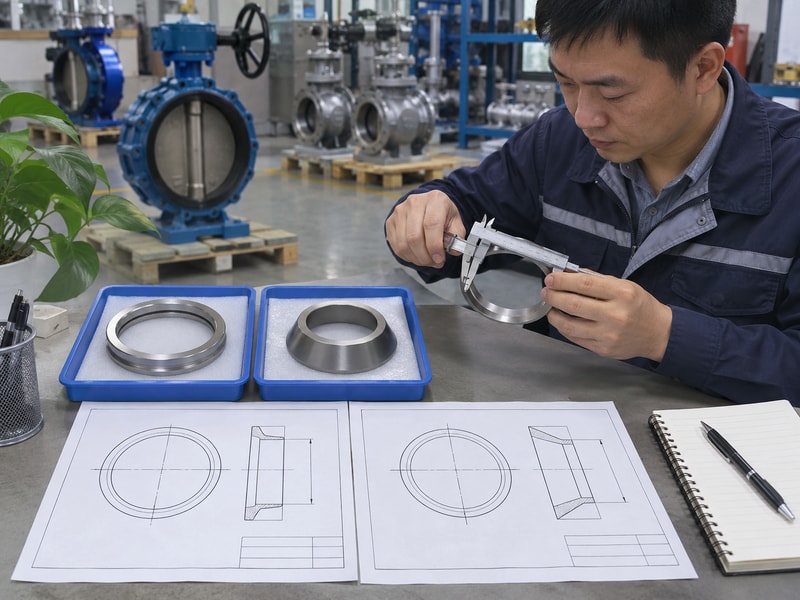
Require written engineering change control before any approved feature changes. Your gear operated high performance butterfly valve manufacturer should identify the reason, affected components, technical impact, and proposed effective point in an engineering change notice. Include changes to seat formulation, shaft dimensions, packing, gearbox, and mounting hardware. A substitute that fits can still alter torque or service compatibility.
What belongs in an engineering change notice?
Compare the old and proposed configurations and state which calculations, drawings, instructions, and approvals need revision. Let the responsible reviewers decide the validation scope before implementation. Record customer approval where required and identify affected samples, work in progress, and released products. An effective serial number or batch prevents later orders from mixing revisions without explanation.
- Describe the changed feature and the reason for changing it.
- Assess pressure, torque, compatibility, interface, and approval effects.
- List validation evidence, approvers, and the effective product identity.
| Change example | Impact review | Possible required action |
|---|---|---|
| Seat compound | Compatibility and operating torque | Revise data and validate sealing |
| Gearbox replacement | Output, effort, stops, and envelope | Repeat selection and fit review |
| Shaft or coupling detail | Strength and dimensional interface | Recalculate and approve drawing |
Close the notice only after the revised evidence is accepted.
9. Which gear operated high performance butterfly valve manufacturer?
Choose a gear operated high performance butterfly valve manufacturer that closes your technical deviations and accepts responsibility for the agreed design. Compare responses against the same service sheet and evidence list. Geographic reach, product breadth, and a familiar connection style do not establish that a particular assembly meets your project conditions.
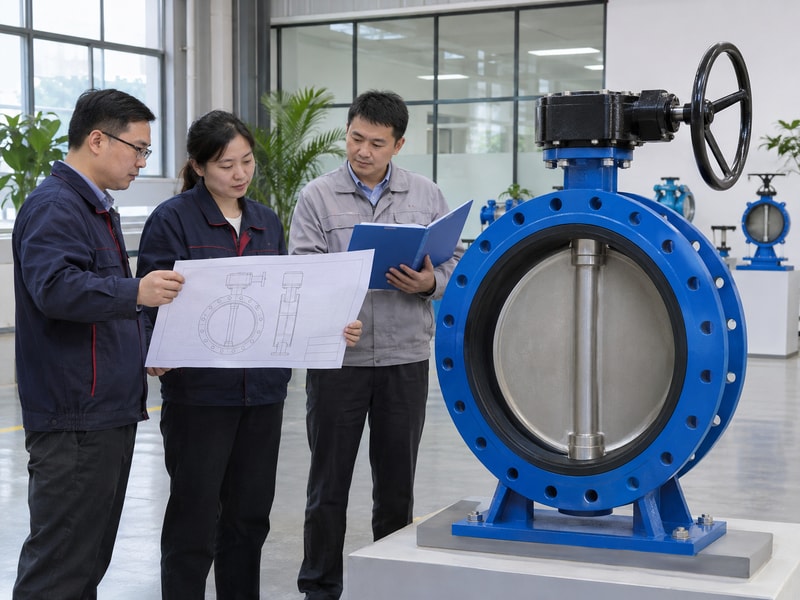
RUITO’s documented double-offset double-flanged water-service range includes DN350–3000 and PN10/16, with forward and reverse closing differential limits stated by model. This scope requires confirmation against the actual service and configuration. It does not establish a general ASME high-temperature, steam, oxygen, or natural-gas high-performance butterfly valve offering.
What should the technical shortlist contain?
Keep a short decision record that your engineering reviewer can sign. Identify accepted evidence, outstanding questions, and the party responsible for each answer. Compare design scope and exceptions before you approve a sample. Any additional operating condition needs a written response rather than an assumption based on the wider valve catalogue.
- Retain the agreed service sheet and signed deviations.
- List approved drawings, ratings, torque data, and sample requirements.
- Assign a reviewer and closure condition to each open item.
| Decision gate | Required evidence | Owner |
|---|---|---|
| Design fit | Configuration and operating limits | Project engineer |
| Validation readiness | Sample plan and acceptance criteria | Engineering and quality |
| Configuration control | Approved revisions and change process | Both design authorities |
Send your fluid data, pressure–temperature points, maximum closing differential, connection drawing, and destination requirements when you contact us for a configuration-specific engineering review.
10. What else should you ask before design approval?
Ask the gear operated high performance butterfly valve manufacturer to resolve any gap between the proposed configuration and your required duty before you approve it. These five questions address recurring gaps in design reviews. Keep the answers with the approved technical documents so later engineering teams can see the basis for selection.
Q1. Can I treat double-offset and triple-offset valves as equivalent?
No. Their geometry and sealing arrangements differ. Request the proposed cross-section and the configuration’s pressure, temperature, directional, and leakage limits. An offset count alone cannot establish the same operating capability or a metal seat’s leakage performance.
Q2. How do I know if a torque value fits my application?
Check its stated conditions. The manufacturer should identify the valve configuration, differential pressure, temperature, direction, and torque stage. Ask how the selection margin, gearbox output, and allowable shaft torque were checked for your assembly.
Q3. Can I accept a higher pressure-test result as a higher rating?
No. Test pressure and working rating describe different conditions. Use the approved pressure–temperature relationship for operation and retain the pressure-test report as evidence of the specified test.
Q4. What’s the best way to approve a replacement seat?
Use the engineering change process. Review material compatibility, dimensions, torque, sealing, and approval scope before authorizing substitution. Retain the new component revision and any required validation with the effective sample or batch identity.
Q5. Can I change the gearbox stops during installation?
Follow the exact valve and gearbox IOM. Closed position, rotation, and stop setting depend on the assembly. Obtain the manufacturer’s written instructions before adjustment; maintenance work requires the specified isolation, depressurization, and site procedures.