
How to Avoid High Temperature Butterfly Valve Seat Mistakes
Check a high temperature butterfly valve metal seat against the complete assembly’s approved temperature history, pressure-temperature envelope, operating duty, and acceptance records. A quotation can list a suitable metal seat while leaving packing, bearings, or actuator exposure unresolved. Use a condition-by-condition review before approving the valve; this guide treats those items as separate purchase requirements rather than assuming one material rating covers the assembly.
1. What limits a high temperature butterfly valve metal seat?
The permitted service envelope limits temperature, pressure, medium, duration, and valve position across every operating condition. A high temperature butterfly valve metal seat specification should describe sustained operation separately from startup, shutdown, cleaning, and abnormal exposure. You need the conditions that occur together, including whether the valve must move or remain closed during each condition.
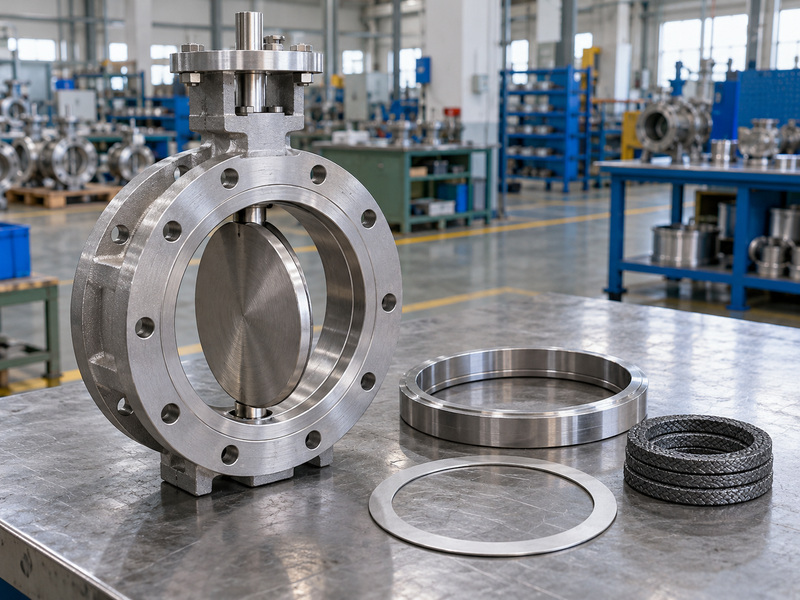
Build a schedule of simultaneous conditions
Start with a process condition schedule supplied or approved by the plant’s responsible engineer. Record normal operation, the highest sustained temperature, minimum temperature, and expected changes between them. State fluid composition, solids, and cleaning chemistry because an acceptable thermal range cannot resolve corrosion or deposit-related problems. Identify whether temperature comes from a process measurement or an agreed design assumption.
Installation details belong beside that schedule. RUITO’s flanged butterfly valve arrangements provide connection context; the proposed hot-service valve still needs its own approved materials and ratings. Include insulation, adjacent equipment, and available installation space in the enquiry so the supplier reviews the intended assembly rather than a bare valve description.
- State pressure direction and downstream conditions for each row.
- Separate required operation from passive temperature exposure.
- Identify assumptions that still need plant confirmation.
| Condition | Record together |
|---|---|
| Continuous run | Temperature, pressure, medium, and duty |
| Startup or shutdown | Change rate, duration, and valve position |
| Cleaning or upset | Chemistry, exposure, and required action |
2. How do pressure and temperature ratings fit together?
Check allowable pressure at the actual temperature for the exact proposed configuration. A high temperature butterfly valve metal seat does not let you combine a catalogue’s highest pressure with its highest temperature. Keep body pressure capability, permitted closing differential, and connection limits visible as separate checks, then apply every relevant restriction.
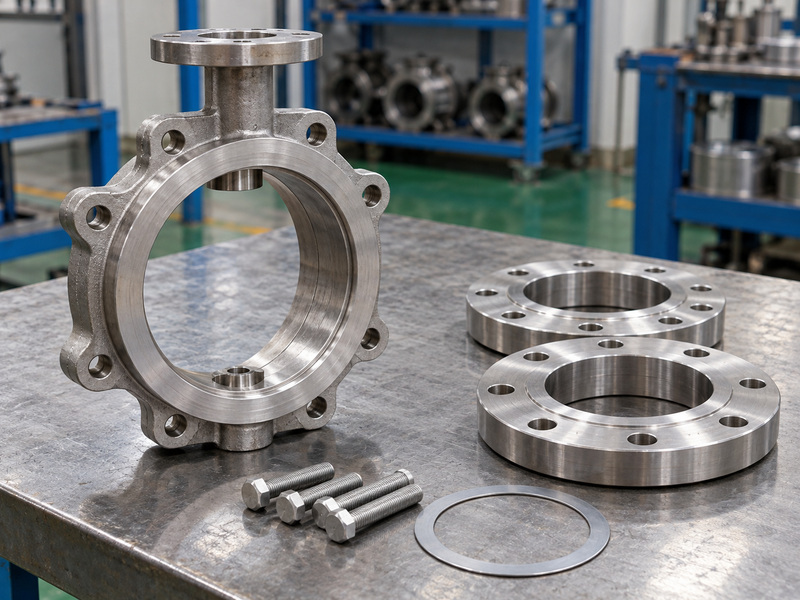
Keep containment and closure limits separate
ASME B16.34 covers pressure-temperature ratings within its stated scope. For an enquiry invoking that standard, identify the contract edition and obtain the manufacturer’s applicable rating documentation. An ASME Class designation is a rating category, not a pressure expressed in psi or bar. A material table alone also leaves the seat assembly and operating restrictions unresolved.
Ask the supplier to mark each operating condition against the submitted curve or table. Require written clarification when a data sheet states only a nominal class, a cold working pressure, or an unqualified maximum temperature. Keep gauge and absolute pressure clearly identified, especially when the process review also considers vapor formation, vacuum, or downstream pressure.
- Match the rating document with body material and configuration.
- Check closing differential in every required pressure direction.
- Record the governing limit for each operating condition.
| Rating question | Evidence requested |
|---|---|
| Can the body contain pressure? | Applicable pressure-temperature rating |
| Can the disc close against differential? | Directional closure rating |
| Can the joint remain suitable? | Matched flange, gasket, and bolting basis |
3. Which components can limit continuous hot service?
Any component with a lower approved service limit can restrict the complete valve. Review a high temperature butterfly valve metal seat together with the disc, body, shaft, packing, gaskets, bearings, and retained sealing parts. Request a configuration-specific material schedule that distinguishes the primary contact surface from backing, sealing, and load-carrying components.
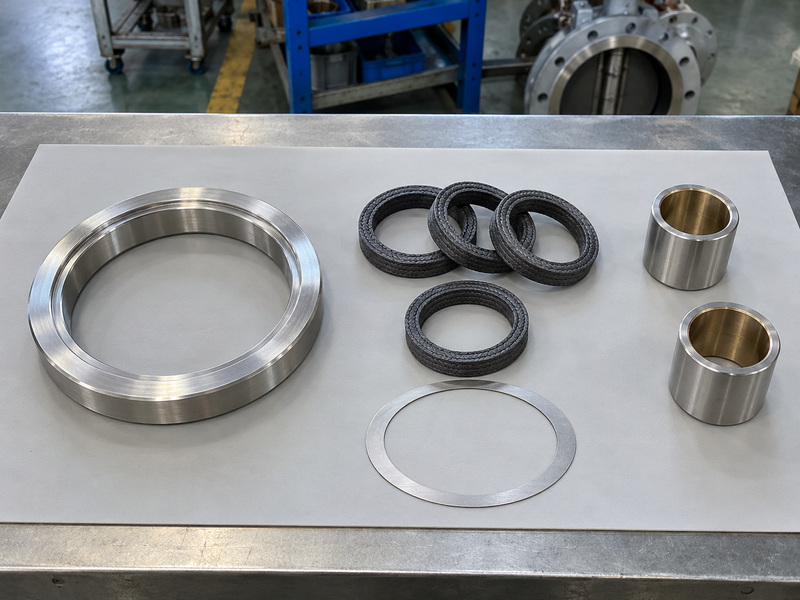
Request the complete material and restriction schedule
A metal contact face can coexist with auxiliary nonmetallic components elsewhere in the assembly. Ask which parts contact the medium, which experience conducted heat, and which depend on lubrication or controlled clearance. The supplier should identify restrictions associated with the complete construction instead of submitting only a seat alloy’s temperature capability. Include corrosion compatibility at the intended operating temperature in that review.
For a separate, cooler chemical duty, RUITO’s PTFE-lined butterfly valve is an alternative construction requiring its own compatibility and derating review. Its lining data cannot qualify a metal-seated hot-service assembly. RUITO’s published product information primarily describes soft-seat and lined butterfly configurations, so any proposed high-temperature metal-seated supply requires separate written model confirmation.
- Identify packing and gasket constructions separately from the seat.
- Confirm bearing and shaft operating restrictions.
- Reopen approval when a component material changes.
| Component group | Review focus |
|---|---|
| Body, disc, and shaft | Strength, chemistry, and permitted loads |
| Packing and gaskets | Containment under sustained exposure |
| Bearings and auxiliary parts | Heat exposure, movement, and maintenance limits |
4. What must a transient temperature review include?
A transient review needs peak temperature, exposure time, change rate, repetition, and the simultaneous pressure and operating demand. For a high temperature butterfly valve metal seat, a short exposure limit must come from approval for the actual assembly. A brief peak above the continuous rating needs review even when the process returns quickly to normal.
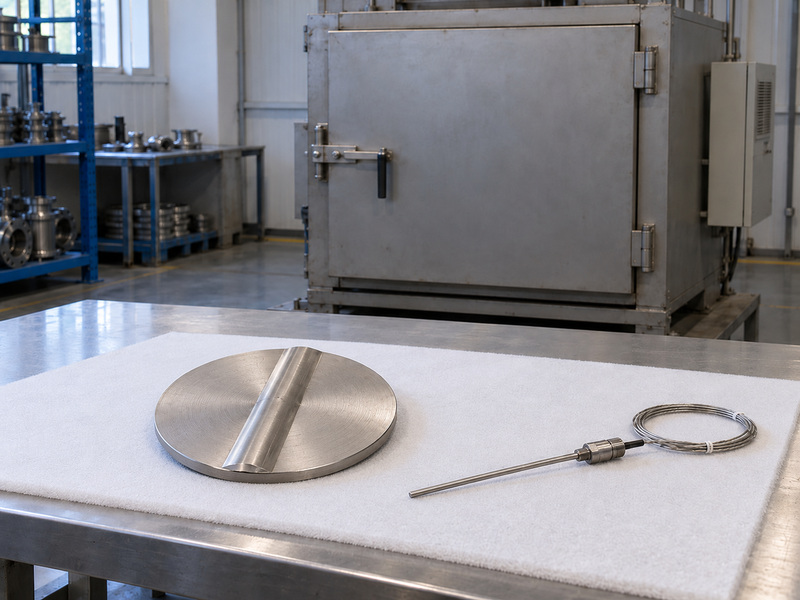
Define the event before requesting an exception
Describe how the condition starts and ends. A hot cleaning step, loss of cooling, and a rapid restart can have different media and temperature histories. Ask whether the valve must stroke during the event, whether it has already soaked at operating temperature, and what action follows. Request limits on repeated events and any inspection or replacement required before return to service.
If you compare RUITO’s PFA-lined butterfly valve for a chemically aggressive cleaning circuit, submit the cleaning schedule under that product’s own limits. Its published lining envelope cannot approve an unrelated metal-seat valve or a hotter cleaning step. Keep alternative constructions on separate review sheets so an exception granted for one assembly does not migrate into another purchase specification.
- Record the temperature measurement location and uncertainty.
- State pressure and valve movement during the event.
- Obtain the supplier’s required post-event action.
| Event detail | Approval should address |
|---|---|
| Peak and duration | Permitted exposure of the full assembly |
| Heating and cooling rate | Applicable operating restrictions |
| Repeat events | Frequency and return-to-service requirements |
5. How should hot and cold leakage be accepted?
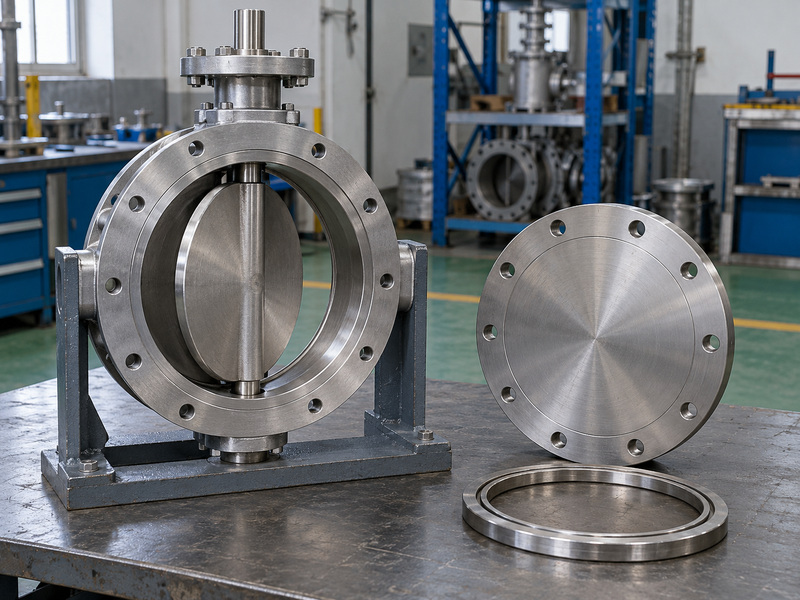
Agree on separate acceptance conditions wherever the process requires hot and cold shutoff. A high temperature butterfly valve metal seat needs a measurable closure criterion with its medium, temperature, differential, direction, duration, and measurement method. Seat material alone cannot establish zero leakage, bidirectional isolation, or the leakage class required by your process.
Tie each acceptance result to its test condition
ISO 5208:2015 addresses metallic-valve pressure-boundary and closure testing alongside applicable product-standard requirements. Identify the agreed test basis and edition in the purchase specification. Ask what a routine ambient test establishes and what additional evidence supports hot isolation. Keep internal seat leakage separate from external leakage at the shaft, body joints, and pipeline connections.
Define when each result will be taken during the proposed sequence. A measurement after cooling answers a different acceptance question from one taken while the valve remains hot. State permitted adjustment between measurements and retain the settings with the results. If hot testing is unavailable, record the missing evidence and resolve its disposition before treating the hot-shutoff requirement as accepted.
- Specify leakage units and the observation method.
- Distinguish shell, seat, and external-seal results.
- Agree on the disposition of missing hot-condition evidence.
| Acceptance point | Record explicitly |
|---|---|
| Before heating | Assembly identity and cold result |
| At the agreed hot condition | Stabilization basis and measured result |
| After cooling | Result, settings, and any intervention |
6. What thermal-cycle evidence should you request?
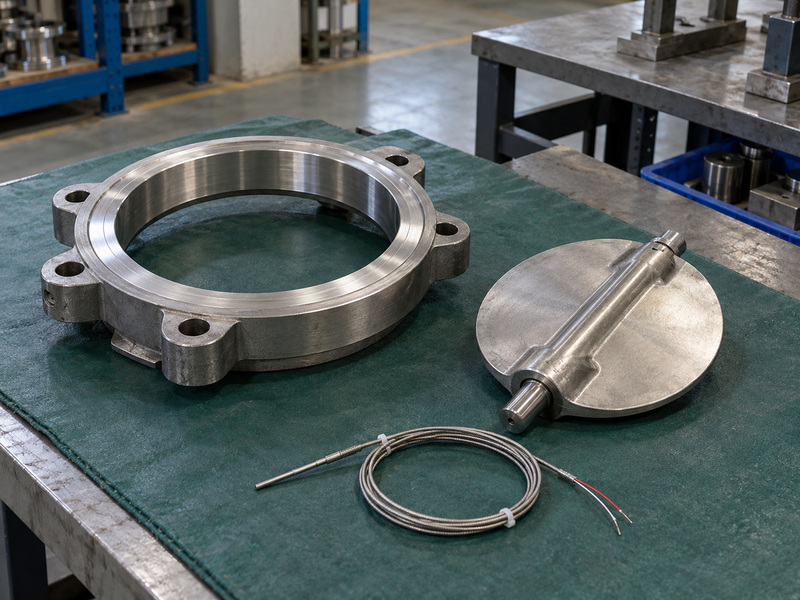
Request a documented cycle sequence that represents the project’s heating, operation, cooling, and acceptance requirements. For a high temperature butterfly valve metal seat, a cycle count without temperatures, pressures, timing, and operating steps gives an incomplete basis for approval. Connect the evidence with the proposed size, materials, sealing construction, and actuator arrangement.
Check whether the tested sequence covers your duty
Separate a qualification report from routine production acceptance. A previously tested assembly may support a proposal, but the supplier should explain its coverage and any differences from the ordered valve. Ask who conducted the test, which instruments measured the conditions, where temperatures were measured, and which results were recorded. Review the report itself when a brochure states only that thermal cycling was completed.
Specify whether the procedure includes stroking under differential, prolonged hot dwell, and cold restart, where those events reflect your service. Define allowed intervention rather than leaving adjustment undocumented. A test that includes maintenance can still provide useful evidence when the report records that work and the acceptance basis permits it. Do not convert a demonstrated sequence into an unlimited service-life claim.
- Compare test construction with the proposed assembly.
- Locate operating steps within the temperature sequence.
- Record adjustments, replacements, and acceptance results.
| Report item | Buyer’s review question |
|---|---|
| Specimen identity | Does its construction cover this order? |
| Cycle sequence | Does it represent required operating events? |
| Results and intervention | Was acceptance achieved under agreed rules? |
7. How does hot isolation differ from modulation?
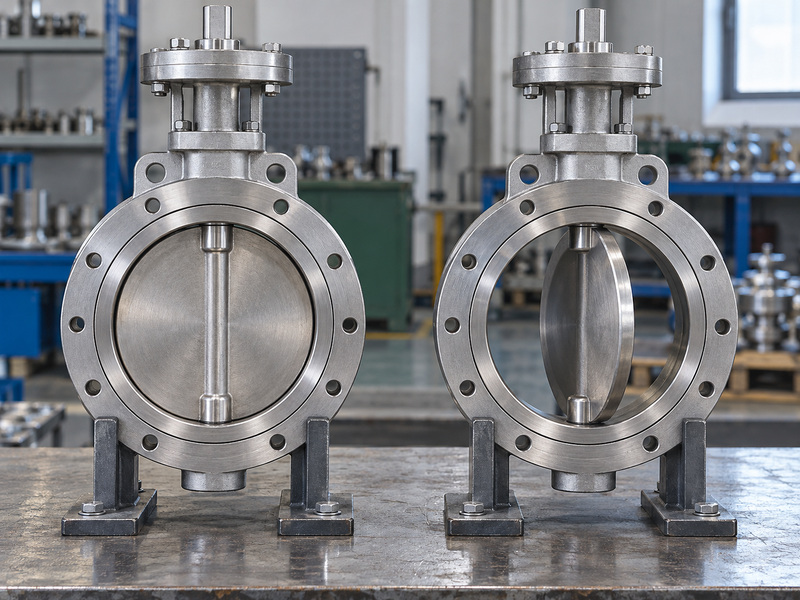
Hot isolation concerns closing and holding the required differential; modulation adds sustained operation at intermediate positions. A high temperature butterfly valve metal seat approved for isolation still needs a separate review before throttling service. Submit the flow range, inlet and outlet conditions, operating positions, and required control response with the temperature schedule.
Specify operation throughout the required range
A maximum-temperature statement cannot establish a stable control range. Ask the supplier to review flow-related torque, vibration, noise, erosion, and fluid-state changes where relevant. Describe any long dwell near closure and the frequency of small movements. For a shutdown application, state whether closure must occur during an upset and what energy supply remains available at that moment.
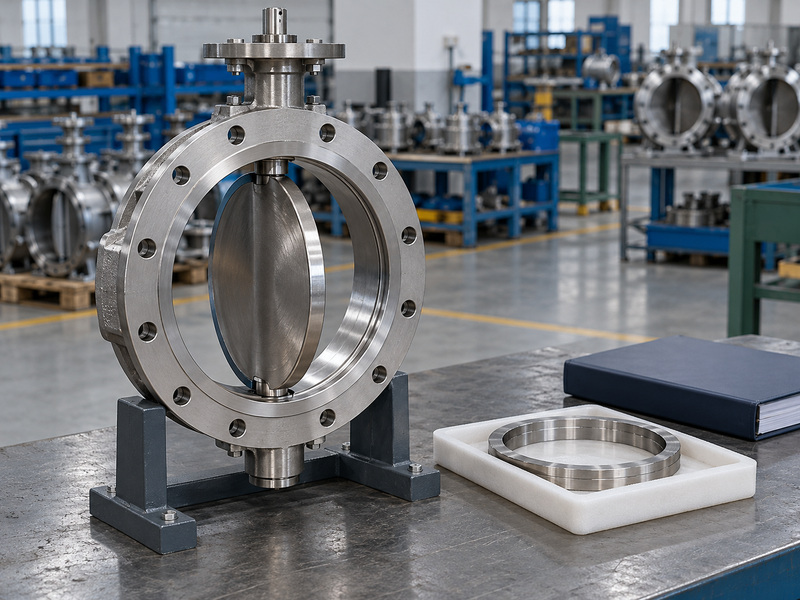
Keep the control assessment with the selected valve and actuator package. A suitable flow coefficient at one point leaves other operating positions unresolved, especially when pressure and fluid properties change. Ask for the allowable operating range and any excluded positions in writing. Treat the physical partly open position shown in an illustration as a position example, without reading service approval into its appearance.
- Distinguish emergency action from normal process adjustment.
- Submit minimum, normal, and maximum flow conditions.
- Record permitted positions and duty restrictions.
| Duty | Additional information needed |
|---|---|
| Hot isolation | Closure differential and required hold condition |
| Modulation | Flow cases, operating positions, and dynamic loads |
| Shutdown | Upset conditions, action time, and available energy |
8. How should the actuator and installation be reviewed?
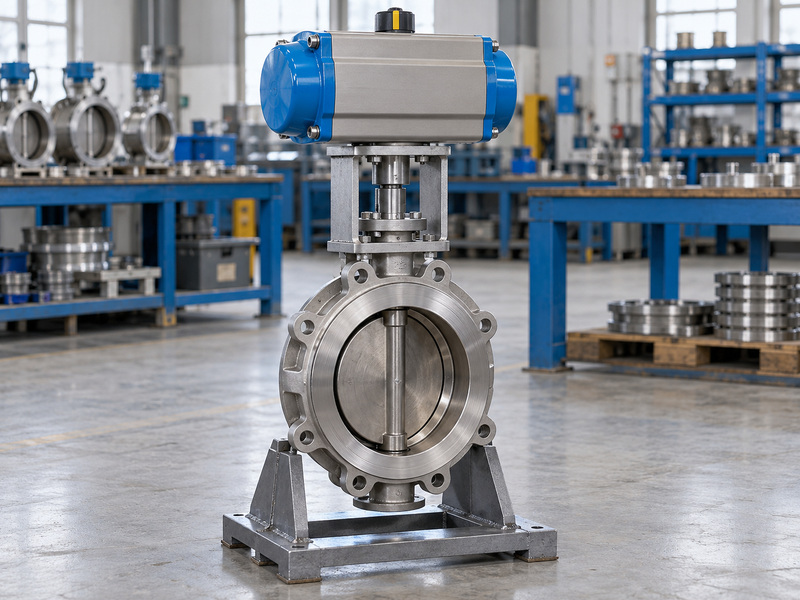
Review the installed actuator package for both mechanical demand and actual heat exposure. A high temperature butterfly valve metal seat can have an acceptable process rating while its actuator, switches, positioner, or accessories face unsuitable conditions. Submit local ambient conditions, insulation details, mounting orientation, and nearby radiant heat sources for the package review.
Review the installed package rather than actuator size alone
Process temperature and actuator ambient temperature describe different exposures. Ask the supplier whether conducted heat requires a stem extension, mounting bracket, heat shield, or another approved arrangement. Obtain the selected equipment’s limits and instructions before choosing a remedy. Review available torque throughout the stroke against valve demand and allowable drive loads, including the required shutdown condition.
Connection comparisons such as RUITO’s wafer butterfly valve and lug butterfly valve help identify installation questions; they do not establish high-temperature ratings. Check the proposed valve’s own flange bore clearance, bolting, supports, maintenance space, and insulation boundaries. Carry approved mounting and accessory changes into the final drawing so installation follows the reviewed arrangement.
- Identify temperature-sensitive accessories and cable limits.
- Obtain approved mounting and insulation instructions.
- Verify torque demand and allowable drive loads together.
| Package detail | Confirmation required |
|---|---|
| Heat exposure | Ambient, conduction, radiation, and restrictions |
| Drive path | Demand, available output, and component limits |
| Installation | Approved mounting, clearance, and insulation layout |
9. Which submittals should release the purchase order?
Release the order against an approved configuration and a closed record of technical exceptions. A high temperature butterfly valve metal seat enquiry should produce a matched data sheet, material schedule, rating basis, installation drawing, and acceptance plan. Identify which documents are preliminary and which revisions authorize manufacture, inspection, and later installation.
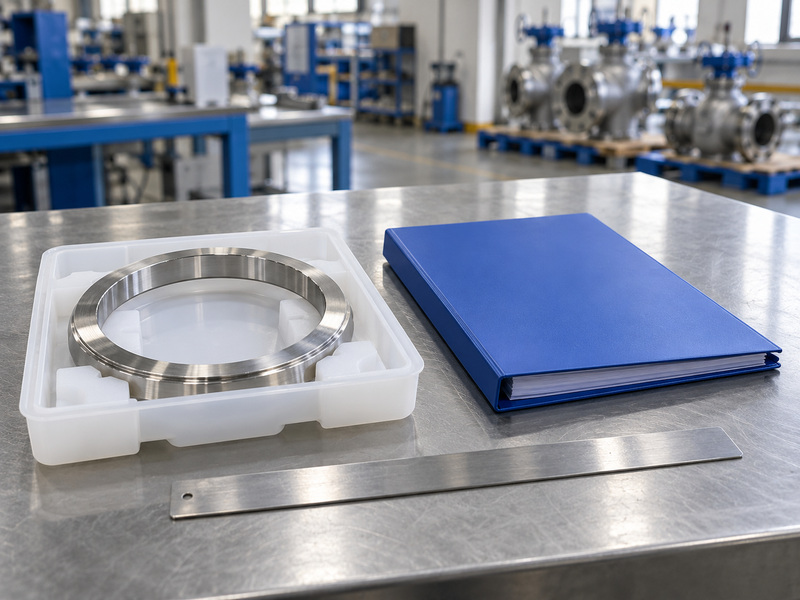
Close technical exceptions before manufacturing release
Require a response against every condition in your service schedule. Keep unsupported capability statements open until the supplier provides applicable evidence or proposes an agreed exception. Fire-test qualification, emissions performance, and safety-system suitability need their own applicable records when specified. A metal seat or a successful pressure test cannot substitute for those separate requirements.
Agree on document delivery dates and inspection hold points before production. Include operating instructions, settings, spare-part identification, and return-to-service requirements in the handover scope. Contact us with the service schedule and required evidence so RUITO can confirm the proposed supply scope in writing; its documented soft-seat and lined range does not establish a universal high-temperature metal-seated offering.
- Link each approval to a document revision.
- Record substitutions and their required reapproval.
- Name the party responsible for resolving each exception.
| Submittal | Release check |
|---|---|
| Data sheet and ratings | Every service condition addressed |
| Materials and drawing | Complete proposed assembly identified |
| Acceptance and handover plan | Evidence, responsibilities, and dates agreed |
10. Which high-temperature valve FAQs need clarification?
Resolve any remaining mismatch between the process requirement and the supplier’s documented offer before approval. A high temperature butterfly valve metal seat description leaves questions about exposure, operation, acceptance, and supply scope that the purchase file must answer.
Q1. Can I approve a valve from its seat alloy alone?
No. Review the complete material schedule, pressure-temperature rating, auxiliary seals, bearings, and actuator exposure. The alloy identifies one component, while approval covers an assembly operating under stated conditions.
Q2. Can I accept a short peak above the continuous rating?
Only with approval for that event and assembly. Submit duration, repetition, change rate, pressure, and required movement, then obtain any inspection or replacement instructions that follow the exposure.
Q3. How do I know whether cold testing covers hot isolation?
Check the agreed acceptance plan and supporting qualification evidence. An ambient result alone does not establish hot closure performance under a different temperature, differential, and operating sequence.
Q4. Can I use an isolation valve for continuous throttling?
Only after a separate duty review. Supply the flow cases, operating positions, pressure conditions, and control demand so the supplier can define the permitted operating range.
Q5. What should I send RUITO for a scoped review?
Send the process condition schedule, connection details, operating duty, and acceptance requirements. Ask for written confirmation of the proposed configuration and available evidence before treating a high-temperature metal-seated requirement as accepted.