
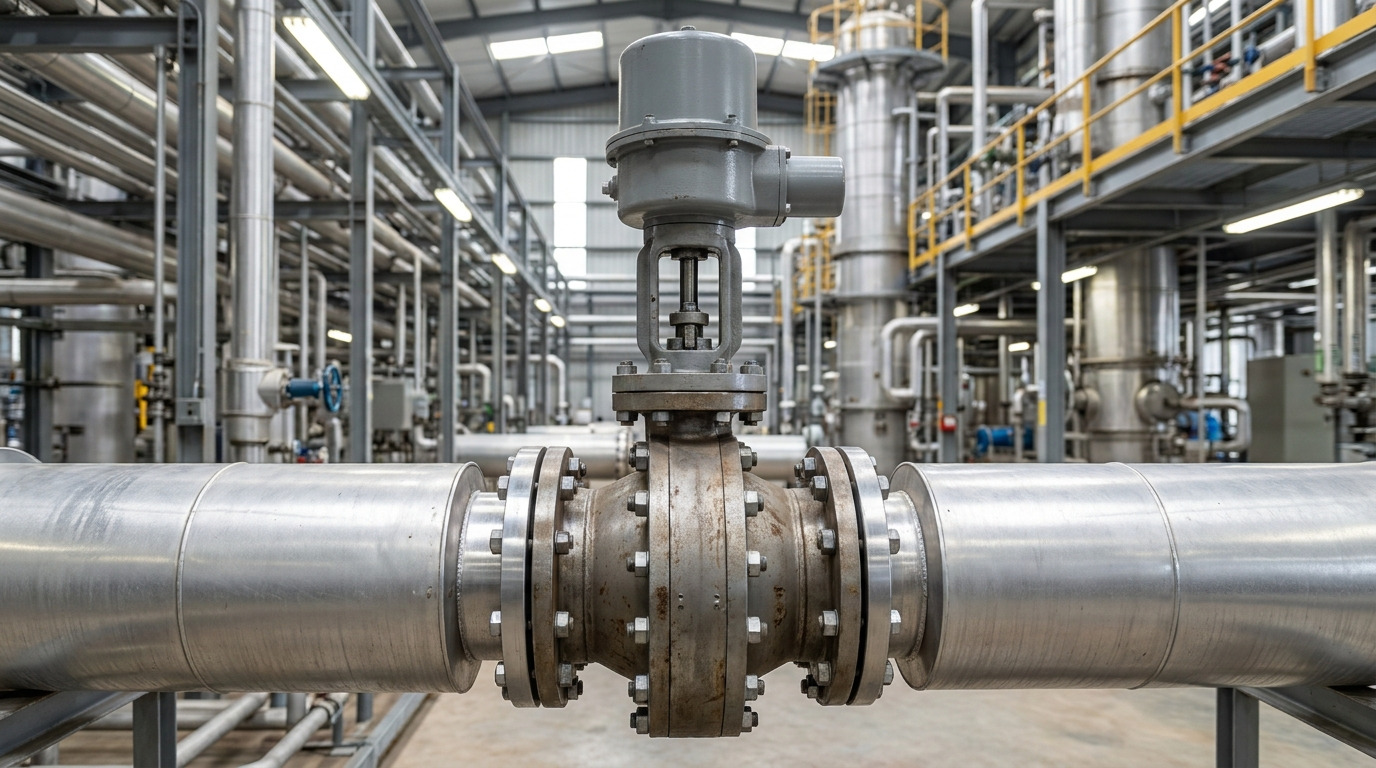
An API 609 butterfly valve is a specialized industrial flow control device designed to meet the strict structural and performance standards established by the American Petroleum Institute. You often face situations where aggressive fluids flow rapidly through complex pipeline networks. Poorly designed valves leak constantly, causing costly facility downtime while creating serious environmental hazards for your staff. To prevent such disasters, you need a reliable component that seals tightly without fail. Integrating a certified api 609 butterfly valve immediately solves these persistent leakage issues while ensuring long-term operational stability. This component features robust design metrics that eliminate sudden pressure drops and resist internal wear effectively.
What Is An API 609 Butterfly Valve Used For?
An api 609 butterfly valve regulates or isolates fluid flow within critical industrial pipeline systems securely. The American Petroleum Institute established this specific standard to regulate how manufacturers design and test quarter-turn valves for robust petroleum and chemical applications. These components provide exceptional shutoff capabilities while remaining relatively lightweight compared to traditional gate alternatives.
How Does The Basic Structure Function?
Here’s the deal: the internal disk rotates exactly ninety degrees to transition between fully open and tightly closed positions. This simple motion allows operators to manage fluid throughput quickly during emergency scenarios.
- The central shaft connects directly to external actuators.
- A resilient or metallic seat provides continuous bubble-tight sealing.
- The streamlined disc minimizes turbulent resistance across pipeline segments.
Key Takeaway
Understanding the fundamental mechanics of these devices helps you identify the correct flow control mechanisms for your specific facility requirements.
| Feature | Functionality | Primary Benefit |
|---|---|---|
| Rotary Disc | Turns 90 degrees | Rapid flow adjustment |
| Valve Seat | Contacts disc edge | Eliminates fluid leakage |
| Actuator Shaft | Transfers mechanical force | Allows remote operation |
This structural layout proves that simplified mechanical designs often yield the most reliable operational results across harsh environments.
What Are The Dimensions Of An API 609 Butterfly Valve?
The face-to-face dimensions of an api 609 butterfly valve follow strict guidelines categorized primarily into Series A and Series B classifications. These standardized lengths ensure that engineers can interchange units from different manufacturers without altering existing pipeline infrastructure. Series A generally covers concentric designs, whereas Series B includes high-performance offset configurations.
Which Categories Define The Measurements?
You might be wondering: how do these specific categories impact physical installation procedures on the factory floor? Series A devices typically feature resilient seats and utilize wafer or lug style connections for compact spaces.
- Series A focuses on concentric configurations for moderate pressure.
- Series B addresses double or triple eccentric designs.
- Both series mandate precise millimeter tolerances for flanges.
Key Takeaway
Adhering to standardized measurements empowers you to replace aging infrastructure rapidly without requiring expensive pipeline modifications.
| Dimension Category | Valve Type | Ideal Application |
|---|---|---|
| Series A | Concentric Resilient | Low-pressure water |
| Series B (Short) | Double Eccentric | Chemical processing |
| Series B (Long) | Triple Eccentric | High-temperature steam |
These standardized length profiles guarantee that plant managers can source compatible replacements across global supply chains seamlessly.
Which Materials Form An API 609 Butterfly Valve?
An api 609 butterfly valve consists of highly durable metals and resilient polymers tailored to withstand severe chemical degradation and intense mechanical stress. Cast iron remains a popular economical choice for benign media, while advanced facilities frequently require forged steel or specialized alloys. The standard strictly references ASME material guidelines to guarantee metallurgical integrity during extreme thermal fluctuations.
Can I Use Stainless Steel Components?
Look at it this way: highly corrosive environments demand materials that naturally resist oxidation and pitting over extended lifespans. Austenitic stainless steel varieties like CF8M provide excellent longevity when handling aggressive acidic compounds or volatile organic chemicals.
- Ductile iron handles standard municipal water distribution efficiently.
- Carbon steel (WCB) excels in high-temperature petrochemical refining operations.
- Duplex stainless steel survives harsh offshore marine environments.
Key Takeaway
Selecting the appropriate metallurgical composition prevents catastrophic equipment failures while extending the overall service life of your processing plant.
| Material Type | Resistance Level | Common Usage |
|---|---|---|
| Ductile Iron | Basic | Water systems |
| Carbon Steel | High Temperature | Oil refineries |
| Stainless Steel | High Corrosion | Chemical processing |
Material selection directly dictates the operational boundary limits and maintenance schedules of your entire fluid handling system.
How Is An API 609 Butterfly Valve Tested?
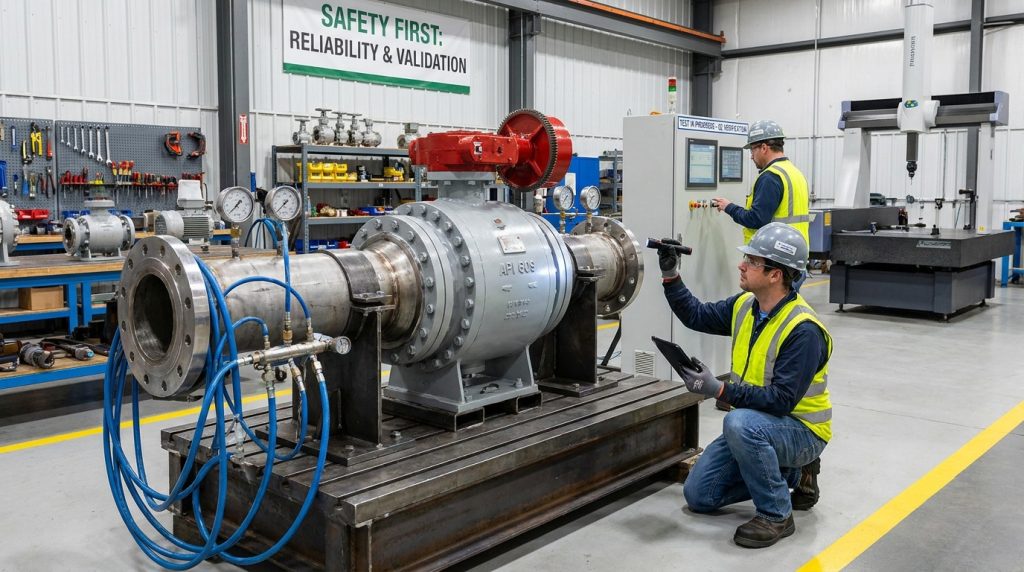
Inspectors evaluate an api 609 butterfly valve through rigorous hydrostatic and pneumatic pressure trials to verify absolute structural integrity. These demanding protocols check both the outer shell strength and the internal seat sealing capacity under maximum rated conditions. Any visible leakage during the specified hold periods results in immediate rejection of the manufactured unit.
What Does The Testing Protocol Include?
This is where it gets interesting: the standard mandates that testing must simulate worst-case scenarios before the product ever leaves the factory floor.
- Shell tests apply pressure exceeding typical operating thresholds by fifty percent.
- Seat leak tests utilize water or air to confirm zero bypass flow.
- Visual inspections guarantee smooth surface finishes without casting defects.
Key Takeaway
Rigorous factory testing assures you that the installed equipment will perform safely and consistently during unpredictable system surges.
| Test Type | Testing Medium | Success Criteria |
|---|---|---|
| Shell Pressure | Water | No visible structural leaks |
| High-Pressure Seat | Water | Zero fluid bypass allowed |
| Low-Pressure Seat | Air | No bubble formation seen |
Consistent adherence to these testing parameters eliminates the risk of deploying compromised hardware into sensitive industrial applications.
What Features Define An API 609 Butterfly Valve?
The defining characteristics of an api 609 butterfly valve include a remarkably compact footprint, rapid actuation capabilities, and extremely low fluid friction. Because the disc profile remains relatively thin, liquids pass through the assembly with minimal turbulence or energy loss. This efficiency drastically reduces pumping costs across large-scale commercial installations.
Why Is The Compact Design Important?
Ready for the good part? Traditional gate devices require massive vertical clearance to accommodate rising stems, whereas rotary mechanisms fit easily into tight subterranean vaults.
- Lightweight construction reduces structural strain on unsupported pipe runs.
- Quick quarter-turn action allows instant emergency isolation.
- Streamlined internal geometry maintains high flow coefficients constantly.
Key Takeaway
Leveraging these unique physical attributes allows you to optimize facility layouts and reduce overall construction budgets significantly.
| Feature | Technical Advantage | Operational Benefit |
|---|---|---|
| Quarter-Turn | 90-degree movement | Faster response times |
| Slim Profile | Narrow face-to-face | Saves installation space |
| Aerodynamic Disc | Reduced friction | Lowers energy consumption |
Implementing compact and responsive fluid control devices directly improves the mechanical efficiency of modern processing facilities.
Where Is An API 609 Butterfly Valve Applied?
Engineers specify an api 609 butterfly valve across diverse sectors ranging from municipal water treatment to heavy petrochemical distillation. These versatile units handle everything from abrasive mineral slurries to superheated steam safely. The broad adaptability of this standard means you will find these components securing critical infrastructure globally.
Does It Work For Abrasive Media?
What’s the real story? Handling abrasive substances requires hardened metal seats and specialized coatings to prevent rapid internal erosion.
- Oil refineries use them to manage volatile hydrocarbon transfers.
- Municipalities deploy them for large-scale potable water distribution grids.
- Extractive industries rely on them for rigorous mining slurry transport.
Key Takeaway
Identifying the correct industrial application ensures you maximize the return on investment for your expensive capital equipment purchases.
| Industry | Typical Media | Specific Requirement |
|---|---|---|
| Petrochemical | Hydrocarbons | Fire-safe certification |
| Water Treatment | Raw Water | Anti-corrosion coating |
| Mining Sector | Rock Slurry | High abrasion resistance |
Deploying standard-compliant hardware across varied industrial landscapes guarantees regulatory compliance and superior environmental protection.
How Does An API 609 Butterfly Valve Handle Pressure?
An api 609 butterfly valve manages intense internal pressures through advanced eccentric designs that shift the rotational axis away from the sealing center. By offsetting the shaft, the disc only contacts the seat at the final moment of closure, thereby eliminating constant frictional wear. This sophisticated geometry allows the unit to sustain massive pressure differentials without deforming.
What Is A Triple Eccentric Design?
But here’s the kicker: a triple offset configuration utilizes a conical sealing profile to achieve true zero-leakage performance under extreme bidirectional pressure.
- The first offset moves the shaft behind the sealing plane.
- The second offset shifts the shaft laterally from the pipe centerline.
- The third offset angles the seating cone to prevent mechanical rubbing.
Key Takeaway
Utilizing advanced eccentric mechanics provides you with unparalleled confidence when controlling highly pressurized or hazardous gaseous materials.
| Offset Type | Friction Level | Pressure Rating |
|---|---|---|
| Concentric | High friction | Low to moderate |
| Double Offset | Reduced friction | Moderate to high |
| Triple Offset | Zero friction | Extremely high |
Advanced mechanical offsetting transforms a simple rotary disc into a formidable barrier capable of containing immense physical forces.
How To Operate An API 609 Butterfly Valve?
Operating an api 609 butterfly valve involves utilizing manual levers, heavy-duty gearboxes, or automated pneumatic and electric actuators. The optimal actuation method depends entirely on the component size, the specific system pressure, and your required response speed. Automated setups integrate seamlessly with central control rooms for precise flow modulation.
Can I Automate The Operation?
Truth be told: integrating smart positioners and automated actuators transforms static infrastructure into highly responsive, data-driven mechanical networks.
- Manual levers suit smaller diameters in accessible locations.
- Gear operators provide mechanical advantage for larger, heavy-duty units.
- Pneumatic actuators deliver rapid fail-safe action during power outages.
Key Takeaway
Selecting the proper actuation mechanism allows you to minimize physical labor while dramatically improving overall process safety.
| Actuator Type | Speed | Best Application |
|---|---|---|
| Manual Lever | Fast | Small accessible pipes |
| Gear Operator | Slow | Large manual shutoffs |
| Pneumatic | Very Fast | Automated safety systems |
Matching the operating mechanism to the precise environmental context ensures smooth day-to-day functionality and rapid emergency responses.
Why Choose A Certified API 609 Butterfly Valve?
Procuring a certified api 609 butterfly valve guarantees that the product has undergone stringent independent verification regarding its metallurgical quality and mechanical reliability. Uncertified alternatives often contain hidden casting defects that eventually cause disastrous ruptures under heavy industrial workloads. Strict adherence to this petroleum standard provides a verifiable baseline for safety and longevity.
Does Certification Impact Maintenance?
Consider this fact: standardized manufacturing means replacement parts fit perfectly, eliminating the need for custom machining during routine plant turnarounds.
- Certified products maintain traceable material test reports for quality assurance.
- Standardized dimensions ensure quick swaps during emergency shutdowns.
- Third-party verification lowers insurance premiums for high-risk facilities.
Key Takeaway
Investing in documented, standard-compliant hardware protects your workforce while drastically reducing unpredictable operational downtime.
| Certification Aspect | Direct Benefit | Long-term Impact |
|---|---|---|
| Material Traceability | Verifies metal quality | Prevents premature corrosion |
| Dimensional Accuracy | Ensures interchangeability | Speeds up repair work |
| Pressure Testing | Confirms safety margins | Avoids catastrophic bursts |
Relying on globally recognized engineering standards remains the most effective strategy for building resilient and profitable manufacturing facilities.
How To Select The Best API 609 Butterfly Valve?
Selecting the ideal api 609 butterfly valve requires carefully evaluating the specific fluid medium, the ambient temperature range, and the expected pressure differentials. Engineers must balance initial procurement costs against expected maintenance intervals to determine the true lifecycle value of the component. Collaborating with an experienced trusted manufacturer simplifies this complex decision-making process significantly.
What Factors Drive The Final Choice?
The bottom line is: ignoring subtle chemical interactions between the fluid and the valve seat inevitably leads to rapid sealing failure.
- Analyze maximum operational temperatures to choose appropriate polymers or metals.
- Determine flow velocity to prevent harmful cavitation behind the rotating disc.
- Check flange compatibility to ensure a secure, leak-proof pipeline connection.
Key Takeaway
Thorough upfront analysis empowers you to specify durable flow control solutions that perform flawlessly for decades.
| Selection Factor | Consideration | Consequence of Error |
|---|---|---|
| Fluid Chemistry | Corrosiveness | Rapid material degradation |
| Temperature Range | Thermal limits | Melted or cracked seats |
| Pipeline Pressure | Structural load | Complete mechanical failure |
Careful component specification directly determines the ultimate safety, efficiency, and profitability of your fluid handling infrastructure.
Selecting durable flow control equipment eliminates persistent leaks, minimizes maintenance downtime, and stabilizes your operational costs. We provide industrial operators with precision-engineered valves that surpass the strictest global safety standards, ensuring your critical processes run without interruption. We build robust systems that safeguard your personnel while optimizing production efficiency for the future. Please contact us today to discuss how our advanced engineering solutions can improve your specific facility layout.
FAQ
Q1: Can I use these devices for high-temperature steam applications?
Yes, you can use triple eccentric designs featuring all-metal seats. Resilient polymers melt at high temperatures, but metallic components handle superheated steam effectively.
Q2: What’s the best material for handling corrosive chemicals?
Stainless steel or duplex alloys are your best choices. These materials naturally resist oxidation and pitting when exposed to aggressive industrial acids.
Q3: How do I know if I need a gear operator instead of a lever?
You need a gear operator if the pipe diameter exceeds six inches. Larger discs require significant mechanical advantage to overcome high internal fluid pressures safely.
Q4: Can I install a wafer style unit as an end-of-line isolation point?
No, you must use a lug style design for dead-end service. Wafer units require downstream flanges to maintain their secure position against system pressure.
Q5: What’s the best way to verify the pressure rating of my equipment?
Check the permanent metal identification tag attached to the body. This tag displays the exact pressure class and material specifications established during factory testing.