
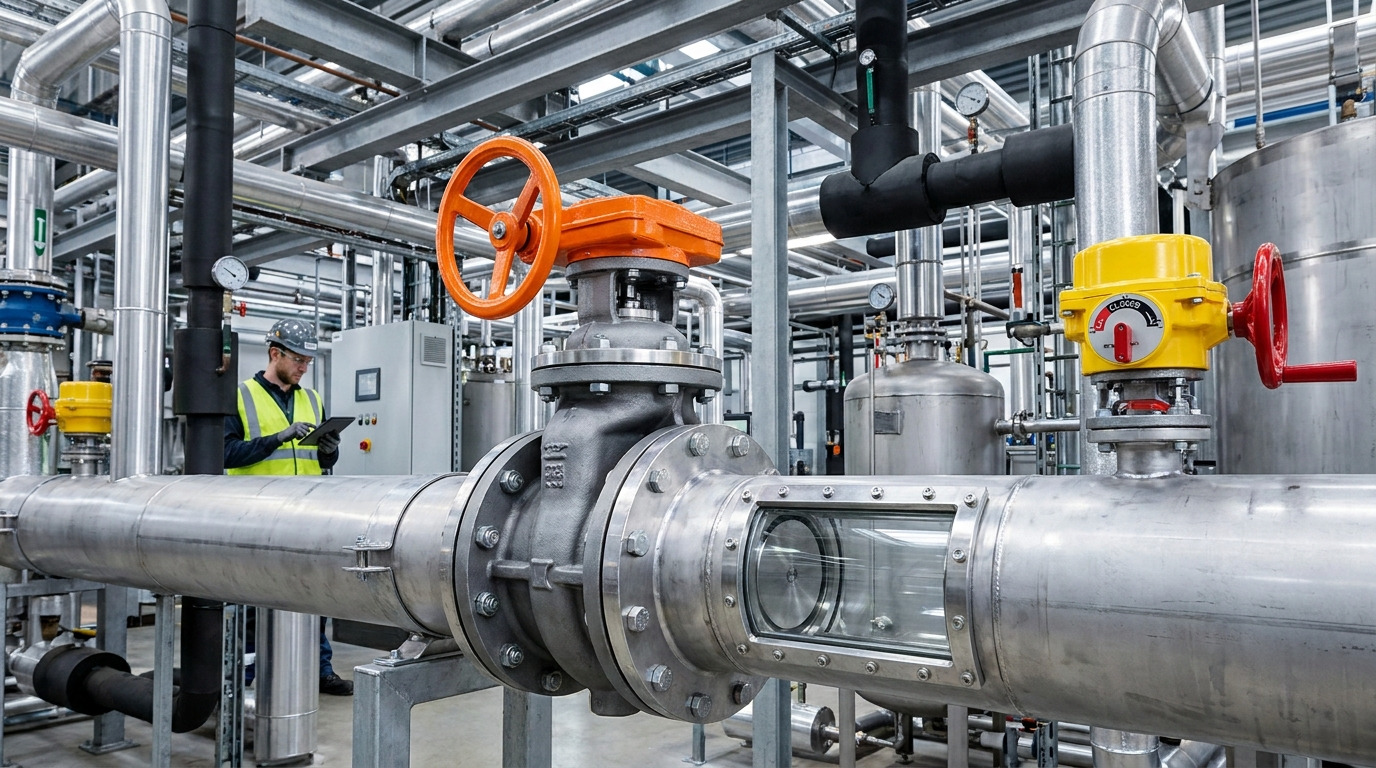
Butterfly valves control fluid flow by utilizing a rotating disc mechanism within a piping network. Industrial operators frequently face sudden fluid surges that threaten to damage sensitive downstream machinery. Unchecked pressure fluctuations lead to severe operational delays, ruined equipment, and compromised safety for facility personnel. By effectively managing the butterfly valve open and closed position, you gain absolute control over flow rates and guarantee secure system shut-offs.
What is a butterfly valve open and closed position?
A butterfly valve open and closed position dictates whether fluid flows freely or stops completely within a pipeline. You rely on this precise orientation to control pressure and volume efficiently. Understanding the butterfly valve open and closed position allows you to maintain optimal system performance and prevent hazardous leaks. It represents the foundational mechanical action of these quarter-turn fluid regulators.
How does the central disc function?
Here is the deal: the central disc pivots on a stem to regulate fluid movement. Turning the disc ninety degrees changes the flow path entirely.
- A parallel disc allows maximum fluid transit.
- A perpendicular disc blocks all fluid movement.
- Angled positions provide variable throttling capabilities.
Is the quarter-turn action beneficial?
The quarter-turn mechanism allows for rapid response times during critical operations. Operators can manually or automatically actuate the stem with minimal delay. You might be wondering: why does speed matter? Fast actuation prevents overflow and minimizes sudden pressure drops.
Why is tight shut-off necessary?
System integrity depends on preventing unwanted fluid bypass when the line requires isolation. A proper seal stops corrosive or high-pressure media from escaping.
Key Takeaway: Mastering the basic operation ensures you prevent costly leaks and maintain safe working environments.
| Position | Flow Status | Disc Alignment |
|---|---|---|
| Open | Maximum | Parallel |
| Throttled | Variable | Angled |
| Closed | Zero | Perpendicular |
This summary illustrates how disc alignment directly controls the operational state of the pipeline.
How do parts affect the butterfly valve open and closed position?
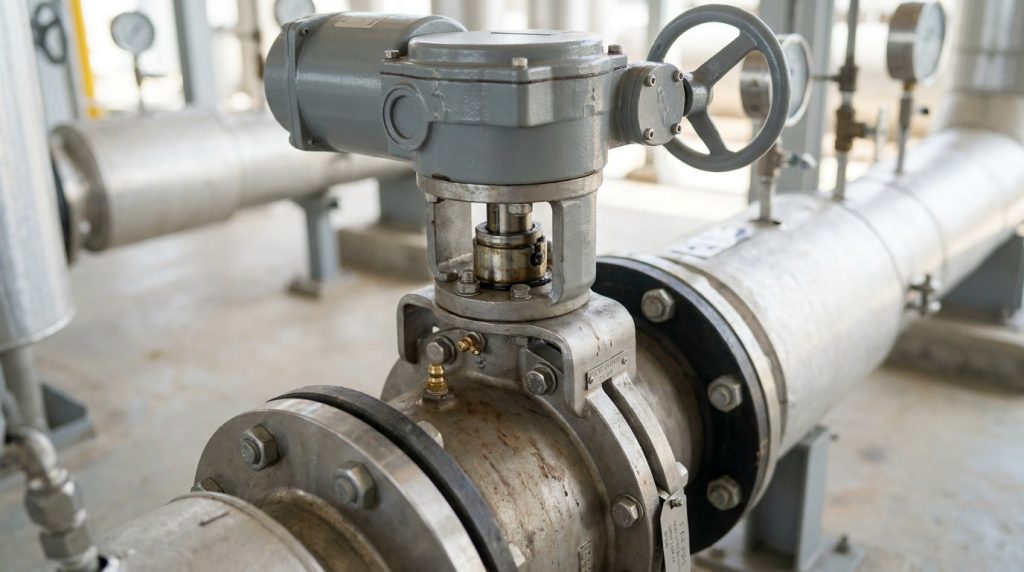
Components like the stem, seat, and actuator directly govern the accuracy of the butterfly valve open and closed position. You need reliable parts to ensure the disc moves smoothly and seats tightly. Without sturdy components, the butterfly valve open and closed position becomes inconsistent and prone to failure. Every part must function harmoniously to secure the fluid boundary.
What role does the body play?
The main body houses the internal parts and connects securely to the adjacent piping. It absorbs structural stress and maintains alignment under high pressure.
- Wafer bodies fit between existing flanges.
- Lug bodies allow for independent pipe removal.
- Flanged bodies provide robust, heavy-duty connections.
How does the stem transfer force?
What is the catch? The stem must handle immense torque without twisting or bending. It connects the external actuator directly to the internal disc. If the stem fails, you lose all ability to regulate the fluid.
Can the seat prevent all leakage?
The seat provides a soft or metallic boundary that the disc presses against. It determines the ultimate sealing capability when flow stops completely.
Key Takeaway: You must select high-quality components to ensure long-lasting and leak-free fluid regulation.
| Component | Primary Function | Failure Risk |
|---|---|---|
| Body | Structural Support | Misalignment |
| Stem | Torque Transmission | Bending |
| Seat | Fluid Sealing | Leakage |
These parts dictate the mechanical reliability of the entire fluid management system.
Which types impact the butterfly valve open and closed position?
Different structural designs alter how you achieve the butterfly valve open and closed position. You choose specific types based on required pressure ratings and installation constraints. Choosing the correct butterfly valve open and closed position design determines long-term maintenance needs. The offset variations significantly influence friction and sealing dynamics.
What is a concentric design?
Ready for the good part? Concentric designs place the stem exactly in the middle of the disc. They serve perfectly for low-pressure water applications.
- They utilize resilient rubber seats.
- The disc rubs the seat continuously.
- They cost less than offset models.
How do double offsets improve performance?
Double offset designs move the stem away from the center line. This geometry reduces the friction between the disc and the seat. This is where it gets interesting: reduced friction extends the operational lifespan considerably.
When should you use triple offsets?
Triple offsets introduce a conical sealing profile for extreme industrial conditions. They provide bubble-tight shut-offs even under high heat and pressure.
Key Takeaway: Selecting the proper offset type directly impacts your maintenance budget and system longevity.
| Design Type | Friction Level | Ideal Application |
|---|---|---|
| Concentric | High | Low Pressure |
| Double Offset | Medium | Moderate Wear |
| Triple Offset | Low | Severe Service |
Evaluating these designs helps you match the mechanical geometry to your specific industrial requirements.
How does operation change butterfly valve open and closed position?
Actuation methods physically alter the butterfly valve open and closed position based on user commands or automated signals. You operate the stem using levers, gears, or motorized units. Modifying the butterfly valve open and closed position requires adequate torque to overcome fluid pressure. The operational method defines how quickly and accurately you manage the flow.
Can manual operation handle large pipes?
Small pipes utilize simple hand levers for quick adjustments. Large pipes require gear operators to multiply human effort safely.
- Levers offer fast, visual state confirmation.
- Gears provide slow, controlled movements.
- Handwheels prevent dangerous water hammer effects.
What drives pneumatic actuators?
Want to know a secret? Pneumatic actuators use compressed air to force the stem into place. They act rapidly, making them perfect for emergency shutdown sequences. You depend on them when milliseconds matter.
Why choose electric automation?
Electric actuators offer precise modulation and remote control capabilities. You can integrate them into complex digital facility management systems easily.
Key Takeaway: Proper actuation selection guarantees that you can control fluid dynamics safely and efficiently under any condition.
| Actuator Type | Power Source | Speed |
|---|---|---|
| Manual | Human Force | Variable |
| Pneumatic | Compressed Air | Very Fast |
| Electric | Voltage | Steady |
These operational modes determine how effectively your facility responds to changing fluid demands.
Why favor a clear butterfly valve open and closed position?
Clear visual confirmation of the butterfly valve open and closed position prevents disastrous operational errors. You need immediate feedback to know if a line is active or isolated. A visible butterfly valve open and closed position guarantees that maintenance crews work safely. Knowing the exact orientation stops accidental cross-contamination in critical processes.
How do levers show status?
Here is the deal: the handle lever always aligns parallel to the internal disc. When the lever runs along the pipe, fluid moves freely.
- Parallel levers mean active flow.
- Perpendicular levers mean isolated lines.
- Notches hold the lever in intermediate spots.
What about gear operator indicators?
Gear boxes often feature a prominent visual dial on top. A bright arrow points to specific markings indicating the exact internal angle. What is the real story? Without these indicators, operators would guess the flow state blindly.
Do automated systems provide feedback?
Automated units send electronic signals back to the main control room. Limit switches confirm mechanically when the stroke completes.
Key Takeaway: Unambiguous position feedback keeps your operators safe and your chemical processes accurate.
| Indicator Type | Visual Clarity | Best For |
|---|---|---|
| Lever Alignment | High | Small Manual |
| Gear Dial | Moderate | Large Manual |
| Digital Signal | Remote | Automated |
Clear indicators drastically reduce human error during complex facility operations.
Where is the butterfly valve open and closed position critical?
Industrial applications demand a reliable butterfly valve open and closed position to function without environmental hazards. You find these mechanisms in power plants, water treatment facilities, and chemical refineries. The butterfly valve open and closed position manages massive volumes of fluid daily. Precise regulation defines the success of these heavy-duty engineering environments.
Why do water plants rely on them?
Municipal water facilities need large-diameter regulators that do not cost a fortune. These units handle clean water distribution with minimal pressure drop.
- They fit into tight underground vaults.
- They resist municipal water corrosion.
- They require infrequent manual servicing.
How do chemical plants use them?
You might be wondering: can they handle harsh acids? Yes, when lined with specialized polymers like PTFE, they resist severe chemical attacks safely. You use them to isolate dangerous reactor vessels during batch changes.
Are they suited for HVAC systems?
Large buildings use them to balance chilled and heated water lines. They provide reliable throttling to maintain comfortable indoor climates.
Key Takeaway: You can adapt these versatile regulators to almost any industrial fluid environment with the right material selection.
| Industry | Primary Fluid | Key Requirement |
|---|---|---|
| Municipal Water | Clean Water | Low Cost |
| Chemical Processing | Harsh Acids | Corrosion Resistance |
| HVAC Services | Chilled Water | Reliable Throttling |
Matching the application to the correct material ensures safe and uninterrupted daily operations.
How to maintain the butterfly valve open and closed position?
Routine maintenance preserves the accuracy of the butterfly valve open and closed position over years of service. You must inspect the seating materials and stem connections regularly. A neglected butterfly valve open and closed position leads to sticking, leaking, and eventual mechanical breakdown. Proper care strategies save you from unexpected and expensive emergency replacements.
What does routine inspection involve?
Ready for the good part? Visual inspections catch external leaks before they cause major damage. You should check the flange bolts for tightness and alignment.
- Look for rust around the stem neck.
- Listen for unusual fluid cavitation noises.
- Test the manual override periodically.
How do you treat sticking discs?
Sediment buildup causes the disc to stick against the rubber seat. You should schedule periodic flushing to clear abrasive debris from the pipeline. This is where it gets interesting: partial cycling breaks up mineral deposits effectively.
When should you replace the seat?
Rubber seats degrade over time due to friction and chemical exposure. You must replace the liner when it cracks or fails a pressure test.
Key Takeaway: Proactive maintenance routines prevent sudden operational failures and extend the working life of your equipment.
| Maintenance Task | Frequency | Benefit |
|---|---|---|
| Visual Check | Monthly | Spots external leaks |
| Partial Cycle | Quarterly | Prevents sticking |
| Seat Replacement | As Needed | Restores tight seal |
Consistent upkeep dramatically lowers the total cost of ownership across your facility.
What problems alter the butterfly valve open and closed position?
Mechanical wear and fluid conditions directly compromise the intended butterfly valve open and closed position. You face issues like cavitation, water hammer, and thermal expansion. An inaccurate butterfly valve open and closed position allows dangerous bypass leakage. Identifying these root causes helps you implement robust corrective measures quickly.
How does cavitation destroy parts?
High fluid velocities create vapor bubbles that collapse violently near the disc. This micro-implosion eats away at the metal surfaces rapidly.
- It causes severe pitting on the disc edge.
- It generates loud, rumbling noises.
- It degrades the sealing profile permanently.
Can water hammer bend the stem?
What is the catch? Closing the fluid path too fast sends a shockwave through the pipe. This intense pressure spike can permanently twist the metal stem. You must enforce slow closing times to avoid this damage.
Does thermal expansion matter?
Extreme heat causes metal parts to swell inside the rigid body. The disc might bind against the seat, preventing normal actuation entirely.
Key Takeaway: Understanding hydraulic and thermal forces allows you to protect your piping infrastructure from severe mechanical damage.
| Problem | Cause | Consequence |
|---|---|---|
| Cavitation | High Velocity | Metal Pitting |
| Water Hammer | Fast Closure | Stem Bending |
| Binding | High Heat | Stuck Actuation |
Mitigating these physical threats guarantees smooth and predictable flow regulation.
How to test the butterfly valve open and closed position?
Rigorous testing verifies the exact butterfly valve open and closed position before live operation. You must perform hydrostatic and pneumatic checks to ensure safety compliance. Validating the butterfly valve open and closed position guarantees that the seat holds back the required pressure. Systematic testing removes the guesswork from facility commissioning.
What is a hydrostatic shell test?
Want to know a secret? The shell test proves the external body will not burst under stress. You fill the unit with water and pressurize it beyond normal limits.
- It checks for casting defects.
- It verifies flange integrity.
- It ensures safe high-pressure handling.
How do you perform a seat leak test?
You apply pressure to one side of the closed disc and measure any fluid escaping past the seat. This proves the shut-off capabilities meet strict industry standards. Here is the deal: zero visible leakage means the unit passes standard resilient-seated criteria.
Why calibrate the actuator?
Electronic units need software calibration to recognize the mechanical limits. You set the stroke endpoints so the motor stops exactly at zero and ninety degrees.
Key Takeaway: Comprehensive testing protocols ensure your equipment operates safely and meets all industrial compliance regulations.
| Test Type | Testing Medium | Target Component |
|---|---|---|
| Shell Test | High Pressure Water | Outer Body |
| Seat Test | Rated Pressure Water | Internal Seal |
| Calibration | Electronic Signals | Motorized Actuator |
Documenting these test results provides verifiable proof of mechanical reliability for your auditors.
Can automation set the butterfly valve open and closed position?
Advanced automation continuously optimizes the butterfly valve open and closed position without human intervention. You program logic controllers to adjust angles based on live sensor data. A digitally controlled butterfly valve open and closed position reacts instantly to changing system demands. This technology transforms passive pipes into highly responsive, intelligent fluid networks.
How do smart positioners work?
Smart positioners read the exact stem angle and compare it to the requested setpoint. They micro-adjust the pneumatic air supply to correct any deviations instantly.
- They eliminate mechanical hysteresis.
- They provide diagnostic health reports.
- They communicate via industrial fieldbuses.
What role do PID controllers play?
You might be wondering: how does the system know when to move? Proportional-Integral-Derivative controllers calculate the error between desired and actual flow rates. They send continuous signals to the actuator for smooth, steady regulation.
Does automation improve safety?
Fail-safe configurations force the stem into a safe orientation if power vanishes. This is where it gets interesting: springs physically drive the unit closed to prevent toxic spills during blackouts.
Key Takeaway: Integrating intelligent automation maximizes process efficiency while virtually eliminating dangerous manual operational errors.
| Automation Tool | Function | System Benefit |
|---|---|---|
| Smart Positioner | Angle Correction | High Precision |
| PID Controller | Logic Calculation | Smooth Flow |
| Fail-Safe Spring | Power Loss Reaction | Spill Prevention |
Embracing digital control systems represents the future of secure and profitable fluid management.
Conclusion
This comprehensive guide detailed how central discs, rugged components, and specific actuation methods govern flow control mechanisms. We outlined the crucial maintenance routines, offset designs, and testing protocols required to manage industrial fluids securely. By mastering these principles, you prevent costly leaks, optimize pressure management, and safeguard your operational infrastructure. Whether you manage chemical processing or municipal water, reliable fluid control remains the backbone of your success. If you need robust engineering solutions to upgrade your facility, contact us today to discuss your specific requirements. We engineer precision reliability, ensuring your operations never miss a beat.
FAQ
Q1: What is the best way to handle abrasive fluids?
Use a specialized heavy-duty design with abrasion-resistant seating. Standard rubber seats wear out quickly when exposed to harsh slurries, so polyurethane or metal seats provide the necessary durability.
Q2: How do I know if my seat needs replacement?
You will observe visible fluid bypassing the disc when it is fully shut. Rubber degradation, thermal cracking, and chemical attacks compromise the tight seal, leading to measurable pressure losses.
Q3: Can I install this equipment in any orientation?
Yes, but horizontal stem installation is highly recommended for fluids containing sediments. Vertical stems allow debris to accumulate at the bottom bearing, which accelerates mechanical wear and binding.
Q4: What’s the best method to stop water hammer?
Implement slow-closing gear operators or adjust actuator speeds. Closing the fluid path too rapidly creates a severe hydraulic shockwave that can permanently damage the stem and internal piping.
Q5: Can I use pneumatic actuation for precise throttling?
Yes, if you equip the actuator with a smart positioner. Without a positioner, pneumatic air cylinders typically only perform rapid open or close functions effectively.