
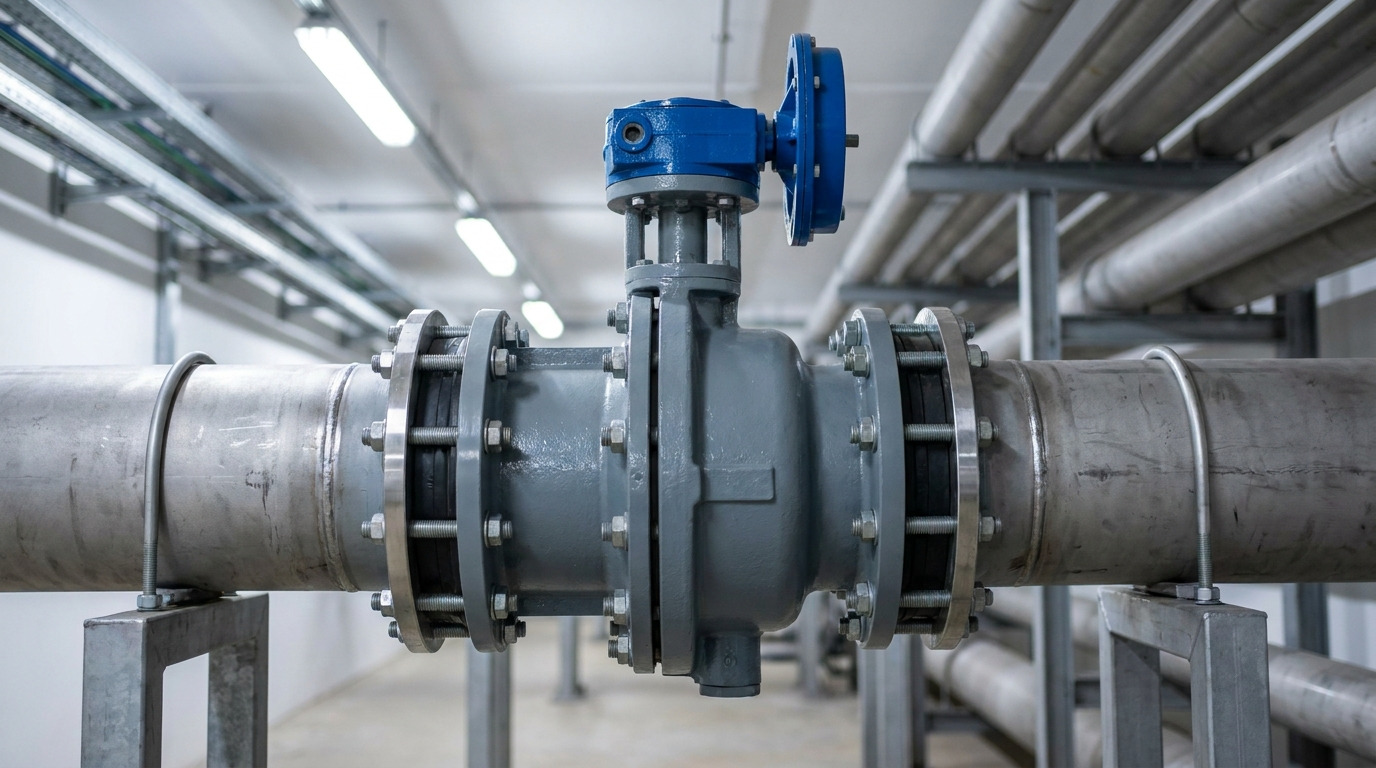
Rubber-lined butterfly valves offer exceptional, bubble-tight sealing and cost-effective corrosion protection for chemical, water, and industrial processing systems, though they are strictly limited by pressure and temperature thresholds. When you are managing high-volume industrial pipelines, maintaining reliable flow control is your highest operational priority.
Imagine a critical pipe joint suddenly springing a highly corrosive leak due to rapid seat degradation. This unexpected failure immediately forces an unscheduled plant shutdown, costing thousands of dollars in lost productivity while creating dangerous chemical hazards for your maintenance crew. Fortunately, installing a robust rubber lined butterfly valve solves this challenge by isolating your metal piping from aggressive fluids, delivering bubble-tight bidirectional isolation.
1. What is a rubber lined butterfly valve?
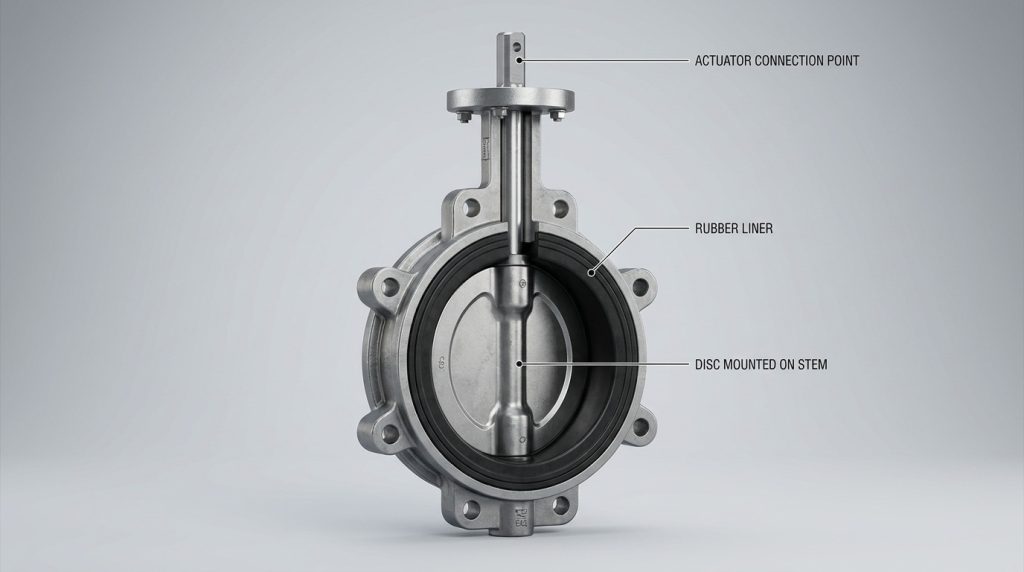
A rubber lined butterfly valve is a concentric quarter-turn flow control device featuring a resilient elastomer seat that completely covers the internal body cavity to isolate process media from the metal casing. When you manage pipelines carrying corrosive liquids, protecting your metal piping is a top priority.
By fully lining the internal valve body, the fluid never comes into contact with the outer pressure-retaining casting. This straightforward design achieves cost-effective chemical resistance without solid alloy parts.
What are the core components of the valve?
The structural simplicity is one of its biggest engineering advantages. Think about it: fewer moving parts means a lower risk of mechanical failure during operation.
To keep your maintenance workflows efficient, you should familiarize yourself with these key elements:
- Valve Body: A robust, protective cast or ductile iron shell.
- Seat Liner: A molded rubber sleeve (EPDM, NBR, or FKM) that provides chemical isolation.
- Valve Disc: A rotating metal disc that blocks or allows flow.
- Valve Stem: A steel shaft transferring actuator torque directly to the disc.
How do elastomer linings protect metal?
The elastomer liner serves as an impenetrable physical barrier. When aggressive chemicals flow through your line, they only contact the chemically stable rubber, preventing corrosion of the outer iron body.
The best part? You avoid the extreme costs of purchasing valves made entirely from expensive corrosion-resistant alloys.
Key Takeaway: Using a rubber lined butterfly valve protects structural metal from fluid contact, cutting procurement costs without sacrificing chemical resistance.
| Component | Common Materials | Primary Function |
|---|---|---|
| Valve Body | Ductile Iron | External pressure containment and structural support |
| Elastomer Seat | EPDM, NBR, FKM | Bubble-tight sealing and chemical barrier |
| Valve Disc | Stainless Steel 316 | Rotating flow control element contacting the media |
Reviewing these specs allows you to select the precise material combination suited for your pipeline’s chemistry.
2. Why use a rubber lined butterfly valve?
You should use a rubber lined butterfly valve to achieve reliable, bubble-tight sealing and cost-effective corrosion resistance in medium-duty fluid networks. If you are balancing tight project budgets with zero-leakage demands, this soft-seated design is your answer.
Standard metal-to-metal seats often suffer from microscopic bypass paths, but elastomers deform to fill every microscopic gap. This uniform compression guarantees bubble-tight bidirectional isolation.
How does soft-seated sealing prevent leaks?
The elastic nature of rubber allows the seat to compress perfectly against the disc edge. When you close the valve, this mechanical interference eliminates any possible fluid bypass.
Think about it: in high-purity water lines or chemical processing systems, even a minor leak can lead to costly downtime.
- Class VI bubble-tight shutoff prevents downstream contamination.
- Flexible seat material absorbs line vibration and hydraulic shocks.
Why is the operating torque so low?
The friction between a polished stainless steel disc and a smooth rubber seat is extremely minimal. This low friction requirement allows you to use smaller, more economical actuators to cycle the lines.
Here is the key: smaller actuators drastically lower your capital expenditures on automation accessories.
Key Takeaway: Choosing a soft-seated design achieves zero-leakage sealing at a fraction of the cost and size of traditional gate valves.
| Sealing Class | Relative Cost | Required Torque |
|---|---|---|
| Soft-Seated Rubber | Economical | Minimal |
| Metal-to-Metal | Expensive | Moderate to High |
Evaluating this performance comparison helps you justify the budget-friendly soft-seated option for non-steam utility lines.
3. How does a rubber lined butterfly valve seal?
This rubber lined butterfly valve seals through the mechanical interference and compression of its disc edge against the resilient elastomer seat lining. The physical sealing process is exceptionally elegant and relies on straightforward mechanical forces.
As you rotate the valve stem 90 degrees, the rounded outer edge of the disc is pushed directly into the raised elastomer seat. This movement causes the soft rubber liner to compress slightly, creating a highly uniform, tight radial seal.
How does compression prevent zero leakage?
The sealing mechanism relies entirely on the interference fit between the disc’s outer diameter and the seat’s inner diameter. When the disc is turned to the fully closed position, it forces its way into the smaller opening of the rubber sleeve.
Here is the critical part: because the compression is mechanical, the valve seals with equal efficiency in both directions.
- Mechanical compression remains stable regardless of pressure fluctuations.
- Zero bypass is maintained across bidirectional pressure differentials.
What is the advantage of a concentric design?
In a concentric design, the shaft is centered directly in the middle of the disc and the seat. This layout maximizes the simplicity and cost-effectiveness of your flow control setup.
The best part? It ensures uniform seat compression around the entire circumference of the disc, preventing uneven wear.
Key Takeaway: Uniform mechanical compression of the elastomer liner ensures a reliable bidirectional seal that prevents hazardous backflow.
| Sealing Direction | Sealing Performance | Primary Benefit |
|---|---|---|
| Forward Flow | 100% Bubble-Tight | Standard flow isolation |
| Reverse Flow | 100% Bubble-Tight | Backflow prevention and pump protection |
Reviewing these bidirectional sealing capabilities lets you streamline your piping schematics without redundant check valves.
4. Where is a rubber lined butterfly valve used?
A rubber lined butterfly valve is widely used in municipal water plants, chemical processing facilities, and industrial HVAC networks. These valves are the workhorses of fluid control across a wide range of industrial environments.
In chemical treatment plants, the inner elastomer acts as an impenetrable shield, keeping aggressive chemical solutions from corroding the outer metallic casing. Many systems deploy them in tandem with industrial check valves to build compact, low-maintenance pump stations.
Why is it preferred in water and wastewater?
Municipal water filtration and sewage treatment lines involve continuous exposure to moisture, dissolved solids, and corrosive treatment chemicals. When you install a rubber-lined option, the flexible seat repels mineral accumulation and easily absorbs small particulate impacts.
The best part? This flexibility keeps the seal intact even when minor grit or sediment passes through.
- EPDM seats resist chlorine and ozone chemical attack.
- NBR seats resist oily grease commonly found in wastewater.
How does it perform in HVAC loops?
In commercial HVAC and industrial cooling water loops, balancing flow rates while preventing energy loss is essential. Soft-seated valves excel here by providing precise throttling and tight shutoff for chilled or condenser water lines.
Think about it: every drop of fluid bypassed in a closed cooling line is wasted energy.
Key Takeaway: Compact soft-seated valves fit easily into tight pipe spaces, delivering reliable municipal water and HVAC isolation.
| Industry Application | Ideal Elastomer Seat | Primary Operational Goal |
|---|---|---|
| Water Treatment | EPDM | Resistance to chloramines and oxidation |
| Industrial Cooling | NBR | Protection against oily water additives |
| Wastewater Processing | EPDM | Grit resistance and chemical stability |
Analyzing these application targets helps you map out the specific soft-seated valves needed across your utility systems.
5. When does a rubber lined butterfly valve fail?
A rubber lined butterfly valve typically fails when the system temperature exceeds the thermal limit of the elastomer or when abrasive particulates wear down the soft seat. While elastomers offer outstanding chemical resistance, they are highly sensitive to thermal extremes.
If you subject an NBR or EPDM seat to temperatures beyond its rated range, the rubber will rapidly harden, crack, or lose its elasticity. High-speed, particulate-heavy slurries also present a significant operational challenge by physically scoring the liner.
What are the limits of thermal degradation?
Every elastomer has a specific thermal envelope that you must strictly respect to prevent premature failure. When temperatures exceed this threshold, the polymer chains within the rubber break down, leading to rapid degradation.
The bottom line? You must carefully match your media’s maximum surge temperature with the rating of your valve’s liner.
- EPDM limits: Stable from -40°C up to 150°C.
- NBR limits: Ideal for oil-based lines from -40°C up to 125°C.
- FKM limits: High-temperature chemical defense up to 200°C.
How do abrasive slurries cause wear?
When your pipeline transports thick slurries or sand-laden wastewater, the fluid dynamics change completely. High-velocity solid particles act like sandpaper against the flexible rubber seat as the valve throttles.
Here is the key: throttling in slurry lines should be kept to a minimum to prevent localized high-velocity wear zones.
Key Takeaway: Exceeding temperature ratings or throttling abrasive slurries will rapidly destroy soft seats, causing immediate valve failure.
| Elastomer Seat Material | Recommended Temperature Range | Relative Material Cost | Primary Chemical Compatibility |
|---|---|---|---|
| NBR (Nitrile) | -40°C to 125°C | Moderate | Oils, fuels, and standard water networks |
| EPDM | -40°C to 150°C | Low | Dilute acids, alkaline media, and HVAC lines |
| FKM (Fluororubber) | -15°C to 200°C | High | Strong acids, hydrocarbons, and chemicals |
Comparing these material limits prevents catastrophic elastomer meltdowns in your high-temperature process lines.
6. Which media suits a rubber lined butterfly valve?
Mild acids, alkaline solutions, municipal wastewater, and clean brine fluids are the ideal media choices for this valve type. Choosing the correct combination of seat materials is the key to maximizing the life of your piping network.
EPDM lined designs are highly compatible with dilute chemical acids, alcohols, and standard industrial water streams. For highly aggressive media, you may want to look into other options, such as resilient gate valves.
What are the ideal liquid chemistries?
For water-based applications, the chemical compatibility of rubber liners is virtually unmatched. When you route clean municipal water, demineralized water, or mild chemical mixtures through an EPDM-lined valve, the rubber remains completely stable.
Think about it: the elastomer doesn’t corrode like steel, ensuring that your fluid purity remains completely uncompromised.
- Highly compatible with sodium hypochlorite and alum solutions.
- Resists degradation from dilute acids and saline brines.
Can these valves transport dry media?
While liquids are the primary media for these valves, dry bulk powders can sometimes be handled with specific precautions. If you must use a soft-seated valve for dry media, you should opt for a specialized polyurethane or reinforced EPDM liner.
The bottom line? To get the longest service life, avoid using standard soft-seated designs in thick, abrasive slurries.
Key Takeaway: Matching the exact chemical composition of your media to the correct elastomer liner guarantees a leak-free system and extends valve life.
| Media Group | Compatible Liner | Recommended Disc Material |
|---|---|---|
| Oils and Hydrocarbons | NBR | Stainless Steel 316 |
| Dilute Mineral Acids | EPDM | Nylon Coated Ductile Iron |
| Municipal Wastewater | EPDM | Stainless Steel 304 |
Consulting this media compatibility matrix ensures your selected elastomer will not swell or degrade in service.
7. Who needs a rubber lined butterfly valve most?
Plant procurement managers and piping design engineers seeking a cost-effective, high-performing alternative to expensive alloy valves should choose this design. If you are an engineer designing a large fluid handling system, you are likely facing tight budget constraints.
Opting for full alloy valves to handle corrosive fluids can quickly blow your budget out of proportion. Using a lined concentric valve lets you keep overall costs low while still achieving the chemical resistance your system needs.
How do plant engineers benefit?
For B2B plant engineers, system reliability and weight reduction are paramount. Standard gate or ball valves are incredibly heavy, requiring extensive support hangers and structural engineering.
The best part? This lightweight build of these valves eliminates the need for heavy structural supports, simplifying your field installations.
- Saves space on tight pump skids.
- Lowers structural stress on support brackets.
Why do procurement managers choose it?
Procurement managers are constantly pressured to reduce initial capital expenditure (CapEx) without sacrificing operational safety. Lined valves offer a compelling financial argument because they deliver premium chemical protection without the premium price tag.
Think about it: why spend money on solid stainless steel when a ductile iron valve with a rubber lining provides the exact same corrosion resistance?
Key Takeaway: Design engineers and buyers can significantly lower overall project costs by leveraging lightweight, rubber-lined designs instead of heavy cast-steel alternatives.
| Target User | Operational Need | Soft-Seated Butterfly Valve Solution |
|---|---|---|
| Plant Engineer | Space and weight savings | Slim face-to-face profile, lightweight construction |
| Procurement Manager | CapEx reduction | High performance using economical iron bodies |
| Maintenance Lead | Fast repair cycles | Easy, on-site replaceable elastomer liners |
Analyzing these stakeholder benefits helps align engineering requirements with procurement budgets.
8. How to install a rubber lined butterfly valve?
To install a rubber lined butterfly valve, you must align the valve concentric to the adjacent pipe flanges, leave enough clearance for the disc to rotate freely, and torque the bolts in a cross-pattern. A flawless installation is critical to preventing premature seat wear and external leaks.
If you do not align the pipe flanges correctly, the elastomer seat can be pinched, leading to a permanent deformation. Unlike standard metal valves, soft-seated designs do not require additional flange gaskets because the lining acts as its own gasket.
What are the critical pre-installation checks?
Before you slide the valve between the flanges, you must perform several quick visual checks. Ensure that the pipeline is perfectly aligned and that the distance between the pipe ends matches the valve’s face-to-face dimension.
Think about it: forcing a valve into a gap that is too small will warp the rubber seat and cause immediate leakage.
- Verify the disc is in the slightly open position to protect its edges.
- Do not use extra flange gaskets; the rubber lining acts as its own gasket.
How do you torque flange bolts correctly?
Tightening the flange bolts requires a careful, step-by-step approach to ensure even compression across the entire rubber face. You must use a torque wrench and tighten the bolts in a star or cross pattern rather than going in a circle.
Here is the key: always refer to the manufacturer’s specified torque limits to avoid crushing the elastomer seat. If you have higher pressure limits, you might want to look into metal-seated ball valves.
Key Takeaway: Following a strict star-pattern torque sequence prevents uneven elastomer compression, ensuring a perfect flange seal and smooth disc operation.
| Installation Step | Critical Action | Potential Failure If Skipped |
|---|---|---|
| 1. Disc Position | Keep disc slightly open | Damaged disc edge or torn seat during installation |
| 2. Flange Gaskets | Do not use extra gaskets | High torque, flange leakage, and pinched seat |
| 3. Bolt Tightening | Use a cross-pattern star method | Uneven seat compression and external leakage |
Reviewing these installation protocols ensures your field crews execute a leak-free setup on the first attempt.
9. What is a rubber lined butterfly valve cost?
The cost of a rubber lined butterfly valve depends on its size, body material, and elastomer type, but it typically ranges from a fraction of the cost of alloy gate or ball valves. When you are looking at capital expenditures, soft-seated valves represent one of the most economical choices on the market.
For standard utility and water services, a ductile iron body with an EPDM liner provides an incredibly low-cost option. Even when you upgrade to premium fluororubber (FKM) liners for harsh chemical lines, the overall cost remains highly competitive.
What factors influence the purchase price?
Several technical specifications will directly impact the final quote you receive from your supplier. The choice of elastomer seat material is a major factor; standard EPDM is highly economical, while specialty elastomers like FKM will increase the price.
Think about it: investing in the right material upfront prevents expensive, unscheduled replacement costs down the line.
- Body Material: Ductile iron is the most budget-friendly option.
- Disc Material: SS316 offers affordable chemical defense.
- Actuation: Manual levers are cheaper than automated systems.
How does it reduce total cost of ownership?
The true value of this valve design becomes clear when you look at its long-term operating costs. Because the elastomer liner is the only part that typically suffers wear, you do not need to replace the entire valve when a leak develops.
The bottom line? This modular design minimizes your ongoing maintenance and spare parts inventory costs.
Key Takeaway: Soft-seated valves offer low initial purchase prices and minimal maintenance costs due to their easily replaceable rubber liners.
| Valve Component | Relative Cost Impact | Cost Saving Strategy |
|---|---|---|
| Main Valve Body | High | Use ductile iron instead of solid stainless steel |
| Elastomer Seat | Low to Moderate | Select EPDM for water; reserve FKM for high-temp acids |
| Actuator Mount | Low | Choose direct ISO 5211 mounting to avoid custom brackets |
Analyzing these cost drivers allows you to optimize your procurement budget without compromising on system reliability.
10. How to maintain a rubber lined butterfly valve?
To maintain a rubber lined butterfly valve, you must perform regular visual inspections, cycle the valve periodically to prevent seat sticking, and replace the elastomer lining once it shows signs of physical wear. A proactive maintenance program is key to ensuring that your valves achieve their maximum operational lifespan.
When you leave a soft-seated valve in the closed position for months, the elastomer can develop a permanent set, increasing the torque required to open it. To prevent this, you should establish a routine schedule to cycle the valves and keep the rubber flexible.
What is the recommended cycling schedule?
To keep the elastomer seat from bonding to the disc or losing its elasticity, you should cycle your valves at regular intervals. In typical clean water or HVAC systems, cycling the valve once every three months is sufficient.
Think about it: regular operation wipes away minor scale buildup on the disc, ensuring a clean sealing surface when you need a tight shutoff.
- Cycle the valve fully open and closed during routine maintenance rounds.
- Monitor actuation torque to detect early signs of seat sticking.
How do you replace a worn elastomer seat?
One of the best design features of these concentric valves is how easily you can replace a worn rubber seat in the field. When the seat eventually wears down, you do not need to discard the entire valve assembly.
The bottom line? This simple swap can be done in minutes, getting your system back online with minimal downtime.
Key Takeaway: Setting up a quarterly cycling schedule and maintaining a stock of spare rubber seats reduces unscheduled downtime and maximizes your valve’s service life.
| Maintenance Task | Recommended Frequency | Operational Benefit |
|---|---|---|
| Quarterly Cycling | Every 3 Months | Prevents seat stiction and clears disc debris |
| Stem Seal Inspection | Every 6 Months | Catches external leaks before they damage actuators |
| Seat Replacement | As required by wear | Restores 100% bubble-tight sealing at a minimal cost |
Implementing these maintenance steps helps you secure continuous, trouble-free operation from your fluid systems.
How can you get the right fluid sealing solution?
Finding the perfect valve configuration for your system requires matching your specific chemical media, working pressure, and temperature limits with the correct elastomer seat material. Selecting the wrong elastomer can lead to rapid valve degradation, environmental hazards, and costly plant shutdowns. Our expert team is ready to analyze your system’s pressure and chemical profile to help you select the exact valve and lining configuration for your needs.
Do not leave your piping system’s performance and safety to chance. To get a detailed, custom technical quote or to speak with our engineering team about your specific application, contact us today and let us help you optimize your flow control networks.
Frequently Asked Questions
Can I use a rubber lined butterfly valve for high-temperature steam lines?
No, you should never use standard soft-seated designs on high-temperature steam lines. Steam temperatures rapidly exceed the thermal limits of standard EPDM and NBR liners, causing the rubber to harden, crack, and fail within a short period. For steam systems, you should always select metal-seated valves.
What’s the best elastomer option for handling hydrocarbon fluids?
NBR (Nitrile) is the best choice for hydrocarbon-rich media. Unlike EPDM, which swells and degrades when exposed to oils and fuels, NBR is chemically formulated to resist petroleum products. This ensures your valve maintains its shape and sealing performance.
How do I know if EPDM is suitable for my chemical lines?
EPDM is ideal for dilute acids, alkalines, and water, but must never be used with oils. If your line carries non-petroleum chemical fluids or municipal wastewater, EPDM provides outstanding corrosion resistance at an economical price point. Always check a chemical resistance chart for high concentrations.
Can I install a rubber lined butterfly valve vertically?
Yes, concentric soft-seated valves perform reliably in horizontal, vertical, and angled positions. Because their sealing mechanism is driven by mechanical disc compression rather than gravity or line pressure, the installation orientation does not affect sealing performance. Ensure correct alignment during setup.
What’s the best way to prevent UV aging in outdoor valve setups?
Applying a protective outer shield or using premium fluororubber (FKM) seats is the best way to prevent UV damage. Standard rubbers can degrade and crack under continuous exposure to sunlight and weather. Therefore, outdoor installations require protective covers or premium UV-resistant elastomers to ensure long-term durability.