
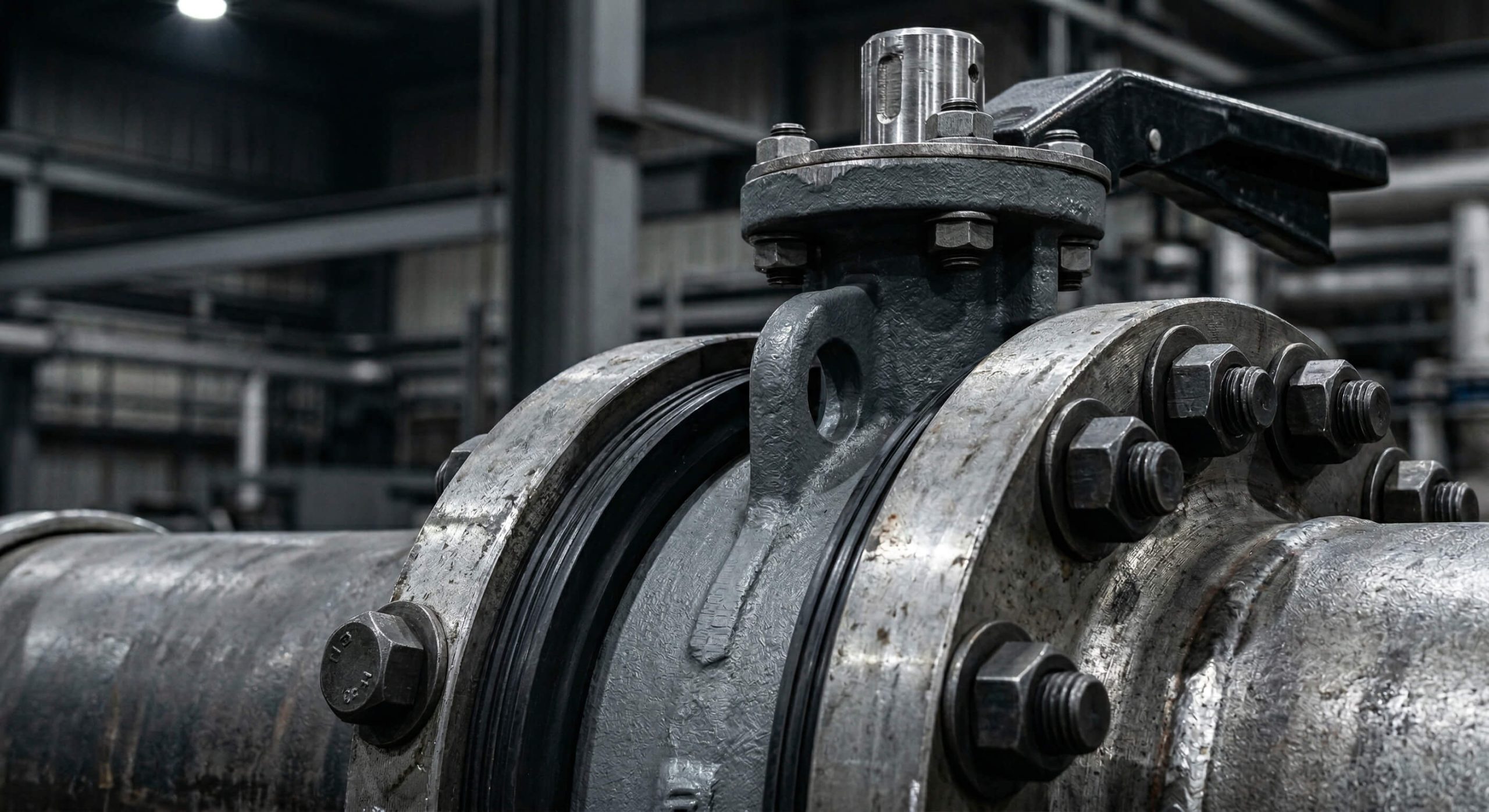
A correct setup demands precise flange alignment and careful bolt tightening. You handle piping systems daily under intense pressure. Flawed connections cause massive leaks, costing facilities thousands. We provide exact methods securing fluid control systems perfectly. When a butterfly valve installed correctly operates, facility managers sleep better.
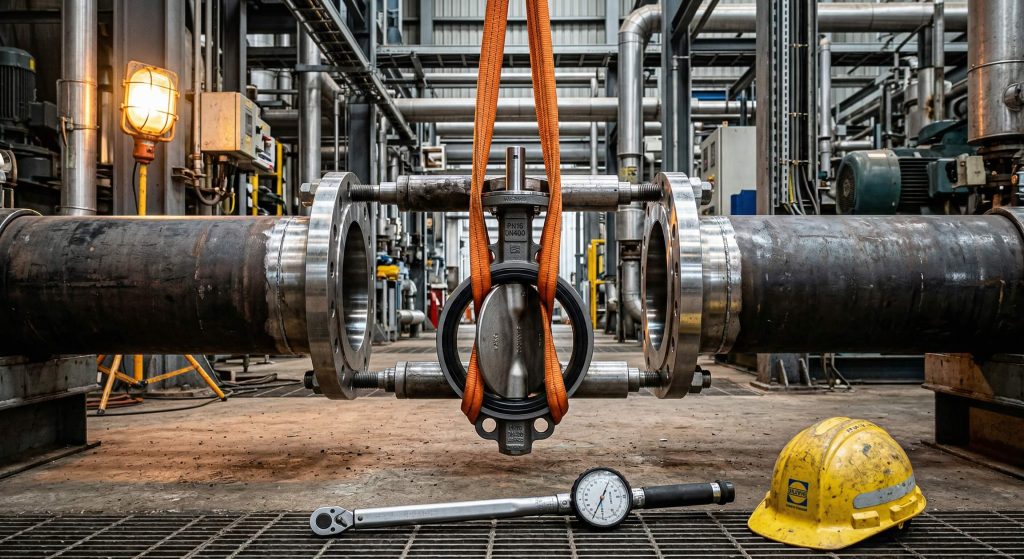
Why is a butterfly valve installed accurately?
An exact fit stops dangerous leaks from ruining your piping network. Every butterfly valve installed precisely prevents mechanical stress across industrial setups. Poor alignment breaks expensive equipment rapidly. Your maintenance team saves money doing work right during initial phases. Many contractors rush this critical step, causing severe headaches later. Proper techniques guarantee structural integrity remains intact under high pressure.
Flange Alignment Basics
Proper spacing guarantees smooth mechanical operation for years. Creating enough room protects fragile disc components from scraping against hard metal flanges. Precision instruments help workers achieve exact measurements quickly. Here’s the deal: forcing parts together destroys seat surfaces instantly.
- Use pipe spreaders safely.
- Clean metal faces thoroughly.
- Check dimensions twice.
Handling Equipment Safely
Workers must support heavy components using hoists during manual lifting. Bumping delicate seats damages core sealing barriers permanently. Proper training prevents dangerous accidents during complex rigging operations.
| Tool Type | Purpose | Risk Level |
|---|---|---|
| Chain Hoist | Lifting heavy items | Low |
| Pipe Spreader | Creating gap space | Medium |
| Hand Wrench | Tightening nuts | Low |
Analyzing this data shows safer mechanical tools reduce component damage risks dramatically.
Key Takeaway: Using correct tools stops accidental harm during tricky mechanical procedures.
How is a butterfly valve installed safely?
Following safety protocols prevents severe injuries and costly mechanical failures. A butterfly valve installed safely keeps workers protected while securing complex networks. Rushing through steps ignores obvious warning signs. Taking time guarantees secure, long-lasting industrial results. Personal protective equipment shields your staff from accidental fluid sprays. Careful handling preserves both human life and expensive mechanical assets.
Creating Gap Separation
Sufficient space allows easy part insertion without harmful friction. Metal rubbing against rubber tears core seals apart quickly. Spreading pipes carefully provides adequate clearance for safe mounting. What’s the real story? Careless workers skip spreading pipes, ruining expensive assets.
- Widen gaps uniformly.
- Insert units slowly.
- Avoid sliding motions.
Can flanges damage seats?
Rough edges slice through soft elastomers instantly upon contact. Keeping disc edges slightly open prevents them catching on sharp metal. Smooth surfaces promote better sealing capabilities long-term.
| Flange Type | Material | Seal Risk |
|---|---|---|
| Weld Neck | Steel | High |
| Slip On | Iron | Medium |
| Threaded | Brass | Low |
Examining these profiles helps maintenance teams choose appropriate sealing strategies.
Key Takeaway: Adequate spacing protects expensive elastomeric components from sharp metal edges.
When is a butterfly valve installed properly?
It functions correctly only after achieving perfect center alignment. Having a butterfly valve installed properly eliminates uneven pressure across flow systems. Off-center placement creates turbulence, destroying internal components fast. Precision centering dictates total fluid control success. Minor deviations magnify into major problems once fluids start flowing. Correct measurements save technicians countless hours during complex commissioning procedures.
Centering Unit Body
Perfect positioning distributes mechanical loads evenly across all connecting points. Unbalanced tightening pulls units off center easily. Constant verification prevents unwanted shifting during hardware installation. You might be wondering: why does centering matter so much?
- Center prevents disc hits.
- Even pressure extends life.
- Seals compress uniformly.
Securing Initial Bolts
Operators should insert mounting hardware loosely during early adjustment phases. Hand-tightening gives workers flexibility for minor positioning tweaks later. Leaving nuts loose permits slight nudges for absolute perfection.
| Bolt Step | Action | Benefit |
|---|---|---|
| Phase One | Hand tighten | Allows shifts |
| Phase Two | Check center | Prevents rubs |
| Phase Three | Tool torque | Final lock |
Reviewing these phases guarantees technicians never clamp systems down prematurely.
Key Takeaway: Loose initial fasteners allow critical adjustments before applying final torque.
Why is a butterfly valve installed centered?
Centering prevents movable discs from crashing into rigid pipe walls. An off-center butterfly valve installed hurriedly suffers catastrophic failure during operation. Fluid dynamics demand symmetrical pathways for maximum performance. Crooked placements wear out elastomeric seats unevenly. Industrial pipelines experience intense vibrations altering loose components over time. Establishing absolute symmetry guards against these destructive physical forces continuously.
Disc Clearance Checks
Engineers must confirm full rotational freedom before applying final torque. Hitting metal stops indicates severe misalignment issues needing immediate correction. Checking motion manually uncovers hidden friction points quickly. Ready for the good part? Testing movement early saves hours of frustrating rework later.
- Open disc fully.
- Listen for scraping.
- Close disc gently.
Preventing Flow Turbulence
Asymmetrical gaps generate high-velocity fluid jets inside pipelines. These chaotic streams erode metal surfaces at alarming rates. Symmetrical flows protect interior walls from abrasive wear.
| Defect | Cause | Result |
|---|---|---|
| Scraping | Off-center | Damaged disc |
| Turbulence | Uneven gap | Erosion |
| Leaking | Poor seal | Fluid loss |
These defect correlations prove accurate centering extends asset lifespans considerably.
Key Takeaway: Verifying unobstructed motion prevents catastrophic internal damage during startup.
Where is a bare butterfly valve installed?
Technicians place them directly between matching pipe flanges securely. Keeping a butterfly valve installed perfectly horizontal limits dirt accumulation near moving stems. Vertical pipes require horizontal stem orientations for best performance. Dirt falls away instead of entering sensitive packing areas. Environmental factors play massive roles in determining correct mounting angles. Smart technicians evaluate surrounding conditions before tightening any metal bolts.
Choosing Best Orientations
Horizontal pipelines allow vertical stem placements easily. However, mounting stems horizontally prevents sediment from settling into lower bearings. Analyzing flow direction helps determine proper component placement. This is where it gets interesting… gravity works against vertical stems handling dirty fluids.
- Analyze fluid type.
- Check pipe angle.
- Determine stem direction.
Handling Dirty Media
Particles suspended within fluids destroy soft bearing materials quickly. Proper stem angles force debris downward, away from sensitive moving junctions. Clever positioning extends maintenance intervals substantially.
| Stem Angle | Pipe Flow | Debris Risk |
|---|---|---|
| Vertical | Horizontal | High |
| Horizontal | Horizontal | Low |
| Horizontal | Vertical | Medium |
Analyzing installation angles minimizes abrasive wear from contaminated industrial media.
Key Takeaway: Smart positioning uses gravity naturally, protecting internal bearings from grit.
Why is a lug butterfly valve installed here?
Lug designs allow engineers dead-end piping networks without disrupting flow. A lug butterfly valve installed correctly uses threaded inserts for secure bolting. They securely hold line pressure even when one side opens. This feature makes maintenance on downstream sections incredibly simple. Isolating specific zones keeps production running smoothly without total shutdowns. Smart designs offer incredible flexibility during demanding factory maintenance schedules.
Dead-End Service Rules
Workers bolt these units directly onto single connecting pipes. Doing so isolates specific zones while keeping main lines active. Proper torque values prevent thread stripping under extreme stress. Truth be told, standard wafer styles cannot perform dead-end duties safely.
- Thread bolts carefully.
- Match flange patterns.
- Use correct torque.
Does bolting sequence matter?
Tightening hardware randomly causes uneven stress across entire structures. Using a star pattern distributes clamping forces perfectly around circular bodies. Even pressure stops leaks before they ever start.
| Valve Style | End Service | Connection Type |
|---|---|---|
| Wafer | No | Clamped |
| Lug | Yes | Threaded |
| Flanged | Yes | Bolted |
Comparing these styles highlights why lug versions dominate isolation applications.
Key Takeaway: Lug designs provide unmatched safety for isolating sections during routine maintenance.
How is a tested butterfly valve installed?
Workers integrate verified units into active systems with complete confidence. Getting a butterfly valve installed right involves final functional checks post-tightening. Technicians cycle actuators repeatedly, confirming smooth transitions from open states. Passing factory tests means little if field mounting bends frames. Field testing reveals hidden flaws unseen during basic visual inspections. Thorough verification protocols separate amateur installations from professional engineering triumphs.
Final Torque Application
Mechanics apply specific torque values using calibrated wrenches systematically. Over-tightening crushes rubber seats, destroying their ability for blocking fluids. Following manufacturer specifications prevents accidental mechanical crushing. Listen to this: excessive force cracks cast iron bodies instantly.
- Read manual limits.
- Use calibrated tools.
- Follow star patterns.
Verifying Actuator Travel
Automated controls require exact stopping points for proper sealing. Limit switches must cut power exactly when discs close completely. Fine-tuning these switches prevents motor burnout.
| Action | Purpose | Consequence |
|---|---|---|
| Torque | Even pressure | Stops leaks |
| Cycle | Check bind | Ensures motion |
| Set Stop | Limit travel | Saves seals |
Executing these final checks guarantees automated systems run without mechanical binding.
Key Takeaway: Calibrated tightening combined with travel verification secures flawless automated control.
Why is a new butterfly valve installed open?
An open position protects delicate edges during tight flange insertions. A closed butterfly valve installed forcefully rubs its sealing faces raw. Keeping discs slightly cracked reduces external diameter profiles temporarily. This trick prevents catastrophic tearing of expensive rubber liners. Manufacturers specifically recommend this technique for maximizing seal lifespan dramatically. Simple precautions prevent catastrophic failures before operations even begin officially.
Protecting Seat Faces
Elastomeric materials tear easily when dragged across rough metal flanges. Slight opening pulls outer edges inward, away from danger zones. Careful handling preserves soft materials perfectly. Truth is, dragging closed discs ruins them before they ever function.
- Open disc slightly.
- Insert unit gently.
- Center body carefully.
Managing Compression Stress
Fully closed discs stretch rubber liners outward maximally. Inserting under maximum stretch creates high friction against mating pipe surfaces. Relaxing rubber compounds prevents unwanted tearing.
| Disc Position | Profile Width | Damage Risk |
|---|---|---|
| Closed | Maximum | Severe |
| Slightly Open | Reduced | Minimal |
| Fully Open | Extended | High |
Studying this dimensional chart reveals why slight openings prevent rubber tears.
Key Takeaway: A slightly open disc profile slips between pipes without damaging seals.
When is a main butterfly valve installed?
Crews place large isolation units during initial facility construction phases. Every main butterfly valve installed correctly acts as a major emergency shutoff. These massive components require cranes and heavy lifting gear always. Proper planning prevents disastrous delays during major infrastructure projects. Massive infrastructure demands rigorous planning before execution starts on site. Experienced project managers orchestrate these complex maneuvers with absolute precision.
Coordinating Heavy Lifts
Rigging heavy components demands strict safety protocols for everyone involved. Dropping multi-ton objects destroys equipment and threatens human lives immediately. Constant communication keeps crane operators synchronized with ground teams. You better believe it, rushing crane operations causes catastrophic workplace accidents.
- Inspect lifting slings.
- Clear work zones.
- Use tag lines.
Commissioning Large Systems
Large networks require slow fluid introduction, preventing massive water hammer. Opening massive discs too fast sends destructive shockwaves through pipes. Gradual pressurization protects downstream equipment effectively.
| Stage | Speed | Hammer Risk |
|---|---|---|
| Initial | Very Slow | Low |
| Midpoint | Moderate | Low |
| Final | Normal | None |
Following this pacing guide prevents hydraulic shockwaves from rupturing connecting joints.
Key Takeaway: Careful lifting and slow fluid introduction protect massive infrastructure investments safely.
Why get your butterfly valve installed now?
Upgrading outdated equipment prevents unexpected failures interrupting your daily operations. A modern butterfly valve installed promptly improves total system efficiency overnight. Old components leak slowly, wasting valuable resources over long periods. Taking action today secures reliable performance for coming decades. Investing money today prevents catastrophic financial losses occurring tomorrow unexpectedly. Forward-thinking managers prioritize continuous improvement across all operational levels constantly.
Upgrading Aging Infrastructure
Deteriorating seals compromise process purity across manufacturing facilities consistently. Replacing worn components restores original factory specifications instantly. New parts eliminate contamination risks completely. What does this mean for you? Better equipment yields higher quality products consistently.
- Audit old valves.
- Schedule downtime smartly.
- Install modern replacements.
Can new tech save money?
Advanced materials resist corrosive chemicals better than older rubber compounds. High-performance units require less maintenance, saving huge labor costs annually. Upgrading repays investments through massive efficiency gains.
| Tech Age | Material | Maintenance Need |
|---|---|---|
| 20 Years | Standard Rubber | Very High |
| 10 Years | Basic EPDM | Moderate |
| New | PTFE Lined | Very Low |
Comparing material lifespans proves modern upgrades reduce long-term operational costs massively.
Key Takeaway: Proactive equipment upgrades eliminate unexpected downtime and reduce expensive maintenance tasks.
Conclusion
Routine maintenance requires precise alignment and careful bolt tightening sequences always. Replacing aging infrastructure stops leaks, securing perfect flow management operations. You handle piping systems daily under intense pressure, facing flawed connections causing massive leaks. We provide exact methods securing fluid control systems perfectly. Trust our experts for secure fluid solutions; contact us today for personalized guidance. We build resilient piping networks powering industrial progress globally.
FAQ
Q1: Can I use standard flanges?
Yes, you can use most standard designs. Most bodies match standard ANSI drilling patterns perfectly, allowing seamless integration.
Q2: What’s the best way for tightening bolts?
A star pattern works best. This method distributes clamping force evenly, preventing uneven seal compression.
Q3: How do I know if alignment fails?
You will feel mechanical binding. Moving parts scrape against metal pipes when centers remain unbalanced during setup.
Q4: Can I skip testing movement?
No, never skip functional testing. Unverified systems often jam, causing severe internal damage upon initial startup.
Q5: Why does my unit leak immediately?
Uneven torque application causes immediate leaks. Improper bolting pinches soft rubber seals, creating tiny gaps for fluids.