
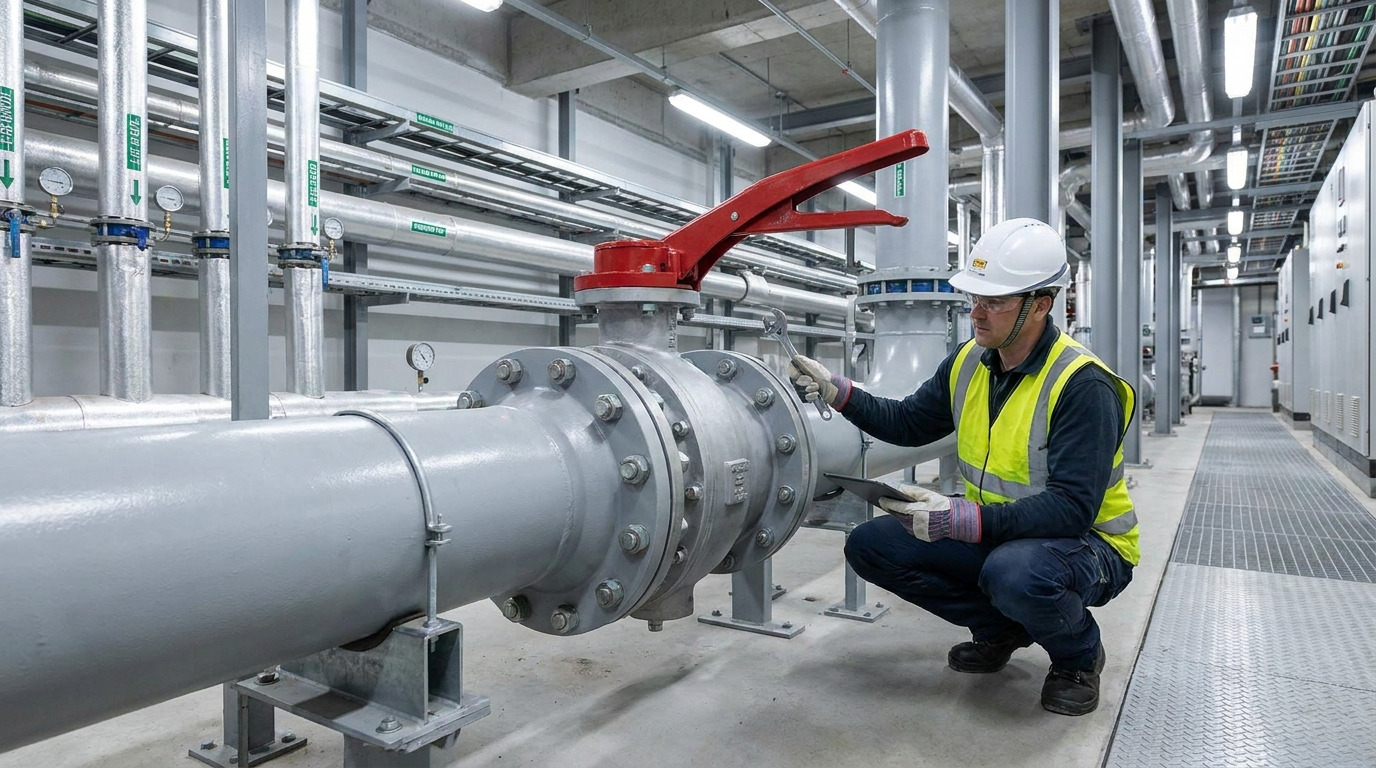
You select, use, and maintain butterfly valves successfully by matching valve design and materials with service duty, installing each unit correctly, and following a risk-based butterfly valve maintenance routine. This approach protects shutoff performance while reducing avoidable repairs.
A plant operator may notice rising actuator torque shortly before a scheduled production run. Ignoring that warning could damage a seat, stall an actuator, or force an unplanned shutdown. This guide shows you how proper selection, operation, inspection, and maintenance can prevent that situation.
What Does a Butterfly Valve Do in a Piping System?
A butterfly valve starts, stops, or throttles flow with a quarter-turn disc, while butterfly valve maintenance keeps that motion dependable. When open, its disc sits broadly parallel with flow; when closed, it presses against a seat that forms a seal. Intermediate positions can regulate flow where pressure drop and control accuracy remain acceptable.
How does disc movement control flow?
Here’s the practical point: small disc movements near a closed position can produce large flow changes. Operators should use a suitable actuator and positioner whenever a process requires repeatable modulation.
- Use full-open or full-closed positions for isolation duty.
- Confirm an approved operating range before throttling.
- Check disc direction against marked flow guidance.
- Avoid rapid closure where pressure surges may occur.
| Operating mode | Disc position | Main purpose |
|---|---|---|
| Isolation | 0° or 90° | Start or stop flow |
| Regulation | Intermediate | Adjust process flow |
| Emergency action | Rapid quarter-turn | Isolate a line |
This comparison shows why operating duty must be defined before actuator sizing. Key Takeaway: You can reduce seat wear and unstable control by matching disc travel with process needs.
How Should You Select a Valve for Service Conditions?
You should select a valve from pressure, temperature, media, size, flow duty, and cycle frequency because butterfly valve maintenance cannot correct a basic specification mismatch. Review normal values and credible extremes rather than relying only on nominal operating data. Flange standards, available installation space, and shutdown access also affect a sound choice.
Which application data should you collect?
But here’s the catch: a compatible body does not mean every wetted component will survive. Seat, disc, stem, coating, packing, and fasteners may face different chemical or mechanical loads.
- Record minimum and maximum pressure.
- Identify temperature peaks and cycling frequency.
- Define solids, viscosity, concentration, and pH.
- Specify shutoff class and control duty.
- State fail-open, fail-closed, or fail-in-place needs.
| Service factor | Selection question | Possible risk |
|---|---|---|
| Media | Is every wetted part compatible? | Swelling or corrosion |
| Pressure | What differential can occur? | Leakage or overload |
| Temperature | Can peaks harden a seat? | Loss of sealing |
| Cycles | How often will it move? | Accelerated wear |
This matrix directs attention toward conditions that drive premature failure. Key Takeaway: You receive a safer specification when your inquiry includes real operating limits rather than a pipe size alone.
Which Butterfly Valve Design Fits Your Application?
Concentric valves suit many general services, while double- or triple-offset designs serve tougher duties where butterfly valve maintenance must address heat, pressure, or aggressive media. Offset geometry moves sealing surfaces apart earlier during opening, reducing rubbing across each operating cycle.
What separates concentric and offset designs?
Now consider this: a more advanced design does not automatically produce better lifecycle value. Selection should reflect actual pressure, temperature, leakage, and cycling demands.
- Choose concentric construction for many water and HVAC duties.
- Review double-offset designs for higher pressure or frequent cycling.
- Use triple-offset construction for suitable metal-seated service.
- Confirm seat replacement and spare-part availability.
- Verify face-to-face and flange compatibility.
| Design | Typical seat | Suitable duty |
|---|---|---|
| Concentric | Elastomer | General water and HVAC |
| Double offset | Soft or resilient | Higher-cycle industrial service |
| Triple offset | Metal | Heat and severe service |
This summary connects valve geometry with expected sealing behavior. Key Takeaway: You can control purchase and maintenance costs by specifying only the offset level your process genuinely requires.
What Advantages Can Butterfly Valves Offer?
Butterfly valves offer compact installation, quick quarter-turn operation, modest weight, and practical automation, while butterfly valve maintenance usually involves fewer internal parts than many multi-turn designs. These qualities make them attractive for large pipe sizes and crowded mechanical rooms. A correctly sized actuator may also require less space than heavier alternatives.
Where do these benefits create business value?
Here’s where value appears: reduced valve weight can simplify supports, handling, and installation planning. Fast operation also supports remote isolation where process response matters.
- Short bodies conserve space between connected equipment.
- Quarter-turn motion supports simple automation.
- Fewer internal components simplify inspection.
- Large sizes can remain manageable during installation.
- Replaceable seats may extend usable valve life.
| Advantage | Project effect | Operating effect |
|---|---|---|
| Compact body | Less installation space | Easier access |
| Quarter-turn action | Simple actuator package | Fast isolation |
| Low part count | Simpler spare planning | Shorter service tasks |
| Broad size range | Flexible piping design | Consistent valve family |
This table shows how one design choice affects both capital work and daily operations. Key Takeaway: You gain most value when compact construction, fast motion, and service access match a defined plant requirement.
What Limitations Should You Plan Around?
You should plan for disc obstruction, cavitation risk, erosion, non-full-port flow, and limited throttling conditions during butterfly valve maintenance. A disc remains inside each flow path even when fully open. Slurries, fibrous media, high velocity, or large pressure drops can therefore increase wear or destabilize control.
When might another valve type work better?
Watch what happens next: using a butterfly valve outside its suitable range often shifts low purchase cost into repeated repair expense. Review another valve style if your line requires unobstructed passage, pigging, or precise throttling across a broad load range.
- Check cavitation risk under minimum downstream pressure.
- Review erosion where solids strike disc edges.
- Avoid unsupported throttling positions.
- Confirm cleaning and pigging requirements.
- Examine corrosion allowance for aggressive fluids.
| Limitation | Warning sign | Practical response |
|---|---|---|
| Disc obstruction | Debris buildup | Review media and velocity |
| Cavitation | Noise or vibration | Change sizing or duty |
| Seat erosion | Rising leakage | Inspect flow direction |
| Limited control | Unstable flow | Review control valve options |
This comparison helps separate a maintenance symptom from a selection problem. Key Takeaway: You avoid recurring failures when process limitations are reviewed before approving valve type.
How Should You Install a Butterfly Valve Correctly?
You should install a butterfly valve between aligned, clean flanges with its disc partly open, and butterfly valve maintenance should begin with recorded installation checks. Do not force a valve between misaligned flanges or use its actuator as a lifting point. Confirm that the disc can rotate without striking pipework, gaskets, or liners.
What should an installation check cover?
Here’s the field method: inspect piping before tightening any bolt. Uneven flange compression can distort a resilient seat and create leakage before commissioning begins.
- Flush debris from connected pipework.
- Verify flange faces, rating, and bolt pattern.
- Support pipe loads independently from valve body.
- Tighten bolts gradually in a cross pattern.
- Stroke the valve before pressurizing the line.
- Record actuator travel and limit settings.
| Installation stage | Required check | Acceptance point |
|---|---|---|
| Before placement | Clean and aligned flanges | No visible obstruction |
| Bolting | Even tightening pattern | Uniform compression |
| Stroking | Free disc travel | No contact or binding |
| Commissioning | Seat and shell condition | No abnormal leakage |
This sequence makes installation defects easier to find before they become operating failures. Key Takeaway: You protect seats and actuators when alignment, clearance, and travel checks occur before pressure enters a line.
How Does Butterfly Valve Maintenance Prevent Failures?
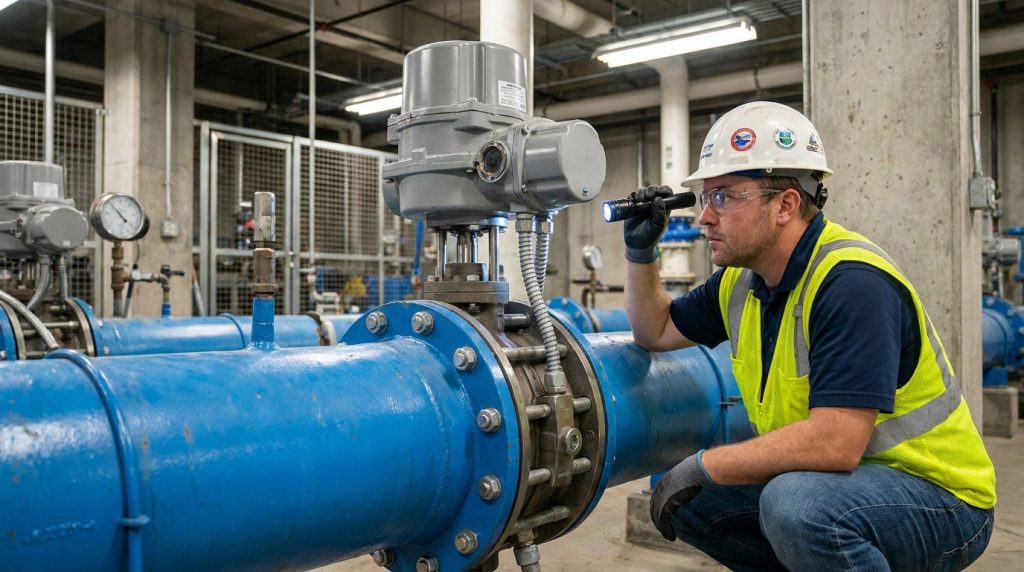
A sound butterfly valve maintenance plan prevents failures through scheduled inspection, functional cycling, cleaning, actuator checks, and condition-based part replacement. Frequency should reflect service severity, operating cycles, safety impact, and past findings. Manufacturer instructions should govern lubricant type, torque values, seal handling, and adjustment limits.
What belongs in a preventive routine?
Here’s the useful part: not every valve needs an identical calendar interval. A high-cycle control valve deserves closer observation than a clean-water isolation valve that remains accessible and stable.
- Inspect external leakage and corrosion.
- Check mounting bolts and actuator connections.
- Exercise inactive valves under controlled conditions.
- Trend operating torque and travel time.
- Examine seats during planned shutdowns.
- Replace worn seals with compatible parts.
| Maintenance level | Typical activity | Trigger |
|---|---|---|
| Operator check | Visual and functional review | Routine rounds |
| Planned service | Cleaning and adjustment | Time or cycle limit |
| Condition repair | Seat or actuator work | Measured deterioration |
| Major service | Internal inspection | Shutdown opportunity |
This structure supports maintenance effort based on consequence and evidence. Key Takeaway: You can reduce emergency work when routine observations feed a documented condition-based schedule.
How Do You Inspect Seats, Discs, Stems, and Actuators?
You inspect sealing and motion components for wear, damage, looseness, and changed performance, while butterfly valve maintenance records should connect every finding with service history. Depressurize, isolate, drain, and verify safe access before opening any valve assembly. Qualified personnel should follow site procedures for stored pneumatic, electrical, hydraulic, or mechanical energy.
Which defects deserve immediate attention?
Look closely: minor symptoms often reveal where a larger failure has started. Seat cuts, uneven disc marks, stem movement, coating loss, or loose actuator hardware can explain leakage and torque changes.
- Examine seats for hardening, swelling, tears, or flattening.
- Check discs for pitting, deposits, and edge damage.
- Test stems and bushings for excess movement.
- Inspect actuator mounts, air lines, wiring, and limits.
- Compare operating torque with earlier readings.
- Confirm position indication against actual travel.
| Component | Typical defect | Likely effect |
|---|---|---|
| Seat | Cut or permanent set | Internal leakage |
| Disc | Corrosion or deposits | Poor sealing |
| Stem | Wear or misalignment | Irregular motion |
| Actuator | Loose connection | Incomplete travel |
This defect map links visible evidence with likely operating consequences. Key Takeaway: You can plan a targeted repair when inspection records identify both damaged parts and probable causes.
How Can You Troubleshoot Common Operating Problems?
You troubleshoot from symptoms toward mechanical, process, and control causes, while butterfly valve maintenance data helps you avoid replacing serviceable parts. Confirm valve position, process pressure, and actuator command before dismantling equipment. One symptom may have several causes, so test simpler external factors early.
What does each symptom suggest?
Here’s the diagnostic shortcut: compare current behavior with a known healthy baseline. Rising torque may point toward seat swelling, deposits, misalignment, or actuator weakness rather than one universal fault.
- For internal leakage, inspect closure travel and seat condition.
- For external leakage, examine stem sealing and fasteners.
- For slow travel, check power supply and actuator sizing.
- For vibration, review velocity, pressure drop, and mounting.
- For sticking, inspect deposits, corrosion, and alignment.
- For false position feedback, test switches and calibration.
| Symptom | Possible cause | Initial check |
|---|---|---|
| Seat leakage | Damage or incomplete closure | Travel stops |
| High torque | Deposits or seat distortion | Manual movement |
| Slow actuation | Low supply or overload | Power source |
| Vibration | Unstable flow | Process conditions |
This symptom-based view narrows investigation without assuming every problem begins inside a valve. Key Takeaway: You reduce repair time when troubleshooting follows measured evidence and confirms root cause before part replacement.
How Can Records Improve Maintenance and Procurement?
Records improve lifecycle decisions because butterfly valve maintenance history reveals recurring materials, installation, actuator, and service problems. Link each valve tag with specifications, drawings, certificates, inspection findings, repairs, and spare-part data. Procurement teams can then compare suppliers through field performance rather than purchase price alone.
Which information should your valve register contain?
Here’s what pays back: consistent records turn isolated repairs into usable reliability evidence. They also help engineers repeat successful configurations across new projects.
- Record size, rating, materials, and design standard.
- Store actuator model, torque basis, and fail position.
- Log installation date and commissioning results.
- Track inspection findings, leakage, and travel time.
- List replaced parts and probable failure causes.
- Retain certificates and approved drawings.
| Record group | Example data | Business use |
|---|---|---|
| Technical | Materials and pressure class | Correct replacement |
| Operating | Cycles and service conditions | Interval planning |
| Maintenance | Findings and repairs | Failure analysis |
| Commercial | Supplier and lead time | Procurement planning |
This register connects engineering evidence with maintenance and purchasing decisions. Key Takeaway: You gain stronger specifications and more predictable spares when every repair contributes structured lifecycle data.
Ready to Build a More Reliable Valve Program?
Successful valve performance comes from compatible materials, suitable design, correct installation, controlled operation, targeted inspections, and disciplined records. These practices address selection errors, premature seat wear, actuator trouble, leakage, and recurring shutdowns while giving your team a practical maintenance framework.
For application review, material guidance, or a valve package matched with your operating data, contact us today. We help industrial teams turn process requirements into dependable flow-control decisions because reliable infrastructure should support safer, steadier operations for every facility.
Frequently Asked Questions
Can I use a butterfly valve for throttling?
Yes, under suitable process conditions. Confirm an approved operating range because high differential pressure, cavitation, or unstable flow may damage components and weaken control.
What’s the best seat material for water service?
EPDM commonly suits clean-water and many HVAC duties. Temperature, treatment chemicals, pressure, and regulatory requirements must still match its published compatibility range.
How do I know if a valve seat needs replacement?
Replace it when inspection finds cuts, hardening, swelling, permanent deformation, or leakage that remains after travel adjustment. Repeated torque increases can also indicate seat deterioration.
Can I maintain an actuated valve without removing it?
Yes, some external checks and adjustments can be completed in place. Internal work requires proper isolation, depressurization, energy control, and adequate service access.
What’s the best maintenance interval for a butterfly valve?
No single interval fits every service. Set inspection frequency from cycle count, media severity, failure consequence, manufacturer guidance, and recorded condition trends.