
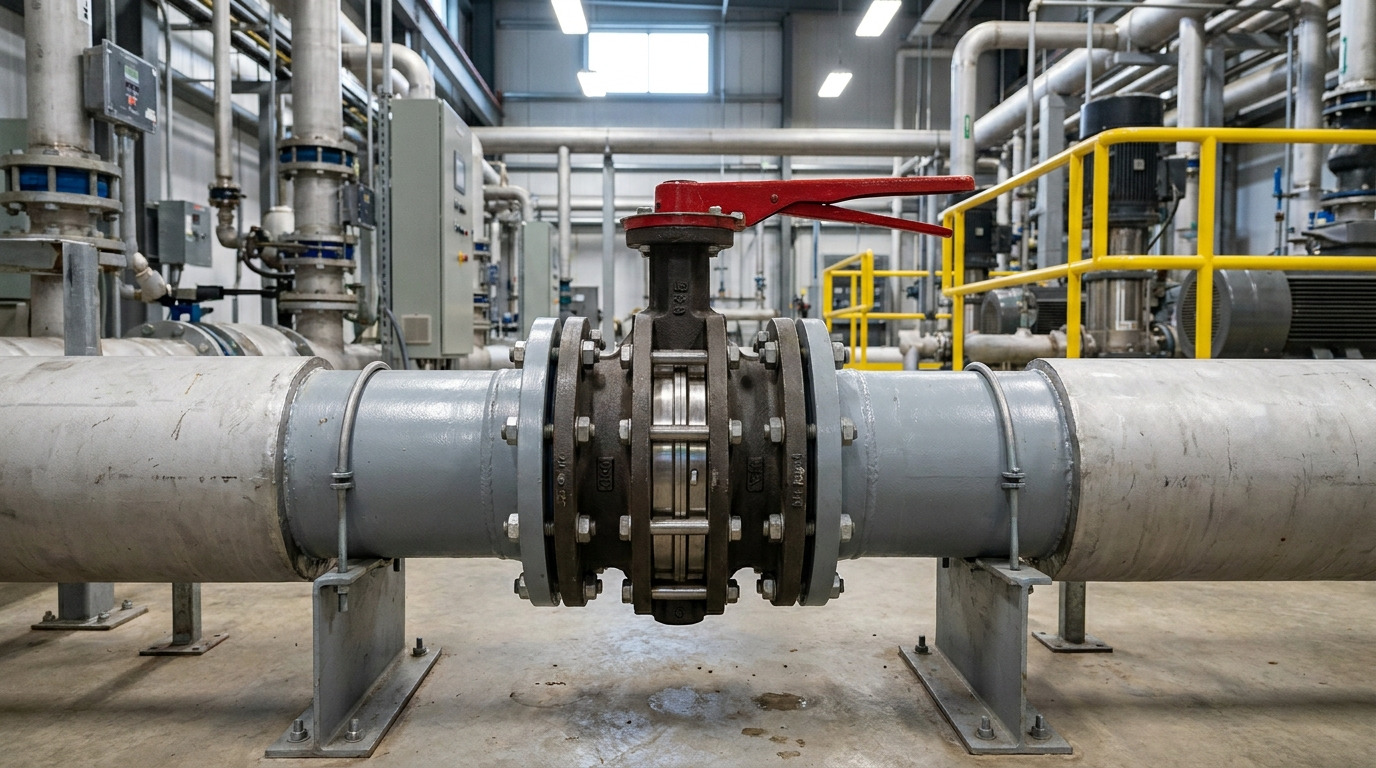
The key difference between wafer and lug styles comes down to their installation method and suitability for end-of-line service. Piping systems often face severe leaks when incompatible components fail under pressure. A mismatched component leads to catastrophic system downtime and expensive repairs. You can prevent these failures by understanding specific application requirements before installation. Incorporating the correct butterfly valve wafer solves these alignment issues and provides a reliable seal.
How does a butterfly valve wafer differ from lug?
A butterfly valve wafer mounts by being squeezed between two pipe flanges using long bolts. This clamping method secures the butterfly valve wafer tightly against the adjoining pipe sections. The lug variation features threaded inserts on both sides. These inserts allow installation using separate bolt sets for each flange side.
You might wonder how this impacts daily operations. The lug version permits removal of downstream piping while maintaining pressure upstream. The wafer type requires complete system depressurization before any pipe disconnection happens.
What defines the wafer design?
The wafer type lacks protruding attachment points around its perimeter. It relies entirely on friction and pressure applied by surrounding flange bolts. This makes it lighter.
Here’s the deal:
- Requires long bolts passing across the entire body.
- Does not support independent single-side removal.
- Weighs less than alternatives.
How does lug style operate?
Lug variations use tapped holes machined directly into their metal casing. Workers thread bolts directly into these holes from either end. This creates a highly secure attachment.
Which type suits your system best?
Your choice depends heavily on maintenance schedules and system architecture. Systems requiring frequent downstream modifications benefit from lug patterns. Permanent pipe runs operate perfectly fine using wafer variations.
Key Takeaway: Choosing between these styles depends heavily on your need for future downstream maintenance without system shutdowns.
| Feature | Wafer Style | Lug Style |
|---|---|---|
| Installation | Clamped between flanges | Bolted into tapped holes |
| End-of-line service | Not recommended | Highly suitable |
| Weight | Lighter | Heavier |
This table clarifies how structural differences directly dictate where you should place each component within your piping layout.
Why choose a butterfly valve wafer for piping?
Opting for a butterfly valve wafer saves substantial space and reduces overall material costs. You install a butterfly valve wafer when minimizing bulk remains your primary engineering priority. The compact body fits easily into tight mechanical rooms where traditional gate mechanisms cannot operate.
Engineers prefer this streamlined form factor for large-scale water distribution networks. Reduced weight lowers structural stress on supporting brackets. Lower material usage also translates directly to cheaper procurement costs.
Does weight matter for installation?
Heavy piping components require specialized lifting equipment and extra structural supports. Lighter components speed up construction timelines.
What’s the real story?
- Less stress placed on pipe hangers.
- Faster manual positioning by crew members.
- Lower shipping expenses for bulk orders.
How space impacts valve selection?
Tight corridors restrict the physical dimensions of plumbing layouts. A slim profile allows engineers to pack more functional elements into confined spaces. You save valuable real estate.
Key Takeaway: Lightweight and slim profiles make these components ideal for high-density piping configurations where space and budget are limited.
| Benefit | Impact on Project |
|---|---|
| Reduced Weight | Faster handling |
| Slim Profile | Fits tight spaces |
| Lower Material | Budget savings |
Reviewing these benefits reveals why compact designs dominate modern industrial HVAC plumbing layouts.
What are butterfly valve wafer pressure ratings?
Pressure ratings for a butterfly valve wafer generally range from 150 PSI up to 300 PSI depending on construction. Every butterfly valve wafer requires careful matching with system operational pressures to avoid catastrophic seal blowouts. Exceeding recommended pressure limits causes immediate disc deformation and fluid leakage.
Manufacturers test these bodies rigorously under varied load conditions. Standard models handle typical municipal water pressures easily. High-pressure steam lines require specifically engineered variations.
How pressure drops affect flow?
The disc remains in the fluid path even when fully open. This obstruction causes a slight drop in fluid momentum.
This is where it gets interesting:
- Disc thickness determines friction loss.
- High velocity increases turbulence.
- Proper sizing minimizes energy waste.
What is the max pressure limit?
Standard elastomer-seated models handle standard municipal loads without issue. Metal-seated variants tolerate significantly higher force.
Key Takeaway: You must verify your system’s peak operating pressure against the manufacturer’s certified limit to prevent premature equipment failure.
| Material Type | Max Pressure (PSI) | Typical Use |
|---|---|---|
| Standard EPDM | 150 | Water lines |
| PTFE Lined | 200 | Chemical lines |
| High-Performance | 300+ | Steam/Gas |
These ratings demonstrate how material selection directly influences the maximum force your plumbing infrastructure can safely withstand.
Can I use a butterfly valve wafer for dead-end?
You should generally avoid using a butterfly valve wafer for dead-end service because it lacks independent bolting capability. A butterfly valve wafer relies on two opposing flanges to maintain its structural seal integrity. Removing one flange removes the clamping force needed to hold back fluid pressure.
If you must isolate a pipe end, lug patterns provide the necessary threaded stability. They hold pressure safely even when downstream pipes are completely missing.
Why isolation requires specific types?
Isolating a section means stopping fluid flow completely while workers open the system downstream. You need a device that stays securely anchored.
Ready for the good part?
- Lug types anchor securely to one pipe.
- Safety regulations mandate proper isolation gear.
- Threaded inserts prevent blow-outs.
Is wafer suited for end-of-line?
No, it cannot function as an end-cap safely. The absence of a second flange eliminates the compression holding the internal liner.
Key Takeaway: Never utilize clamped-style components for end-of-line duties unless specifically modified with a blank downstream companion flange.
| Service Type | Recommended Style | Safety Risk |
|---|---|---|
| Mid-line flow | Wafer | Low |
| End-of-line | Lug | High (if mismatched) |
| System isolation | Lug | Low |
Understanding this limitation prevents dangerous accidents caused by improper equipment deployment during routine maintenance shutdowns.
How to install a butterfly valve wafer correctly?
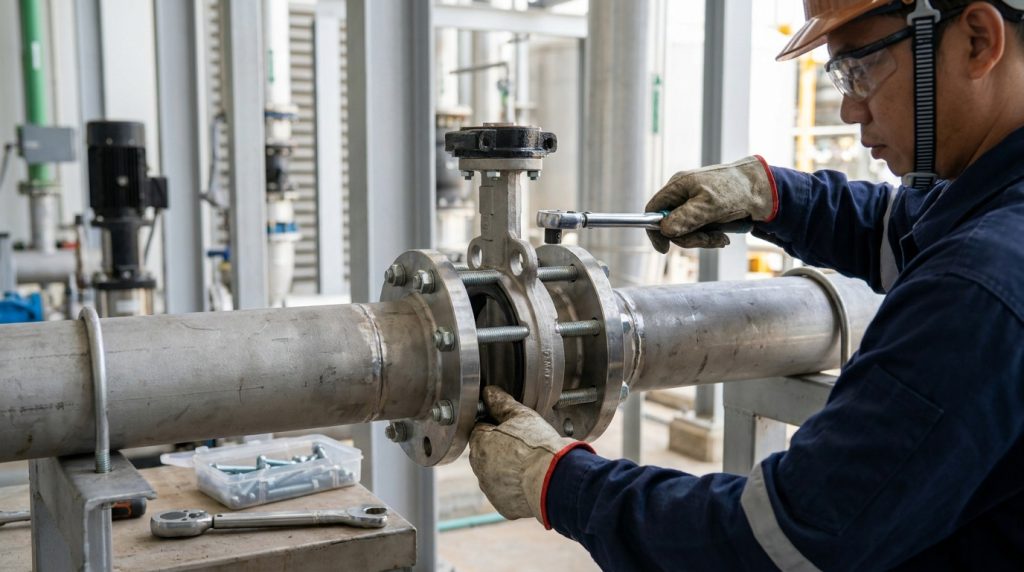
Proper installation of a butterfly valve wafer involves centering the body precisely before applying uniform torque to the flange bolts. A misaligned butterfly valve wafer will pinch its rubber seat and leak immediately upon pressurization. You must ensure the disc opens freely without scraping the inner pipe walls.
Workers often rush this process and over-tighten one side. Uneven tightening distorts the elastomer liner. Always use a star-pattern sequence when torquing bolts.
What flange alignment steps matter?
Pipes must align perfectly before you insert the sealing unit. Forcing pipes together using bolt tension damages the rubber faces.
You might be wondering:
- Clean flange faces thoroughly first.
- Leave slight gaps during insertion.
- Check disc clearance manually.
How tightening bolts affects seals?
Uneven pressure creates weak spots where liquid escapes. The rubber liner must compress equally around its entire circumference.
Key Takeaway: Symmetrical tightening ensures the rubber seat compresses evenly, guaranteeing a leak-proof connection and extending hardware life.
| Step | Action | Consequence of Failure |
|---|---|---|
| 1 | Align pipes | Seat pinching |
| 2 | Center body | Disc scraping |
| 3 | Star-torque | Uneven seal/leaks |
Following this strict sequence eliminates ninety percent of post-installation leakage issues faced by plumbing contractors.
What materials build a butterfly valve wafer?
Manufacturers construct a butterfly valve wafer using ductile iron, stainless steel, or specialized plastics depending on chemical exposure. A standard butterfly valve wafer body uses epoxy-coated ductile iron for general water applications. Corrosive environments demand stainless steel or PVC construction to resist degradation.
The internal disc and seat materials matter just as much. Discs come in aluminum bronze or coated steel. Seats utilize EPDM, NBR, or PTFE rubber.
Do body materials impact lifespan?
Oxidation destroys cheap metals quickly in damp environments. Matching the exterior metal to ambient conditions prevents exterior rust.
Here’s the deal:
- Ductile iron provides cheap strength.
- Stainless steel resists external moisture.
- PVC ignores chemical vapors.
Which disc material handles heat?
Metal discs handle high temperatures far better than plastic variants. The sealing rubber usually fails before the metal disc.
Key Takeaway: Precise material matching dictates whether your equipment survives twenty years or fails within six months of deployment.
| Component | Standard Material | Corrosive Material |
|---|---|---|
| Body | Ductile Iron | Stainless 316 |
| Disc | Nickel-plated | Aluminum Bronze |
| Seat | EPDM | PTFE |
Selecting the appropriate material matrix prevents chemical corrosion and thermal degradation from destroying your plumbing infrastructure.
Are butterfly valve wafer types cost-effective?
Yes, a butterfly valve wafer typically costs less than alternative designs due to lower material usage during manufacturing. Purchasing a butterfly valve wafer significantly reduces initial procurement budgets for large-scale plumbing projects. The lack of threaded metal lugs cuts down on machining time and raw material.
They also require shorter bolts in some configurations, though usually, they need long bolts spanning the whole gap. The sheer simplicity of their design makes them cheap to produce in bulk.
How initial costs compare?
When buying hundreds of units, small price differences multiply quickly. Clamped designs represent the cheapest viable option for large diameter pipes.
What’s the real story?
- Less metal equals lower price.
- Simple casting reduces factory time.
- Lower shipping weight saves money.
What about long-term maintenance?
They feature very few moving parts. Fewer internal mechanisms mean fewer things break during normal daily operations.
Key Takeaway: Minimalist construction drives down both initial purchase prices and long-term repair expenses for facility managers.
| Cost Factor | Wafer Impact | Lug Impact |
|---|---|---|
| Initial Purchase | Lowest | Moderate |
| Installation Time | Fast | Slower |
| Replacement | Cheap | Moderate |
These financial metrics prove why engineers specify these lightweight units for massive commercial construction projects operating under strict budgets.
How to maintain a butterfly valve wafer system?
Maintaining a butterfly valve wafer system requires regular visual inspections for external leaks and periodic actuation to prevent sticking. Leaving a butterfly valve wafer in one position for years causes the rubber seat to bond with the metal disc. You should cycle the handle fully open and closed every few months.
Lubrication of the upper stem housing prevents moisture from corroding the internal turning gears. Replace any unit that requires excessive physical force to operate.
How frequently should you inspect?
Quarterly checks catch small drips before they flood mechanical rooms. Look for white crusty build-up around the flange joints.
This is where it gets interesting:
- Cycle mechanisms every six months.
- Check bolt torque annually.
- Inspect stem seals for moisture.
What parts wear out fastest?
The soft rubber liner handles all the friction and pressure. This elastomer ring inevitably dries out or tears over time.
Key Takeaway: Routine cycling prevents parts from seizing up, ensuring emergency shut-offs function properly when you need them most.
| Maintenance Task | Frequency | Purpose |
|---|---|---|
| Visual Check | Monthly | Spot leaks |
| Full Actuation | 6 Months | Prevent sticking |
| Bolt Torquing | Annually | Maintain seal |
Implementing this simple maintenance calendar drastically reduces emergency repair calls and unexpected system failures.
What industries use a butterfly valve wafer?
Water treatment facilities heavily rely on the butterfly valve wafer for controlling massive volumes of liquid efficiently. A butterfly valve wafer fits perfectly into the massive piping networks required for municipal water processing. You will also find them dominating commercial HVAC chiller systems due to their compact footprint.
Food processing plants utilize stainless steel variants to maintain sanitary conditions. Chemical refineries use Teflon-lined versions to handle highly acidic fluids safely.
Are they good for water treatment?
Municipal plants move millions of gallons daily. They need reliable, cheap, large-diameter flow control mechanisms.
Ready for the good part?
- Handles dirty water easily.
- Scales up to massive pipe diameters.
- Resists typical water treatment chemicals.
How HVAC systems utilize them?
Chillers and cooling towers require constant flow regulation. Small profiles fit neatly into crowded rooftop mechanical enclosures.
Key Takeaway: Versatile material options allow these components to serve seamlessly across diverse sectors from sanitary food processing to heavy chemical manufacturing.
| Industry | Primary Fluid | Preferred Material |
|---|---|---|
| Water Treatment | Raw Water | Epoxy Iron/EPDM |
| HVAC | Chilled Water | Iron/NBR |
| Chemical | Acids | Stainless/PTFE |
This broad industry adoption highlights the incredible versatility and fundamental engineering reliability of this specific flow control design.
How to select the right butterfly valve wafer?
Selecting the proper butterfly valve wafer demands accurate calculation of fluid velocity, operating temperature, and chemical compatibility. You cannot simply guess which butterfly valve wafer fits; you must consult engineering specification charts. Matching the elastomer seat to the specific chemical flowing through the pipe is critical for longevity.
Size the unit according to desired flow rates, not just matching the existing pipe diameter. Oversized units provide poor throttling control and degrade system efficiency.
How fluid type dictates choice?
Abrasive slurries destroy standard rubber quickly. You need specialized hardened metals and tough elastomers for harsh fluids.
You might be wondering:
- EPDM handles basic water.
- Nitrile survives oily fluids.
- Viton handles high heat.
What sizing rules apply?
Throttling requires the disc to sit at specific angles. If the unit is too large, small adjustments create massive flow changes.
Key Takeaway: Meticulous calculation of flow dynamics and chemical compatibility ensures your chosen equipment operates flawlessly for decades.
| Parameter | Selection Criteria |
|---|---|
| Temperature | Determines seat material |
| Fluid Makeup | Determines body/disc material |
| Flow Rate | Determines exact valve size |
Careful analysis of these three parameters guarantees you purchase the exact mechanical component required for your specific industrial application.
Final Thoughts
Choosing between wafer and lug designs dictates how easily you can maintain your piping infrastructure over time. Wafer variants save space and budget, while lug models offer critical end-of-line isolation capabilities. You must evaluate your system’s pressure ratings, maintenance schedules, and fluid types to ensure optimal performance.
By applying these principles, you prevent costly leaks and structural failures. We provide the technical expertise to guide your fluid control projects from design to deployment. Feel free to contact us today to find the perfect flow solution for your facility. Delivering reliable, high-performance valving solutions remains our steadfast commitment to the global industrial sector.
FAQ
Q1: Can I use a butterfly valve wafer for dead-end service?
No, you cannot. A wafer style relies on compression between two pipe flanges to maintain its seal, making it unsafe for end-of-line isolation.
Q2: What’s the best way to install a butterfly valve wafer?
Always center the body perfectly and tighten the flange bolts in a star pattern. This ensures the rubber seat compresses evenly without pinching or leaking.
Q3: How do I know if a butterfly valve wafer is cost-effective for my project?
They are highly cost-effective if your project requires bulk installations in mid-line positions. They use less metal and cost significantly less than lugged alternatives.
Q4: Can I use these valves in high-temperature systems?
Yes, but only if configured correctly. You must specify metal discs and high-temperature seats like Viton or PTFE instead of standard EPDM rubber.
Q5: What’s the best maintenance routine to prevent sticking?
Cycle the handle fully open and closed every six months. This prevents the rubber seat from bonding permanently to the metal disc over long periods of inactivity.