
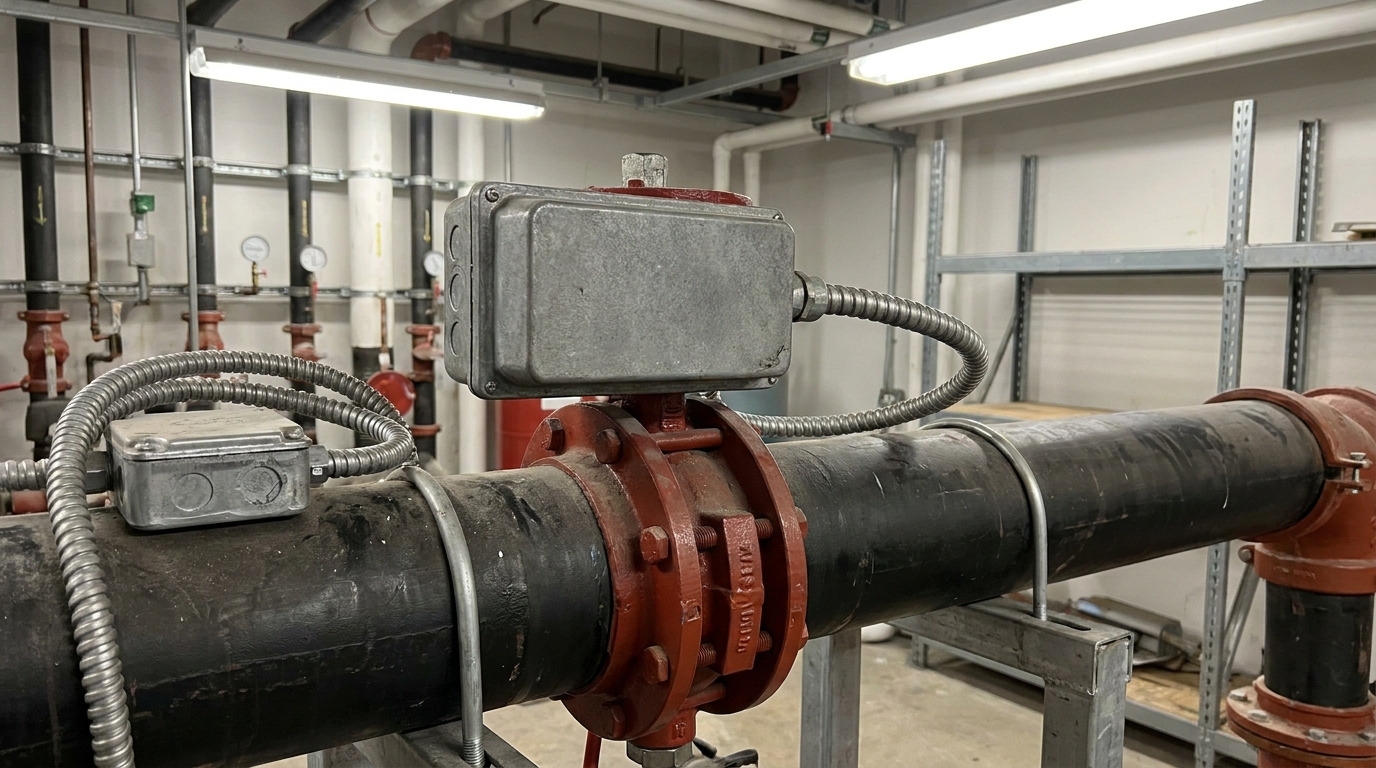
A butterfly valve with a tamper switch is a quarter-turn flow control device equipped with an electronic sensor to monitor its open or closed position constantly. Picture managing a large industrial facility where fire suppression systems must remain active constantly without fail. You face the constant threat that a simple manual valve closure could go unnoticed, leading to catastrophic failure during an emergency situation. The clear solution is integrating a butterfly valve tamper switch to guarantee real-time monitoring and instant unauthorized access alerts for your peace of mind.
What Is the Core Concept of a Butterfly Valve Tamper Switch?
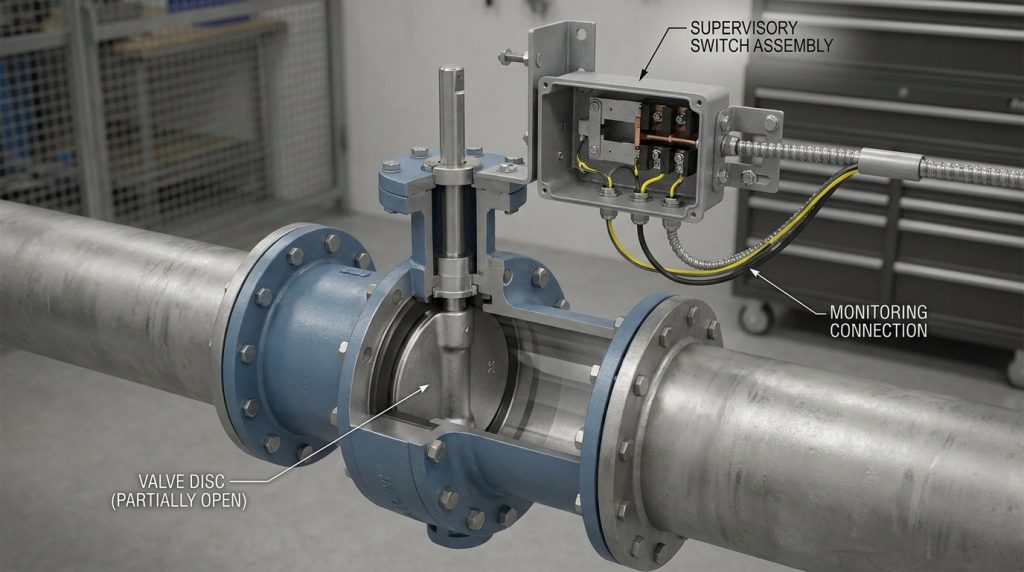
The core concept of a butterfly valve tamper switch involves merging mechanical fluid control with electronic position monitoring to maintain system readiness. When you operate a butterfly valve tamper switch, the internal disc rotates to manage the flow while the switch continuously tracks this movement. This integration ensures that the water supply remains unobstructed unless scheduled maintenance is occurring.
Understanding the Basic Valve Design?
You might be wondering… how the mechanical part actually functions within your piping network. The design relies on a central axis and a disc that turns ninety degrees to either block or allow water passage. This mechanism is highly favored because it requires minimal space and operates swiftly when needed.
- Compact profile saves installation space in tight areas.
- Quarter-turn action ensures fast and reliable response.
- Lightweight construction reduces physical strain on pipes.
Exploring the Electronic Switch Role?
Here is the deal… the switch component is the true brain of the operation, communicating with your safety network. It wires directly into your main alarm panel to broadcast the exact status of the hardware. If anyone tries to close the line, the system immediately recognizes the change.
- Sends instant alerts upon any unauthorized movement.
- Connects easily to standard central alarm panels.
- Prevents accidental or malicious system shutdowns.
Key Takeaway: The fundamental design guarantees that you always maintain visibility over your critical fluid pathways, preventing unnoticed human errors that compromise safety.
| Component | Primary Function | Operational Benefit |
|---|---|---|
| Disc Mechanism | Regulates water passage | Minimal pressure drop |
| Electronic Sensor | Monitors exact position | Instant status updates |
| Protective Housing | Shields internal parts | Long-term durability |
The table above demonstrates how each part aligns mechanical control with digital oversight to increase facility safety effectively.
How Does a Butterfly Valve Tamper Switch Function?
A butterfly valve tamper switch functions by physically turning a central disc while simultaneously sending electrical signals regarding its rotational status. As you turn the handle of the butterfly valve tamper switch, internal contacts either open or close to trigger the connected alarm circuitry. This dual-action process makes sure that mechanical flow control and electronic surveillance happen at the exact same moment.
How Does the Quarter-Turn Action Work?
What is the real story… behind the fluid dynamics of this quarter-turn action? When the handle aligns parallel to the pipe, the disc allows maximum fluid to pass through the system. Turning it perpendicularly blocks the passage entirely, stopping the water immediately.
- Achieves full open or close in just ninety degrees.
- Reduces fluid turbulence during normal operation.
- Provides clear visual indication of the current status.
How Is the Signal Transmitted?
Ready for the good part… the electrical transmission is seamless and highly reliable for continuous monitoring. Inside the housing, microswitches detect the stem’s rotation and alter the electrical current flowing to your control panel. The panel reads this interruption as a warning sign.
- Uses specialized microswitches for precise detection.
- Integrates smoothly with standard wiring configurations.
- Activates the alarm before the water flow fully stops.
Key Takeaway: The immediate synchronization between the physical handle movement and the electrical signal ensures that your monitoring panel never misses a critical status change.
| Action State | Disc Position | Signal Status |
|---|---|---|
| Fully Open | Parallel to flow | Normal / No Alarm |
| Partially Closed | Angled position | Alarm Triggered |
| Fully Closed | Perpendicular | Alarm Triggered |
The table above illustrates how the system translates physical handle positions into actionable electronic alerts for your safety panel.
Where Is a Butterfly Valve Tamper Switch Used?
A butterfly valve tamper switch is primarily used in fire suppression networks, commercial plumbing systems, and critical industrial fluid applications. Whenever you install a butterfly valve tamper switch, you add a mandatory layer of oversight to systems that cannot afford unexpected water blockages. These devices appear frequently in high-rise buildings, manufacturing plants, and large storage warehouses.
Why Use Them in Sprinkler Systems?
This is where it gets interesting… sprinkler systems rely entirely on an uninterrupted water supply to function correctly during emergencies. If a worker mistakenly leaves the main line shut after maintenance, the sprinklers become entirely useless. The integrated switch prevents this exact oversight from happening.
- Guarantees water availability for the sprinkler heads.
- Alerts building managers to accidental line closures.
- Meets strict municipal codes for fire suppression.
Are They Ideal for Standpipes?
But here is the kicker… standpipes serve as the artificial fire hydrants for multi-story buildings, demanding the same level of constant readiness. Firefighters connect their hoses directly to these lines, expecting immediate water pressure to fight the flames. Using monitored valves here guarantees that the water sits ready and waiting.
- Secures vertical water delivery for emergency responders.
- Monitors multiple floors from a single control room.
- Stops unauthorized access in public building stairwells.
Key Takeaway: Placing these monitored units at critical junctions guarantees that your emergency infrastructure remains fully operational and ready to deploy water instantly.
| Application Area | Primary Risk Addressed | Monitoring Frequency |
|---|---|---|
| Ceiling Sprinklers | Accidental water shutoff | Continuous (24/7) |
| Building Standpipes | Malicious line closure | Continuous (24/7) |
| Industrial Pumps | Maintenance oversight | Continuous (24/7) |
The table above details the primary applications and the specific risks mitigated by continuous electronic monitoring.
What Advantages Does a Butterfly Valve Tamper Switch Offer?
A butterfly valve tamper switch offers the distinct advantages of compact size, immediate status alerts, and high reliability in demanding environments. By utilizing a butterfly valve tamper switch, you gain complete confidence that your fluid networks are both mechanically sound and electronically secure. This combination significantly reduces the manual labor required to inspect piping systems daily.
How Does It Improve System Security?
You might be wondering… how exactly this device stops tampering before it becomes a major problem. Because the sensor triggers the alarm within the first few degrees of rotation, malicious actors or careless workers are caught immediately. The control room receives the notification before the water supply is noticeably restricted.
- Provides early warning against unauthorized adjustments.
- Records the exact time and location of the incident.
- Deters vandalism through visible wiring and housing.
Why Is Reliability Maximized?
Here is the deal… mechanical simplicity directly translates to long-term operational reliability in your facility. The quarter-turn mechanism involves very few moving parts, which minimizes the chances of internal wear and tear over decades of use. The sealed electronic housing protects the sensitive switches from moisture and dust.
- Fewer moving parts reduce mechanical breakdown risks.
- Sealed enclosures prevent water damage to electronics.
- Consistent performance across wide temperature ranges.
Key Takeaway: The integration of physical simplicity and digital vigilance provides you with a highly dependable solution that lowers facility risk profiles substantially.
| Advantage | Mechanism | Facility Benefit |
|---|---|---|
| High Security | Instant rotation detection | Stops unauthorized changes |
| Reliability | Few moving internal parts | Low maintenance costs |
| Space Saving | Narrow wafer body design | Fits in tight pipe spaces |
The table above highlights the core benefits that make this equipment superior to traditional, unmonitored fluid control options.
How Do You Install a Butterfly Valve Tamper Switch Correctly?
You install a butterfly valve tamper switch by securely flanging the unit into the pipeline and wiring the sensor to the local alarm panel. Successfully setting up a butterfly valve tamper switch requires you to follow exact piping alignment procedures and precise electrical diagrams. Proper installation ensures that the unit will not leak and the sensor will trigger correctly.
What Are Pre-Installation Steps?
What is the real story… behind preparing for a flawless installation process? You must first depressurize the system and verify that the pipe flanges align perfectly with the unit’s body. Cleaning the flange faces removes debris that could cause costly leaks after the water turns back on.
- Depressurize and drain the specific pipeline section.
- Clean all mating surfaces to ensure tight seals.
- Verify the correct voltage for the alarm connections.
How to Connect to Alarm Panels?
Ready for the good part… wiring the unit is a straightforward process if you follow the manufacturer schematic closely. You run conduit from the switch housing directly to the fire control board, connecting the normally open or normally closed terminals as required. Testing the connection immediately verifies the setup.
- Use weatherproof conduit for all exterior wiring runs.
- Connect to the specific supervisory zone on the panel.
- Perform a manual turn test to confirm signal receipt.
Key Takeaway: Following strict alignment and wiring protocols during the initial setup guarantees long-term leak prevention and accurate signal transmission to your panel.
| Installation Phase | Critical Action | Expected Outcome |
|---|---|---|
| Preparation | Clean flange surfaces | Prevents water leaks |
| Mechanical Setup | Align pipes properly | Reduces structural stress |
| Electrical Wiring | Connect to panel zone | Enables remote monitoring |
The table above breaks down the installation phases to highlight the critical actions needed for a successful deployment.
What Are the Components of a Butterfly Valve Tamper Switch?
The components of a butterfly valve tamper switch include the main body, the rotating disc, the elastomer seat, and the supervisory electronic housing. Every butterfly valve tamper switch relies on these parts working together to seal the pipe and report the handle’s position. Understanding these parts helps you perform better visual inspections and maintenance routines.
What Is the Role of the Disc?
This is where it gets interesting… the disc acts as the primary gatekeeper for your fluid network. Machined to exact tolerances, it presses tightly against the rubber seat to create a bubble-tight seal when completely closed. When open, its slim profile allows water to rush past with very little resistance.
- Creates a watertight barrier when fully shut.
- Maintains low pressure drops during normal flow.
- Resists corrosion due to specialized metal coatings.
How Does the Housing Protect?
But here is the kicker… the electronic components would fail rapidly without the rugged supervisory housing protecting them. This enclosure shields the delicate microswitches from factory dust, accidental impacts, and ambient moisture. It usually features a bright color to make the unit easily identifiable in dark environments.
- Blocks moisture and dust from reaching electronics.
- Provides physical protection against accidental strikes.
- Features clear indicators for visual status checks.
Key Takeaway: Recognizing how the mechanical gatekeeper and the protective housing interact allows you to manage and inspect your hardware much more efficiently.
| Component Name | Material Composition | Main Purpose |
|---|---|---|
| Internal Disc | Stainless or coated steel | Controls the fluid flow |
| Valve Seat | EPDM or NBR rubber | Creates a tight seal |
| Switch Housing | Heavy-duty cast metal | Protects electrical parts |
The table above lists the essential parts and their materials to show how robust construction supports overall functionality.
How Do You Maintain a Butterfly Valve Tamper Switch?
You maintain a butterfly valve tamper switch by conducting regular visual inspections, testing the electrical signals, and lubricating the exposed mechanical stems. Keeping your butterfly valve tamper switch in optimal condition means you periodically verify that the disc turns smoothly and the alarm activates appropriately. Consistent maintenance prevents false alarms and guarantees emergency readiness.
What Is the Routine Testing Frequency?
You might be wondering… how often you need to physically test this equipment to stay compliant. Industry guidelines typically mandate a physical rotation test at least twice a year to confirm the signal reaches the main panel. During this test, you turn the handle slightly until the supervisory alarm sounds.
- Perform physical rotation tests semi-annually.
- Verify panel signal receipt during every test.
- Document all testing outcomes for compliance audits.
How to Clean the Valve Housing?
Here is the deal… keeping the exterior clean is more than just aesthetics; it prevents debris from jamming the handle. You should wipe down the housing with a damp cloth and inspect the wiring conduit for any signs of physical damage or corrosion. Never use harsh chemicals that might degrade the rubber seals.
- Wipe the exterior to remove industrial dust buildup.
- Inspect all wiring conduits for visible wear or cracks.
- Avoid solvents that compromise the internal rubber parts.
Key Takeaway: Implementing a strict, documented schedule for physical testing and cleaning extends the operational life of the unit and ensures constant reliability.
| Maintenance Task | Recommended Frequency | Primary Purpose |
|---|---|---|
| Visual Inspection | Monthly | Spot exterior damage |
| Signal Testing | Semi-Annually | Verify alarm communication |
| Surface Cleaning | Annually | Prevent handle jamming |
The table above outlines a standard maintenance schedule to keep your monitoring equipment functioning flawlessly year after year.
How Do You Troubleshoot a Butterfly Valve Tamper Switch?
You troubleshoot a butterfly valve tamper switch by first checking the electrical connections for continuity and then inspecting the mechanical handle for obstructions. When a butterfly valve tamper switch fails to send a signal, you must systematically isolate whether the issue lies in the wiring or the internal microswitch. Proper troubleshooting restores your facility’s safety net quickly.
How to Fix False Alarms?
What is the real story… when your panel shows a closed line but the handle is clearly open? False alarms usually stem from a misaligned internal switch or a loose wire inside the housing. You can open the housing cover and carefully adjust the strike plate so it only contacts the microswitch when actually turned.
- Realign the internal strike plate to the microswitch.
- Tighten all terminal screws to ensure solid contact.
- Check for moisture ingress causing electrical shorts.
What Causes Signal Failures?
Ready for the good part… finding the root cause of a dead signal is usually straightforward with a standard multimeter. If the handle turns but the panel stays quiet, you likely have a broken wire in the conduit or a burned-out microswitch. Testing the continuity at the switch terminals quickly identifies the culprit.
- Use a multimeter to test switch continuity directly.
- Trace the conduit line to find broken or pinched wires.
- Replace the internal microswitch if it shows no reading.
Key Takeaway: Approaching troubleshooting methodically by dividing the electrical from the mechanical saves you significant downtime and repair costs.
| Troubleshooting Issue | Likely Cause | Recommended Action |
|---|---|---|
| Constant False Alarm | Loose internal wiring | Tighten terminal connections |
| No Alarm on Turn | Broken microswitch | Replace internal switch unit |
| Intermittent Signal | Moisture in housing | Dry and reseal enclosure |
The table above provides a quick diagnostic reference to help you resolve the most common operational issues efficiently.
Which Standards Govern a Butterfly Valve Tamper Switch?
Standards from organizations like NFPA, UL, and FM govern the design, manufacturing, and installation of a butterfly valve tamper switch. You must select a butterfly valve tamper switch that carries the appropriate certifications to meet local building codes and insurance requirements. Using non-certified equipment can lead to massive fines and denied insurance claims after an incident.
How Do NFPA Rules Apply?
This is where it gets interesting… the National Fire Protection Association writes the rules that local inspectors enforce rigorously. NFPA standards specify exactly how these devices must communicate with the main panel and how quickly they must report a state change. Compliance ensures that your setup behaves predictably during a crisis.
- Dictates exact signal response times for alarms.
- Outlines specific installation distances and placements.
- Requires mandatory documentation for all maintenance tests.
Why Is UL/FM Certification Crucial?
But here is the kicker… inspectors and insurance agents look specifically for the Underwriters Laboratories (UL) or Factory Mutual (FM) stamps on the housing. These marks prove that the specific model passed brutal stress tests, including extreme pressure spikes and electrical surges, without failing. Without these marks, the unit is legally unacceptable for fire suppression.
- Proves the unit survived rigorous independent testing.
- Satisfies strict requirements from commercial insurance providers.
- Guarantees material quality and manufacturing consistency.
Key Takeaway: Adhering to recognized industry standards protects your facility from legal liabilities and ensures your equipment will perform under extreme stress.
| Governing Body | Focus Area | Impact on Facility |
|---|---|---|
| NFPA | Installation rules | Ensures legal code compliance |
| UL | Electrical safety | Prevents electrical fire risks |
| FM | Performance testing | Secures insurance approvals |
The table above details the primary governing bodies and how their specific rules directly impact your facility’s compliance strategy.
What Is the Future of a Butterfly Valve Tamper Switch?
The future of a butterfly valve tamper switch lies in wireless connectivity, advanced diagnostics, and integration with smart building management systems. Soon, your butterfly valve tamper switch will report not just its position, but also its internal wear and tear directly to your smartphone. These advancements will revolutionize how facilities manage their fluid control networks.
How Are Smart Sensors Used?
You might be wondering… how much smarter a simple mechanical device can actually get. Next-generation sensors can measure tiny vibrations and temperature changes within the pipe, predicting failures before they occur. This data feeds into predictive maintenance software, telling you exactly when to replace a seal before it leaks.
- Measures internal vibrations to detect pipe stress.
- Monitors temperature to prevent freezing in winter.
- Feeds data directly into predictive maintenance algorithms.
What About Wireless Monitoring?
Here is the deal… running conduit through massive concrete buildings is expensive and time-consuming for contractors. New models incorporate secure, encrypted wireless transmitters that bypass the need for physical wires entirely. This makes retrofitting older buildings with modern safety technology much more cost-effective.
- Eliminates the high cost of running physical conduit.
- Uses encrypted signals to prevent digital hacking.
- Simplifies the retrofitting process in historical buildings.
Key Takeaway: Adopting these upcoming technological advancements will drastically reduce your maintenance costs while providing unprecedented visibility into your system’s health.
| Future Technology | Primary Function | Cost Saving Benefit |
|---|---|---|
| Smart Diagnostics | Predicts mechanical failures | Prevents emergency repairs |
| Wireless Transmitters | Sends data without wires | Cuts installation labor |
| Cloud Integration | Stores data remotely | Simplifies compliance audits |
The table above forecasts the upcoming technological shifts that will make fluid network management significantly more efficient.
To sum up the core insights, integrating this specific fluid control technology provides unparalleled oversight and security for your critical infrastructure. We discussed the mechanical design, electronic monitoring benefits, correct installation procedures, and troubleshooting methods necessary to maintain constant readiness. Implementing these monitored units resolves the constant anxiety over accidental line closures and guarantees that your fire suppression networks remain fully armed. We offer comprehensive engineering support and precision-manufactured units to make sure your facility operates safely and efficiently. By choosing our solutions, you align with a brand dedicated to industrial safety and continuous innovation; please contact us today to discuss your project needs.
FAQ
Q1: What is a butterfly valve with a tamper switch?
Yes, it is a flow control device equipped with an electronic sensor. This combination allows you to regulate water flow while the sensor continuously monitors the handle position to prevent unauthorized closures.
Q2: How does a tamper switch work in this setup?
It works by sending immediate electrical signals to a central panel. When the valve handle rotates even slightly, internal contacts shift and trigger a supervisory alarm to notify building management.
Q3: Can I use these units in commercial sprinkler systems?
Yes, they are specifically designed for commercial fire suppression networks. They ensure that the water supply to the sprinkler heads remains open and alerts you if someone attempts to shut the main line.
Q4: What’s the best way to maintain these monitored units?
The best way is to perform semi-annual physical rotation tests and visual inspections. Regularly turning the handle ensures the mechanism is not jammed and confirms that the alarm panel still receives the signal.
Q5: How do I know if my unit meets safety standards?
You can confirm compliance by checking the housing for specific certification marks. Look for the UL or FM stamps on the metal body, which prove the device has passed rigorous independent safety testing.