
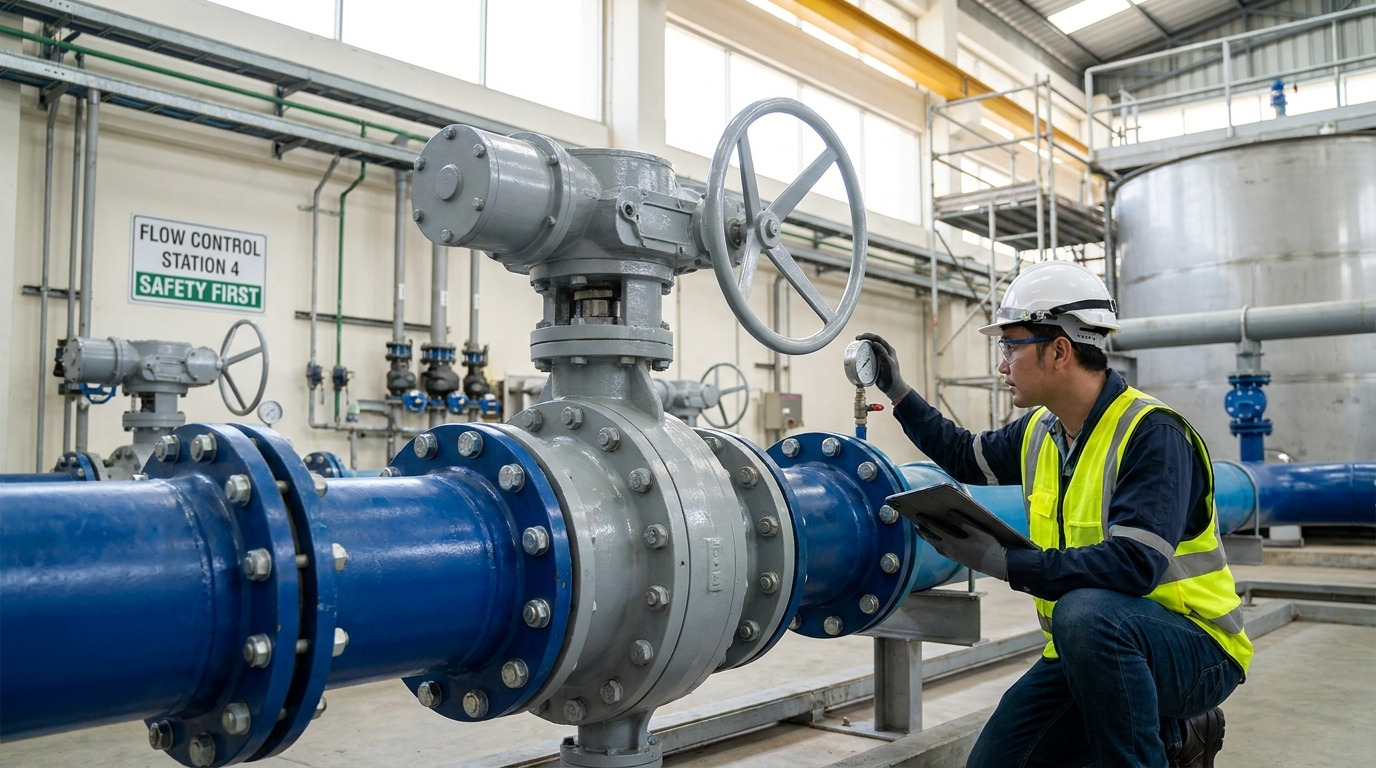
A butterfly valve is a quarter-turn rotational motion device used to stop, regulate, or start fluid flow in piping systems. Many facility managers deal with constant leaks and inefficient flow control in their industrial setups. These ongoing pipeline issues lead to costly downtime and wasted energy resources. Implementing a high-quality butterfly water valve provides a tight shut-off solution that eliminates these frustrating leaks and streamlines your fluid management.
What Exactly Is a Butterfly Water Valve?
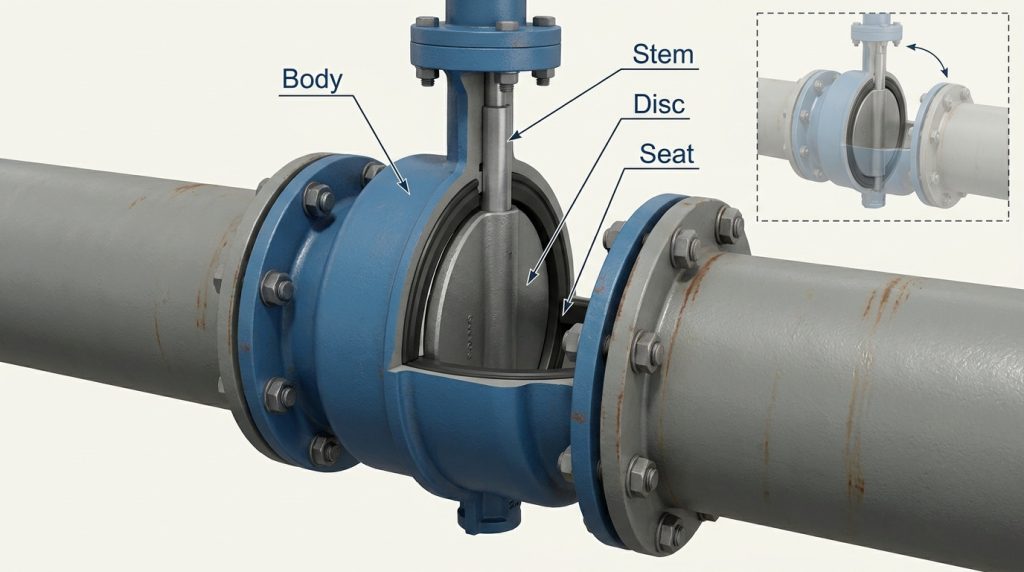
A butterfly water valve is a compact mechanical flow control mechanism relying on a rotating circular disc. Using a butterfly water valve in your pipeline gives you rapid control over fluid movement. The disc rotates 90 degrees to fully open or close the passage. This rapid operation saves valuable time during emergency shut-offs.
How Are They Structured?
The internal structure consists of a body, stem, disc, and a sealing seat. Here is the deal: you need a solid construction to handle varied pressures. You will find that regular inspection of these components prevents unexpected failures.
- Durable outer body casting
- Central rotating disc
- Elastomer or metal seating
Key Takeaway: Understanding the basic anatomy of the mechanism helps you diagnose operational issues quickly.
| Component | Main Function | Typical Material |
|---|---|---|
| Body | Contains internal pressure | Cast iron or steel |
| Disc | Regulates fluid passage | Stainless steel |
| Seat | Provides tight shut-off | EPDM or PTFE |
This table clearly outlines how component materials directly affect the overall durability of the system.
How Does a Butterfly Water Valve Function?
A butterfly water valve functions by turning a central stem connected to a disc to block or allow flow. Operating a butterfly water valve requires very little physical effort or automated torque. When the valve opens, the disc turns parallel to the pipeline flow. When closed, it turns perpendicular to seal against the seat.
What Is Quarter-Turn Operation?
Quarter-turn means the handle or actuator only needs a 90-degree movement to fully cycle. But here is the kicker: this fast action makes it ideal for automated systems. You can easily attach pneumatic or electric actuators to these units.
- Quick 90-degree motion
- Low torque requirements
- Visual open/close indication
Key Takeaway: The minimal movement required greatly reduces wear on automated control systems.
| State | Disc Position | Flow Status |
|---|---|---|
| Open | Parallel | Full flow |
| Closed | Perpendicular | Zero flow |
| Throttled | Angled | Regulated flow |
These operational states show exactly why this design offers such versatile fluid control.
Where Can You Use a Butterfly Water Valve?
You can use a butterfly water valve in municipal treatment plants, HVAC systems, and chemical processing facilities. Integrating a butterfly water valve into your network handles large volume liquid transfers efficiently. They take up less space than gate valves in crowded industrial environments. Their lightweight design makes them perfect for overhead piping installations.
Which Industries Rely on Them?
Many sectors depend on these units for reliable daily operations. What is the real story? Their cost-effectiveness makes them the standard for large-scale piping. You will notice them in almost every major manufacturing plant.
- Wastewater management
- Food and beverage
- Fire protection systems
Key Takeaway: Their broad applicability means you can standardize your inventory with one reliable valve type.
| Industry | Common Application | Benefit |
|---|---|---|
| HVAC | Chilled water lines | Compact size |
| Municipal | Water distribution | High volume capacity |
| Marine | Ballast systems | Corrosion resistance |
This data highlights the adaptability of the mechanism across vastly different working environments.
What Are the Main Types of Butterfly Water Valve?
The main types of a butterfly water valve include concentric, double eccentric, and triple eccentric designs. Selecting the right butterfly water valve depends heavily on your specific pressure requirements. Concentric designs feature a stem centered in the middle of the disc. Eccentric designs offset the stem to reduce wear on the sealing surface.
How Does Offset Design Work?
Offset designs move the stem away from the center line of the pipeline. Ready for the good part? This offset geometry drastically extends the lifespan of the seat. You get a bubble-tight shut-off without excessive friction.
- Concentric for low pressure
- Double offset for medium wear
- Triple offset for harsh conditions
Key Takeaway: Matching the offset type to your system pressure prevents premature equipment failure.
| Valve Type | Stem Position | Best Use Case |
|---|---|---|
| Concentric | Centered | Standard water lines |
| Double Offset | Slightly offset | Moderate pressure |
| Triple Offset | Heavily offset | High temperature |
Comparing these types reveals how mechanical design directly correlates to industrial performance capabilities.
Why Choose a Butterfly Water Valve for Systems?
You should choose a butterfly water valve for systems because they are lightweight, compact, and highly cost-effective. Installing a butterfly water valve reduces structural support requirements on your pipelines. Their narrow profile allows installation in extremely tight spaces. They also cost significantly less than comparable ball or gate models.
Do They Offer Value?
These mechanisms provide excellent performance relative to their upfront purchase price. This is where it gets interesting: the savings compound when you factor in low maintenance costs. You can allocate your budget to other facility upgrades.
- Lower initial purchase price
- Reduced installation labor
- Minimal replacement parts needed
Key Takeaway: The structural efficiency translates directly to massive cost savings for your engineering department.
| Advantage | Direct Impact | Long-term Result |
|---|---|---|
| Compact build | Less pipe stress | Fewer structural failures |
| Low weight | Easy handling | Lower labor costs |
| Simple design | Fast repairs | Minimized downtime |
These advantages demonstrate why engineers consistently specify this equipment for new plant constructions.
How to Install a Butterfly Water Valve Correctly?
To install a butterfly water valve correctly, you must align the piping accurately and tighten flanges evenly. Proper installation of a butterfly water valve prevents uneven stress on the elastomer seat. You should leave the disc in a slightly open position during bolting. This practice prevents the disc from jamming against the pipeline interior.
What Are Installation Best Practices?
Following manufacturer guidelines prevents immediate leaks upon system startup. You might be wondering: why do so many units fail early? It is almost always due to poor flange alignment.
- Clean pipeline flanges thoroughly
- Center the unit carefully
- Tighten bolts in a star pattern
Key Takeaway: Meticulous installation procedures protect your investment and guarantee a perfect seal.
| Step | Action | Purpose |
|---|---|---|
| 1 | Inspect flanges | Remove debris |
| 2 | Position unit | Center the disc |
| 3 | Torque bolts | Prevent seat distortion |
This step-by-step summary proves that methodical assembly directly prevents future operational headaches.
What Maintenance Does a Butterfly Water Valve Need?
A butterfly water valve needs regular visual inspections, lubrication of the stem, and occasional seat replacement. Maintaining your butterfly water valve extends its service life by many years. You should check for external leakage around the stem packing routinely. Addressing minor weeping early prevents catastrophic blowouts later.
How to Spot Wear?
Routine checks will reveal early signs of material degradation. Picture this: a tiny drip ignored today becomes a flooded floor tomorrow. You must schedule periodic cycling of units that remain static.
- Check stem packing for moisture
- Listen for unusual flow noises
- Test manual actuator resistance
Key Takeaway: Proactive maintenance keeps your facility running smoothly and prevents emergency shutdowns.
| Maintenance Task | Frequency | Benefit |
|---|---|---|
| Visual check | Monthly | Spot early leaks |
| Cycle test | Quarterly | Prevent sticking |
| Seat inspection | Annually | Ensure tight seal |
Following this maintenance schedule directly correlates to lower failure rates across your facility.
Can a Butterfly Water Valve Handle High Pressure?
A butterfly water valve can handle high pressure if you select a high-performance double or triple offset model. Standard elastomer-seated butterfly water valve units generally suit low to moderate pressure environments. High-performance models utilize metal seats to withstand intense mechanical stress. You must verify the pressure rating matches your maximum system output.
What Determines Pressure Limits?
The materials and offset geometry dictate the maximum allowable working parameters. Listen to this: pushing a standard unit past its rating will destroy the seat instantly. You always need to consult the technical data sheets.
- Seat material composition
- Body casting thickness
- Disc geometry
Key Takeaway: Accurate pressure calculation prevents dangerous blowouts and protects facility personnel.
| Valve Design | Seat Material | Pressure Rating |
|---|---|---|
| Concentric | Rubber | Low (Up to 150 psi) |
| Double Offset | PTFE | Medium (Up to 300 psi) |
| Triple Offset | Metal | High (Up to 600+ psi) |
This structural breakdown clarifies which models safely manage extreme industrial fluid dynamics.
How to Select the Right Butterfly Water Valve?
Select the right butterfly water valve by analyzing fluid type, system temperature, and maximum line pressure. Specifying the correct butterfly water valve requires a thorough understanding of your operational environment. You must choose materials compatible with the chemical makeup of your fluid. Sizing the unit properly ensures ideal flow rates without excessive turbulence.
What Factors Matter Most?
Your application environment dictates every material choice you make. Here is a pro tip: always account for temperature spikes during system flushing. You want components that will not warp under sudden heat.
- Media compatibility
- Actuation method needed
- Flange connection style
Key Takeaway: Careful specification prevents premature corrosion and guarantees reliable mechanical operation.
| Specification | Consideration | Impact |
|---|---|---|
| Body Material | Fluid corrosiveness | Prevents rusting |
| Actuator Type | Automation needs | Controls operation speed |
| Sizing | Flow volume | Reduces pressure drops |
Evaluating these specifications clearly directs you toward the most efficient flow control solution.
What Issues Plague a Butterfly Water Valve Often?
A butterfly water valve often faces issues like seat degradation, stem leakage, and disc obstruction. Troubleshooting a butterfly water valve requires identifying the root cause of the specific failure. Debris in the pipeline frequently damages the soft elastomer seat causing slow leaks. Excessive torque applied to manual handles can shear the internal stem.
How to Fix Common Faults?
Identifying the symptom leads you directly to the mechanical remedy. Watch out for this: replacing the entire unit is rarely necessary if you catch wear early. You can often rebuild the internals on-site.
- Replace worn elastomer seats
- Tighten loose stem packing
- Flush debris from the line
Key Takeaway: Rapid troubleshooting keeps your maintenance budget low and your pipelines active.
| Common Issue | Probable Cause | Solution |
|---|---|---|
| Passing leak | Torn seat | Replace seat |
| External drip | Loose packing | Tighten gland |
| Hard to turn | Stem corrosion | Lubricate or rebuild |
This diagnostic matrix shows how simple mechanical adjustments quickly restore full functional capacity.
Ready to Upgrade Your Flow Control Systems?
Upgrading your pipelines with reliable mechanisms drastically reduces maintenance headaches and operational downtime. You need parts that handle demanding environments without constant supervision or costly repairs. We deliver high-performance solutions tailored specifically to industrial fluid management requirements. If you want to stop leaks and improve system efficiency, contact us today to discuss your pipeline needs. Our proven industrial solutions are built to keep your operations flowing smoothly for decades.
FAQ
Q1: Can I use this mechanism for throttling flow?
Yes, you can easily use it for flow regulation. The disc can be held at various angles to precisely control the volume of liquid passing through the pipe.
Q2: What is the best material for drinking water applications?
An EPDM seat with a stainless steel disc works perfectly. These materials resist bacterial growth and do not release harmful chemicals into the potable water supply.
Q3: How do I know if the unit is fully open?
The handle position gives you a direct visual cue. When the lever runs parallel to the pipe, the passage is fully open and unobstructed.
Q4: Can I automate my existing manual units?
Yes, retrofitting actuators is quite common. You simply remove the manual handle and mount an electric or pneumatic actuator onto the existing top flange.
Q5: What is the best way to clear debris from the seat?
Flushing the line while cycling the disc works best. Opening and closing the disc slightly allows the fluid velocity to wash trapped particles away from the sealing edge.