
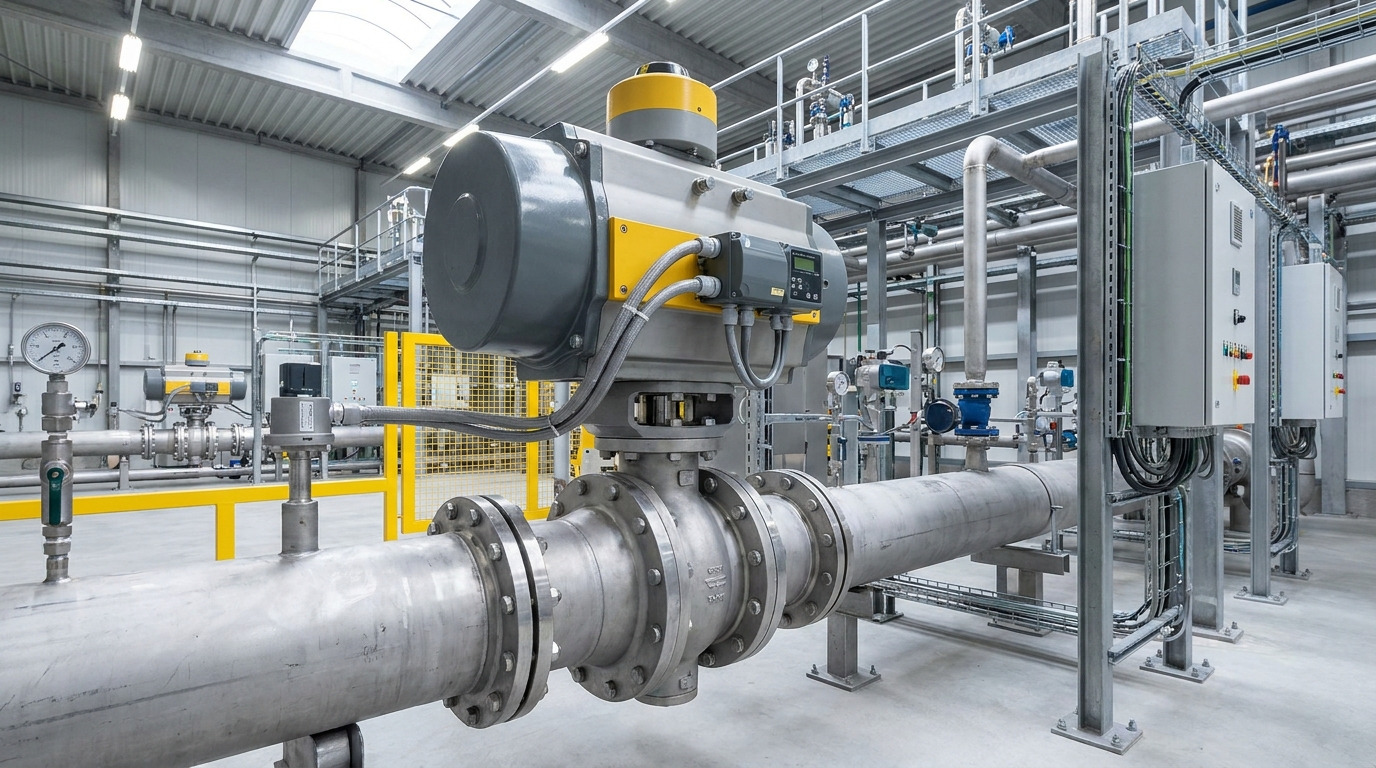
Modulating butterfly valves offer precise flow regulation for industrial pipelines instead of simple on-off actions. Reading Modulating Butterfly Valves: A Few Things You Should Know gives you practical facts for selecting equipment. You operate a fluid pipeline where sudden pressure spikes ruin product quality. Poor control from standard on/off mechanisms wastes material and causes expensive downtime. A modulating butterfly valve regulates flow dynamically, providing exact precision your system demands.
What Exactly Is a Modulating Butterfly Valve?
A modulating butterfly valve controls fluid flow by rotating a central disc incrementally, rather than just opening or closing fully. This design allows operators to fine-tune volume levels passing through your pipeline. Your quarter-turn mechanism provides quick responses for control signals coming from a central system. Using this specific modulating butterfly valve reduces mechanical wear while maintaining stable internal pressure.
How does your disc regulate flow?
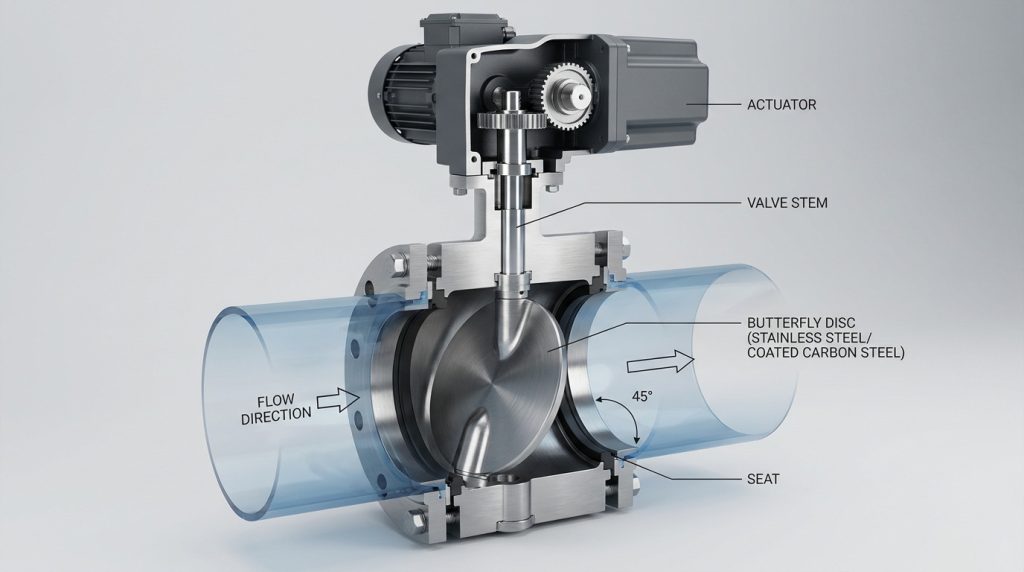
Here is the deal. A central disc sits directly inside your flow path and connects via one top-mounted stem. When your actuator receives a signal, it turns this stem for angle adjustments.
- Closed positions block all fluid movement completely.
- Incremental angles allow partial flow for precise regulation.
- Open positions align everything parallel with your pipe.
Key Takeaway: Understanding how this disc moves helps you maintain accurate flow rates and prevent pipe damage.
| Component | Function | Material Options |
|---|---|---|
| Disc | Regulates volume | Stainless steel |
| Stem | Connects components | Hardened steel |
| Actuator | Provides force | Pneumatic units |
| Seat | Creates seals | EPDM rubber |
Reviewing these component materials helps you match parts against specific application requirements.
How Does a Modulating Butterfly Valve Regulate Fluid?
A modulating butterfly valve regulates fluid by receiving electronic signals directing your disc into specific angles. Your control system monitors downstream pressure and adjusts component positions instantly. This continuous adjustment keeps your pipeline running smoothly without sudden surges. Every modulating butterfly valve relies on this dynamic feedback loop for proper function.
What makes quarter-turn motion effective?
You might be wondering. A 90-degree rotation requires very little time compared against multi-turn gate designs. This speed allows your system to react instantly regarding changing process conditions.
- Quick reaction times prevent dangerous pressure buildups.
- Lower torque requirements let you use smaller actuators.
- Fewer moving parts reduce maintenance costs over time.
Key Takeaway: Selecting quarter-turn technology saves physical space and lowers your long-term maintenance expenses.
| Feature | Quarter-Turn | Multi-Turn |
|---|---|---|
| Speed | Fast | Slow |
| Wear Parts | Few | Many |
| Actuator Size | Compact | Large |
| Flow Control | Dynamic | Static |
This comparison highlights that quarter-turn mechanisms provide faster response times during dynamic flow adjustments.
Why Choose a Modulating Butterfly Valve Over Ball Valves?
You should choose a modulating butterfly valve over any ball valve because it takes up far less pipe space. Ball valves become incredibly heavy and expensive as pipe diameters increase. A modulating butterfly valve features a slim profile fitting easily between narrow pipe flanges. This compact design dramatically lowers your installation costs alongside structural support requirements.
Are they better for large pipes?
Ready for the good part? When your pipeline exceeds several inches across, weight savings become massive. You save money on initial purchases and labor required for installation.
- Reduced weight puts less stress on pipeline infrastructure.
- Lower material costs keep your project under budget.
- Compact dimensions allow installation inside tight confined spaces.
Key Takeaway: Replacing bulky ball valves with slimmer alternatives frees up budget for other critical system upgrades.
| Valve Type | Weight Profile | Cost for Large Pipes |
|---|---|---|
| Butterfly | Light | Economical |
| Ball | Heavy | Expensive |
| Gate | Very Heavy | High |
| Globe | Heavy | High |
This data confirms that lightweight designs offer significant financial savings across large-scale piping networks.
What Industries Rely on the Modulating Butterfly Valve?
Petrochemical plants, HVAC networks, and water treatment facilities rely heavily on the modulating butterfly valve for managing large fluid volumes. These sectors require continuous adjustments preventing safe operation disruptions. A modulating butterfly valve handles everything from cooling water through aggressive chemicals. You will find these units installed wherever precise volume management remains a daily requirement.
Where are they applied most?
What is the real story? Marine engineering and power generation also depend on these components for daily safety. They regulate steam, cooling fluids, and fuel feeds with high reliability.
- Water plants use them mixing chemicals accurately.
- HVAC systems depend on them regulating temperature.
- Marine ships rely on them cooling massive engines.
Key Takeaway: Aligning your valve choice alongside industry standards guarantees better safety and regulatory compliance.
| Industry | Typical Application | Fluid Handled |
|---|---|---|
| Water Treatment | Dosing distribution | Raw water |
| HVAC | Climate control | Chilled water |
| Petrochemical | Process flow | Oils |
| Marine | Engine cooling | Seawater |
The matrix above proves that diverse sectors benefit directly from specialized flow regulation.
Which Modulating Butterfly Valve Body Style Fits Your Pipeline?
A wafer or lug body style fits your pipeline depending on whether you require end-of-line service for your modulating butterfly valve. Wafer styles slide between two flanges using long bolts spanning across your entire valve body. Lug styles feature threaded inserts allowing workers bolting each side independently. Choosing an appropriate modulating butterfly valve body prevents dangerous leaks while simplifying future maintenance.
Should you use wafer or lug?
This is where it gets interesting. If you need downstream piping removed while keeping systems pressurized, lug styles become mandatory. Wafer styles cost less but cannot support end-of-line removal.
- Wafer bodies are lighter and easier installing along long pipe runs.
- Lug bodies provide secure isolation protecting maintenance workers.
- Both styles offer identical flow control performance metrics.
Key Takeaway: Assessing your future maintenance needs before installation dictates the safest body style choice.
| Body Style | End-of-Line Service | Cost | Installation Method |
|---|---|---|---|
| Wafer | No | Lower | Sandwiched between flanges |
| Lug | Yes | Higher | Bolted on both sides |
| Flanged | Yes | Highest | Direct flange mating |
This breakdown indicates that lug configurations provide unmatched safety during downstream piping repairs.
How Do Actuators Automate a Modulating Butterfly Valve?
Actuators automate a modulating butterfly valve by converting pneumatic, electric, or hydraulic energy into precise mechanical rotation. This external power source eliminates your need for manual handwheels. Your automation system communicates directly with flow sensors making real-time adjustments continuously. Every automated modulating butterfly valve requires one properly sized actuator overcoming internal fluid pressure.
Which actuator type works best?
Let that sink in. Electric actuators use motors delivering highly accurate positioning, while pneumatic versions use compressed air creating rapid fail-safe actions. Your choice depends entirely upon available power sources and required reaction speeds.
- Pneumatic units react fast handling harsh environments.
- Electric units offer pinpoint precision alongside easy wiring.
- Hydraulic units deliver massive torque turning huge pipes.
Key Takeaway: Matching an actuator against your power supply and speed requirements guarantees reliable automation.
| Actuator Type | Power Source | Best Feature | Speed |
|---|---|---|---|
| Pneumatic | Compressed Air | Fail-safe ready | Very Fast |
| Electric | Electricity | High precision | Moderate |
| Hydraulic | Fluid Pressure | High torque | Fast |
Selecting correct power sources determines how quickly your system responds during emergency shutoff signals.
What Seat Materials Protect a Modulating Butterfly Valve?
EPDM, PTFE, and metal seats protect a modulating butterfly valve by providing tight seals against specific chemicals or high temperatures. A seat acts like a flexible ring that your disc presses against stopping fluid flow. Your modulating butterfly valve will leak if chemical attacks degrade this seat material. You must match seat compounds directly against exact fluids flowing through your network.
How does material affect sealing?
But here is the kicker. Rubber seats like EPDM handle water perfectly but fail instantly when exposed near harsh oils. PTFE resists nearly all chemicals, while metal seats survive extreme heat melting plastic alternatives.
- EPDM works flawlessly managing municipal water and HVAC systems.
- PTFE resists aggressive industrial acids and harsh bases.
- Metal components endure high-pressure steam alongside abrasive slurries.
Key Takeaway: Testing seat compatibility against your process fluid prevents unexpected leaks and hazardous spills.
| Seat Material | Max Temperature | Chemical Resistance | Best Use Case |
|---|---|---|---|
| EPDM | 250°F | Moderate | Water |
| PTFE | 400°F | Excellent | Corrosives |
| Metal | 1000°F+ | High | Steam |
This material chart reveals that extreme temperatures strictly require solid metal sealing components.
Is a Modulating Butterfly Valve Safe for High-Pressure Jobs?
A modulating butterfly valve remains totally safe during high-pressure jobs when equipped using triple-offset designs and solid metal seats. Standard rubber-lined models blow out under extreme force, but offset designs handle massive physical stress. High-performance modulating butterfly valve geometry prevents discs from grinding against their seats. This frictionless rotation preserves seals even under severe pipeline pressure.
Can they handle extreme conditions?
Truth be told. Triple-offset geometry shifts pivot points away from your pipe center. This allows your disc camming into its seat like a vault door, creating mechanical seals without rubbing.
- Zero friction extends your sealing component lifespan dramatically.
- Mechanical wedging action provides bubble-tight shutoff capabilities.
- These designs easily handle ANSI class 600 pressure ratings.
Key Takeaway: Investing in triple-offset technology protects high-pressure lines from catastrophic seal failures.
| Design Type | Pressure Limit | Friction Level | Shutoff Quality |
|---|---|---|---|
| Concentric | Low | High | Good |
| Double-Offset | Medium | Moderate | Very Good |
| Triple-Offset | Very High | Zero | Excellent |
Offset evolution demonstrates how advanced geometry solves traditional high-pressure sealing problems.
How Do Pressure Drops Affect Modulating Butterfly Valve Duty?
Pressure drops affect your modulating butterfly valve duty by altering fluid velocity, which damages internal parts if ignored. Because discs always sit inside flow paths, they naturally restrict fluid and drop system pressure. A modulating butterfly valve dropping pressure too low causes liquids boiling instantly. This boiling effect, called cavitation, destroys metal components within days.
Why does velocity matter?
Think about it. As pressure drops across restricted openings, liquids speed up dramatically. High-speed liquids act like sandpaper on internal metal parts, eroding discs and stems quickly.
- Proper sizing keeps fluid velocity within safe functional limits.
- Avoiding tight throttling angles prevents severe system cavitation.
- Hardened disc materials resist erosive forces from fast fluids.
Key Takeaway: Calculating expected pressure drops beforehand saves equipment from rapid internal erosion.
| Pressure Condition | Fluid Behavior | Risk Level |
|---|---|---|
| Normal Drop | Smooth flow | Low |
| High Drop | Velocity increase | Moderate |
| Extreme Drop | Cavitation | Critical |
This risk matrix points out that extreme pressure changes directly cause fatal internal hardware damage.
What Must You Review Before Buying a Modulating Butterfly Valve?
You must review pipe size, fluid type, and required flow characteristics before purchasing any new modulating butterfly valve. Buying units based solely on pipe diameter often leads toward poor control performance. Your modulating butterfly valve must operate within ideal opening angles regulating effectively. You need precise calculations checking actual flow coefficients required during specific process conditions.
How do you size it correctly?
Believe it or not. If you install oversized units, they operate near closed positions, causing poor control and excessive wear. Slightly smaller units operating across middle rotation ranges perform much better.
- Calculate maximum and minimum flow rates accurately.
- Select models where normal flow occurs between 30 and 70 degrees open.
- Review manufacturer flow characteristic curves carefully.
Key Takeaway: Sizing equipment based on flow rates rather than pipe size guarantees accurate regulation.
| Selection Factor | Why It Matters | Consequence of Error |
|---|---|---|
| Flow Coefficient | Determines control accuracy | Unstable fluid regulation |
| Fluid Chemistry | Dictates material choice | Rapid chemical corrosion |
| Actuator Torque | Overcomes line pressure | Valve gets stuck |
Reviewing these exact selection factors prevents costly operational failures after the installation phase.
How Can a Modulating Butterfly Valve Upgrade Your Operations?
Upgrading pipelines with precise flow regulation technology eliminates material waste and stabilizes daily production outputs. We deliver custom fluid control solutions engineered specifically withstanding your toughest industrial conditions. Our team provides fast, professional support keeping systems running at peak performance. Reach out and contact us today building a safer, more reliable fluid management network.
Q1: Can I use this valve for slurry applications?
Yes, you can manage slurries effectively. The straight-through flow path prevents solid particles from accumulating, but you must select an abrasion-resistant seat and disc material preventing rapid wear.
Q2: What is the best actuator for remote pipelines?
Electric actuators are your top choice for isolated locations. They only require standard power cables and eliminate your need running costly compressed air lines across long distances.
Q3: How do I know if I need a triple-offset design?
You need triple-offset designs if your process involves extreme heat or high pressure. Zero-friction metal seats handle harsh conditions destroying standard rubber-lined models instantly.
Q4: Can I install this valve vertically?
Yes, vertical installation works perfectly fine. However, you must install shafts horizontally preventing debris settling into bottom bearings and causing mechanical binding.
Q5: What is the best way to prevent cavitation?
Proper sizing remains your best prevention method. Keep disc opening angles above 30 degrees and calculate expected pressure drops keeping fluid velocity within safe operating margins.