
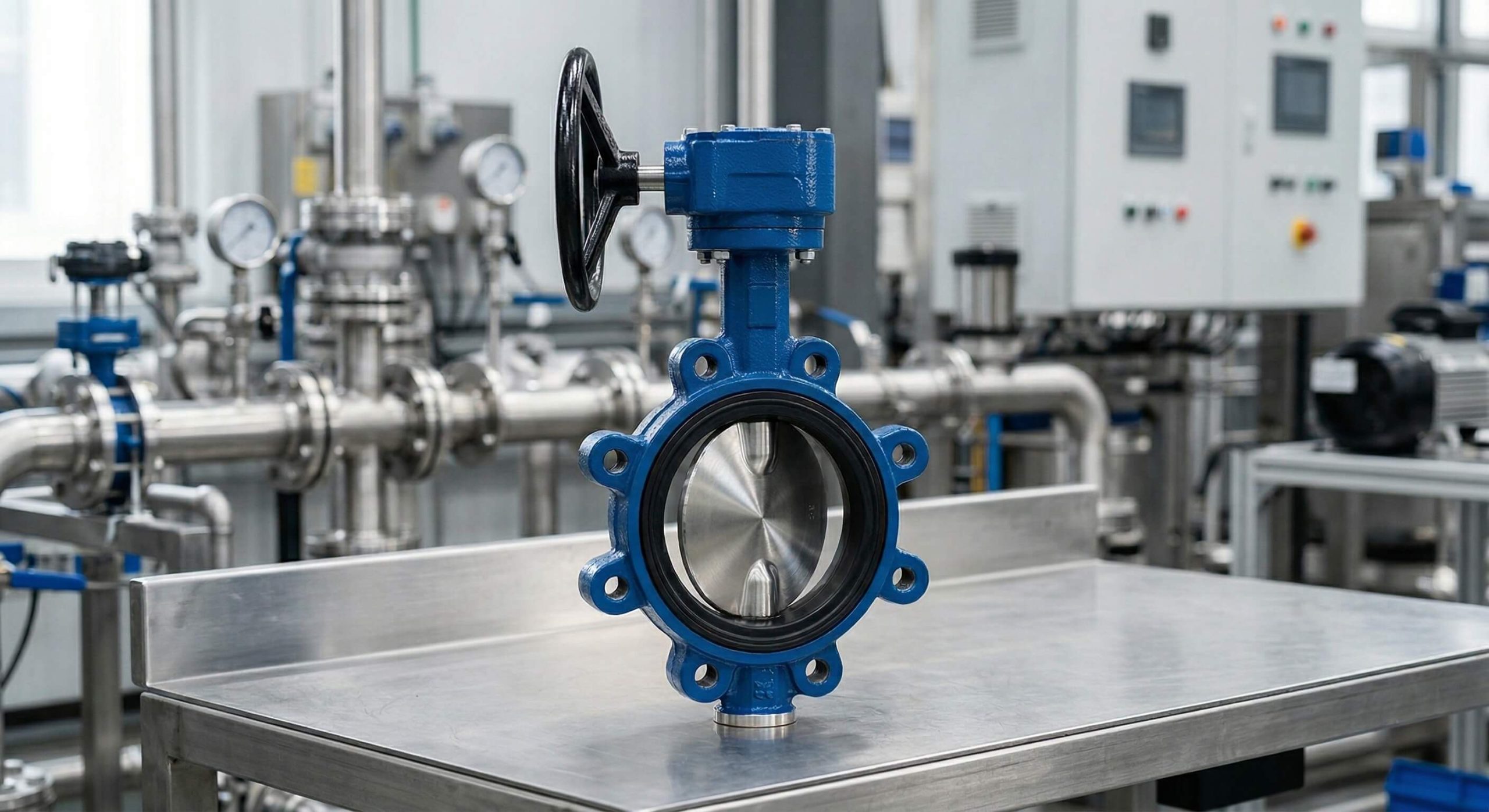
A 6-inch (DN150) butterfly valve regulates fluid flow using a rotating disc within industrial piping systems. Handling high-pressure fluids often causes massive, unexpected leaks. A tiny drip ruins entire production runs instantly. You require dependable flow control hardware immediately. We provide practical solutions for pipeline management. Industry engineers trust this specific dn150 butterfly valve mechanism daily.
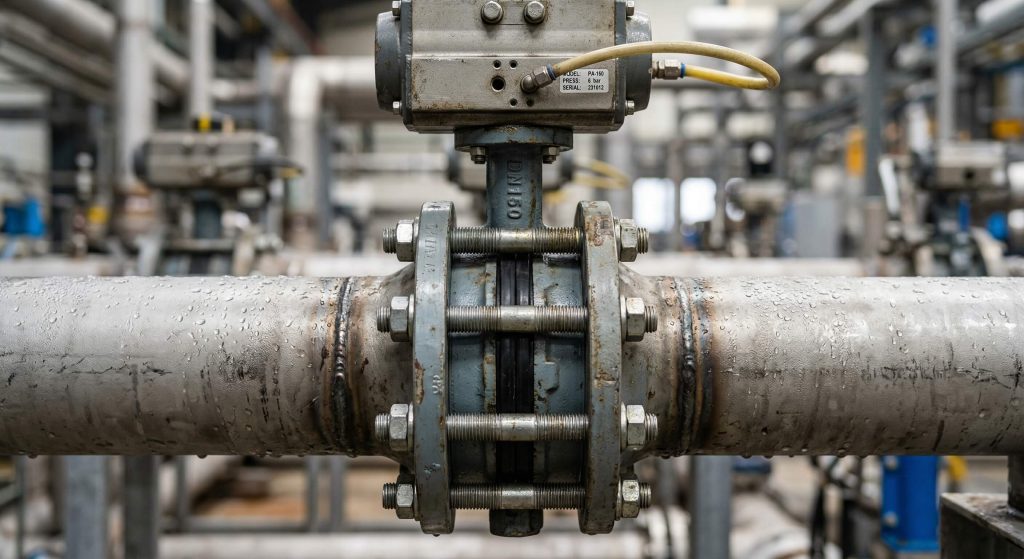
1. What Exactly Is A dn150 butterfly valve?
This component acts as a precise flow regulator inside mid-sized pipelines. A standard dn150 butterfly valve blocks fluid movement effectively. The circular disc rotates a quarter turn for quick operation. Engineers rely on these units for rapid shutoff capabilities.
Materials define performance across harsh chemical environments. Cast iron bodies withstand heavy mechanical stress well. Stainless steel discs resist severe internal corrosion. Valve seats ensure tight seals against extreme pressures.
What Are Its Core Components?
Here is the deal: Understanding valve parts prevents costly maintenance errors. The central stem connects actuators directly with discs.
- Actuators provide mechanical turning force.
- Seats prevent fluid leakage completely.
- Discs act as primary flow barriers.
Key Takeaway: Identifying each internal component helps operators troubleshoot flow issues quickly.
| Component Name | Primary Function | Common Material |
|---|---|---|
| Valve Body | Houses internal parts | Cast Iron |
| Rotating Disc | Regulates fluid flow | Stainless Steel |
| Inner Seat | Creates leak-proof seal | EPDM Rubber |
This table summarizes crucial parts required for proper pipeline operation.
2. How Does A dn150 butterfly valve Operate?
A dn150 butterfly valve operates by turning its central disc ninety degrees. The mechanism requires minimal physical effort during activation. Fluid passes freely when the disc sits parallel. Flow stops completely once the plate becomes perpendicular.
Manual levers allow quick adjustments by human operators. Pneumatic actuators automate turning processes for large facilities. Gear operators offer precise control over partial flow rates. Proper torque application prevents mechanical stem failures.
Why Use Quarter-Turn Mechanisms?
You might be wondering: Why do facilities prefer this specific turning method? Faster closing speeds reduce emergency spillage risks significantly.
- Quick shutoff saves valuable resources.
- Minimal friction extends equipment lifespan.
- Lower torque demands reduce energy costs.
Key Takeaway: Quarter-turn valves offer unmatched speed compared with traditional gate designs.
| Operation Method | Speed | Best Application |
|---|---|---|
| Manual Lever | Fast | Small scale systems |
| Gear Operator | Slow | High-pressure lines |
| Pneumatic | Very Fast | Automated factories |
These operational methods dictate how fast pipelines react during emergencies.
3. What Types Of dn150 butterfly valve Exist?
Several variations exist based on unique disc alignments. A concentric dn150 butterfly valve works best for low-pressure water systems. Double offset designs handle higher temperatures efficiently. Triple offset versions manage severe industrial chemicals safely.
Lug style bodies feature threaded inserts on both sides. Wafer styles fit tightly between two separate pipe flanges. Flanged valves provide rigid connections for heavy infrastructure. Choosing correct mounting styles prevents catastrophic joint failures.
Which Alignment Works Best?
What’s the real story? Offset designs reduce friction between discs and rubber seats. This design choice prevents premature wear over time.
- Concentric handles basic liquid flow.
- Double offset manages moderate pressures.
- Triple offset survives extreme heat.
Key Takeaway: Matching valve types with pressure ratings ensures long-term operational safety.
| Valve Type | Pressure Rating | Friction Level |
|---|---|---|
| Concentric | Low | High |
| Double Offset | Medium | Moderate |
| Triple Offset | Very High | Zero |
Selecting appropriate offset configurations dictates overall pipeline durability.
4. Where Can You Use A dn150 butterfly valve?
You can deploy these valves across municipal water treatment plants. Every modern dn150 butterfly valve manages wastewater distribution networks efficiently. Chemical processing facilities rely on them daily. HVAC systems use them for building temperature regulation.
Food processing plants demand sanitary stainless steel variations. Marine vessels utilize bronze models for saltwater environments. Oil refineries require robust, fire-safe valve constructions. Each unique sector demands specific material certifications.
Are They Suitable For Slurries?
This is where it gets interesting: Thick slurries often destroy standard internal pipeline components. Specialized abrasive-resistant seats manage suspended solids beautifully.
- Rubber lined valves handle mud.
- Metal seats resist sharp particles.
- Teflon parts block chemical corrosion.
Key Takeaway: Customizing seat materials allows these components to handle highly aggressive media.
| Industry | Primary Fluid | Required Material |
|---|---|---|
| Water Treatment | Clean Water | EPDM |
| Chemical Plant | Acidic Fluids | PTFE |
| Mining Sector | Heavy Slurry | Metal-to-Metal |
Industry-specific applications demand rigorous material compatibility checks.
5. How To Select The Right dn150 butterfly valve?
Selecting proper hardware requires analyzing your exact fluid type first. An optimal dn150 butterfly valve matches pipeline temperature ratings perfectly. Operating pressure limits dictate required body thickness. Incorrect material choices cause rapid structural degradation.
Actuation requirements influence your final purchasing decision heavily. Remote locations demand automated electric or pneumatic controls. Accessible pipes only need simple hand levers. Always verify flange compatibility before finalizing orders.
How Do Pressure Ratings Work?
Ready for the good part? Standardized pressure classes make selection processes relatively simple. European PN16 standards align perfectly with DN150 sizing.
- Verify maximum system temperature.
- Check continuous flow pressure.
- Calculate potential pipeline surges.
Key Takeaway: Evaluating pressure classes prevents dangerous equipment blowouts.
| Pressure Class | Max PSI | Application Suitability |
|---|---|---|
| PN10 | 145 PSI | Low pressure lines |
| PN16 | 232 PSI | Standard industrial |
| Class 150 | 285 PSI | Heavy duty systems |
Correct pressure class selection guarantees safe fluid containment.
6. What Are dn150 butterfly valve Dimensions?
Standard dimensions include a six-inch internal nominal diameter. A typical dn150 butterfly valve features specific face-to-face measurements. The outer diameter must align with matching pipe flanges. Stem height determines which actuators fit correctly.
Weight varies drastically based on chosen body materials. Cast iron units remain surprisingly lightweight for their size. Solid steel models add significant strain on pipe supports. Accurate clearance measurements prevent frustrating installation delays.
Do Flange Standards Matter?
But here’s the kicker: Mismatched flanges cause immediate and unstoppable fluid leaks. ANSI standards differ from DIN or JIS requirements.
- ANSI targets North American pipes.
- DIN fits European infrastructure.
- JIS serves Asian industrial markets.
Key Takeaway: Verifying regional flange standards saves hours of installation headaches.
| Standard | Region | Bolt Hole Count |
|---|---|---|
| ANSI B16.5 | Americas | 8 Holes |
| DIN PN16 | Europe | 8 Holes |
| JIS 10K | Asia | 8 Holes |
Matching global dimensional standards ensures seamless pipe integration.
7. How Should You Install A dn150 butterfly valve?
Install these units with discs in a partially open position. Placing a dn150 butterfly valve properly requires aligned pipe flanges. Never weld pipes while rubber seats remain inside. Heat destroys internal seals almost instantly.
Tighten flange bolts using alternating star patterns. Uneven torque causes immediate seat distortion and leaks. Support heavy automated valves with external brackets. Verify clearance spaces before engaging pneumatic actuators.
What Are Common Installation Mistakes?
Here is the deal: Rushing mechanical installations ruins expensive flow control hardware. Forgetting pipe alignment stresses valve bodies severely.
- Never force misaligned pipes together.
- Avoid over-tightening connection bolts.
- Clean pipe debris before mounting.
Key Takeaway: Careful alignment protocols extend hardware life by decades.
| Installation Step | Critical Action | Consequence of Failure |
|---|---|---|
| Preparation | Clean all pipe faces | Immediate seal leakage |
| Alignment | Center valve perfectly | Broken mechanical stems |
| Bolting | Use star tightening pattern | Warped rubber seats |
Following strict installation steps prevents catastrophic startup failures.
8. Why Might Your dn150 butterfly valve Fail?
Failure happens when abrasive debris ruins soft rubber seals. A broken dn150 butterfly valve often results from extreme over-pressurization. Thermal shock cracks cast iron bodies unpredictably. Chemical incompatibility melts standard EPDM seats rapidly.
Operator error causes bent internal mechanical stems. Forcing manual levers past designated stops breaks gearboxes. Poor lubrication destroys automated actuator systems completely. Regular inspections identify micro-leaks before disasters strike.
How Does Cavitation Destroy Parts?
What’s the real story? Rapid pressure drops create microscopic, destructive fluid bubbles. These bursting bubbles erode solid metal surfaces quickly.
- Cavitation sounds like grinding rocks.
- It destroys metal discs fast.
- Proper sizing prevents bubble formation.
Key Takeaway: Correctly calculating flow rates eliminates destructive cavitation issues entirely.
| Failure Cause | Warning Sign | Prevention Method |
|---|---|---|
| Abrasion | Visible seal wear | Use metal seats |
| Over-torque | Stiff operating lever | Install gear operators |
| Cavitation | Loud grinding noises | Resize pipeline layout |
Understanding failure modes allows maintenance teams to react proactively.
9. How Do You Maintain A dn150 butterfly valve?
Maintenance involves lubricating external stem bearings every six months. A well-maintained dn150 butterfly valve provides reliable service for years. Inspect rubber seats for visible chemical degradation. Tighten loose packing glands periodically to stop drips.
Replace worn actuators during scheduled factory shutdowns. Clean external surfaces thoroughly to prevent rust formation. Test automated open-close cycles monthly. Keep spare sealing kits available for emergency repairs.
Can You Replace Internal Seats?
This is where it gets interesting: Many modern designs allow quick field seat replacements. Swapping rubber liners saves money versus buying new units.
- Isolate pipeline pressure first.
- Remove valve from piping.
- Slide new seat into body.
Key Takeaway: Routine seat replacements offer cost-effective hardware life extension.
| Maintenance Task | Frequency | Benefit |
|---|---|---|
| Visual Inspection | Monthly | Catches leaks early |
| Stem Lubrication | Bi-Annually | Ensures smooth turning |
| Seat Replacement | Every 3 Years | Prevents internal bypass |
Scheduled upkeep reduces unexpected factory downtime massively.
10. What Does A dn150 butterfly valve Cost?
Pricing depends heavily on specific construction materials utilized. A basic cast iron dn150 butterfly valve costs relatively little. High-performance stainless steel versions demand premium industrial pricing. Automated electric actuators double initial purchase expenses.
Bulk orders reduce individual unit prices significantly. Specialized certifications add extra costs for food-grade environments. Shipping heavy metal parts increases overall project budgets. Cheap valves often fail quickly, increasing long-term expenses.
Is Upgrading Worth The Price?
Ready for the good part? Investing in triple offset designs prevents expensive maintenance shutdowns. Higher upfront costs yield massive long-term savings.
- Premium valves last much longer.
- They reduce fluid loss costs.
- Better materials prevent safety fines.
Key Takeaway: Strategic purchasing decisions prioritize lifecycle value over initial price tags.
| Valve Material | Actuation | Estimated Cost Range |
|---|---|---|
| Cast Iron | Manual Lever | Low |
| Carbon Steel | Gear Box | Moderate |
| Stainless Steel | Pneumatic | High |
Budgeting accurately requires analyzing both materials and control mechanisms.
Conclusion
Investing in high-quality pipeline components prevents disastrous industrial accidents. We provided comprehensive data regarding sizing, installation, and operation. Trust reliable hardware to keep operations running smoothly. Please reach out and contact us today for specialized flow control solutions. Quality engineering remains our unwavering commitment.
FAQ
Q1: Can I use this valve for drinking water?
Yes, you certainly can. Make sure you select models with WRAS or NSF certifications for safety.
Q2: What’s the best material for highly corrosive chemicals?
PTFE-lined units offer superior protection. Teflon resists harsh acidic environments better than standard rubber.
Q3: How do I know if my pipeline pressure is too high?
Check your system gauge against the valve’s PN rating. Exceeding class limits causes immediate seal blowout.
Q4: Can I install this vertically or horizontally?
Both orientations work perfectly fine. Just ensure horizontal pipes have stems positioned vertically to prevent debris buildup.
Q5: What’s the best way to fix a leaking stem?
Tightening the top packing gland usually works. If dripping continues, you must replace internal stem O-rings.