
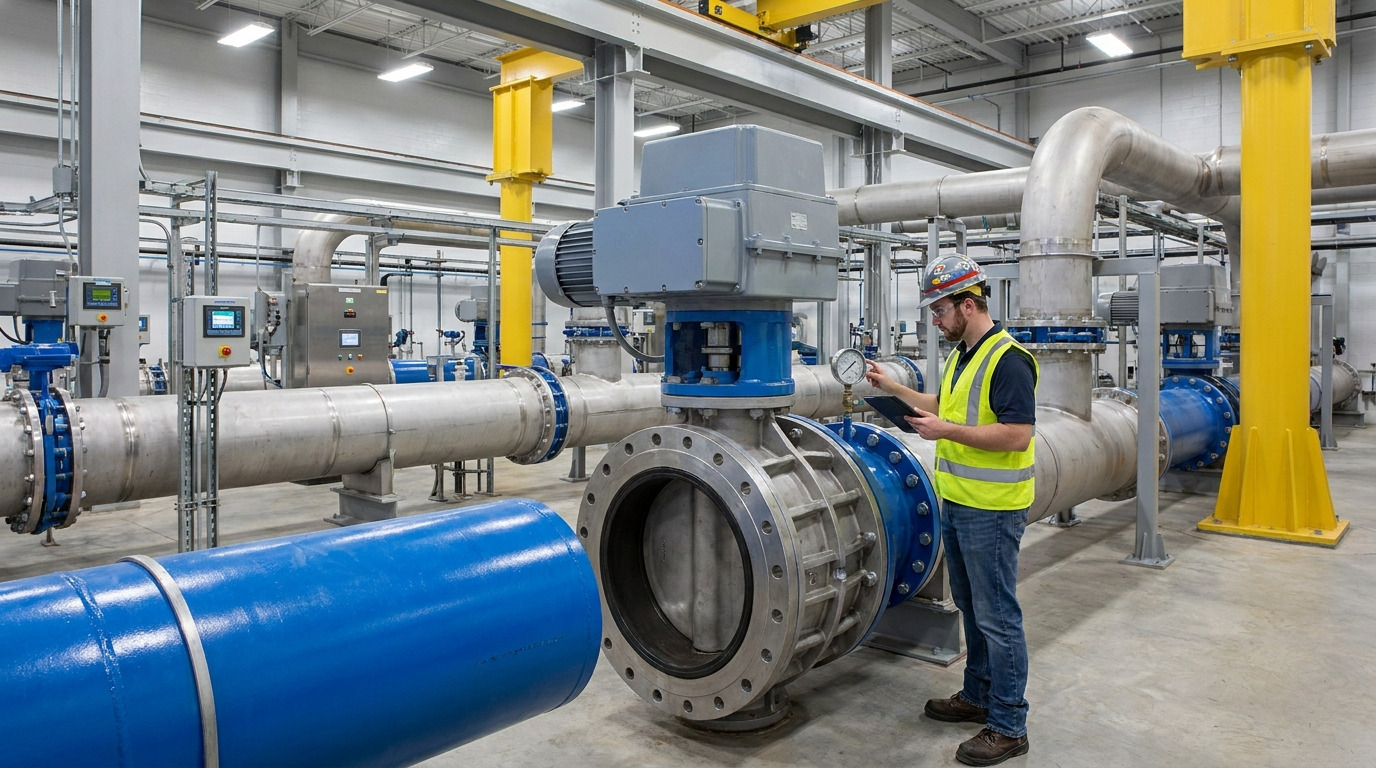
Butterfly valves are compact quarter-turn mechanisms designed to regulate or isolate fluid flow efficiently across various pipeline systems. You often face situations where bulky shutoff devices consume too much space and cause maintenance headaches. The downtime from a failing system can frustrate your team and drain your operational budget rapidly. Fortunately, understanding fundamental butterfly valve uses provides a streamlined solution to control media flawlessly while minimizing installation footprint.
What defines core butterfly valve uses?
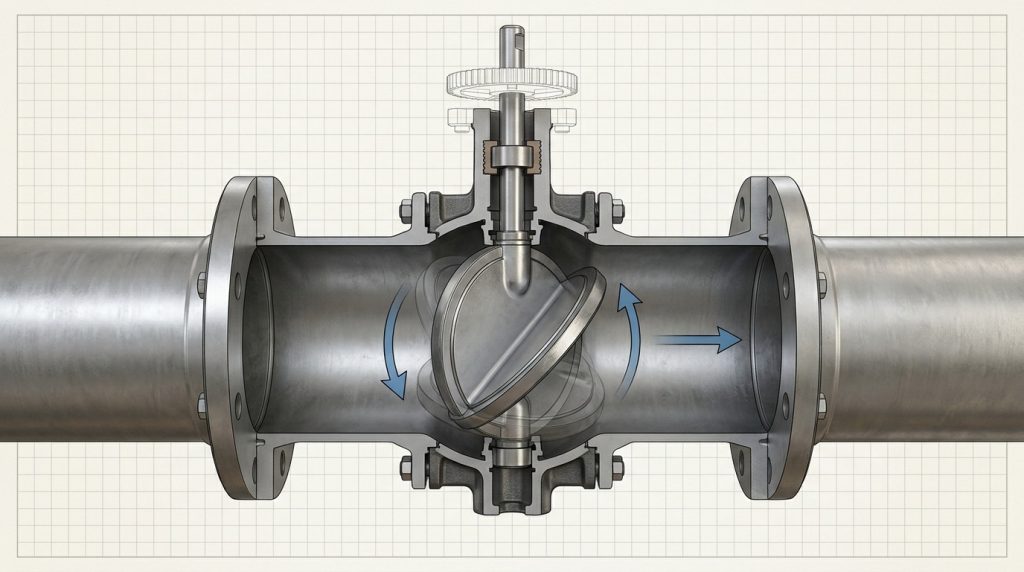
Core butterfly valve uses revolve around regulating and stopping fluid flow through a quarter-turn rotating disc mechanism. When you turn the handle or activate the actuator, the internal disc pivots on its center axis to allow or block media. This straightforward action provides a tight seal and reliable throttling for numerous commercial configurations. You will find these components indispensable for space-restrictive applications where traditional gate options simply cannot fit.
How does the mechanism operate?
The basic mechanism relies on a disc connected to a central stem to control fluid passage. Here’s the deal: when the valve stem rotates ninety degrees, the disc either aligns with the flow or sits perpendicular to stop it. This rapid open and close capability ensures immediate response times during critical operations.
- Quarter-turn operation for quick shutoff.
- Central disc design minimizes pressure drop.
- Compact body saves crucial pipeline space.
Why choose this specific design?
Choosing this design guarantees a smaller installation footprint compared to bulkier alternatives. What’s the real story? You save significant time and resources during installation and routine servicing because the lightweight body is easier to handle.
Key Takeaway: Implementing quarter-turn technology drastically reduces system footprint while maintaining high-performance fluid regulation.
| Feature | Description | Benefit |
|---|---|---|
| Disc | Rotating circular barrier | Quick fluid control |
| Stem | Connects actuator to disc | Transfers motion directly |
| Seat | Inner lining | Ensures tight sealing |
The table above illustrates the primary components that make quarter-turn mechanisms highly effective for fluid isolation.
Where are common butterfly valve uses?
Common butterfly valve uses span across municipal water supply, sanitary lines, HVAC systems, and heavy industrial slurries. The versatile design allows these valves to handle both clean fluids and abrasive media effectively across diverse operating environments. Depending on the body style, they can easily adapt to large-diameter pipes where space is severely limited.
Which industries rely on them?
Numerous sectors depend on these components for daily liquid and gas regulation tasks. You might be wondering: can they handle tough environments? Absolutely, which is why chemical processing plants utilize them to manage aggressive fluids safely.
- Municipal water treatment facilities.
- Marine and offshore fluid handling.
- Chemical and petrochemical processing.
What are specific application scenarios?
These devices excel in scenarios requiring frequent operation and rapid flow adjustment. This is where it gets interesting… they are perfectly suited for flow isolation, redirecting media swiftly during unexpected maintenance periods.
Key Takeaway: Understanding industry-specific requirements helps you leverage the correct quarter-turn configuration for optimal process efficiency.
| Industry | Typical Application | Key Advantage |
|---|---|---|
| Water Treatment | Large pipe isolation | Cost-effective scaling |
| Chemical processing | Acid and base regulation | Corrosion resistance |
| HVAC Systems | Coolant flow control | Compact installation |
This breakdown highlights how various industrial sectors benefit directly from compact quarter-turn fluid regulation devices.
Which terms explain butterfly valve uses?
Specific industry terminology explains how butterfly valve uses deliver precise near-linear flow regulation and reliable isolation capabilities. Near-linear flow means the fluid rate remains strictly proportional to the angular motion of the internal disc. Grasping these technical terms enables you to discuss specifications confidently with your engineering team.
What does near-linear flow mean?
Near-linear flow describes a condition where the flow rate directly matches the disc’s open percentage. Ready for the good part? If you set the disc to sixty percent open, the fluid passing through is exactly sixty percent of the maximum capacity. This predictability is essential for accurate process scaling.
- Consistent flow proportionality.
- Easier automated control integration.
- Stable media delivery rates.
How does flow isolation function?
Flow isolation refers to completely blocking media from entering a specific pipeline section. Truth be told: this characteristic is vital when you need to perform emergency repairs without draining the entire network.
Key Takeaway: Mastering valve terminology empowers you to communicate technical requirements accurately and select the optimal configuration.
| Term | Definition | Practical Impact |
|---|---|---|
| Near-linear | Proportional flow rate | Accurate throttling |
| Quick opening | Rapid initial flow | Fast system response |
| Isolation | Complete media blockage | Safe maintenance zones |
The glossary terms summarized here clarify the operational behaviors you can expect from these regulating devices.
How are parts installed for butterfly valve uses?
Properly installing components for typical butterfly valve uses requires careful flange cleaning and methodical bolt tightening procedures. You must inspect the flange surfaces to eliminate rust or welding residue that could compromise the critical seal. Misaligned pipe faces represent a leading cause of premature failure in these systems.
What is the preparation process?
Preparation involves meticulously clearing the attachment area of any debris or corrosion. But here’s the kicker… skipping this simple step often leads to immediate leakage and costly rework. Always ensure adequate spacing exists between pipe flanges to prevent tearing the elastomer seat during insertion.
- Clean flange faces thoroughly.
- Inspect for warping or misalignment.
- Verify adequate pipeline clearance.
How should you secure the bolts?
Securing the unit requires a specific tightening pattern to distribute pressure evenly across the seal. Pay close attention: tighten the bolts in a star pattern, much like you would when changing a vehicle tire.
Key Takeaway: Meticulous preparation and staggered bolt tightening prevent seat damage and ensure a leak-free installation.
| Step | Action | Consequence of Skipping |
|---|---|---|
| 1 | Clean flanges | Immediate fluid leaks |
| 2 | Align pipes | Premature seat wear |
| 3 | Star-pattern tightening | Uneven seal pressure |
Proper installation steps outlined above are critical for maximizing the operational lifespan of the regulating unit.
What are pros of butterfly valve uses?
The primary advantages of butterfly valve uses include high flow capacity, significant cost efficiency, and low overall maintenance requirements. Because the internal disc presents minimal resistance to fluid passage, you benefit from a remarkably low pressure drop across the system. Their straightforward mechanical design simplifies daily operations and drastically reduces training time for your staff.
How do they save money?
These devices save money through their lightweight construction and reduced material requirements. It gets better: the simple quarter-turn action requires smaller, less expensive actuators to automate the process. You spend less on initial procurement and enjoy lower long-term energy costs.
- Lower initial purchase price.
- Reduced structural support needs.
- Cheaper automation requirements.
Why is pressure recovery important?
High pressure recovery ensures your system operates efficiently without requiring oversized pumping equipment. Let’s face it: excessive pressure drops force pumps to work harder, consuming more electricity over time.
Key Takeaway: The combination of affordability and high operational efficiency makes these units an exceptional investment for large networks.
| Advantage | Mechanism | User Benefit |
|---|---|---|
| Cost efficient | Less raw material | Budget savings |
| High capacity | Aerodynamic disc | Maximum throughput |
| Low pressure drop | Unobstructed path | Energy conservation |
These documented advantages demonstrate why quarter-turn mechanisms offer superior return on investment for fluid control networks.
How to maintain typical butterfly valve uses?
Routine cycling and targeted lubrication are essential to maintain typical butterfly valve uses effectively over extended periods. You must develop a consistent schedule to operate the mechanisms, especially those sitting idle for months in bypass lines. Consistent movement prevents the elastomer seat from sticking to the disc and tearing during sudden operation.
What is a proper cycling schedule?
A proper schedule involves opening and closing the unit fully at least once every month. Here is the secret: this simple action clears accumulated debris from the seating area and keeps the mechanical components free. Regular movement is your first line of defense against unexpected seizing.
- Cycle idle units monthly.
- Inspect seat integrity quarterly.
- Check actuator alignment annually.
When is lubrication necessary?
Lubrication becomes necessary when the mechanism operates in exceptionally dry or dusty environments. Think about this: applying the correct grease to the stem and seat prevents friction-induced wear and dramatically prolongs the lifespan.
Key Takeaway: Proactive cycling and appropriate lubrication routines prevent catastrophic failures and extend the working life of the equipment.
| Task | Frequency | Purpose |
|---|---|---|
| Routine cycling | Monthly | Prevent seizing |
| Visual inspection | Quarterly | Spot exterior leaks |
| Stem lubrication | Annually | Reduce turning friction |
Adhering to this basic maintenance schedule guarantees your fluid isolation devices remain reliable during critical moments.
What ensures quality in butterfly valve uses?
Premium materials and third-party certifications are what ensure high quality in demanding butterfly valve uses. You should look for ductile iron bodies coated with fusion-bonded epoxy to resist aggressive external corrosion. Components meeting strict industry standards guarantee that the device will withstand severe pressure fluctuations without structural failure.
Why do certifications matter?
Certifications prove that an independent laboratory has tested and verified the manufacturer’s performance claims. Make no mistake: approvals for drinking water safety mean the internal materials will not leach toxic chemicals into your supply. Trusting certified products protects your brand reputation and ensures regulatory compliance.
- Verifies material safety.
- Ensures structural integrity.
- Guarantees standard compliance.
What materials indicate high quality?
High-quality construction relies on durable metals and resilient elastomers designed for longevity. As it turns out: a stainless steel shaft combined with a vulcanized seat creates an incredibly robust internal structure.
Key Takeaway: Investing in certified, premium-material valves guarantees long-term reliability and compliance with strict industrial safety standards.
| Component | Preferred Material | Quality Indicator |
|---|---|---|
| Body | Ductile Iron | High tensile strength |
| Coating | Fusion Bonded Epoxy | Corrosion resistance |
| Shaft | Stainless Steel | Prevents snapping |
Evaluating these specific material choices helps you identify truly high-quality devices capable of enduring harsh industrial conditions.
How do alternatives match butterfly valve uses?
Alternatives like gate or ball designs often struggle to match the compact efficiency of standard butterfly valve uses. Gate devices require substantial vertical space to accommodate the rising stem, making them unsuitable for tight mechanical rooms. While ball devices offer excellent sealing, they become prohibitively expensive and heavy in larger pipe diameters.
Where do gate devices fall short?
Gate configurations fall short when precise flow throttling is required for your process. The reality is: partially opening a gate mechanism causes severe vibration and rapid wear on the internal sealing faces. They are strictly designed for fully open or fully closed operations.
- Incapable of accurate throttling.
- Require significant installation space.
- Slower to open and close.
Why are ball mechanisms sometimes avoided?
Ball mechanisms are often avoided in large-scale municipal projects due to their immense weight and high cost. Keep in mind: once you exceed a certain pipe diameter, the solid metal ball becomes incredibly difficult to actuate efficiently.
Key Takeaway: Quarter-turn disc mechanisms provide the best balance of size, cost, and throttling capability compared to traditional alternatives.
| Valve Type | Best Trait | Major Limitation |
|---|---|---|
| Butterfly | Compact & light | Lower pressure limits |
| Gate | Full bore flow | No throttling ability |
| Ball | Excellent sealing | High cost in large sizes |
Comparing these structural differences clarifies why disc-based quarter-turn units dominate large diameter pipeline installations globally.
What issues impact butterfly valve uses?
Improper alignment and severe cavitation are the primary issues that negatively impact industrial butterfly valve uses. If you fail to align the device properly between the flanges, the disc will strike the pipe interior during operation. This mechanical interference severely damages the sealing edge and instantly ruins the isolation capability of the unit.
How does cavitation occur?
Cavitation occurs when extreme pressure drops across the disc cause fluid vapor bubbles to form and rapidly collapse. You should know: these collapsing bubbles act like tiny explosions that erode the metal disc and elastomer seat over time. You must carefully calculate pressure differentials to avoid this destructive phenomenon.
- Causes severe metal pitting.
- Generates excessive system noise.
- Destroys elastomer seals quickly.
What causes seat tearing?
Seat tearing typically happens during installation when flanges are not spread wide enough before inserting the body. Here is the truth: forcing the unit into a tight gap pinches the rubber lining, creating an immediate weak point.
Key Takeaway: Understanding common failure modes like cavitation and physical interference helps you engineer safer, more resilient piping networks.
| Problem | Root Cause | Prevention Method |
|---|---|---|
| Disc interference | Poor pipe alignment | Use centering tools |
| Cavitation | High pressure drop | Size properly |
| Seat tearing | Forced installation | Spread flanges fully |
Identifying these operational challenges early allows you to implement preventative measures during the initial design phase.
How to size for butterfly valve uses?
Accurately calculating flow coefficients is essential to size correctly for specific butterfly valve uses. You must evaluate the maximum anticipated flow rate, the specific gravity of the media, and the acceptable pressure drop. Choosing a device that is too large results in poor throttling control, while an undersized unit causes severe fluid restriction.
Why is the flow coefficient critical?
The flow coefficient determines exactly how much fluid can pass through the unit at a given pressure drop. Let me explain: matching this coefficient to your process requirements ensures the actuator operates smoothly without struggling against extreme resistance. It prevents the system from experiencing damaging cavitation.
- Ensures accurate throttling control.
- Prevents excessive pressure loss.
- Protects against cavitation damage.
How do you handle velocity limits?
Handling velocity limits involves ensuring the fluid does not exceed the maximum rated speed for the elastomer seat. The bottom line is: excessive fluid velocity strips the rubber lining away from the rigid body over time.
Key Takeaway: Precise sizing based on strict mathematical calculations ensures optimal flow control and prevents premature mechanical degradation.
| Parameter | Importance | Sizing Impact |
|---|---|---|
| Flow rate | Determines capacity | Avoids bottlenecks |
| Pressure drop | Affects pump load | Prevents cavitation |
| Fluid velocity | Protects seat | Extends lifespan |
This final evaluation matrix ensures you account for all critical hydraulic parameters when sizing your control equipment.
In closing, mastering these fundamental principles ensures you deploy quarter-turn fluid mechanisms effectively across any industrial landscape. Proper sizing, strategic installation, and consistent maintenance will drastically reduce unexpected downtime and lower your operational overhead. By focusing on certified, high-quality components, your systems will run with unparalleled reliability and safety. If you are struggling with complex pipeline design or chronic equipment failure, contact us today to discover how our expertly engineered solutions can optimize your fluid control network. We are dedicated to providing robust, reliable flow technology that keeps your most critical global operations running seamlessly.
FAQs
Q1: What is a butterfly valve?
A butterfly valve is a quarter-turn isolation device. It uses a rotating central disc to regulate or completely stop the flow of fluids within a piping network efficiently.
Q2: When are butterfly valves used and what are their applications?
They are used when space is highly restricted. Typical applications include water treatment plants, chemical processing facilities, and commercial HVAC systems requiring rapid flow isolation.
Q3: How are butterfly valves installed?
They are installed by centering the body between two clean pipe flanges. You must tighten the holding bolts in a star pattern to ensure even pressure on the seal.
Q4: What are the advantages of butterfly valves?
The main advantages are compact size and low cost. They also provide excellent flow capacity and require significantly less maintenance than heavier gate or globe alternatives.
Q5: How should you maintain butterfly valves?
You maintain them by cycling the disc open and closed regularly. Monthly operation prevents the seals from sticking and ensures the mechanical parts remain free of debris.