
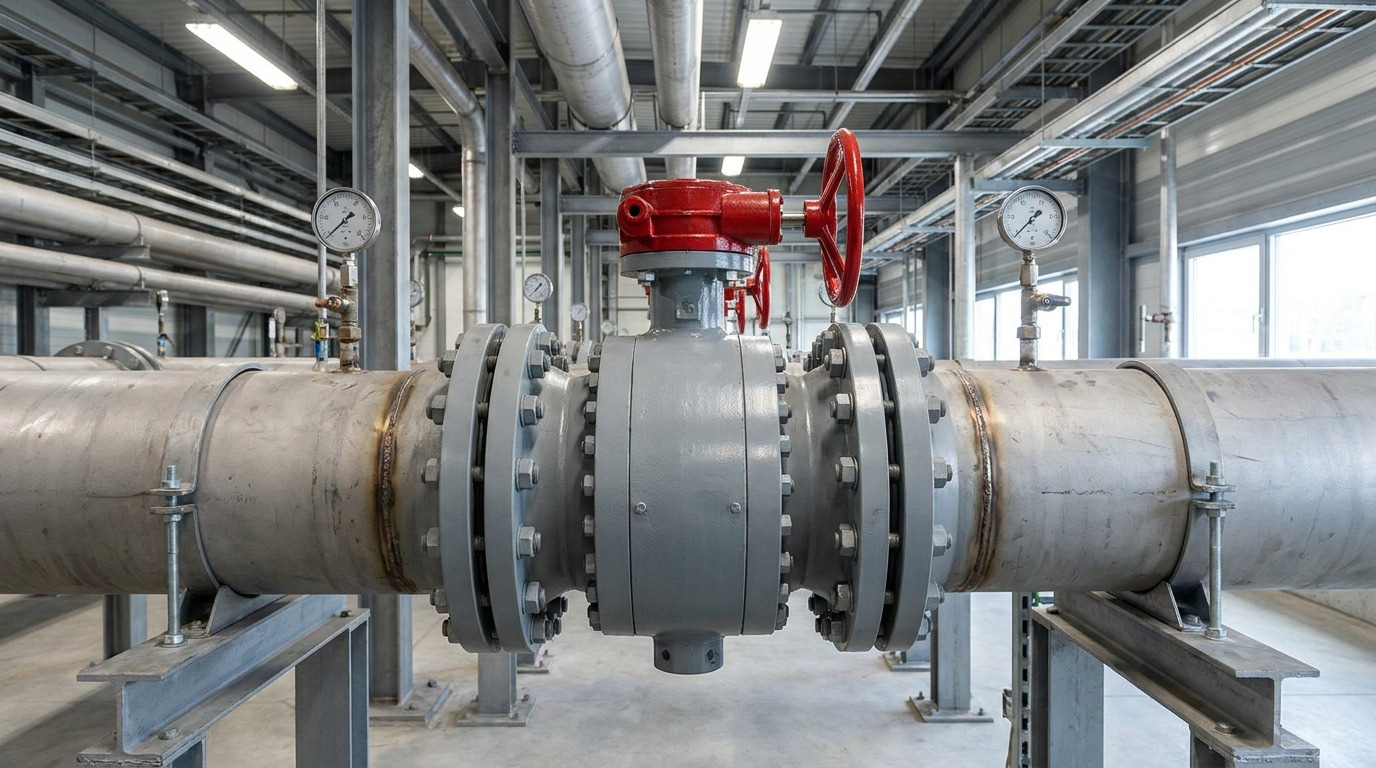
Butterfly valve uses mainly include on-off isolation, coarse throttling, and compact flow control in water, air, gas, slurry, chemical, HVAC, power, and utility piping. These uses make a butterfly valve a practical choice when you need high flow capacity, quick 90-degree quarter-turn operation, and a shorter face-to-face length than many gate or globe valves.
A typical situation is a plant upgrade where the pipe rack is crowded, the line size is large, and operators need a valve that can close quickly without adding too much weight to the piping support. A butterfly valve can solve that problem, but only when the seat, disc, body style, pressure class, actuator, and media compatibility match the actual service.
Main Butterfly Valve Uses in Industrial Piping
The main value of a butterfly valve is that it can stop, start, or regulate flow with a rotating disc inside a compact valve body. It is not the best valve for every duty, but it is one of the most efficient choices when the process needs large flow through a relatively small installation envelope.
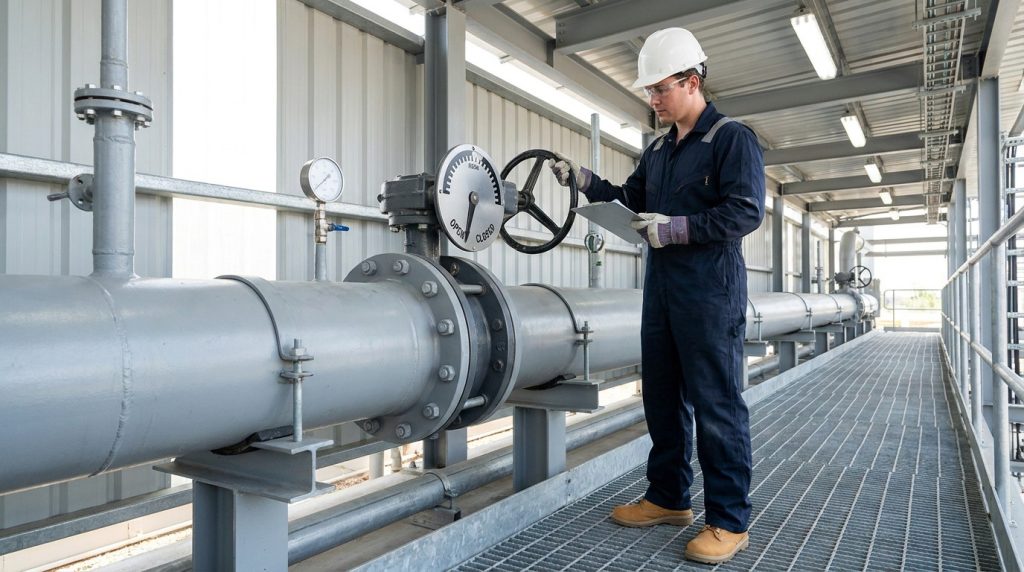
Can It Isolate Flow Reliably?
Yes, a butterfly valve can be used for isolation when the selected seat and shutoff class match the service. In many water, air, and general industrial lines, resilient-seated butterfly valves are used for normal open-close duty because the elastomer seat helps seal around the disc.
For higher temperature, abrasive, or more demanding chemical service, the isolation question becomes more specific. You need to confirm whether the valve is resilient seated, PTFE lined, double offset, triple offset, or metal seated, because each design handles shutoff differently.
Can It Control Flow Accurately?
A butterfly valve can control flow, but it is usually better for coarse or moderate throttling than for fine control. The disc changes the flow area as it rotates, and many butterfly valves have useful control behavior in the middle travel range, often around 20 to 70 degrees open depending on the design and Cv curve.
If your system needs very stable flow at low opening angles, a globe valve, V-port ball valve, or dedicated control valve may be a better fit. For pump discharge balancing, cooling water adjustment, or large air-flow regulation, butterfly valve uses often make economic and mechanical sense.
Where Does Fast Operation Matter?
Fast operation matters in systems that need quick shutoff, frequent cycling, or simple manual operation. A quarter turn from fully open to fully closed is much faster than the multiple handwheel turns required by many gate valves.
That speed is useful in utility systems, fire protection support lines, process bypasses, and large-diameter water lines. It also makes automation simpler because a pneumatic or electric actuator only needs rotary motion through about 90 degrees.
Why Butterfly Valves Suit Large Flow Lines
Butterfly valves suit large flow lines because their disc-and-shaft design keeps the body short, light, and relatively simple. As pipe size increases, the weight and cost difference between valve types becomes more important, especially when the valve must fit into existing pipework or elevated structures.
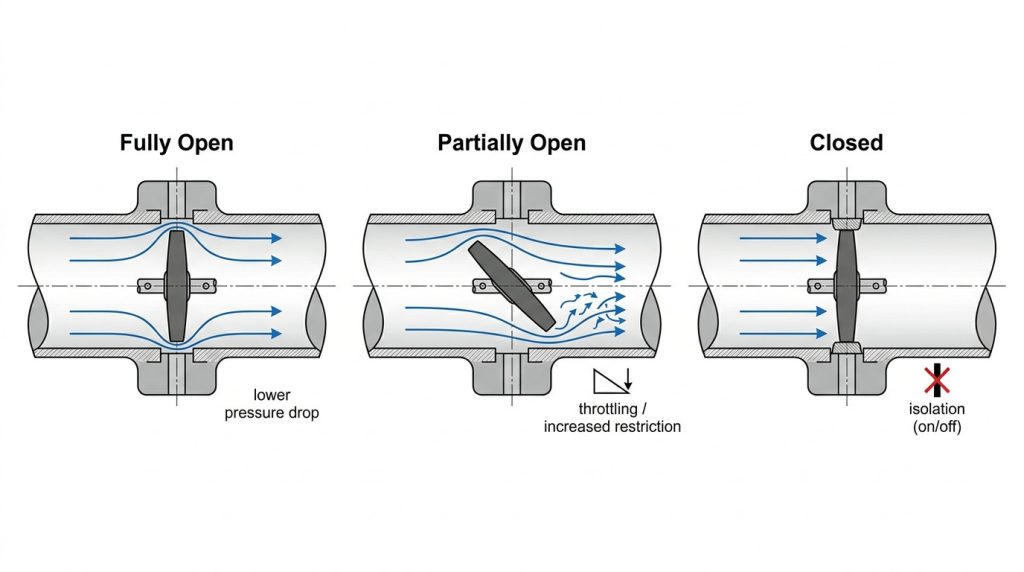
What Does the Disc Do to Flow?
The disc stays in the flow path even when the valve is fully open, so a butterfly valve is not a full-bore valve in the same sense as a full-port ball valve. However, in many large-diameter services, the pressure drop is acceptable because the valve body is short and the flow path is still relatively open.
This is why butterfly valves are common where flow volume is high but perfect full-bore passage is not required. You should still check the manufacturer’s Cv or Kv data, especially when the valve is used near pumps, heat exchangers, filters, or control loops.
Why Do Space and Weight Matter?
Space and weight matter because valve installation is rarely just about the valve itself. Pipe supports, flange spacing, access for the actuator, maintenance clearance, and lifting requirements all affect the final cost.
ASME B16.10 is often used to support face-to-face dimensional consistency for valves of a given type, size, rating class, and end connection. Even so, final installation dimensions should always be confirmed against the valve drawing, especially for replacement projects.
Common Applications by Industry
Butterfly valves are most useful in industries where compact isolation, high flow capacity, and practical cost control matter more than fine throttling accuracy. The table below helps you compare common use areas and the main checks that prevent poor selection.
| Application area | Main valve duty | Typical technical clue | Key risk to confirm |
|---|---|---|---|
| Water and wastewater | Isolation, pump discharge, basin lines | AWWA C519 covers high-performance waterworks butterfly valves from 3 in to 60 in in defined water service | Water quality, velocity, coating, seat material |
| HVAC and cooling water | Balancing, isolation, bypass control | Large flow with moderate pressure drop | Disc position, actuator sizing, condensation exposure |
| Chemical processing | Isolation or controlled transfer | Seat and liner must match concentration and temperature | Swelling, corrosion, permeation, fugitive leakage |
| Slurry and solids | Coarse isolation in selected services | Short body and open passage can help with bulky flow | Abrasion, solids size, seat damage, trapped particles |
| Power and utilities | Cooling water, air, gas, selected steam duties | Fast operation and compact installation | Temperature, pressure class, seat design, testing |
This comparison is a starting point, not a substitute for a valve data sheet. Final selection should confirm pressure, temperature, media, end connection, leakage requirement, actuator torque, and applicable project standards.
Water, Wastewater, and Utilities
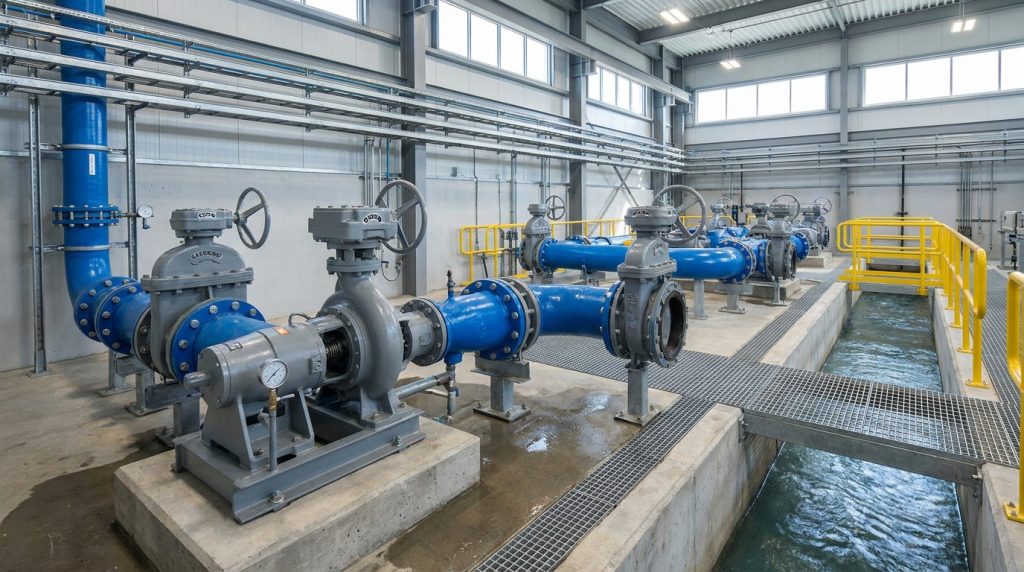
Butterfly valves are widely used in water and wastewater treatment because these systems often involve large pipe sizes, frequent isolation points, and moderate pressure conditions. In waterworks service, standards such as AWWA C504 and AWWA C519 help define requirements for rubber-seated and high-performance butterfly valves under specified water conditions.
For example, AWWA C519 high-performance waterworks butterfly valves are associated with defined pH, temperature, pressure, and velocity conditions, including water service from pH 6 to 12 and 33 to 125°F for its stated scope. Those figures are useful for understanding the standard’s boundary, but your actual valve must still match the project specification and manufacturer data sheet.
Chemical and Process Lines
In chemical processing, butterfly valves can be useful when the media is compatible with the body, disc, seat, liner, and shaft materials. PTFE-lined or corrosion-resistant designs may be considered for aggressive fluids, while common elastomer seats may be unsuitable for solvents, oils, or high-temperature chemicals.
The main mistake is selecting by valve type only. You should confirm chemical concentration, operating temperature, cleaning method, pressure cycles, and whether the valve needs tight shutoff after repeated operation.
HVAC, Air, Gas, and Power
In HVAC and district energy systems, butterfly valves are commonly used for chilled water, condenser water, and heating water isolation or balancing. Their compact body is useful in mechanical rooms where large valves compete for space with pumps, strainers, expansion joints, and instruments.
For air and gas service, butterfly valves may work for shutoff, dampening, or coarse flow control, but leakage class and shaft sealing become more important. For steam or high-temperature utility service, do not assume a general-purpose soft-seated valve is acceptable; the seat and pressure-temperature rating must be checked first.
Where Butterfly Valves Are a Poor Fit
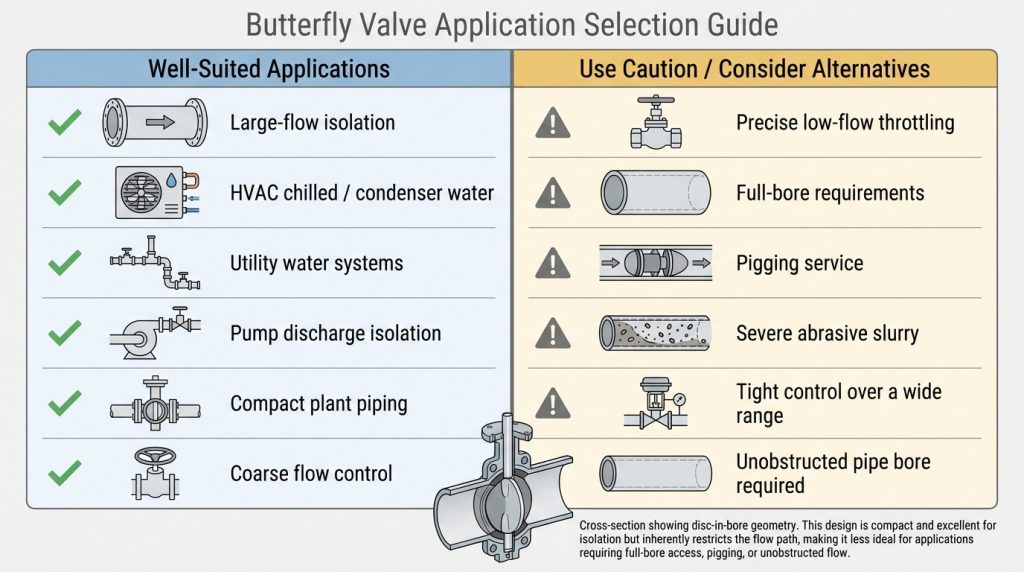
Butterfly valves are a poor fit when the service requires full-bore pigging, very fine control, severe throttling at low opening angles, or media that can damage the seat and disc. They are versatile, but their disc remains in the flow path, and that fact creates limits.
Common caution areas include:
- Viscous or sticky media that can build up around the disc
- Highly abrasive slurry that can erode the seat
- Very high differential pressure across a partially open valve
- Applications requiring precise low-flow modulation
- Lines where the valve must provide an unobstructed bore
When Is a Gate or Ball Valve Better?
A gate valve may be better for full-open or full-closed service where low obstruction is more important than fast operation. It is slower to operate, but it can suit certain large isolation lines where throttling is not required.
A ball valve may be better when tight shutoff, full-port flow, or compact quarter-turn isolation is required in smaller and medium line sizes. However, in large sizes, ball valves can become heavier and more expensive than butterfly valves.
When Is a Globe Valve Better?
A globe valve is usually better for precise throttling. Its internal flow path creates more pressure drop, but it gives better control authority across a wider operating range.
If your control loop needs stable response at small changes in opening, a butterfly valve may create hunting, noise, or unstable flow. In that case, the higher pressure drop and cost of a globe-style control valve can be justified.
How Design Changes the Use Case
The same valve name can mean very different performance, so design details decide the real use case. A low-pressure resilient-seated wafer valve and a high-performance metal-seated offset valve should not be treated as interchangeable.
Wafer, Lug, or Flanged Body?
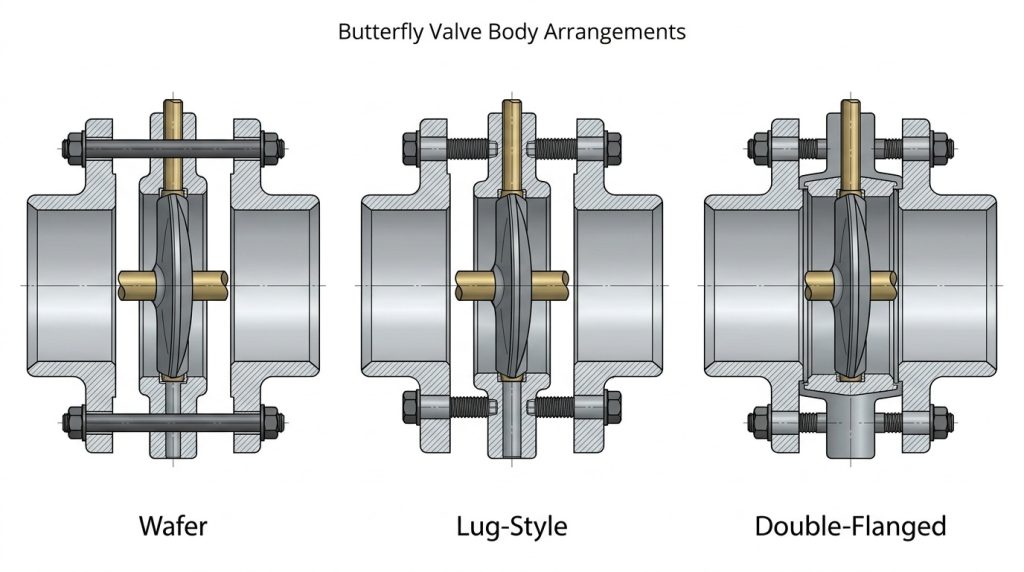
A wafer butterfly valve fits between flanges and is often used where compact installation and cost control matter. A lug-style valve has threaded or tapped lugs and may allow one side of the piping to be removed in some configurations, but dead-end service must be confirmed from the manufacturer’s rating.
A double-flanged butterfly valve is common in larger sizes or more rigid piping layouts. For ASME flanged piping, ASME B16.5 covers NPS 1/2 through NPS 24 across several pressure classes, but that flange standard does not mean every butterfly valve is available in every size and class.
Resilient Seat or Metal Seat?
A resilient seat is often the practical choice for water, air, HVAC, and many low-to-moderate temperature services. It can provide good sealing, but the seat material must match the media, pressure, and temperature.
A metal seat butterfly valve is considered when heat, pressure, abrasion, fire-safe expectations, or chemical attack make soft seats unsuitable. Metal seats usually require more careful torque, sealing, and leakage-class review, so they should be selected from the full service conditions rather than by price alone.
Manual, Gear, Pneumatic, or Electric?
Manual lever operation is common for smaller valves and simple on-off duty. Gear operators are often used on larger valves because torque increases with size, pressure differential, and seat friction.
Pneumatic and electric actuators are used when the valve is automated, interlocked, or controlled remotely. For automated butterfly valves, actuator sizing should include break torque, running torque, closing torque, safety factor, supply pressure or voltage, cycle frequency, and fail-open or fail-closed requirements.
Selection Parameters You Should Confirm
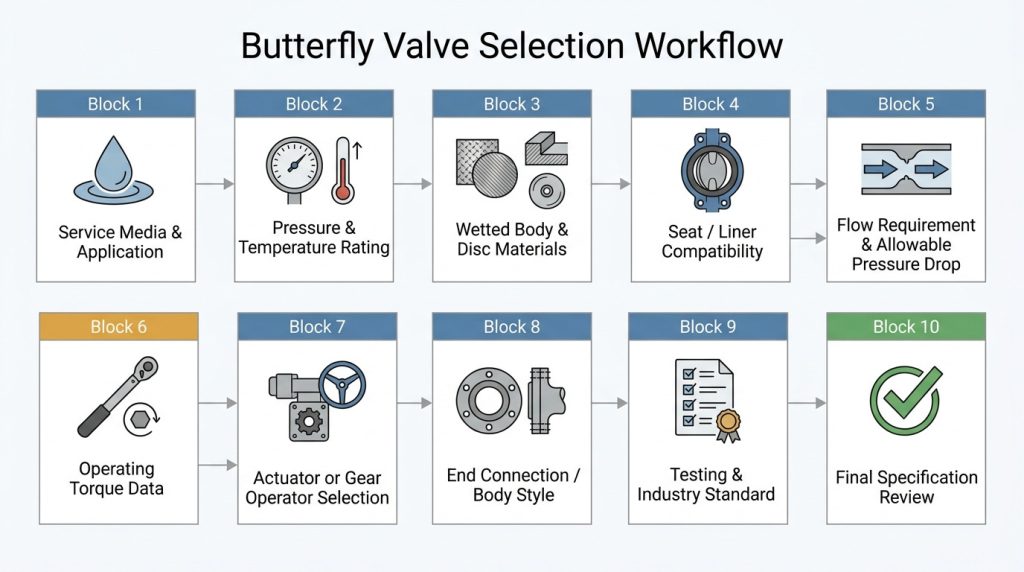
A butterfly valve should be selected from the service conditions first, then matched to standards, materials, connection, and actuator requirements. If you start only with pipe size and pressure class, you can miss the details that cause leakage, short seat life, or unstable control.
Pressure, Temperature, and Standards
Pressure rating must be read together with temperature and material. A valve that is acceptable at ambient water service may not be acceptable at elevated temperature, steam exposure, chemical cleaning, or pressure cycling.
For metallic butterfly valves in European or international projects, BS EN 593:2017 covers metallic butterfly valves for isolating, regulating, and controlling applications and includes PN 2.5 to PN 160, Class 150 to Class 900, and DN 20 to DN 4000 within its stated scope. For oil, gas, petrochemical, and general industrial specifications, API 609 is commonly referenced for butterfly valve design, materials, face-to-face dimensions, pressure-temperature ratings, inspection, and testing.
Materials and Media Compatibility
Material selection should cover every wetted and sealing part, not only the body. The disc, shaft, seat, liner, bushing, packing, and fasteners can all become weak points if the media is corrosive, abrasive, hot, or chemically active.
For common industrial service, body materials may include ductile iron, carbon steel, stainless steel, or alloy materials depending on the standard and project requirement. Seat choices may include EPDM, NBR, PTFE, reinforced PTFE, or metal sealing surfaces, but the final choice should be checked against the actual fluid, concentration, temperature, and cleaning procedure.
Flow, Torque, and Actuator Sizing
Flow data matters because butterfly valve Cv does not increase in a perfectly linear way as the disc opens. If the valve is used for regulation, review the butterfly valve flow characteristics and avoid sizing the valve so normal operation stays near fully closed or fully open.
Torque data matters just as much. High differential pressure, dry service, frequent cycling, sticky media, or long idle periods can increase the torque needed to move the disc, so the actuator should be selected from the valve manufacturer’s torque data rather than from pipe size alone.
Installation and Maintenance Factors
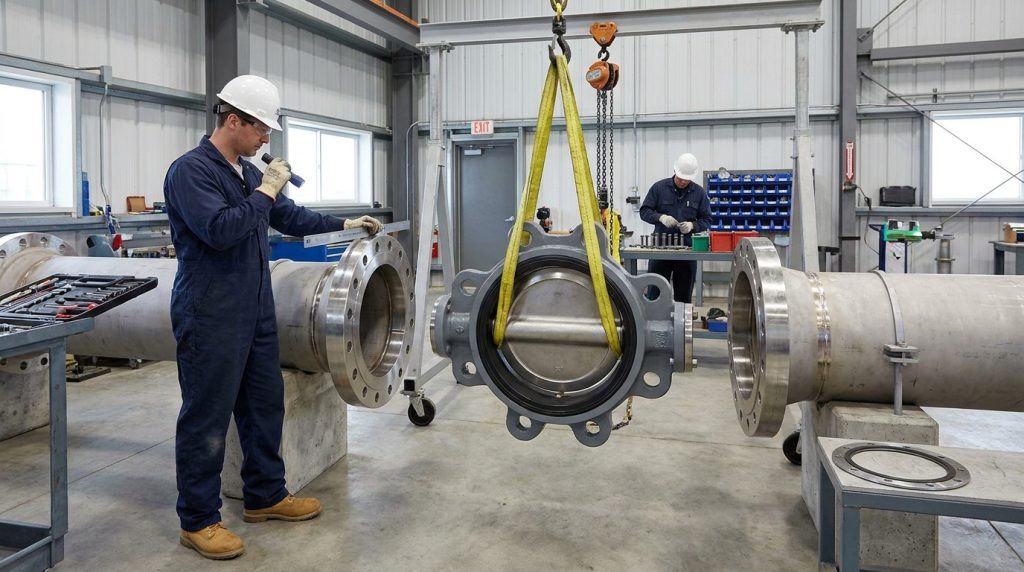
Butterfly valve performance depends heavily on installation alignment, disc clearance, and correct gasket compression. Even a well-selected valve can leak or bind if it is squeezed unevenly between flanges or installed where the disc contacts the pipe, liner, or adjacent fitting.
How Do You Avoid Disc Interference?
Disc interference is avoided by checking the valve drawing, pipe inside diameter, flange type, gasket position, and disc swing clearance before installation. This is especially important for lined pipe, thick-wall pipe, reducers, and valves installed close to elbows or check valves.
You should also confirm preferred flow direction if the valve design is offset or marked for directional sealing. Some butterfly valves are bidirectional, while others have better shutoff performance or dead-end limits in one orientation.
What Maintenance Limits Should You Expect?
Maintenance is usually simpler than with many multi-turn valves because the mechanism has fewer major moving parts. Still, the seat, shaft seal, bushings, actuator, and mounting bolts need periodic inspection based on the service.
Useful maintenance checks include:
- Exercising valves that stay open or closed for long periods
- Watching for stem leakage, seat wear, or uneven closing torque
- Checking actuator travel stops after installation or adjustment
- Inspecting coating or lining condition in water and chemical service
- Replacing valves rather than forcing operation when the disc is stuck
Conclusion
Butterfly valve uses are strongest where you need compact isolation, quick quarter-turn operation, large flow capacity, and practical cost control. They work well in many water, wastewater, HVAC, chemical, air, gas, and utility systems, but they should be selected with clear limits around throttling accuracy, seat compatibility, pressure-temperature rating, and installation clearance. For project-specific selection, you can share your valve specifications with media, pressure, temperature, size, connection, material, actuator, and testing requirements for review.
FAQ
Can I use a butterfly valve for throttling?
Yes, you can use a butterfly valve for throttling when the service only needs coarse or moderate control. It is often suitable for cooling water, air, and large utility lines, but it is not usually the best choice for precise low-flow control. Check the valve Cv curve and normal operating angle before using it as a control valve.
What’s the best butterfly valve for wastewater?
The best wastewater butterfly valve is usually one with a suitable corrosion-resistant body, durable disc, compatible elastomer seat, and enough clearance for the expected solids. For waterworks projects, AWWA-style rubber-seated or high-performance butterfly valves may be considered depending on pressure, size, and specification. Final selection should confirm coating, shaft material, seat compound, and operating torque.
How do I know if a butterfly valve is wrong?
A butterfly valve is probably wrong if you need full-bore flow, very precise throttling, pigging, or severe abrasive service with high velocity. It may also be unsuitable if the media attacks the seat or liner. When in doubt, compare it with gate, ball, globe, plug, or control valves based on shutoff, pressure drop, control accuracy, and maintenance risk.
Can I use a butterfly valve for steam?
Yes, but only with a design rated for the steam pressure and temperature. General-purpose soft-seated butterfly valves are often not suitable for steam unless the manufacturer data sheet specifically allows it. For steam or high-temperature service, review pressure-temperature rating, seat design, leakage class, actuator torque, and applicable standards before specifying the valve.
What should I confirm before ordering?
Confirm pipe size, pressure class, media, temperature, flow rate, shutoff requirement, body style, end connection, body material, disc material, seat material, actuator type, and test standard. For replacement valves, also confirm face-to-face dimension, flange drilling, bolt clearance, and disc swing clearance. The final values should always match the valve drawing and data sheet.