
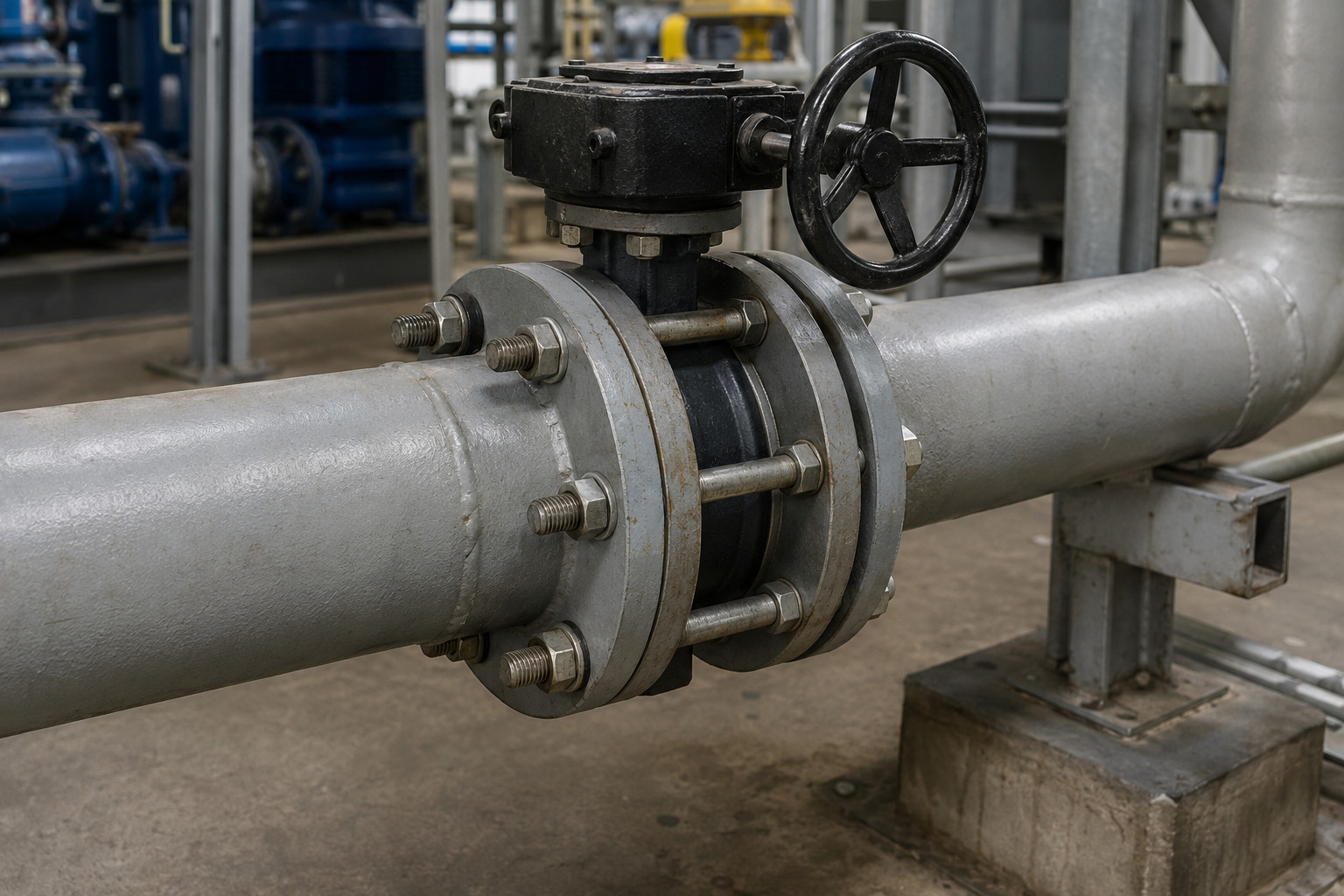
A butterfly wafer valve fits best when you need a compact, cost-effective valve clamped between two pipe flanges, while a lug-style butterfly valve is better when you need one-side isolation or rated dead-end service. In practice, you should choose between a wafer butterfly valve and a lug design by checking flange standard, shutdown strategy, pressure-temperature rating, seat material, and whether one side of the line may be removed.
If you are comparing a standard butterfly valve for water, HVAC, chemical, or utility piping, the body style is not just a price detail. It affects bolting, leakage risk, maintenance access, actuator load, and how confidently you can approve the valve for a real project.
A common situation is a plant upgrade where the existing pipeline has ASME or EN flanges, limited space, and a short shutdown window. A wafer valve may look like the simple choice, but if downstream equipment must be removed while the upstream line remains pressurized, the design direction changes quickly.
What Is a Butterfly Wafer Valve
A butterfly wafer valve is a quarter-turn valve body designed to sit between two mating pipe flanges and be compressed by flange bolts or studs. The disc rotates about 90 degrees from open to closed, and the resilient or metal seat seals against the disc while also helping seal the flange faces.
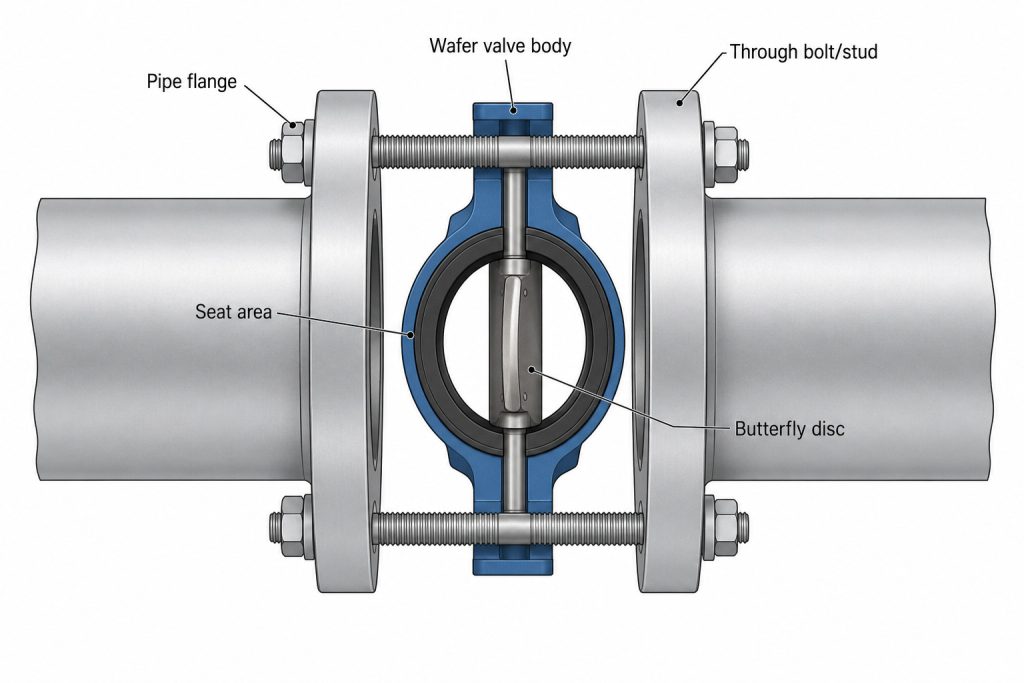
The key point is that a wafer body normally depends on both adjacent flanges for support. Unlike a lug-style body, it does not have a full set of threaded lugs intended to hold each pipe flange independently. Some wafer valves have centering holes or guide holes, but those should not be mistaken for full dead-end mounting capability.
For normal inline isolation, the wafer style is often efficient. It saves space, reduces body weight, and usually costs less than a lug body of the same nominal size, material, and pressure class. For terminal service, frequent one-side maintenance, or piping layouts where one flange may be removed, the safer assumption is that a standard wafer valve is not the right connection style unless the manufacturer data sheet clearly says otherwise.
Wafer vs Lug Butterfly Valves at a Glance
The fastest way to compare wafer and lug styles is to look at what each body allows the piping system to do. Both may use similar discs, seats, stems, handles, gearboxes, or actuators, but the connection design changes the maintenance and isolation logic.
| Decision Point | Butterfly Wafer Valve | Lug-Style Butterfly Valve | What You Should Verify |
|---|---|---|---|
| Body mounting | Clamped between two pipe flanges | Bolted to each flange through threaded lugs | Flange standard, bolt circle, face type, and body drawing |
| One-side maintenance | Usually requires both sides isolated and depressurized | May allow one side to be removed if rated | Dead-end rating, flow direction limits, and pressure side |
| Cost and weight | Usually lower cost and lighter body | Usually higher cost and heavier body | Total installed cost, not only valve purchase price |
| Bolting method | Long through-bolts or studs across both flanges | Separate bolts into the valve lugs from each side | Bolt length, material, thread engagement, and torque method |
| Typical project fit | Compact inline service with full-line shutdown possible | Lines needing sectional maintenance or terminal isolation | Shutdown plan, safety requirement, and maintenance access |
| Standards to check | API 609, MSS SP-67, EN 593, ISO 5752, EN 558 as applicable | Same standards may apply, depending on project specification | Edition, valve category, pressure class, face-to-face length |
This comparison does not mean one style is universally better. It means the wafer style is best when the pipeline always supports the valve from both sides, while the lug style earns its extra cost when isolation and maintenance access matter.
Key takeaway: choose wafer for compact inline service; choose lug when the valve may need to hold pressure with one side of the piping removed.
How Does Connection Design Affect Maintenance
Connection design affects maintenance because it decides whether the valve can stay in place when one side of the pipeline is opened. A wafer butterfly valve is normally treated as an inline component, so the practical maintenance plan is to isolate, drain, and depressurize both sides before removing nearby piping.
Can One Side of the Line Be Removed
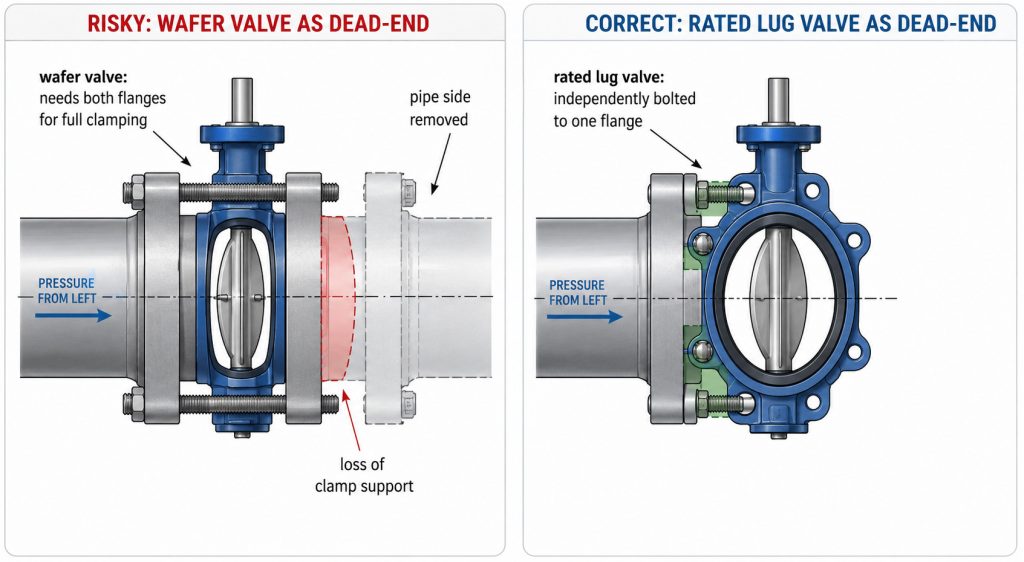
With a standard wafer body, you should not plan to remove one flange while keeping the opposite side pressurized. The bolts clamp the full flange-valve-flange sandwich together, so removing one side can disturb compression on the seat and body.
A lug-style valve may support one-side removal, but only if its data sheet rates it for dead-end service under the actual pressure, temperature, seat material, and installation direction. For lines that require this function, review lug-style butterfly valve installation limits before treating the valve as a terminal isolation point.
What Makes Dead-End Service Risky
Dead-end service is risky because the valve may see pressure from one side without the normal support of the downstream flange and pipe. Some lug designs may have a reduced dead-end pressure rating, a preferred pressure direction, or a requirement for a downstream blind flange.
This is where many selection mistakes happen. The phrase “lug type” alone is not enough. You need the valve drawing, pressure class, body material, seat construction, stem design, and the manufacturer’s dead-end statement before approving the valve for this duty.
Pressure, Size, and Standards to Confirm First
Pressure class, nominal size, and flange standard should be confirmed before you compare price. A wafer valve that fits the nominal pipe size can still fail the project if the bolt pattern, face-to-face dimension, or pressure-temperature rating does not match the piping specification.
Which Standards Matter Most
For many industrial butterfly valves, API 609 is used for design, materials, face-to-face dimensions, pressure-temperature ratings, inspection, and testing of double-flanged, lug, wafer, and related butterfly valve configurations. MSS SP-67 is also common for general-service butterfly valves, while EN 593 may appear in European project specifications.
For flanges, ASME B16.5 covers pipe flanges and flanged fittings from NPS 1/2 through NPS 24, including common pressure class designations such as Class 150, 300, 600, 900, 1500, and 2500 under defined size limits. Larger ASME flanges may fall under ASME B16.47, while many European projects use EN 1092-1. The valve must be selected to match the flange system actually used on your line.
How Do You Confirm Bolt Fit
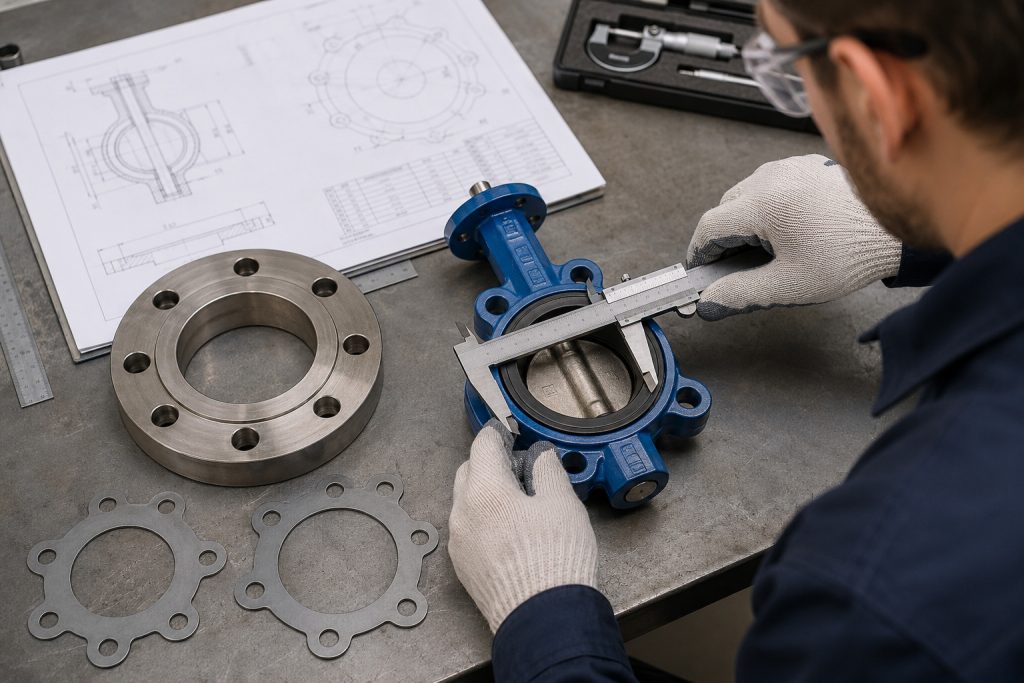
Bolt fit is confirmed by checking the flange standard, nominal size, pressure class, bolt circle, number of bolts, bolt diameter, body clearance, and required bolt length. For ASME steel piping, projects may specify materials such as ASTM A193 B7 studs with ASTM A194 2H nuts, but the final bolt material must follow the project piping class and corrosion environment.
Do not rely on “same size” wording alone. An 8 inch valve, for example, may have different bolting requirements depending on whether the flange is ASME Class 150, ASME Class 300, PN10, or PN16. If you are checking replacement fit, confirm butterfly valve sizes against the valve drawing rather than measuring only the pipeline outside diameter.
Face-to-face length is another common trap. API 609, ISO 5752, and EN 558 may define dimensional series, but actual project approval should still be based on the manufacturer’s drawing because seat design, body style, and actuator mounting can affect installed clearance.
Seat, Material, and Installation Risks
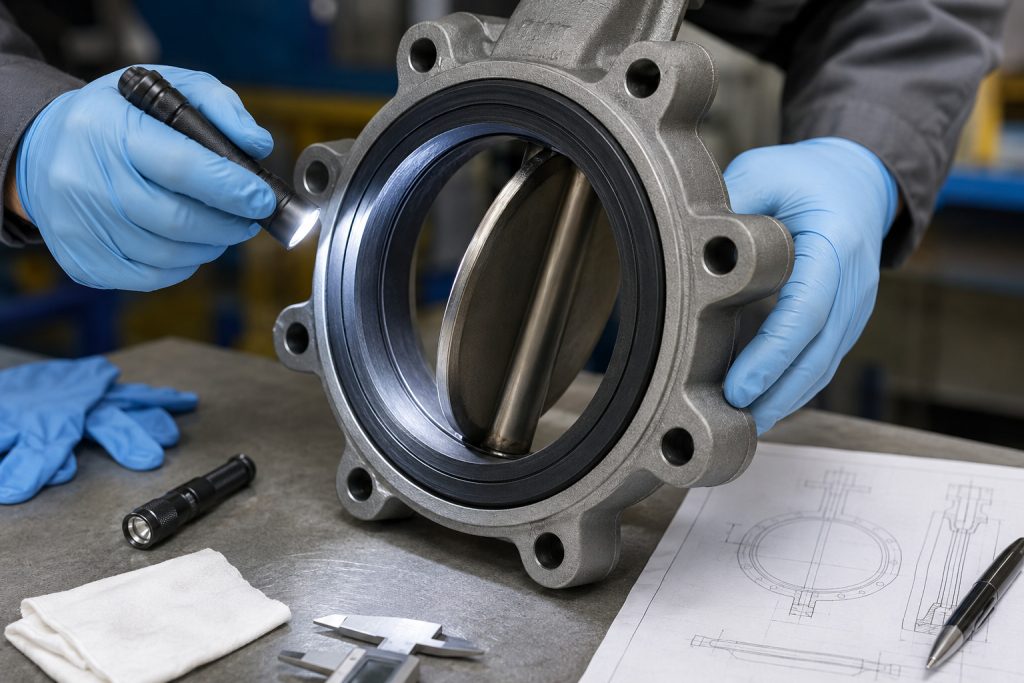
Seat and material selection decide whether a wafer butterfly valve performs reliably after it is bolted into the line. The body style tells you how the valve mounts, but the seat, disc, stem, and coating decide whether it survives the medium, temperature, pressure differential, and operating cycle.
What Seat Material Fits the Medium
EPDM is commonly used for water, wastewater, HVAC, and many non-oil services, but it is generally not selected for petroleum media. NBR is often considered where oil compatibility is needed, PTFE is used where chemical resistance is more important, and FKM may be used in selected higher-temperature or hydrocarbon services.
These are only typical material directions, not universal approvals. You should confirm the medium concentration, temperature, cleaning chemicals, solids content, pressure differential, and operating frequency. A soft seat that works well in chilled water may be a poor choice in solvent service or abrasive slurry.
Disc and body material also matter. Ductile iron bodies are common in utility service, stainless steel may be needed for corrosion resistance, and aluminum bronze can appear in seawater-related applications. Coatings can help, but they do not replace correct base material selection when corrosion or erosion is severe.
What Installation Errors Cause Leaks
Most wafer valve leakage problems come from poor alignment, wrong flange type, uneven bolt tightening, damaged seat faces, or closing the disc against a misaligned pipe bore. Because the seat often seals both around the disc and between the flanges, installation stress can directly affect shutoff.
Before tightening, the valve should be centered, the disc should have clearance to rotate, and flange faces should be clean and parallel. Many resilient seated butterfly valves do not require separate flange gaskets because the seat face performs that sealing function, but this must be checked against the valve installation manual.
Tightening should be gradual and even, usually in a cross pattern. Over-tightening can distort the seat, while under-tightening can leave an external leak path. After installation, cycle the valve before startup to confirm that the disc does not rub the pipe, liner, weld bead, or flange bore.
Where a Wafer Butterfly Valve Works Best
A wafer butterfly valve works best in inline service where the system can be fully isolated for maintenance and the buyer values compact size, lower weight, and economical installation. Typical applications include water distribution, wastewater treatment, HVAC loops, cooling water, irrigation, compressed air, and many general utility lines.
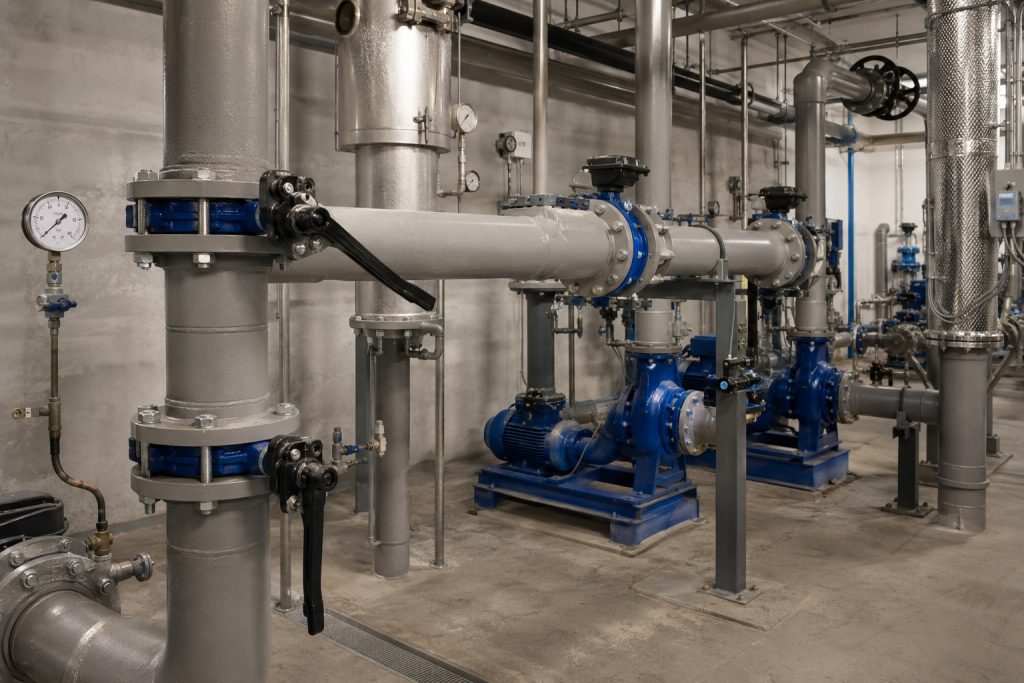
In water and wastewater systems, wafer valves are often attractive because they provide practical shutoff in a short face-to-face space. In HVAC and district energy loops, they are also common because the piping layout usually allows full-line isolation during planned maintenance.
Wafer style becomes less attractive when the line contains abrasive slurry, severe corrosion, high temperature, frequent throttling near closed position, or a safety requirement for one-side pipe removal. It may still be possible to use a wafer valve in some demanding services, but the decision should be based on the exact valve category, seat design, material package, actuator sizing, and test requirement.
For throttling, remember that a butterfly disc always remains in the flow path. That can be acceptable for balancing or general flow adjustment, but a control application should check Cv, pressure drop, cavitation risk, noise, and stable operating range. If the valve will spend long periods only slightly open, seat wear and flow turbulence deserve more attention.
How to Specify a Wafer Valve Before Ordering
The best way to specify a wafer valve is to give the supplier enough information to check fit, material compatibility, shutoff, and actuator sizing before production or shipment. A short inquiry that says only “butterfly wafer valve, 6 inch” leaves too much room for errors.
Include these details in your request:
- Nominal size, flange standard, and pressure class, such as NPS 6 ASME Class 150 or DN150 PN16
- Applicable valve standard, such as API 609, MSS SP-67, EN 593, ISO 5752, or EN 558 when required
- Body, disc, stem, and seat material
- Medium, concentration, solids content, operating temperature, and pressure differential
- Shutoff expectation and test standard, such as API 598 or ISO 5208 when specified
- Operation method, such as lever, gearbox, pneumatic actuator, or electric actuator
- Installation position, flow direction limits, and whether the line ever needs dead-end service
From a valve manufacturer’s perspective, the most useful inquiries also include drawings, piping class notes, and photos of the existing installation if the valve is a replacement. A capable wafer butterfly valve supplier should be able to discuss where a wafer body is suitable and where a lug, flanged, double-offset, or metal-seated design deserves review.
Do not treat price as the first filter until the technical boundary is clear. A lower-cost wafer valve is a good decision only when it fits the shutdown plan, flange geometry, pressure-temperature rating, and media compatibility.
Conclusion
A butterfly wafer valve is the practical choice for compact inline isolation where both sides of the pipeline remain supported and the system can be shut down for maintenance. A lug-style butterfly valve is the stronger candidate when you need one-side pipe removal, rated dead-end service, or more flexible maintenance isolation.
Before you order, confirm the flange standard, pressure class, face-to-face dimension, seat material, dead-end requirement, and test standard against the valve data sheet or drawing. If you need help checking a wafer or lug butterfly valve against your project conditions, you can contact Ruitoflow with the medium, pressure, temperature, flange standard, size, and installation notes for discussion.
FAQ
Can I use a butterfly wafer valve at the end of a pipe?
Usually no. A standard wafer butterfly valve is designed to be clamped between two flanges, so it should not be used as a pipe-end valve unless the manufacturer specifically rates that exact model for the duty. For end-of-line service, a rated lug-style valve is normally the safer starting point.
What’s the best choice for HVAC or water lines?
A wafer valve is often the best choice when the line can be isolated on both sides during maintenance. It is compact, economical, and widely used in HVAC and water service. If the system needs one-side maintenance or terminal isolation, check a lug-style design instead.
How do I know if the bolt pattern will fit?
Check the flange standard, nominal size, pressure class, bolt circle, bolt quantity, bolt diameter, and required bolt length. Do not confirm fit by nominal pipe size alone. A valve for ASME Class 150 may not match a PN16 or ASME Class 300 flange arrangement.
Can I automate a wafer butterfly valve?
Yes, many wafer butterfly valves can be automated if the mounting pad, stem, torque, and actuator standard match. Check ISO 5211 mounting dimensions where applicable, then size the actuator for pressure differential, seat material, media condition, and required safety factor.
How do I choose between EPDM, NBR, and PTFE seats?
Start with the medium. EPDM is common for water and HVAC service, NBR is often considered for oil-compatible service, and PTFE is used where chemical resistance is important. Final selection must confirm temperature, concentration, pressure, solids, cleaning chemicals, and the valve manufacturer’s material data.