
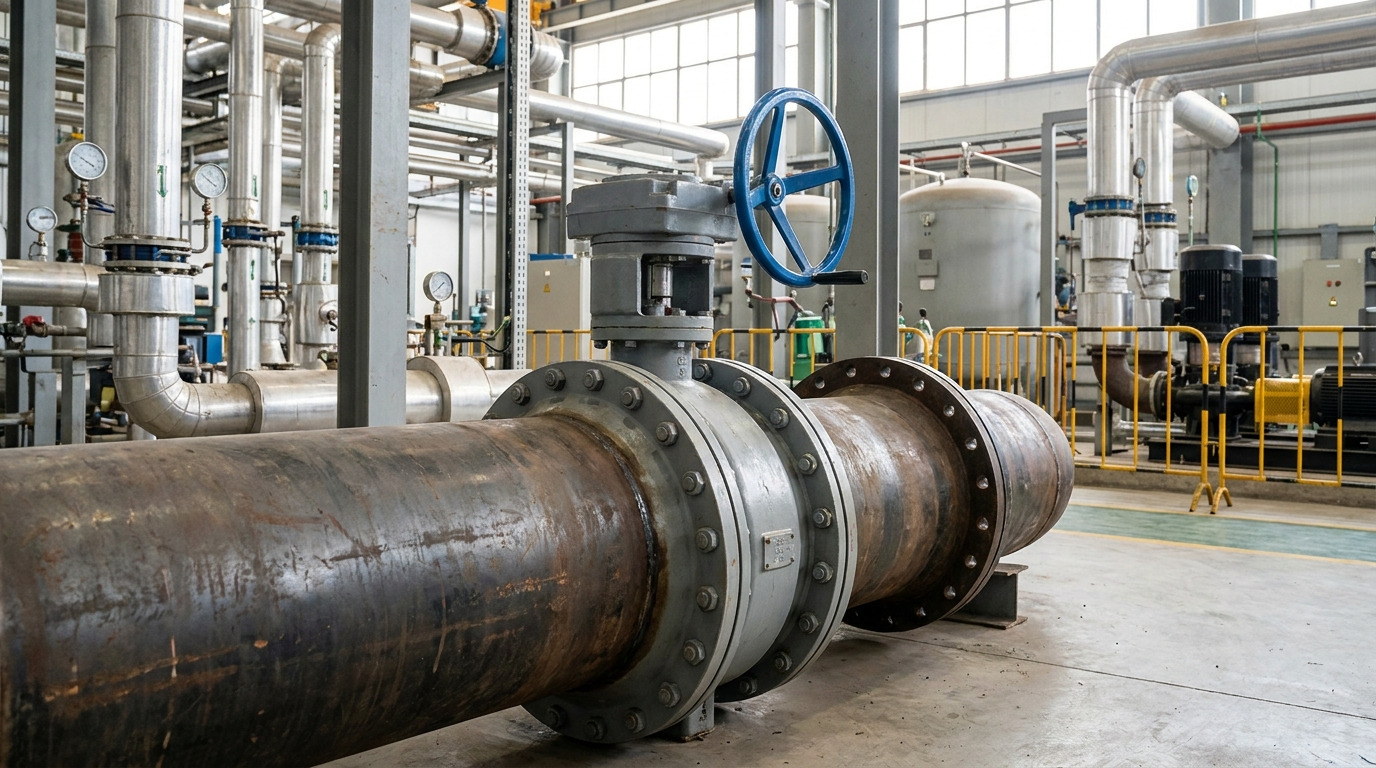
A butterfly valve starts, stops, or throttles fluid by rotating a disc one-quarter turn inside a pipeline. A cramped mechanical room, a slow isolation valve, and rising downtime can leave your crew fighting both space and schedule. That pressure grows when a mismatched seat leaks or an oversized actuator cannot move its load. This guide answers what is a butterfly valve used for and shows you how type, seat, materials, and actuation solve those problems with a compact flow-control package.
What Is a Butterfly Valve and How Does It Control Flow?
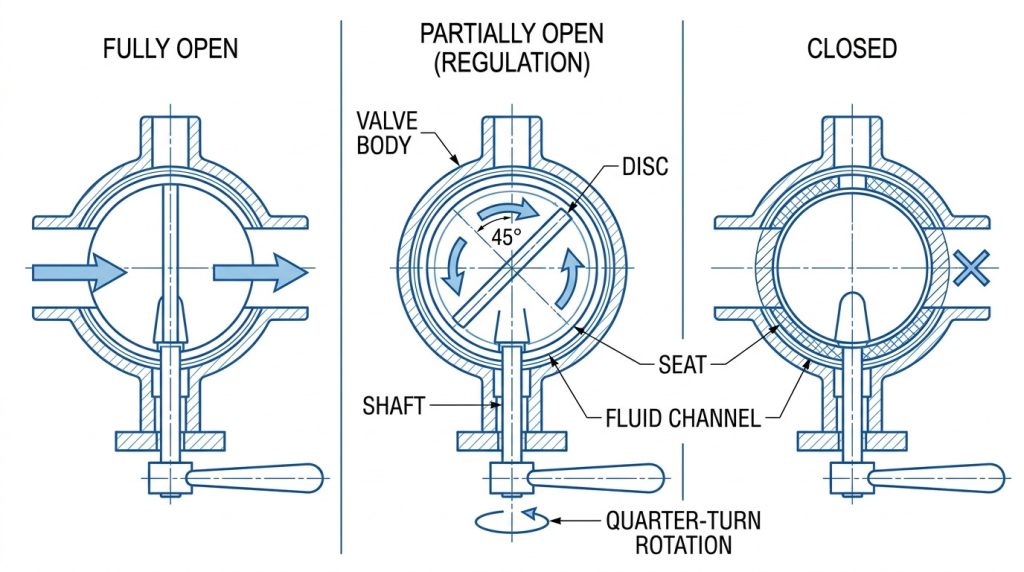
A butterfly valve controls flow through a rotating disc, so what is a butterfly valve used for includes rapid isolation and measured throttling. Its shaft turns through 90 degrees: parallel alignment gives a broad flow path while perpendicular alignment closes that path. Partial angles create a variable opening for regulation.
What Happens During a Quarter Turn?
Here’s the practical point: Disc angle changes open area quickly, which gives you short operating times and straightforward automation. Flow still meets disc resistance when fully open, so sizing should account for pressure loss rather than pipe diameter alone.
Which Core Features Define the Design?
Use these features during an early specification review:
- Circular disc mounted on a shaft
- Compact body installed between pipe flanges
- Manual, electric, or pneumatic operator
- Seat selected for shutoff duty and media
| Feature | Function | User benefit |
|---|---|---|
| Disc | Modulates passage area | Fast control |
| Shaft | Transfers torque | Simple actuation |
| Seat | Seals around disc | Controlled leakage |
That relationship shows why disc, shaft, and seat must be specified as one working assembly.
Key Takeaway: You can gain fast flow control in tight piping layouts when every primary component suits operating duty.
What Is a Butterfly Valve Used For in Industrial Systems?
A butterfly valve is used for isolation, throttling, diversion support, and automated process control, so what is a butterfly valve used for depends on fluid properties and shutoff targets. You will commonly see these valves in water networks, HVAC loops, chemical utilities, power cooling lines, and bulk handling systems. Large diameters often favor this design because weight and face-to-face length stay manageable.
Where Does the Design Fit Best?
Consider the operating pattern: Clean water and low-viscosity fluids suit concentric soft-seated valves while hot or aggressive service may call for offset construction. Throttling works best within a manufacturer-approved angle range because near-closed operation can cause turbulence and seat wear.
Which Duties Match Common Configurations?
Map service needs before selecting a body or seat:
- On-off isolation for water mains
- Chilled-water regulation in HVAC loops
- Automated sequencing on process skids
- Airflow balancing in ducts and exhaust lines
| Duty | Typical design | Selection focus |
|---|---|---|
| Isolation | Resilient seated | Leakage class |
| Throttling | Offset or control trim | Stable range |
| Air control | Damper | Low pressure |
This comparison keeps a familiar valve shape from masking major differences in service capability.
Key Takeaway: You can narrow the field quickly by defining isolation, throttling, or airflow duty before choosing hardware.
When Are Damper Butterfly Valves the Right Choice?
Damper butterfly valves fit low-pressure air and gas regulation, so what is a butterfly valve used for in duct systems often means balancing rather than tight shutoff. A damper has no sealing seat and leaves a clearance between disc and body. That gap prevents positive isolation but permits economical flow adjustment in large passages.
Which Applications Benefit From a Damper?
Here’s where the distinction matters: Heating ducts, exhaust vents, burner air systems, and chimney flues may tolerate residual flow after closure. Your safety review must reject a damper wherever hazardous gas isolation or verified zero leakage is required.
What Should You Specify Before Purchase?
Confirm operating limits with these inputs:
- Maximum duct pressure and temperature
- Gas composition and corrosion risk
- Allowed leakage at closed position
- Manual or automated movement
| Parameter | Damper tendency | Design implication |
|---|---|---|
| Shutoff | Incomplete | Not for isolation |
| Pressure | Low | Light-duty body |
| Medium | Air or gas | Check corrosion |
The table makes leakage acceptance the decisive boundary rather than purchase price.
Key Takeaway: You can use a damper for economical airflow control only when residual closed-position flow remains acceptable.
Why Do Resilient-Seated Butterfly Valves Seal Tightly?
Resilient-seated valves seal tightly because an elastomer seat compresses around the disc, so what is a butterfly valve used for here centers on positive shutoff. EPDM, NBR, and other seat compounds support different water, oil, temperature, and chemical conditions. Interference between disc and seat creates closure force but also raises operating torque.
How Does the Seat Create Shutoff?
The useful detail is this: A slightly oversized disc edge presses into a flexible liner during closure. Body-mounted seat designs can also seal around the shaft, reducing external leakage paths and simplifying packing needs.
Which Checks Prevent Early Seat Damage?
Review these conditions before approving a resilient seat:
- Actual temperature peaks rather than averages
- Media chemistry and cleaning agents
- Differential pressure at closure
- Solids, velocity, and cycling frequency
| Risk | Likely effect | Specification response |
|---|---|---|
| Heat | Hardening | Raise temperature class |
| Chemicals | Swelling | Change compound |
| Solids | Abrasion | Review disc and seat |
These failure modes show why a generic “rubber seat” description cannot support reliable procurement.
Key Takeaway: You can obtain tight shutoff and low maintenance when seat chemistry matches real process conditions.
How Do Dovetail Seats Affect Valve Performance?
Dovetail seats allow mechanical retention between molded seat and body groove, so what is a butterfly valve used for favors accessible water service rather than deep vacuum. Pipe-flange compression locks this removable seat into position. Vacuum can pull an unbonded liner inward where a closing disc may pinch or cut it.
Why Does Retention Geometry Matter?
Watch what happens under reverse loading: Positive pressure tends to support seating while vacuum tries to separate elastomer from body. A dovetail joint resists routine movement but cannot match full-surface bonding under severe suction.
When Does a Dovetail Seat Make Sense?
Check whether your project values these traits:
- Replaceable liner for field maintenance
- Moderate-pressure water service
- Flange compression after installation
- No sustained vacuum exposure
| Attribute | Dovetail result | Project impact |
|---|---|---|
| Repair | Seat replaceable | Lower service cost |
| Vacuum | Limited suitability | Pinch risk |
| Assembly | Flanges retain seat | Correct torque needed |
This tradeoff favors maintainability only after vacuum duty has been ruled out.
Key Takeaway: You can choose dovetail seating for serviceable water valves when pipeline pressure stays above vacuum conditions.
When Should You Specify Cartridge Seats?
Cartridge seats suit higher pressure and vacuum duties because a rigid reinforcing ring stabilizes the elastomer, so what is a butterfly valve used for includes demanding isolation without permanent bonding. An interference fit holds the cartridge within a smooth body bore. Replacement remains possible when valve construction provides service access.
How Does a Cartridge Resist Movement?
Here’s the engineering advantage: A metal or phenolic ring limits deformation as pressure direction changes. That support helps keep disc-to-seat geometry consistent under loads that could displace a softer, unsupported liner.
What Must Your Team Confirm?
Request evidence for each relevant point:
- Rated pressure in both flow directions
- Documented vacuum capability
- Seat material compatibility
- Replacement method and spare availability
| Requirement | Cartridge response | Buyer check |
|---|---|---|
| Pressure | Strong retention | Published rating |
| Vacuum | Better support | Tested limit |
| Repair | Often replaceable | Service procedure |
The practical value depends on validated limits rather than a cartridge label alone.
Key Takeaway: You can handle pressure reversals with greater confidence when a reinforced seat carries verified ratings.
Why Would You Select a Bonded Seat?
A bonded seat suits severe pressure or vacuum service because its elastomer attaches across the body surface, so what is a butterfly valve used for can include stable sealing under bidirectional loads. Adhesive bonding or injection molding resists liner displacement. Damage usually requires valve replacement because seat removal is not practical.
What Tradeoff Comes With Permanent Bonding?
Now for the catch: Strong retention improves stability while reducing field repair options. Lower initial cost may still produce sound lifecycle value when service conditions are predictable and spare valves are readily stocked.
Which Buying Questions Matter Most?
Ask suppliers for clear answers on:
- Bonding method and quality checks
- Pressure and vacuum ratings
- Elastomer traceability
- Replacement lead time after damage
| Factor | Bonded seat | Operational effect |
|---|---|---|
| Retention | Permanent | Stable under vacuum |
| Repair | Not replaceable | Stock a spare |
| Cost | Often economical | Compare lifecycle cost |
This balance makes spare strategy part of valve selection rather than an afterthought.
Key Takeaway: You can secure stable liner retention if your maintenance plan accepts whole-valve replacement after seat failure.
How Do High-Performance Butterfly Valves Handle Harsh Service?
High-performance valves use offset geometry and rigid sealing systems, so what is a butterfly valve used for extends into higher pressure, temperature, and aggressive media service. Double-offset designs move shaft and disc away from seat centerlines, reducing rubbing. Triple-offset designs add conical sealing geometry for metal-seat contact with minimal sliding.
Why Do Offsets Reduce Torque and Wear?
This is where geometry pays off: Disc movement cams away from the seat early in opening travel. Reduced contact limits friction, lowers actuator demand, and protects sealing surfaces during frequent cycles.
Which Design Fits Severe Conditions?
Match construction with actual duty:
- Double offset for reduced soft-seat wear
- PTFE seats for compatible chemical service
- Triple offset for hot or fire-safe duties
- Metal seats for temperature and abrasion
| Design | Seal approach | Typical strength |
|---|---|---|
| Double offset | Soft or PTFE seat | Lower wear |
| Triple offset | Metal seal ring | Heat tolerance |
| Concentric | Elastomer liner | General service |
That progression helps you avoid paying for severe-service geometry where a simpler valve will perform.
Key Takeaway: You can manage heat, pressure, and cycling by matching offset geometry with a compatible sealing system.
What Parts Make a Butterfly Valve Work?
Body, disc, shaft, seat, bearings, seals, and operator make a butterfly valve work, so what is a butterfly valve used for must be tied to every component’s rating. Body style controls pipeline connection while disc profile influences flow and torque. Bearings guide shaft motion, and packing blocks leakage along exposed stem areas.
How Do Components Share Operating Loads?
Follow the load path: Actuator torque passes through the shaft into the disc while pressure pushes the disc toward bearings and body. The seat then converts closing movement into sealing stress, which means poor alignment can increase wear across several parts at once.
What Belongs on a Component Review?
Verify each major element during submittal:
- Body and disc material grades
- Shaft strength and corrosion resistance
- Seat compound and leakage rating
- Bearing, packing, and actuator details
| Component | Main job | Common concern |
|---|---|---|
| Body | Contains pressure | Corrosion |
| Disc | Controls passage | Erosion |
| Operator | Supplies motion | Torque margin |
This review links material certificates and actuator data with real mechanical loads.
Key Takeaway: You can prevent hidden weak points by checking the complete valve assembly rather than body pressure class alone.
How Should You Select and Apply a Butterfly Valve?
Select a butterfly valve from media, pressure, temperature, flow duty, connection, and actuation data, so what is a butterfly valve used for must be answered before requesting a quote. Define normal and upset conditions plus leakage limits. Then verify materials, dimensions, standards, torque, test records, and delivery documentation.
Which Inputs Drive a Reliable Selection?
Start with service reality: Peak differential pressure may govern actuator torque while temperature excursions govern seat life. Flange standards, face-to-face dimensions, and disc clearance also determine whether a correct valve can physically enter your line.
What Should Your Final Review Include?
Use a concise approval checklist:
- Fluid composition, solids, and temperature range
- Pressure class and shutoff differential
- Connection standard and available space
- Leakage target, actuation, and fail position
| Review stage | Required evidence | Risk reduced |
|---|---|---|
| Sizing | Flow and pressure data | Poor control |
| Materials | Compatibility record | Early failure |
| Acceptance | Test certificate | Site leakage |
This sequence turns a broad product choice into a defensible engineering decision.
Key Takeaway: You can reduce rework and downtime by giving suppliers complete operating data before valve configuration begins.
Ready to Put the Right Butterfly Valve to Work?
Butterfly valves give you compact isolation, practical throttling, and fast actuation across air, water, HVAC, and severe process duties. You now have a clear way to compare damper, resilient, dovetail, cartridge, bonded, double-offset, and triple-offset designs against service needs.
Ruitoflow can review your media, pressure, temperature, connection, leakage, and control requirements, then recommend a documented valve package. Contact us today for a technical review or tailored quote—our position is simple: dependable flow control begins with honest application data and disciplined manufacturing.
Frequently Asked Questions
Can I use a butterfly valve for both isolation and throttling?
Yes, within its approved operating range. Tight isolation needs a compatible seat and leakage rating while throttling needs stable disc angles, correct sizing, and acceptable pressure loss.
What’s the best butterfly valve seat for clean water?
EPDM is often a sound choice. It handles many potable-water and HVAC duties, though temperature, disinfectants, approvals, and supplier limits still need verification.
How do I know if I need a double- or triple-offset valve?
Choose from service severity. Double-offset construction suits higher cycling and reduced seat wear while triple-offset metal sealing better fits high temperature, fire-safe, or demanding leakage duties.
Can I install a butterfly valve in either flow direction?
Sometimes, but not automatically. Many concentric valves support bidirectional flow while offset designs may have a preferred pressure direction marked on the body or datasheet.
What’s the best actuator for a butterfly valve?
It depends on control and safety needs. Manual gears suit infrequent operation, electric units suit remote plant control, and pneumatic spring-return units suit fast fail-safe movement.