
How to Avoid Graphite Butterfly Valve Seal Mistakes
Check metal seat butterfly valve graphite by identifying where the graphite sits, which material is specified, and what conditions that component experiences. A quotation that lists only “graphite” can leave the sealing ring, shaft packing, and gaskets confused. Use a drawing-linked component review to resolve compatibility, assembly limits, handling, and replacement requirements before accepting the proposal or ordering a spare.
1. Where does metal seat butterfly valve graphite belong?
Graphite can occur in a laminated sealing component, shaft packing, or a gasket, with a different role in each location. A metal seat butterfly valve graphite review should identify every occurrence on the proposed assembly drawing. Ask the supplier to distinguish the closure contact from shaft sealing and stationary joint sealing before reviewing material suitability. Graphite in packing or a gasket can coexist with metallic primary seat contact.
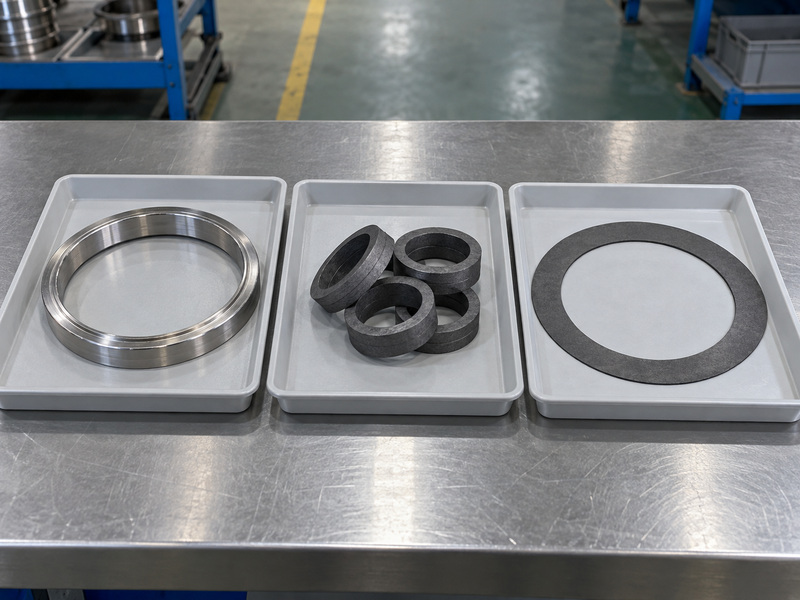
Assign each graphite item to its sealing function
A laminated-seal manufacturer’s description identifies graphite foil as one possible layer within a valve-specific metallic laminate. Separately, a butterfly-valve component manual identifies graphite packing and a thin graphite retaining-ring gasket. These are examples of different locations, not evidence that every metal-seated valve uses the same arrangement.
RUITO’s butterfly valve range provides context for its published product families, primarily soft-seat and lined constructions in the supplied documentation. Confirm any proposed graphite-containing metal-seat assembly separately. A material mentioned in another valve family cannot establish the construction or capabilities of a butterfly valve offered for your project.
- Mark graphite-containing items on the assembly drawing.
- Separate closure, shaft, and stationary-joint functions.
- Request the material record for each identified item.
| Graphite location | Role to identify |
|---|---|
| Laminated sealing component | Part of the specified closure construction |
| Shaft packing | Seal around the moving shaft |
| Gasket | Seal an identified stationary joint |
2. What must the graphite material description include?
Identify the exact supplied grade, component form, treatments, reinforcement, and controlled dimensions. A metal seat butterfly valve graphite specification needs enough detail to distinguish the ordered part from a generic graphite sheet or packing ring. Use the valve manufacturer’s approved component specification rather than selecting from colour, appearance, or a broad purity claim.
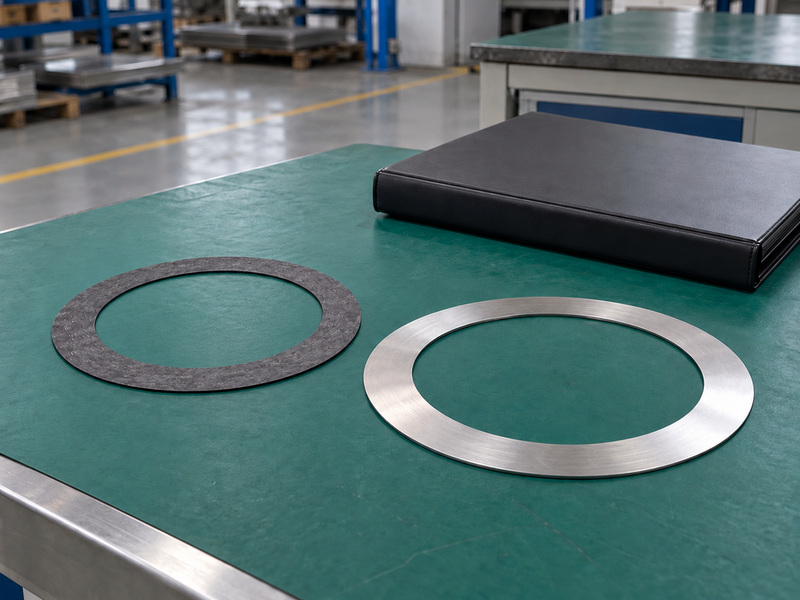
Review the finished component rather than the word graphite
Read the complete material data sheet. A graphite-sheet manufacturer’s data sheet describes a binder-free sheet that also has antistick impregnation. That example shows why “binder-free” does not establish the absence of all treatments. Ask which impregnants, inhibitors, binders, lubricants, metal reinforcement, or other additions are present in the proposed component.
Record thickness, density, purity, reinforcement, or other properties where the component specification requires them, without inventing universal acceptance limits. Identify whether a value applies to raw foil or the finished assembly. Obtain supplier confirmation for undocumented additives and proposed substitutions before approval. A matching trade description cannot resolve differences in the actual material or finished-part requirements.
- Request the exact material and component identification.
- List treatments and reinforcing materials where present.
- Keep raw-material properties distinct from finished-part requirements.
| Material detail | Question to resolve |
|---|---|
| Grade and form | Which exact supplied product is proposed? |
| Treatments and additions | What else is present besides graphite? |
| Controlled properties | Which requirements apply to the finished part? |
3. How should compatibility with the medium be reviewed?
Review the complete component against the actual medium and its operating conditions. A metal seat butterfly valve graphite enquiry should include composition, concentration, impurities, temperature, pressure, and cleaning chemistry. Compatibility of the graphite base material leaves metal layers, reinforcement, treatments, and adjacent sealing materials to be assessed separately.
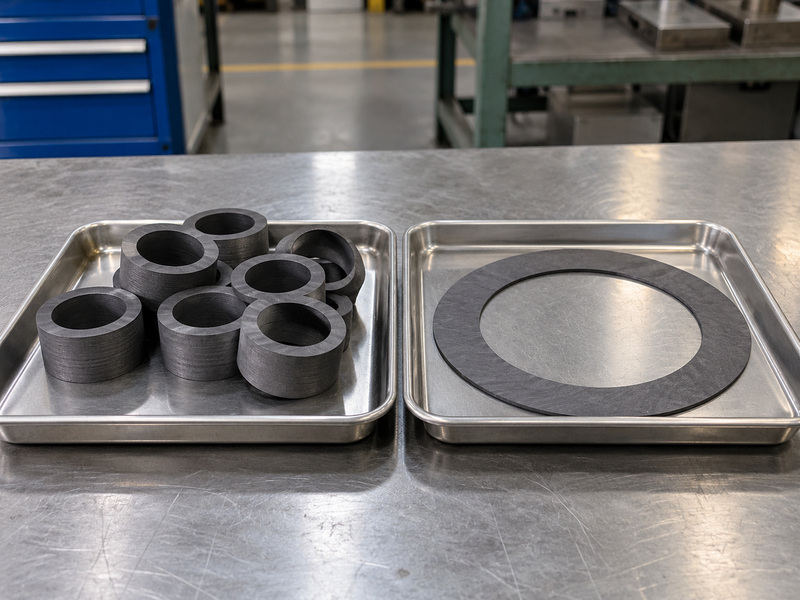
Submit the process and cleaning chemistry together
Ask the supplier to state which materials contact the process and which can contact cleaning fluid or external contamination. Include oxidizing ingredients and changes between normal production and cleaning. If a compatibility chart is used for screening, preserve its conditions and limitations with the enquiry. Obtain confirmation for the finished component rather than extending a favourable entry to every graphite-containing construction.
For an alternative chemical-isolation construction, compare RUITO’s PTFE-lined butterfly valve and PFA-lined butterfly valve under their own lining, backing, and shaft-seal limits. Those alternatives do not qualify a graphite-containing metal-seat assembly for the same chemistry. Keep the supplier’s suitability decision attached to the exact proposed construction and service schedule.
- Identify every material exposed to the medium.
- Include cleaning agents and relevant contaminants.
- Resolve missing or conditional compatibility information in writing.
| Exposure | Information needed |
|---|---|
| Normal medium | Composition, concentration, pressure, and temperature |
| Cleaning step | Chemistry and actual exposure conditions |
| Composite component | Graphite, additions, and metal compatibility |
4. Why do oxidation and oxygen service need separate checks?
Oxidation depends on the graphite product, exposure, temperature, and time, while oxygen service needs a specific material and cleanliness review. A metal seat butterfly valve graphite description cannot establish either limit. Ask the supplier to address process-side oxidants and atmospheric exposure where the actual component location makes them relevant.
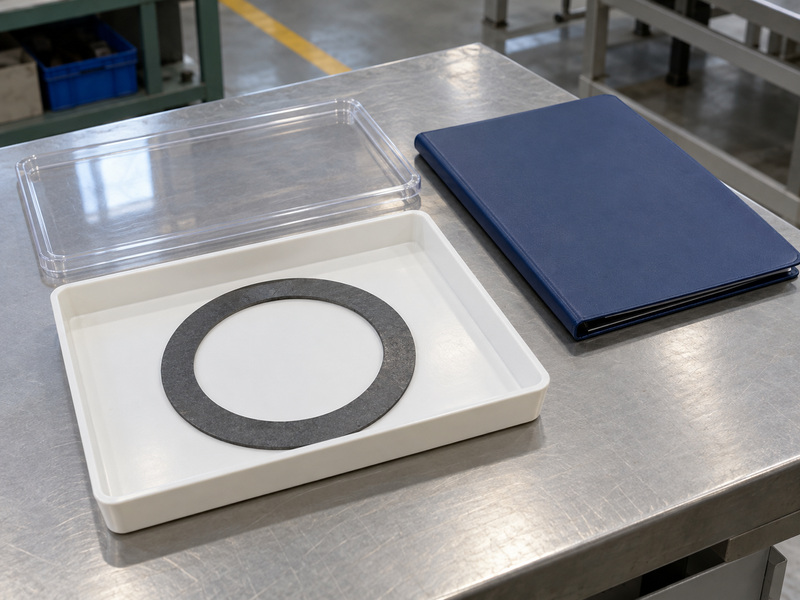
Review the actual exposure and any specialist service
The graphite manufacturer’s thermal-stability guidance explains that oxidative material loss varies with product quality and installation conditions. It also distinguishes the environment around a seal from the process medium. Request a service-specific assessment instead of treating a catalogue maximum temperature as a universal continuous-use limit or a predictable service-life figure.
The packing manufacturer’s oxygen-service guidance describes dedicated materials and cleanliness controls for that duty. Ordinary graphite wording cannot approve an oxygen application or its lubricants and treatments. Refer the exact component, operating conditions, cleaning, packaging, and handling requirements to the responsible oxygen-service specialists and supplier before accepting such a proposal.
- Identify oxidants on each relevant side of the seal.
- Obtain limits for the specific graphite product and installation.
- Keep oxygen-service approval separate from generic material data.
| Question | Required confirmation |
|---|---|
| Can oxidation affect this part? | Product and exposure-specific assessment |
| Which temperature applies? | Relevant component location and conditions |
| Is oxygen service proposed? | Specific materials, cleanliness, and approval basis |
5. How should the complete assembly limits be recorded?
Record the limits of every component that can restrict the proposed valve. A metal seat butterfly valve graphite review should keep the sealing component, packing, gaskets, body, disc, bearings, and actuator visible in the same approval package. A graphite material-sheet limit cannot define the allowable operating envelope of the complete assembly.
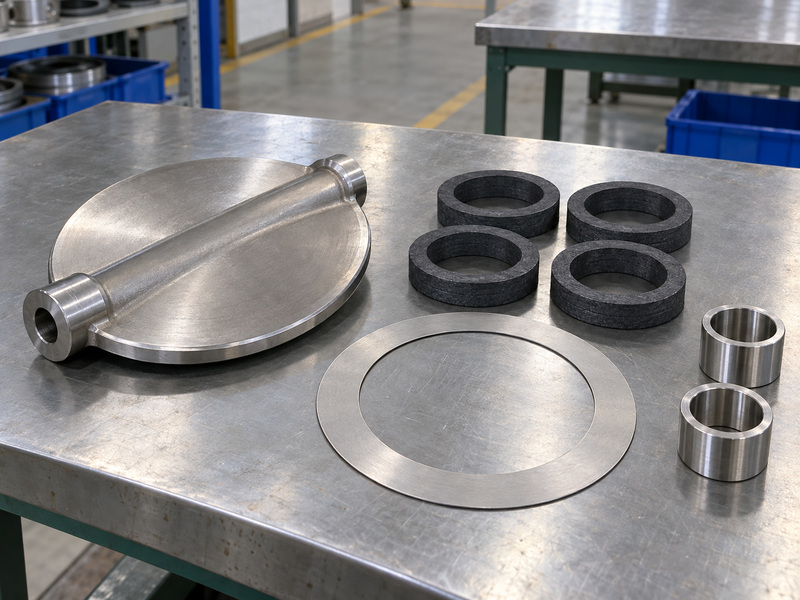
Keep component limits attached to their supporting documents
Request the supplier’s configuration-specific pressure-temperature information and identify any separate restrictions associated with the medium or component location. The packing or external joint can experience conditions different from the bulk process fluid. Use the manufacturer’s approved basis for that assessment; do not estimate a temperature reduction from an unrelated installation or apply another product’s heat-exposure figures.
Build a component-limit schedule that points to the supporting document and revision. Record continuous operation, intermittent exposure, or other restrictions only where the supplier has defined them. Keep any unresolved row open before approval. Material identity, assembly rating, closure acceptance, and fire qualification each require their own evidence when the project specifies them.
- Identify the actual graphite-containing parts.
- Include bearings, auxiliary seals, and the operating package.
- Resolve conflicting or undocumented limits before approval.
| Assembly item | Limit record needed |
|---|---|
| Sealing component | Medium, contact construction, and approved conditions |
| Packing and gaskets | Product, exposure, and installation restrictions |
| Remaining assembly | Applicable body, bearing, and actuator limits |
6. What pressure and cycling information should you submit?
Submit pressure, differential, direction, movement, and temperature together for the intended duty. A metal seat butterfly valve graphite proposal needs the operating conditions that affect each sealing component. A static gasket, shaft packing, and a laminated closure component have different functions, so a statement about one cannot establish the operating capability of another.
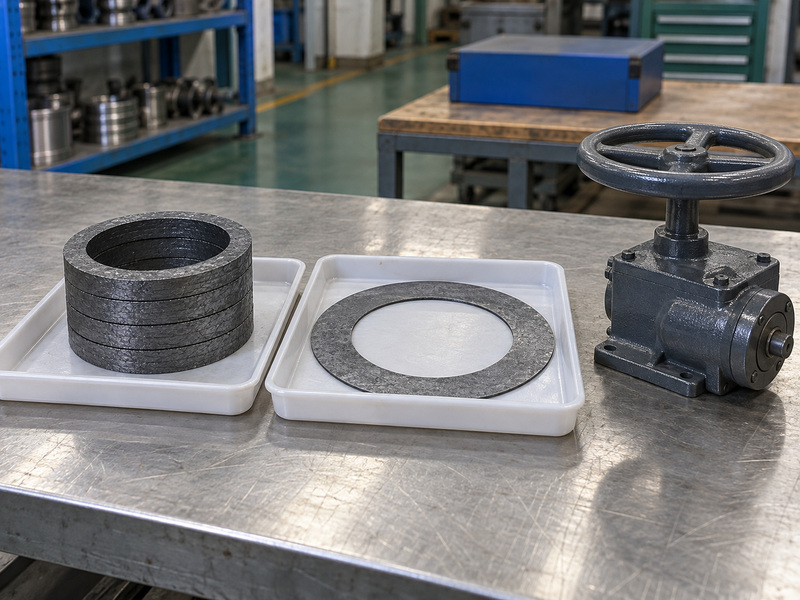
Connect the duty with the relevant sealing component
Describe isolation, modulation, expected movement frequency, and periods of sustained closed operation where relevant. Ask what evidence supports the proposed assembly and which operating restrictions apply. Keep any cycle-test conditions attached to the result rather than accepting a cycle count without its pressure, temperature, and operating sequence. Avoid converting a demonstrated test into an unlimited service-life promise.
Define the closure and external-containment acceptance requirements separately. A graphite packing statement concerns shaft sealing; it cannot establish seat leakage. Obtain the applicable assembly and setting instructions before selecting actuator output or maintenance adjustments. If the operating demand changes after purchase, return the configuration and its graphite-containing components to the supplier for review.
- State differential and required pressure direction.
- Describe movement and hold conditions.
- Keep test results and claimed coverage together.
| Duty information | Review question |
|---|---|
| Pressure and differential | Which component and assembly limits apply? |
| Movement and cycling | Which evidence covers the intended operation? |
| Acceptance requirement | Is closure or external containment being checked? |
7. How should graphite components be stored and handled?
Preserve their shape, surfaces, cleanliness, and identity under the supplier’s instructions. A metal seat butterfly valve graphite spare should arrive protected against bending, crushing, contamination, and mix-ups. Inspect the received packaging and component condition before accepting it into storage, and retain the supplier’s preservation requirements with the part record.
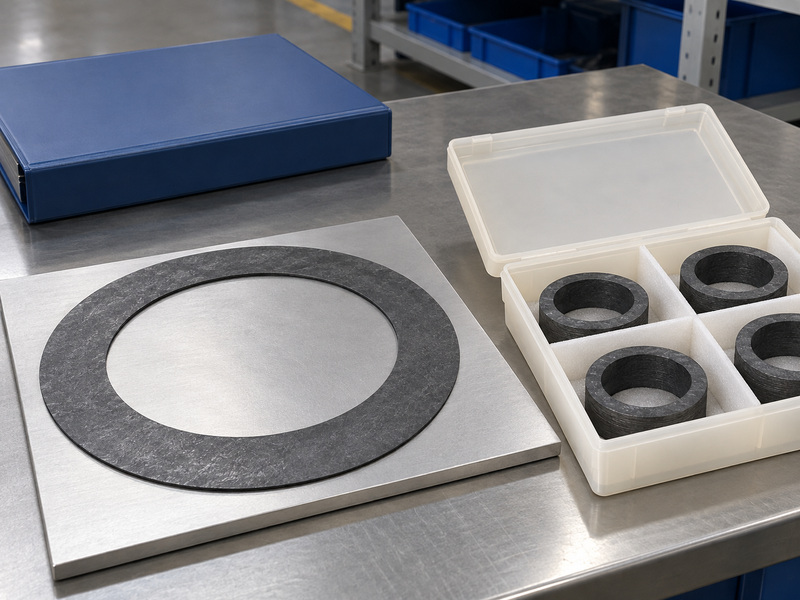
Protect the supplied form and keep its identity
The gasket manufacturer’s handling and storage guidance calls for protection from contamination and mechanical damage. Use packaging and support appropriate to the actual part rather than hanging or tightly stacking vulnerable gaskets. Any shelf-life statement belongs to the specified product and storage conditions; it cannot approve an unidentified, damaged, or contaminated spare.
For maintenance planning, a connection example such as RUITO’s flanged butterfly valve arrangement provides access context, while the proposed graphite component needs its own handling instructions. Confirm the space and protective packaging needed during removal and transport. Refer uncertain damage to the supplier instead of flattening, trimming, or repairing a precision component without authorization.
- Support thin or shaped parts during storage and transport.
- Keep components clean and separated from unrelated spares.
- Record and resolve damage before installation.
| Handling stage | Control to confirm |
|---|---|
| Receipt | Identity, packaging, and condition |
| Storage | Supplier-defined support and preservation |
| Maintenance transport | Protected surfaces and component traceability |
8. What makes a graphite replacement acceptable?
It must match the approved component requirements and receive any required substitution approval. A metal seat butterfly valve graphite replacement needs the correct valve identity, drawing revision, part number, construction, and material specification. Matching the visible diameter or fitting inside the available space cannot establish interchangeability.
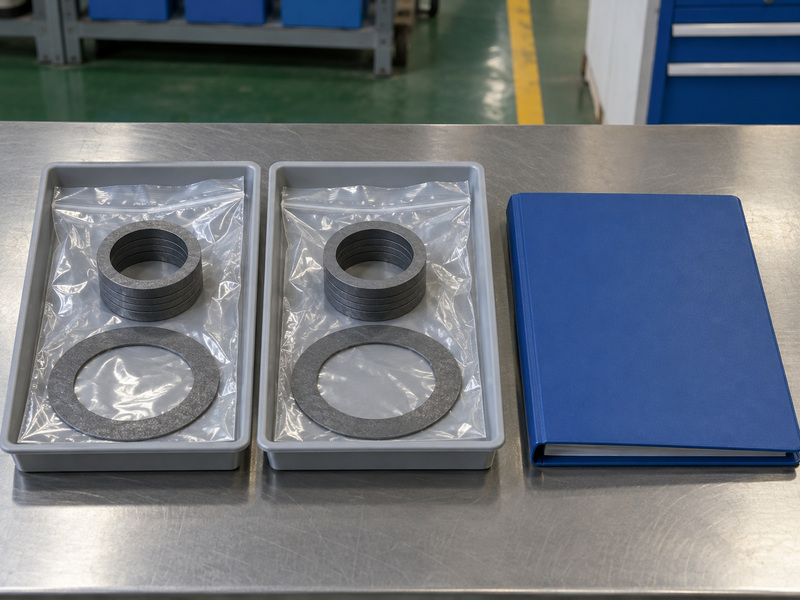
Control the replacement through the valve’s parts record
Ask the supplier to identify any difference in graphite grade, treatment, reinforcement, density, thickness, or other controlled property. Include the surrounding metal parts and assembly instructions in the review where they affect the replacement. Preserve batch or lot identification and the approved spare record. A change described as equivalent should have a written technical disposition before installation.
A connection category such as RUITO’s lug butterfly valve cannot identify a compatible graphite kit for an unrelated model. Use the proposed valve’s own parts list and instructions. Agree on required replacement consumables, assembly checks, and return-to-service acceptance, then retain the final configuration so the next spare order refers to the accepted construction.
- Match the spare with valve and drawing identities.
- Review changes in material or component construction.
- Retain supplier approval and post-work acceptance records.
| Replacement check | Required evidence |
|---|---|
| Identity | Valve, part, drawing revision, and lot |
| Conformity | Specified construction and material requirements |
| Substitution | Approved technical disposition and final record |
9. What should the graphite review file contain?
Keep a coordinated record of component roles, material identity, service review, limits, and approved replacements. A metal seat butterfly valve graphite enquiry should produce enough evidence for procurement and maintenance teams to identify the same construction. Close missing compatibility or material details before accepting the offer or approving a spare.
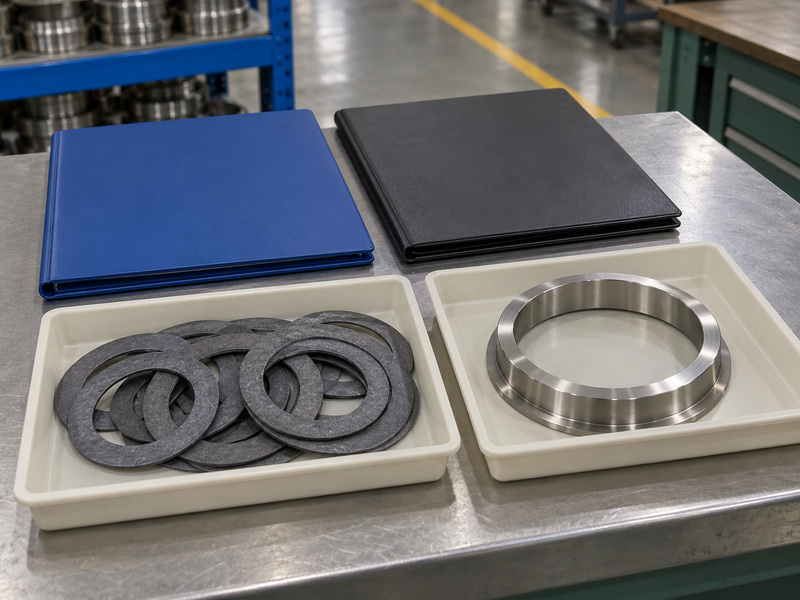
Close the material and service questions before release
Include the marked drawing, material sheets, component specification, service conditions, supplier suitability statement, assembly limits, and required acceptance records. Record who approves substitutions and which instructions control storage and installation. If a project requires fire qualification, emissions performance, or specialist service approval, keep the applicable evidence separately identifiable. Graphite content alone cannot establish those qualifications.
Contact us with the graphite component’s location, specified material, medium, operating conditions, and required records for a scoped RUITO review. Its supplied documentation does not establish a universal graphite-containing metal-seat butterfly range. Obtain written confirmation of the proposed construction and available supporting evidence before treating the enquiry as an accepted product capability.
- Link each graphite item with its approved specification.
- Retain service suitability and component-limit decisions.
- Assign storage, substitution, and handover responsibilities.
| Review record | Decision supported |
|---|---|
| Role and material | What is supplied and where it belongs |
| Service and limits | Which conditions the proposal covers |
| Replacement control | How the accepted configuration is preserved |
10. Which graphite-component FAQs should buyers resolve?
Resolve the component’s identity and intended exposure before approving the proposal. A metal seat butterfly valve graphite description needs a confirmed role, complete material specification, applicable assembly limits, and records that remain usable when replacement parts are ordered.
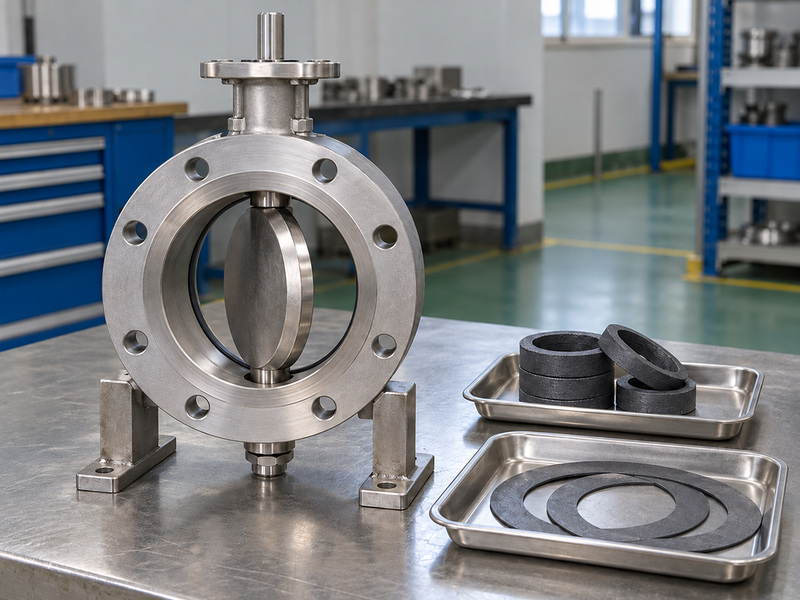
Q1. How do I know where the graphite is used?
Request a marked assembly drawing and component material list. A laminated closure component, shaft packing, and a stationary gasket need separate identification and service review.
Q2. Does binder-free mean there are no treatments?
No. A product can have a treatment such as antistick impregnation while being described as binder-free. Check the exact material sheet and supplier declaration.
Q3. Can I assume graphite is suitable for oxygen service?
No. Obtain the specific material, cleanliness, packaging, and operating approval required for that duty. A generic graphite description cannot establish oxygen-service suitability.
Q4. Does graphite prove all-metal or fire-safe construction?
No. Identify the actual contact materials and every relevant component. Fire qualification requires its own applicable evidence, and graphite-containing construction cannot be described as entirely metallic.
Q5. Can a same-size graphite spare replace the original?
Only after conformity and any substitution approval are confirmed. Match the material, construction, controlled properties, and part identity with the valve’s approved record before installation.