
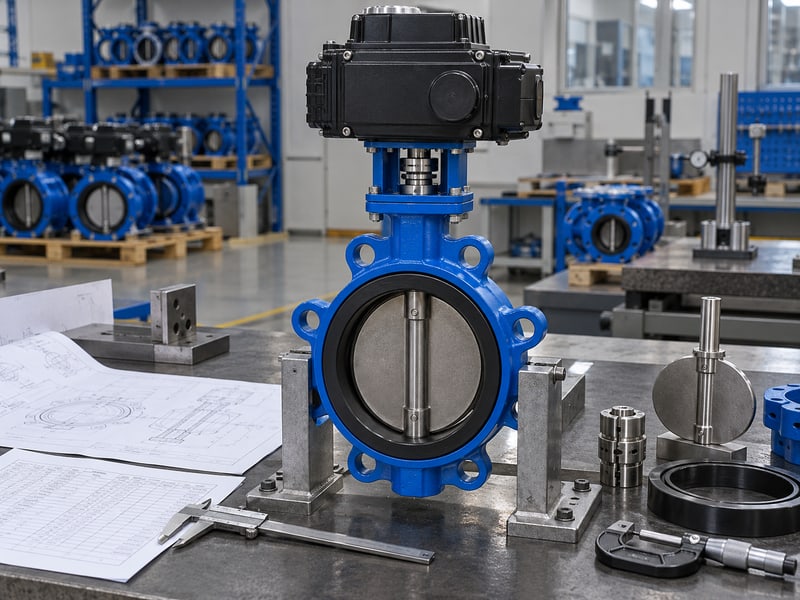
Fix errors from motorized butterfly valve manufacturers by freezing the required assembly, checking model-specific evidence, and closing deviations before production. An acceptable sample can still become an unsuitable repeat order if materials or actuator settings change. Use accepted drawings, operating limits, traceable records, and an agreed inspection plan to control that risk.
1. How do motorized butterfly valve manufacturers qualify?
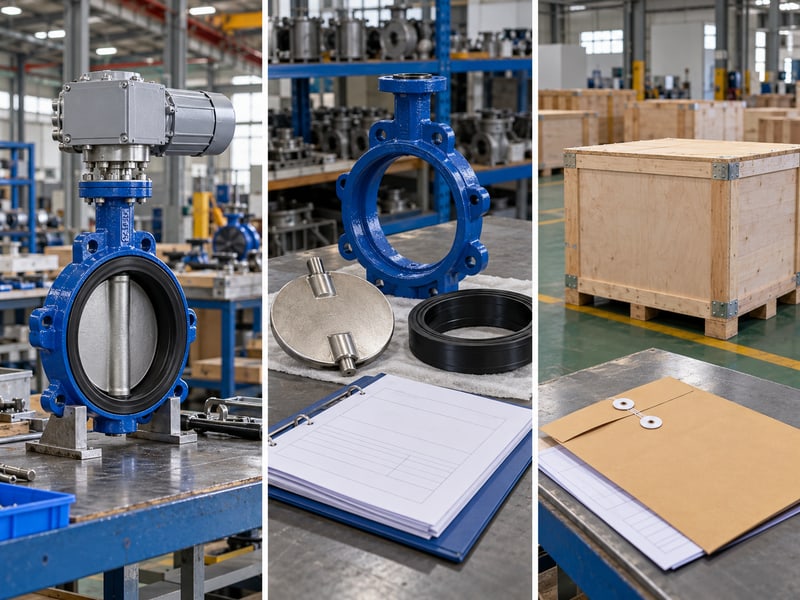
Motorized butterfly valve manufacturers qualify by showing that their proposed assembly meets your defined duty and that they can reproduce its accepted configuration. Factory size and an attractive catalog cannot establish that fit. Ask the supplier to identify who designs, assembles, tests, and releases the valve and actuator package.
What should you verify about the supply arrangement?
Follow one proposed assembly through the records. Review a relevant example of how drawings, purchased actuator identification, manufacturing work, and release documents connect. When reviewing RUITO's manufacturing scope, request evidence for the offered configuration rather than treating general company information as acceptance of your project.
- Identify responsibility for valve construction and actuator integration.
- Confirm where assembly and specified inspections take place.
- Check who resolves interface errors and supplies replacement parts.
What is a useful qualification result?
Key takeaway: Qualify the supplier against a defined product and duty. Record accepted capabilities, unresolved questions, and restrictions so a commercial award does not silently broaden the technical scope.
| Qualification item | Evidence to request |
|---|---|
| Assembly responsibility | Named supply and integration roles |
| Configuration fit | Model-specific proposal and drawings |
| Repeatability | Linked production and release records |
Select a representative proposed assembly for review. Keep the resulting restrictions in the procurement file.
2. What must motorized butterfly valve manufacturers specify?
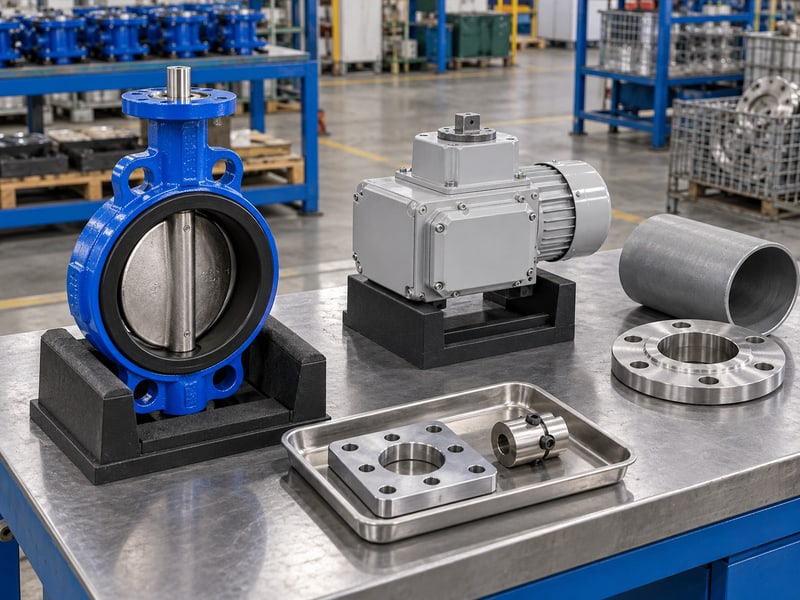
Motorized butterfly valve manufacturers must specify the complete valve, actuator, mounting, controls, and operating envelope that they intend to supply. Pressure and temperature limits need to apply together to the selected materials and size. A nominal pressure class alone does not define permitted closing differential, media compatibility, or actuator suitability.
Which details prevent an ambiguous quotation?
Separate connection choices from operating ratings. Identify the disc design, seat construction, body connection, and drive as distinct configuration decisions. For a wafer butterfly valve, verify the accepted face-to-face dimension, companion flange arrangement, and disc clearance instead of assuming another body's drawing will apply.
- State medium composition, operating temperature, pressure, and closing differential.
- Define size, flange interface, materials, and installation envelope.
- Specify supply voltage, control mode, feedback, and required operating duty.
How should the offered limits be recorded?
Key takeaway: Accept one consistent set of configuration and operating limits. Keep the valve's pressure-temperature information, permitted pressure direction, and actuator conditions attached to that exact proposal so reviewers cannot combine unrelated catalog maxima.
| Specification area | Accepted basis |
|---|---|
| Valve service | Simultaneous operating envelope |
| Pipe interface | Configuration-specific drawing |
| Electric operation | Supply, controls, and duty |
Return incomplete datasheets for clarification. Freeze the accepted assembly before releasing production.
3. How do motorized butterfly valve manufacturers prove torque?
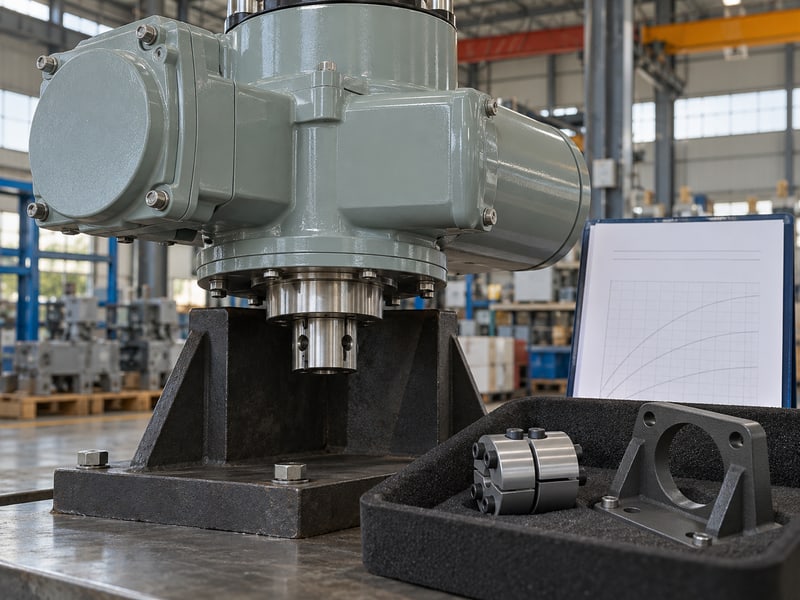
Motorized butterfly valve manufacturers should support actuator selection with valve torque requirements and available output under the stated operating conditions. Motor power alone cannot establish adequate shaft torque. The review must cover breakaway, running, and seating requirements, permitted shaft loads, and the chosen actuator's duty limits.
What should the sizing evidence include?
Check the conditions behind the figures. Request the valve size, seat configuration, temperature, pressure differential, and method used to establish required torque. Compare those requirements with actuator output and the documented selection margin, while checking that allowable valve and coupling loads remain within their limits.
- Match torque data with the actual valve and service conditions.
- Review output, operating time, frequency, and ambient limitations.
- Check mounting, coupling engagement, stop settings, and protective settings.
What does an acceptable review establish?
Key takeaway: Torque acceptance needs both sufficient output and protection against overload. A no-load demonstration can confirm movement and indication, but it does not replace a selection review for the maximum specified service load.
| Evidence | Question answered |
|---|---|
| Valve torque basis | What does the service require? |
| Actuator output and duty | Can the drive perform that duty? |
| Load limits and settings | Is the assembly protected? |
Ask engineering to close missing sizing inputs. Retain the accepted calculations with the assembly drawing.
4. Can motorized butterfly valve manufacturers trace materials?
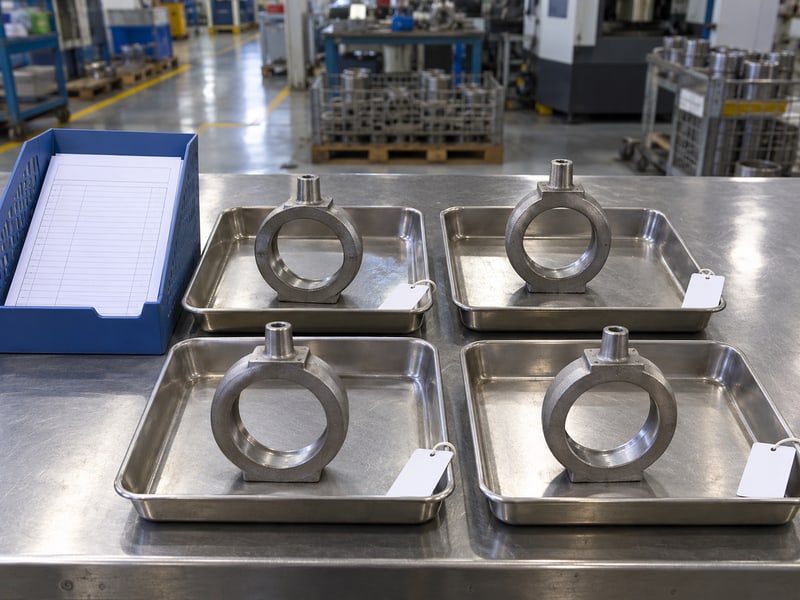
Motorized butterfly valve manufacturers can demonstrate material traceability when valve identification links with the relevant metal, seal, lining, and production records. A material grade printed on a datasheet establishes a requirement, not proof of the supplied parts. Review how the factory keeps those links through machining, assembly, testing, and shipment.
Which materials need separate evidence?
Follow the full material configuration. Check pressure-retaining parts, wetted components, seats, and auxiliary seals according to the inspection plan. For a PTFE-lined butterfly valve, verify the lining, backing, disc covering, and shaft-seal arrangement because naming one polymer does not describe the entire wetted barrier.
- Link applicable metal certificates with component and product identification.
- Identify seal, resin, and coating batches where specified.
- Record approved material substitutions and their effective units.
How can you audit a traceability claim?
Key takeaway: Test the record link with an identified unit from the proposed supply. Ask the supplier to retrieve its applicable records and resolve gaps rather than accepting an unrelated certificate as evidence for a whole shipment.
| Material record | Link to verify |
|---|---|
| Metal certificate | Relevant component and heat |
| Seal or lining record | Approved material and batch |
| Finished valve identity | Assembly and release records |
Define traceability requirements before manufacture. Check that the final document package preserves the agreed links.
5. What should motorized butterfly valve manufacturers test?
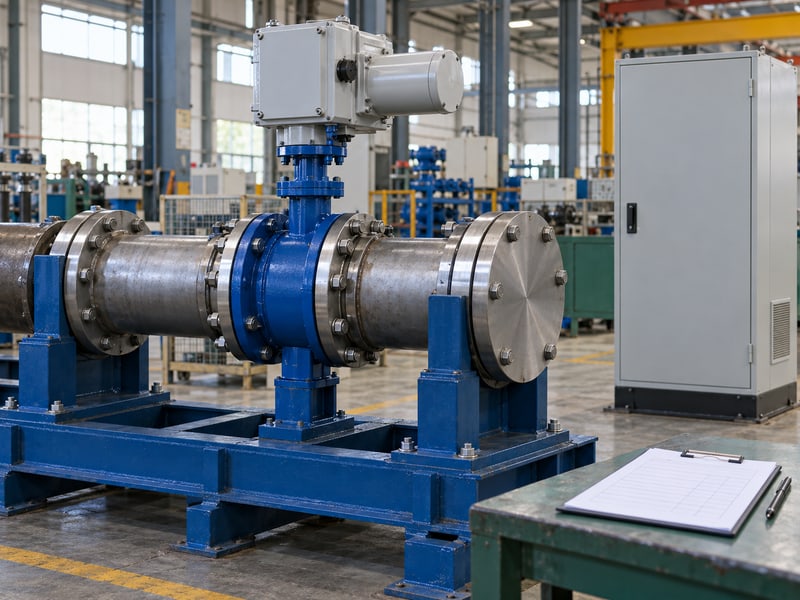
Motorized butterfly valve manufacturers should test the supplied assembly against agreed pressure, leakage, dimensional, and functional acceptance requirements. Define the applicable method, conditions, and acceptance criteria before testing. A report marked passed cannot establish conformity when the tested configuration or required procedure is unclear.
What belongs in the inspection and test plan?
Agree the acceptance conditions in advance. Specify test medium, pressure, direction, duration, leakage criterion, instrumentation, and any witness or hold points required by the contract. Keep proof-test conditions distinct from working ratings, and define extra checks for configurations whose lining, service, or electric accessories need separate verification.
- Check required dimensions and the approved valve-actuator interface.
- Define shell, seat, and external leakage checks as applicable.
- Verify travel, indication, controls, and agreed protective functions.
What makes a factory result reviewable?
Key takeaway: Require records that identify the unit, procedure, test conditions, and result. Functional checks should describe which commands and feedback were verified so a successful local stroke cannot stand in for an untested control interface.
| Acceptance area | Record requirement |
|---|---|
| Pressure and leakage | Conditions, direction, and criterion |
| Mechanical interface | Dimensions and engagement checks |
| Electric function | Verified commands and feedback |
Resolve failed or incomplete checks before release. Agree any retest after corrective work.
6. Which motorized butterfly valve manufacturers' files matter?
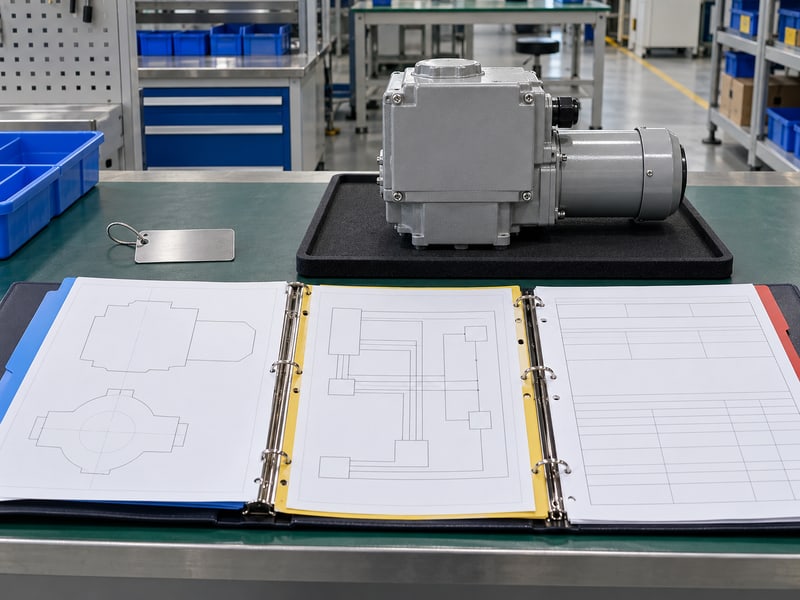
Motorized butterfly valve manufacturers should provide the files needed to approve, install, operate, and maintain the accepted assembly. These usually include configuration data, mounting drawings, wiring information, operating instructions, and the agreed inspection records. Certification evidence must cover the actual model, materials, accessories, destination, and intended application where relevant.
How do you check document consistency?
Compare identities and revisions across the package. Match valve and actuator identification with drawings, torque data, terminal schedules, and records. A company management-system certificate addresses its stated organizational scope; product or application acceptance needs the applicable evidence for the offered equipment and project requirements.
- Request an indexed list of required files and their submission stages.
- Check accepted revisions against labels and supplied configuration.
- Confirm installation instructions and spare-part identification are included.
What should happen when files disagree?
Key takeaway: Conflicting documents need correction before they guide installation or release. Ask the supplier to identify the governing revision and affected units, then issue a consistent package rather than leaving your team to choose between incompatible files.
| Document | Practical use |
|---|---|
| Accepted configuration and drawing | Equipment and interface approval |
| Wiring and operating instructions | Installation and operation |
| Linked inspection records | Contract acceptance review |
Set document approval responsibilities in the order. Confirm that the final index identifies the accepted revisions.
7. How do motorized butterfly valve manufacturers handle changes?
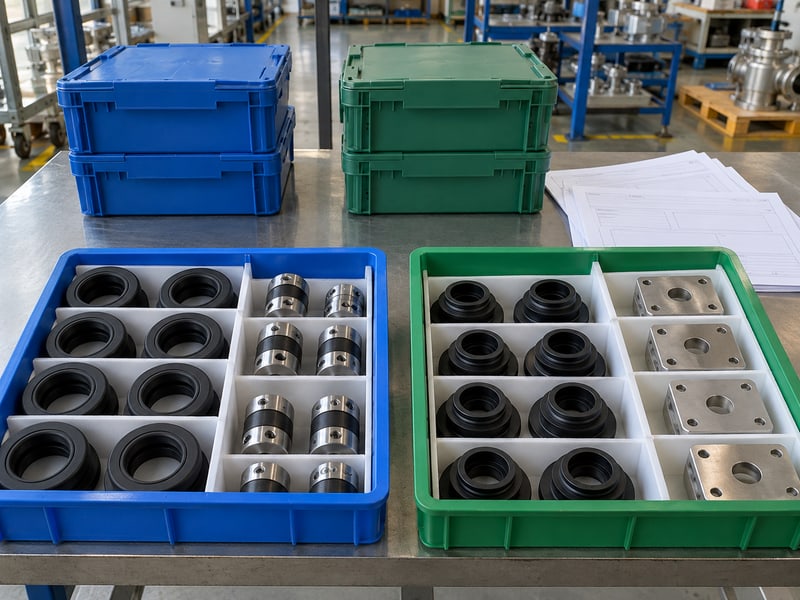
Motorized butterfly valve manufacturers should handle engineering changes through a documented review of the affected configuration, performance, approvals, and production units. A seat, actuator, or coupling substitution can change more than purchasing availability. Request written authorization before implementing changes that alter the accepted supply.
What must a change notice describe?
Review the consequences before approving the substitution. Compare the original and proposed parts, then identify affected drawings, torque calculations, control functions, materials, and inspection requirements. State whether sample validation, interface checks, or additional tests are needed before the changed configuration enters production.
- Describe the reason and exact technical difference.
- Identify affected documents, stock, work in progress, and shipped units.
- Define approval, verification, and the effective production boundary.
How do you prevent mixed configurations?
Key takeaway: Identify the unit or batch where a change starts and record which configuration each affected unit receives. Purchasing, production, quality, and document teams should use the same accepted revision so a repeat order does not contain an unannounced mixture of old and new assemblies.
| Change stage | Required record |
|---|---|
| Proposal | Difference and impact review |
| Approval | Authorized decision and conditions |
| Implementation | Effective units and revised files |
Check the changed configuration before release. Keep its approval with the affected order records.
8. How should motorized butterfly valve manufacturers flag deviations?
Motorized butterfly valve manufacturers should flag deviations explicitly against your requested specification, with the technical effect and proposed disposition. Silence in a quotation leaves the buyer uncertain about conformity. Require the supplier to distinguish an unanswered requirement from a confirmed match or a proposed exception.
Which differences require a clear decision?
Compare requested and offered behavior. Review dimensional differences, materials, operating limits, control signals, timing, and failure response against the project requirements. An electric actuator's behavior after loss of power depends on its design and configuration, so a requested fail position needs explicit support rather than a general motor-operated description.
- Identify the requested requirement and exact offered alternative.
- Explain effects on installation, operation, safety, and maintenance.
- Assign an approval owner and record any acceptance conditions.
How should accepted deviations follow the order?
Key takeaway: An accepted deviation becomes part of the agreed supply definition. Carry it into drawings, operating documents, inspection criteria, and the purchase order so later reviewers can see why the delivered configuration differs from the original request.
| Deviation status | Procurement action |
|---|---|
| Unanswered | Request a technical response |
| Proposed exception | Review effects and disposition |
| Accepted exception | Update governing order documents |
Close technical exceptions before production release. Reopen the review if the offered alternative changes.
9. Can motorized butterfly valve manufacturers repeat quality?

Motorized butterfly valve manufacturers can support repeat quality through controlled configuration, consistent inspection, traceable materials, and documented corrective action. Sample approval establishes the accepted baseline but does not establish conformity of every later unit. Define what must remain unchanged and what evidence accompanies each production release.
What should repeat orders reference?
Order against the accepted baseline. Identify the configuration, drawing revisions, actuator options, markings, and inspection requirements retained from the accepted supply. Review any process or supplier changes that could affect fit, sealing, operating torque, or controls before deciding whether further validation is required.
- Link each order with the current accepted technical definition.
- Check release records against the supplied product identities.
- Track recurring defects and verify completed corrective actions.
How do you use a quality finding constructively?
Key takeaway: A finding should lead to containment, cause review, and a checked correction. Identify affected batches and configuration revisions so the supplier can control the immediate problem while preventing the same condition in the next release.
| Repeat-order concern | Control to request |
|---|---|
| Configuration drift | Revision and change control |
| Inconsistent acceptance | Agreed inspection criteria |
| Recurring defect | Verified corrective action |
Review the evidence at each agreed release point. Revisit qualification when changes affect the accepted basis.
10. What should motorized butterfly valve manufacturers receive?
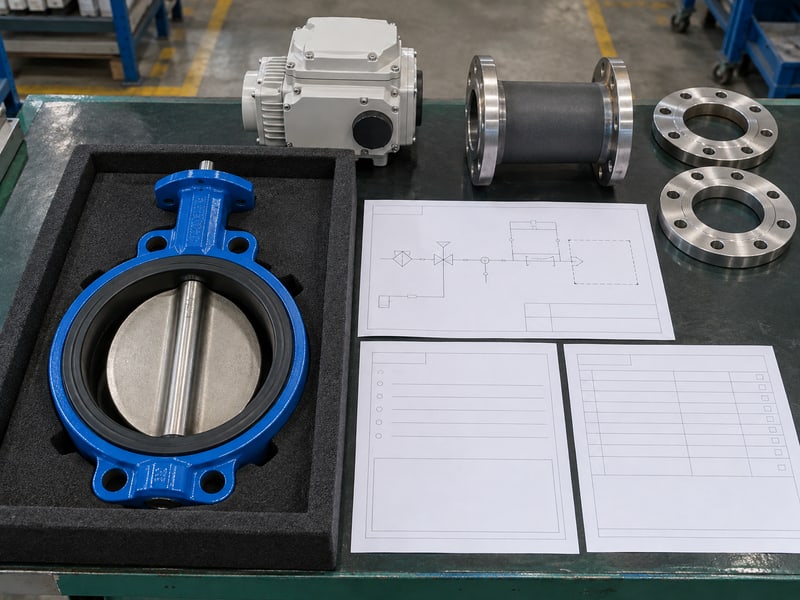
Motorized butterfly valve manufacturers should receive the operating conditions, interfaces, control requirements, acceptance scope, and document expectations needed for a defensible proposal. Complete inputs let engineering identify limitations before an order is placed. Include installation constraints and unresolved requirements so the supplier can respond with confirmed data or a clearly stated exception.
What should motorized butterfly valve manufacturers supply?
Send the technical inputs together. RUITO can review valve configurations and provide model-specific drawings, operating data, material records, and project inspection documentation. Ask for the offered assembly's pressure-temperature limits, torque selection basis, interface drawing, and proposed test plan before treating a quotation as technically accepted.
- Medium composition, temperature, pressure, and maximum closing differential.
- Size, pipe interface, space, electrical supply, commands, and feedback.
- Required files, inspections, witness points, and change-approval rules.
What should the next review deliver?
Key takeaway: Request a proposal that identifies its configuration, supporting evidence, and deviations. For selection and documentation review, contact us today with your operating conditions, interface requirements, and acceptance checklist.
| Buyer input | Requested response |
|---|---|
| Defined service | Configuration and operating limits |
| Interface and controls | Assembly and electrical documents |
| Acceptance scope | Inspection plan and exceptions |
Assign reviewers for the returned technical package. Resolve its open items before releasing production.
FAQ
Q1: Can I qualify a supplier using a management certificate alone?
No. Check its stated scope, then review evidence for the actual valve-actuator configuration, application requirements, and proposed acceptance process.
Q2: What's the best evidence that an actuator is correctly selected?
Request service-specific valve torque and actuator output data. The review should cover duty, selection margin, allowable loads, and relevant operating conditions.
Q3: How do I know if material certificates match my valves?
Check the traceability links. Ask for an identified unit's component, heat or batch, assembly, and release records according to the agreed inspection plan.
Q4: Can a manufacturer change actuator brands on a repeat order?
Only through your agreed change process. Review torque, interfaces, controls, approvals, and documentation before authorizing a substitution that changes the accepted assembly.
Q5: Does a passed factory test prove suitability for every service?
No. A result applies to the recorded configuration and test conditions; service acceptance also requires the specified operating envelope and assembly selection review.