
Control PTFE butterfly valve seat manufacturing process compression molding mistakes through an approved resin grade, qualified forming route, verified dimensions, and matched assembly. A seat that looks smooth can still have the wrong dimensions, resin, or backing. Specify the material and process route together, then verify the finished seat in its intended valve assembly.
For a PTFE butterfly valve seat manufacturing process compression molding enquiry, send the component drawing rather than a nominal diameter alone. Two white rings of the same nominal size can behave differently: one turns freely while the other binds or leaves a sealing gap. Follow the resin, forming record, finished profile, and assembly conditions before approving repeat production.
1. How does compression molding make a PTFE valve seat?
PTFE butterfly valve seat manufacturing process compression molding creates a controlled preform that can be sintered and finished into the required seat geometry. The selected resin grade and part design determine the production route. A separately manufactured seat, a body liner, and an encapsulated disc are different components with different tooling and acceptance requirements.
Which component are you asking the supplier to make?
Start with the section drawing. Identify the contact surface, flange sealing faces, shaft passages, backing, and retention arrangement. A nominal diameter alone leaves most of that geometry undefined. For a replacement seat, obtain the original component drawing or inspect the exact assembly through an approved reverse-engineering process.
A material-equivalent ring may still have the wrong interference or support. Your purchase specification should also state whether the supplier delivers a finished component, a semi-finished blank, or a complete tested valve. Each choice moves acceptance responsibility to a different stage. Key takeaway: Define the component boundary before approving a resin or a forming method.
- Identify the seat, liner, and backing separately.
- State whether supply covers a blank, finished part, or assembly.
| Control | Acceptance evidence |
|---|---|
| Part definition | Approved cross-section and interfaces |
| Supply scope | Blank, finished component, or tested valve |
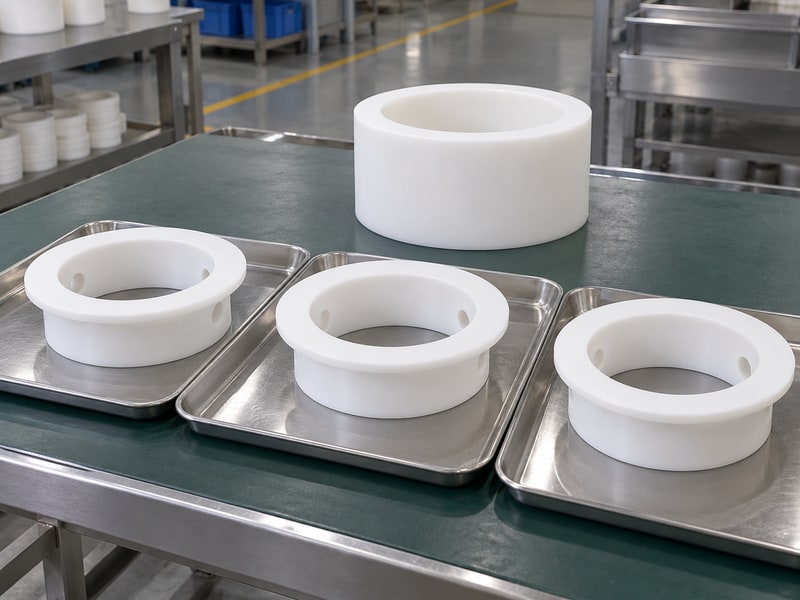
2. Why must you distinguish PTFE from PFA processing?
PTFE butterfly valve seat manufacturing process compression molding follows a powder-processing route rather than assuming ordinary thermoplastic injection molding. Conventional PTFE has very high melt viscosity. PFA is a different, melt-processable fluoropolymer. A quotation describing a white polymer as injected PTFE needs clarification of the actual resin and manufacturing method.
What evidence settles the material route?
Ask for the resin designation. Review the grade, manufacturer data, batch identity, and process description together. The PTFE material guidance identifies grades for different forming methods. Resin identity also controls which material specification and qualification records apply.
Avoid approving a substitute because both products are fluoropolymers or share a color. A change from PTFE to PFA may affect tooling, dimensions, chemical-service documentation, and the supplied assembly. Put the proposed change through engineering review before treating it as a routine production improvement. Key takeaway: A clear resin designation prevents an incorrect manufacturing route from entering the order.
- Name the exact resin and grade on the approved parts list.
- Match the process description with the resin supplier’s data.
| Control | Acceptance evidence |
|---|---|
| PTFE | Grade-specific powder forming and subsequent processing |
| PFA | Separately specified melt-processable resin |
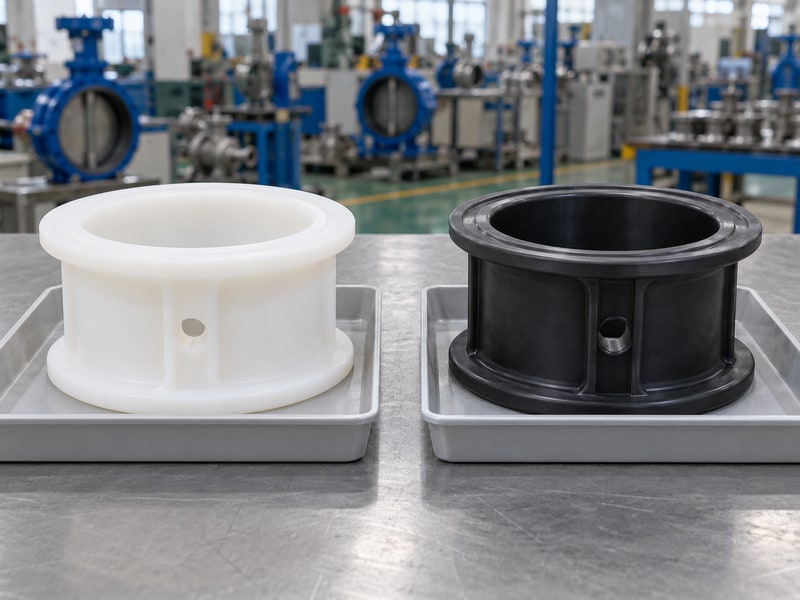
3. How should resin receipt and preparation be controlled?
PTFE butterfly valve seat manufacturing process compression molding begins with accepted resin that remains identifiable through preparation and production. Confirm the grade, batch, packaging condition, storage requirements, and handling instructions. Filled or modified grades need their own approval because their properties and intended service can differ from unfilled material.
Which contamination checks are practical?
Protect the material before it reaches the mold. Use clean equipment and controlled containers suited to the specified powder. Keep incompatible materials and workshop debris away from preparation. The work instruction should define permitted handling, any required conditioning, and how unused material is identified.
For chemical-duty components, do not assume that a filler acceptable for mechanical wear also suits the complete fluid composition. Ask how production operators keep the approved grade separate from visually similar stock. Record transfers between containers so batch identity survives normal workshop handling. Key takeaway: Clean handling and traceability protect the properties selected during material approval.
- Keep resin grade and batch identity visible through preparation.
- Control containers, tools, and any approved additives or fillers.
| Control | Acceptance evidence |
|---|---|
| Receipt | Accepted grade, batch, and packaging |
| Preparation | Clean equipment and controlled material identity |
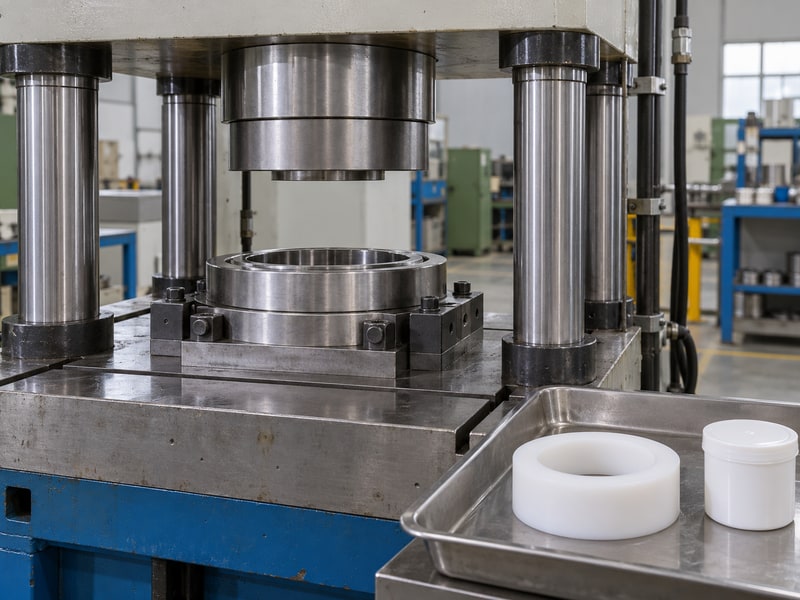
4. What should a compression-molding setup control?
PTFE butterfly valve seat manufacturing process compression molding needs tooling and a qualified setup suited to the resin, blank geometry, and downstream finishing allowance. The production instruction defines powder charging, compaction, handling, and acceptance. Press capacity alone does not establish whether the resulting preform will meet the component requirements.
How should you review the forming record?
Review a complete setup, not a single pressure number. Identify the tool, resin batch, charge, prescribed cycle, and part or batch reference. The producer should show how the preform is removed and supported without damage. A tooling change or a different blank size can require another process review.
For example, increasing blank thickness to cover machining stock changes what the later thermal process must accommodate. Do not transfer a setting from an unrelated ring size solely because the nominal valve diameter appears similar. Define what triggers requalification in the production plan. Key takeaway: A controlled setup links the pressed blank with its qualified production route.
- Identify the tooling and approved cycle revision.
- Record the preform acceptance and any process deviation.
| Control | Acceptance evidence |
|---|---|
| Setup | Tool identity and approved process revision |
| Preform | Accepted condition and traceable batch |
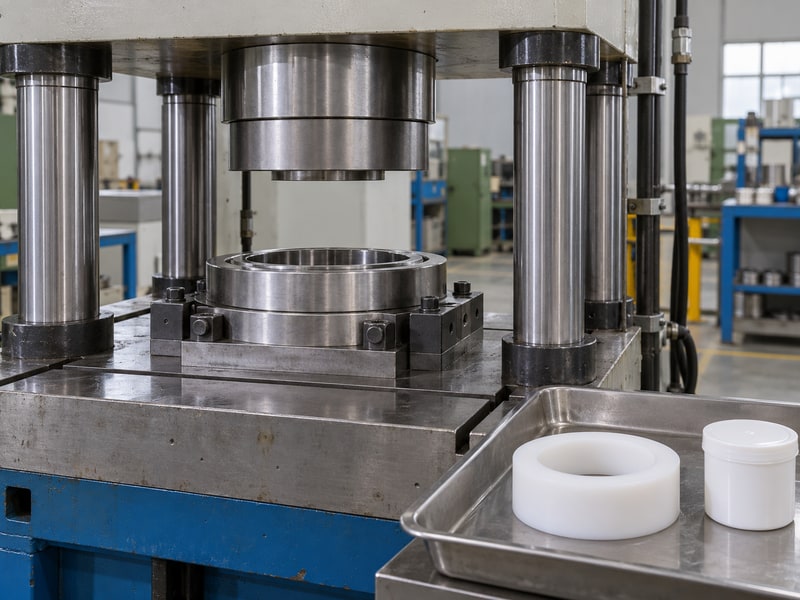
5. How do sintering and cooling enter the quality record?
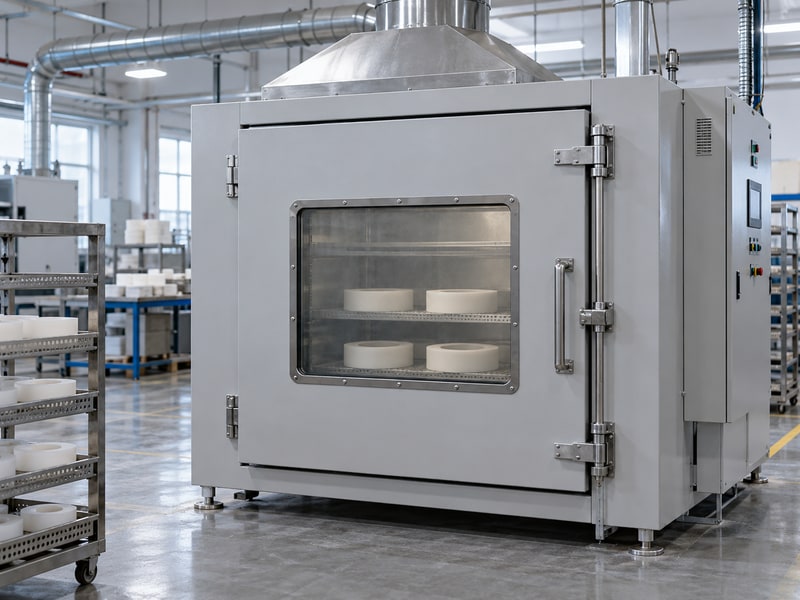
PTFE butterfly valve seat manufacturing process compression molding includes a controlled sintering and cooling route for the formed blank. The cycle follows the selected grade, geometry, equipment, and qualified procedure. A generic oven setpoint cannot establish that every part experienced the required thermal history.
What should you request from a thermal-cycle review?
Connect the cycle with the load. Identify which blanks entered the oven, the approved recipe, the equipment, and the recorded process conditions. The producer should control the load arrangement and handling between operations. Investigate an interrupted cycle through the approved disposition process rather than assuming that restarting the oven restores acceptance.
For repeated batches, retain enough information to distinguish a material issue from a thermal-process change. Your acceptance plan can request the agreed cycle records without demanding a supplier’s proprietary recipe beyond the contract. Define the evidence required before production starts. Key takeaway: A traceable cycle record supports process acceptance beyond a nominal oven temperature.
- Link thermal records with the identified production load.
- Approve the disposition of interrupted or abnormal cycles.
| Control | Acceptance evidence |
|---|---|
| Thermal route | Qualified recipe and identified equipment |
| Load | Traceable parts and accepted cycle record |
6. Which finishing checks determine the seat fit?
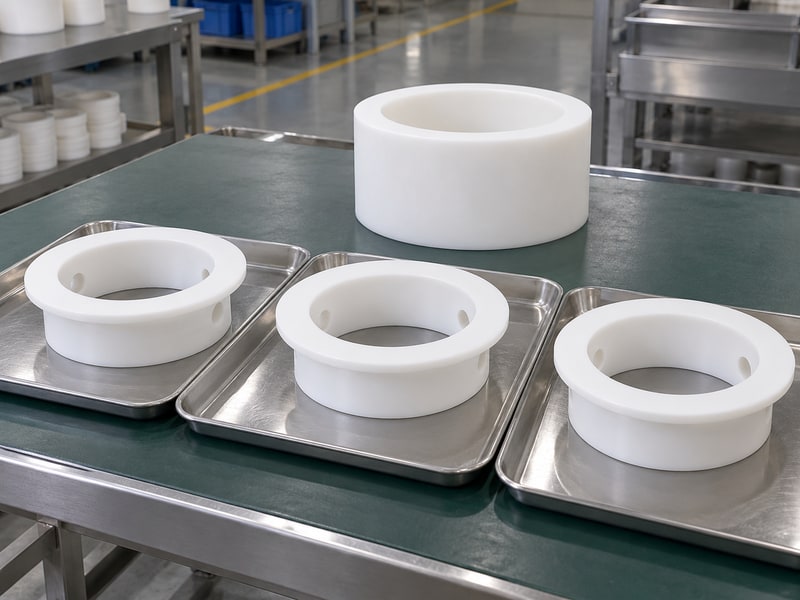
PTFE butterfly valve seat manufacturing process compression molding produces a blank whose finished profile must match the approved body, disc, shaft, and sealing interfaces. Machining and dimensional acceptance establish that profile. Nominal size and material identity do not define the required wall thickness, flange faces, or shaft-passage position.
How do you avoid accepting a dimensionally wrong ring?
Measure the functional features. Use the drawing’s references for internal profile, outer support surfaces, end faces, and shaft openings. The measurement method must suit a polymer component and the agreed inspection conditions. Excessive measuring force can make a soft component appear to have a different dimension.
Check the sealing lip for machining marks, burrs, chips, and handling damage. If the part receives a conditioning step before final inspection, record it. A drawing tolerance without an agreed measurement method can lead the supplier and buyer to accept different versions of the same part. Key takeaway: Functional dimensions determine whether the finished seat can work in the intended assembly.
- Inspect the specified sealing and support profiles.
- Agree on measurement conditions and suitable equipment.
| Control | Acceptance evidence |
|---|---|
| Geometry | Profile and interface dimensions |
| Surface | Accepted lips, passages, and contact finish |
7. How should backing and retention be specified?
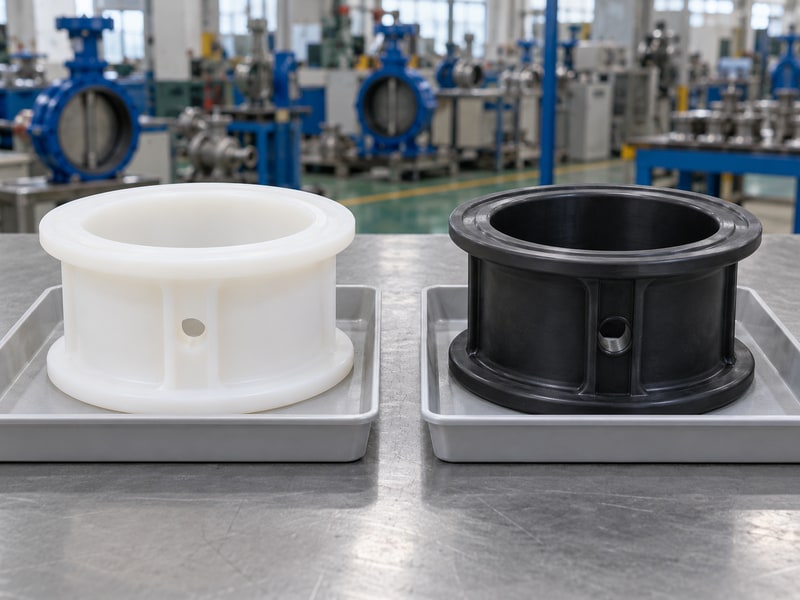
PTFE butterfly valve seat manufacturing process compression molding must account for the finished seat’s support and retention design. The fluoropolymer may work with an elastomer backing, a rigid support, or another approved arrangement. Those supporting parts affect fit and service behavior even when the principal wetted surface is PTFE.
What should the assembly drawing identify?
Check the complete support path. Identify which part locates the seat, how the flange faces seal, and how the shaft passages remain supported. Ask which materials may contact the fluid if the primary layer is damaged or displaced. A liner with a backing is not automatically suitable for every vacuum or pressure condition.
RUITO reviews lined configurations with their actual backing, auxiliary seals, temperature, and minimum absolute pressure. Changes to one supporting component require review of the assembly. Treat a new backing hardness or profile as an engineering change rather than an invisible purchasing substitution. Key takeaway: The complete support arrangement belongs in the approval of a PTFE seat.
- Identify support, retention, and auxiliary sealing components.
- Review the actual pressure and minimum absolute-pressure duty.
| Control | Acceptance evidence |
|---|---|
| Backing | Approved material, geometry, and condition |
| Retention | Model-specific location and interface details |
8. What should assembly checks verify?
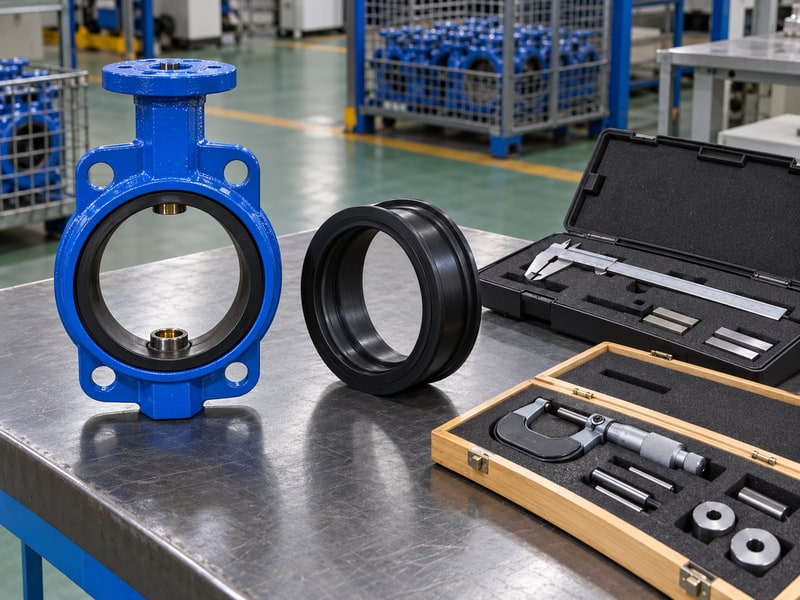
PTFE butterfly valve seat manufacturing process compression molding reaches assembly acceptance when the finished component fits the approved valve without damaged lips, displaced support, or abnormal binding. Use the model-specific fitting sequence and lubricant requirements. A method suitable for bending an elastomer sleeve may be unsuitable for a PTFE component.
How should you evaluate a trial assembly?
Use the actual mating parts. Check the body pocket, disc profile, shaft position, and any backing against their approved versions. A trial with convenient workshop components can conceal a mismatch in the production set. Record the initial installed condition, functional travel, and any specified torque check.
If the seat needs correction, document the change and determine whether another dimensional or performance inspection is required. Avoid trimming a sealing lip in the workshop without an approved rework instruction. That alteration can change the contact geometry and make the original inspection record incomplete. Key takeaway: Trial assembly should verify the approved production interfaces without uncontrolled adjustment.
- Protect flange lips and shaft passages during fitting.
- Record binding, rework, and required repeat inspections.
| Control | Acceptance evidence |
|---|---|
| Mating parts | Correct configuration and drawing revisions |
| Installed seat | Undamaged interfaces and accepted travel |
9. Which tests establish finished-valve acceptance?
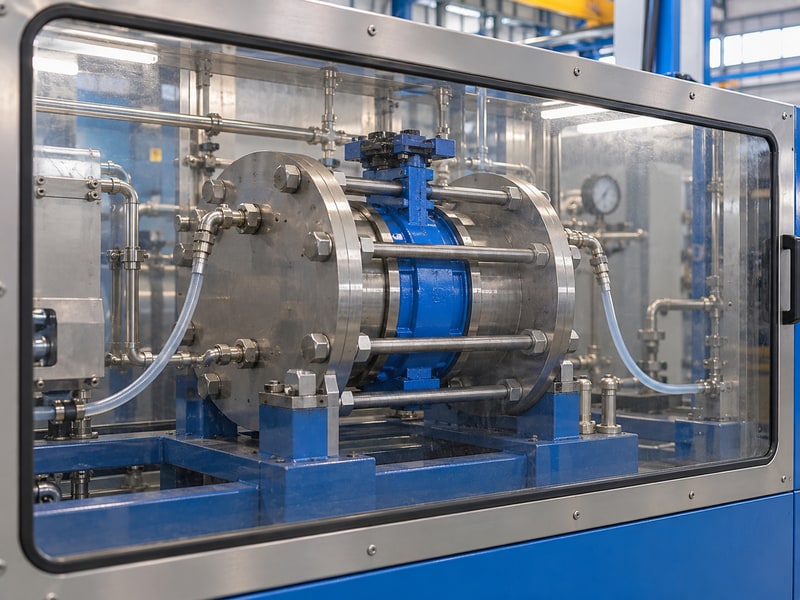
PTFE butterfly valve seat manufacturing process compression molding requires finished-valve verification under the agreed pressure, leakage, functional, and lining procedures. A resin certificate or a dimensionally accepted ring cannot replace those tests. The required examinations depend on whether you ordered a separate seat, a lined assembly, or a complete valve.
How do you separate routine and qualification tests?
Name the purpose of each examination. RUITO’s lined-valve route includes specified lining thickness, integrity, flange-lip condition, and pressure acceptance, with additional thermal or chemical qualification where the configuration requires it. Routine production records and representative qualification records serve different roles. A passed water-pressure test does not establish chemical compatibility, vacuum capability, or unlimited thermal cycling.
Define those requirements from the actual fluid and operating envelope. Reports should identify the tested assembly, procedure, conditions, acceptance criterion, and applicable configuration. Keep inspection pressures separate from allowed service pressure in the release documents. Key takeaway: Acceptance evidence must cover the supplied construction and the duty you intend to approve.
- Separate component inspection from complete-valve testing.
- Specify any chemical, thermal, or vacuum qualification needed.
| Control | Acceptance evidence |
|---|---|
| Routine checks | Required production inspection and test reports |
| Qualification | Applicable configuration and stated service conditions |
10. What records support repeat orders and shipment?
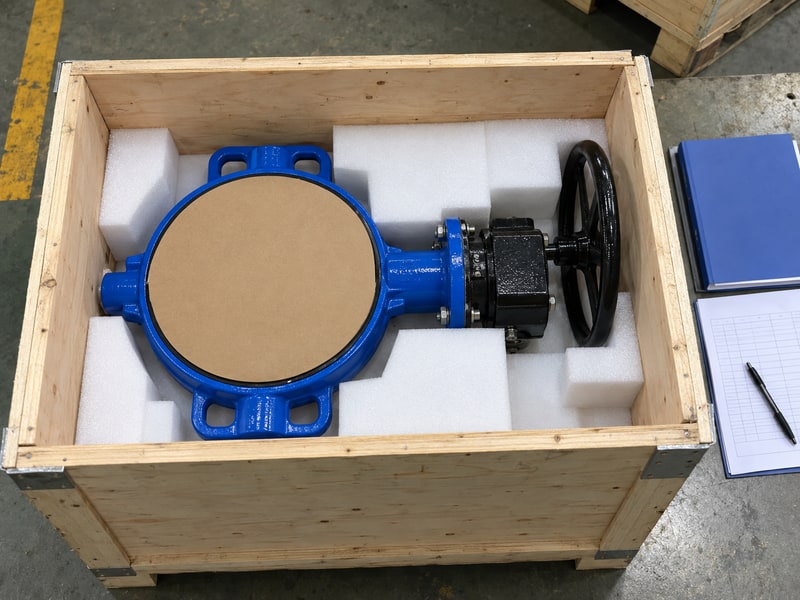
PTFE butterfly valve seat manufacturing process compression molding becomes repeatable supply when resin identity, tooling, thermal route, finished dimensions, and assembly results remain controlled. Release the component or valve with its agreed records and protective packaging. A future order should reference the approved version rather than only the nominal diameter.
How do you keep replacements consistent?
Retain the accepted baseline. Record the component drawing, material designation, approved process route, and relevant assembly configuration. Define which changes require approval and identify the first affected batch. Protect finished sealing lips from concentrated packing loads, abrasion, and contamination.
For a complete valve, support the operator and cover exposed sealing faces in the prescribed transport position. A buyer holding spare seats should follow the storage instructions and keep each part’s identity intact. Recheck the configuration before using a spare after a later valve-design revision. Key takeaway: Repeat supply depends on a retained configuration and a controlled change process.
- Control changes to resin, tooling, backing, and geometry.
- Protect finished surfaces and retain replacement-part identity.
| Control | Acceptance evidence |
|---|---|
| Baseline | Approved material, drawing, and process route |
| Delivery | Protected components and matching records |
For a PTFE butterfly valve seat manufacturing process compression molding review, send RUITO your seat drawing, valve identification, fluid composition, temperature, pressure conditions, and required tests. We can review the lining construction and approval route before a replacement or production batch. Contact us with the actual assembly details so the material and fit review address your duty.
FAQ
Q1: Can I describe ordinary PTFE as injection molded?
Clarify the exact resin and process. Conventional PTFE uses specialized powder-processing routes, while PFA is a separately specified melt-processable fluoropolymer.
Q2: What is the best molding pressure for every seat?
There is no universal setting. Use the qualified procedure for the actual resin grade, tooling, blank geometry, and production equipment.
Q3: Can I replace an EPDM seat with a PTFE ring of the same size?
Only after a design review. The body pocket, disc profile, shaft passages, support, and assembly method must suit the replacement construction.
Q4: How do I know if a white seat is the specified grade?
Use material identity and traceability records. Color, a photograph, and a nominal material label cannot establish the resin grade or its qualification.
Q5: Does a passed pressure test prove chemical suitability?
No. Chemical suitability needs review of the actual fluid, concentration, temperature, wetted construction, and applicable qualification evidence.