
Fix ptfe seat butterfly valve scope mistakes by identifying the actual sealing element and tracing which other surfaces contact the fluid. Confirm its formulation, support and energizer through the selected assembly records. Chemical screening, thermal behavior and mechanical duty need their own configuration-specific evidence before the material label can support a service decision.
A quotation can specify a PTFE seat while leaving the disc coating, shaft sealing, backing and body exposure unresolved. The material name then appears to cover a larger wetted assembly than the documents define. Resolve those boundaries before accepting chemical, temperature or sealing claims for the complete valve.
1. What defines a ptfe seat butterfly valve?
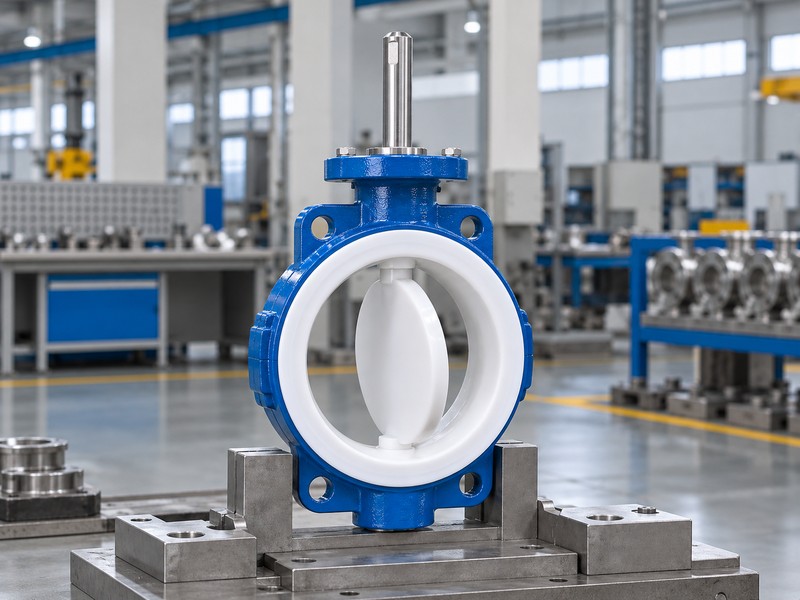
A ptfe seat butterfly valve description identifies PTFE in the selected seat construction, with its exact scope defined by the actual model. PTFE is polytetrafluoroethylene, a material-family name. That name alone cannot define the seat formulation, backing, mating surface or every other component in the valve.
What should the seat description identify?
Locate the actual sealing element. Match the model, section and component list before assigning PTFE to a surface or complete seat assembly. Record backing, energizer and retention features separately. An image or family heading cannot establish the exact offered construction.
- Identify the actual model and selected seat construction.
- Locate the PTFE sealing element through the component record.
- Keep included supports and other materials separately defined.
Key takeaway: Define the PTFE seat within one identified construction rather than treating a material-family label as a complete specification.
| Check | What you should confirm |
|---|---|
| Seat | PTFE description has a defined component or assembly scope |
| Construction | Actual support and retention features are identified |
| Record | Selected model and material definitions describe the same offer |
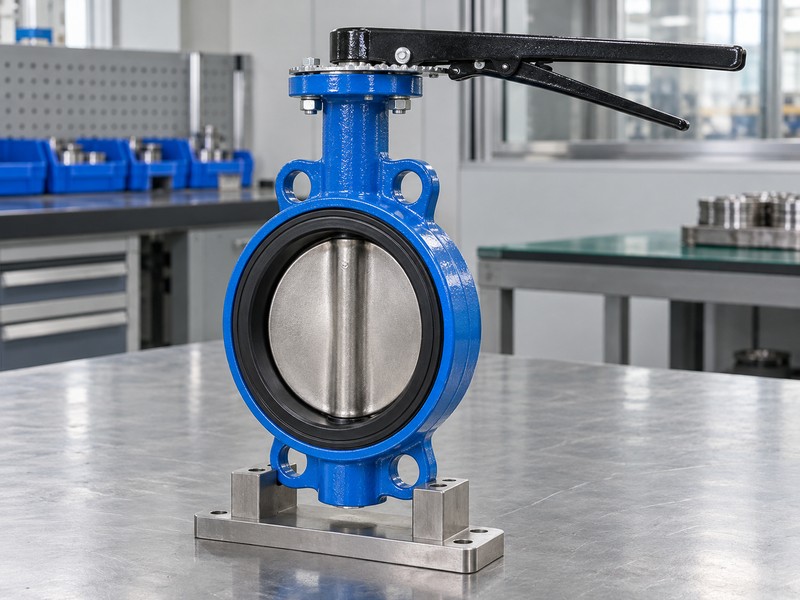
2. What does a ptfe seat butterfly valve line?
The lining scope of a ptfe seat butterfly valve must be confirmed separately from its seat description. Identify actual body, disc, shaft and seal exposure through the selected construction. A PTFE seat does not by itself establish a fully PTFE-lined wetted assembly or a particular disc-coating material.
How should the wetted-material map be read?
Trace each exposed boundary. Use the selected section and material schedule to identify fluid-contacting surfaces and their actual materials, including relevant shaft interfaces. Keep body lining and disc coating as separate definitions. A PFA-coated disc combined with another seat material cannot establish a fully PFA-lined wetted assembly.
- Identify actual fluid-contacting surfaces through the selected drawing.
- Separate seat, body lining and disc-coating definitions.
- Retain shaft-area and other relevant wetted-material boundaries.
Key takeaway: Map the full wetted assembly before extending a seat-material description to the rest of the valve.
| Check | What you should confirm |
|---|---|
| Body | Actual lining or exposed body material is identified |
| Disc | Coating, encapsulation or exposed material has its own definition |
| Other interfaces | Relevant shaft and sealing surfaces retain actual material records |
3. What supports a ptfe seat butterfly valve?
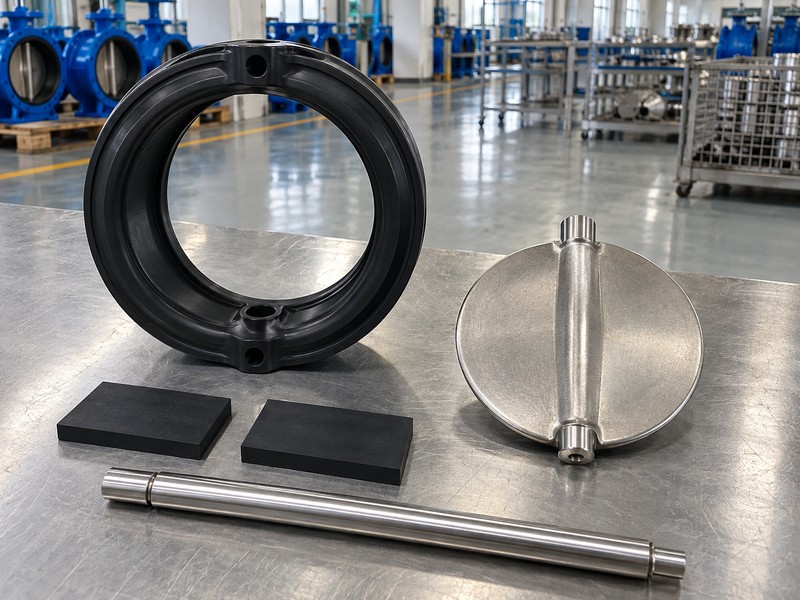
The support arrangement in a ptfe seat butterfly valve belongs to its actual seat assembly. Identify any backing, energizer, retainer or other included element through the selected records. A visible polymer surface cannot establish the material or function of concealed supporting components.
Why should the energizer have a separate review?
Follow the complete seat assembly. Bray’s Materials Selection guide distinguishes model-specific PTFE columns and requires separate energizer compatibility review. Match those screening references with actual component definitions. Retain the selected support and sealing relationships for mechanical and service review rather than extending exposed PTFE to concealed materials.
- Identify included backing, energizers and retaining components.
- Record concealed materials and their actual assembly functions.
- Review supporting components within the same service definition.
Key takeaway: Evaluate the supported seat assembly rather than its exposed PTFE surface in isolation.
| Check | What you should confirm |
|---|---|
| Surface | Selected component defines the exposed sealing material |
| Support | Included backing or energizer has an identified material and function |
| Assembly | Service review covers the actual combined construction |
4. What grade fits a ptfe seat butterfly valve?
The grade specified for a ptfe seat butterfly valve must identify the actual supplier-defined formulation used in the selected component. Request the relevant grade, filler or reinforcement description and traceable material definition. A broad PTFE or reinforced-PTFE label cannot establish identical properties or interchangeability between different formulations.
Which formulation details need their own evidence?
Record the exact material definition. Link formulation with component, supplier reference and applicable batch or acceptance records. Preserve specified restrictions on additives, backing, processing and service. Review a grade change against the complete sealing assembly and required performance instead of accepting a shared PTFE label.
- Identify the supplier-defined formulation for the actual component.
- Retain applicable filler, reinforcement and supporting material details.
- Review proposed grade changes against the complete assembly requirements.
Key takeaway: Use the actual formulation and supporting records instead of treating all PTFE labels as equivalent materials.
| Check | What you should confirm |
|---|---|
| Definition | Actual formulation has an identified supplier or material reference |
| Trace | Applicable component and material records remain linked |
| Change | Substitutions receive the required service and performance review |
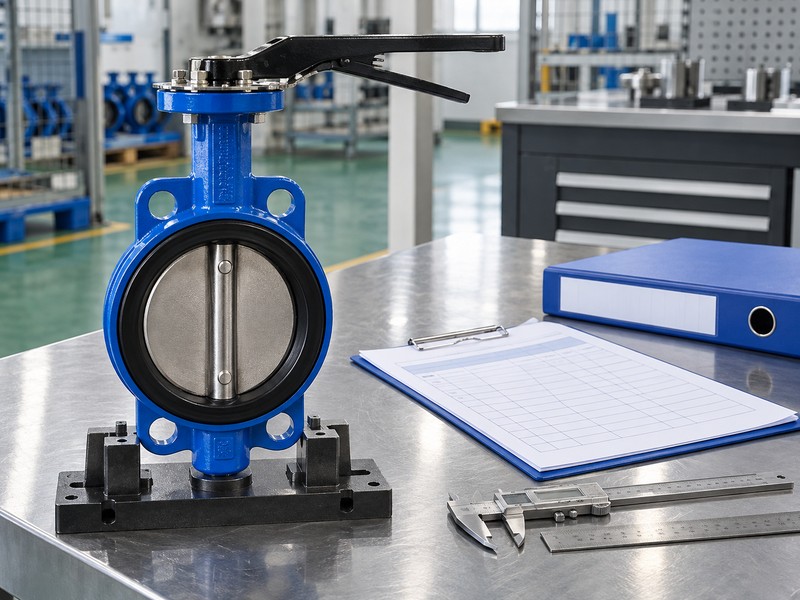
5. What limits a ptfe seat butterfly valve thermally?
The thermal limits of a ptfe seat butterfly valve belong to its actual seat, support and complete valve configuration. Thermal expansion and time-dependent deformation under sustained load can affect the sealing relationship. Review temperature and mechanical loading together instead of using a general polymer temperature value as the valve rating.
What should thermal and creep review establish?
Request the loaded-service basis. Identify required temperatures, duration, cycling and contact loads. Request configuration-specific evidence for dimensional stability, contact retention and permitted limits under those conditions. The material name cannot supply a universal creep rate, lifespan or operating envelope; any tightening or adjustment follows selected instructions.
- Define actual temperature, loading and exposure conditions.
- Request applicable thermal and time-dependent behavior evidence.
- Keep seat and support limits linked with the complete rated assembly.
Key takeaway: Evaluate thermal and creep behavior through the loaded seat design rather than an isolated material maximum.
| Check | What you should confirm |
|---|---|
| Conditions | Required temperature and loading states are explicitly defined |
| Behavior | Applicable data addresses the selected supported-seat construction |
| Limit | Accepted operating scope belongs to the actual configuration |
6. What media fit a ptfe seat butterfly valve?
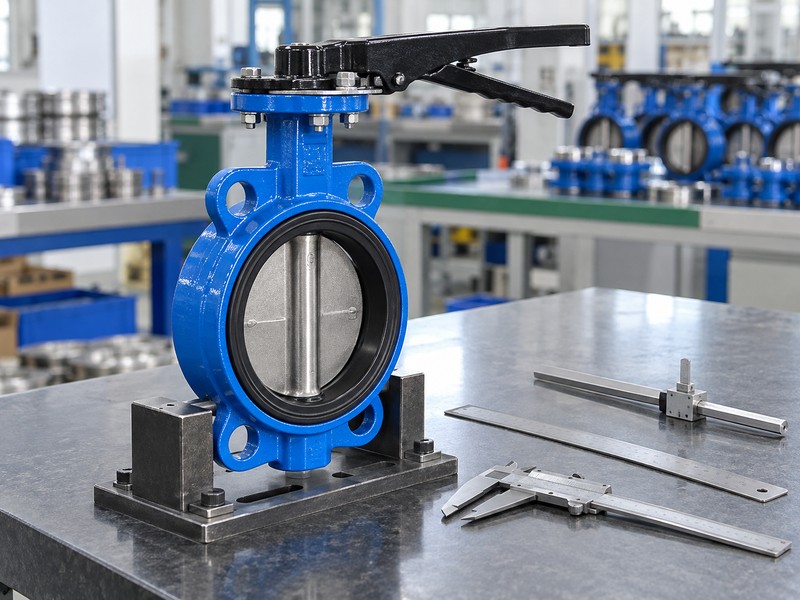
Media suitability for a ptfe seat butterfly valve requires the actual fluid and complete wetted or sealing construction. A compatibility chart can support screening within its stated conditions, but it cannot approve an unspecified formulation or assembly. Include mixtures, contaminants and cleaning exposure in the application definition.
What must a screening result leave for application review?
Retain the actual exposure conditions. Record concentration, temperature, duration and relevant loading or cycles beside the material definitions. Preserve the guide’s own model columns and legend. Unlisted exposures, permeation concerns and support-component behavior need the selected supplier’s review rather than a blanket chemical-resistance claim.
- Define actual process and cleaning exposures.
- Keep screening conditions and legend with the source result.
- Review the full wetted and supported sealing assembly separately.
Key takeaway: Use compatibility screening as one input to the actual assembly review rather than complete-valve approval.
| Check | What you should confirm |
|---|---|
| Exposure | Actual fluid, mixtures and cleaning conditions are identified |
| Screening | Applicable source conditions and model references remain intact |
| Review | Complete configuration receives the required application assessment |
7. What contact fits a ptfe seat butterfly valve?
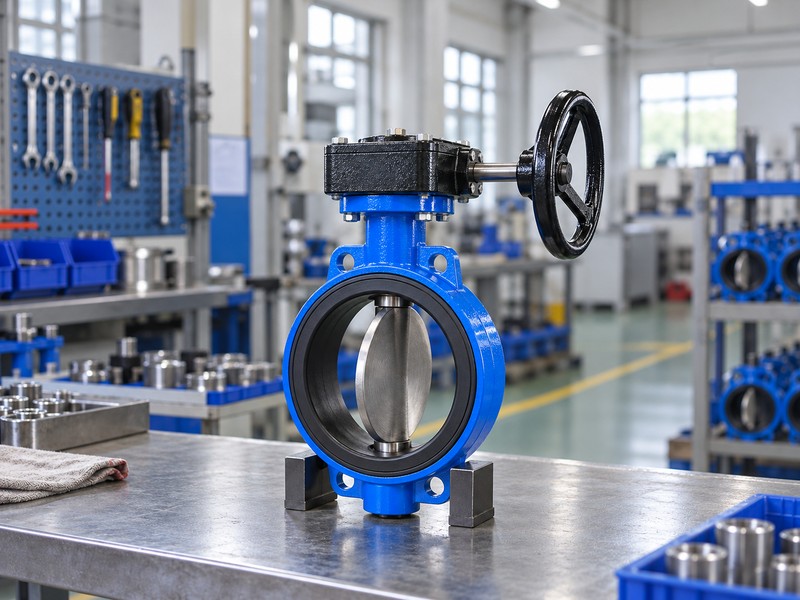
The contact relationship in a ptfe seat butterfly valve follows the selected disc, seat, support and retention design. Review actual closing differential, direction and operating demand within that configuration. The polymer name cannot establish acceptable seat loading, low torque or identical behavior across different valve geometries.
Which mechanical relationships belong in the review?
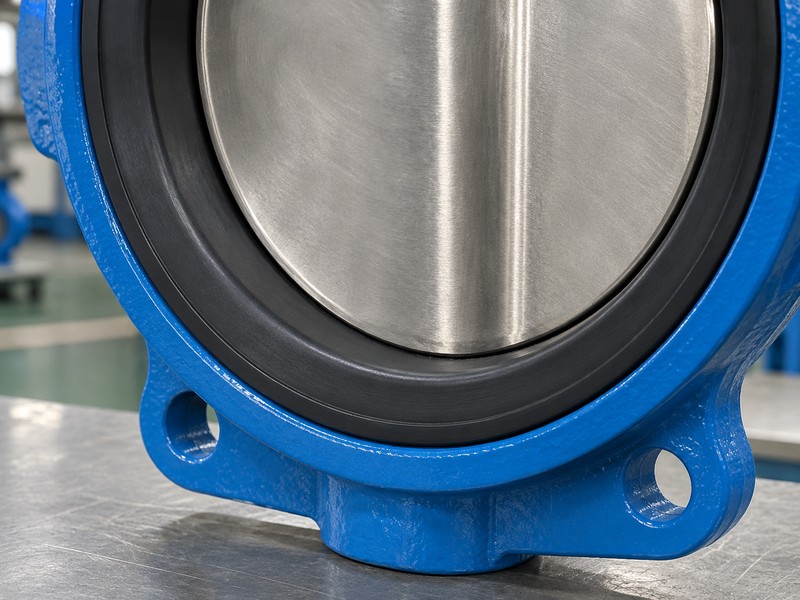
Trace the selected sealing pair. Identify the disc sealing surface, seat region and any defined interference or loading condition through the actual section. Review applicable seating, unseating and running demands with the selected operator and drive limits. Apparent softness or a smooth contact image cannot establish accepted compression, leakage performance or an allowable adjustment.
- Identify actual disc, seat and support relationships.
- Review relevant direction, differential and operating demand.
- Keep contact and adjustment acceptance within selected requirements.
Key takeaway: Accept contact and operating behavior through the selected mechanical design rather than the PTFE label.
| Check | What you should confirm |
|---|---|
| Pair | Actual mating surfaces have defined assembled relationships |
| Duty | Selected pressure direction and demand remain within limits |
| Verification | Required fit and functional evidence addresses the assembly |
8. What service fits a ptfe seat butterfly valve?
Installation and maintenance of a ptfe seat butterfly valve must follow the actual model’s interface and service requirements. Confirm retention, flange-sealing details, access and permitted consumables through the selected instructions. A PTFE description cannot authorize a universal gasket arrangement, lubricant or replacement method.
What should the physical-work plan retain?
Use the selected family instructions. The Bray resilient-seat manual separates construction-specific service arrangements. Match the actual model and seat variant before applying any procedure or replaceability statement. Physical work requires qualified authorization and applicable isolation, depressurization, draining/decontamination and stored-energy controls, with preparation and assembly governed by those selected instructions.
- Match actual construction with its selected installation and service scope.
- Confirm applicable access, gasket and consumable requirements.
- Keep physical work within authorized model-specific procedures.
Key takeaway: Use the actual construction and authorized instructions to define service rather than general PTFE handling advice.
| Check | What you should confirm |
|---|---|
| Interface | Actual retention and pipe-sealing arrangements are defined |
| Service | Selected instructions cover the identified model and variant |
| Authority | Required work controls and responsible personnel are established |
9. What proves a ptfe seat butterfly valve seal?
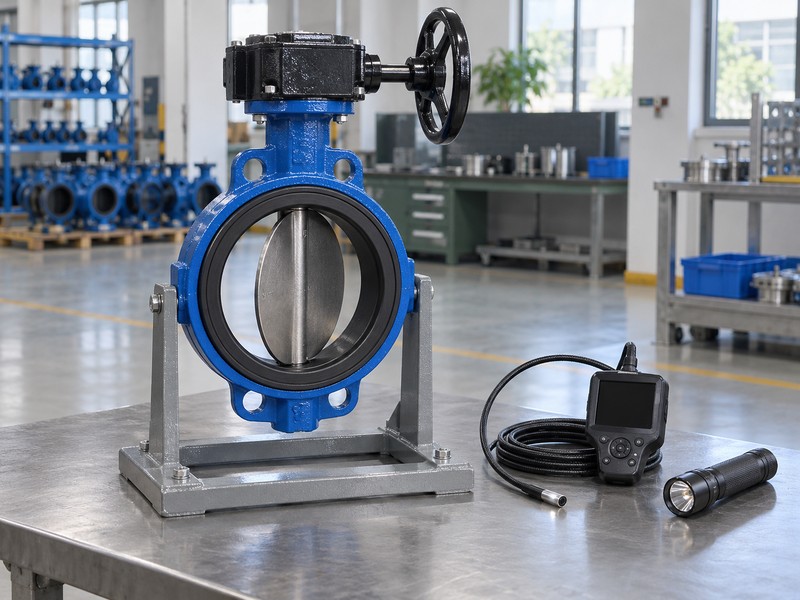
Acceptance of a ptfe seat butterfly valve seal requires the selected leakage criteria and actual verification for its configuration. Identify shutoff leakage separately from external shaft, body or pipe-interface leakage. An apparently continuous contact surface cannot establish that those requirements have been met.
Why is a flow-loss illustration separate from leakage acceptance?
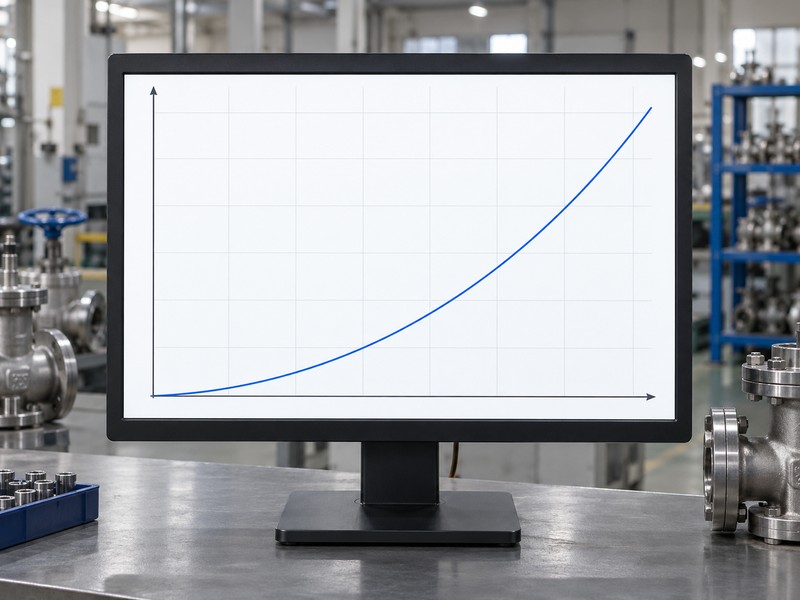
Match each claim with its evidence. Retain the specified test method, medium, direction, temperature and pressure or differential with the actual acceptance result. The conceptual chart describes pressure loss versus flow at constant opening, flow coefficient and liquid density, with no leakage curve or measured model data. A seat-material designation cannot supply the missing test conditions or result.
- Identify the actual leakage path and acceptance criterion.
- Retain applicable test conditions and traceable results.
- Keep flowing pressure loss separate from closed-seat sealing evidence.
Key takeaway: Use actual verification for sealing acceptance and material records for the distinct question of component identity.
| Check | What you should confirm |
|---|---|
| Shutoff | Actual sealing pair has a defined leakage acceptance basis |
| Other paths | External observations and criteria remain separately identified |
| Evidence | Required results cover the selected construction and conditions |
10. What records define a ptfe seat butterfly valve?
The records defining a ptfe seat butterfly valve should connect formulation, wetted coverage, support and operating scope with one identified assembly. Retain the actual section, material schedule and required inspection or test results. General polymer illustrations cannot establish proprietary construction, stock, approval or successful verification for a supplier’s product.
What should remain traceable before a scope commitment?
Close the actual material boundaries. Record accepted seat-only or lining scope, relevant batch or component identity, application decisions and required performance evidence. Assign unresolved formulation, backing and exposure questions explicitly, retaining changes against the selected configuration. RUITO can review an identified request and available documents, with actual construction and supporting records confirmed for the proposed scope before any supply commitment.
- Link seat formulation and wetted coverage with actual assembly identity.
- Retain application and performance acceptance records.
- Assign unresolved support, material and service questions before commitment.
Key takeaway: Accept one traceable construction whose PTFE description, wetted scope and service evidence agree.
| Check | What you should confirm |
|---|---|
| Scope | Actual seat and lining boundaries are explicitly defined |
| Trace | Material, component and assembly records remain linked |
| Acceptance | Required application and verification decisions have supporting evidence |
Send RUITO your identified valve request, actual fluid and thermal conditions, required seat or full-lining scope and available assembly records. We can review the proposed scope and clarify which actual construction and supporting documents would be needed for evaluation. Contact us before extending a PTFE seat description to unverified materials, concealed supports or complete-valve service claims.
FAQ
Q1: Can I assume a PTFE seat means every wetted surface is PTFE?
No. Confirm actual body, disc, shaft and seal exposure through the selected section and material schedule.
Q2: What’s the best way to specify the seat formulation?
Use an identified material definition. Retain the actual grade, relevant filler or reinforcement details, component reference and applicable traceability records.
Q3: How do I know if a backing or energizer is compatible?
Review the selected complete assembly. Its actual support materials and exposure conditions need their own application assessment.
Q4: Can a general PTFE temperature value establish valve duty?
No. The actual supported-seat construction, component limits, loading and pressure-temperature data govern the selected assembly.
Q5: How do I know whether the seat meets the leakage requirement?
Request the selected acceptance evidence. The actual criterion, test conditions and recorded results must cover the identified construction.