
A resilient seat butterfly valve suits isolation duties when its elastomer, pressure rating, temperature range and installation dimensions match your service. A valve that fits between two flanges can still have the wrong seat or disc clearance. Use the checks below to compare a concentric design with an offset alternative and turn your operating conditions into a purchase specification.
1. How does a resilient seat butterfly valve seal?
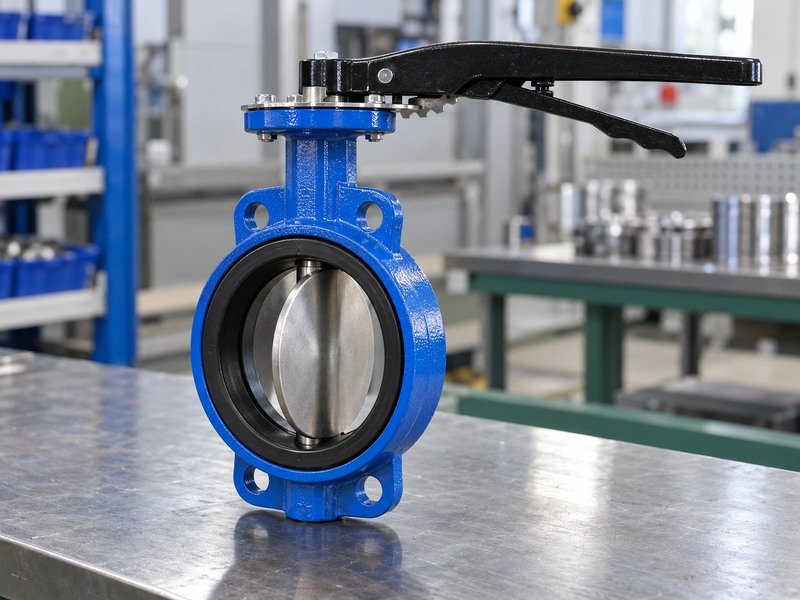
The disc edge on a resilient seat butterfly valve compresses an elastomer seat at closure. In a typical concentric design, the shaft passes through the disc centerline. The seat may also line the body bore, depending on construction, so inspect a section drawing before deciding which metal surfaces contact your liquid.
What should you check on the drawing?
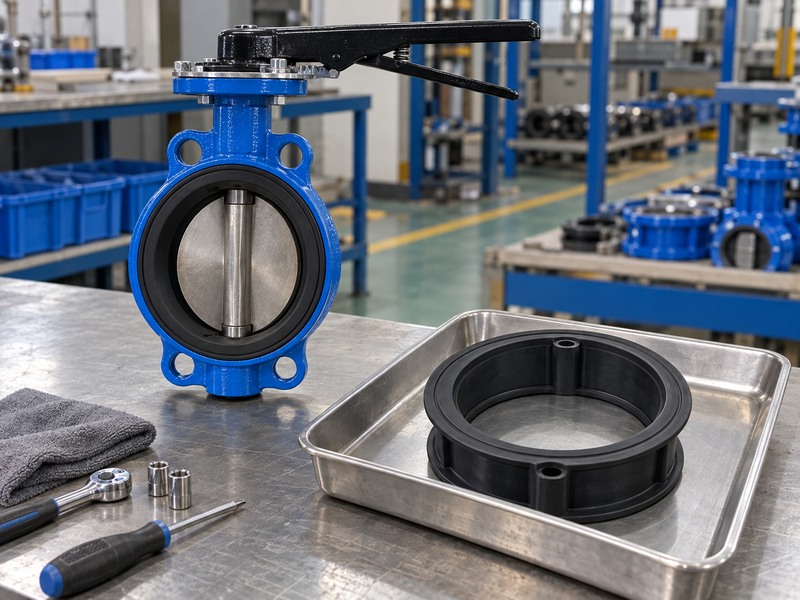
Look for a continuous sealing surface around the disc, supported seat retention and defined sealing around both shaft penetrations. A loose rubber ring shown beside a valve does not prove that you can replace its installed seat. Bonded and mechanically retained designs have different repair procedures, and the correct replacement must match that valve’s drawing and parts list.
- Identify the seat construction and retention method.
- Confirm every wetted material, including the shaft seals.
- Request the permitted closure direction and differential pressure.
Which details belong in your enquiry?
Send the supplier your fluid, normal and maximum temperature, operating pressure, maximum closure differential and cycling frequency. Ask for the corresponding section drawing. RUITO’s wafer butterfly valve information provides a starting point for discussing the connection, but your approved configuration determines what can be supplied.
| Item | Evidence to request | Reason |
|---|---|---|
| Seat retention | Section drawing | Establishes the repair method |
| Shaft sealing | Wetted parts list | Reveals auxiliary seals |
| Closure rating | Model data sheet | Sets the permitted differential |
2. How does an offset butterfly valve differ?
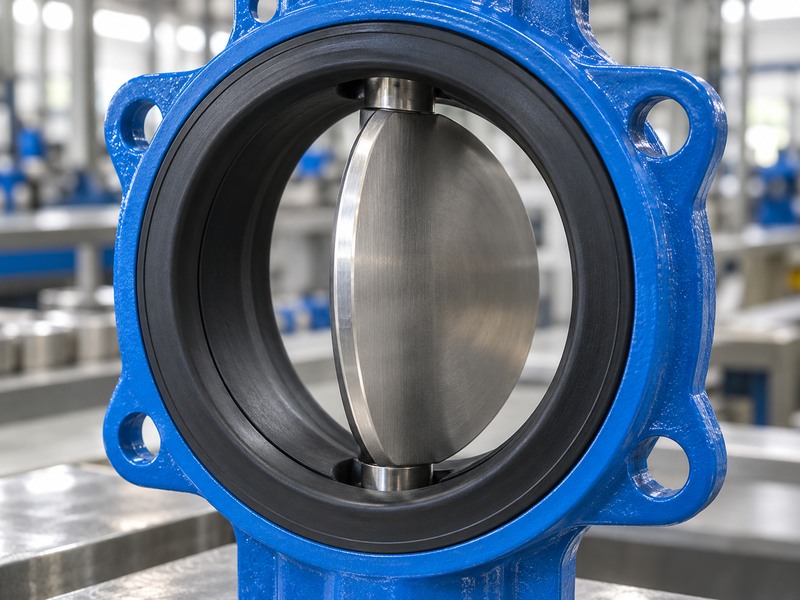
A resilient seat butterfly valve usually keeps the shaft on the bore centerline, while a double offset design moves the shaft relative to the sealing plane and bore centerline. Those offsets change how the disc approaches and leaves its seat. They do not, by themselves, establish temperature capability, fire resistance or a particular leakage class.
When does the difference affect your choice?
Compare complete valves under the same duty. For a cool water isolation point, an elastomer seated concentric valve may meet your requirements with a compact body. A more demanding application may need another seat system or offset geometry, but you still need the exact pressure-temperature curve and closure rating.
- Compare the same fluid and temperature.
- Use the same maximum closure differential.
- Check both pressure directions when reversal is possible.
Can you substitute one design for another?
Check face-to-face length, flange drilling, disc envelope, mass and actuator torque before approving a replacement. Two valves with the same nominal size can require different installation space. An offset waterworks valve may itself use an elastomer seal, so treat shaft geometry and seat material as separate selection fields.
| Selection field | Concentric design | Offset alternative |
|---|---|---|
| Shaft location | Usually centered | Defined offsets |
| Seat material | Often elastomer | Depends on construction |
| Interchangeability | Verify dimensions | Verify dimensions |
3. Which seat material matches your fluid?
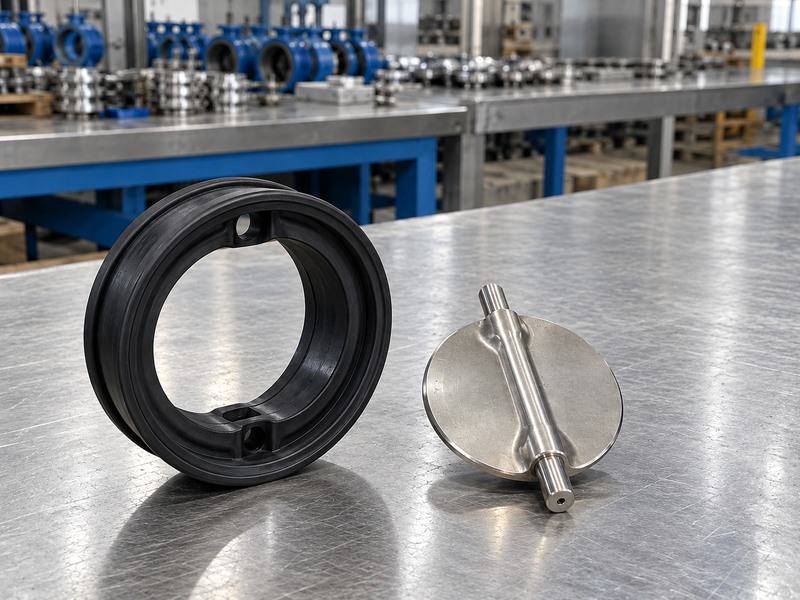
Choose the seat compound for your resilient seat butterfly valve against the complete fluid mixture and operating temperature. EPDM and NBR are separate material choices. RUITO uses EPDM for its defined water configurations and a separately specified NBR configuration for compatible high flash point mineral oil service.
Why is the fluid name insufficient?
Cooling water may contain glycol, corrosion inhibitors or cleaning residues. Mineral oil contains additives that can affect rubber swelling. Give the supplier concentrations and cleaning conditions, including occasional exposure, rather than sending a description such as “industrial liquid.” If the composition changes after commissioning, review compatibility again before continuing service.
- List the main fluid and each additive.
- State concentration units and temperature limits.
- Include cleaning and flushing chemicals.
What evidence supports a material choice?
Ask for the elastomer grade, supplier compatibility review and any application-specific immersion results. Color alone does not identify a compound. For aggressive chemical duties, review a dedicated PTFE lined butterfly valve configuration with its backing and shaft seals; a change of seat name cannot protect every wetted component.
| Service input | What your supplier needs |
|---|---|
| Water circuit | Additives, pH and temperature |
| Mineral oil | Oil grade and additive information |
| Chemical liquid | Composition, concentration and cleaning cycle |
4. Which pressure and temperature limits apply?
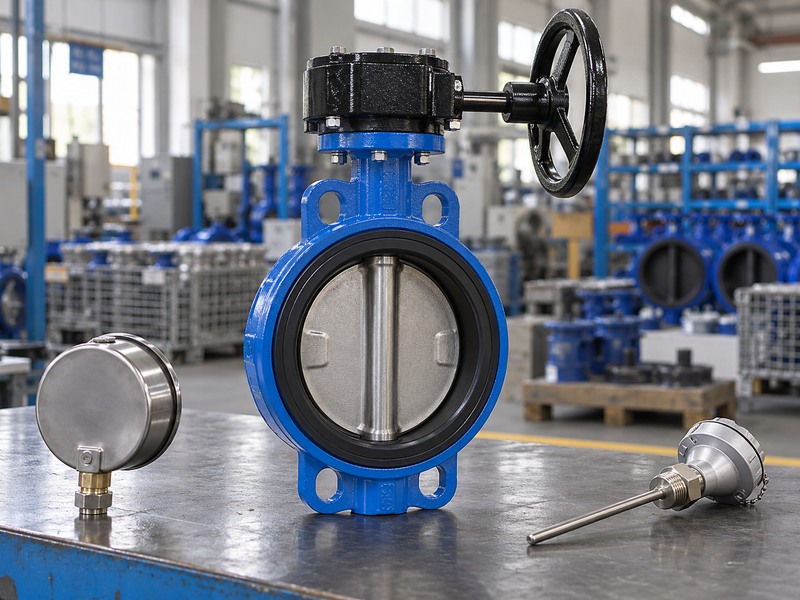
Check working pressure and closure differential at the same temperature when specifying a resilient seat butterfly valve. PN16 does not mean every material combination can operate at 16 bar throughout its entire temperature range. The body, seat, shaft, connection and operating conditions all constrain the approved duty.
How should you read RUITO’s water specifications?
RUITO’s defined clean water wafer configuration covers DN50–600 with PN10 or PN16 options. Its stated clean water application window is 5–60°C, with pressure subject to the selected model’s pressure-temperature relationship. Potable water configurations have a separate 5–40°C application window and approval requirements. Those figures describe different service boundaries, so avoid combining their maximum values.
- Record normal pressure and credible transients.
- Specify differential pressure during closure.
- Check temperature and pressure together.
Does a pressure test increase the working rating?
No. RUITO’s stated PN16 ambient shell and soft seat closure test inputs are 24 bar and 17.6 bar under the applicable procedure and model limits. These are inspection conditions. They do not authorize continuous operation at either test pressure, and they do not demonstrate resistance to every possible surge.
| Parameter | Meaning |
|---|---|
| Working pressure | Permitted operating condition |
| Closure differential | Pressure difference across the closed disc |
| Shell test pressure | Temporary inspection condition |
| Seat test pressure | Defined closure inspection condition |
5. Where does the design fit water and HVAC duties?
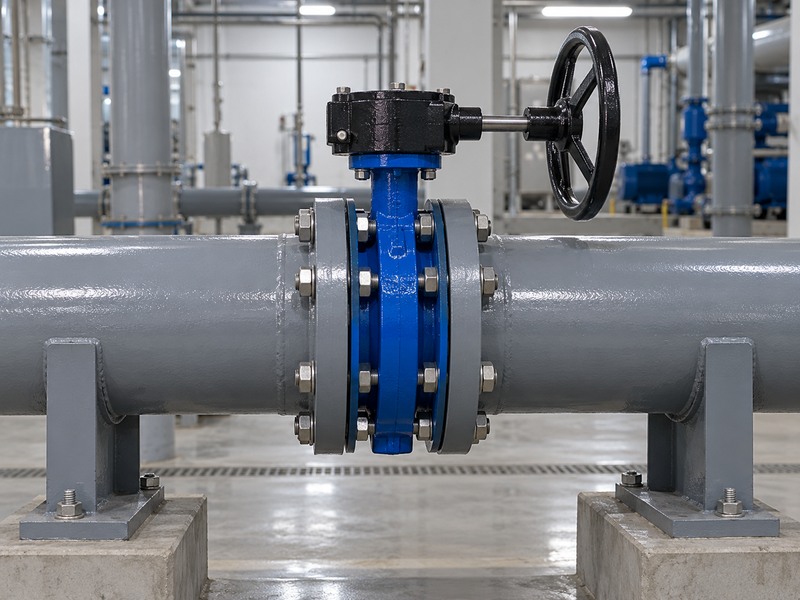
A resilient seat butterfly valve can serve clean water isolation and compatible HVAC circulation when its configuration covers the actual duty. For RUITO’s specified circulation service, clean water or inhibited glycol mixtures up to 40% by volume have a 5–60°C application window and working pressure up to 10 barg, subject to configuration review.
What changes when the application changes?
A freshwater cooling loop and a seawater intake require different wetted material reviews. External salt spray around a ship’s machinery room also differs from internal seawater exposure. For wastewater, examine solids, fibers and abrasion: RUITO’s defined treated water configurations do not cover arbitrary sludge or abrasive slurry.
- Identify internal fluid exposure separately from the environment.
- Describe suspended solids and fibers.
- Review glycol concentration and inhibitors.
Can the valve regulate flow continuously?
Ask for opening-specific flow and torque information before using an isolation valve for throttling. A nominal diameter and a full-open Kv value cannot establish acceptable behavior at a small opening. Review velocity, pressure drop, cavitation risk and control requirements using the selected valve’s data.
| Application | Selection question |
|---|---|
| Cooling water | Are additives and temperature approved? |
| Glycol circulation | Is the actual concentration covered? |
| Treated water | Can solids damage or obstruct the seat? |
6. How do you check flange fit and disc clearance?
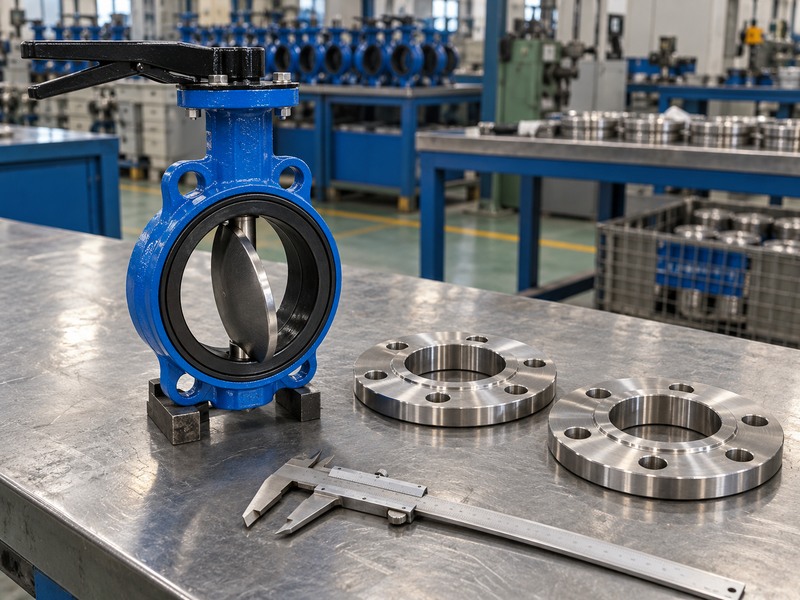
Match flange faces, bore clearance and fasteners to your resilient seat butterfly valve, even when nominal pipe size agrees. The rotating disc can extend beyond the short body. A nearby reducer, thick pipe lining or an unsuitable flange bore can obstruct its travel and damage the sealing edge.
What should installers measure?
Compare the approved valve drawing with the pipe bore, flange standard, drilling and face-to-face space. Check the entire disc sweep. Support the pipe independently, keep the faces aligned and remove welding debris before fitting the valve. Follow that valve’s installation instructions for disc position and tightening sequence.
- Measure the minimum clear bore beside the disc.
- Check fastener length and thread engagement.
- Confirm whether the seat forms the flange seal.
Can you add another gasket?
Use the manufacturer’s instructions. Some elastomer lined designs seal directly against the flange faces, and an extra gasket can distort the seat. Other constructions have different requirements. A lug butterfly valve also needs its own bolt engagement and end service assessment; threaded lugs alone do not establish a dead-end rating.
| Check | Acceptance basis |
|---|---|
| Disc sweep | No interference through full travel |
| Flange arrangement | Approved interface drawing |
| Gasket use | Valve-specific installation instructions |
| Dead-end service | Explicit model rating and validation |
7. How do you choose the operator or actuator?
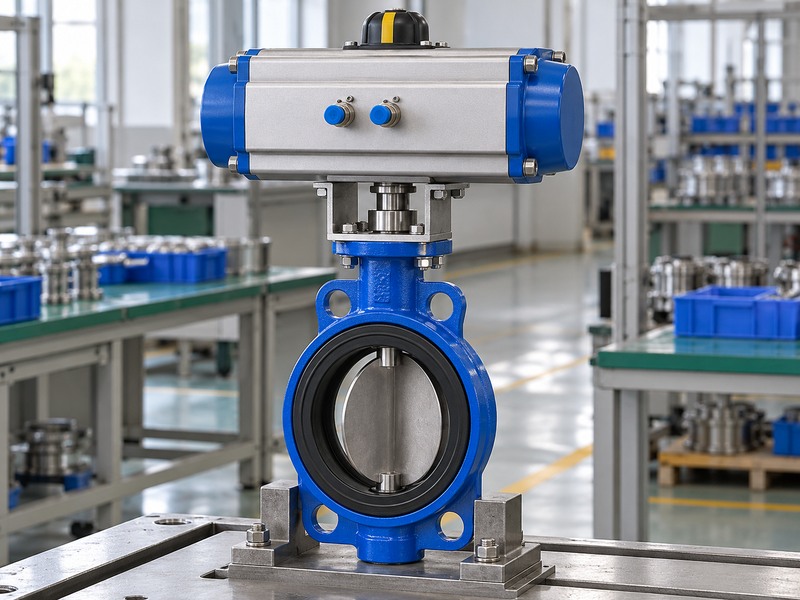
Size the operator for a resilient seat butterfly valve using torque requirements throughout its stroke and the shaft’s permitted load. Select from the valve’s breakaway, running and seating torque at maximum closure differential. Nominal size or a matching mounting flange alone cannot establish an actuator size.
Which operating conditions govern sizing?
For a pneumatic assembly, use the minimum available air pressure at the actuator while it moves. Confirm the output in both directions. A spring return unit must also complete its specified fail stroke using spring torque. For an electric actuator, check power supply, duty cycle, travel time and environmental protection alongside output torque.
- Obtain the valve torque curve and sizing basis.
- Check the coupling, bracket and shaft limits.
- Define fail position and position feedback.
Does the actuator change the process rating?
No. Pneumatic operation describes the drive. It does not turn a water configuration into a gas service valve. Ask the supplier to document the complete assembly and test its travel and stops. A hand lever, gearbox or powered operator still needs compatible mounting and enough access for operation and maintenance.
| Drive choice | Input to confirm |
|---|---|
| Hand lever | Operating effort and access |
| Gearbox | Output torque and travel stops |
| Pneumatic actuator | Minimum air pressure and fail action |
| Electric actuator | Supply, duty cycle and torque limits |
8. Which inspections belong in your acceptance plan?
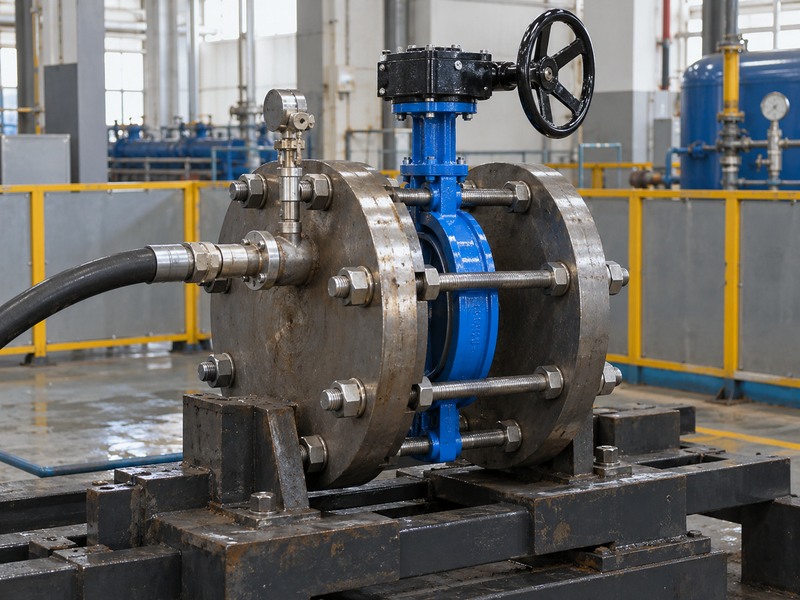
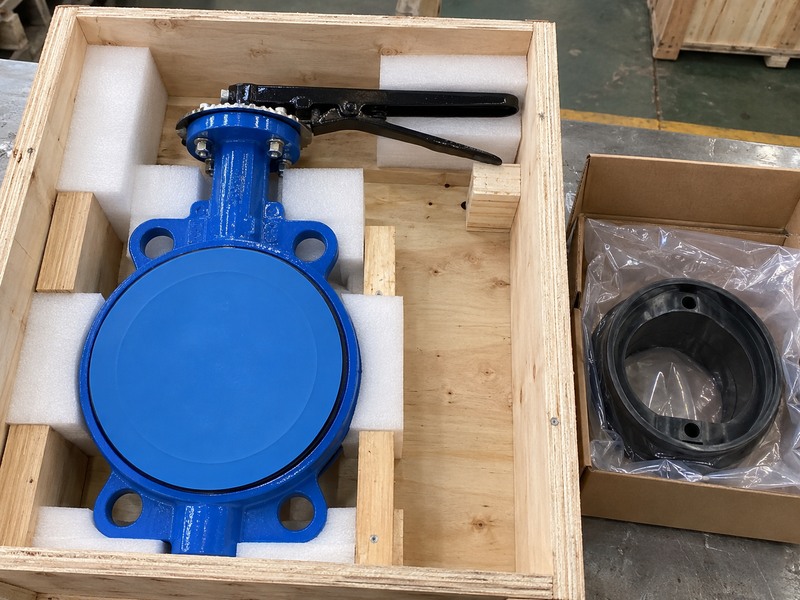
Include material identification, dimensions, function and pressure tests in your resilient seat butterfly valve acceptance plan. Agree on the main test standard and leakage criterion before ordering. A report without product identification, test direction or holding conditions leaves you unable to verify what was inspected.
What should the inspector witness?
Check the selected DN, flange drilling, face-to-face length, coating condition and full disc travel. Review material and elastomer batch records. Pressure testing must use a suitable restrained fixture and the approved procedure. If your selected configuration has different directional ratings, record the test basis for each required direction.
- Match the unit identifier to its records.
- Verify test pressure, medium, duration and direction.
- Record the applicable leakage acceptance criterion.
What does a tightness result establish?
A specified no-visible-leakage result applies to the agreed test conditions. It cannot promise that a valve will never leak after debris damage, chemical attack or incorrect installation. Potable water and fire protection approvals also require separate, model-specific evidence. Identify the exact RUITO construction before requesting its inspection documents.
| Record | Minimum connection |
|---|---|
| Materials | Unit or batch identification |
| Dimensions | Approved drawing revision |
| Pressure test | Standard and acceptance conditions |
| Functional test | Operator, stops and full travel |
9. How do you prevent seat damage after delivery?
Keep your resilient seat butterfly valve within its approved conditions and installation limits to avoid preventable seat damage. Protect its sealing surfaces during storage, keep debris out of the bore and inspect the pipe before commissioning. If the operator suddenly needs more force, isolate and investigate rather than increasing the actuator setting until the disc moves.
What should a leakage investigation collect?
Record the actual fluid, temperature, pressure and closure differential when leakage occurs. Photograph the disc edge and seat after safe isolation, depressurization and decontamination. Look for trapped particles, cuts, swelling, permanent deformation or flange compression. These observations help distinguish a material problem from damage during installation or operation.
- Preserve the unit number and operating history.
- Obtain the correct replacement part revision.
- Recheck the cause before returning the valve to service.
Which documents should you retain?
Keep the approved data sheet, drawing, wetted materials list, pressure-temperature limits, inspection records and installation manual together. Add actuator settings and spare part details where applicable. For a duty review, contact us with your fluid composition, maximum closure differential, temperature range and flange drawing so RUITO can assess a matching configuration.
| Symptom | Check before replacing parts |
|---|---|
| High operating torque | Interference, debris and seat swelling |
| Seat leakage | Disc edge, particles and rated differential |
| External leakage | Shaft seals and flange installation |
10. What do buyers ask before ordering?
A resilient seat butterfly valve order should specify the service, connection, seat compound, closure rating and inspection requirements. These five questions help close common gaps before the supplier releases a drawing or quotation.
Q1. Can I use EPDM with mineral oil?
Do not select ordinary EPDM water trim for mineral oil service. Ask for a separately reviewed oil configuration, including its seat compound and auxiliary seals. RUITO specifies NBR for its defined compatible mineral oil butterfly valve applications.
Q2. How do I know whether a valve is bidirectional?
Read the exact model’s closure ratings and test requirements. Confirm the allowable differential in each direction. A concentric appearance or a supplier’s general product description does not establish identical ratings.
Q3. Can I replace a wafer valve with a lug valve?
Only after checking the installation. Compare face-to-face dimensions, flange drilling, bore clearance, bolt arrangements and support. Any end service requirement needs an explicit rating for that lug configuration.
Q4. What’s the best way to compare quotations?
Normalize the specification. Compare the same DN, materials, seat compound, pressure-temperature duty, operator, inspections and documents. Include freight and agreed delivery milestones when assessing total supply cost.
Q5. Does passing a factory test approve every application?
No. A factory test verifies stated conditions for the inspected configuration. Drinking water, fire protection, chemical exposure and other regulated or specialized duties require their own applicable evidence and service review.