
A resilient seated butterfly valve closes by pressing its disc against a deformable seat. Understanding that contact explains why rubber selection, shaft alignment and flange installation affect shutoff. If a replacement fits the pipe but needs excessive operating force, compare its construction and service limits before changing the actuator or tightening the stops.
1. What does a resilient seated butterfly valve mean?
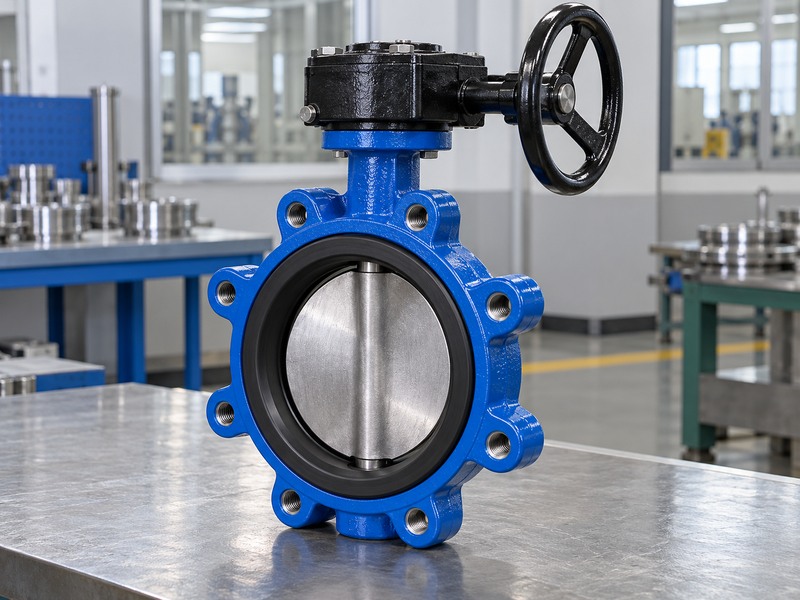
The word “resilient” describes how the seat on a resilient seated butterfly valve deforms under the disc and recovers as contact changes. Its sealing element is commonly an elastomer. Seat construction can differ between manufacturers and configurations, so a product name alone cannot identify the compound, retention method or permitted duty.
What information does the name leave out?
You still need the nominal size, body connection, wetted materials, operating envelope and closure differential. A water configuration with EPDM and an oil configuration with NBR are separate specifications. The same external body shape may conceal different shaft seals or seat formulations, and those differences belong in the approved parts list.
- Specify the seat compound and its identification.
- Record every other material exposed to the fluid.
- Keep the operating conditions with the selected configuration.
How should you describe the valve to a supplier?
Use a complete description rather than a short catalog label. State whether you need a wafer, lug or flanged connection and whether the drive is manual, electric or pneumatic. The supplier can then provide a drawing that connects the product description with an actual sealing arrangement.
| Description field | What it establishes |
|---|---|
| Resilient seat | General sealing approach |
| Compound and retention | Material and repair details |
| Connection and operator | Installation and drive arrangement |
2. Which components make the sealing system work?
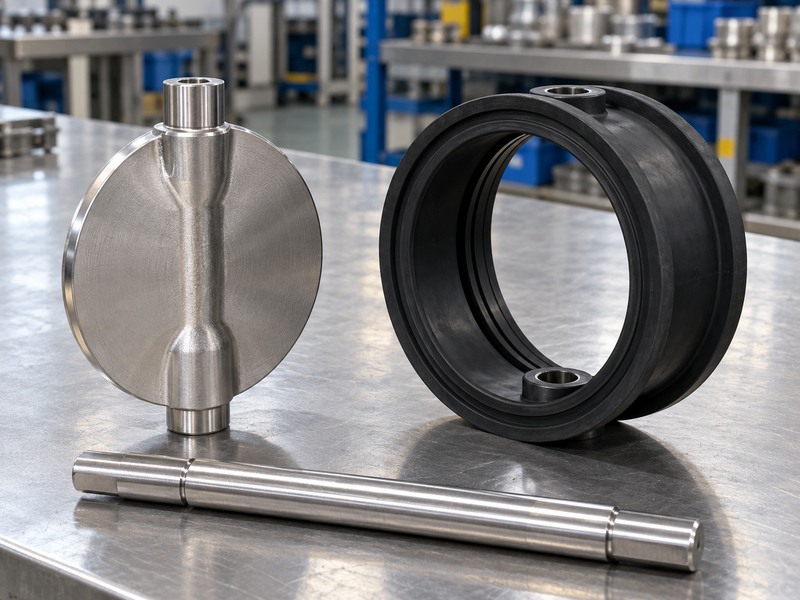
The disc, seat, shaft and supporting body work together in a resilient seated butterfly valve. The operator turns the shaft, the shaft moves the disc and the disc edge loads the seat at closure. Bearings, shaft seals and retention features keep those parts aligned and prevent leakage through other paths.
Why does the complete materials list matter?
A corrosion-resistant disc does not establish the suitability of the shaft, seat or auxiliary seals. Likewise, a coated body can have different internal exposure depending on whether the liner isolates it from the fluid. Review the section drawing alongside the wetted materials list instead of treating a single material name as a whole-valve specification.
- Identify the disc edge that contacts the seat.
- Check the shaft penetrations and their sealing details.
- Confirm how the body supports the liner.
Which dimensions deserve inspection?
Ask how the manufacturer controls the disc profile, seat dimensions, shaft alignment and supporting bores. These features affect contact and movement. A body dimension report without the corresponding sealing and assembly checks leaves part of the functional inspection unexplained.
| Component | Function | Inspection concern |
|---|---|---|
| Disc | Moves across the flow path | Edge profile and damage |
| Seat | Forms the closure seal | Compound, dimensions and support |
| Shaft assembly | Transmits rotation | Alignment, retention and sealing |
3. What happens during the quarter-turn movement?
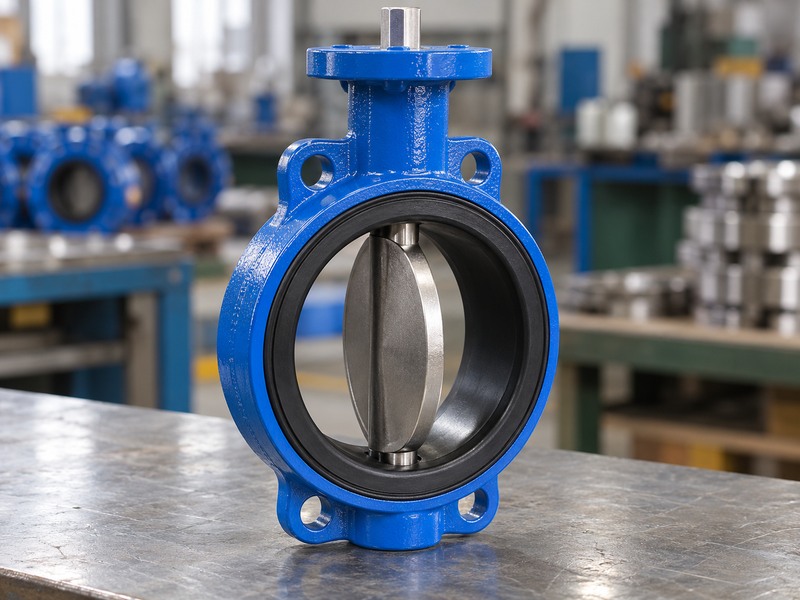
A resilient seated butterfly valve moves from closed toward open as the operator rotates the disc through its specified travel. The disc presents a broad obstruction when closed and a narrower profile when open. Even at full opening, the disc and shaft remain in the flow path, so the valve does not become an unobstructed piece of pipe.
Does a partly open position define flow?
No. Disc angle alone cannot tell you the flow rate through an installed system. You also need the valve’s flow characteristic, fluid properties and pressure difference. An opening percentage on a position indicator describes travel; it is not a measured percentage of maximum process flow.
- Obtain opening-specific flow data when regulating flow.
- Review the available differential pressure.
- Include density and viscosity where they affect the calculation.
What should you check during an operating test?
Move the assembled valve through its full permitted stroke using the approved procedure. Check the indicator, stops and physical disc position together. A coupling installed in the wrong orientation can make a displayed position disagree with the valve, even when the actuator itself travels normally.
| Observation | What it can establish |
|---|---|
| Indicator movement | Drive position indication |
| Observed disc travel | Mechanical position correspondence |
| Flow and pressure readings | Behavior of the installed system |
4. How does concentric geometry affect seat contact?
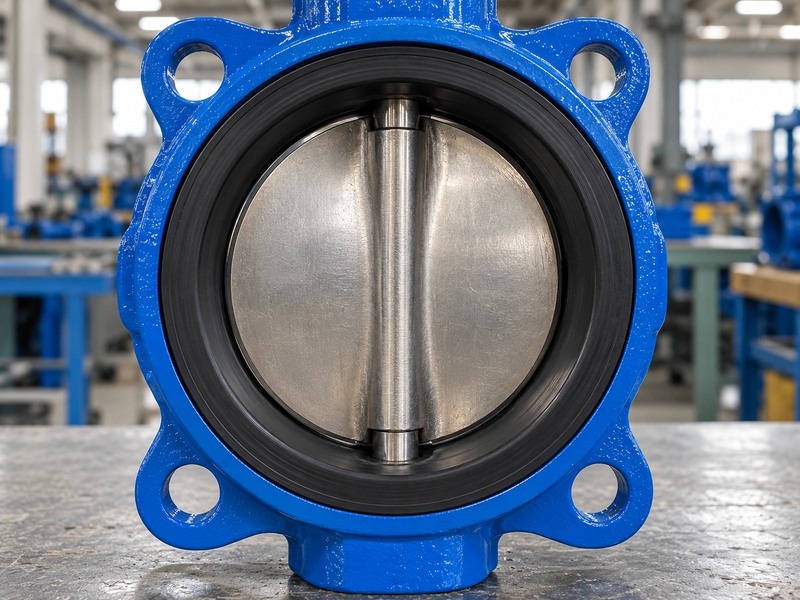
A typical concentric resilient seated butterfly valve places its shaft on the bore centerline, with the disc rotating about that centered axis. The geometry governs how the disc passes through the seat. Seat material, interference and construction then determine the contact behavior of the selected valve.
How does that compare with an offset design?
An offset arrangement moves the shaft relative to the sealing geometry, changing how the disc approaches and leaves the seat. Compare the actual section drawings. “Double offset” and “resilient seated” describe different design fields, and an offset valve may also have an elastomer sealing element.
- Separate shaft geometry from the seat material.
- Compare contact behavior using the approved construction.
- Check the operating torque data for each design.
Can you infer a longer operating life from the label?
You cannot establish service life from geometry alone. Fluid compatibility, particles, temperature, closure differential and cycling all affect wear. Ask for evidence relevant to the proposed duty if the purchase specification includes a cycle requirement; an ambient tightness test does not demonstrate that requirement.
| Design question | Evidence to use |
|---|---|
| Where is the shaft? | Section drawing |
| How does the seat engage? | Construction and operating information |
| What cycle duty is supported? | Applicable validation and service limits |
5. How do you compare EPDM and NBR seats?
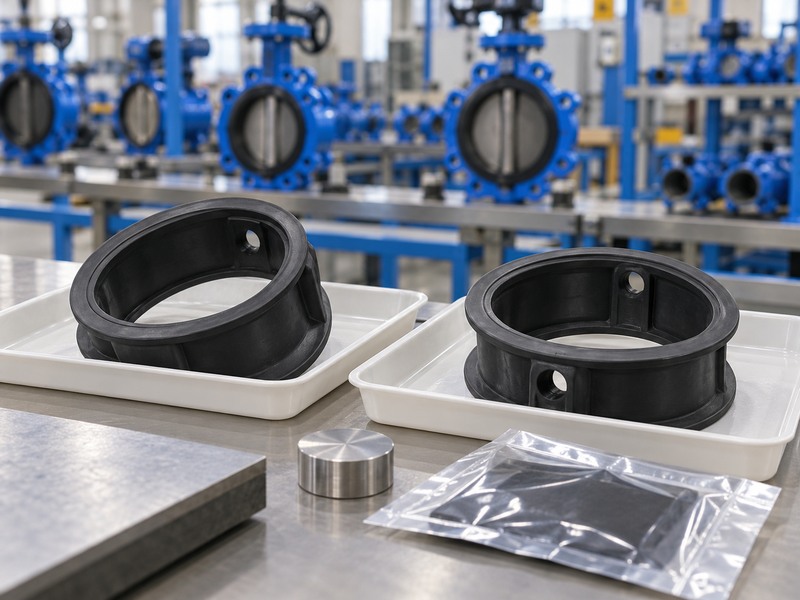
Select EPDM or NBR for a resilient seated butterfly valve against the fluid and temperature, rather than choosing by appearance. RUITO specifies EPDM for defined water configurations and a separate NBR configuration for compatible high flash point mineral oil. Those choices include a review of auxiliary seals and the rest of the wetted assembly.
Which service details can change the assessment?
Additives, concentration and cleaning exposure can change the result. For example, an inhibited glycol solution needs its actual volume concentration and inhibitor information recorded. An oil enquiry needs the oil grade and additives. A generic statement such as “rubber compatible” does not identify what was reviewed.
- Supply the fluid composition and concentration units.
- List normal operation and cleaning temperatures.
- Include occasional chemical exposure.
What if an elastomer configuration cannot cover the duty?
Review another complete construction. A dedicated PTFE lined butterfly valve has its own liner, backing and shaft seal requirements. Replacing an elastomer name in a quotation does not turn an existing water valve into that lined design.
| Input | Detail needed for review |
|---|---|
| Glycol solution | Volume concentration and inhibitors |
| Mineral oil | Grade, additives and temperature |
| Cleaning cycle | Chemicals, concentration and exposure conditions |
6. Which connection styles can use this seat system?
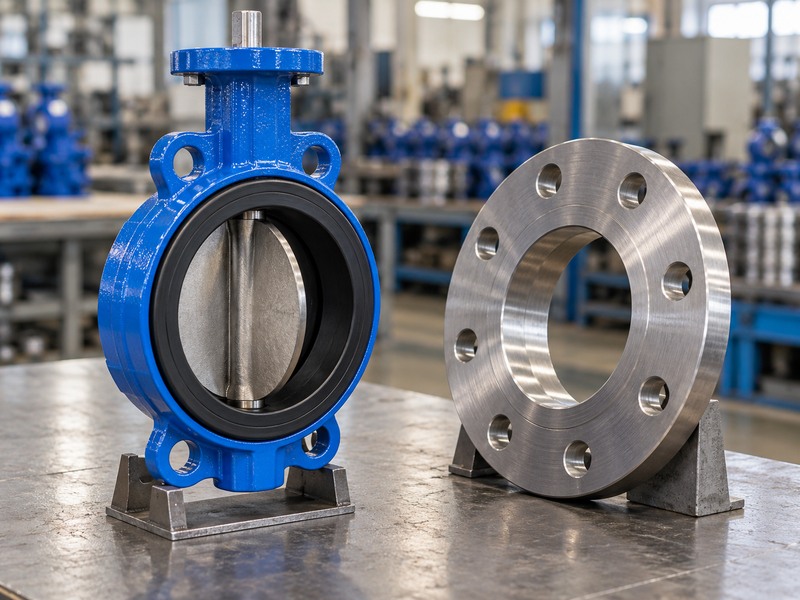
A resilient seated butterfly valve can have a wafer, lug, flanged or another specifically designed connection. The connection describes how the valve joins the pipe. It does not identify the seat compound or provide a universal pressure rating, face-to-face length or end service capability.
What distinguishes a wafer installation?
A wafer butterfly valve fits between the matching pipe flanges. Check the bolt arrangement, minimum bore and disc clearance using its drawing. The short body does not confine the complete disc sweep, so nearby reducers and internal pipe linings also need examination.
- Match the flange standard and drilling.
- Check the full opening envelope.
- Follow the valve-specific gasket instructions.
What changes with a lug connection?
A lug butterfly valve uses its threaded connections according to a defined bolting arrangement. Verify thread engagement and end service requirements. Removing a downstream pipe can create a different loading condition, and you need an explicit rating before treating the valve as a permitted terminal isolation point.
| Connection detail | Check before installation |
|---|---|
| Wafer body | Companion flanges and disc sweep |
| Threaded lugs | Bolt engagement and approved end service |
| Flanged body | Face-to-face dimensions and flange rating |
7. Which RUITO service boundaries should you compare?
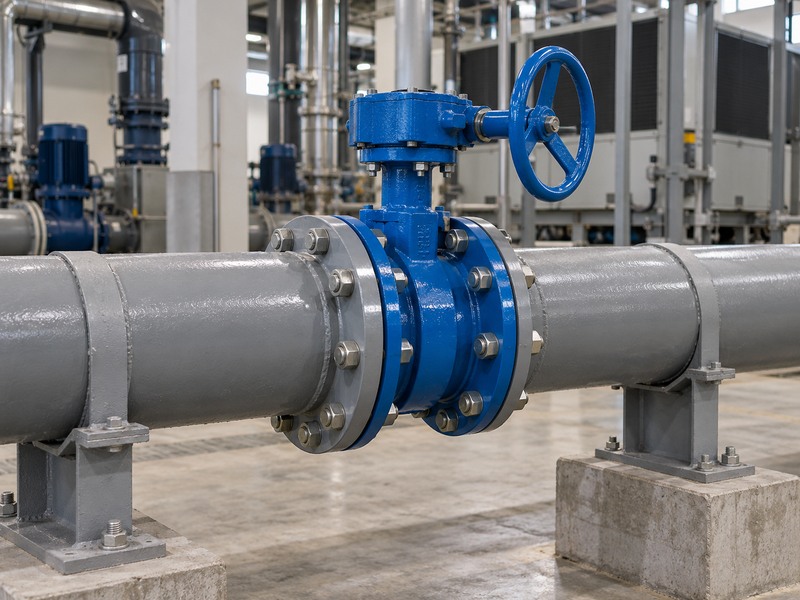
Compare the duty-specific boundaries of a resilient seated butterfly valve with your actual application. RUITO’s clean water wafer configuration covers DN50–600, with PN10 or PN16 options and a 5–60°C application window subject to the selected pressure-temperature relationship. A potable water configuration has separate contact approval requirements and a 5–40°C application window.
How does circulation service differ?
RUITO’s specified circulation configuration covers clean water or inhibited glycol mixtures up to 40% by volume at 5–60°C and up to 10 barg, subject to configuration review. The fluid’s pH, inhibitors, density and viscosity still need consideration. A low-temperature package is a separately validated configuration, so it cannot be inferred from the ordinary circulation specification.
- Identify the exact service category.
- Keep pressure and temperature on the same data sheet.
- Check whether the required approval covers the supplied materials.
Can you use the same assembly for oil?
RUITO’s defined compatible mineral oil butterfly valve configuration uses NBR, DN50–300, 5–70°C and working pressure up to 10 barg. Its compatibility review includes the oil composition. Do not transfer those limits to a different elastomer, gas duty or chemical liquid.
| Configuration | Boundary requiring confirmation |
|---|---|
| Clean water | Selected pressure-temperature relationship |
| Potable water | Contact approval and 5–40°C duty |
| Mineral oil | Separate NBR configuration and oil review |
8. What does a factory tightness test demonstrate?
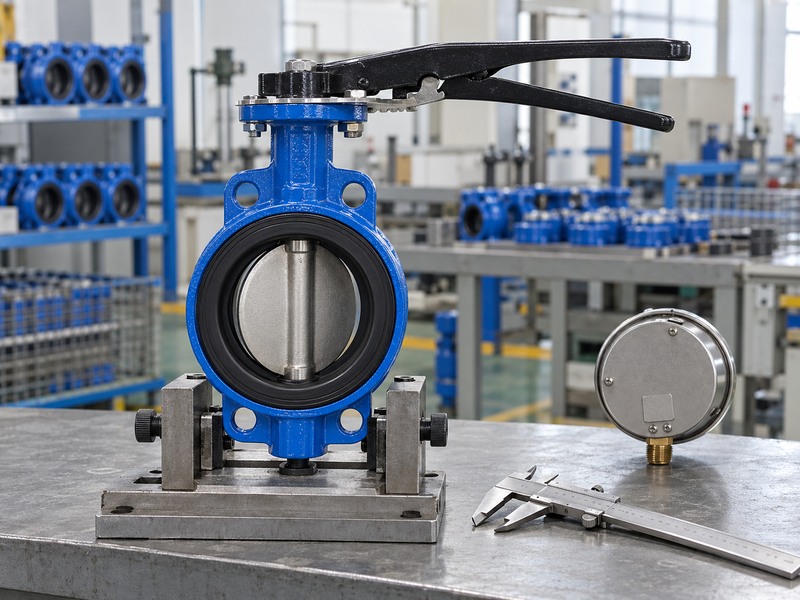
A factory tightness test checks a resilient seated butterfly valve under a specified procedure, medium, pressure, direction and duration. It provides evidence for that inspection condition. It cannot establish unlimited temperature capability, resistance to every chemical or the operating life of a valve after installation.
Which records should accompany the result?
The report should identify the unit or batch, applicable drawing and test procedure. Confirm that the closure test corresponds to the model’s directional rating. If the contract requires a particular leakage criterion, record that criterion with its inspection conditions rather than relying on an undefined “zero leakage” statement.
- Match the report to the delivered product.
- Separate shell and closure test results.
- Review pressure, direction and acceptance together.
Are test pressure and working pressure interchangeable?
No. RUITO’s stated PN16 ambient inspection inputs include 24 bar for the shell and 17.6 bar for soft seat closure, under the applicable model and procedure. These are temporary test conditions. Operating pressure remains subject to the approved pressure-temperature relationship and closure differential rating.
| Evidence | What to retain |
|---|---|
| Shell test | Procedure and external leakage result |
| Closure test | Direction, differential and acceptance criterion |
| Function check | Travel, indicator and operator correspondence |
9. How should you inspect and maintain the seat?
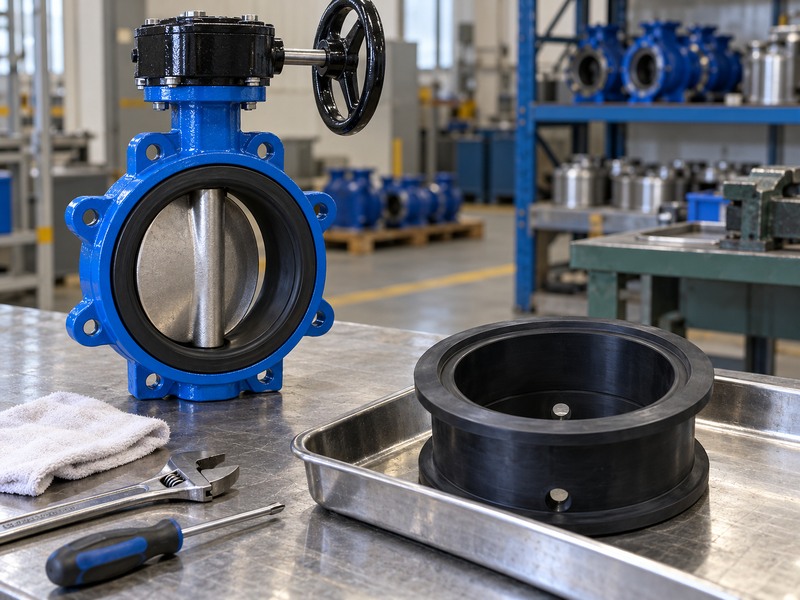
Inspect a resilient seated butterfly valve for debris, sealing edge damage, deformation and abnormal operating force before deciding on a repair. Stop and isolate the system safely before accessing the valve. A higher actuator torque setting can force damaged components to move without correcting the underlying cause.
Can you replace every resilient seat?
Replacement depends on construction. A mechanically retained liner and a bonded seat have different repair procedures, and a spare with a similar diameter may not fit the disc, shaft penetrations or body retention features. Order the approved part revision against the valve identification and confirm the installation method.
- Preserve the valve and material identification.
- Compare the observed damage with the operating history.
- Use the approved spare and repair instructions.
What information helps resolve a recurring problem?
Record the fluid, cleaning chemicals, temperature, pressure, closure differential and installation arrangement. Photographs of the seat and disc edge after safe removal can support the review. If you need RUITO to assess a replacement configuration, contact us with those inputs and the existing interface drawing.
| Observation | Follow-up question |
|---|---|
| Swollen seat | Has the actual fluid composition changed? |
| Cut sealing surface | Was debris present during installation or operation? |
| High torque | Is there interference or an unsuitable drive setting? |
10. What do engineers ask about resilient seats?
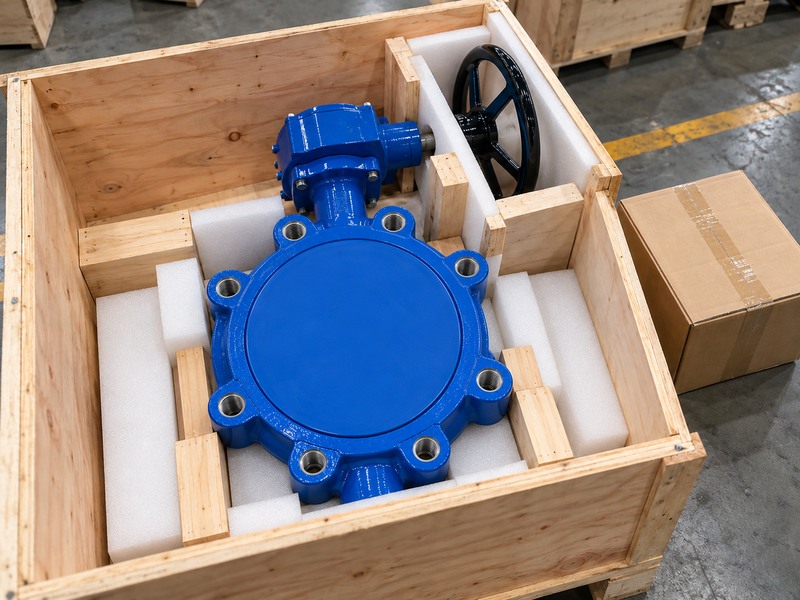
Questions about a resilient seated butterfly valve usually concern its sealing mechanism, material limits and installation. The answers depend on the exact construction, so keep the approved drawing and data sheet with the product identification.
Q1. Can I identify the seat compound by its color?
No. Request the compound identification and corresponding records. Similar-looking seats can have different formulations, and a visual comparison does not establish compatibility with your fluid.
Q2. Does a resilient seat always mean a concentric valve?
No. Seat material and shaft geometry are separate design characteristics. Review the section drawing to establish whether the supplied valve is concentric or offset.
Q3. Can I read flow directly from the opening indicator?
No. The indicator shows mechanical travel. Establishing flow requires the selected valve characteristic, pressure difference and fluid properties, or an appropriate measurement.
Q4. What’s the best way to specify a spare seat?
Use the valve identification, approved parts list and required compound. Confirm that the construction permits seat replacement and obtain the corresponding repair procedure.
Q5. Can I apply the water rating to another fluid?
Only after a configuration review. Seat compatibility, auxiliary seals, wetted metals and the pressure-temperature relationship must cover the proposed fluid and duty together.