
Choose a safe triple eccentric butterfly valve by matching its service limits, test evidence, and complete operating assembly to your actual duty. A valve can pass a workshop leakage check and still arrive with the wrong actuator setting or missing material records. Use a documented acceptance plan alongside your safe and reliable triple eccentric butterfly valve enquiry, so engineering, inspection, and site teams approve the same configuration.
1. What proves a safe and reliable triple eccentric butterfly valve?
Reliable service requires evidence for the supplied configuration and the conditions it will face. A safe and reliable triple eccentric butterfly valve needs a traceable link between its approved drawing, materials, actuator, and inspection results. A catalogue description cannot establish that link. Record the normal duty, credible upsets, required isolation performance, and maintenance arrangements before you decide which evidence to request.
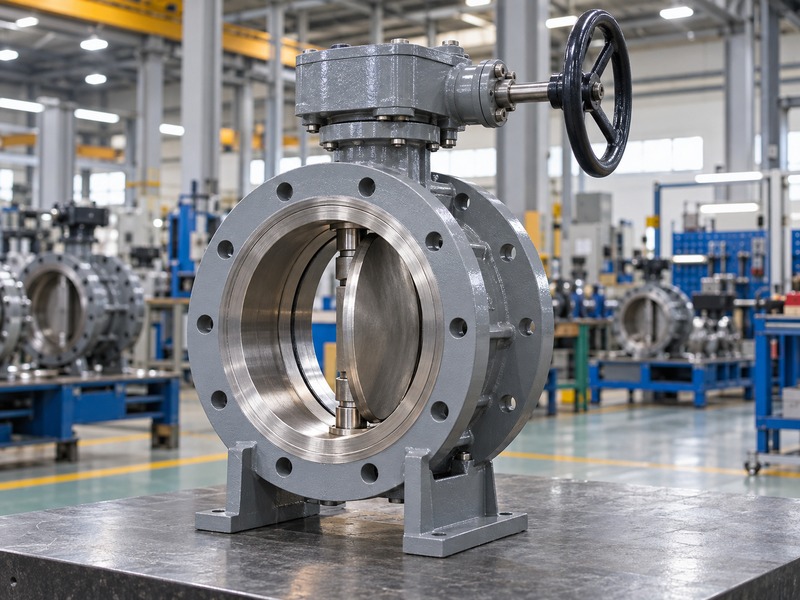
Build one acceptance file
Assign each valve a project tag and a unique product identifier. Ask the supplier to use those identifiers on the drawing register, material records, assembly sheet, and release report. A certificate for another size or seal arrangement needs a documented assessment before anyone accepts it as relevant. Investigate any broken link before you authorize shipment.
Check these connections:
- The ordered service matches the approved data sheet.
- The assembled parts match the released parts list.
- Each inspection result identifies the tested item.
| Evidence | What you should match |
|---|---|
| Data sheet | Duty and acceptance limits |
| Assembly record | Supplied configuration |
| Test report | Product identifier and procedure |
2. How do you turn service risks into an acceptance plan?
An acceptance plan converts each service requirement into a review, inspection, or test with a defined result. For a safe and reliable triple eccentric butterfly valve, separate pressure containment, seat leakage, external leakage, and operating function. These are different failure paths. Passing one check does not close the others.
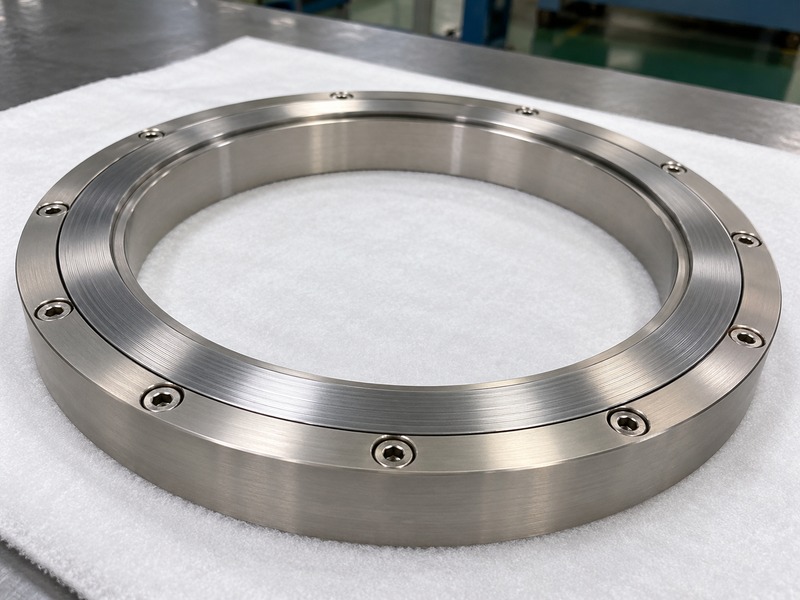
Give each requirement an owner
Your engineering team should define the operating envelope and acceptable deviations. Quality personnel can then agree on inspection stages, witness points, and the records needed for release. Site personnel should add access, support, isolation, and commissioning requirements while changes are still practical.
For example, a shutdown valve may require a documented loss-of-supply test of the complete assembly. A valve exposed to reverse differential pressure needs an explicit reverse shutoff requirement. Neither requirement follows automatically from the phrase “triple eccentric.” Keep unresolved requirements visible in the inspection plan.
- State the acceptance criterion before testing.
- Identify who reviews the result.
- Define what happens when the result fails.
| Requirement | Acceptance route |
|---|---|
| Pressure containment | Approved shell-test procedure |
| Required shutoff | Defined leakage test and direction |
| Loss-of-supply response | Complete assembly function test |
3. Which configuration changes need another review?
A change needs another review whenever it can affect an approved interface, material, rating, or operating function. A safe and reliable triple eccentric butterfly valve can become an unsuitable assembly after a seemingly small substitution. Seal-ring construction, packing, stem material, actuator gearing, and mounting brackets all deserve controlled treatment. Compare the delivered configuration with the approved version rather than relying on appearance.
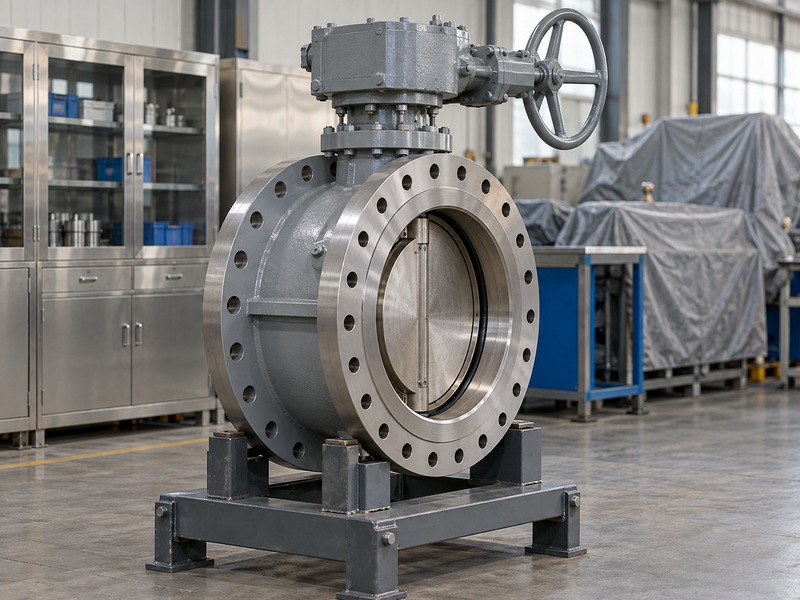
Close changes before assembly release
Ask the supplier to explain the reason for each proposed change and identify the affected documents. Engineering should decide whether previous calculations and tests still apply. The decision may require a revised drawing, new material review, or repeated functional test.
Connection names also need care. RUITO's documented flanged butterfly valve configurations include concentric and double-offset structures; a double-flanged body alone does not establish triple-offset geometry. Release the revised document set together.
- Record the original and replacement part descriptions.
- Identify affected calculations and test coverage.
- Obtain approval before the change reaches production.
| Proposed change | Review question |
|---|---|
| Seal construction | Does the existing validation still apply? |
| Actuator or gearbox | Are output and settings still suitable? |
| Body connection | Do fit and loading requirements still match? |
4. How do you audit material traceability?
Audit material traceability by following a selected component from the finished assembly back to its material record. For a safe and reliable triple eccentric butterfly valve, the review should cover pressure-containing parts and the specified sealing, shaft, and packing materials. A body certificate provides no proof of the seal-ring alloy. Review each component against its own requirement.
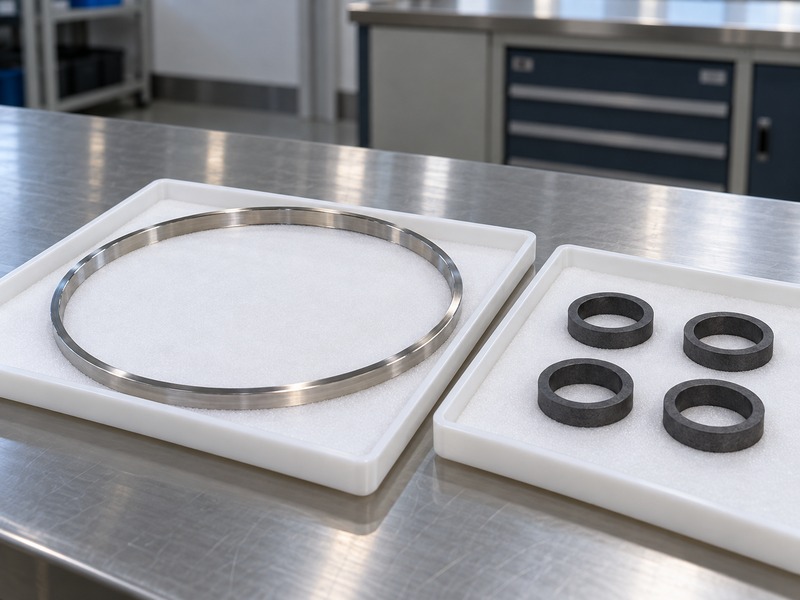
Sample the chain in both directions
Start with a finished valve identifier and request the associated component records. Then select a material batch and ask which finished valves received it. Both checks help expose a record system that contains certificates but cannot connect them to products.
Review the actual fluid composition, concentration, temperature, and cleaning conditions when judging material suitability. A familiar stainless-steel grade or graphite packing description does not establish compatibility with every process. Keep approved substitutions and any supplementary examinations attached to the same record. Resolve missing component records before accepting the file.
- Match material descriptions with the approved parts list.
- Check batch or heat references where specified.
- Record the scope of any material verification.
| Component | Traceability check |
|---|---|
| Body and pressure parts | Material record and product mapping |
| Seal and seat | Specified alloy and construction |
| Packing | Approved material and batch reference |
5. What should the shutoff test report record?
The report should identify the valve, procedure, test conditions, and observed leakage against the agreed criterion. A safe and reliable triple eccentric butterfly valve needs more detail than a stamped “passed” box. Check the test medium, differential pressure, duration, direction, and method used to observe leakage. Confirm that the actuator arrangement matches the agreed test scope.

Read the result within its limits
A room-temperature closure test demonstrates performance under its recorded conditions. It does not by itself establish thermal-cycle endurance, fire-test qualification, or fugitive-emissions performance. Request those records separately when the project requires them.
“Zero leakage” also needs a named test basis and conditions. Avoid converting a specified test result into a promise of permanent leak-free service. If the order requires performance in both directions, check that the report identifies both directions and the applicable differential pressures.
- Confirm the test procedure revision.
- Check instrument identification and calibration status.
- Retain actual observations and any retest history.
| Report field | Reason to check it |
|---|---|
| Direction and differential | Defines the tested closing duty |
| Medium and duration | Defines the observation conditions |
| Acceptance criterion | Makes the result reviewable |
6. How do you verify the complete operating assembly?
Verify the assembled valve, coupling, bracket, actuator, and accessories together against the required operating duty. A safe and reliable triple eccentric butterfly valve depends on adequate torque through the full stroke and correct seating control. An actuator nameplate alone cannot show that the assembled system delivers the required movement. Review the supplier's torque data and the actuator's available output under the specified supply conditions.
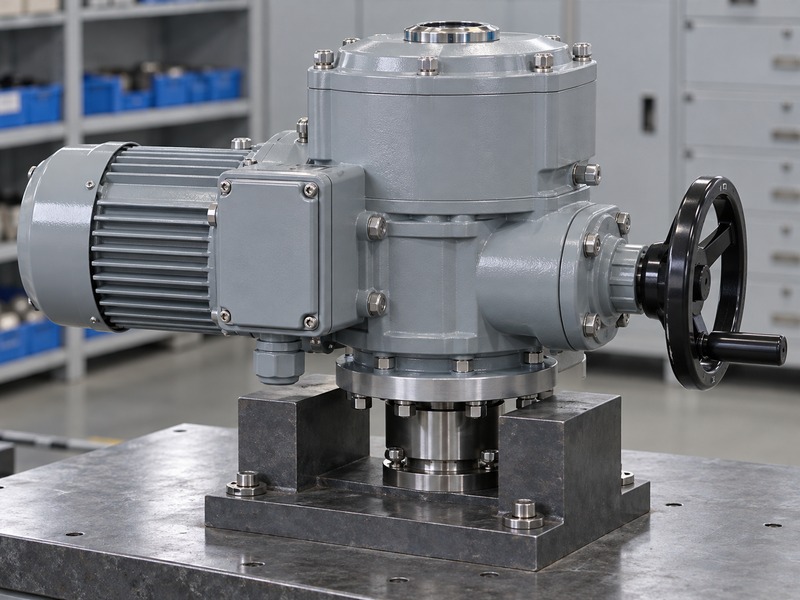
Test commands and physical response
Check local operation, remote commands, position feedback, and any required loss-of-supply response. Compare feedback with actual valve movement during the agreed test. A switch can indicate a commanded position even when a coupling is loose or incorrectly aligned.
For torque-seated designs, use the manufacturer's setting procedure. Increasing closing torque to hide leakage can overload the shaft, seal, or drive train. Any setting change should remain within approved limits and trigger the necessary checks. Retain settings with the delivered assembly identifier.
- Review minimum available supply and output.
- Check coupling engagement and mounting fasteners.
- Record final settings and observed response.
| Assembly check | Record to retain |
|---|---|
| Torque suitability | Input conditions and output assessment |
| Stroke and feedback | Command, movement, and indication |
| Settings | Approved final configuration |
7. Which site checks belong in the release record?
Site release should confirm that the installed valve matches the approved arrangement and can move without interference. For a safe and reliable triple eccentric butterfly valve, check the specified pressure direction, adjacent pipe bore, disc clearance, supports, and operating access. Pipe flow and preferred pressure direction can require separate consideration. Follow the selected model's markings and installation instructions.
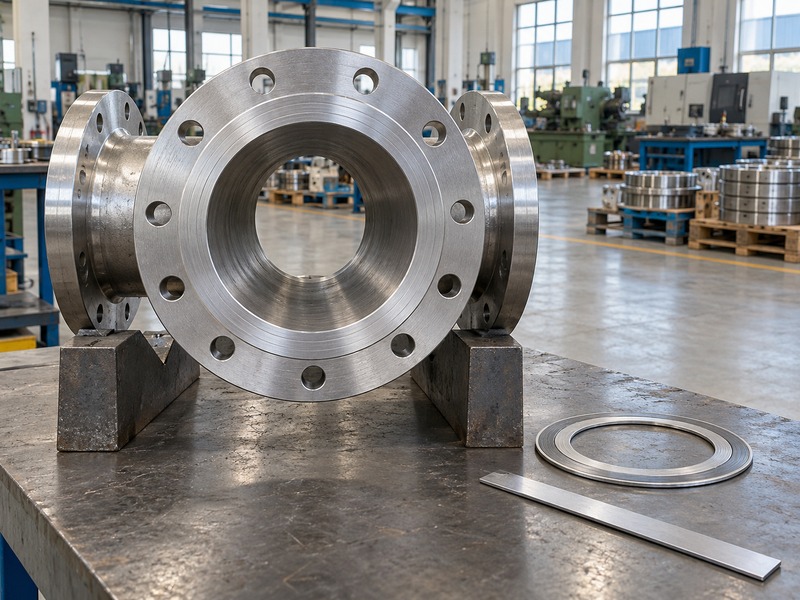
Check installation before energizing
Confirm that flange alignment and supports meet the approved piping arrangement. Bolts should not pull a misaligned pipeline into position through the valve body. Verify gasket type, bolt engagement, and the required tightening procedure without obstructing the disc's operating envelope.
If your application uses different connection arrangements, compare the interface requirements with the documented wafer butterfly valve range. Shared nominal size does not establish interchangeable face-to-face dimensions or disc clearance. Record deviations before commissioning proceeds.
- Confirm cleanliness and removal of transport protection.
- Check access to the actuator and maintenance points.
- Complete the permitted movement check under the site procedure.
| Site item | Approval basis |
|---|---|
| Installation direction | Model marking and approved layout |
| Disc clearance | Actual adjacent bore and drawing |
| Supports and alignment | Piping installation requirements |
8. How should you close defects and inspection hold points?
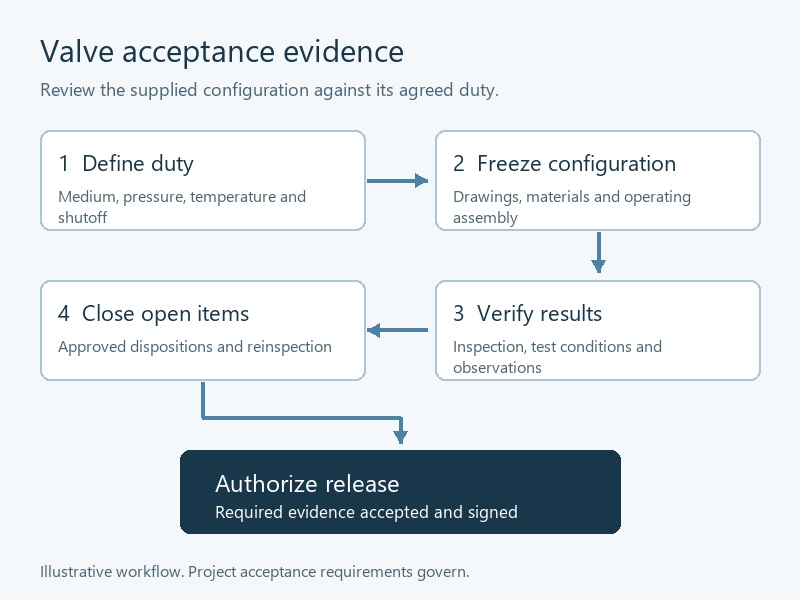
Close a defect only after the responsible reviewer accepts its disposition and the required verification is complete. A safe and reliable triple eccentric butterfly valve should have a readable history of rejected results, repairs, and retests. Replacing the original report with a clean final sheet loses useful information. Keep the sequence tied to the product identifier.
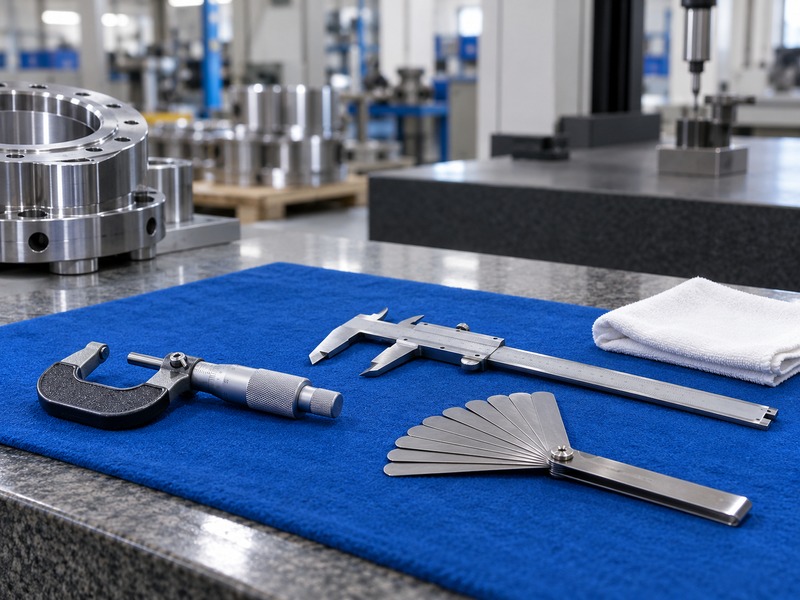
Make the release decision explicit
A nonconformance record should describe the issue, affected items, proposed correction, and approval authority. Engineering must assess whether the correction changes the approved design or invalidates earlier inspections. Quality personnel can then define the verification needed to close the issue.
Agree on witness arrangements before the inspection date. If a customer cannot attend, follow the agreed waiver or rescheduling process. An unsigned witness point should remain open until its authorized disposition is recorded. Do not hide an open issue inside a general release certificate.
- Identify affected serial numbers or batches.
- Record the approved repair or replacement route.
- Attach the relevant reinspection result.
| Record | Required closure detail |
|---|---|
| Defect report | Issue and affected items |
| Disposition | Approved corrective action |
| Reinspection | Result and release authority |
9. What maintenance baseline should you retain?
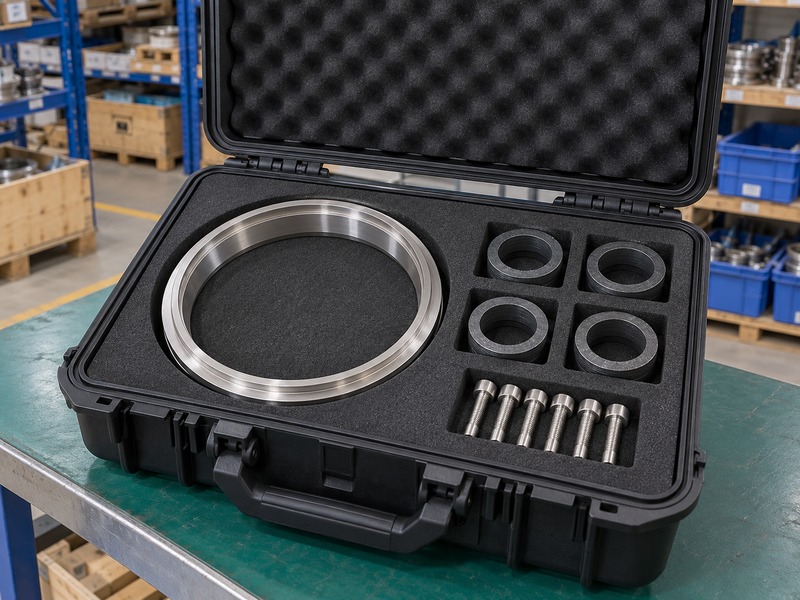
Retain the approved settings, initial condition, operating history, and spare-part identification needed for future comparison. A safe and reliable triple eccentric butterfly valve becomes harder to maintain when its delivered configuration is unclear. Capture a baseline after commissioning under the site's permitted procedure. Later changes in torque, leakage, or stroke time can then be investigated against recorded conditions.
Specify usable replacement information
Request the installation and maintenance instructions, exact replacement-part descriptions, and any restrictions on field work. Similar-looking seal rings can have different geometry or material construction. Match replacement parts with the selected valve and approved document revision.
Set maintenance intervals using the manufacturer's instructions, actual duty, and plant experience. Avoid a universal interval based solely on the number of offsets. Solids, cycling, temperature changes, and long idle periods can create different inspection needs. Update the record after approved maintenance or modification.
- Keep commissioning observations and settings.
- Record operating cycles where relevant.
- Identify spares by the approved configuration.
| Baseline item | Future use |
|---|---|
| Initial operating condition | Comparison during troubleshooting |
| Approved settings | Controlled restoration after service |
| Spare-part references | Correct replacement selection |
10. How do you make the final release decision?
Release the valve when required evidence is accepted and remaining deviations have an authorized disposition. For a safe and reliable triple eccentric butterfly valve, review technical compliance, physical condition, records, and delivery readiness together. A completed test report cannot compensate for an unresolved material substitution or missing installation instruction. Assign a named person to sign the final release.
Send a focused engineering enquiry
Provide the fluid data, operating envelope, required shutoff differential in each direction, connection details, actuation requirements, and inspection scope. RUITO's documented product range has configuration-specific limits; obtain confirmation of the proposed supply scope before assuming a triple-offset construction is available. You can review the company's manufacturing and inspection approach alongside your requirements.
- List unresolved technical questions.
- Confirm the document and spare-parts package.
- Approve packaging and product identification.
| Release area | Required decision |
|---|---|
| Technical scope | Accepted configuration and deviations |
| Inspection | Required results and hold points closed |
| Delivery | Identification, protection, and documents checked |
To define acceptance requirements for a safe and reliable triple eccentric butterfly valve, contact us with the service data sheet and inspection scope.
Questions buyers ask before acceptance
Q1. Can I accept a valve from a leakage report alone?
No. You also need the specified material, configuration, functional, and document checks. Read the leakage result within its recorded conditions.
Q2. How do I know if a certificate covers my valve?
Match its scope with the supplied design, size, materials, and applicable conditions. Ask for a documented assessment wherever coverage is unclear.
Q3. Can I approve a substitute actuator after testing?
Only after reviewing the complete revised assembly. Output, coupling fit, settings, feedback, and required failure response may need verification again.
Q4. What's the best way to handle a failed inspection?
Keep the original result, agree on a disposition, and record the required reinspection. Close the issue through the named approval authority.
Q5. Does a factory test replace commissioning checks?
No. Installation can introduce misalignment, contamination, wiring errors, or movement restrictions. Complete the approved site checks before operation.