
Compare soft seat butterfly valve manufacturers by the configuration they can define, manufacture and verify for your actual service. A quoted valve family and an attractive sample photograph do not establish the production version. Start with a service sheet and a drawing-based acceptance plan, then review the factory’s corresponding records.
An OEM approves a sample that fits its skid, but the next batch arrives with a different seat profile or bracket hole pattern. Both shipments carry the same product name. Avoid that failure by freezing the interface, material schedule and inspection revision before batch release. The manufacturer review below follows the path from your enquiry through first-piece approval and repeat supply.
1. How do soft seat butterfly valve manufacturers define scope?
Capable soft seat butterfly valve manufacturers define the actual fluid, temperature, pressure, connection and operating function before quoting a model. They separate standard water duty from oil, clean gas and lined chemical configurations. Ask for accepted inputs and listed deviations, rather than a catalogue range assembled from unrelated maximum values.
What should an engineering response contain?
The response should name the proposed materials and connection, identify unresolved service inputs and state the applicable pressure-temperature envelope. RUITO’s engineering review uses the complete mixture and duty to select a configuration. Close the missing inputs. If your cleaning fluid, pressure reversal or flange bore remains unknown, record that item explicitly instead of accepting an unconditional suitability statement.
- Provide one complete service sheet with normal and maximum conditions.
- Request the proposed configuration and its accepted duty limits.
- Record unanswered inputs and deviations before purchase approval.
Key takeaway: A useful manufacturer response ties the quoted product to your service inputs and remaining decisions.
| Check | What you should confirm |
|---|---|
| Service scope | The actual fluid, temperature and pressure envelope |
| Product scope | Materials, connection and operating function identified |
| Open items | Unresolved data and accepted deviations recorded |
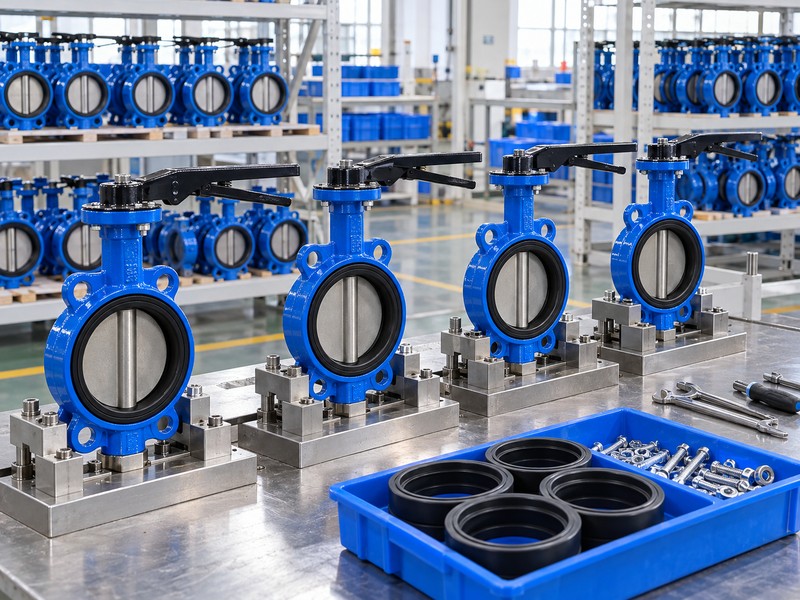
2. What drawings must soft seat butterfly valve manufacturers provide?
Require soft seat butterfly valve manufacturers to provide the interface and section drawings needed for approval. DN alone cannot establish flange drilling, face-to-face length, disc clearance or actuator space. The approved drawing should also identify its revision and the supplied construction, so your installer and quality team review the same production definition.
Where do drawing mismatches cause rework?
Check reducers, lined pipe, bolt access and the full disc opening envelope against the actual installation. For an actuated valve, compare bracket, coupling and control-box clearance with the skid layout. Approve the interface revision. Keep the accepted drawing with the purchase order and require notification before a dimensional change, rather than discovering a different drilling pattern after delivery.
- Review flange drilling, facing and the actual pipe bore.
- Check disc travel and the complete actuator assembly envelope.
- Freeze the drawing revision with the approved material schedule.
Key takeaway: A frozen interface drawing prevents the sample and batch from becoming different installation problems.
| Check | What you should confirm |
|---|---|
| Pipe interface | The agreed drilling, facing and face-to-face length |
| Moving envelope | Disc clearance and actuator access |
| Revision control | The version authorized for manufacture and inspection |
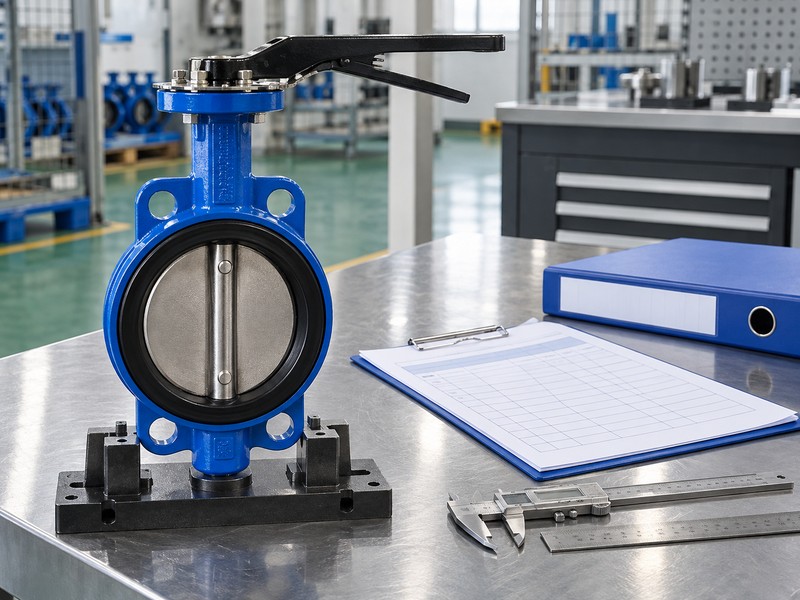
3. How do soft seat butterfly valve manufacturers control machining?
Review how soft seat butterfly valve manufacturers control the body faces, shaft bores and other sealing-related dimensions. Process capability belongs to the actual valve size and construction, not the largest machine visible in a factory photograph. Request the relevant machining route, first-piece checks and inspection records for the model you intend to order.
Which dimensions need a defined datum?
The inspection plan should connect the drawing datums with the measured faces, bores and alignment features. A body can look clean while an axis or face is outside its accepted dimension. Follow the actual part. Ask the factory to trace one identified workpiece through its machining and inspection route, with the stated instruments and drawing revision available for review.
- Identify critical dimensions and their drawing references.
- Review first-piece checks before approving a batch route.
- Trace measurements to the workpiece and accepted revision.
Key takeaway: Assess the process and measured result for your product, rather than inferring capability from equipment size.
| Check | What you should confirm |
|---|---|
| Machining route | The actual model and size-specific operations |
| Dimensional record | Defined datums, measurements and acceptance limits |
| Traceability | Workpiece identity and inspection revision linked |
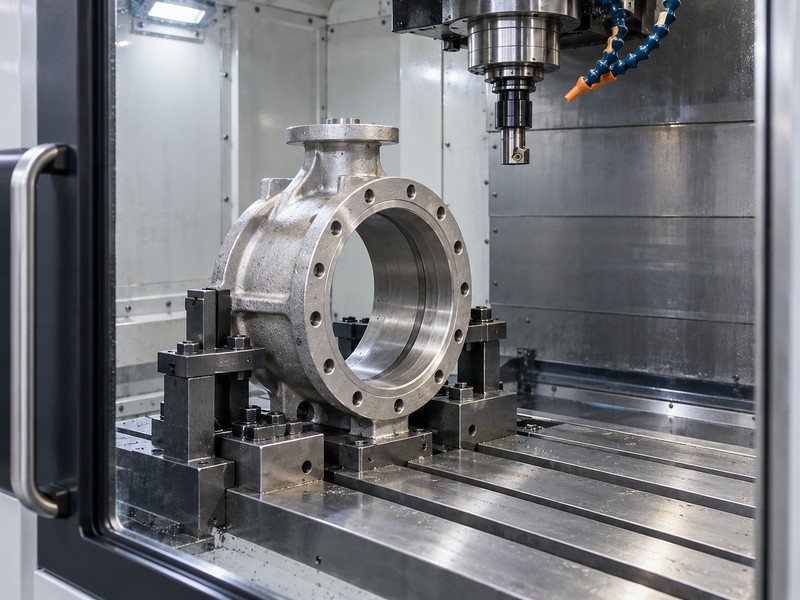
4. How do soft seat butterfly valve manufacturers trace materials?
Ask soft seat butterfly valve manufacturers to trace the actual body, disc, shaft, seat and auxiliary seals to the approved material schedule. A broad stainless or rubber label leaves the component identity unresolved. Material changes can affect corrosion, torque, leakage and approvals, so substitution requires an engineering decision and the agreed customer authorization.
What should a batch check connect?
Connect incoming material identification with the work order and supplied valve IDs. For an elastomer seat, the specified compound and batch matter alongside the metal grades. Check the component identities. A certificate for a body casting does not identify the seat, disc or shaft; review each required record against the bill of materials rather than treating one document as the complete package.
- Identify each specified wetted material and compound.
- Link metal and nonmetallic batches with the production order.
- Approve substitutions before changed components enter the batch.
Key takeaway: Material traceability should identify every relevant component in the supplied configuration, including the seat.
| Check | What you should confirm |
|---|---|
| Metals | Actual body, disc and shaft grades identified |
| Seat materials | The approved compound and associated batch |
| Changes | The accepted substitution and effective production scope |
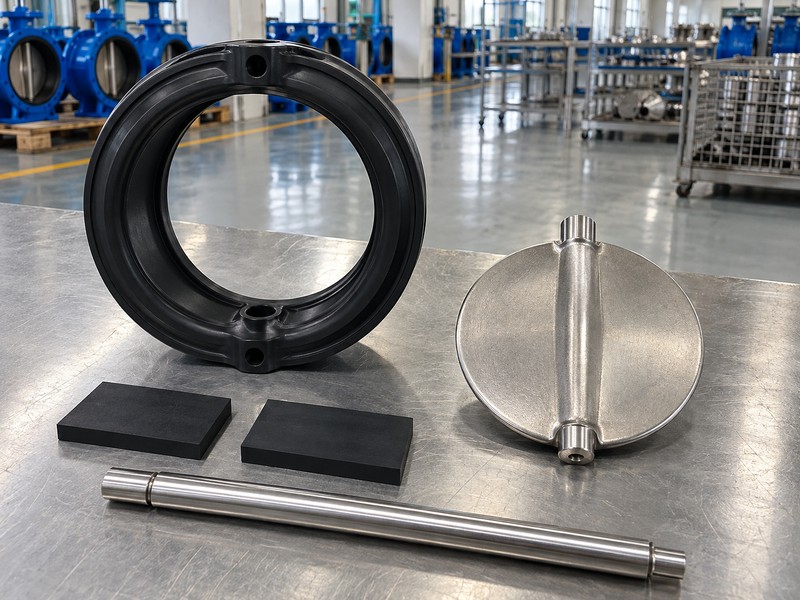
5. How do soft seat butterfly valve manufacturers check seats?
Require soft seat butterfly valve manufacturers to verify seat fitting, disc contact and shaft sealing for the actual model. The seat profile and retaining construction affect assembly and repair. A visually similar liner cannot be assumed interchangeable, and an acceptable disc-edge seal cannot compensate for incorrect shaft components or a distorted flange face.
Which assembly checks belong in the plan?
Specify the seat and disc references, retaining features, assembly sequence and functional checks. Confirm that the closing stop is indexed against the real disc position. Inspect the sealing path. Ask how the factory detects liner damage, trapped debris and assembly mismatch before pressure testing, and how it records a rejected component without allowing it into the accepted shipment.
- Match seat, disc and shaft components with the approved model.
- Inspect contact surfaces and the liner’s retaining arrangement.
- Verify disc travel and true closing-stop indexing.
Key takeaway: A controlled assembly check verifies the full sealing path before a pressure result is recorded.
| Check | What you should confirm |
|---|---|
| Seat fit | The correct profile and retained orientation |
| Shaft sealing | The specified seals and retention components |
| Function | Unobstructed travel and the accepted closed position |
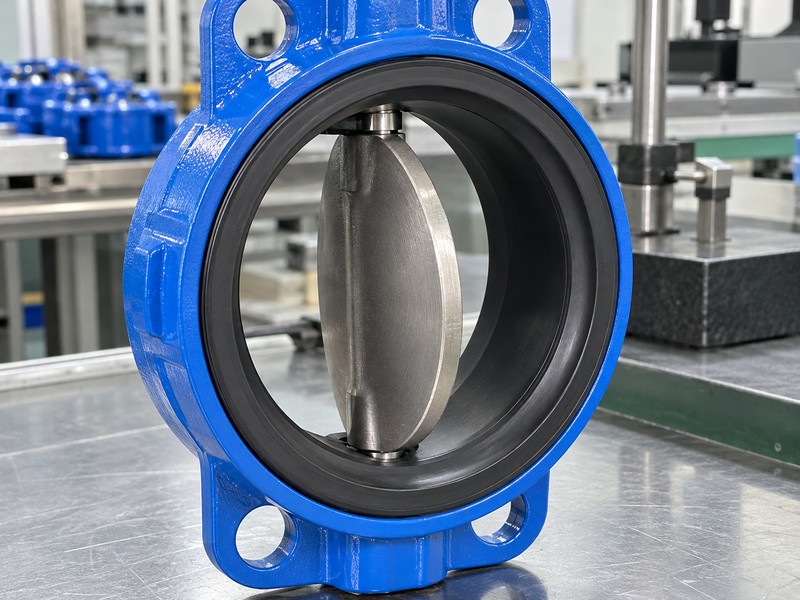
6. How do soft seat butterfly valve manufacturers inspect dimensions?
Ask soft seat butterfly valve manufacturers to inspect the dimensions your installation actually depends on. The plan should cover flange interfaces, face-to-face length, disc clearance and drive mounting where relevant. Identify the drawing tolerances and measurement method in advance, then review the delivered model rather than an unrelated sample of similar nominal size.
What makes an inspection record usable?
A usable record identifies the product, drawing revision, measured characteristic, instrument and acceptance result. Gauge calibration must suit the measurement, and the part support should not introduce an unreviewed distortion. Check the inspection basis. Compare the record with the approved installation drawing so a recorded dimension answers the interface question your project needs to close.
- Agree critical characteristics and the applicable tolerances.
- Identify instruments and their relevant calibration status.
- Connect measured results with the delivered product IDs.
Key takeaway: Dimensional inspection should close a defined installation risk, rather than supply an unexplained checklist.
| Check | What you should confirm |
|---|---|
| Characteristic | A defined dimension from the accepted drawing |
| Method | A suitable instrument and part-support arrangement |
| Record | Product identity, measured value and acceptance result |
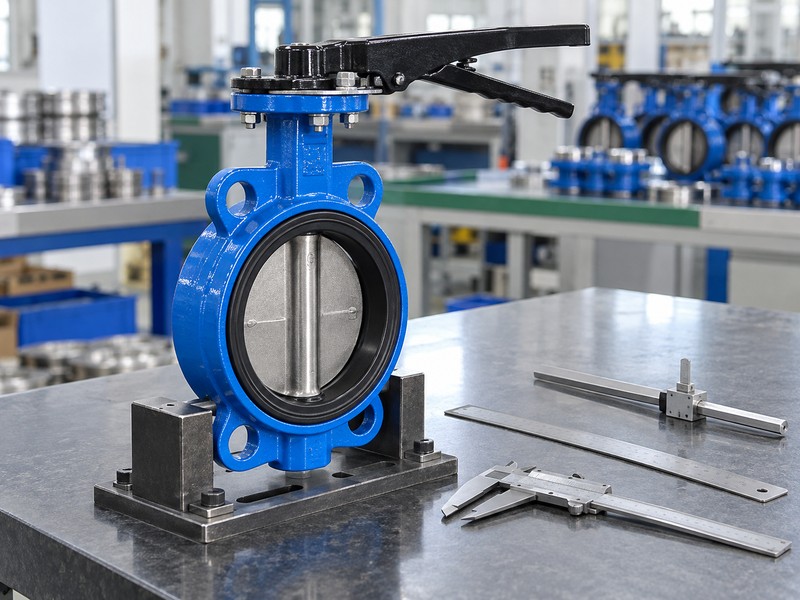
7. How do soft seat butterfly valve manufacturers prove closure?
Require soft seat butterfly valve manufacturers to prove closure under the agreed test medium, pressure, direction, duration and acceptance criterion. Separate the shell, external-leakage and closed-seat results. A hydraulic report from a water configuration cannot by itself approve gas service, a lining system or a different pressure direction.
What should the pressure report identify?
Specify the contractual method, such as ISO 5208, with the actual product’s inspection requirements. The shipment report should identify its valve IDs, conditions and instruments. Review the actual result. RUITO defines additional checks for clean gas and polymer-lined configurations separately, rather than using a common water report as evidence for every product family.
- Agree the test method and configuration-specific additions.
- Record both the pressure direction and acceptance criterion.
- Link results, instruments and product IDs in the shipment package.
Key takeaway: A traceable, configuration-specific pressure record establishes more than a generic passed-test certificate.
| Check | What you should confirm |
|---|---|
| Boundary integrity | The specified shell and external-leakage checks |
| Seat closure | The actual direction and agreed leakage acceptance |
| Special duty | The additional gas or liner evidence where required |
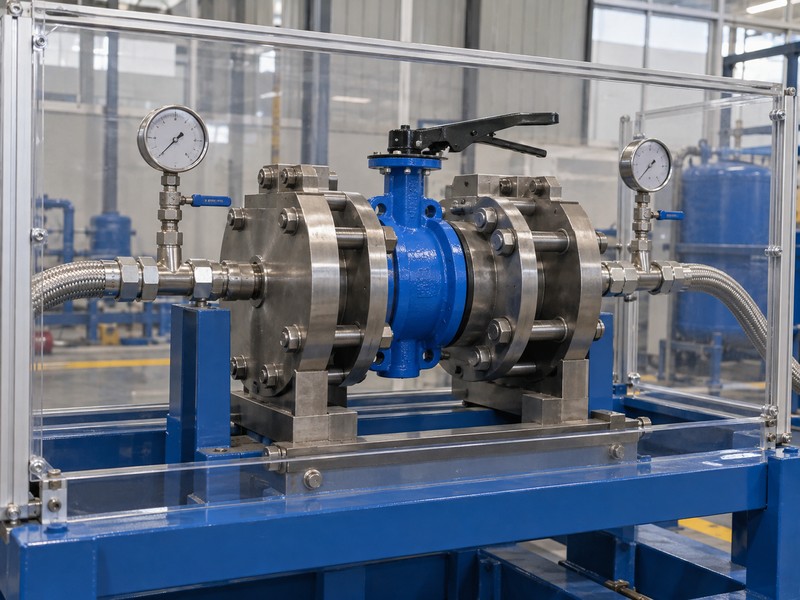
8. How do soft seat butterfly valve manufacturers check the drive?
Ask soft seat butterfly valve manufacturers to check the valve and drive as one assembly. Mounting-flange compatibility does not prove adequate torque, correct coupling or accepted feedback. The sizing calculation should use the valve’s actual demand at the service conditions and the actuator’s available output at minimum supply, including the required fail stroke.
Which assembly details should be frozen?
Freeze the bracket, coupling, travel stops, supply specification and feedback arrangement with the quotation. For a pneumatic spring-return unit, review the complete specified fail action; for electric duty, review supply and operating duty. Approve the complete assembly. A supplier should identify those components and verify travel before offering the same nominal actuator on a changed valve or seat configuration.
- Review torque demand and output at the agreed minimum supply.
- Confirm coupling, bracket and shaft load compatibility.
- Verify travel stops, indication and the required action after supply loss.
Key takeaway: Approve an identified valve-drive assembly with a recorded sizing and functional basis.
| Check | What you should confirm |
|---|---|
| Sizing | The actual duty and stated output condition |
| Mounting | Accepted bracket, coupling and shaft loading |
| Function | Travel, feedback and the specified fail action |
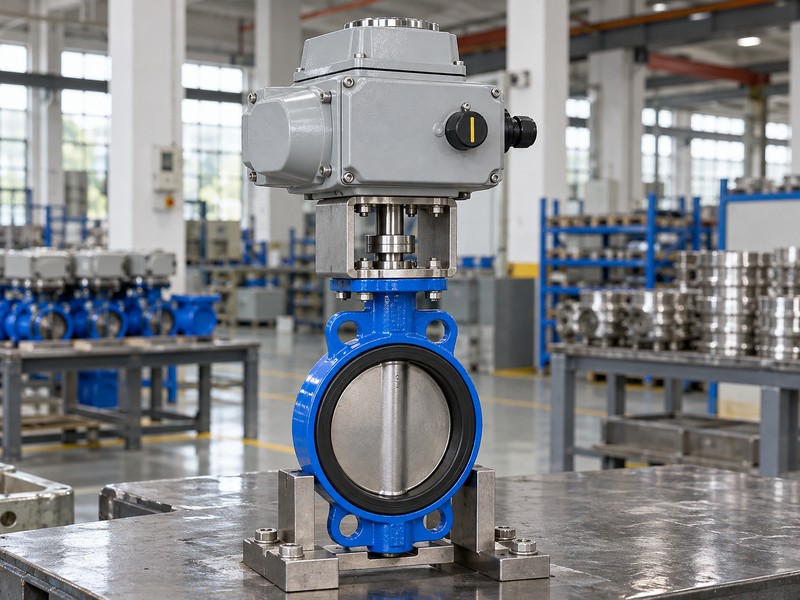
9. How do soft seat butterfly valve manufacturers qualify samples?
Use samples from soft seat butterfly valve manufacturers to verify the defined installation and operating duty, not to replace the production controls. Give each sample an identity and approved revision. Compare its dimensions, materials, torque and relevant performance data with the project acceptance plan, then record which findings authorize the first production batch.
What should a sample approval cover?
A model flow coefficient supports a stated sizing calculation; a sample that turns freely does not establish every hydraulic condition. Test the intended duty. Keep the actual fluid properties, pressure budget and permitted opening range in the review, then link the accepted sample to the same bill of materials and drawing revision planned for batch production.
- Identify the sample and the configuration under review.
- Verify the actual interface and agreed operating functions.
- Record unresolved findings before approving production release.
Key takeaway: A useful sample approval establishes what the batch must reproduce and what remains unresolved.
| Check | What you should confirm |
|---|---|
| Sample identity | A defined product and approved technical revision |
| Duty check | Relevant dimensions, function and model data |
| Production link | The same accepted material and drawing scope |
10. How do soft seat butterfly valve manufacturers control versions?
Select soft seat butterfly valve manufacturers that connect repeat orders with the accepted bill of materials, drawing, inspection and spare-part records. The same commercial product name can hide a changed component or interface. Require notice and approval before critical changes, with the affected orders and production batches clearly identified.
What should a change notice explain?
The notice should identify the changed item, reason, effective scope and proposed verification. A revised rubber profile, bracket or material needs a review of its installation and service consequences. Control the effective batch. RUITO supports configuration-based repeat enquiries and documented change decisions; your purchasing team should preserve the accepted revision, release records and replacement-part references with the order.
- Freeze the accepted configuration and inspection revision.
- Approve critical changes before releasing affected batches.
- Connect product IDs with packing, inspection and spare-part records.
Key takeaway: Controlled repeat supply preserves the accepted installation and duty instead of only repeating a product name.
| Check | What you should confirm |
|---|---|
| Repeat identity | The same accepted drawing and material definition |
| Change identity | The revised item and its effective order scope |
| Delivery identity | Product IDs linked to release and packing records |
Send RUITO your service sheet, installation drawing and inspection requirements. We can identify the proposed configuration, document scope and unresolved inputs for manufacturer approval. Contact us before releasing a sample or production batch, and retain the accepted technical revision with the purchase order.
FAQ
Q1: Can a factory photograph prove manufacturing capability?
No. Trace an identified product through the relevant processes and inspection records for the model you want to buy.
Q2: What’s the best way to compare manufacturers?
Use one common service sheet and acceptance plan. Compare configuration, deviations, evidence, delivery and change control against that same scope.
Q3: Can a sample replace batch inspection?
No. It can qualify the defined configuration, while production records must show what the delivered batch reproduces.
Q4: How do I know if an actuator fits correctly?
Review the complete mounting and torque basis. Mechanical bolt fit alone does not verify output, indexing or fail action.
Q5: Can I accept an equivalent seat without review?
Do not assume equivalence. Assess the compound, profile, torque, sealing and approval consequences before accepting the change.