
Fix material-selection mistakes in soft seated butterfly valves by matching every wetted component with the complete fluid and temperature range. The seat, disc, shaft and auxiliary seals work together. A correct rubber name on a quotation does not protect a valve whose remaining components suit a different service.
A buyer orders an EPDM water valve for an equipment skid, then the cleaning procedure introduces an incompatible chemical. The operating water was acceptable; the cleaning cycle was omitted from the enquiry. Prevent that mismatch with one fluid schedule covering operation, cleaning, shutdown and restart. The following checks distinguish material families from the duty that RUITO actually offers and verifies.
1. What materials are used in soft seated butterfly valves?
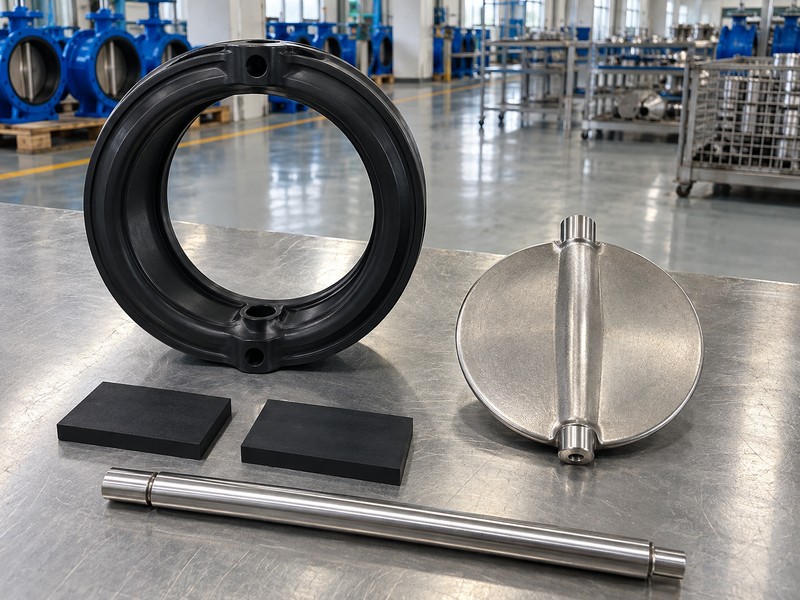
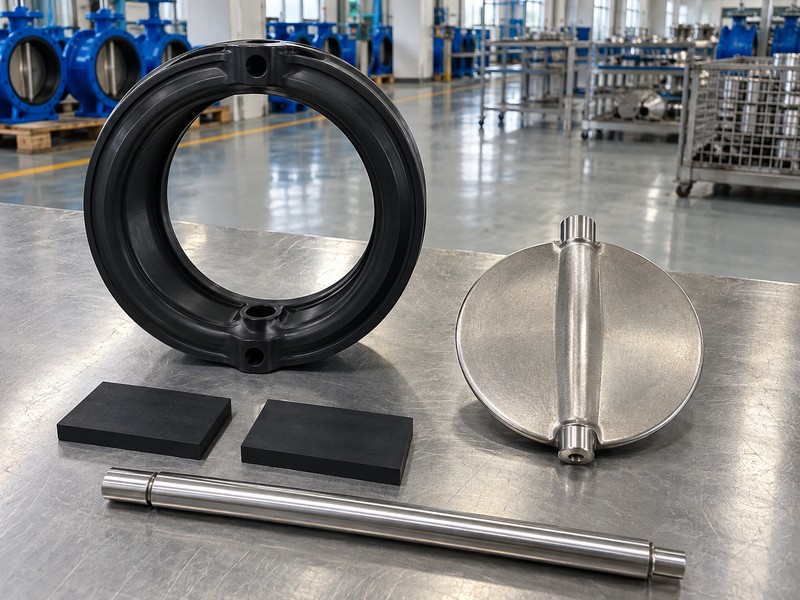
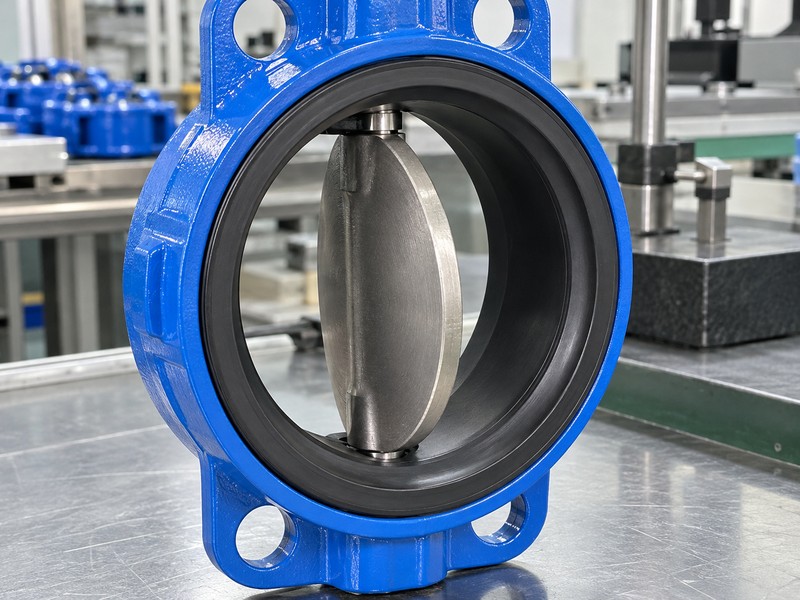
The sealing materials in soft seated butterfly valves include elastomers and engineered polymers, depending on the design. An elastomer-lined concentric valve differs from a fully polymer-lined chemical valve. Both can have nonmetallic seats, yet their construction, supporting seals and approved duties differ. Start by requesting the complete wetted bill of materials.
What should a material schedule identify?
List the body, disc, shaft, seat, auxiliary seals and any lining separately. A stainless description may identify only one component, and a coated disc does not establish a fully lined flow path. Read every wetted entry. Check how the barrier joins around the shaft and flange faces before accepting the complete material schedule.
- Identify each wetted metal and nonmetallic component.
- Distinguish a coated disc from a complete lined flow path.
- Freeze the material schedule with the approved drawing revision.
Key takeaway: Approve the complete wetted path rather than one prominent material on the product label.
| Check | What you should confirm |
|---|---|
| Elastomer seat | Exact compound, retention and supporting shaft seals |
| Polymer lining | Continuous wetted coverage and the stated substrate |
| Metal components | Separate body, disc and shaft material identities |
2. When does EPDM suit soft seated butterfly valves?
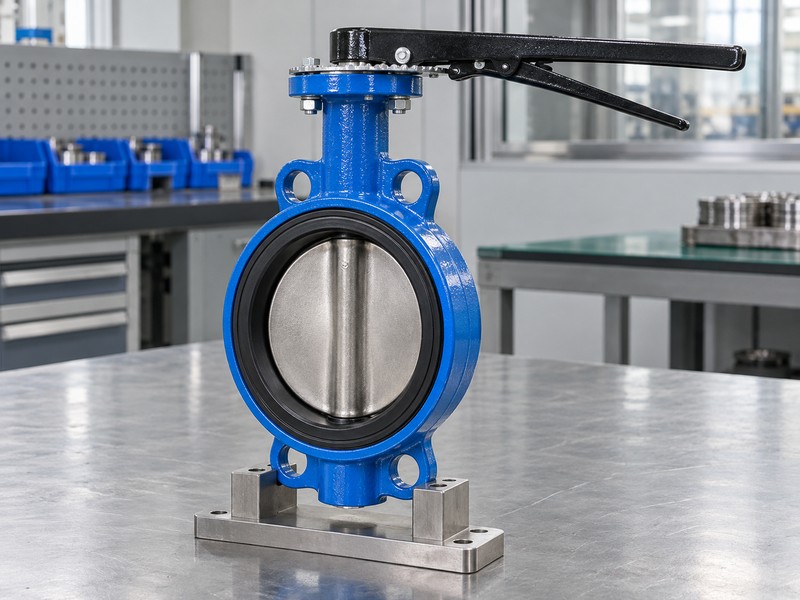
EPDM can suit soft seated butterfly valves for an approved water or inhibited glycol duty. The formulation and exposure conditions still need review. RUITO’s normal clean-water service is stated at 5–60°C within the model pressure rating; its cooling-water configurations cover approved ethylene glycol mixtures up to 40% by volume, with a working limit no greater than 10 barg.
What changes between water circuits?
Drinking water, cooling water and treated wastewater need separate reviews. Drinking-water contact requires the accepted compound and other wetted materials; glycol duty also needs inhibitor, pH and concentration data. Provide the water chemistry. Low-temperature glycol packages are separately verified, and ordinary water valves cannot inherit their scope or omit disinfectant and cleaning exposures.
- Declare water chemistry, additives and the cleaning sequence.
- Request destination-specific approval for the drinking-water configuration.
- Keep the normal and low-temperature product packages separate.
Key takeaway: Water-service suitability depends on the actual chemistry and approval, not the word EPDM alone.
| Check | What you should confirm |
|---|---|
| Clean water | Approved compound and model pressure-temperature scope |
| Glycol circuit | Concentration, inhibitors, pH and operating temperature |
| Drinking water | The accepted model and complete contact-material scope |
3. When does NBR suit soft seated butterfly valves?
NBR can suit soft seated butterfly valves in an approved mineral-oil configuration. RUITO’s stated wafer and lug oil selections cover compatible high-flash-point mineral oil, DN50–300, at 5–70°C and no more than 10 barg within the model rating. That scope does not authorize every fuel, solvent or hydraulic formulation sold under an oil description.
What should you ask about the oil?
Provide the oil grade, additive information and maximum temperature. Swelling can alter torque and disc contact before visible leakage appears. Use the actual oil. Agree the exposure checks, retain sample identity and conditions, and review the complete assembly rather than transferring an EPDM water-service approval into an oil quotation.
- Identify the oil grade and additive information available to you.
- Declare maximum temperature, exposure time and cycling frequency.
- Review seat swelling, hardness change and sealing performance together.
Key takeaway: Qualify the chosen compound against the oil used on site before approving repeat supply.
| Check | What you should confirm |
|---|---|
| Oil identity | The actual formulation and additive package |
| Rubber response | Project-agreed immersion and property-change evidence |
| Valve response | Closure, external leakage and operating torque after exposure |
4. How does PTFE change soft seated butterfly valves?
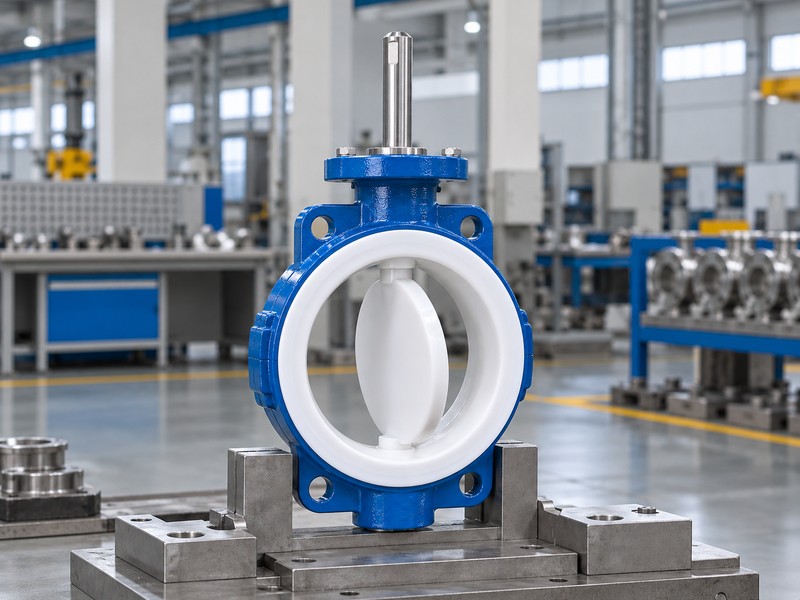
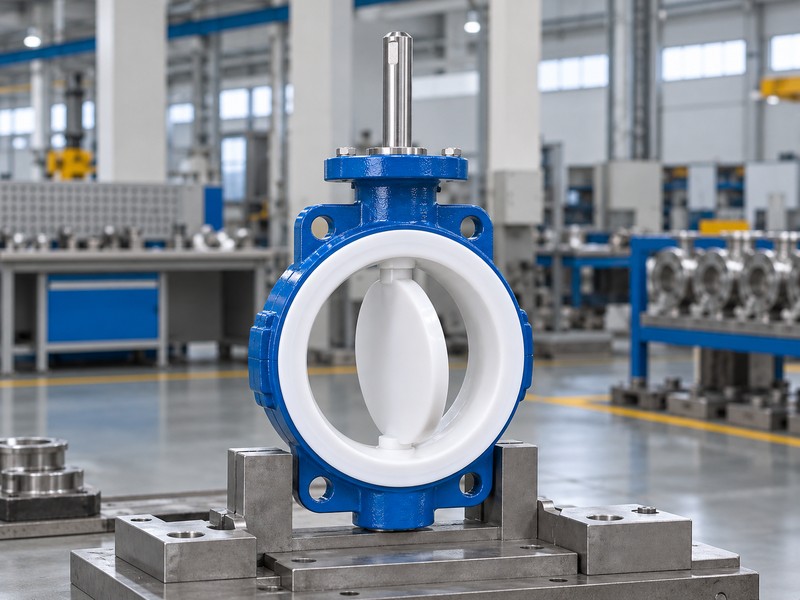
PTFE-lined soft seated butterfly valves use a polymer barrier and matched sealing construction for defined chemical duties. RUITO’s lined range has its own PN10 rating and configuration boundaries. The relevant selection covers the lining, coated disc, backing and shaft seals together. A high material temperature limit cannot be copied directly into the working limit of the assembled valve.
Where can the lining be vulnerable?
Inspect flange faces, shaft transitions, local lining thickness and handling damage. Excess tightening can crush a lined face, while reduced-pressure service needs its own retention review. Review the actual section. State concentration, impurities, cleaning fluids and minimum absolute pressure; the defined RUITO chemical windows do not authorize every acid or alkali duty.
- Review the lining section, backing and auxiliary seal materials.
- State minimum absolute pressure and every cleaning chemical.
- Specify handling protection and the approved flange-tightening method.
Key takeaway: Treat a lined valve as a complete engineered configuration with its own service envelope.
| Check | What you should confirm |
|---|---|
| Continuous lining | The complete barrier around the bore and shaft regions |
| Temperature | The assembled valve’s rated duty and derating |
| Installation | Supported flange faces and controlled assembly compression |
5. How does PFA differ in soft seated butterfly valves?
PFA-lined soft seated butterfly valves need a clearly identified lining system, not a generic fluoropolymer description. RUITO distinguishes its full PFA wetted lining and coated disc from assemblies combining a PFA-coated disc with a different seat. The actual resin, backing, shaft seals and minimum lining thickness belong on the approved material and section records.
Which claims require their own evidence?
PFA alone does not establish cleanliness, vacuum suitability or a pharmaceutical application. RUITO’s full PFA-lined range is DN25–200, assembled PN10, with chemical working limits tied to the specified mixture and temperature. Name the full construction. Compare local thickness, flange faces and shaft isolation before approving a substitute for the wetted lining system.
- State whether the complete wetted lining and disc coating are PFA.
- Keep resin, backing and auxiliary seals traceable to the approved build.
- Request the configuration-specific lining and pressure inspection records.
Key takeaway: A precise material description prevents a mixed-polymer assembly from being accepted as a full PFA-lined valve.
| Check | What you should confirm |
|---|---|
| Full PFA build | Body lining and disc coating both identified |
| Mixed polymer build | Each component material stated separately |
| Special qualification | Evidence for the actual cleanliness, vacuum or service claim |
6. Which metals belong in soft seated butterfly valves?
The wetted metals in soft seated butterfly valves must suit the fluid independently of the seat. A seat can protect much of the body bore without isolating every disc or shaft surface. RUITO’s normal water configuration uses a defined ductile-iron body, CF8M disc and checked stainless shaft. Marine and chemical selections require their own corrosion and isolation review.
Can stainless steel settle the review?
A stainless description does not establish alloy grade or chloride resistance. Seawater can introduce crevice and galvanic corrosion concerns at moderate pressure. Trace the metal grades. Review exposed surfaces, flow and connected materials against the dedicated seawater configuration; an ordinary water valve cannot inherit that scope from a bright disc or black seat.
- Identify the actual disc and shaft grades and exposed surfaces.
- Review chlorides, flow conditions and galvanic material combinations.
- Link material records with the supplied valve and approved drawing.
Key takeaway: A chemically compatible seat still needs suitable metals, shaft seals and a verified wetted-path design.
| Check | What you should confirm |
|---|---|
| Disc | The actual wetted alloy and corrosion assessment |
| Shaft | Material, exposure and required strength together |
| Isolation | The section showing which metal surfaces remain wetted |
7. How do you age-check soft seated butterfly valves?
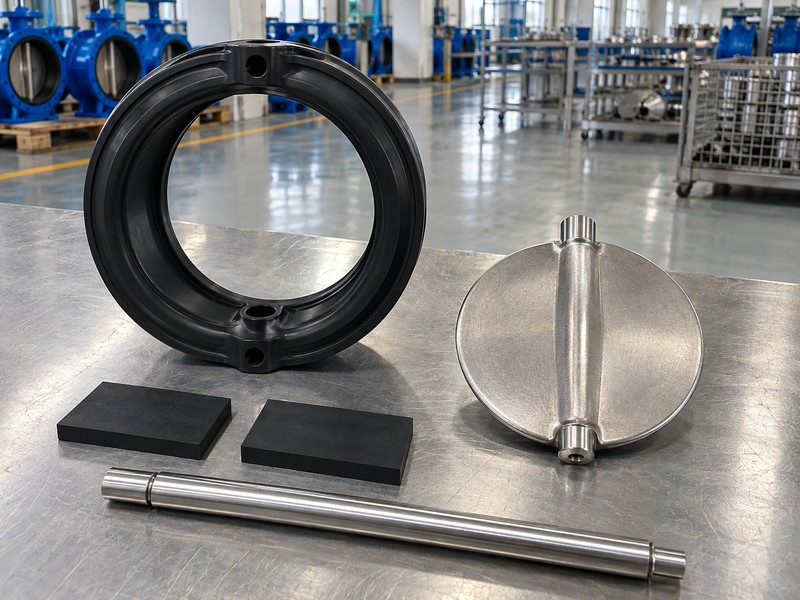
Check soft seated butterfly valves for the ageing mechanisms caused by their actual duty: chemical exposure, temperature, compression and operating cycles. A new seat may close tightly yet behave differently after storage or repeated operation. Specify the inspection or representative validation appropriate to the project instead of inventing a universal service-life number.
Which changes affect sealing first?
Swelling, hardening, compression set and damage can alter closure and torque. Match the agreed exposure and acceptance checks with the fluid and temperature expected in service. Keep the exposure record. Preserve spare-seat storage and batch identity, and review any compound change rather than treating colour or matching dimensions as performance evidence.
- Record storage conditions and the supplier’s handling instructions.
- Agree the relevant exposure, cycle and property checks for the duty.
- Require approval before changing the compound in a repeat order.
Key takeaway: Plan ageing checks around the mechanism your service can cause, rather than a generic lifetime promise.
| Check | What you should confirm |
|---|---|
| Chemical ageing | Specified fluid, temperature and exposure period |
| Compression response | Seat recovery and closure performance after service |
| Batch continuity | The same approved compound or an accepted change |
8. How does flow affect soft seated butterfly valves materials?
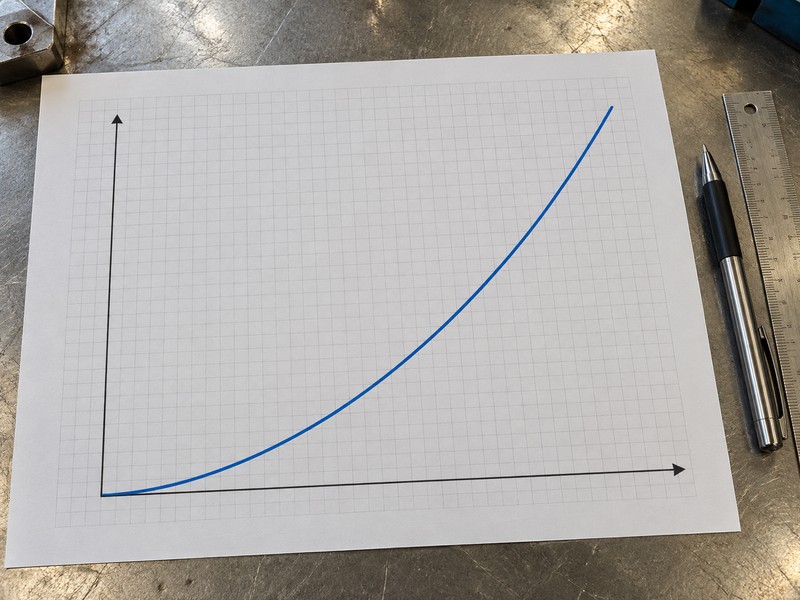
Flow affects soft seated butterfly valves through pressure drop, velocity, cavitation risk and any solids contacting the seat and disc. A material that suits the chemistry may still wear in an unsuitable hydraulic duty. Review the model flow coefficient and permitted operating positions with the fluid’s density, viscosity and particle information.
What should a flow review separate?
Keep a coefficient calculation separate from a seat-life claim. A schematic curve shows a hydraulic trend and cannot establish wear limits or prolonged throttling suitability. Check the operating position. Assess particle and fibre information against the defined duty; RUITO treated-water configurations cover specified low-solids, low-fibre, nonabrasive conditions rather than arbitrary slurry service.
- Provide the flow range and the permitted system pressure loss.
- Describe particle size, hardness, concentration and fibre content.
- Confirm the approved opening range and any throttling restrictions.
Key takeaway: Combine hydraulic suitability with material compatibility before accepting a valve for continuous operation.
| Check | What you should confirm |
|---|---|
| Hydraulic duty | Approved coefficient and fluid properties |
| Solid content | Particle and fibre information tied to the selection |
| Seat exposure | The permitted operating position and pressure differential |
9. Which tests qualify soft seated butterfly valves materials?
Qualify soft seated butterfly valves with material records and the inspections required by the actual assembly. Pressure and closure tests establish defined valve results; they do not prove every material exposure is acceptable. For lined valves, thickness, integrity and flange-face checks accompany the stated pressure programme. Agree the required evidence before comparing final offers.
How should reports identify the build?
Connect product ID, material schedule, drawing revision and test conditions in the report. A method such as ISO 5208 accompanies the agreed product requirements. Verify the identifiers. Keep immersion, liner-integrity, pressure and function results distinguishable, because a different model’s pressure report cannot approve the changed material configuration.
- Connect the component batches with the delivered product IDs.
- State exposure and liner checks separately from pressure results.
- Record accepted deviations and the applicable inspection revision.
Key takeaway: Accept a linked evidence package whose separate checks cover the actual material and valve configuration.
| Check | What you should confirm |
|---|---|
| Material record | Approved component identities and associated batches |
| Assembly test | Closure and external-leakage results for the supplied build |
| Special inspection | Liner or exposure evidence for the defined duty |
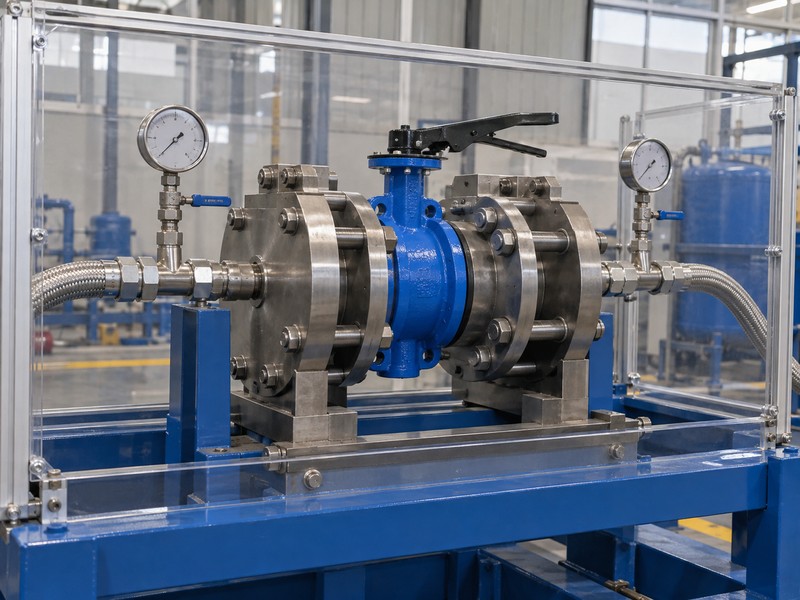
10. How do you order spares for soft seated butterfly valves?
Order spares for soft seated butterfly valves by the approved valve identification, seat design and compound. Pipe diameter and rubber colour are insufficient. The same nominal seat size may have a different profile, shaft-hole arrangement or retention system. Include the service fluid and current drawing revision when you request replacement components.
When should you review the replacement?
Compare the spare with its approved reference and check storage condition before installation. Follow the manual for disassembly, shaft retention, lubrication and reassembly tests. Match the original configuration. A changed compound or profile needs an engineering decision and verification; request the correct RUITO part identification rather than accepting an untraceable ring that appears to fit.
- Supply valve ID, drawing revision and the original seat reference.
- Confirm the replacement compound and its storage condition.
- Complete the prescribed reassembly and closure checks before return to service.
Key takeaway: A traceable spare preserves the approved sealing configuration and gives the repair team a defined acceptance basis.
| Check | What you should confirm |
|---|---|
| Identification | Exact valve and approved spare-part reference |
| Condition | Correct compound, profile and storage history |
| Return to service | The required reassembly and leakage verification |
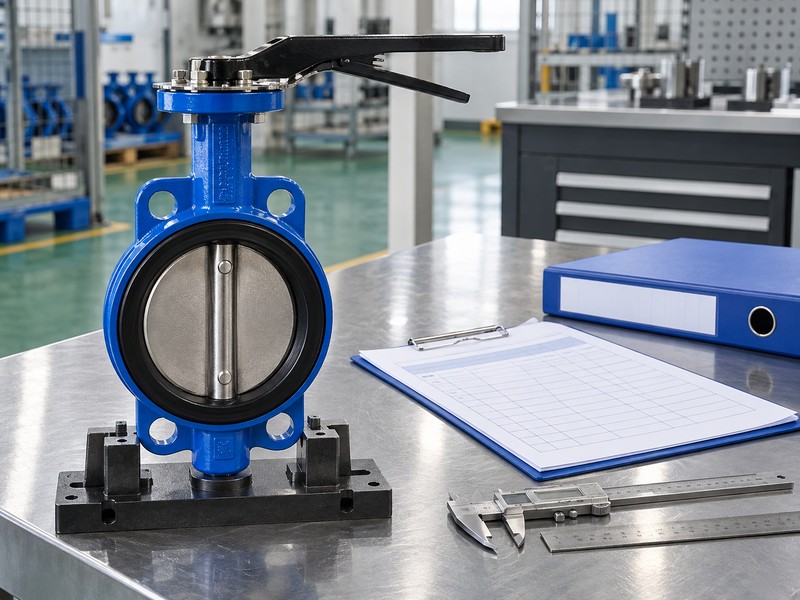
Send your fluid schedule, concentration basis, cleaning cycle and pressure-temperature envelope to RUITO. We can compare the available elastomer or polymer-lined configurations and define the material, drawing and inspection scope for your order. Contact us before you approve a material substitute or repeat purchase.
FAQ
Q1: Can I identify EPDM and NBR from their colour?
No. Use the part identification, approved material schedule and batch records; appearance alone does not establish the compound.
Q2: What’s the best seat for my chemical line?
Choose from the complete chemical duty. Concentration, impurities, cleaning fluids, temperature and the whole wetted construction determine the review.
Q3: Can a coated disc be called a fully lined valve?
Only when the complete stated wetted lining is present. Identify the body lining, seat, disc coating and shaft-region materials separately.
Q4: How do I know if a seat change affects the actuator?
Review its operating torque and closure behaviour. A different compound or seat profile can change the drive demand even at the same DN.
Q5: Can I reuse a pressure-test certificate for a new compound?
Do not treat it as full approval. Identify the changed configuration and agree which material, function and leakage checks need repeating.