
Compare "spring return butterfly valve manufacturers" by the evidence behind the offered assembly. A factory photograph, broad catalogue, or low unit price leaves the valve load, return action, materials, and acceptance scope unresolved. Qualify the proposed configuration and the organization responsible for it before approving a production order.
1. What should spring return butterfly valve manufacturers supply?
Spring return butterfly valve manufacturers should define the valve, operator, mounting hardware, controls, service boundaries, and acceptance evidence included in their offer. Some organizations manufacture valve components, some manufacture actuators, and some integrate purchased parts into a tested assembly. Those roles can support different supply arrangements. Ask who owns design approval, torque matching, assembly, testing, and technical changes.
A company description alone does not identify who takes responsibility for the complete ordered package.
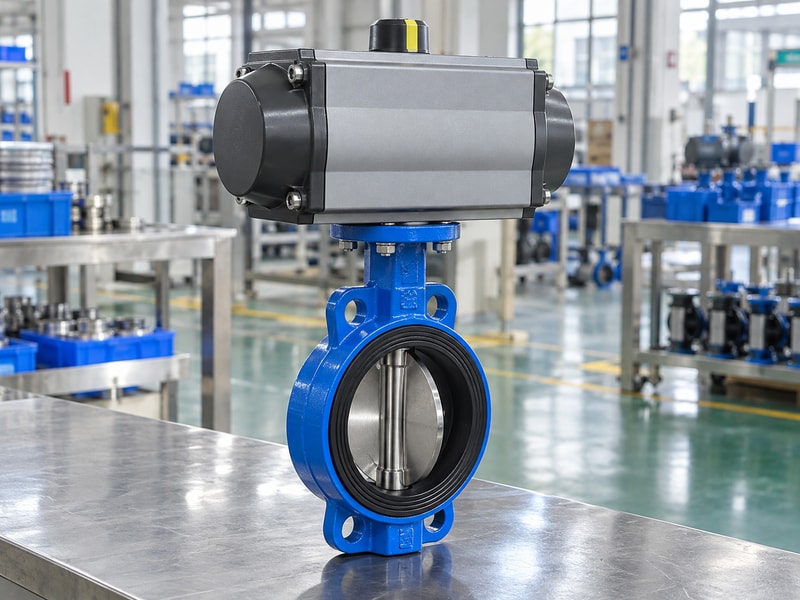
Compare actual supply boundaries
Request an itemized assembly list and a clear statement of work. Identify bought-in components and the process used to qualify them. A wafer butterfly valve package still needs a compatible drive connection, mounting kit, control arrangement, and agreed tests when those components come from different sources. The useful comparison is whether the manufacturer controls the offered assembly and can provide its evidence.
Manufacturing every component in one location is not the only way to meet that requirement.
- Identify component manufacturing and assembly responsibilities.
- Name the owner of the complete matching review.
| Role | Evidence to request |
|---|---|
| Valve manufacturer | Configuration, materials, ratings, and valve tests |
| Actuator source | Output curves, operating limits, and instructions |
| Assembly integrator | Interface design, adjustment, controls, and functional test |
2. How do you compare product scope against your duty?
Compare spring return butterfly valve manufacturers against the exact duty rather than the largest size or highest temperature shown anywhere in a catalogue. Give each candidate the same fluid, size, connection, operating cases, closing differential pressure, utilities, failure sequence, and acceptance requirements. Ask which configuration covers them. Separate standard options from items requiring a new technical review.
A broad product range does not establish that every material, size, operator, and service limit can be combined.
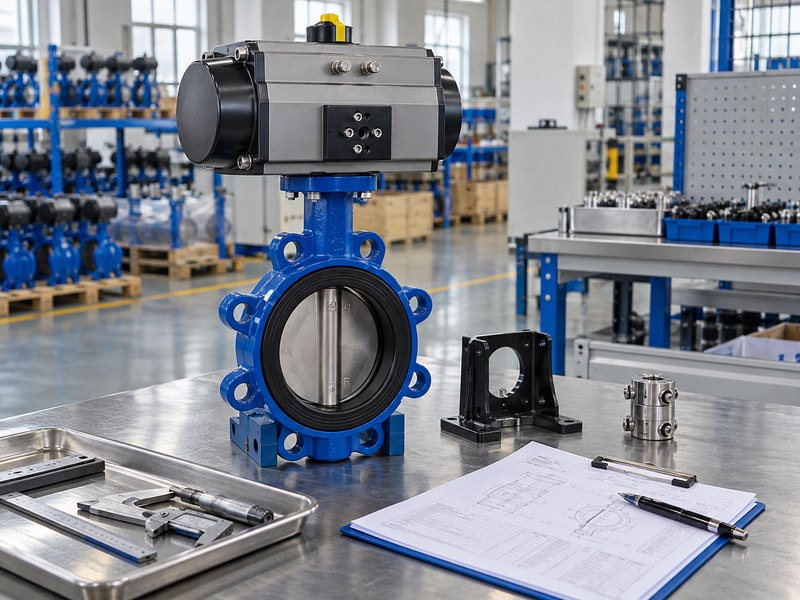
Keep operating cases connected
Require the proposed pressure and temperature limits to apply simultaneously to the offered configuration. Check pressure direction, seat differential rating, installation constraints, and environmental conditions. Identify any exclusions, such as specialist vacuum, hazardous locations, or a certification the offered package does not cover. RUITO treats product configuration and service boundaries as order-specific review items.
Use the same approach when comparing candidates so a narrower but accurate offer can be assessed against a broader offer containing unresolved assumptions.
- Use one common duty sheet for all candidates.
- Require a configuration-specific statement of coverage.
| Comparison | Common input |
|---|---|
| Service | Fluid, temperature, pressure, differential, and direction |
| Installation | Connection drawing, clearance, and environment |
| Operation | Utilities, cycle pattern, failure sequence, and tests |
3. What torque-matching evidence should a manufacturer retain?
Spring return butterfly valve manufacturers should retain the valve torque basis and the actuator output comparison for the offered assembly. The review needs the normal and spring-driven strokes, actual operating cases, minimum moving supply condition, and stated sizing allowance. Ask which travel region and condition controls selection. The record should also identify permitted loads on the shaft, coupling, bracket, and attachment so an actuator substitution cannot be approved from peak output alone.
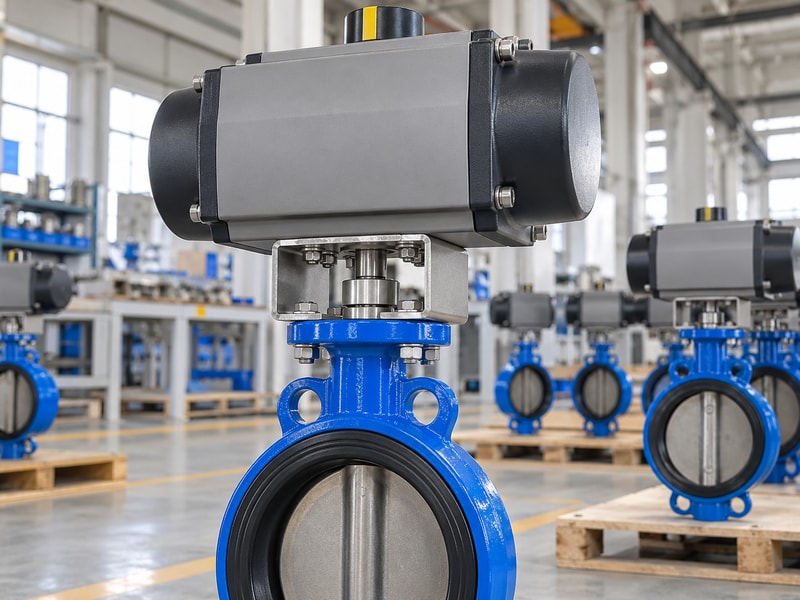
Check the interface beyond its designation
Review shaft geometry, engagement, mounting alignment, fasteners, and the complete mounting-kit drawing. The ISO 5211 attachment scope can support an interface review where applicable, but the assembled package still needs its own design and matching data. A lug butterfly valve assembly also retains its pipe-connection requirements. Ask how the manufacturer revises drawings and calculations when the seat, operator, spring configuration, or service case changes after the original quotation.
- Request full-stroke matching data and the controlling case.
- Check how technical changes update the assembly record.
| Record | Required detail |
|---|---|
| Valve torque | Actual configuration and operating conditions |
| Actuator output | Both strokes and specified supply conditions |
| Mechanical interface | Drawing, engagement, alignment, and load limits |
4. Which manufacturing controls protect the valve geometry?
Manufacturing controls used by spring return butterfly valve manufacturers should protect the dimensions and features that govern assembly, movement, and sealing. Ask how the body, disc, shaft, seat, sealing surfaces, and mounting interfaces are inspected against approved drawings. Identify the control of machining, coating, liner processing where applicable, and final assembly. A general workshop tour is less useful than a demonstration of how the actual offered configuration meets its dimensional and process requirements.
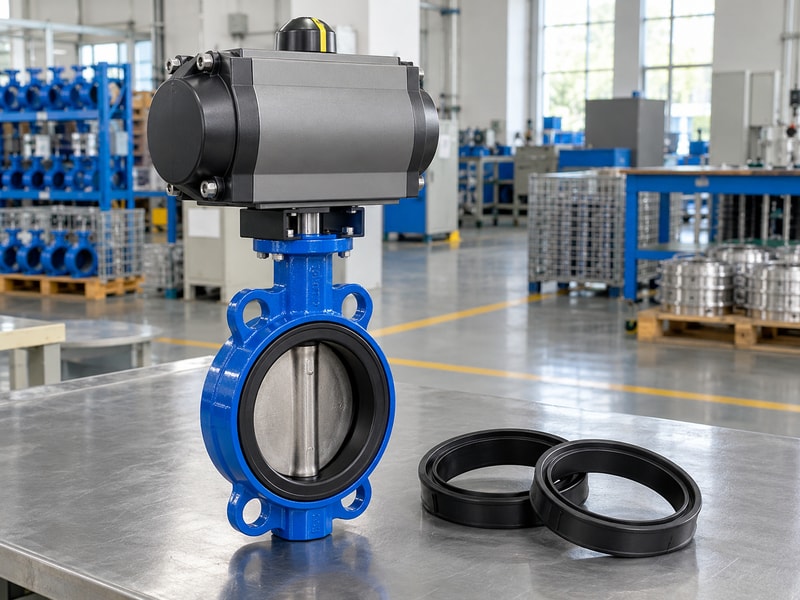
Sample the controls that affect your order
During a technical review or factory assessment, select an offered size and ask how its approved drawing connects to inspection records. Check the controls for disc-seat fit, shaft alignment, flange details, and mounting dimensions. Ask how nonconforming parts are identified, segregated, corrected, and released. Review bought-in components through the same configuration boundary.
The aim is to understand the manufacturer's control of the ordered assembly without assuming that every process visible in the workshop is relevant to your product.
- Follow one offered configuration from drawing to inspection.
- Check identification and control of nonconforming parts.
| Feature | Control to review |
|---|---|
| Sealing geometry | Disc, seat, surfaces, and assembly inspection |
| Shaft and mounting | Alignment, dimensions, engagement, and fasteners |
| Process-dependent features | Applicable coating, lining, and bought-in component controls |
5. How should materials and seal compounds be traced?
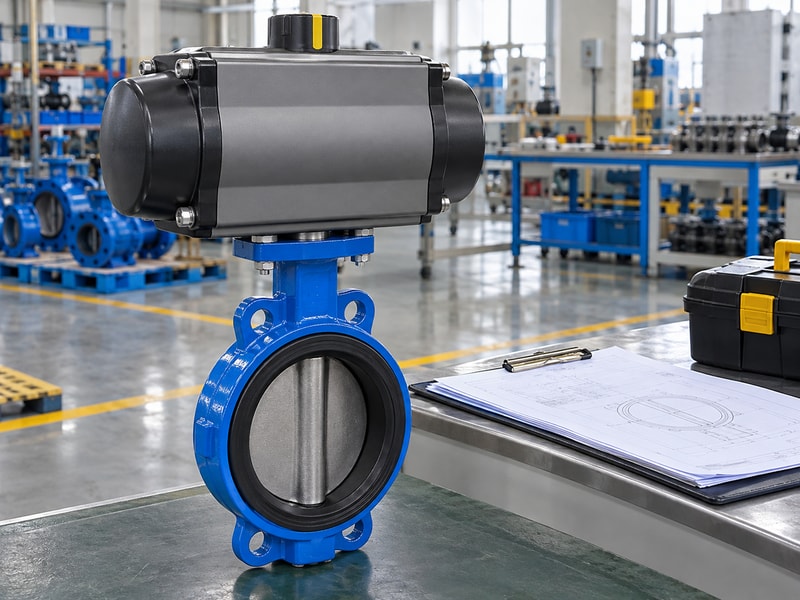
Spring return butterfly valve manufacturers should identify the actual materials and seal compounds supplied in the reviewed configuration. Ask how metal grades, heat or batch identification where required, elastomer compounds, liners, and auxiliary seals connect to the assembly record. A certificate for one component does not identify every wetted material. A material change can also affect operating torque, compatibility, and temperature limits, so substitution control belongs in both manufacturing and technical review.
Review configuration-specific evidence
Compare documents with the parts and acceptance requirements they actually cover. Check whether the record identifies the supplied size, material, and process rather than another product family. For a lined butterfly valve, review the complete wetted barrier, backing, shaft seals, and applicable lining inspection. Appearance or color cannot establish resin, compound, or alloy.
Agree which records are required for the order and at what stage they must be available for review or witness.
- Identify all wetted materials and auxiliary seals.
- Link approved substitutions to revised matching and test data.
| Material item | Traceability question |
|---|---|
| Metal components | Which grade and required heat or batch record applies? |
| Seats and seals | Which exact compound and approved source is supplied? |
| Lining system | Which construction and inspection records cover this configuration? |
6. Which tests should the manufacturer perform?
Agree the tests expected from spring return butterfly valve manufacturers before production so the inspection plan covers the offered valve and its actuation. Separate pressure-containing and shutoff tests from travel, return action, controls, and feedback. Define test conditions, methods, criteria, identification, and witness points. A valve pressure test does not cover the pneumatic circuit.
A no-load actuator movement does not cover the complete valve's torque or installed failure response.
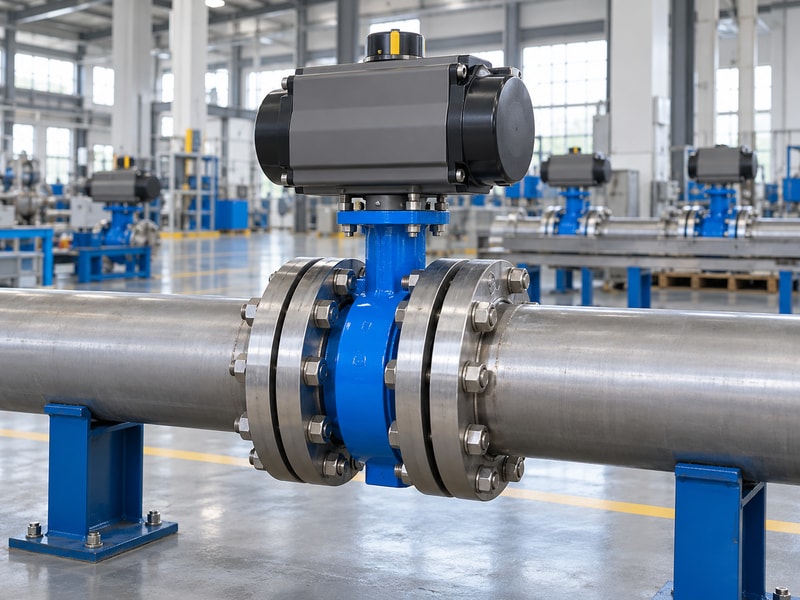
Connect the test record with the delivered assembly
Ask how the manufacturer identifies the unit, configuration, test equipment, procedure, and result. Check which factory conditions represent the ordered duty and which site checks remain necessary. A spring-return assembly needs a specified loss-of-utility sequence and a verified endpoint under agreed conditions. Feedback and shutoff leakage need separate acceptance records where specified.
If a component is replaced after testing, require an assessment of the affected evidence and any repeat tests before the unit is released.
- Specify valve and actuator acceptance items separately.
- Agree witness and repeat-test conditions before manufacture.
| Test family | Coverage |
|---|---|
| Pressure and leakage | Selected valve method, conditions, and criterion |
| Actuation | Normal travel, return, timing, and controls |
| Final configuration | Identification of the assembly tested and released |
7. What do certificates establish about the offered product?
Certificates supplied by spring return butterfly valve manufacturers establish only the scope and conditions stated in those documents. A management-system certificate addresses a different boundary from a material report, a product approval, or a safety-related assessment. Check issuer, validity, scope, manufacturing location where relevant, and coverage of the offered configuration. Avoid treating a collection of logos as evidence that every valve, actuator, material, size, and application in the catalogue has the same approval.
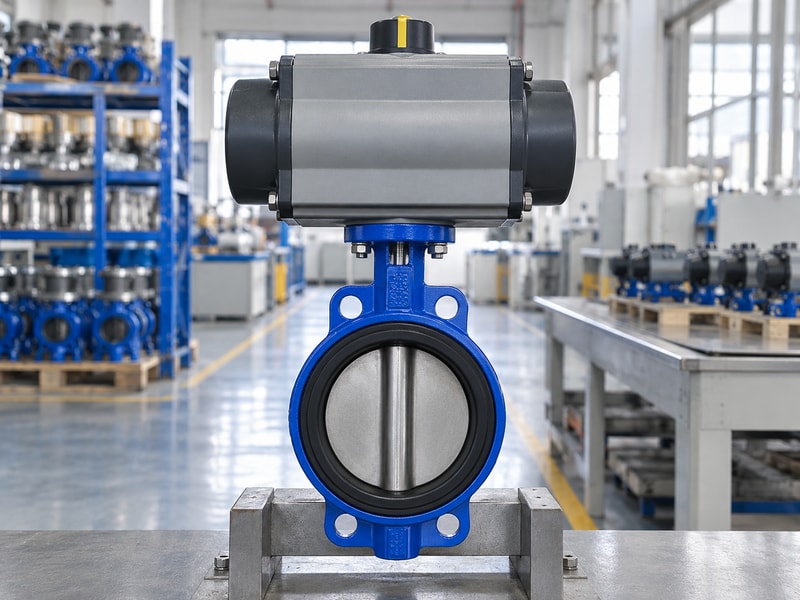
Ask for the document behind the claim
List the project approvals and reports required for the actual destination and duty. Ask the manufacturer to identify the exact covered configuration and any conditions of use. A spring mechanism does not by itself establish a complete safety function, and an enclosure's appearance does not establish hazardous-area suitability. Where documentation is missing, keep that requirement unresolved rather than substituting a related certificate.
Make the required evidence part of the order and inspection plan before manufacturing release.
- Read scope and conditions rather than relying on a logo.
- Keep management, material, product, and system evidence distinct.
| Document | Boundary to verify |
|---|---|
| Management-system certificate | Organization, scope, location, and validity |
| Material or inspection record | Covered parts, configuration, method, and result |
| Product or function approval | Exact configuration and stated conditions of use |
8. How do you assess service and spare-parts support?
Assess spring return butterfly valve manufacturers by how they identify spare parts, control revisions, support technical questions, and handle the offered assembly after delivery. Ask which valve and operator parts are configuration-specific and how replacements are matched to the original record. A seat that fits dimensionally can still change compatibility or operating torque. A solenoid with a similar appearance can change the failure sequence.
Service support needs access to the actual assembly information.
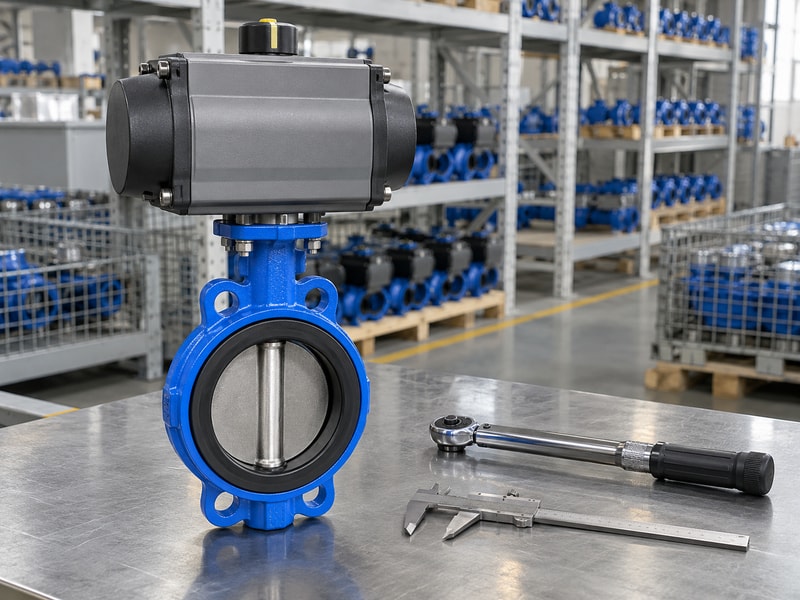
Review a realistic replacement request
Choose a representative item from the proposed package and ask what identification the manufacturer needs to supply it correctly. Check whether instructions address isolation, stored spring energy, adjustment, and return to service. Ask how technical changes and revised parts are communicated and approved. Confirm the availability basis and lead time for the required spares without accepting an unsupported universal promise.
Keep the parts list and maintenance documents with the final handover package so site staff can request the correct configuration.
- Use assembly identification when requesting spares.
- Confirm the review required after material or control changes.
| Support item | Question |
|---|---|
| Spare parts | How is the exact configuration identified? |
| Maintenance | Which instructions and stored-energy procedures apply? |
| Changes | How are revisions approved and recorded? |
9. How should you make the final manufacturer comparison?
Compare spring return butterfly valve manufacturers using the same duty and complete supply boundary, then document the differences that affect acceptance and installed use. Review technical coverage, unresolved assumptions, matching evidence, materials, tests, documents, service, and total delivered scope. A low unit price can omit controls or required inspection. A large catalogue can still leave your exact configuration unconfirmed.
Record why the selected offer meets the requirement and which conditions must be resolved before release.
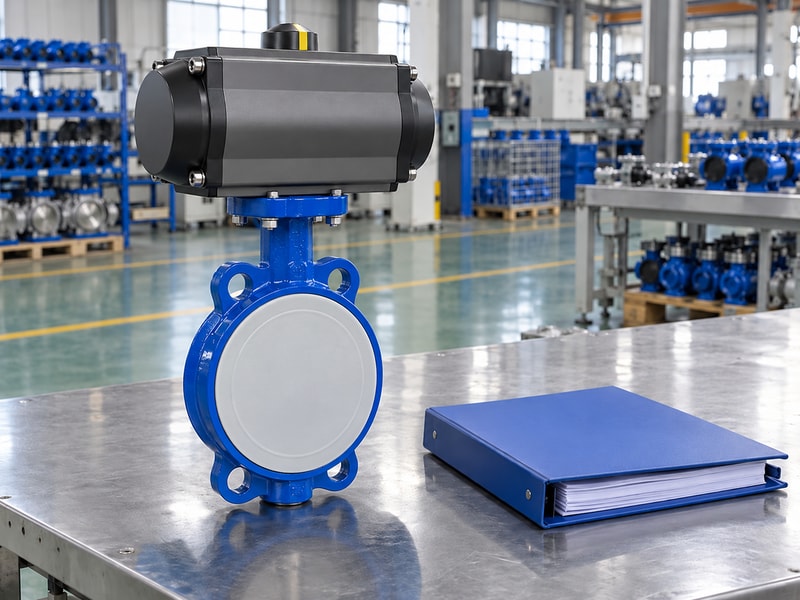
Turn the comparison into an enforceable order scope
Attach the approved technical schedule, assembly boundary, inspection plan, document list, and substitution procedure to the purchase scope. Define the manufacturing release point and separate it from transport and customs time. RUITO can review a requested valve and actuation configuration against the supplied duty, with availability and acceptance requirements confirmed for the order. Use written evidence for the chosen package so the production and receiving teams work from the same configuration rather than a general supplier profile.
- Compare equivalent technical and delivery boundaries.
- Record unresolved items and approval conditions before release.
| Decision area | Recorded basis |
|---|---|
| Technical coverage | Configuration and duty matched to the requirement |
| Acceptance | Tests, documents, witnesses, and remaining site work |
| Supply | Included components, change control, spares, and release conditions |
10. What should buyers ask during manufacturer qualification?
Q1. Can an assembly integrator be a suitable source?
Yes, if it controls the offered components, matching, assembly, testing, and technical changes. Identify responsibility and request evidence for the complete package.
Q2. Does a factory photograph prove manufacturing capability?
No. Follow an offered configuration from its approved drawing through relevant manufacturing controls, inspection, assembly, and acceptance records.
Q3. How do I know whether a certificate covers my order?
Read its scope, conditions, validity, and configuration coverage. Ask which offered parts, sizes, materials, location, and application it actually covers.
Q4. What is the best way to compare quotations?
Give every candidate the same duty and supply boundary. Compare technical coverage, matching data, tests, documents, exclusions, spares, and release conditions alongside price.
Q5. Can a replacement seat be accepted by dimensions alone?
No. Confirm compound, compatibility, operating limits, and the effect on torque and sealing. Review the change against the original assembly record.
Send the duty sheet and required acceptance scope when you contact us. RUITO can review the offered configuration and provide a basis for comparing the complete supply package.