
Fix a "spring return butterfly valve" selection by defining the complete package, operating duty, failure sequence, and acceptance evidence before comparing quotations. Buying only by pipe size and fail position leaves torque, interfaces, and controls unresolved. One approved assembly record gives the supplier and receiving team a clear basis for checking the delivered package.
1. What belongs in a spring return butterfly valve package?
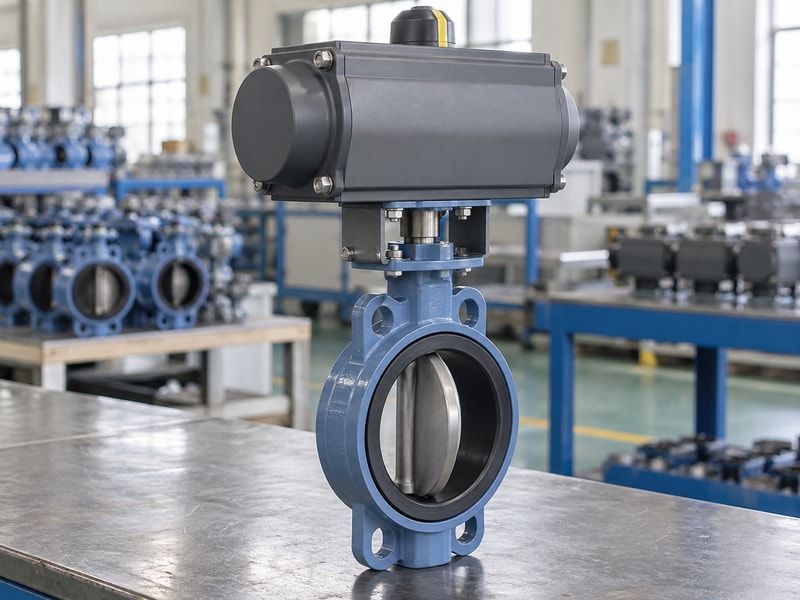
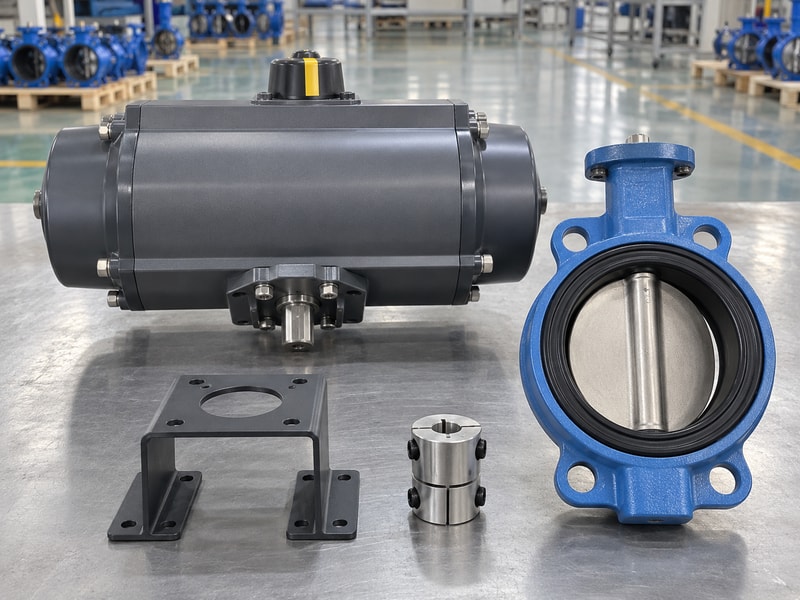
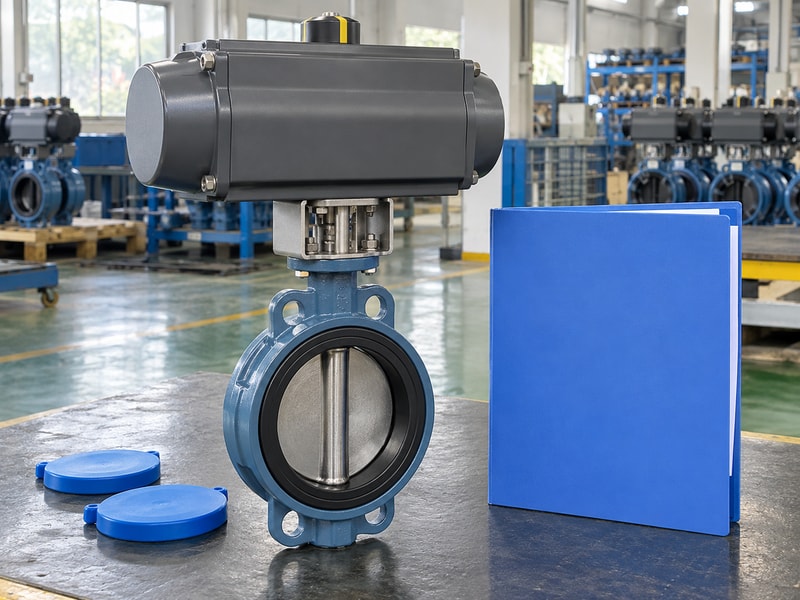
A spring return butterfly valve package includes the valve, spring-return operator, drive connection, mounting hardware, and the controls specified for the duty. For a pneumatic package, the supply boundary may also include a solenoid, air preparation unit, tubing, and position feedback. Suppliers do not always include the same accessories. Put an itemized assembly list beside the quotation so an apparently complete offer cannot conceal missing installation work or unpriced control components.
Name one owner for assembly matching
Identify who takes responsibility for actuator sizing, bracket strength, coupling fit, travel adjustment, and the assembled functional test. If the valve and actuator come from different sources, someone still needs to verify the combination. A spring return butterfly valve should have an assembly drawing that ties those parts to the ordered configuration. Specify whether the supplier delivers a tested assembly or separate components requiring site integration.
That distinction affects acceptance, installation time, and responsibility for corrections.
- List all included accessories and mounting parts.
- Assign responsibility for the complete assembly.
| Package boundary | Required clarification |
|---|---|
| Mechanical | Valve, actuator, bracket, coupling, and fasteners |
| Controls | Solenoid, feedback, tubing, and electrical interfaces |
| Integration | Assembly, adjustment, testing, and records |
2. Which process data should you send before selection?
A spring return butterfly valve inquiry needs fluid composition, nominal size, connection details, operating temperatures, working pressures, and maximum closing differential pressure. Include normal and upset conditions without combining limits from unrelated operating cases. State solids, fibers, cleaning fluids, and concentration where relevant. The supplier also needs cycle frequency, time held closed, installation orientation, available utilities, and environmental conditions.
Missing inputs should appear as unresolved items rather than becoming silent assumptions in the offer.
Distinguish the pressure quantities
Working pressure describes the pressure the assembly contains in service. Closing differential pressure describes the difference across the disc during operation or shutoff. Absolute pressure is relevant to vacuum, flashing, and certain lining limits. A pressure class or nominal PN designation does not replace the actual duty at temperature.
Give the operating cases in a small table with their associated temperatures, pressures, flow conditions, and failure responses. That format makes mutually incompatible combinations easier to catch during review.
- Provide linked operating cases instead of isolated maxima.
- State the closing pressure direction and differential.
| Input | Why the supplier needs it |
|---|---|
| Fluid and contaminants | Material and operating-torque review |
| Pressure and temperature together | Configuration-specific service rating |
| Maximum closing differential | Disc, seat, and actuator matching |
3. What sizing evidence should accompany the quotation?
Sizing evidence for a spring return butterfly valve should compare the valve's required torque with the actuator's available output through both travel directions. Request the valve torque basis, actuator curves, spring configuration, minimum moving air pressure, and sizing allowance. The calculation should cover breakaway, running, and seating demands where they control selection. It should also identify limits on shaft, coupling, and bracket torque so a proposed actuator increase does not overload the mechanical interface.
Make the controlling condition visible
Ask the supplier to identify which operating case, stroke, and travel region controls the selection. For pneumatic equipment, a static supply value may overstate the pressure available while air flows. For spring return, end-of-stroke capability may differ from the initial output. Keep the approved calculation with the spring return butterfly valve assembly record.
If the seat, actuator, spring pack, or service condition changes, the record shows which part of the original selection must be checked again.
- Request both air-driven and spring-driven output data.
- Record the assumptions and limiting interface loads.
| Document | Minimum content |
|---|---|
| Valve torque basis | Size, seat, service conditions, and travel demands |
| Actuator output | Both strokes at the stated supply condition |
| Matching review | Sizing allowance and permitted interface torque |
4. How should the required fail action be written?
Write the spring return butterfly valve fail action as a response to a named event. Specify the required disc position after air loss, electrical loss, control-signal loss, and any applicable trip command. State the permitted movement time and the conditions for restart. Fail-closed on a quotation can leave several different sequences unspecified.
A short cause-and-effect schedule is easier to test and less open to interpretation than a general claim that the assembly is fail-safe.
Include the return path and reset logic
The pneumatic circuit must let pressure leave the chamber that opposes spring movement. Check the solenoid function, manual override position, exhaust arrangement, and any isolation devices. A closed air supply valve does not necessarily vent trapped pressure. During electrical restoration, decide whether the assembly may return to its normal command or needs a deliberate reset.
Include these states in the factory test where practicable and identify the remaining site checks before the equipment is placed into operation.
- Name the event, endpoint, and permitted time.
- Define what happens when utilities return.
| Sequence item | Purchase wording should define |
|---|---|
| Failure event | Air, power, signal, or a specified trip |
| Required response | Endpoint, timing, and feedback state |
| Recovery | Automatic restart or controlled reset |
5. How do you approve materials without overgeneralizing?
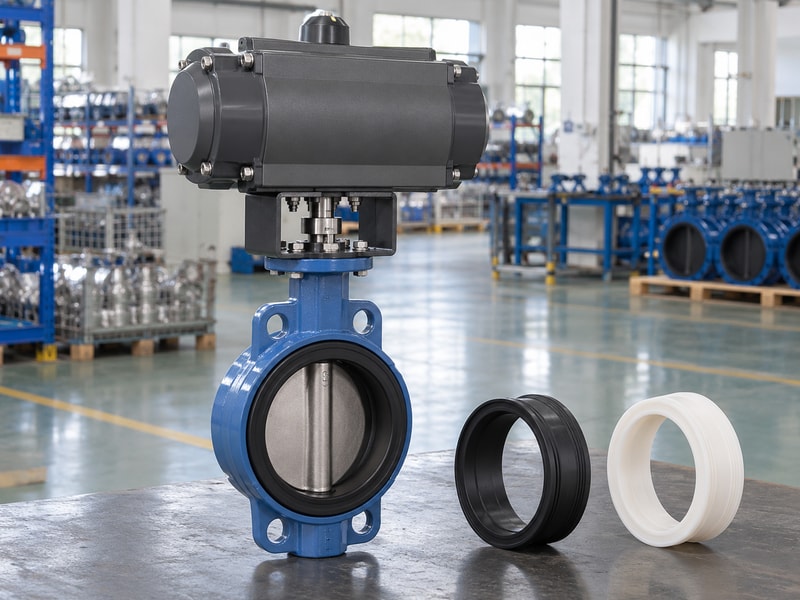
Approve spring return butterfly valve materials for the exact fluid and service conditions, including every wetted component. Record body, disc, shaft, seat, auxiliary seals, coating, and any liner with their actual grades or compounds. A familiar material name can cover several formulations or construction details. Ask how substitutions are controlled.
Water, oil, seawater, clean gas, and chemical-liquid configurations should retain their own documented limits rather than sharing an unrestricted product description.
Review the complete sealing configuration
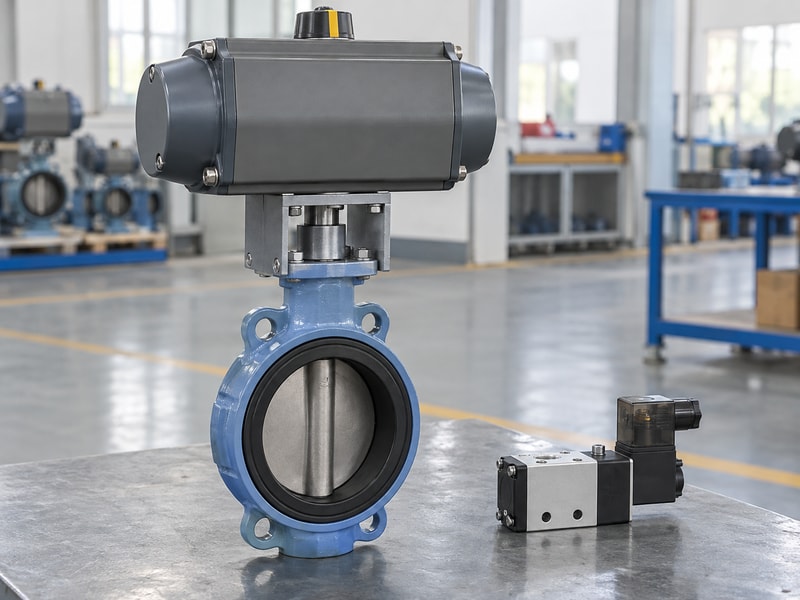
A seat compound affects fluid compatibility, temperature limits, sealing behavior, and operating torque. A lined configuration also depends on backing, retention, shaft seals, and minimum absolute pressure. Review the exact lined butterfly valve arrangement rather than assuming that a fluoropolymer surface establishes suitability for every corrosive duty. RUITO's product information separates these configurations and their limits.
Require a written material review when the fluid, cleaning regime, or offered seal changes after quotation.
- Keep material identification tied to the ordered assembly.
- Review replacement compounds before accepting a substitution.
| Part | Approval detail |
|---|---|
| Seat and auxiliary seals | Exact compound and fluid compatibility |
| Disc and shaft | Actual wetted grades and configuration |
| Lining system | Continuous barrier, backing, retention, and operating limits |
6. Which dimensions prevent installation surprises?
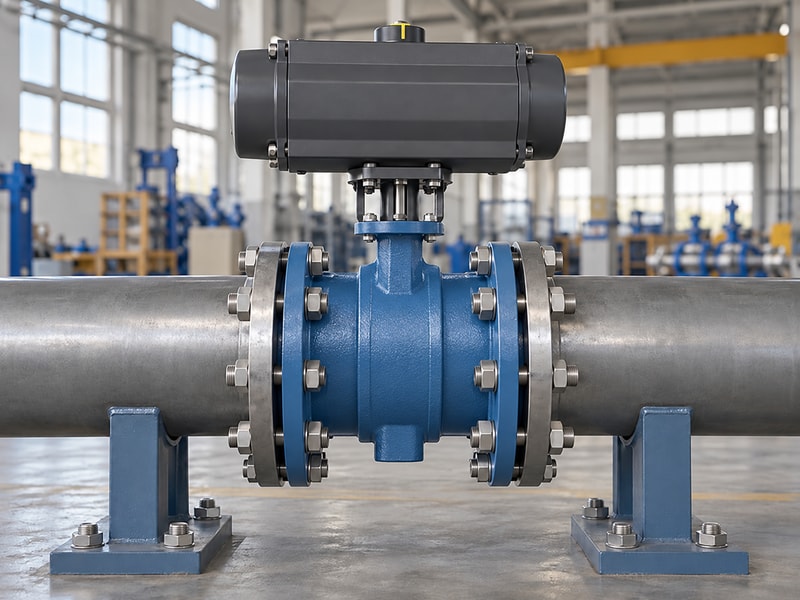
A spring return butterfly valve needs compatible pipe and actuator interfaces, adequate disc clearance, and a usable installation envelope. Check flange drilling, bore, face, face-to-face length, gasket arrangement, bolt engagement, shaft geometry, and mounting details. Nominal pipe size does not establish interchangeability. Include the actuator and accessories in the drawing review because an assembly can fit the pipe joint while colliding with nearby structures or leaving no practical maintenance access.
Compare drawings before approving a replacement
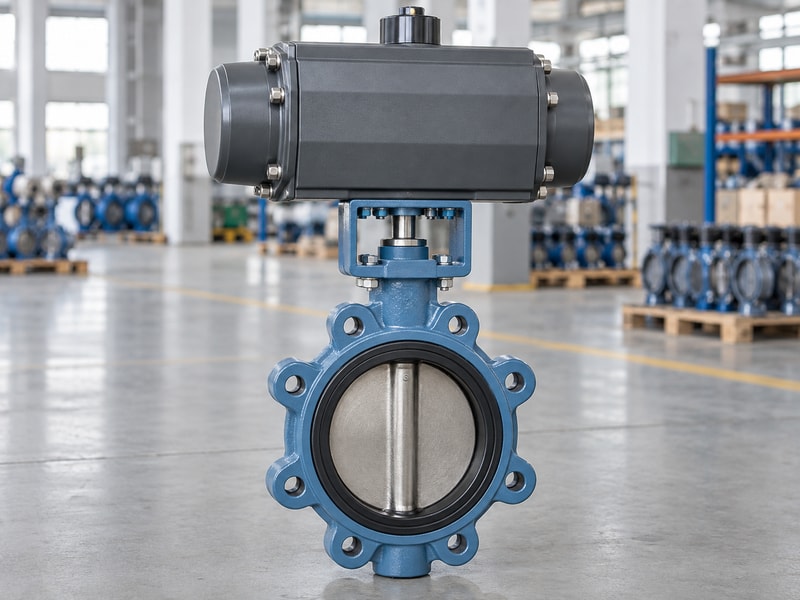
Use the existing valve's measured installation details and approved drawings where available. Confirm the disc's opening envelope against reducers, liners, gaskets, and adjacent pipe bores. Pipe supports should carry the piping load without using the actuator as a lifting or bracing point. A lug connection also needs its approved thread and bolt arrangement.
If end-of-line service is proposed, obtain the exact configuration's rating, pressure direction, and test coverage rather than inferring that capability from the body style.
- Review the full disc travel and accessory envelope.
- Confirm lifting, support, and maintenance access.
| Interface | Drawing check |
|---|---|
| Pipe joint | Bore, drilling, face, length, and fasteners |
| Drive connection | Shaft geometry, engagement, and alignment |
| Installed envelope | Disc clearance, accessories, supports, and access |
7. Which control details belong on the order?
The spring return butterfly valve order should identify supply conditions, solenoid function, electrical ratings, feedback signals, enclosure requirements, and the control sequence. Include the actual ambient environment and any location-specific requirements. Specify manual override behavior where provided. A generic control voltage alone does not define the circuit or the behavior after loss of power.
Confirm how the site control system interprets open, closed, fault, and intermediate states.
Keep mechanical indication and feedback aligned
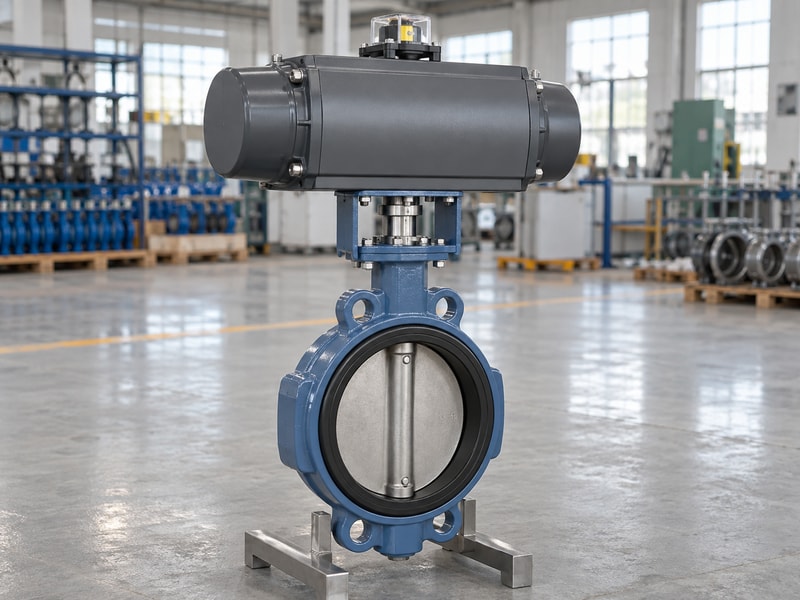
A local indicator, limit switch, or position signal needs adjustment against actual valve travel. Check the coupling so actuator movement corresponds to disc movement. Feedback establishes the reported position under the test conditions; it does not measure shutoff leakage. Ask the supplier to provide the wiring and pneumatic diagrams for the offered assembly, including terminal identification and contact logic.
Review changes to accessories against those diagrams before the package leaves the factory or a replacement is fitted on site.
- Specify signal types and contact interpretation.
- Record manual override and restoration behavior.
| Control item | Required detail |
|---|---|
| Supply | Dynamic air condition or electrical supply specification |
| Command | Solenoid function and cause-and-effect sequence |
| Feedback | Signal type, contact states, and adjustment basis |
8. What tests should be agreed before manufacture?
Agree spring return butterfly valve tests before manufacture so the supplier can prepare the correct configuration, equipment, and records. Separate pressure-containing and shutoff tests from actuator travel, return, feedback, and control-sequence checks. State the test method, conditions, duration, acceptance criterion, and witness requirements. A general inspection certificate can leave the return function untested.
A no-load actuator demonstration can leave the valve's assembled behavior outside the acceptance boundary.
State what remains for site commissioning
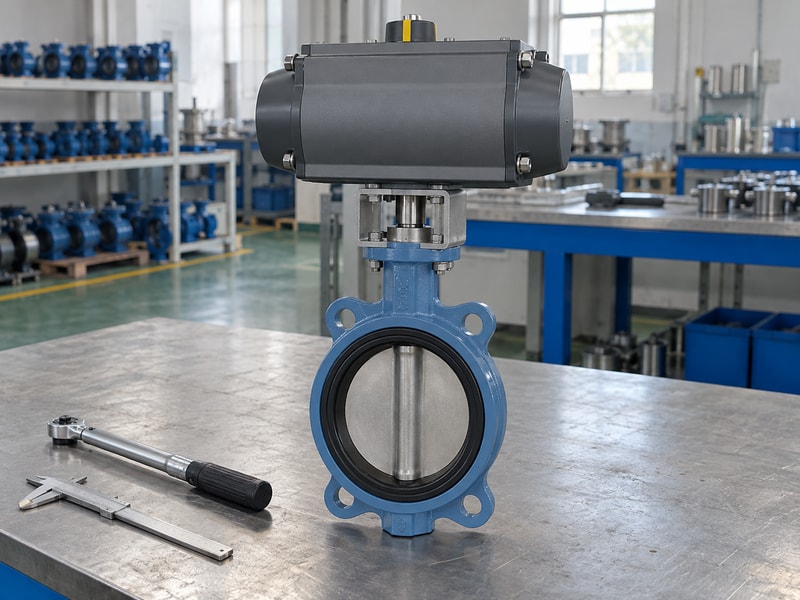
The factory may verify assembly, travel, controls, and the specified pressure tests, while the site must confirm actual supply conditions, process integration, and installed response. Identify those boundaries in the inspection plan. Record the unit identification, test configuration, measuring equipment, and results. If a component changes after testing, assess which records no longer cover the delivered assembly.
Any work near the disc or operator must follow the manufacturer's isolation and stored-energy procedure.
- Distinguish valve leakage from return movement.
- Identify witness points and site completion checks.
| Acceptance item | Evidence to retain |
|---|---|
| Pressure and leakage | Selected procedure, direction, conditions, and result |
| Actuation | Supply condition, travel time, return endpoint, and feedback |
| Configuration | Identification of the assembly actually tested |
9. Which documents and protections belong with delivery?
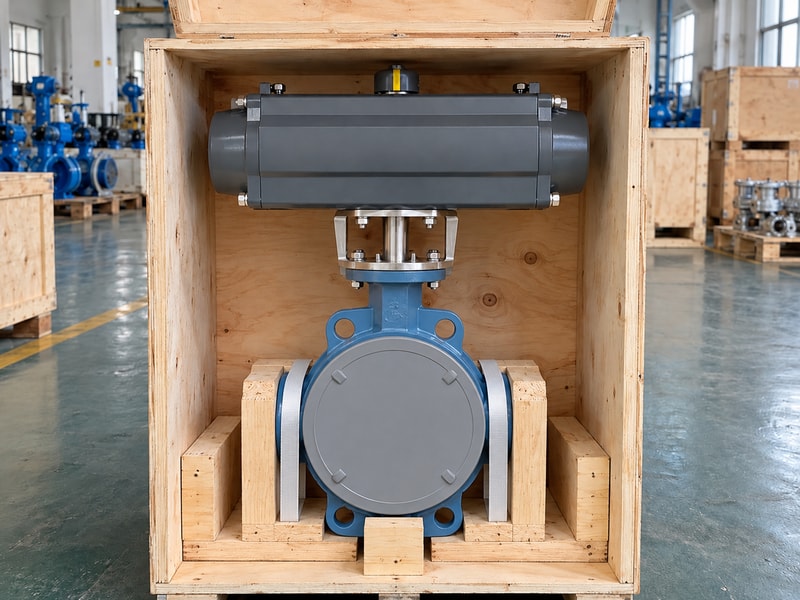
A delivered spring return butterfly valve should arrive with documents that identify the offered assembly and explain its installation, operation, and maintenance. Request the approved drawing, material identification, actuator sizing basis, control diagrams, operating instructions, and agreed test records. Specify port protection, packing, lifting information, and storage requirements. The required documents should be reviewed before dispatch when they affect acceptance or installation, rather than being treated as paperwork to request after the shipment arrives.
Control changes against the approved package
Record the approved configuration and the authority needed for substitutions. A different actuator, spring pack, coupling, or seat can alter the torque balance or failure response. Require the supplier to identify the change, provide revised matching data, and repeat affected tests. Keep spare-part identification linked to the same configuration.
For an export order, separate manufacturing release from transport and customs time so the delivery promise has a clear basis and receiving teams can plan their inspection.
- Review configuration-dependent documents before dispatch.
- Protect ports and support the valve body during transport.
| Handover item | Purpose |
|---|---|
| Approved assembly record | Identify the valve, drive, controls, and seals |
| Installation and operation instructions | Define safe handling, setup, and maintenance |
| Test and packing records | Connect acceptance evidence with the delivered unit |
10. What should you resolve before accepting the quotation?
Q1. Can I buy the valve and actuator separately?
Yes, if someone takes responsibility for their matching and assembly. Confirm torque, mounting, shaft connection, travel, controls, and the complete functional test before installation.
Q2. How do I know the quoted package is complete?
Ask for an itemized assembly list and scope boundary. Identify the controls, feedback, tubing, mounting kit, adjustment, testing, documents, and any work left to the site.
Q3. Can one material certificate approve the whole assembly?
No. Material identification supports the covered components. The complete review also needs seal compounds, service ratings, actuation matching, interfaces, controls, and the agreed test evidence.
Q4. What is the best way to control substitutions?
Require written approval against the assembly record. Ask for the technical difference, revised matching data, affected drawings, and any tests that must be repeated.
Q5. Does a factory test remove the need for site checks?
No. Site checks confirm the installed interfaces, actual utilities, control integration, and required process response. Agree the factory and site boundaries before placing the order.
Send the duty sheet, connection details, and required failure sequence when you contact us. RUITO can review the assembly scope and acceptance requirements with those inputs.