
Check a triple offset metal seated butterfly valve against its sectional drawing, material schedule, maintenance instructions, and agreed leakage test. “Metal seated” leaves several questions unanswered, including which ring moves, what touches the seat, and which parts can be replaced.
1. What seals a triple offset metal seated butterfly valve?
The disc-side and body-side sealing surfaces meet during final closure. A triple offset metal seated butterfly valve uses offset geometry to separate those surfaces through most of its travel. Applied closing torque establishes the required seating contact in torque-seated designs. Confirm which surface carries the replaceable ring from the selected design’s sectional drawing.
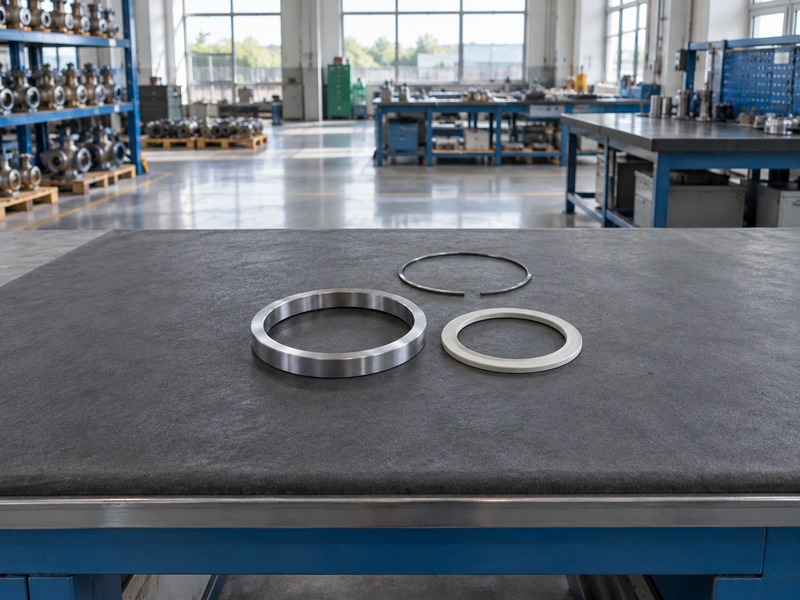
Identify each sealing boundary
Ask for a sectional drawing that distinguishes the body seat, seal ring, retainer, and any gasket behind the ring. A gasket can prevent leakage behind a replaceable ring while the ring's edge seals against the seat. Confusing those functions can lead a repair team toward the wrong replacement part. Use consistent part names between the drawing, spare quotation, and maintenance instructions.
Trace the external pressure boundary separately. Shaft packing, body joints, and bottom covers have their own leakage paths. A closure-test result does not establish their condition, and tightening a packing gland cannot repair damaged seating contact.
- Identify the rotating and stationary sealing surfaces on the drawing.
- Record the ring's backing gasket and retention arrangement.
- Separate through-seat leakage from external leakage in inspection reports.
| Boundary | Identify on the drawing |
|---|---|
| Seat contact | Ring edge and mating surface |
| Behind the ring | Gasket or specified sealing arrangement |
| External boundary | Packing, covers, and joints |
2. How do solid and laminated seal rings differ?
Solid rings use a one-piece metal sealing element, while laminated rings combine layers according to the selected design. A triple offset metal seated butterfly valve may use either construction. The label alone cannot establish leakage performance, corrosion resistance, or repair method.
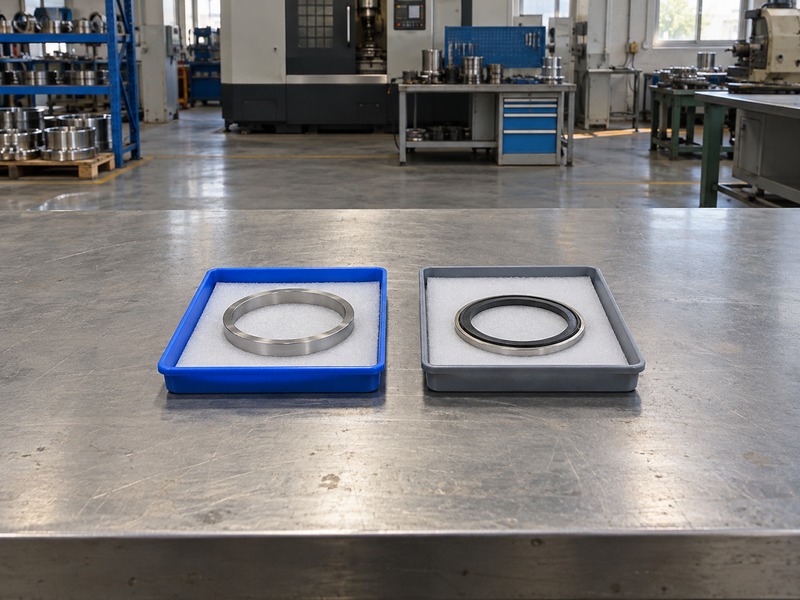
Request the actual layer schedule
A laminated ring may combine metal with graphite or another specified material. Ask which layers contact the process, how their edges are protected, and whether the fluid can attack any exposed layer. For a solid ring, review its geometry and material alongside the mating seat rather than assuming that a solid section resists every service condition.
Neither construction provides a universal purchasing shortcut. Ask whether the spare is supplied ready for installation, requires factory fitting, or belongs to a matched assembly. Keep the approved part identity with the valve serial number so a later ring order preserves the original design. Include any accompanying gasket in the spare request rather than assuming that the existing gasket can be reused.
- Request a section view and full material description.
- Check exposed layers against process and cleaning fluids.
- Confirm fitting, orientation, and replacement restrictions before ordering spares.
| Ring construction | Question for the supplier |
|---|---|
| Solid metal | How does the ring accommodate seating load? |
| Laminated | Which layers contact the medium? |
| Replacement spare | Is fitting or matching required? |
3. Which material pairs need review?
Review both sides of the sealing contact, including any overlay or coating. Selecting a triple offset metal seated butterfly valve by body material alone leaves the ring, seat surface, fasteners, and auxiliary seals unresolved. Those parts can face different corrosion and wear conditions.
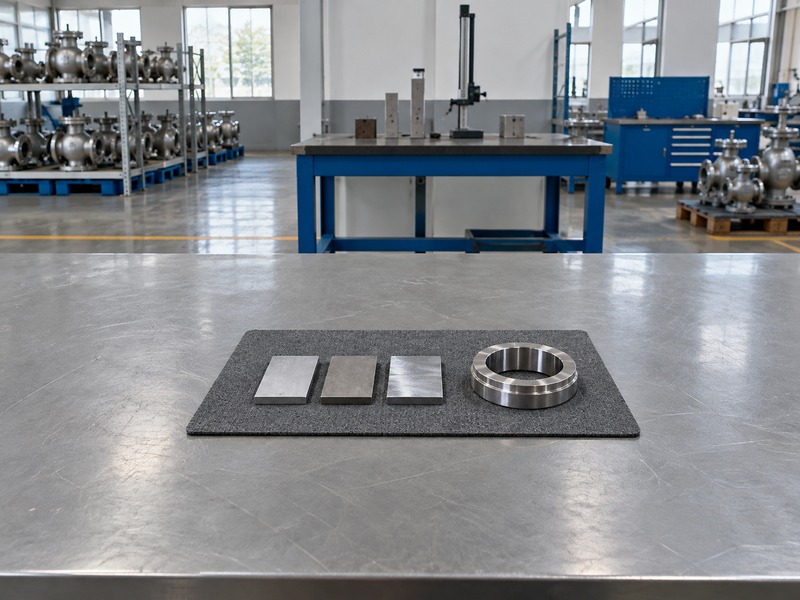
Check corrosion and contact behavior together
Ask the supplier to identify the base metal, deposited material, and relevant surface requirements for each contact surface. Review the pair for corrosion, adhesive wear, and galling under the intended load and movement. “Stainless steel trim” does not describe a complete contact pair or explain how it was qualified. Where a surface treatment is specified, ask how its identity and condition are verified.
Include contaminants, cleaning chemicals, and periods of stagnant exposure in the material enquiry. For corrosive liquid duties, a PTFE lined butterfly valve represents a separate material strategy that needs its own pressure, temperature, and installation review.
- Submit fluid composition and cleaning conditions, including known impurities.
- Identify overlays and coatings separately from base metals.
- Request material evidence tied to the supplied components.
| Component | Material detail to record |
|---|---|
| Seal ring | Alloy and exposed auxiliary materials |
| Seat | Base metal and contact-surface treatment |
| Retention parts | Fastener and backing-gasket materials |
4. How can heat and cycling change contact?
Temperature changes can alter clearances, component movement, and seating load. For a triple offset metal seated butterfly valve, the operating temperature range should include startup, shutdown, cleaning, and upset conditions. A room-temperature closure test cannot establish performance through every thermal cycle.
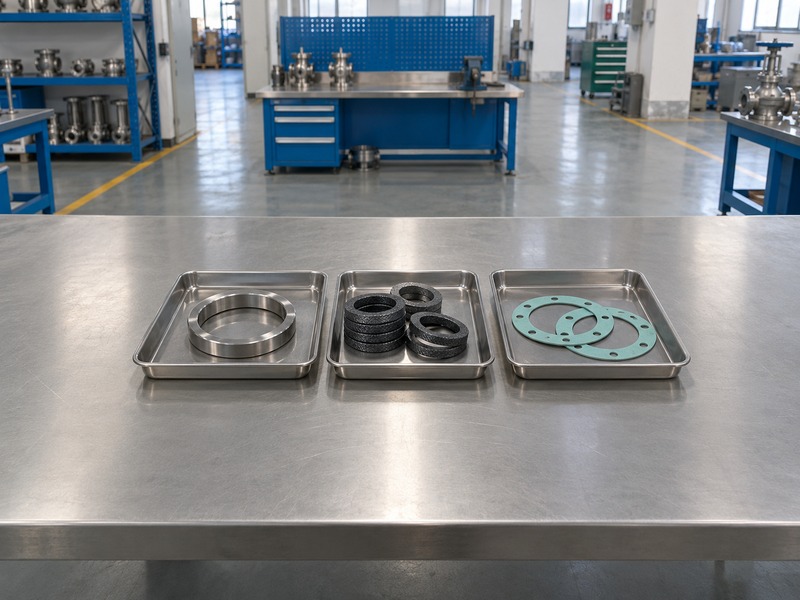
Describe the temperature sequence
Different components can heat and cool at different rates. Ask how the selected assembly accommodates thermal movement and whether evidence covers the expected transitions. Provide the temperature sequence rather than sending only a maximum temperature, especially when hot process fluid enters a cold valve or cleaning changes conditions quickly.
Review cycling duty alongside temperature. Long closed periods, frequent operation, and deposits on contact surfaces create different maintenance questions. Ask which observed changes in torque or leakage should trigger inspection; avoid assigning a service life from the phrase “metal seat.” Specify any required hot-condition leakage check separately from the routine room-temperature acceptance test.
- State normal, minimum, and maximum temperatures.
- Describe heating, cooling, dwell periods, and operating frequency.
- Request relevant thermal and operating evidence where the duty requires it.
| Service detail | Review question |
|---|---|
| Thermal movement | What movement does the design permit? |
| Temperature transitions | Which conditions were evaluated? |
| Repeated operation | What inspection triggers apply? |
5. What keeps the seat and seal ring in place?
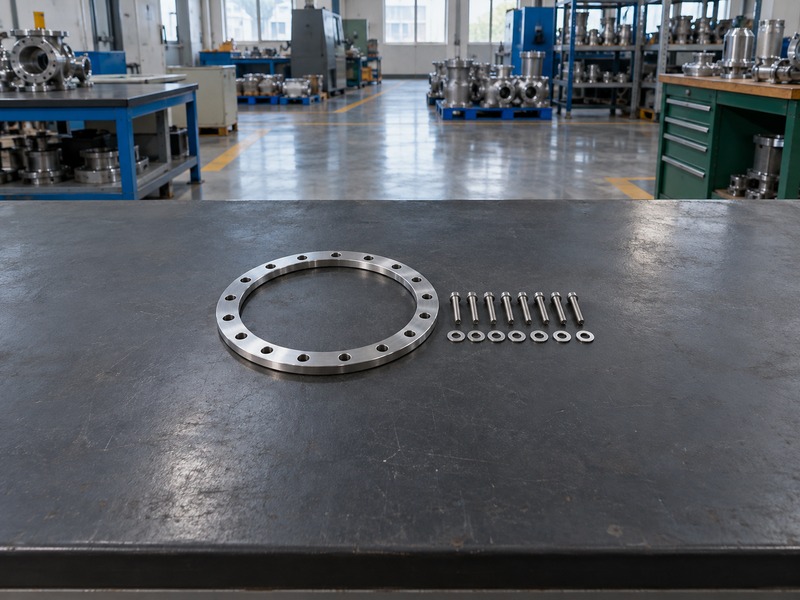
Retention depends on the selected seat, ring, retainer, fasteners, and locating features. A triple offset metal seated butterfly valve may have an integral seat or a separately retained arrangement. Identify the actual construction before deciding which parts can be removed or repaired.
Review the load and assembly path
The maintenance drawing should show how parts locate and how fasteners retain them. Ask which orientation references must be preserved, whether fasteners require replacement, and which tightening sequence applies. A visually similar ring can still have incompatible geometry or an incorrect installed orientation. Record any locking parts required by the approved assembly instead of substituting available workshop hardware.
Confirm the pressure direction and closing differential covered by the selected construction. Some designs support specified duty in both directions; others carry different directional limits. A retainer arrangement or the words “metal seated” cannot establish the reverse-pressure rating without the manufacturer's declaration and applicable evidence.
- Obtain the assembly drawing and current maintenance procedure.
- Preserve specified location references during inspection.
- Record directional differential limits with the seat construction.
| Retention item | Required information |
|---|---|
| Seat attachment | Integral or separately retained construction |
| Ring location | Approved orientation and locating method |
| Fasteners | Material, replacement rule, and tightening procedure |
6. Which adjustments belong in the maintenance procedure?
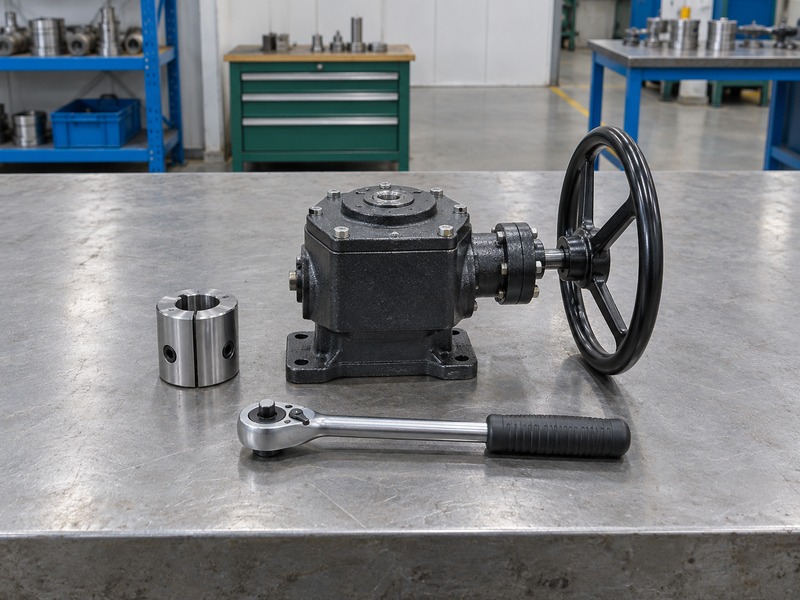
Only adjustments described for the selected assembly belong in the repair procedure. A triple offset metal seated butterfly valve may require specific closing-torque settings, stop positions, or ring-centering steps. Increasing actuator output without diagnosis can overload parts or damage contact surfaces.
Diagnose before changing settings
Compare the installed actuator settings with the approved records. If leakage appears after replacement or adjustment, inspect assembly orientation, cleanliness, coupling alignment, and the specified seating sequence. Treat the suspected cause as an open question until inspection supports it. Save the as-found settings so the investigation retains evidence of the condition before intervention.
Keep shaft packing adjustment separate from seat adjustment. Excess packing load can increase operating resistance and obscure the source of a torque change. After authorized work, verify operation and leakage using the specified procedure, then save the final settings with the repair record.
- Record existing settings before authorized disassembly or adjustment.
- Follow the model-specific order for assembly and setting.
- Compare required torque with allowable loads throughout the drive path.
| Observation | Check before adjustment |
|---|---|
| Rising operating torque | Packing, bearings, deposits, and alignment |
| Leakage after repair | Ring location, cleanliness, and settings |
| Stop reached early | Approved travel and coupling arrangement |
7. How should permitted leakage be specified?
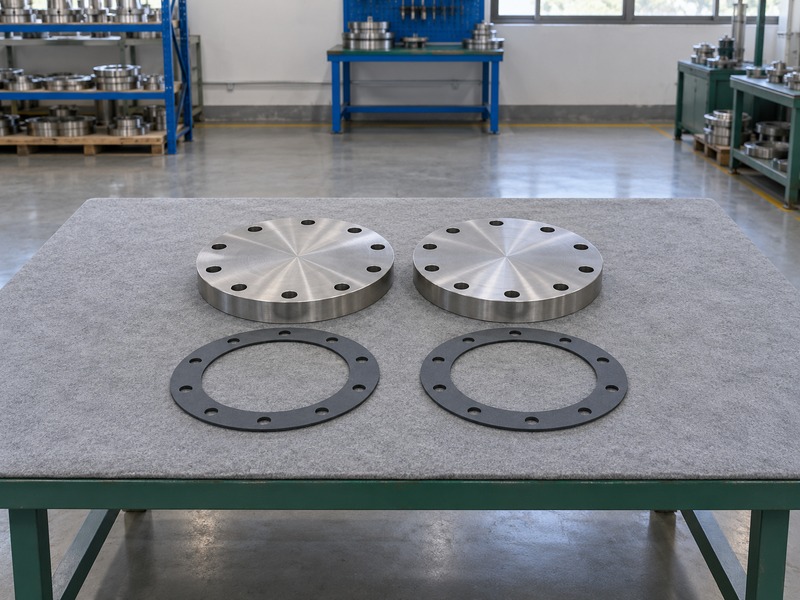
Specify the leakage criterion with its test medium, differential, duration, temperature, and pressure direction. A triple offset metal seated butterfly valve should have an agreed acceptance basis before manufacture or repair. “Tight shutoff” and “zero leakage” are incomplete purchase requirements without those conditions.
Keep the acceptance conditions attached
ISO 5208 addresses metallic-valve pressure-boundary and closure testing in conjunction with applicable product-standard requirements. Identify the contract standard, edition, and required acceptance criterion rather than combining fragments from different test methods. Ask how measured leakage will be recorded, including the unit and observation method.
A passing acceptance test describes the tested valve under stated conditions. It cannot promise permanent leak-free service. Fire-test qualification also requires separate applicable evidence; metal seating by itself does not establish a fire-test result. Where the process needs hot isolation, ask which additional service-condition evidence supports that requirement.
- Define the closing differential in each required pressure direction.
- Agree on the measurement method and acceptance limit.
- Separate shell, closure, and any additional qualification records.
| Test detail | Record explicitly |
|---|---|
| Acceptance | Standard, edition, and leakage criterion |
| Conditions | Medium, temperature, differential, and duration |
| Traceability | Valve identity, direction, and measured result |
8. What damage should an inspection record?
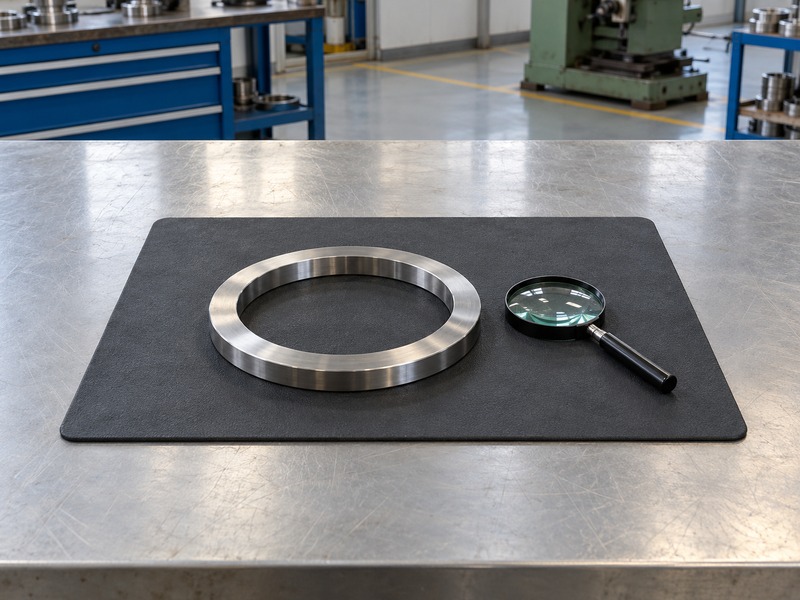
Record where damage occurs, its appearance, and which component it affects before deciding on repair. For a triple offset metal seated butterfly valve, useful findings include scratches, dents, deposits, corrosion, damaged layers, and loose retention parts. Photographs should preserve location and scale without replacing measurements.
Preserve evidence before surface work
Use the manufacturer's inspection limits to decide whether a mark is acceptable. Do not turn a visual observation into an invented depth tolerance. Identify whether the mark crosses the sealing contact, affects a backing surface, or sits outside the functional area. Record the mating surface's condition too, because replacing one damaged component leaves the other contact surface unchanged.
Cleaning, polishing, lapping, and coating repair can change geometry or remove material. Obtain an approved method before treating a precision contact surface. Keep the removed ring and its associated records until the repair decision and failure review are complete, especially when a new ring also leaks.
- Record valve identity, orientation, and component location.
- Photograph deposits before approved cleaning removes them.
- Refer uncertain damage to the supplier with measured findings.
| Finding | Evidence worth preserving |
|---|---|
| Contact mark | Location, extent, and measured condition |
| Deposits | Appearance and process history |
| Retention damage | Part identity and as-found assembly |
9. Can the sealing parts be reached and replaced?
Replacement is practical only when the selected parts are serviceable and the installation provides access. A triple offset metal seated butterfly valve can have replaceable sealing components yet still require removal from the pipeline. Confirm the complete job before calling a ring “field replaceable.”
Plan the repair route
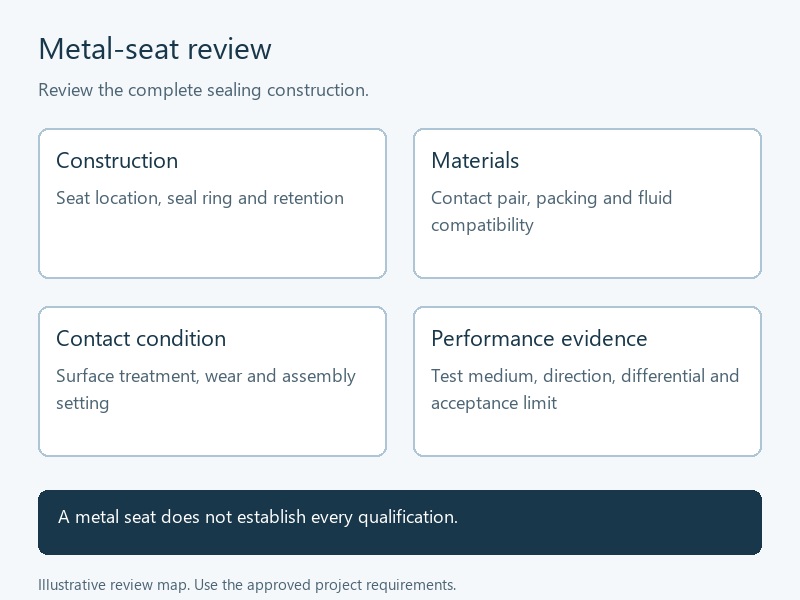
Request the space needed for retainer tools, disc positioning, ring withdrawal, lifting, and actuator removal. Review the installed flanged butterfly valve arrangement as connection context, then use the proposed valve's own maintenance drawing for the access decision. The connection category does not establish repair access.
Plan isolation, drainage, stored-energy release, and decontamination under the site's procedure. Confirm which spare gaskets, fasteners, and packing accompany the seal ring. A repair plan also needs a return-to-service test and a practical way to conduct it after reassembly. Check storage and preservation requirements so the spare's sealing edge remains protected until installation.
- Separate component replacement from in-line replacement claims.
- Confirm lifting and tool access before the outage.
- Identify replacement consumables and post-repair verification.
| Repair stage | Access to confirm |
|---|---|
| Disassembly | Tools, disc position, and operator removal |
| Replacement | Ring withdrawal and component handling |
| Verification | Test arrangement and acceptance procedure |
10. What should a purchase and repair file contain?
Keep a configuration-specific file that connects service requirements with drawings, materials, settings, and acceptance records. A triple offset metal seated butterfly valve needs enough detail for a later repair team to identify the original assembly. A catalogue description cannot substitute for that record.
Close the enquiry with evidence
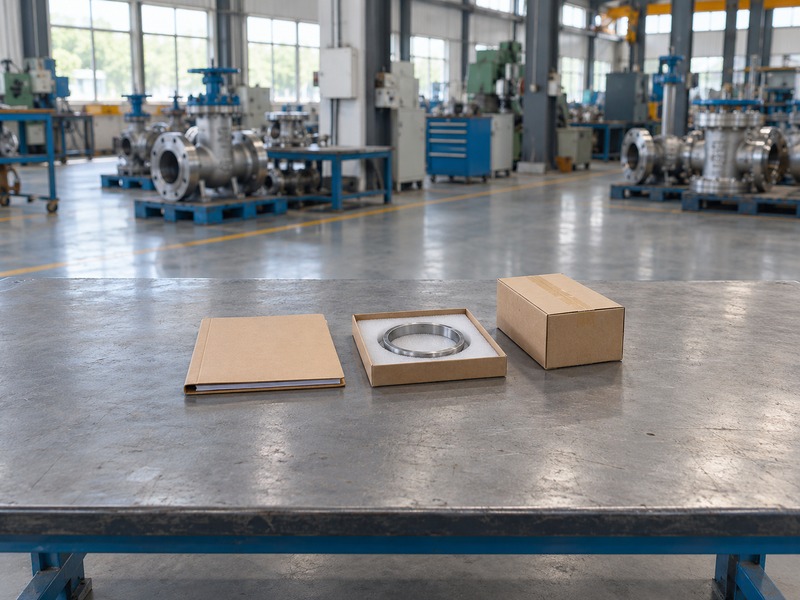
Include the approved sectional drawing, material schedule, directional ratings, spare-part list, maintenance instructions, and test requirements. RUITO's manufacturing and inspection information provides background for an enquiry; ask the team to confirm the proposed supply configuration and supporting evidence before treating a triple-offset requirement as accepted. Request written disposition of any proposed material substitution or change in seal construction.
- State the process, thermal cycle, and isolation duty.
- Request the exact seat, ring, and retention details.
- Close unresolved repair and acceptance questions before approval.
| File item | Purpose |
|---|---|
| Approved construction | Identify the supplied sealing system |
| Maintenance package | Preserve parts and setting requirements |
| Acceptance records | Connect results with the valve identity |
Contact us with your service conditions, seal specification, and repair constraints to confirm the proposed configuration and available evidence.
Questions buyers ask about metal seating
Q1. Does a laminated ring count as metal seated?
The description can cover a laminated sealing construction. Obtain the layer schedule and contact details because some layers may use other materials.
Q2. Can a solid ring replace a laminated ring directly?
Only with approval for the exact valve. Geometry, retention, materials, settings, and qualification may differ.
Q3. Does a metal seat establish fire-tested performance?
No. Request the applicable fire-test evidence and check its coverage of the proposed assembly.
Q4. Should leakage be corrected with more actuator torque?
Diagnose the cause and follow the approved procedure. Added torque can exceed component limits without correcting damage or misassembly.
Q5. Can the same seal kit fit every valve of one nominal size?
Nominal size cannot establish interchangeability. Match the kit with the manufacturer, assembly revision, materials, and valve identity.